

10 Simple Journaling Formats to Make Daily Writing Easier
Starting a daily journaling habit can feel difficult when you’re staring at a blank notebook and wondering what to write. Some days, your thoughts flow easily. Other days, even a few sentences feel challenging. That’s where simple journaling formats can make daily writing easier.
Whether you have two minutes in the morning or a quiet moment before bed, these 10 simple journaling formats offer easy ways to organize your thoughts, reflect on your day, and enjoy writing without pressure. From short lists to gratitude entries, there’s something for every routine.
Quick Guide: Making Daily Journaling Easier
- Start small: Five minutes or a few sentences are enough.
- Use a simple structure: Lists, prompts, and sentence starters make writing easier.
- Keep your journal nearby: Place your notebook somewhere convenient.
- Forget perfection: Grammar, handwriting, and beautifully written paragraphs aren’t important.
- Try different formats: Switch between bullet points and longer reflections whenever you like.
- Stay flexible: Missing a day doesn’t mean you’ve failed. Simply begin again.
1. Try the Three-Sentence Daily Journal Format
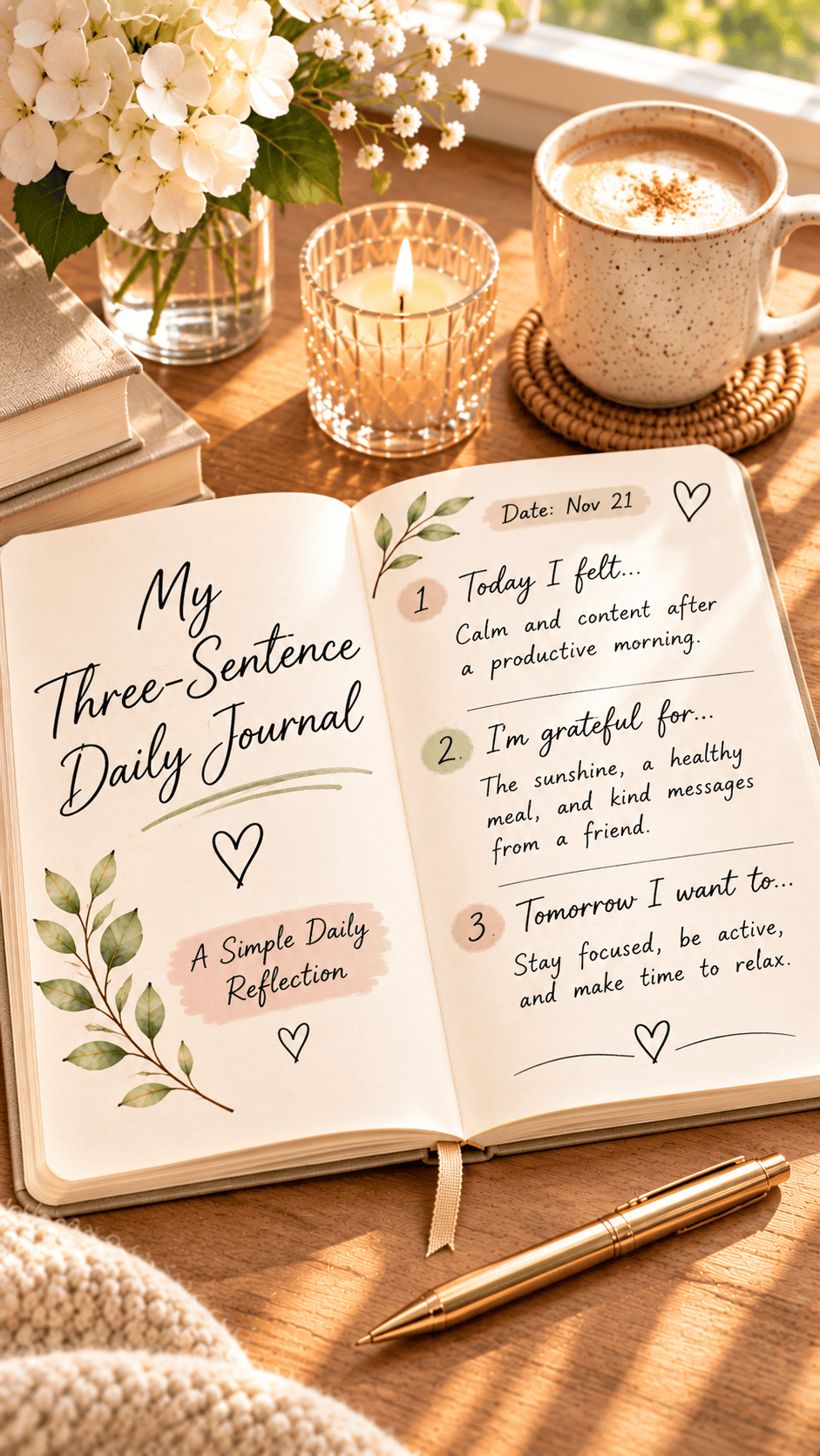
The three-sentence journal is one of the easiest ways to start writing every day. Instead of filling an entire page, you record just three short sentences about your experiences, thoughts, or feelings.
Use the first sentence to describe something that happened, the second to explain how you felt, and the third to capture something you’d like to remember or do differently tomorrow. It’s a simple way to create a meaningful daily record.
Example: Today I enjoyed a peaceful morning walk. I felt calmer afterward. Tomorrow, I’d like to make more time for myself.
2. Use a Simple Bullet Point Journaling Format
Bullet point journaling is perfect when you want to record your thoughts without writing full paragraphs. Short notes make it easy to capture memories, accomplishments, feelings, and everyday observations.
Write the date at the top of your page and add three to five bullet points about your day. Include anything meaningful, from a small achievement to something you’re looking forward to. There’s no need for a complicated layout.
Example: Enjoyed my morning coffee outside. Finished an important task. Felt tired in the afternoon. Looking forward to the weekend.
3. Create a Morning Intentions Journal
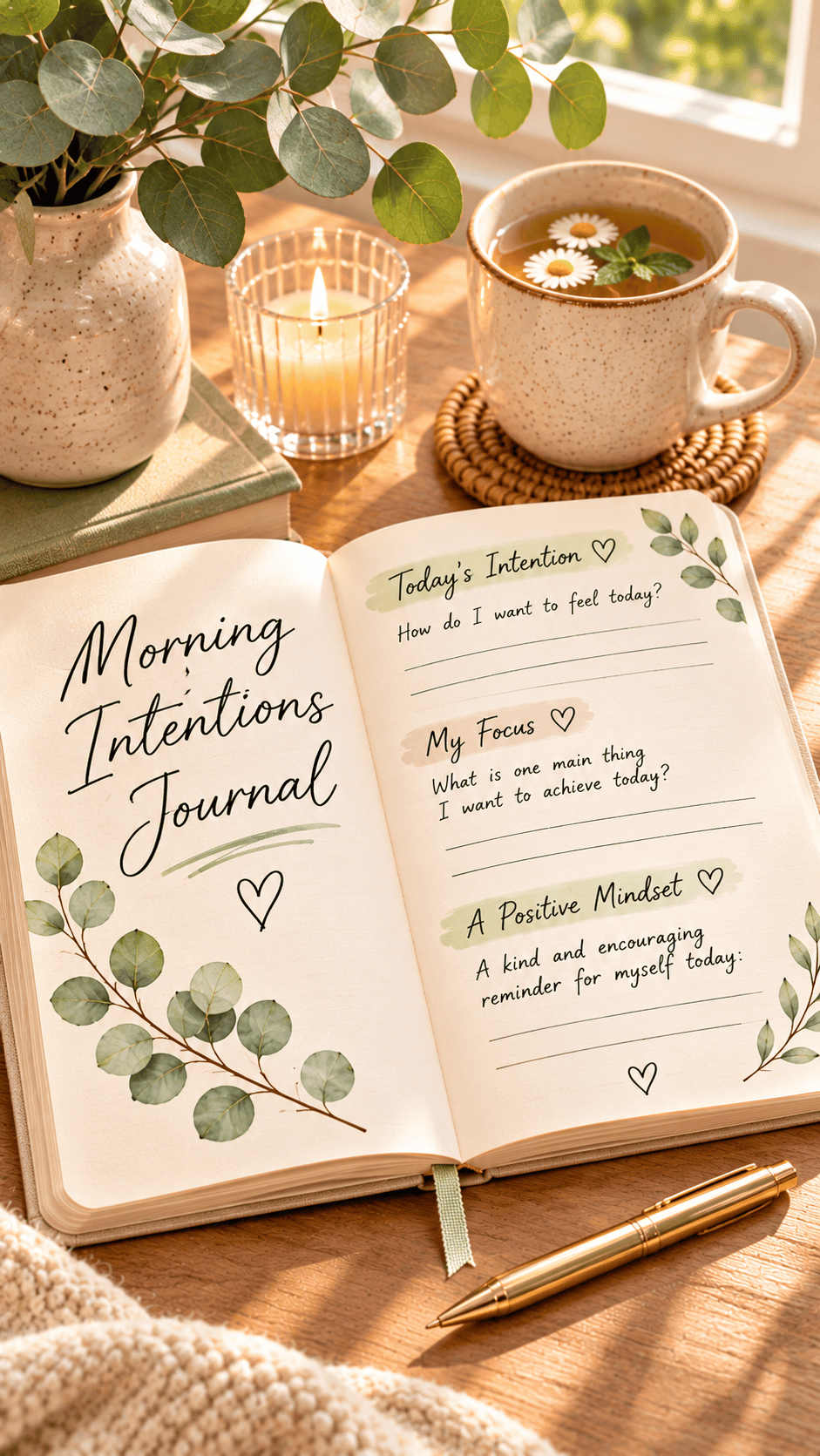
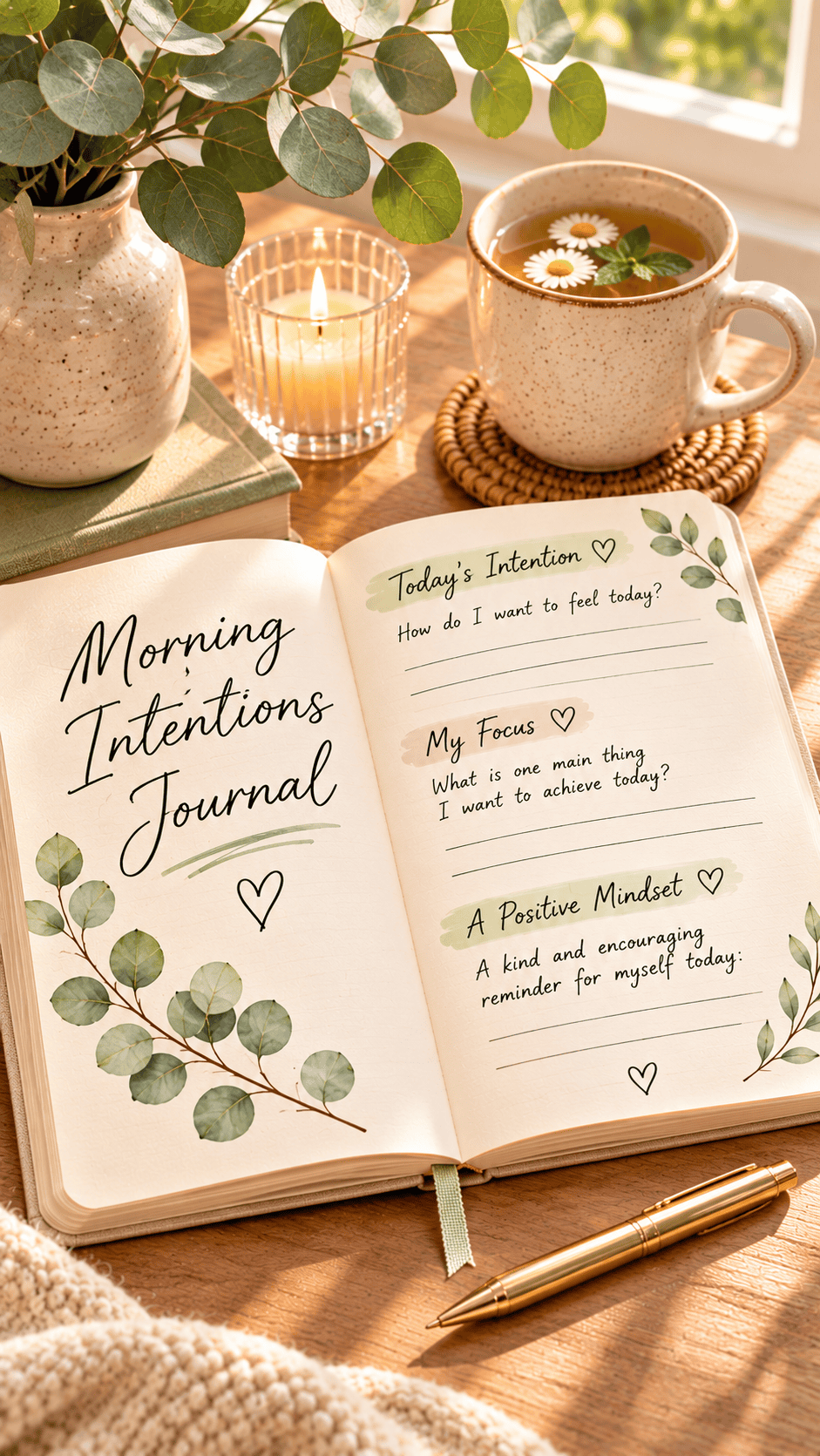
A morning intentions journal helps you begin the day with clarity and purpose. Rather than creating another demanding to-do list, this format encourages you to focus on what matters and how you want your day to feel.
Each morning, write one intention, one important priority, and one small act of kindness toward yourself. Keep your answers simple and realistic so the practice feels encouraging rather than overwhelming.
Example: My intention is to stay patient. My priority is to finish one project. One kind thing I’ll do for myself is take a proper lunch break.
4. Follow a Three-Question Evening Reflection Format
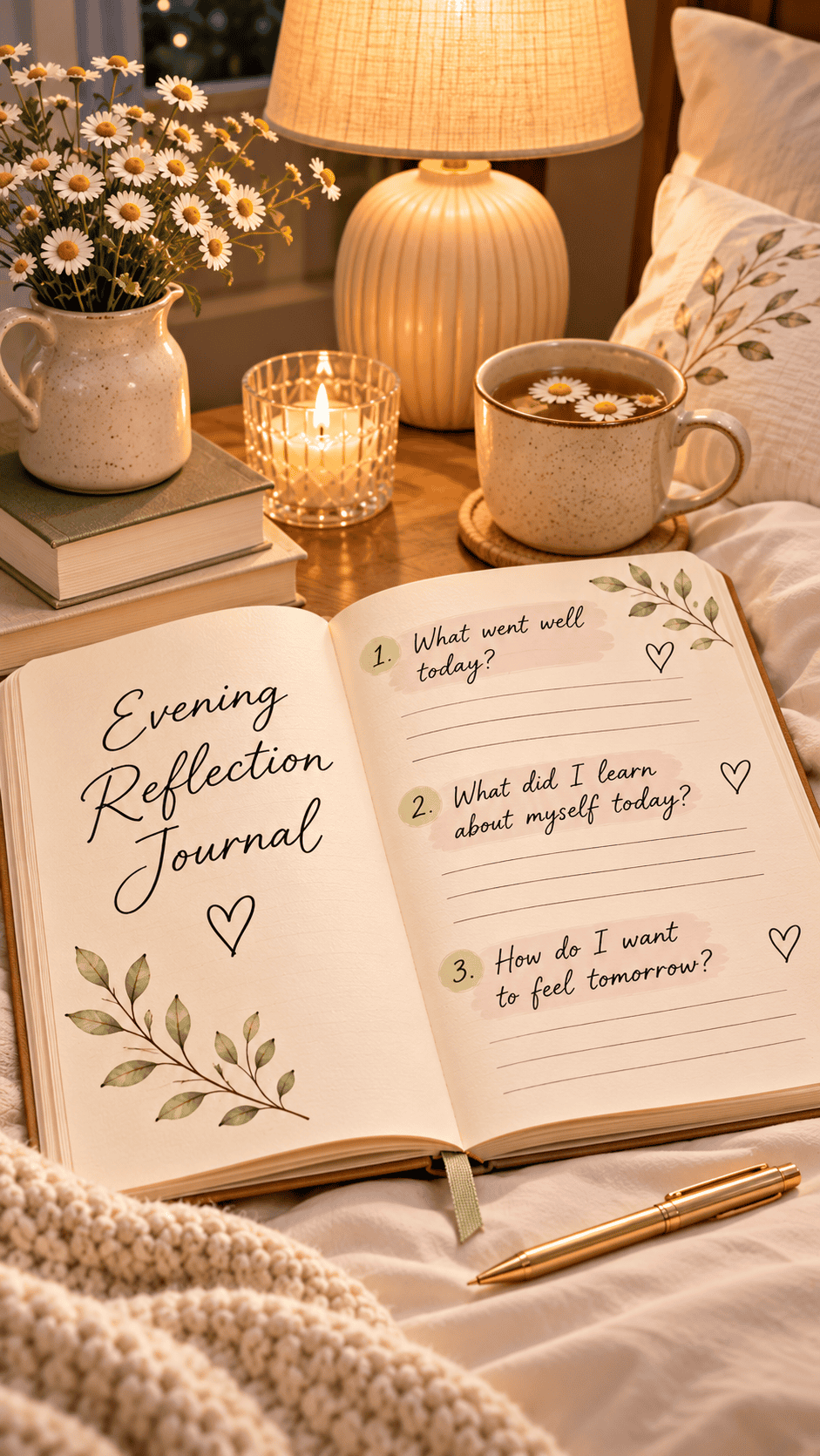
An evening reflection journal helps you look back on your day without writing a lengthy diary entry. Answering three familiar questions creates a gentle routine and encourages you to notice meaningful moments.
Write a sentence or two about what went well, what felt difficult, and what you’d like to carry into tomorrow. Keep your reflections honest and supportive rather than focusing on everything you think you should have accomplished.
Example: What went well? I enjoyed talking with a friend. What felt difficult? Concentrating during the afternoon. What will I carry into tomorrow? A slower, more relaxed morning.
5. Start a Simple Daily Gratitude Journal
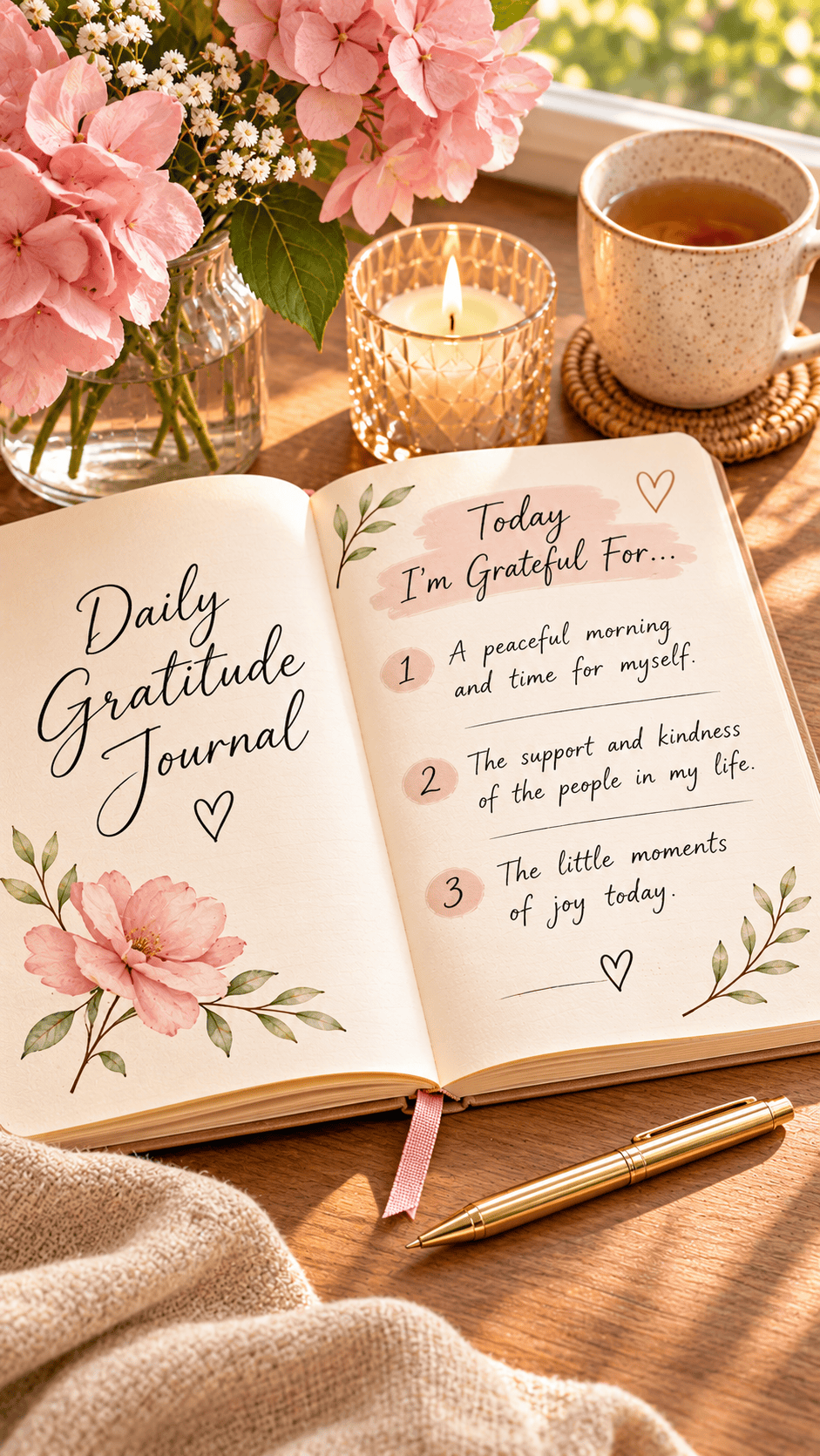
A daily gratitude journal encourages you to notice small moments of appreciation. You don’t need extraordinary experiences to write about. A warm drink, a kind message, or a peaceful afternoon can make a meaningful entry.
Write three things you appreciated during the day. If you have extra time, add a short sentence explaining why one of them mattered. Keep your reflections genuine, especially when you’ve had a difficult day.
Example: I’m grateful for the sunshine during my walk, a thoughtful message from someone I love, and a quiet evening to relax.
6. Try a Simple Mood Check-In Journaling Format
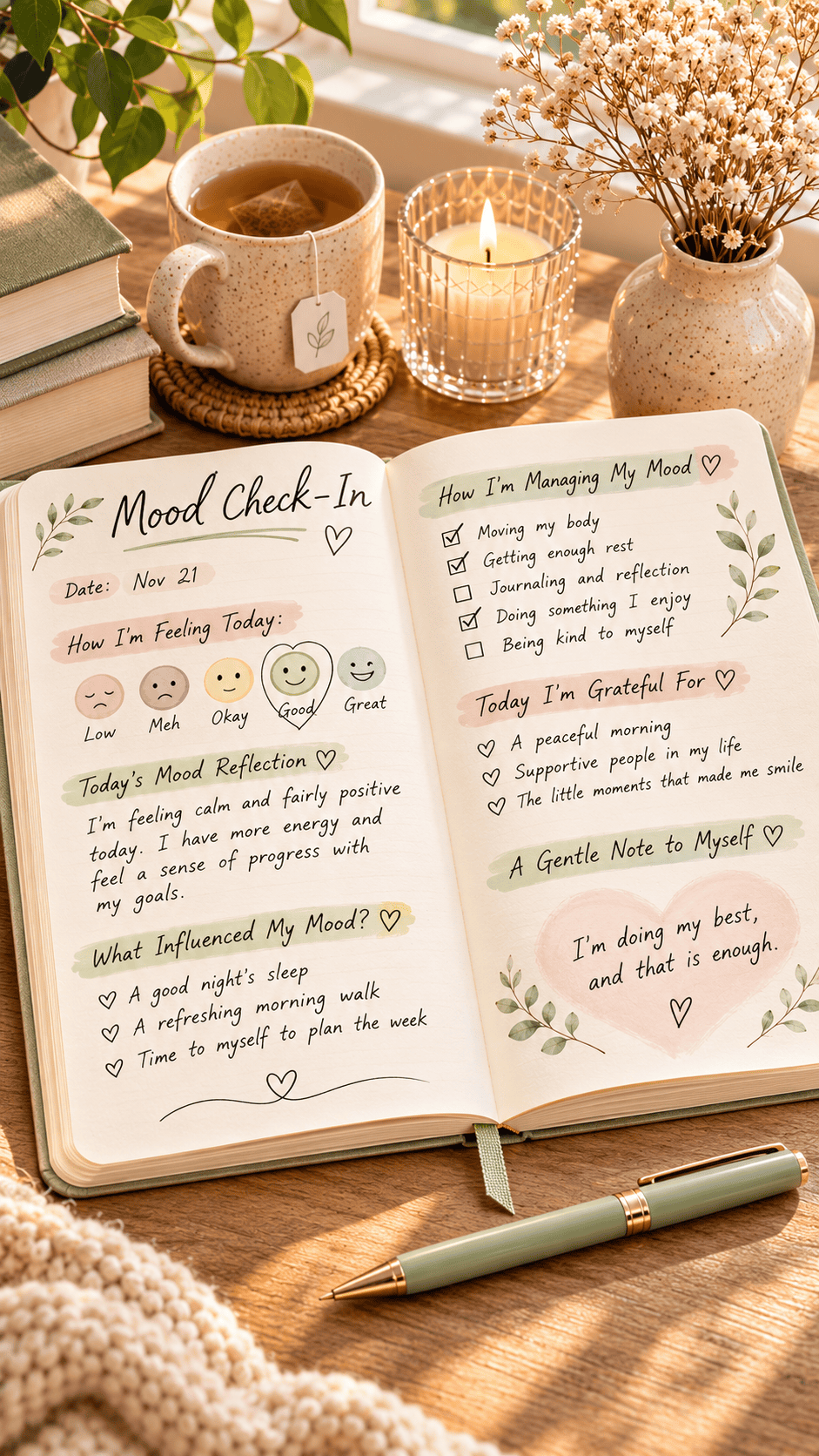
A mood check-in journal helps you become more aware of your emotions without writing a lengthy diary entry. Simply naming how you feel can make it easier to reflect on your experiences and notice patterns over time.
Write the date and choose one or two words that describe your mood. Add a short sentence about what may have influenced those feelings and something that might help you feel more comfortable or supported.
Example: Mood: A little overwhelmed but hopeful. Possible reason: Several unfinished tasks. What might help: Taking one task at a time and enjoying a quiet evening.
7. Keep a One-Line-a-Day Journal
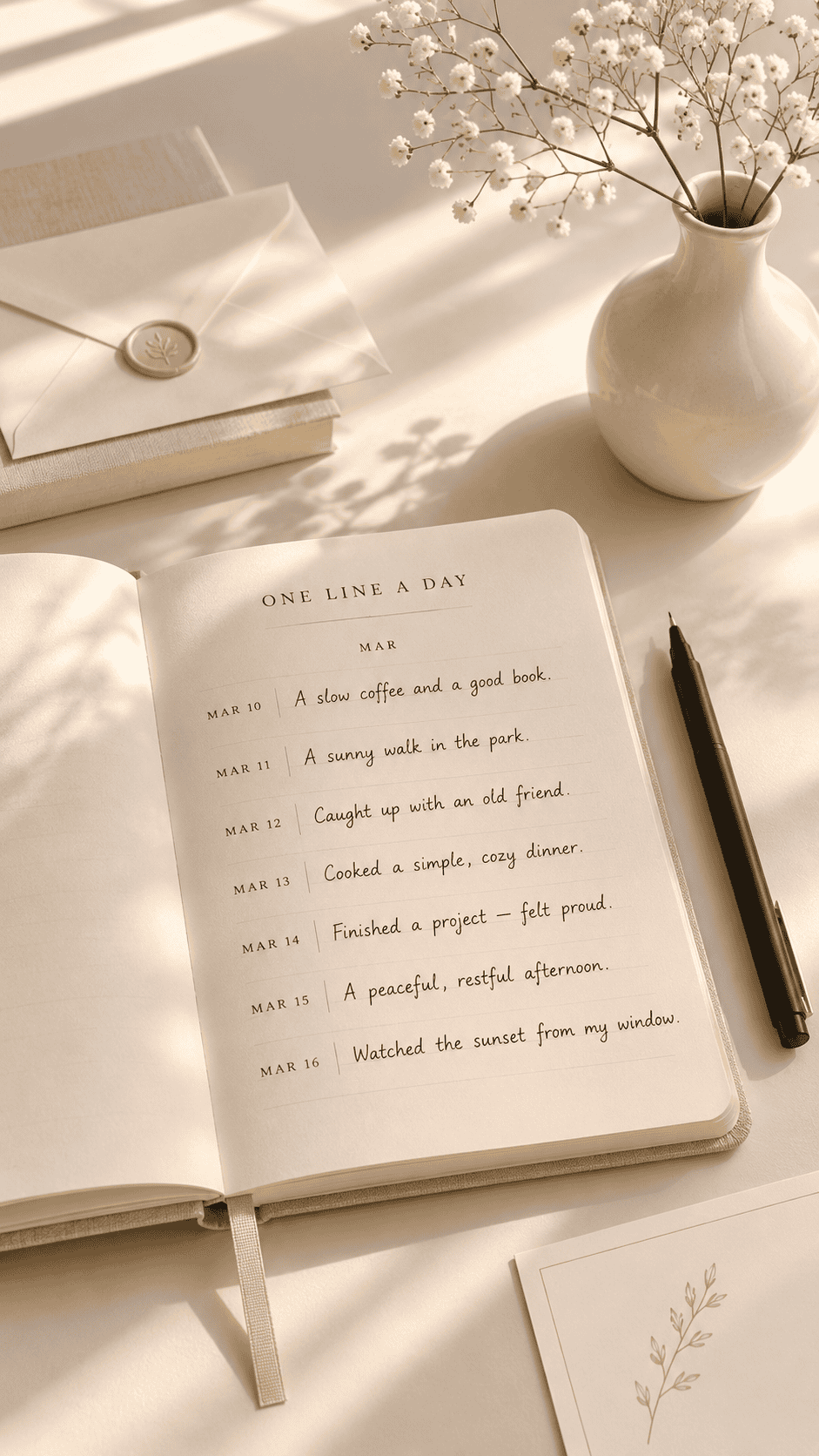
A one-line-a-day journal is perfect when you want to develop a writing habit without committing to long entries. Recording just one meaningful sentence each day creates a lovely collection of memories and reflections.
Choose a small notebook and write the date followed by one sentence about something you experienced, noticed, or appreciated. Some days might capture a happy memory, while others simply describe how you’re feeling.
Example: November 23 — I enjoyed a peaceful afternoon reading beside the window while the rain fell outside.
8. Use a Guided Journal Prompt Format
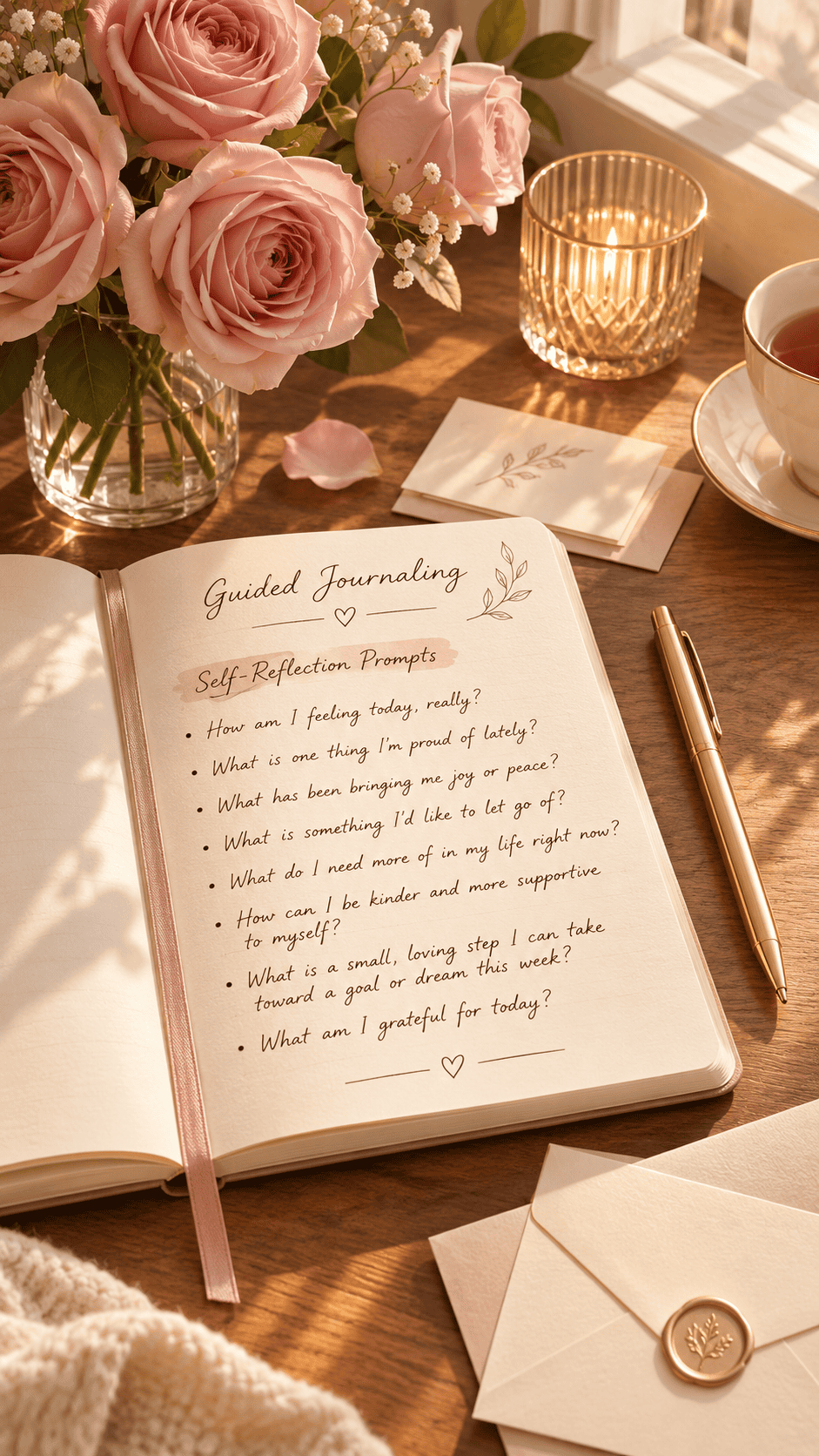
Guided journal prompts make daily writing easier by giving you a question to answer instead of leaving you with a blank page. They’re especially helpful when you want to explore your thoughts but aren’t sure where to begin.
Choose one question each day and write a few sentences in response. You can focus on personal growth, happiness, relationships, or everyday experiences. There’s no need to find the perfect answer.
Try these prompts: What made me smile today? What am I looking forward to? What have I learned about myself recently? What would make tomorrow easier?
9. Clear Your Mind With a Brain Dump Journaling Format
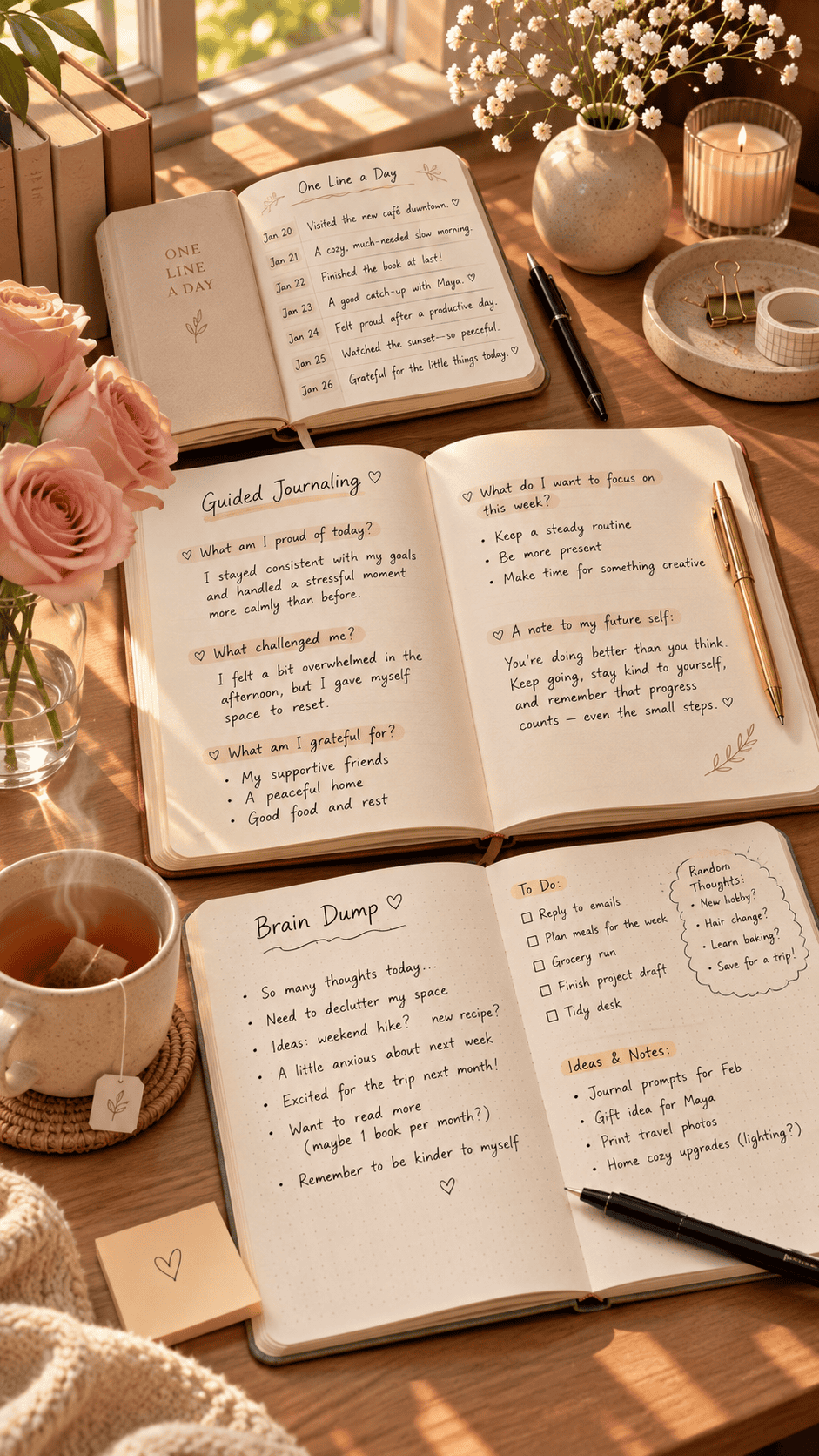
A brain dump journal is useful when your mind feels busy and you have too many thoughts competing for attention. Instead of organizing everything into paragraphs, you write down whatever comes to mind without worrying about structure.
Spend five minutes recording thoughts, reminders, worries, ideas, or unfinished tasks. Leave the page as it is or highlight anything that needs your attention. The goal is to create space for reflection rather than another demanding to-do list.
Example: Reply to that email. Plan weekend meals. Feeling excited about a new idea. Need more time to relax. Buy flowers for the dining table.
10. Create a Simple Weekly Reflection Journal
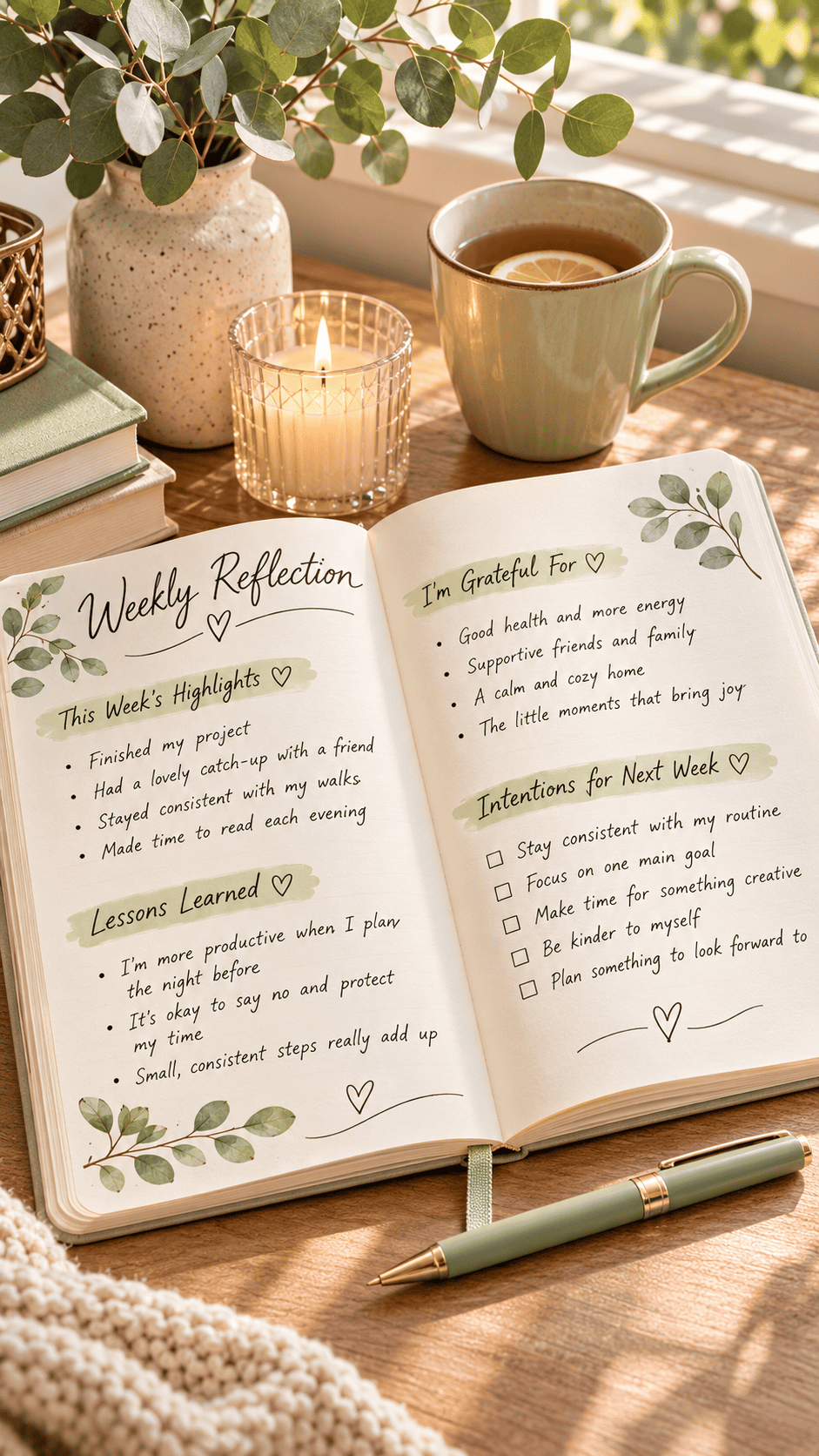
A weekly reflection journal is a wonderful alternative when daily writing feels difficult to maintain. Instead of recording every detail, you take a few minutes at the end of the week to reflect on meaningful moments and personal progress.
Divide your page into three simple sections: weekly highlights, lessons learned, and intentions for the coming week. Write a few short notes beneath each heading to create a useful overview without lengthy entries.
Example: Highlight: Enjoyed a relaxing walk with a friend. Lesson: Preparing the night before makes mornings easier. Next week’s intention: Make more time for quiet moments.
You Might Also Like
How to Choose the Best Journaling Format for You
The best journaling format is one that feels comfortable and fits naturally into your routine. You don’t have to follow the same structure every day, and there’s no single correct way to journal.
- Short on time? Try a one-line-a-day journal or the three-sentence format.
- Prefer organized writing? Choose bullet points or a three-question reflection.
- Want to explore emotions? Use mood check-ins or guided journal prompts.
- Have a busy mind? Experiment with a simple brain dump.
- Enjoy positive reflection? Try gratitude journaling or morning intentions.
- Find daily writing difficult? Start with weekly reflections instead.
Simple Tips for Making Journaling a Daily Habit
Building a journaling habit doesn’t require a perfect routine or an expensive notebook. A few small changes can make writing easier and more enjoyable.
- Connect journaling to an existing habit: Write after morning coffee or before bedtime.
- Keep your notebook nearby: Make it easy to begin whenever you have a quiet moment.
- Start with two minutes: A few sentences are enough.
- Use sentence starters: Try “Today I noticed…” or “Right now I’m feeling…”
- Change formats when needed: Write lists on busy days and longer reflections when you have more time.
- Forget perfection: Your journal is a personal space, not a writing assignment.
Final Thoughts
Daily journaling doesn’t have to involve long diary entries or complicated routines. Sometimes a single sentence, a few bullet points, or three simple reflection questions are enough to capture your thoughts and create a meaningful record of everyday life.
These 10 simple journaling formats offer easy ways to make writing feel more approachable. Whether you prefer gratitude lists, mood check-ins, morning intentions, or weekly reflections, choose a format that works for you and let your journaling habit develop naturally.
Love these journaling ideas? Save this article to your Pinterest journaling ideas, daily journal inspiration, or personal growth journal prompts board so you can revisit these simple writing formats whenever you need inspiration.