
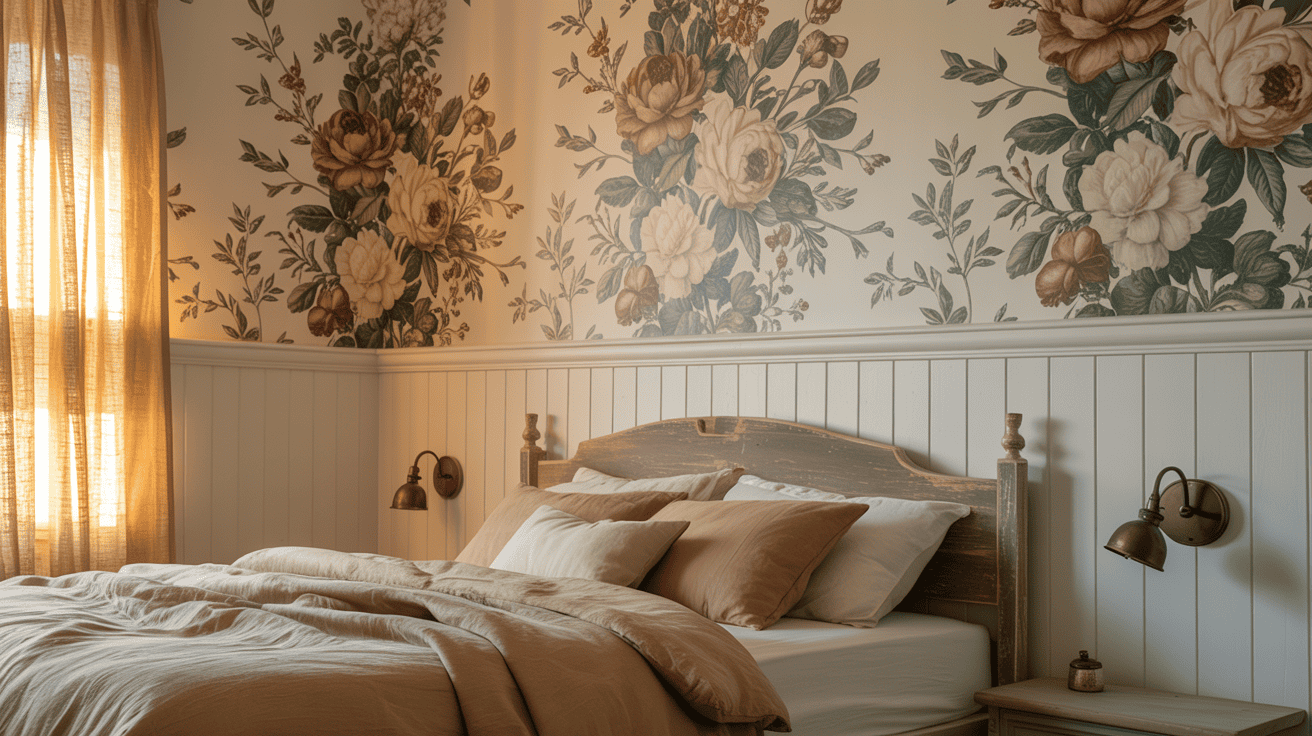
12 Farmhouse Accent Wall Ideas That Transform a Plain Bedroom
A plain bedroom can feel completely different once you give one wall a little more attention. And if you love farmhouse style, an accent wall is an easy way to bring in warmth, texture, and architectural character without filling the room with lots of extra decor.
This post includes affiliate links. If you make a purchase through them, I may earn a small commission at no extra cost to you. More details here.
The farmhouse look has also moved well beyond white shiplap and distressed signs. Today’s bedrooms can feel softer and more sophisticated, with warm wood, muted paint colors, subtle paneling, traditional wallpaper, and natural textures creating that relaxed country feeling.
Whether you’re decorating a modern farmhouse bedroom, a cozy cottage-inspired retreat, or simply trying to make a blank wall look more interesting, these farmhouse accent wall ideas offer plenty of ways to create a beautiful focal point.
Quick Guide: Choose Your Farmhouse Accent Wall
- Classic farmhouse: Try horizontal shiplap in warm white or cream.
- Modern farmhouse: Choose simple board and batten in a muted neutral or earthy color.
- Rustic bedroom: Use reclaimed-look wood or warm timber tones.
- Romantic country style: Try a delicate botanical or vintage-inspired wallpaper.
- Small bedroom: Use subtle molding or a tonal painted treatment to add depth without overwhelming the room.
- Budget refresh: Create the focal point primarily with paint and simple trim rather than covering the entire wall in expensive materials.
The wall behind the bed is usually the natural place for an accent treatment because the bed already provides a focal point. Before committing, however, look at windows, doors, ceiling height, existing trim, and furniture placement so the design works with the architecture rather than fighting against it.
1. Create a Classic White Shiplap Wall
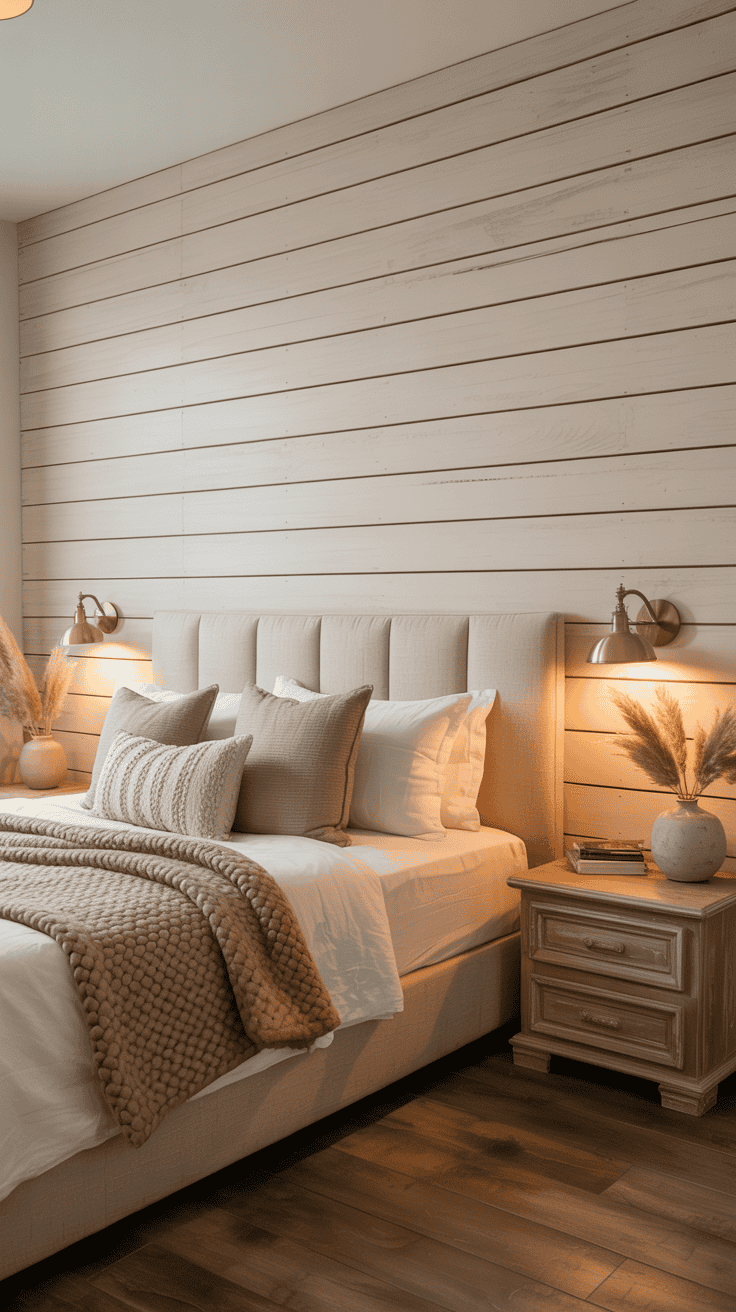
Shiplap remains a farmhouse favorite for a reason. The horizontal lines introduce texture and architectural interest while still being simple enough to work with neutral bedding, vintage furniture, woven accessories, and changing seasonal decor.
For a softer look, consider warm white, ivory, or cream rather than a very bright white. These slightly warmer shades sit beautifully beside natural timber and can make the bedroom feel more relaxed and inviting.
You also don’t need to fill the finished wall with decoration. A simple headboard, two bedside lamps, and perhaps one restrained piece of artwork may be plenty once the wall itself provides texture.
Style White Shiplap With
- Warm wood furniture.
- Cream or oatmeal bedding.
- Woven baskets.
- Simple black or aged metal accents.
Most timeless option: Keep the shiplap simple and let natural materials provide the rustic character rather than adding lots of obviously themed farmhouse accessories.
2. Try Sage Green Board and Batten
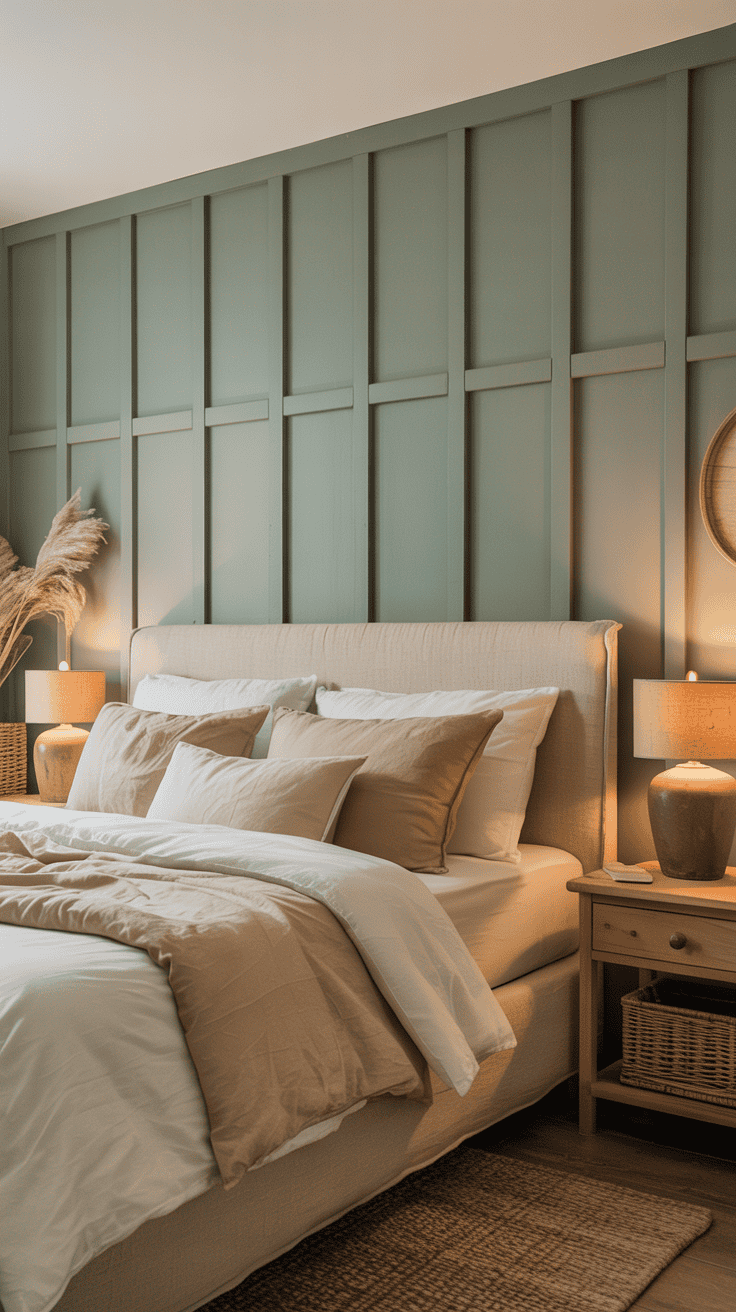
Board and batten is ideal when you want farmhouse character with a cleaner, slightly more contemporary finish. The vertical lines give a bedroom architectural structure, while color prevents the treatment from feeling overly traditional.
Muted sage works particularly well because it brings in a natural, restful quality without dominating the room. Pair it with warm whites, beige, linen, timber, and understated botanical details for a bedroom that feels cozy rather than themed.
Panel spacing makes a noticeable difference, so plan the complete wall before installing trim. Consider the bed width, electrical outlets, switches, and where bedside furniture will sit.
Complete the Look With
- Cream linen-style bedding.
- Warm oak or pine furniture.
- Simple ceramic lamps.
- Muted botanical artwork.
Why it works: The combination of vertical paneling and an earthy color gives farmhouse style a more updated, polished appearance.
3. Warm Up the Bedroom With a Natural Wood Wall
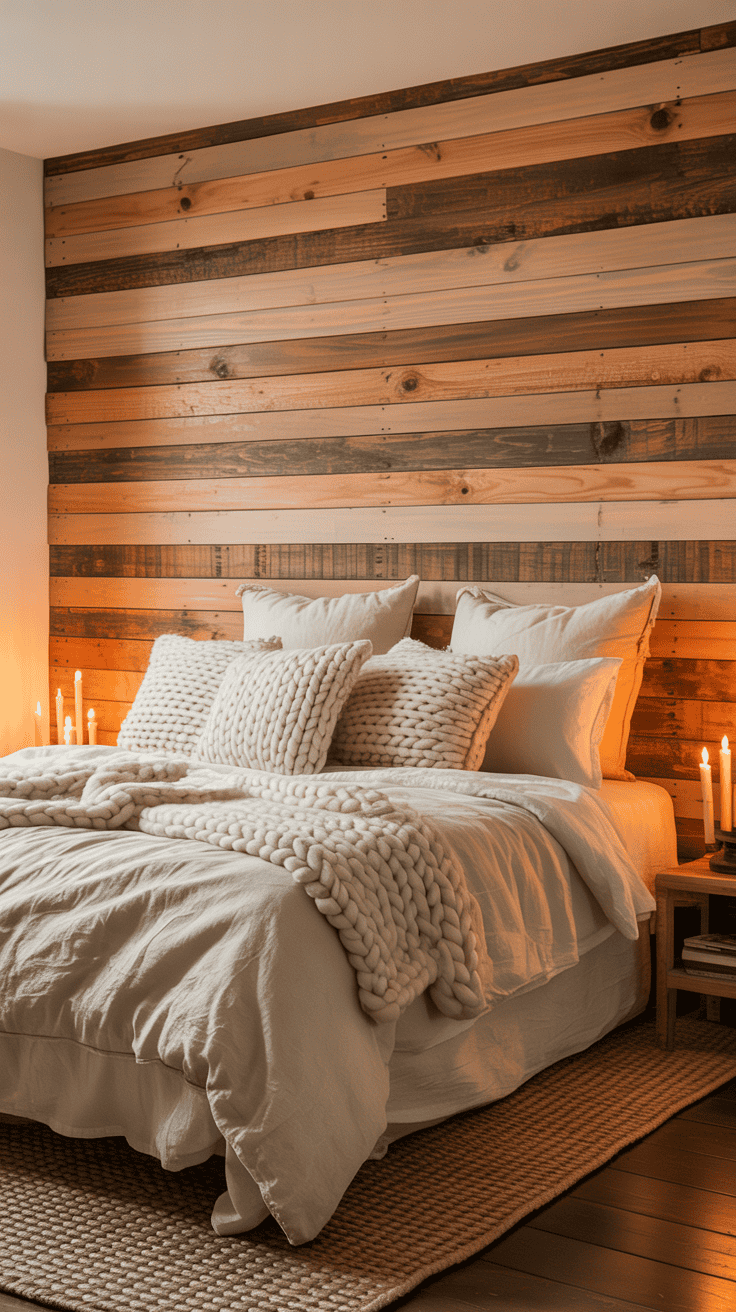
If your bedroom feels cold or flat, wood can change the atmosphere immediately. A timber accent wall brings warmth, texture, and natural variation, making it especially effective in rooms with otherwise simple white or neutral walls.
You can take the look rustic or refined. More varied wood tones create a relaxed cabin or old-farmhouse feeling, while boards with a consistent tone and clean layout can look considerably more contemporary.
Because real wood and wood-based products vary in weight, moisture behavior, installation requirements, and suitability, choose a material appropriate for the room and wall construction rather than selecting on appearance alone.
Balance a Wood Wall With
- Simple light-colored bedding.
- Soft neutral walls elsewhere.
- Natural woven textures.
- Minimal wall decor.
Designer detail: Repeat the wood tone once or twice elsewhere in the room rather than trying to match every piece of furniture exactly.
4. Add Romance With Vintage Floral Wallpaper
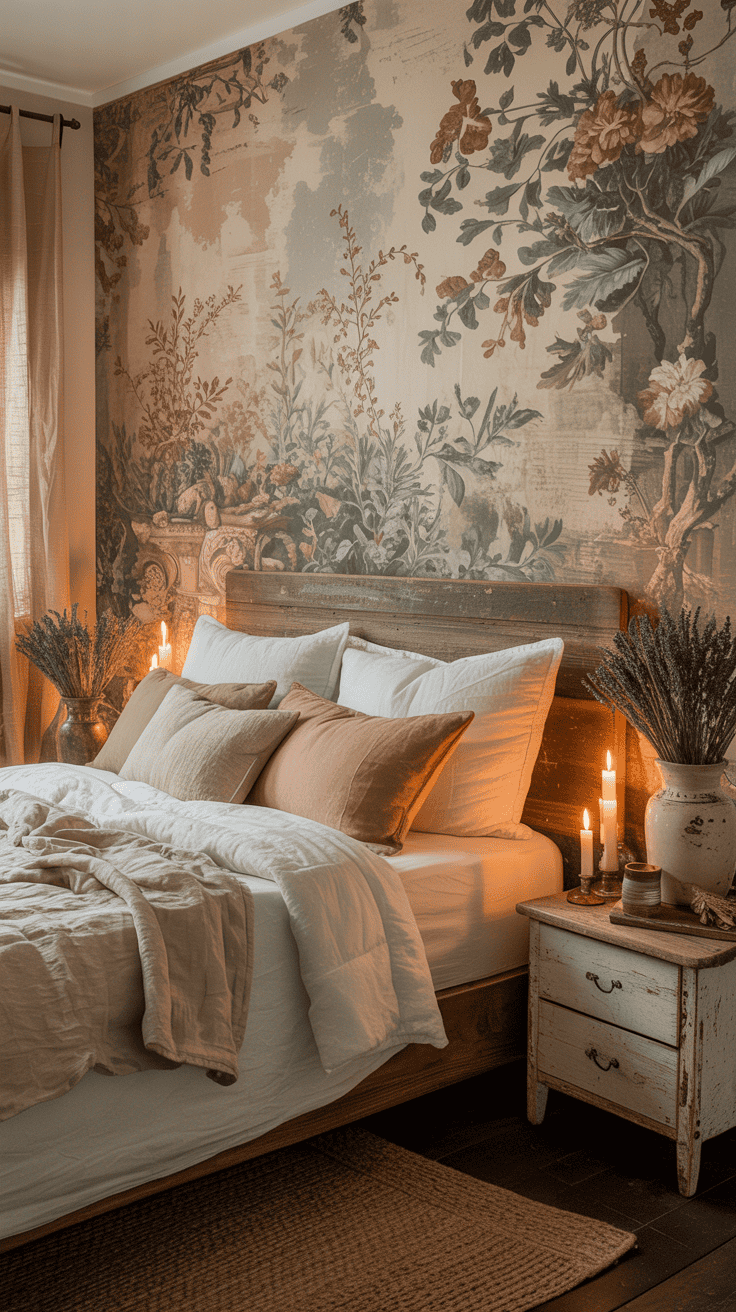
Farmhouse bedrooms don’t have to rely entirely on wood paneling. A traditional floral or botanical wallpaper can bring in the softer side of country style and works particularly well with vintage furniture and layered textiles.
Look for slightly muted colors rather than very bright prints if you want the room to feel restful. Faded blue, sage, dusty rose, cream, and warm brown can all create the impression of a pattern that has belonged in the room for years.
Pull one or two colors from the wallpaper into the bedding or accessories, but avoid matching everything. A little variation makes a farmhouse bedroom feel collected rather than overly coordinated.
Wallpaper Patterns to Consider
- Small-scale florals.
- Botanical prints.
- Traditional trailing vines.
- Subtle vintage stripes.
Creates this effect: A softly patterned wall can make a new or plain bedroom feel more established and layered without adding physical clutter.
5. Paint a Moody Farmhouse Accent Wall
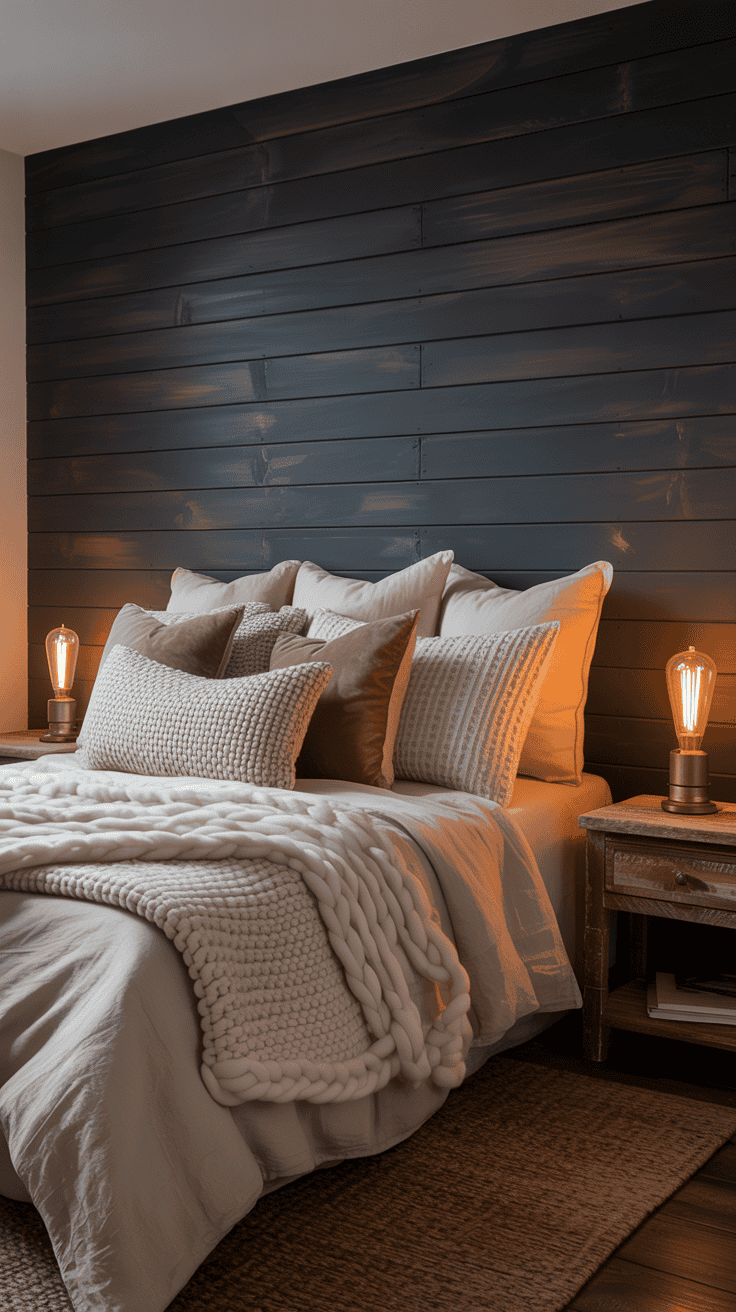
Farmhouse style doesn’t have to mean pale walls. A deep charcoal, earthy green, muted navy, or chocolate brown accent wall can make a bedroom feel wonderfully cozy while providing contrast against natural wood and soft bedding.
This approach is especially effective if you want a quick transformation without installing paneling. Paint gives you the drama of a strong focal wall while keeping the surface itself simple.
Balance the deeper color with lighter bedding and warm textures, then use lamps or wall lighting to create a softer atmosphere after dark.
Farmhouse Colors to Try
- Deep olive green.
- Charcoal gray.
- Muted navy.
- Chocolate brown.
- Earthy gray-green.
Budget-friendly version: Paint alone can create a surprisingly dramatic farmhouse focal point, particularly when you restyle the bed with neutral layers and repeat the wall color in one or two smaller details.
6. Create Half-Wall Paneling Behind the Bed
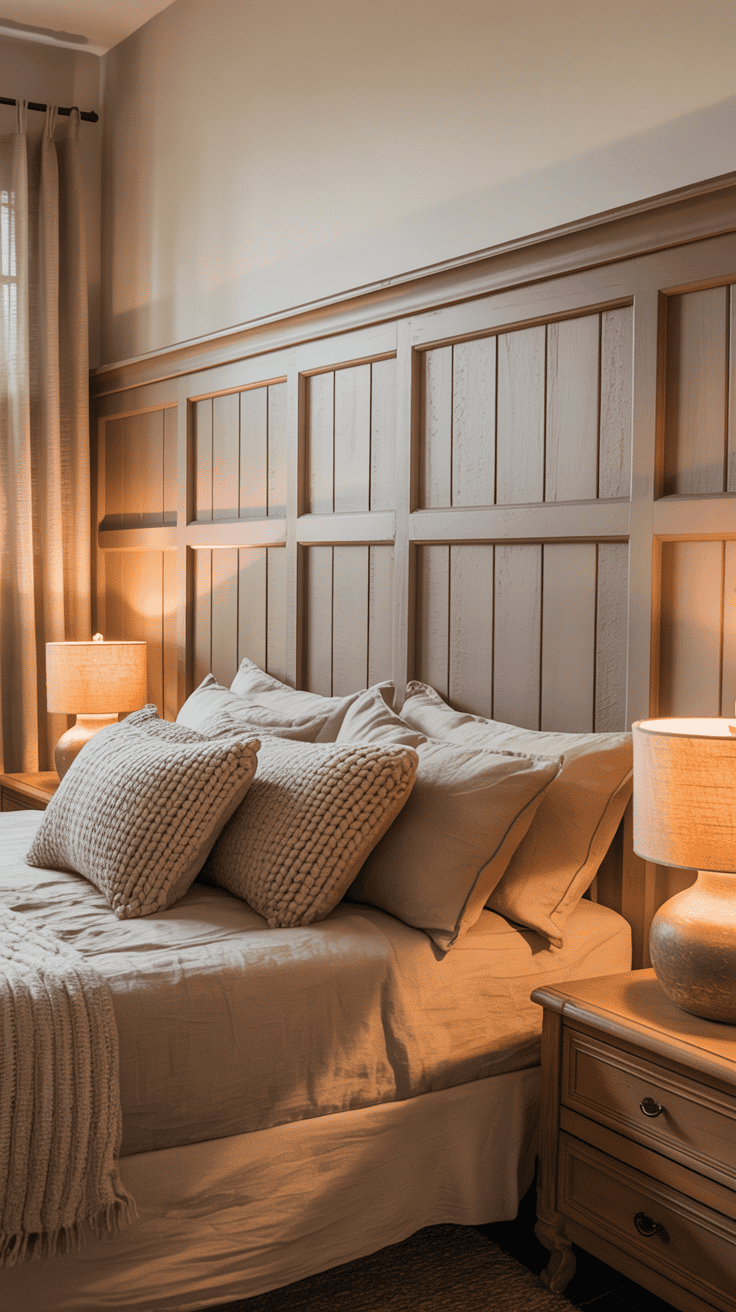
If full-height paneling feels too strong for your bedroom, stop the treatment partway up the wall. Half-wall paneling creates architectural interest around the bed while leaving the upper section calmer and more open.
Board and batten, beadboard, or simple molding can all work with this approach. Paint the lower section a warm neutral or muted country color and keep the upper wall lighter for gentle contrast.
The height should relate to the bed, headboard, ceiling, windows, and other architectural lines rather than following one universal measurement. Temporarily marking the proposed height on the wall can help you judge the proportions before committing.
Try This Combination
- Warm taupe lower paneling.
- Soft cream upper walls.
- Natural linen bedding.
- Vintage-style bedside tables.
- Simple framed artwork above.
Small space tip: Half-height paneling adds texture without making every inch of a small bedroom wall visually busy, giving you a useful middle ground between a plain painted wall and full-height millwork.
7. Use Vertical Wood Slats for a Modern Farmhouse Look
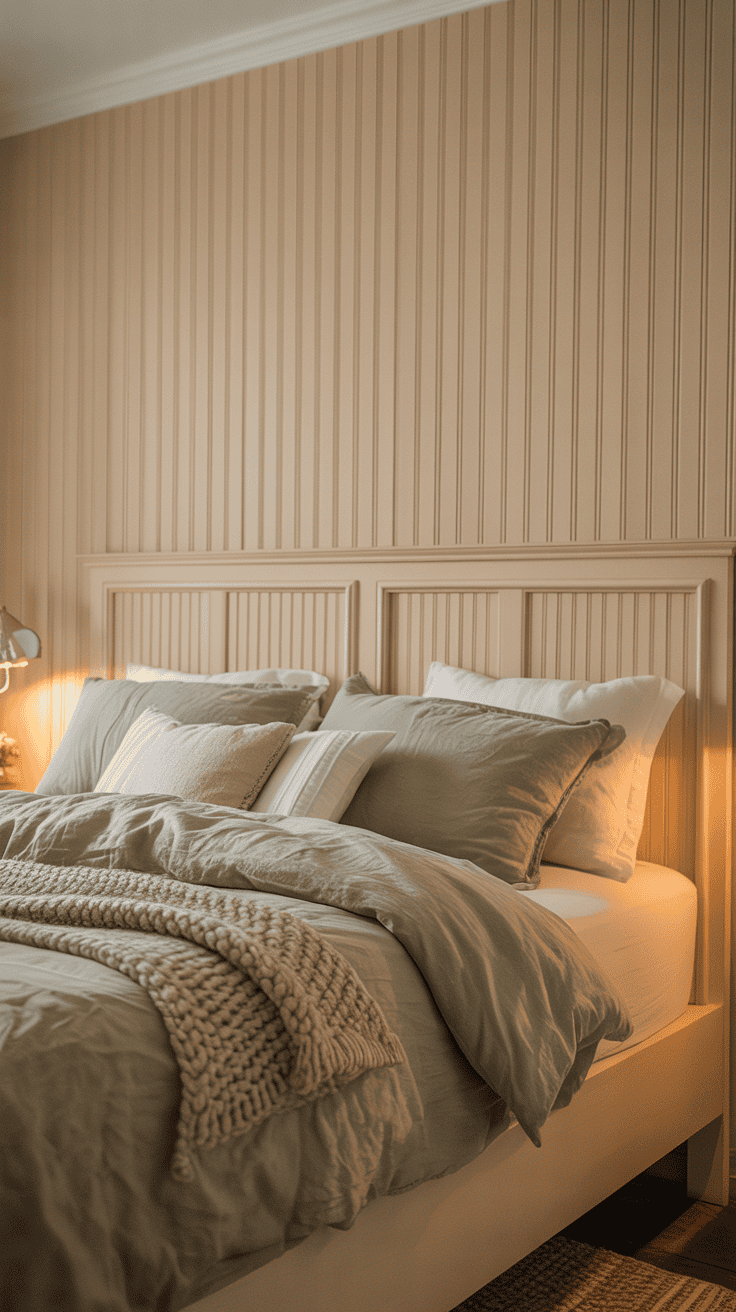
Vertical wood slats are a good choice if you like farmhouse warmth but want something cleaner than traditional shiplap. The upright lines draw the eye upward, while the natural wood introduces texture without making the bedroom feel overly rustic.
Keep the spacing consistent and choose a wood tone that works with the flooring and existing furniture. Pale oak creates a softer Scandinavian-farmhouse feel, while walnut or darker timber gives the bedroom more contrast and depth.
You don’t necessarily need to cover every inch of the wall. A slatted section centered behind the bed can create a strong focal point while reducing the amount of material required.
Pair Wood Slats With
- Simple cream or white bedding.
- Black or aged metal lighting.
- Warm neutral walls.
- Minimal artwork.
Designer detail: Let the slatted wall provide most of the decoration. Too many pictures and accessories can hide the texture you worked so hard to create.
8. Try a Soft Greige Board and Batten Wall
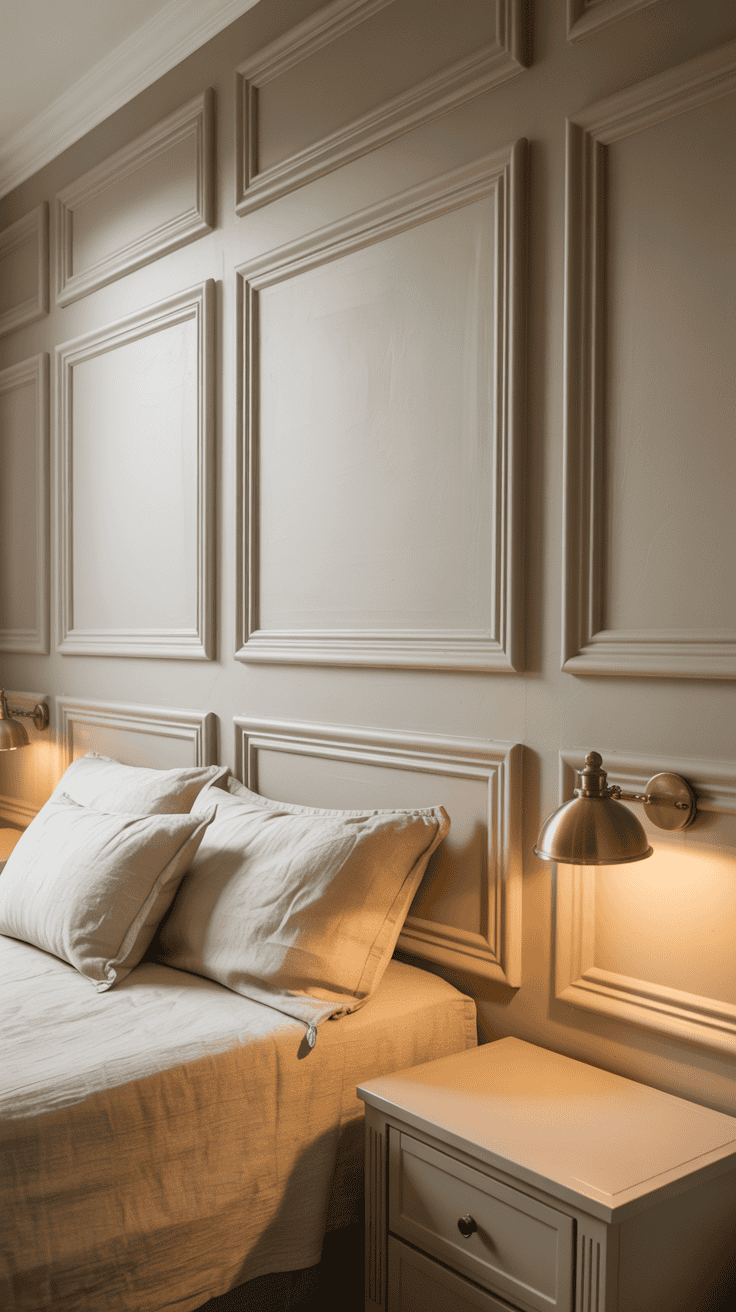
Greige is particularly useful in farmhouse bedrooms because it combines the softness of beige with just enough gray to keep the room feeling fresh. Add board and batten, and a simple neutral wall suddenly has far more architectural presence.
This is a lovely option if white farmhouse interiors feel a little too stark but you don’t want a noticeably colorful feature wall. Mushroom, putty, taupe, and warm greige all work beautifully with natural wood and creamy textiles.
For a quieter finish, paint the battens and wall the same color. The changing light across the raised trim creates enough contrast without requiring a second paint shade.
Warm Up Greige With
- Natural timber furniture.
- Oatmeal and cream bedding.
- Aged brass details.
- Woven or linen textures.
Most timeless option: Tonal greige paneling gives you farmhouse character without relying on a strong color or decorative theme, making it easy to restyle later.
9. Create a Reclaimed Wood Look
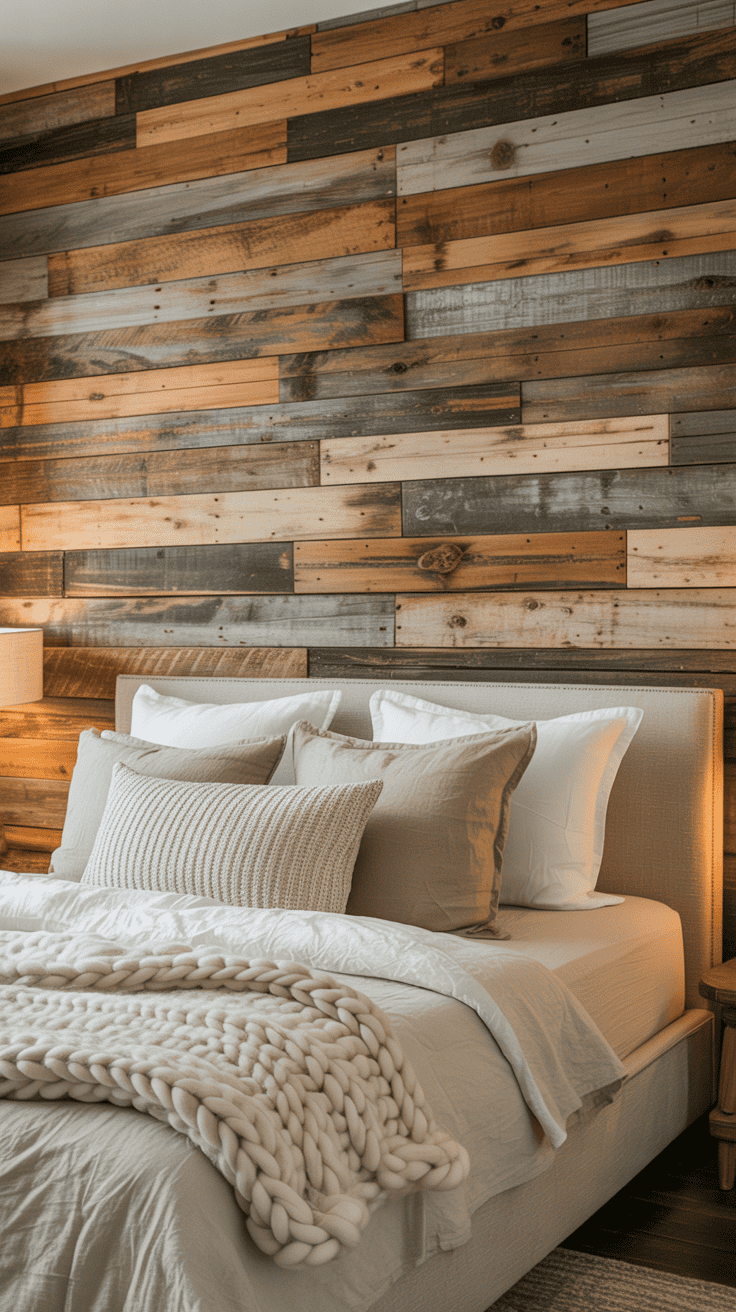
A reclaimed-look wood wall brings instant age and texture to a bedroom, making it particularly effective if the rest of the space is fairly new or plain. Variations in grain and tone create the imperfect, collected quality that farmhouse interiors do so well.
The wall doesn’t need to look rough or heavily distressed. Subtle variation often feels more convincing and is easier to combine with modern bedding and furniture. If you’re using genuine reclaimed timber, make sure it is suitable, clean, dry, and properly prepared for interior use.
Keep the bed relatively simple so the timber remains the main feature. Cream linen, a softly textured quilt, and restrained bedside furniture are usually enough.
Keep the Room Balanced With
- Warm white or cream walls elsewhere.
- Simple neutral bedding.
- Minimal additional distressed finishes.
- Soft rugs and woven textiles.
Why it works: The natural variation of the wood creates plenty of visual interest on its own, allowing the rest of the farmhouse bedroom to stay beautifully simple.
10. Frame the Bed With Picture-Frame Molding
Picture-frame molding offers a more refined interpretation of farmhouse style. Instead of obvious rustic texture, it adds subtle architectural detail that works beautifully in country, cottage, transitional, and modern farmhouse bedrooms.
Paint the molding and wall in one color for a calm, built-in appearance. Soft taupe, warm white, mushroom, dusty green, and muted gray are all easy choices that allow the shadows around the trim to create the detail.
Plan the molding around the width and height of the bed rather than dividing the wall into arbitrary boxes. The arrangement should visually frame the furniture and work around outlets, switches, windows, and existing trim.
For a Polished Farmhouse Look
- Keep molding proportions simple.
- Use one paint color across the entire wall.
- Add traditional bedside lamps.
- Choose linen or cotton bedding.
Creates this effect: Simple molding gives a plain bedroom the feeling of original architectural detail without requiring a heavily rustic treatment.
11. Combine Wallpaper With Lower Wall Paneling
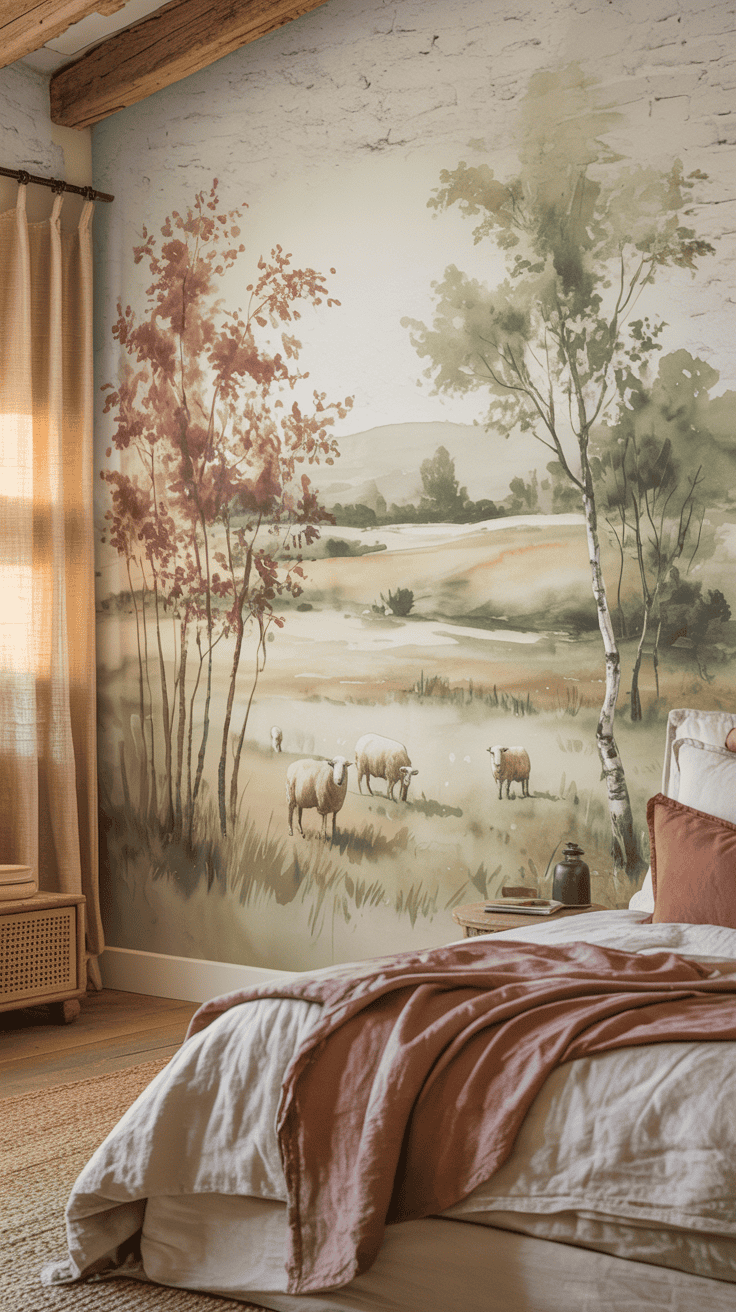
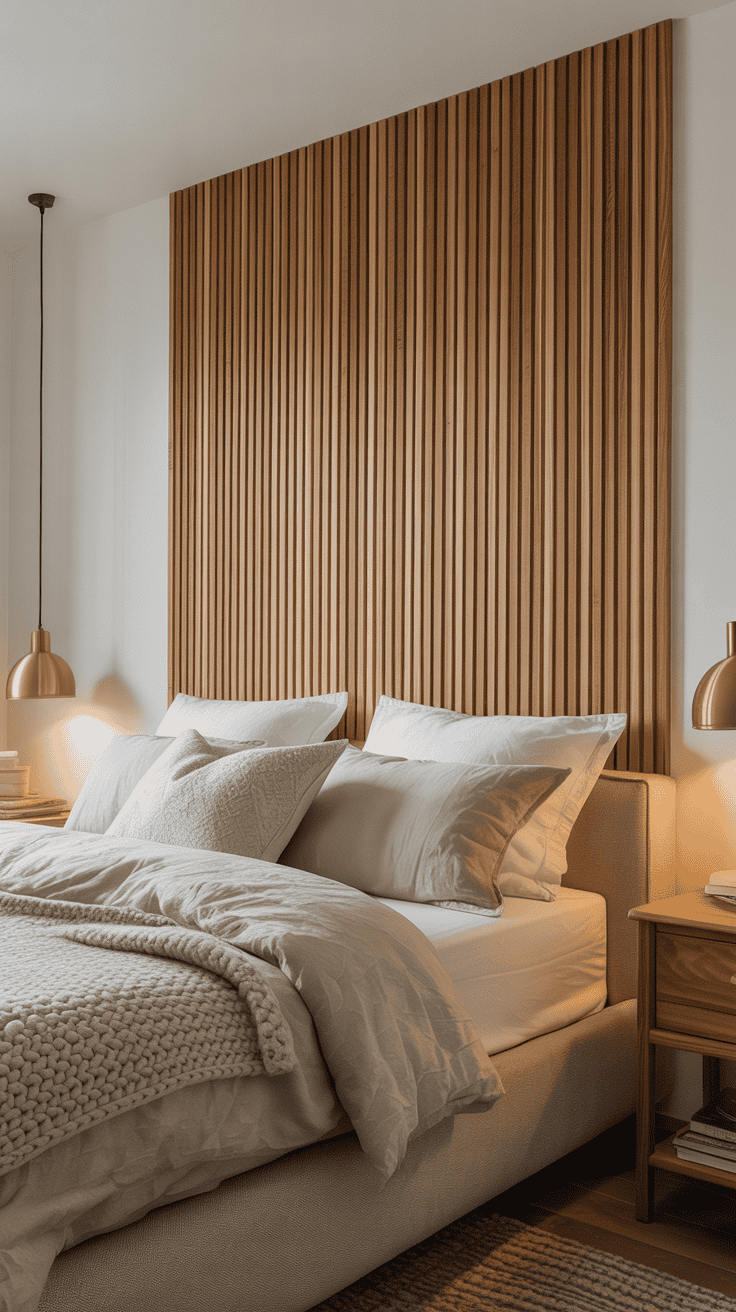
If you love pattern but worry that a full wallpapered wall might feel too busy, combine wallpaper on the upper section with simple paneling below. The paneling grounds the design while the wallpaper introduces the softer, more decorative side of farmhouse style.
This works especially well with small florals, botanical prints, subtle stripes, or traditional country patterns. Choose a paneling color that appears somewhere in the wallpaper so the two sections feel connected.
Keep the bed linens relatively restrained if the wallpaper has plenty of detail. You can repeat one small motif or color in a cushion or throw without matching the entire bedding set to the wall.
Try This Combination
- Muted floral wallpaper above.
- Warm white or sage paneling below.
- Cream bedding.
- Natural wood bedside furniture.
Small space tip: Keeping the busier pattern above the paneling can give a compact bedroom character while the simpler lower section prevents the wall from feeling overwhelmingly patterned.
12. Use a Warm White Textured Wall for Subtle Farmhouse Style
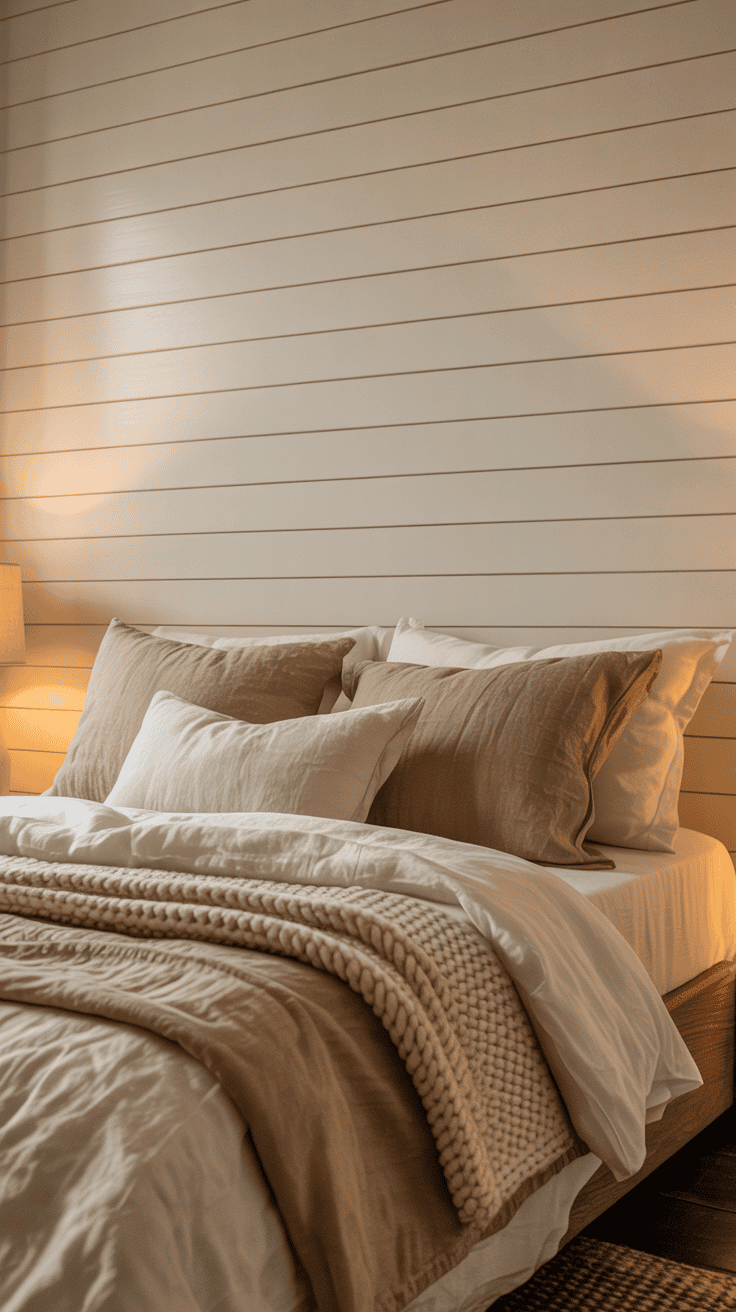
Not every farmhouse accent wall needs obvious boards, bold paint, or patterned wallpaper. A warm white wall with subtle texture can create a quieter focal point that still gives the bedroom depth and character.
The texture might come from simple panel detailing, a suitable textured wall finish, or another decorative treatment designed for interior walls. The goal is to create gentle variation that becomes more noticeable as natural and artificial light moves across the surface.
This approach works particularly well if you want the bedroom to feel calm and neutral while still avoiding completely flat white walls. Layer the room with linen, timber, woven textures, and soft neutral colors to complete the look.
Layer a Neutral Wall With
- Natural linen bedding.
- Warm wood furniture.
- Woven baskets or rugs.
- Soft black, brass, or aged metal accents.
Most understated option: If you love farmhouse warmth but not obvious farmhouse motifs, subtle texture and natural materials can create the feeling without making the room look themed.
Which Farmhouse Accent Wall Is Best for Your Bedroom?
The best treatment depends on how much texture, color, and architectural detail your bedroom already has. Start by deciding whether you want the wall to feel rustic, polished, romantic, or simply a little more interesting.
- For classic farmhouse style: Choose warm white shiplap.
- For modern farmhouse: Try board and batten in sage, greige, or another muted shade.
- For rustic warmth: Use natural or reclaimed-look wood.
- For romantic country style: Choose vintage floral or botanical wallpaper.
- For subtle architecture: Try picture-frame molding or half-wall paneling.
- For the easiest budget change: Use a deeper farmhouse-inspired paint color behind the bed.
You Might Also Like
How to Choose the Right Accent Wall Color
Farmhouse colors tend to work best when they feel slightly softened rather than extremely bright or saturated. Warm undertones also help create the relaxed, comfortable atmosphere associated with country interiors.
- Warm white and cream: Light, versatile, and easy to pair with timber.
- Sage and olive: Bring a gentle connection to nature and work beautifully with neutral bedding.
- Greige and mushroom: Add depth without making the wall feel strongly colorful.
- Charcoal: Creates a moodier focal point and looks particularly striking with lighter textiles.
- Muted navy: Gives the bedroom depth while still working with traditional farmhouse materials.
- Earthy brown: Creates a warm, cocooning look when balanced with cream and natural textures.
Before you paint: Sample your chosen color directly in the bedroom and look at it during the morning, afternoon, and evening. Natural light, flooring, furniture, and artificial lighting can all change the way a color appears.
Farmhouse Accent Wall Ideas for Small Bedrooms
A small bedroom can still handle an accent wall beautifully. The trick is choosing a treatment that adds character without introducing so much contrast or detail that the wall begins to dominate the entire room.
- Keep the palette soft: Warm white, greige, sage, and muted taupe add interest without feeling too heavy.
- Use vertical lines: Board and batten or narrow vertical detailing can emphasize height.
- Consider half-wall paneling: It adds architectural character while leaving part of the wall visually open.
- Keep artwork restrained: If the wall already has paneling or pattern, it may not need much additional decoration.
- Use pattern strategically: A wallpapered bed wall can work well, but simpler bedding will help balance it.
- Repeat materials lightly: One or two wood or metal details elsewhere in the room are enough to connect the accent wall with the rest of the space.
Small space tip: An accent wall doesn’t need to be dramatic to work. In a compact bedroom, subtle molding or a slightly deeper version of the surrounding wall color can provide plenty of definition.
Common Farmhouse Accent Wall Mistakes to Avoid
A farmhouse accent wall should feel like part of the bedroom rather than a separate decorating project. A few simple planning decisions can make the finished wall look considerably more intentional.
- Adding too many farmhouse elements: Shiplap, distressed furniture, signs, galvanized metal, checks, and rustic accessories don’t all need to appear in the same bedroom.
- Ignoring the proportions of the bed: Panel spacing, molding, and painted shapes should relate visually to the furniture in front of them.
- Choosing materials only for appearance: Consider the wall construction, product weight, moisture behavior, installation method, and manufacturer guidance before fixing materials to the wall.
- Using a stark white by default: Warm whites and creams often sit more naturally with timber, linen, and other farmhouse materials.
- Overdecorating the finished wall: Paneling, timber, or wallpaper may already provide enough detail without a large collection of signs and artwork.
- Forgetting the lighting: A beautiful wall can disappear after dark if the bedroom relies on one harsh overhead light.
- Skipping the planning stage: Mark panel heights, molding layouts, or painted shapes before installation so you can see how they relate to the bed and surrounding architecture.
An Easy Farmhouse Accent Wall Formula
If you’re unsure where to begin, keep the wall itself simple and let the rest of the farmhouse character come from materials and textiles.
- Choose the wall that naturally anchors the bed.
- Pick one main treatment: paint, paneling, timber, molding, or wallpaper.
- Choose a warm, muted color that works with the flooring and existing furniture.
- Keep the bedding relatively simple if the wall has strong pattern or texture.
- Repeat one material or color from the wall elsewhere in the room.
- Finish with warm lighting and a few natural textures rather than lots of themed accessories.
Best rule to remember: The accent wall should support the bed, not compete with it. If the wall treatment is bold, keep the surrounding decor quieter; if the wall is subtle, you have more freedom to layer the room.
Final Thoughts
A farmhouse accent wall can transform a plain bedroom without requiring a complete makeover. Shiplap and reclaimed-look wood bring rustic warmth, board and batten adds cleaner architectural detail, while wallpaper and molding can create a softer country-inspired finish.
The most timeless farmhouse bedrooms usually mix old and new rather than trying to make every detail look rustic. Choose one wall treatment you genuinely love, then surround it with warm wood, relaxed textiles, muted colors, and simple furniture.
When the accent wall feels connected to the architecture and the rest of the bedroom, it becomes more than a decorative feature. It gives the whole room a focal point and that comfortable, collected character that makes farmhouse style so inviting.
Accent Wall Decor
Discover stylish finishing touches for creating a standout accent wall, from mirrors and wall art to shelves, decorative panels, lighting, and beautiful statement pieces.
Shop Accent Wall Decor