

10 Clever Accent Wall Ideas for a Narrow Hallway
A narrow hallway can be one of the trickiest spaces to decorate. There isn’t much room for furniture, anything too bulky becomes an obstacle, and leaving the walls completely bare can make the whole area feel more like a passageway than part of your home.
This post includes affiliate links. If you make a purchase through them, I may earn a small commission at no extra cost to you. More details here.
That’s exactly where an accent wall can work beautifully. Instead of adding things that take up precious floor space, you can use paint, wallpaper, molding, paneling, or subtle texture to give the hallway character without making it physically narrower.
The trick is choosing a treatment that works with the proportions of the space. These narrow hallway accent wall ideas range from simple paint updates to architectural details, with plenty of options for small hallways where every inch counts.
Quick Guide: Choose the Right Hallway Accent Wall
- Very narrow hallway: Try paint, subtle wallpaper, or low-profile molding that doesn’t project far from the wall.
- Dark hallway: Use warm light colors, mirrors, and good lighting to keep the space inviting.
- Long hallway: Consider emphasizing the end wall to create a destination and visually shorten the corridor.
- Want an expensive look: Try picture-frame molding or simple wall paneling painted in one sophisticated color.
- Budget update: A carefully chosen paint color can create a focal point without adding materials or taking up space.
- Need more personality: Use wallpaper or a small gallery arrangement rather than filling both sides of the hallway with decor.
Before choosing your feature wall, look at the hallway from both directions. Doorways, stairs, radiators, switches, lighting, and the view from adjoining rooms can all affect which wall makes the most natural focal point.
1. Turn the End Wall Into a Bold Focal Point

If your hallway feels exceptionally long and narrow, you don’t necessarily need to decorate one of the long side walls. The smaller wall at the very end can be a much smarter place to create your focal point.
A deeper color draws attention toward the end of the hallway and gives the eye somewhere intentional to land. Muted green, earthy blue, warm terracotta, charcoal, or a rich neutral can all work depending on the colors used elsewhere in your home.
Add one appropriately scaled piece of artwork, a wall light where suitable, or another simple feature and leave the longer walls relatively calm. It’s a small change that can completely alter the experience of walking through the space.
Good End-Wall Colors
- Muted olive green.
- Warm terracotta.
- Deep blue-gray.
- Chocolate brown.
- Soft charcoal.
Small space tip: Concentrating the strongest color on the end wall gives you impact without surrounding the entire narrow passage in a dark shade.
2. Add Slim Picture-Frame Molding

Picture-frame molding is one of the easiest ways to make a plain hallway look more architectural. Because the trim can be relatively shallow, it provides visual depth without requiring the floor space of a console table or storage cabinet.
For a sophisticated look, paint the molding and the wall behind it the same color. The detail then appears through light and shadow rather than strong contrast, which can be particularly effective in a narrow space.
Plan the rectangles around doorways, switches, outlets, and other permanent features. Consistent proportions will make a bigger difference to the finished result than adding lots of decorative pieces afterward.
Keep the Molding Simple
- Use a relatively slim trim profile.
- Repeat panel proportions where possible.
- Paint the trim and wall one color.
- Allow the molding itself to provide decoration.
Why designers love it: Molding creates the impression of custom architectural detail while keeping the hallway floor completely clear.
3. Use Wallpaper on Just One Hallway Wall

Wallpaper can give a narrow hallway personality without introducing any bulky decor. The key is deciding how much pattern the space needs rather than automatically papering every available wall.
A botanical, subtle geometric, stripe, or softly textured design on one wall can provide plenty of interest while the opposite wall remains quieter. If the hallway connects several rooms, choose a pattern containing colors that relate to the surrounding spaces so the transition feels intentional.
Always test a sample in the hallway itself before committing. Patterns and colors can look surprisingly different in corridors where natural light is limited.
Wallpaper Styles to Try
- Soft botanical prints.
- Delicate stripes.
- Small-scale geometrics.
- Linen-look textures.
- Muted vintage-inspired patterns.
Creates this effect: Pattern turns a functional walkway into a decorated part of the home without taking a single inch from the usable floor area.
4. Paint the Lower Half of the Wall a Deeper Color

A two-tone paint treatment is a clever option when you want more character but don’t want one dark color covering the entire hallway. Use a deeper shade on the lower section and a lighter related tone above to create definition while keeping the upper part visually open.
The dividing line can be completely painted or finished with an appropriately installed slim molding. Either approach gives a plain wall a stronger sense of structure without adding bulky decoration.
Don’t assume the color division has to sit at one particular universal height. Consider the ceiling, door frames, existing trim, switches, and sightlines into adjoining rooms before deciding where the change should happen.
Two-Tone Combinations to Try
- Sage green with warm white.
- Dusty blue with soft cream.
- Mushroom with pale beige.
- Warm taupe with ivory.
Budget-friendly version: Use paint alone to create the division and skip additional trim for a simple weekend transformation.
5. Create a Vertical Board and Batten Accent Wall

Vertical board and batten can give a narrow hallway a stronger architectural presence while drawing the eye upward. This makes it particularly appealing if the corridor feels plain, flat, or a little box-like.
For a narrow space, keep the overall treatment relatively restrained. Painting the battens and wall the same color prevents lots of contrasting vertical lines from making the hallway unnecessarily busy.
Before adding trim, consider how much it will project from the wall and how it interacts with door casings, baseboards, switches, radiators, and the usable width of the passage. Hallways need to remain comfortable and practical first.
For a Cleaner Look
- Keep batten spacing consistent.
- Use one paint color across the treatment.
- Limit additional wall decorations.
- Coordinate the color with adjoining rooms.
Designer detail: Continue the same paint color across the trim and background so the texture appears through shadow rather than obvious contrast. It creates architectural interest without making an already narrow hallway feel visually crowded.
6. Create a Gallery Wall That Follows the Hallway

A gallery wall is a clever way to turn a long blank hallway into something more personal without adding furniture. Artwork, photographs, sketches, and vintage prints can create a focal wall that naturally leads the eye through the space.
In a narrow hallway, restraint is particularly useful. Instead of filling every available inch, choose a consistent arrangement with enough breathing room around the frames. Matching frames create a cleaner look, while a carefully coordinated mix can feel more relaxed and collected.
Before making lots of holes, map out the arrangement with paper templates or another temporary method. This makes it much easier to check the overall composition from both ends of the hallway.
Gallery Wall Ideas
- Black-and-white family photographs.
- Vintage botanical prints.
- Simple landscape artwork.
- Architectural sketches.
- A coordinated collection of smaller prints.
Small space tip: Use relatively slim frames and avoid anything that projects significantly into the walkway, particularly in a very tight corridor.
7. Add Warmth With Vertical Wood Paneling

Wood can make a hallway feel warmer and more inviting, especially when the space is otherwise dominated by plain painted walls and hard flooring. Vertical timber detailing also draws attention upward, giving a simple corridor a stronger architectural feel.
You don’t necessarily need to cover the longest wall from beginning to end. A section of wood detailing near the entrance, around a recessed area, or on the end wall can provide enough warmth without making a narrow hallway feel overly enclosed.
Keep the opposite surfaces relatively simple and consider how the wood tone relates to the flooring, doors, and furniture visible from the hallway. Wall construction, material weight, installation requirements, and any applicable building requirements should also be considered.
Balance Wood Paneling With
- Warm white or cream walls.
- Simple ceiling lighting.
- Minimal artwork.
- A restrained neutral palette.
Why it works: Natural texture adds plenty of visual interest without requiring shelves, cabinets, or other pieces that would take up precious hallway space.
8. Use a Large Mirror as the Accent Feature

If your narrow hallway is also short on natural light, a large mirror can be more useful than adding another decorative surface treatment. It creates a focal point while reflecting light and views from elsewhere in the home.
An arched mirror can soften a hallway filled with rectangular doors and straight lines, while a simple rectangular design creates a cleaner contemporary look. Choose a frame that relates to other finishes already visible in the space.
Wall-mounted mirrors are usually more practical than leaning floor mirrors in a narrow passage. Make sure the mirror is appropriately secured for its weight, wall type, and fixing requirements.
Make the Mirror Feel Intentional
- Choose a generous but proportionate size.
- Position it where it can reflect useful light.
- Coordinate the frame with nearby finishes.
- Keep surrounding wall decor simple.
Easiest upgrade: One well-positioned mirror can provide both decoration and a greater sense of visual depth without requiring a full hallway makeover.
9. Color Drench One Section of the Hallway

Instead of creating a conventional accent wall, use color to define one section of the hallway. Painting the wall and related trim in the same shade can create a surprisingly sophisticated focal area, particularly around an alcove, doorway, or the far end of a long corridor.
Muted olive, dusty blue, warm taupe, deep beige, and earthy terracotta can all add character without feeling excessively bright. The exact effect will depend heavily on the hallway’s lighting, so always test the color in the actual space.
This approach works especially well if the rest of the hallway is relatively simple. Rather than introducing several competing features, the change in color becomes the architectural moment.
Colors to Consider
- Muted olive.
- Warm mushroom.
- Dusty blue.
- Soft terracotta.
- Deep warm beige.
Creates this effect: Color drenching can make an awkward section of hallway feel like a deliberate architectural zone rather than a leftover connecting space.
10. Combine Half-Wall Paneling With Wallpaper

If you want a hallway with more personality, combine two treatments rather than decorating the entire wall in one strong pattern. Simple paneling on the lower section with wallpaper above creates a layered look that works beautifully in traditional, cottage, farmhouse, and transitional homes.
The paneling gives the lower wall structure while the wallpaper introduces pattern higher up, where it can be enjoyed without visually filling the entire corridor. Choose related colors between the two finishes so the combination feels intentional.
This treatment can be particularly effective on one long hallway wall while the opposite side remains simpler. Plan the transition height around existing architectural features rather than assuming there is one correct measurement for every hallway.
Try This Combination
- Muted sage paneling with botanical wallpaper.
- Warm beige paneling with delicate stripes.
- Dusty blue paneling with a small floral print.
- Cream paneling with vintage-inspired wallpaper.
Most timeless option: Keep the lower paneling simple and choose wallpaper with a restrained palette so the two treatments complement rather than compete with each other.
You Might Also Like
Which Wall Should You Accent in a Narrow Hallway?

The best accent wall isn’t automatically the longest one. In a particularly narrow corridor, emphasizing the far end can sometimes be more effective because it creates a destination without adding visual weight along the entire passage.
- Long, narrow hallway: Consider the end wall as your main focal point.
- Short hallway: One side wall may provide enough room for wallpaper, molding, or artwork.
- Hallway with lots of doors: Use color or subtle molding to create cohesion rather than squeezing decor into every small section.
- Dark hallway: Consider a mirror or lighter textural treatment rather than relying entirely on a very dark accent wall.
- Hallway with an alcove: Treat the recess as a natural opportunity for a different color, wallpaper, or texture.
Best decision: Stand at the main entrance to the hallway and notice where your eye naturally lands. That wall or architectural feature is often the strongest candidate for an accent treatment.
How to Make a Narrow Hallway Feel Wider
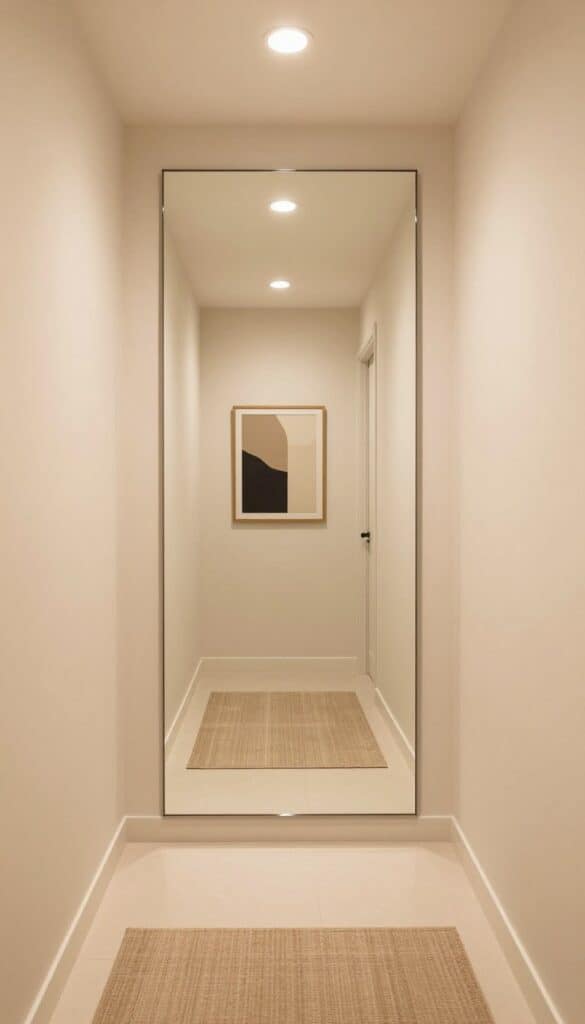
An accent wall can add personality, but the rest of the decorating decisions matter too. Keeping the physical walkway clear and reducing unnecessary visual clutter will usually do more for a narrow hallway than simply painting everything white.
- Keep floor space clear: Wall-based decorating is particularly useful where furniture would restrict circulation.
- Use mirrors strategically: Reflected light and views can create a greater sense of visual depth.
- Improve the lighting: A poorly lit corridor can feel more enclosed regardless of its paint color.
- Keep the palette connected: Repeating colors from adjoining rooms helps the hallway feel part of the wider home.
- Avoid oversized wall decor: Deep frames, shelves, and bulky objects can intrude into an already restricted passage.
- Preserve some empty wall: Not every surface needs artwork, molding, shelves, and a decorative feature at the same time.
Small space tip: If the hallway is extremely narrow, prioritize light, clear circulation, and one strong wall treatment rather than trying to decorate every available surface.
How to Make a Hallway Accent Wall Look More Expensive

A polished hallway doesn’t necessarily require expensive materials. Careful proportions, a restrained palette, and good finishing can make even relatively simple paint or molding treatments look much more considered.
- Repeat nearby finishes: Carry one or two colors or materials through from adjoining rooms.
- Get the proportions right: Carefully planned molding usually looks more convincing than adding lots of decorative trim.
- Choose fewer, larger decisions: One beautiful mirror or considered gallery arrangement often looks more polished than lots of tiny accessories.
- Coordinate the details: Lighting, frames, switches, and hardware can help tie the finished hallway together.
- Prepare the walls properly: Smooth surfaces and clean paint or wallpaper edges make inexpensive materials look considerably better.
- Use lighting deliberately: Warm, layered lighting can emphasize molding, texture, and color.
Designer detail: In a narrow hallway, simplicity can look surprisingly luxurious. One beautifully finished feature wall will often have more impact than several competing decorating ideas.
Common Narrow Hallway Accent Wall Mistakes

Hallways may be small, but they connect the rest of the home, so decorating decisions here can have a surprisingly big visual impact. Avoiding a few common mistakes can keep the finished space feeling intentional rather than overcrowded.
- Automatically choosing the longest wall: Sometimes the end wall creates a much stronger focal point.
- Adding too much physical depth: Bulky shelving, deep frames, and thick decorative features can interfere with circulation.
- Using too many competing patterns: Give a strong wallpaper or gallery wall quieter surroundings.
- Ignoring adjoining rooms: Hallway colors should have some relationship with the spaces visible from it.
- Forgetting the lighting: Always test paint and wallpaper under the hallway’s actual lighting conditions.
- Overdecorating both walls: A narrow corridor often feels calmer when one side is allowed to breathe.
- Ignoring practical clearance: Keep doors, stairs, switches, radiators, and the main walking route comfortably accessible.
An Easy Narrow Hallway Decorating Formula

If you’re staring at a completely blank corridor and don’t know where to begin, keep the first version simple. A narrow hallway rarely needs several different decorating ideas fighting for attention.
- Choose one wall or architectural area to emphasize.
- Pick one main treatment such as paint, molding, wallpaper, or wood.
- Keep the opposite wall relatively quiet.
- Add a mirror or a small amount of artwork if the space needs another layer.
- Use lighting to highlight the finished wall.
- Keep the floor and main walking route as clear as possible.
This gives the hallway enough personality to feel decorated while preserving the openness and easy circulation that matter most in a narrow space.
Final Thoughts

A narrow hallway doesn’t need more furniture to become interesting. In many cases, the walls themselves are the best decorating opportunity. Paint, wallpaper, molding, timber, artwork, or even one beautifully positioned mirror can give the space a focal point without sacrificing valuable floor area.
The most successful approach is usually to choose one strong idea and let it breathe. Keep the walking route comfortable, consider the views into adjoining rooms, and use color and texture strategically.
With a little restraint and one well-chosen focal feature, that forgotten little corridor can quickly start to feel like a deliberate part of the home rather than somewhere you simply hurry through on the way to another room.
Accent Wall Decor
Discover stylish finishing touches for creating a standout accent wall, from mirrors and wall art to shelves, decorative panels, lighting, and beautiful statement pieces.
Shop Accent Wall Decor