
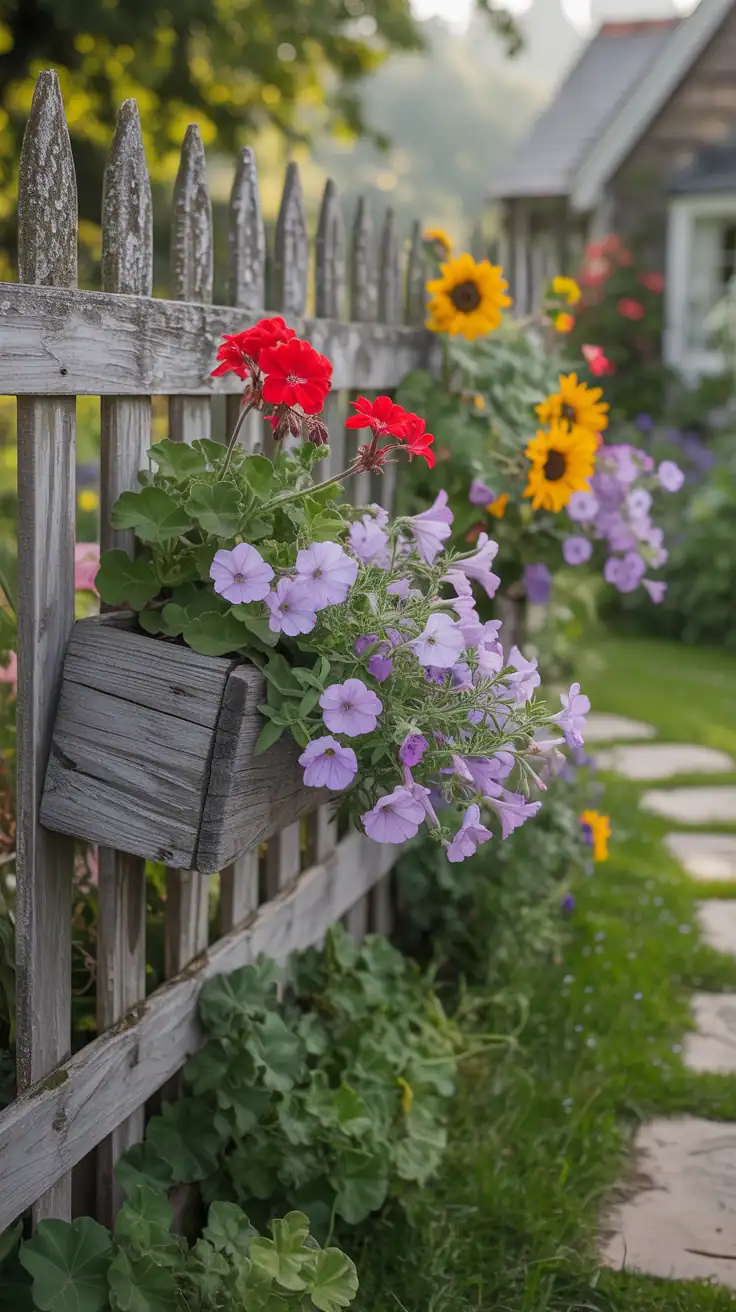
25 Enchanting English Cottage Garden Ideas for Your Dream Space
English cottage gardens have that lovely, slightly wild charm that makes an outdoor space feel instantly softer. Think tumbling flowers, winding paths, weathered stone, climbing roses, buzzing bees, and corners that look as though they have been quietly blooming for decades.
This post includes affiliate links. If you make a purchase through them, I may earn a small commission at no extra cost to you. More details here.
The beauty of this style is that it does not need to be perfect. In fact, perfection would rather ruin the whole thing. Cottage gardens look best when they feel layered, relaxed, romantic, and a tiny bit untamed.
Whether you have a large garden, a narrow side path, a patio, or a small sunny corner, these English cottage garden ideas will help you create a space that feels charming, peaceful, and full of life.
Quick Guide to Creating an English Cottage Garden
If you want the cottage garden look without overthinking every petal, start with a few key ingredients. Mix flowers with herbs, soften hard edges with trailing plants, add curved pathways, and bring in natural textures like stone, wood, gravel, terracotta, and aged metal.
- For small spaces: use containers, trellises, herbs, and compact seating corners.
- For instant charm: add climbing roses, rustic fencing, birdhouses, or a vintage bench.
- For low maintenance: choose native wildflowers, lavender, hardy perennials, and gravel paths.
- For a romantic look: layer soft pinks, purples, creams, and plenty of leafy texture.
- For year round interest: mix spring bulbs, summer flowers, autumn displays, and evergreen structure.
If you want more plant ideas that return year after year, these English cottage garden perennials are a helpful companion for building a softer, fuller garden over time.
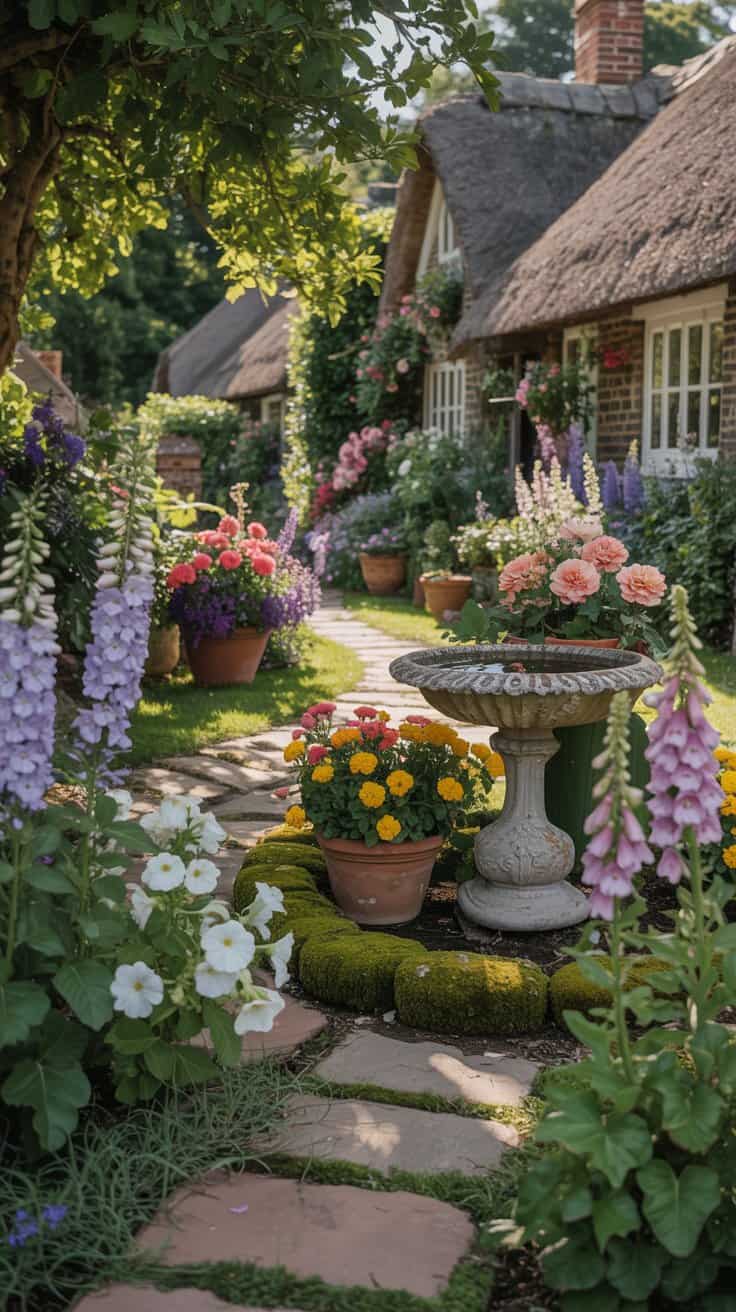
1. Add a Water Feature for a Peaceful Cottage Garden Corner
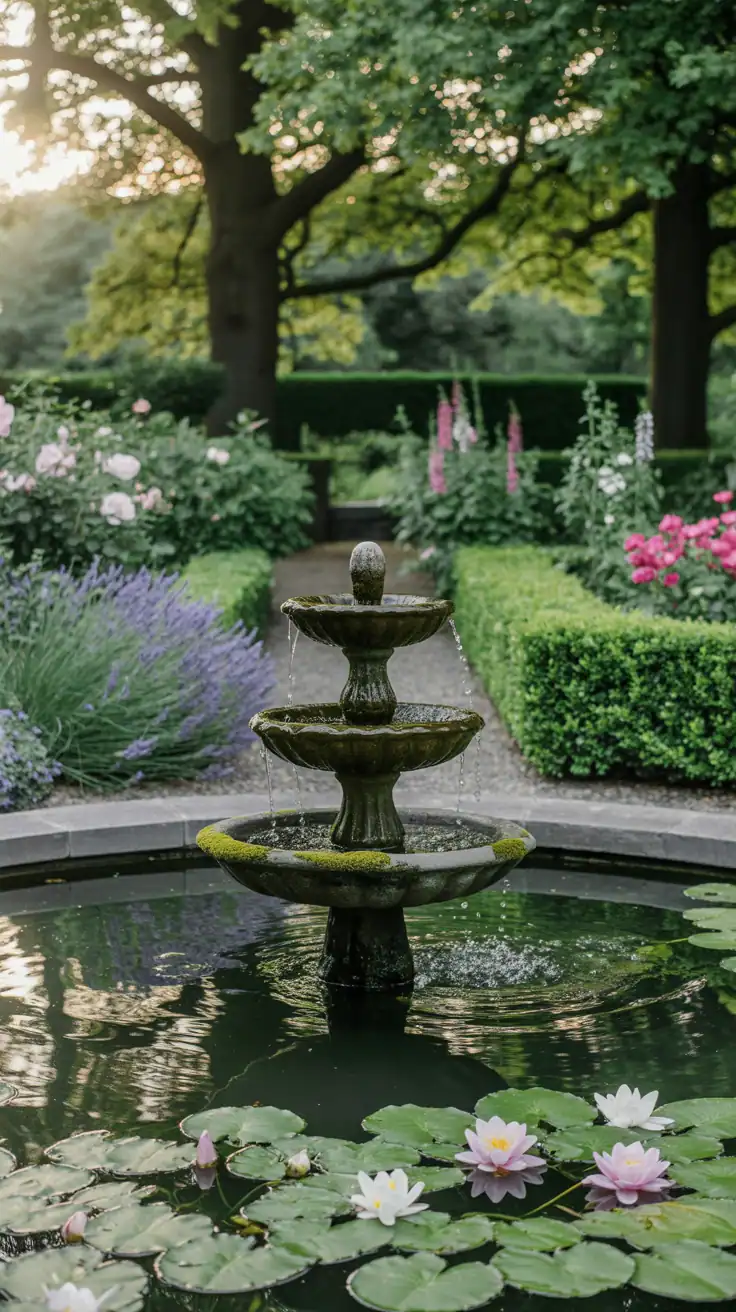
A small pond, fountain, or birdbath can completely change the mood of an English cottage garden. The gentle sound of water adds calm, while the surrounding flowers and greenery make the whole space feel more romantic and settled.
You do not need a grand garden pond to get the effect. Even a compact fountain tucked beside ferns, hostas, lavender, or trailing ivy can create a peaceful little retreat. It also encourages birds, bees, and other garden visitors, which is always a bonus unless you are trying to host a very private tea moment.
- Best placement: near a seating area, path, or shaded corner.
- Designer detail: surround the base with soft foliage so it looks naturally nestled into the garden.
- Small space tip: use a tabletop fountain or stone birdbath for the same calming effect.
2. Create a Wildflower Meadow for Natural Cottage Beauty
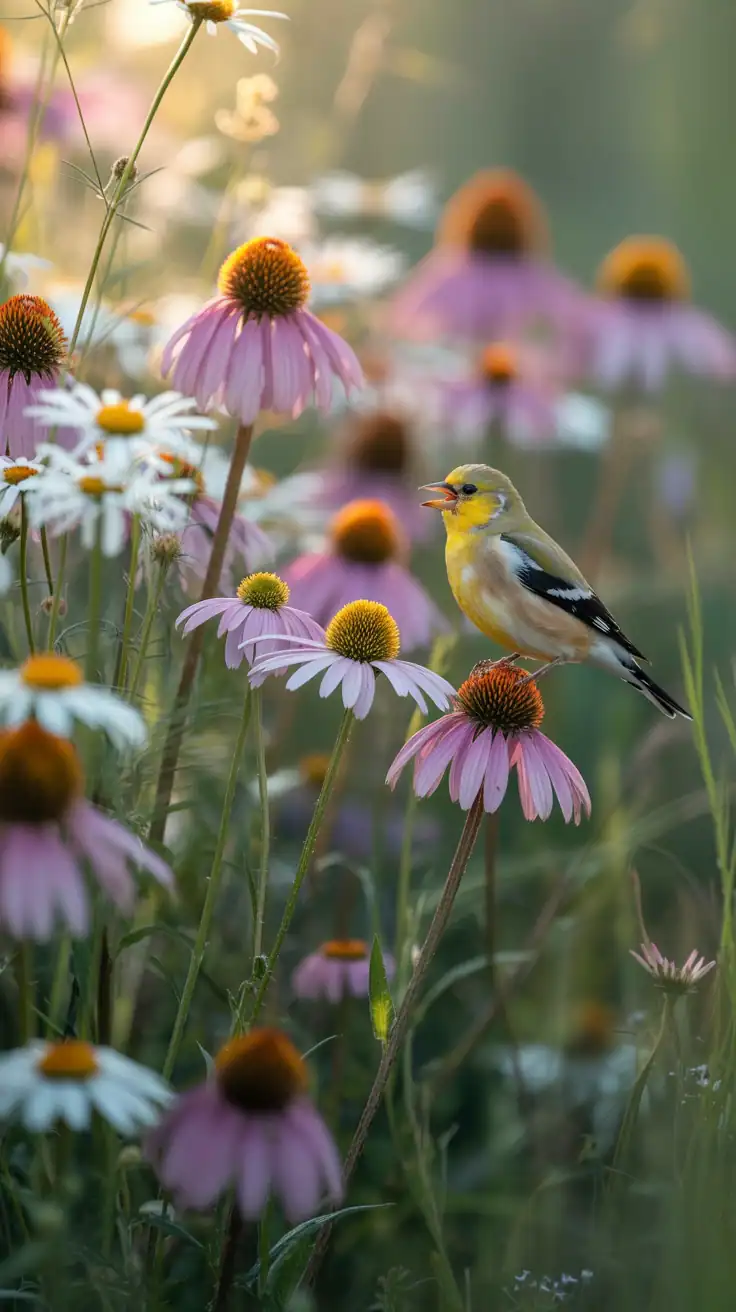
Wildflower meadows bring movement, color, and that beautifully relaxed cottage garden look. Daisies, coneflowers, poppies, cornflowers, and native meadow flowers all work together to create a garden that feels full of life without looking overly arranged.
This is a wonderful option if you want something pretty but not too polished. Choose a sunny patch, prepare the soil, and sow a mix of flowers that suit your climate. Once established, wildflowers often need less fuss than formal flower beds, which is excellent news for anyone who enjoys gardening but not constant gardening guilt.
- Creates this effect: soft, natural, pollinator friendly charm.
- Best for: sunny borders, lawn edges, and unused garden patches.
- Try this with: mown paths through the meadow for a romantic walkway effect.
3. Design a Stone Pathway Lined With Flowers
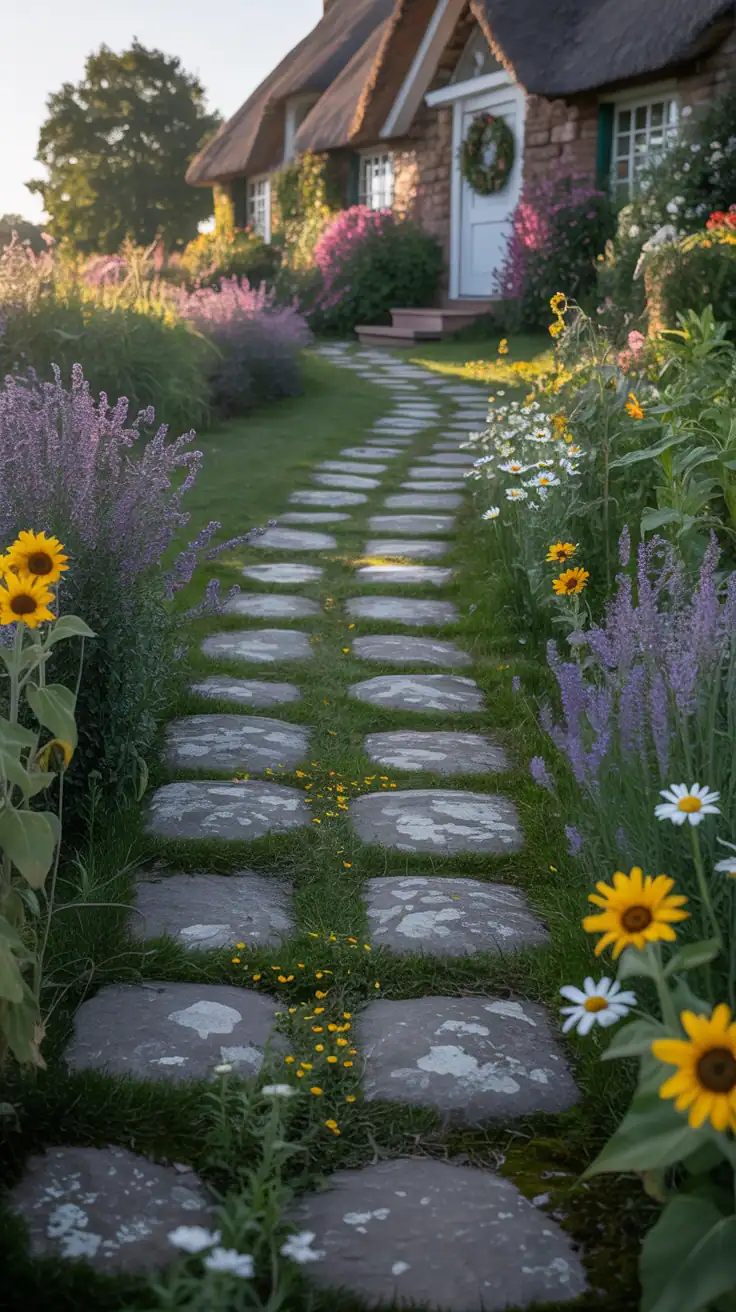
A winding stone pathway is one of the easiest ways to give your garden that storybook cottage feeling. It naturally invites people to wander, pause, and admire the flowers instead of marching across the lawn like they are late for a meeting.
Line the path with lavender, foxgloves, daisies, geraniums, or soft ornamental grasses. The more the planting spills gently over the edges, the more charming it feels. This look works beautifully in both large gardens and narrow side paths.
- Most timeless option: irregular stone slabs with soft planting between the gaps.
- Small space tip: use stepping stones through gravel or mulch.
- Style note: avoid making the path too straight if you want a relaxed cottage feel.
4. Grow Climbing Roses Over a Romantic Arbor
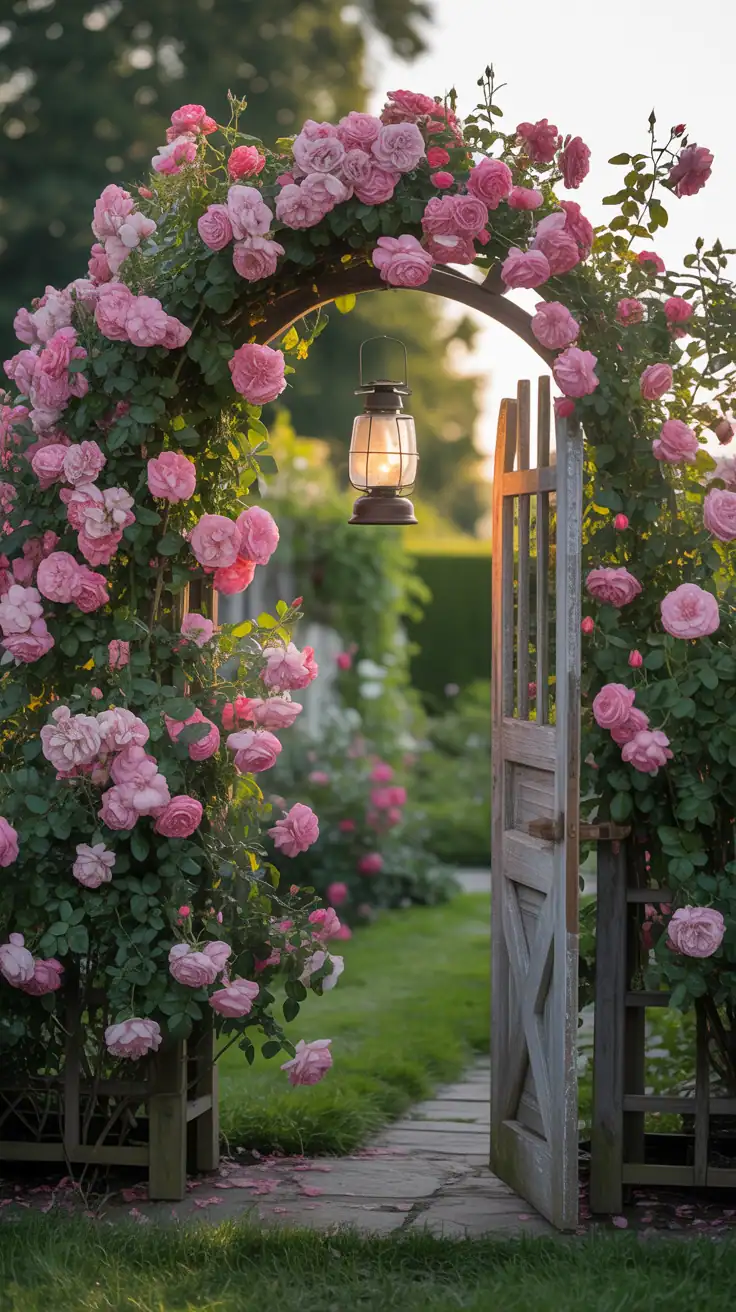
Few things say English cottage garden quite like a rose covered arbor. It creates a beautiful entrance, frames a path, and adds height without making the garden feel formal or stiff.
Choose climbing roses in soft pink, cream, apricot, or deep red depending on your garden palette. Add a lantern, a wooden gate, or low planting at the base to make the entrance feel even more magical. It is romantic, classic, and very hard not to photograph.
For more romantic planting inspiration, these English cottage garden ideas with lavender and roses pair beautifully with arbors, trellises, and soft cottage borders.
- Why designers love it: it adds height, scent, color, and structure in one feature.
- Best placement: at a garden entrance, over a path, or beside a seating area.
- Pair it with: lavender, catmint, or soft cottage perennials around the base.
5. Add Vintage Garden Furniture for a Relaxed Sitting Spot
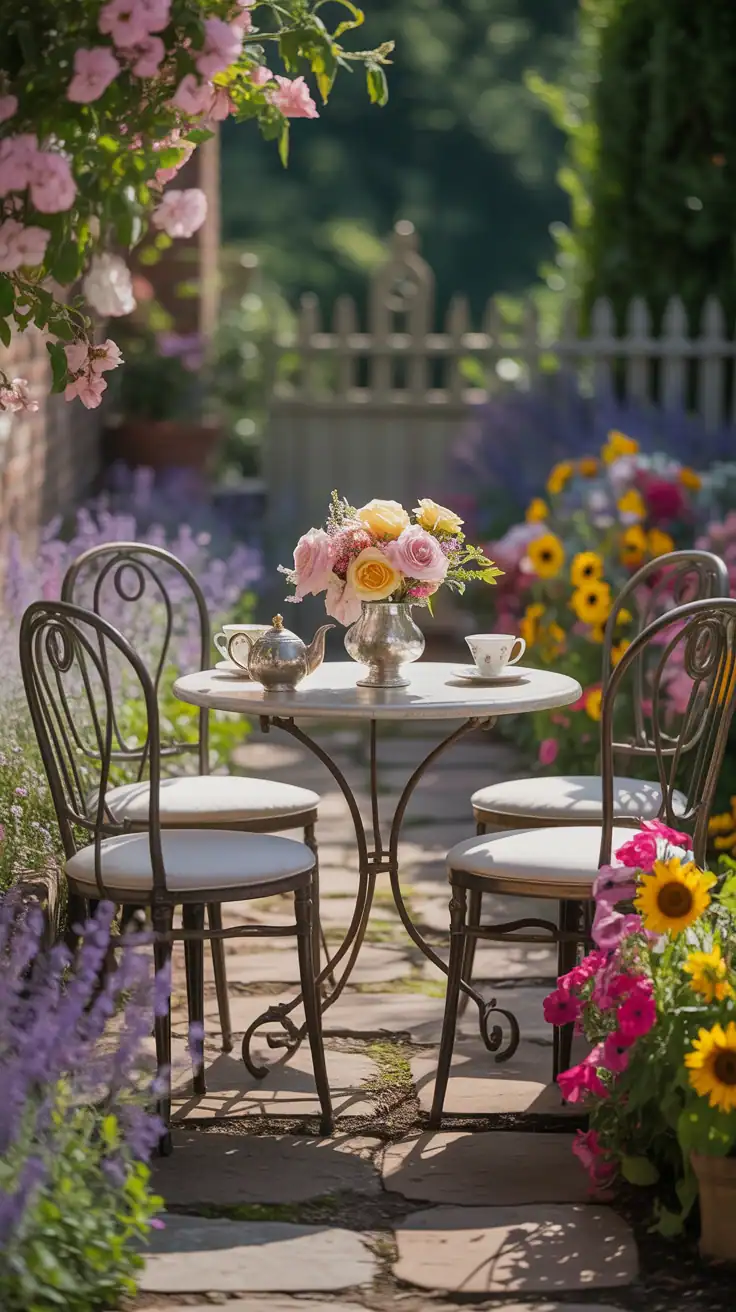
A cottage garden should have somewhere to sit and admire all your hard work, preferably with tea, coffee, or a book you may or may not actually read. Vintage style garden furniture helps turn flower filled corners into inviting outdoor rooms.
Look for wrought iron chairs, weathered wooden benches, small bistro tables, or painted metal pieces. Slightly aged finishes work beautifully because cottage gardens are not trying to look brand new. They are trying to look loved.
- Easiest upgrade: add a small bistro set beside a flower border.
- Looks beautiful with: climbing roses, terracotta pots, and soft cushions.
- Budget friendly version: repaint an old chair or bench in white, sage, or soft blue.
6. Mix Vegetables and Flowers in a Cottage Style Patch
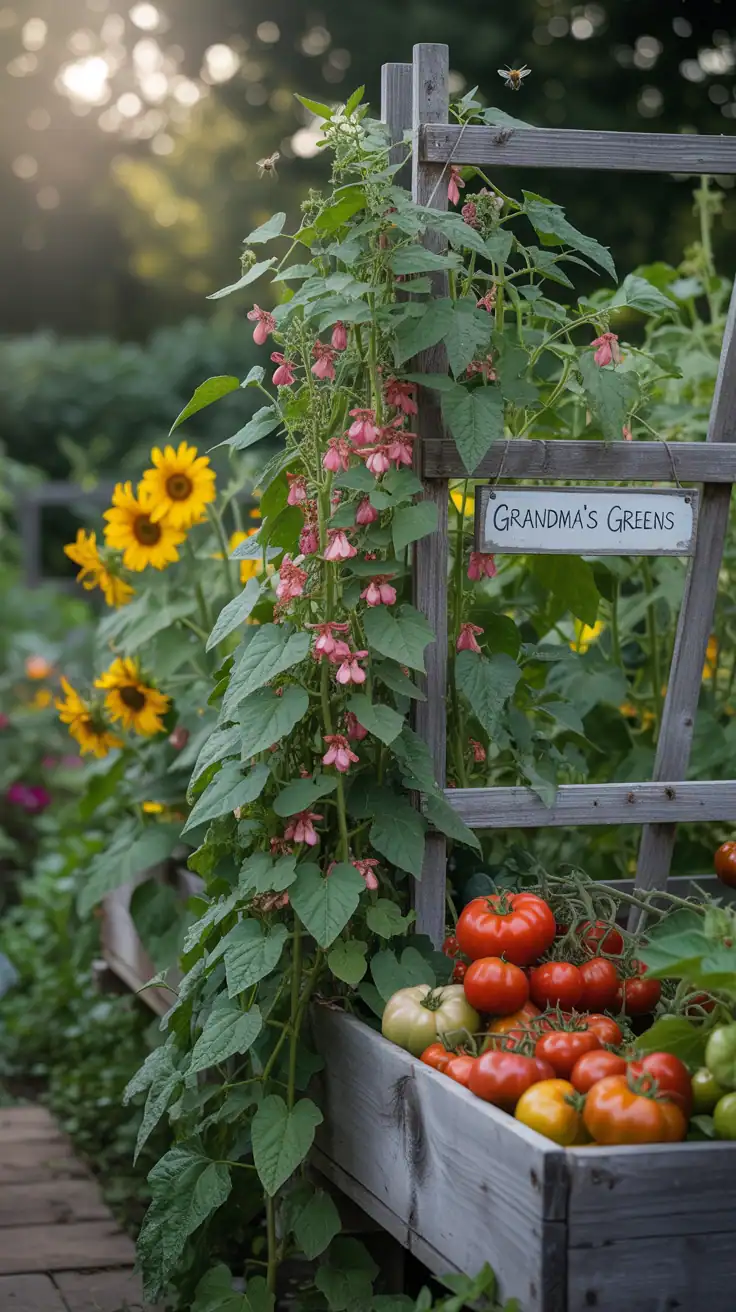
A cottage vegetable patch does not have to look purely practical. In fact, it looks far more charming when vegetables, herbs, flowers, and climbing plants all mingle together in a cheerful, productive jumble.
Try mixing lettuces, beans, herbs, marigolds, nasturtiums, and calendula in raised beds or informal rows. Add wooden trellises for height and a few flowers for pollinators. Suddenly your vegetable patch looks less like a chore zone and more like a little kitchen garden dream.
- Practical detail: keep herbs and salad greens close to the kitchen if possible.
- Try this with: marigolds, nasturtiums, and calendula for color and pollinator appeal.
- Small space tip: grow herbs, tomatoes, and edible flowers in containers.
7. Plant Lush Flower Borders Along Fences
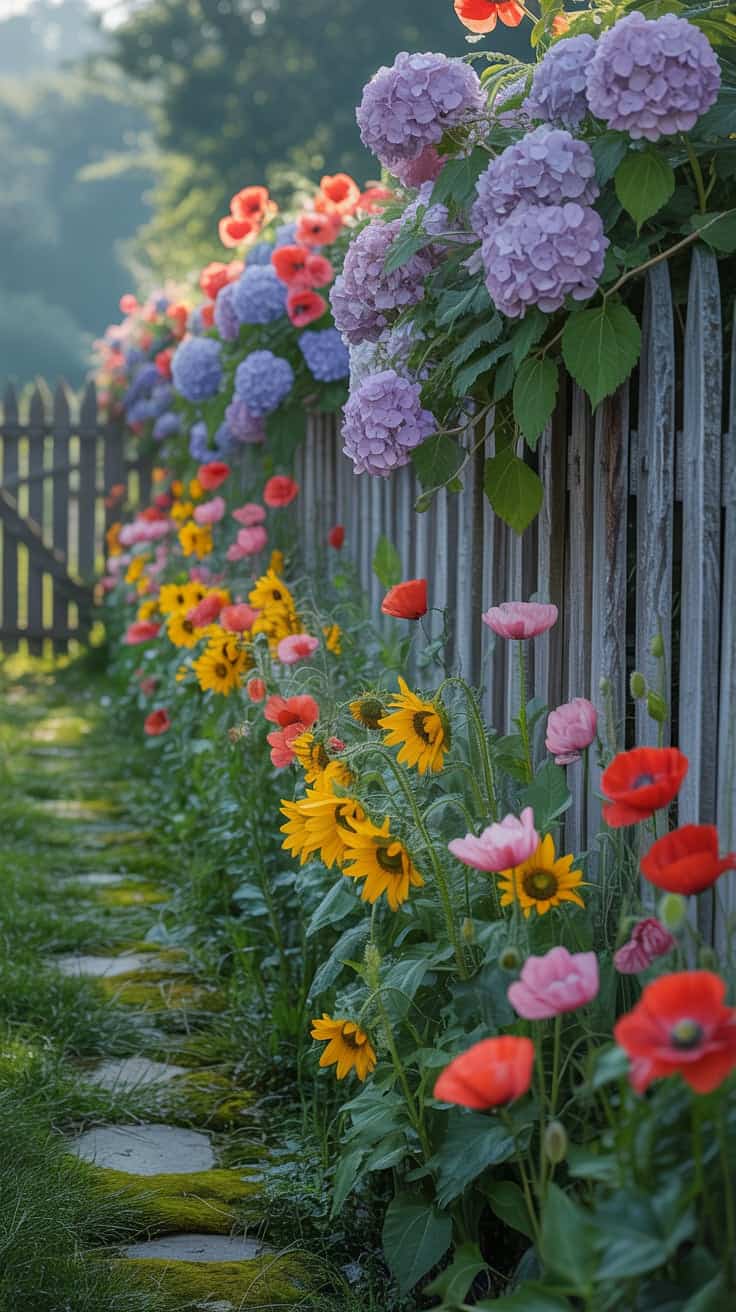
Flower borders are the heart of an English cottage garden. They soften fences, fill empty edges, and create those generous layers of color that make the whole garden feel abundant.
Mix taller plants at the back with medium flowers in the middle and low edging plants at the front. Foxgloves, delphiniums, hollyhocks, roses, geraniums, lavender, and daisies all suit the look beautifully. The goal is layered and full, not perfectly lined up like a floral spreadsheet.
This is where cottage gardens look best when they are slightly relaxed rather than perfectly symmetrical. These ideas on why asymmetry works best in cottage garden style explain how to make borders feel natural and beautifully layered.
- Creates this effect: full, romantic, traditional cottage charm.
- Best placement: along fences, walls, paths, and garden boundaries.
- Designer detail: repeat a few colors through the border so it feels cohesive.
8. Grow a Fragrant Herb Garden
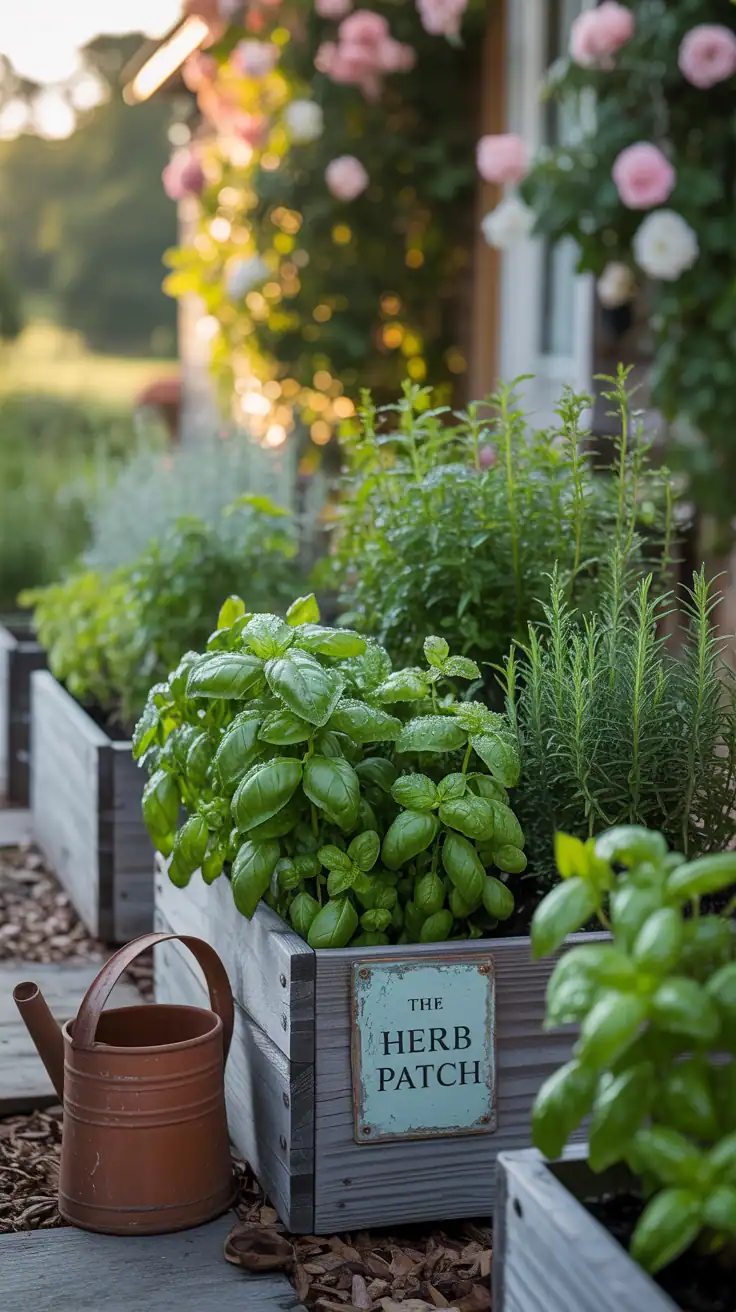
Herbs are perfect for cottage gardens because they are pretty, fragrant, useful, and wonderfully easy to tuck into small spaces. Basil, mint, thyme, rosemary, sage, parsley, and chives can all add texture and scent to beds, borders, and containers.
For the prettiest effect, mix herbs with edible flowers or plant them in terracotta pots near a path. Every time you brush past them, the scent makes the garden feel even more inviting.
If you love the practical side of cottage planting, these English cottage garden perennials are useful for creating long lasting borders with less yearly replanting.
- Best for: patios, kitchen gardens, sunny borders, and raised beds.
- Small space tip: use stacked planters or a narrow herb trough.
- Try this with: lavender, rosemary, thyme, and sage for a Mediterranean cottage feel.
9. Plan Seasonal Blooms for Year Round Color
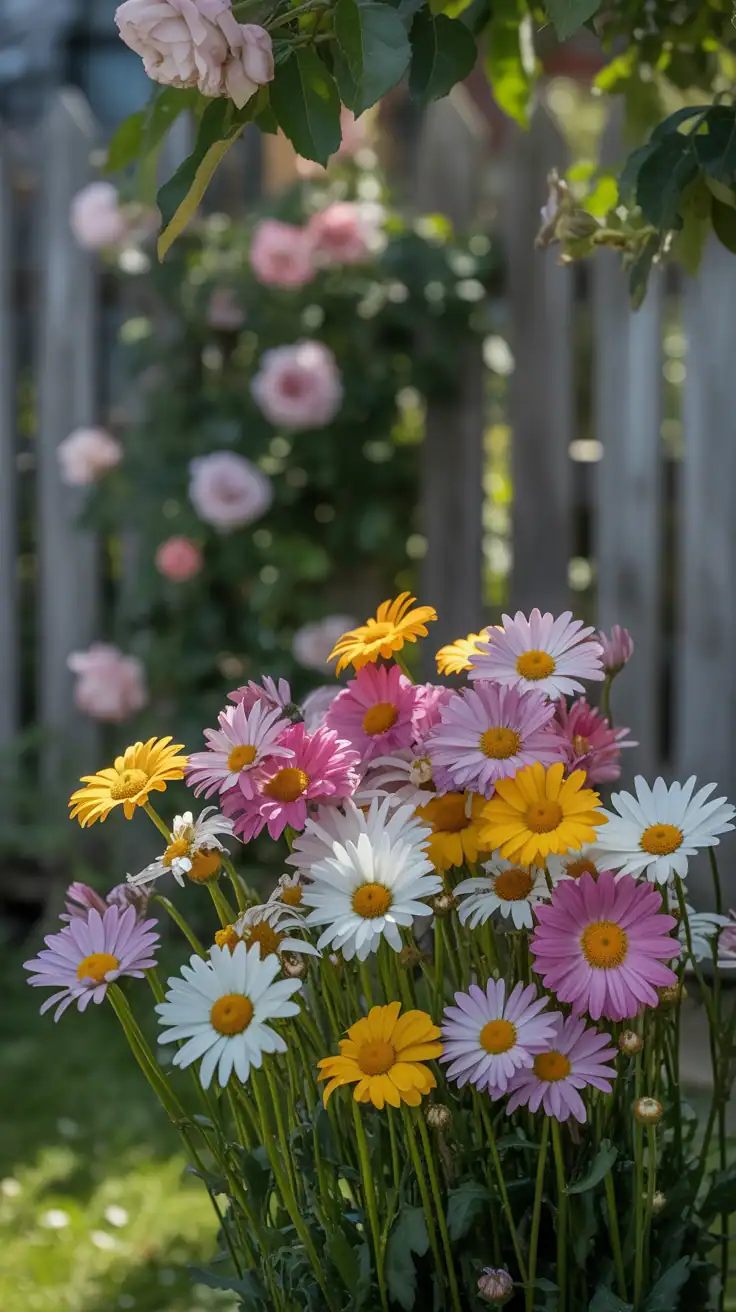
A beautiful cottage garden should not have one glorious month and then quietly give up. With a little planning, you can create color and interest across the seasons.
Use spring bulbs, summer perennials, autumn flowers, and evergreen structure to keep the garden feeling alive. Tulips, daffodils, daisies, roses, dahlias, chrysanthemums, hellebores, and evergreen shrubs can all play their part.
- Spring idea: tulips, daffodils, primroses, and forget me nots.
- Summer idea: roses, lavender, daisies, foxgloves, and delphiniums.
- Autumn idea: dahlias, asters, chrysanthemums, grasses, and seed heads.
- Winter idea: evergreens, hellebores, ivy, and decorative branches.
10. Use Colorful Containers for Small Cottage Garden Spaces
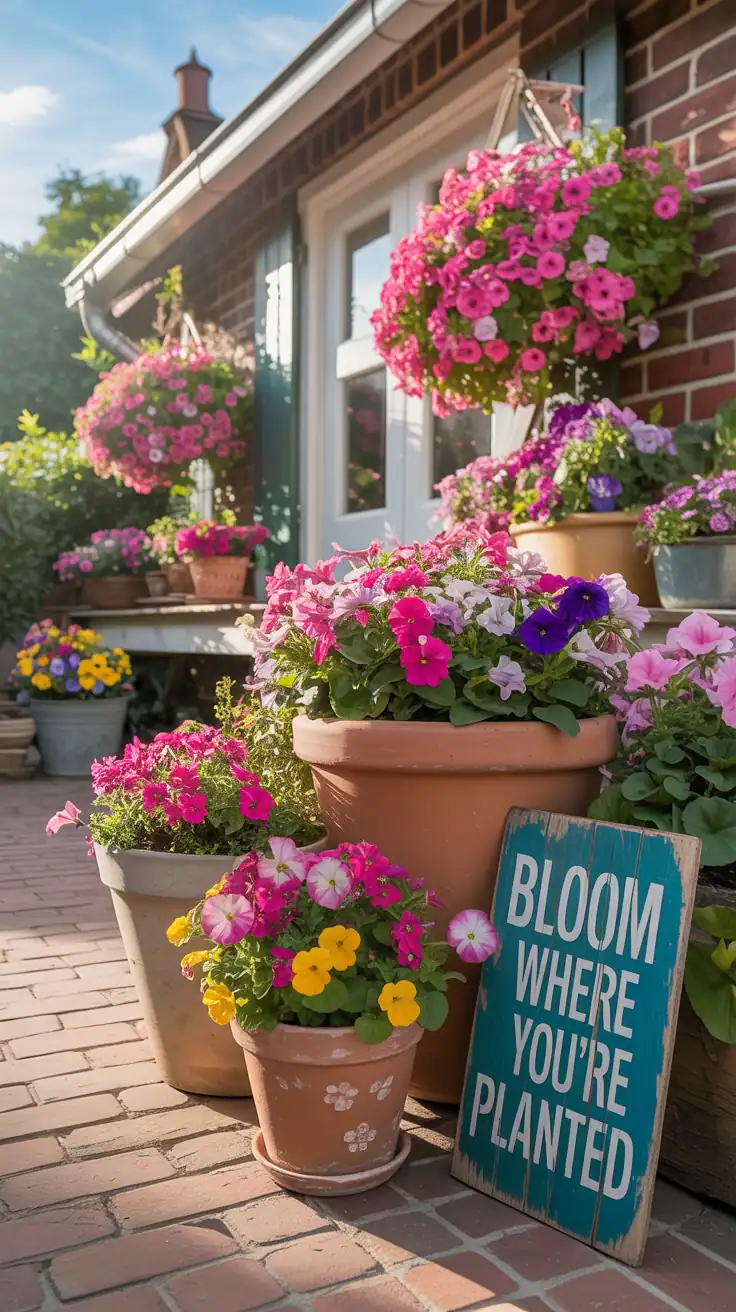
Container gardens are a brilliant way to create cottage charm on patios, balconies, porches, and small courtyards. Use a mix of terracotta pots, glazed containers, baskets, and weathered planters for a layered collected look.
The classic formula is simple: add one tall plant, one fuller middle plant, and one trailing plant that spills over the edge. It gives every pot shape, movement, and that generous cottage feel.
- Small space tip: cluster pots in groups of three or five for more impact.
- Best plants: geraniums, lavender, petunias, herbs, ivy, and trailing lobelia.
- Designer detail: mix pot heights so the display looks natural rather than flat.
11. Frame the Garden With Rustic Fencing
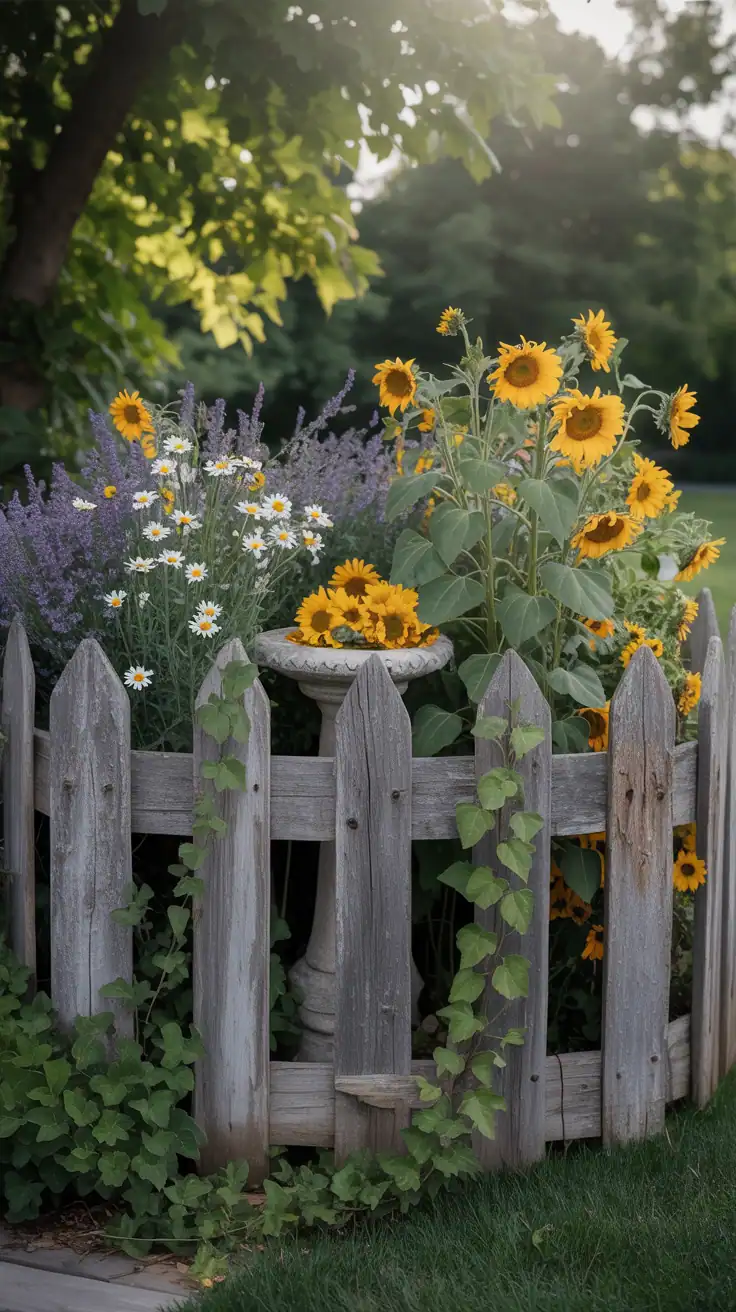
Rustic fencing gives an English cottage garden structure without making it feel too formal. Weathered wood, picket fencing, woven willow, or simple garden gates all help frame the planting beautifully.
Let flowers lean into the fence, train climbing plants along it, or place containers nearby to soften the lines. A fence should feel like part of the garden, not a stern border telling the flowers to behave.
- Most timeless option: white picket fencing with roses or lavender.
- Natural look: hazel, willow, or weathered timber edging.
- Best placement: around vegetable patches, flower borders, and garden entrances.
12. Plant a Butterfly Garden for Movement and Magic
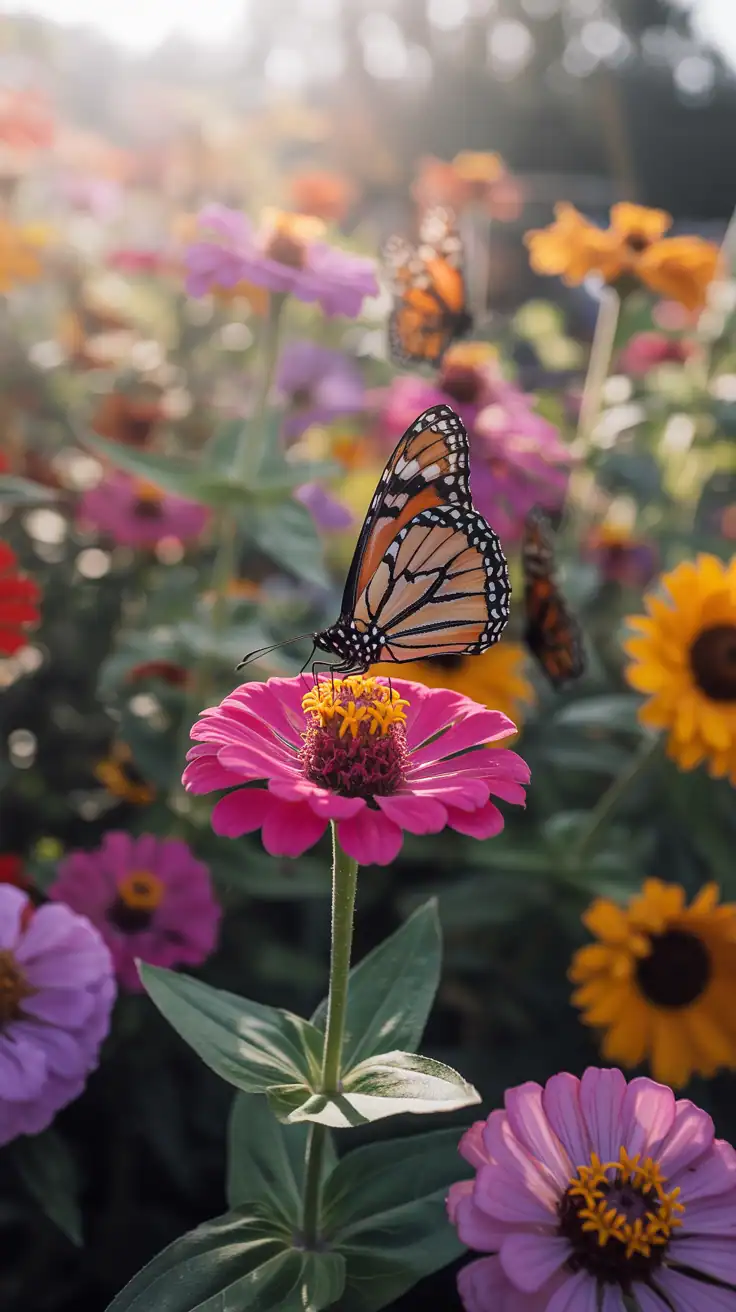
A butterfly garden brings your cottage garden to life. Nectar rich flowers, sunny planting areas, and sheltered corners can attract butterflies, bees, and other pollinators throughout the warmer months.
Plant flowers such as lavender, zinnias, buddleia, marigolds, verbena, echinacea, and cosmos. Add a shallow water dish or damp stones for butterflies to rest near, and avoid harsh chemicals so the garden stays welcoming.
- Creates this effect: lively, colorful, nature filled beauty.
- Best placement: sunny, sheltered areas with plenty of flowers.
- Try this with: a mix of native plants for stronger pollinator support.
13. Add Scented Plants for a Fragrant Escape
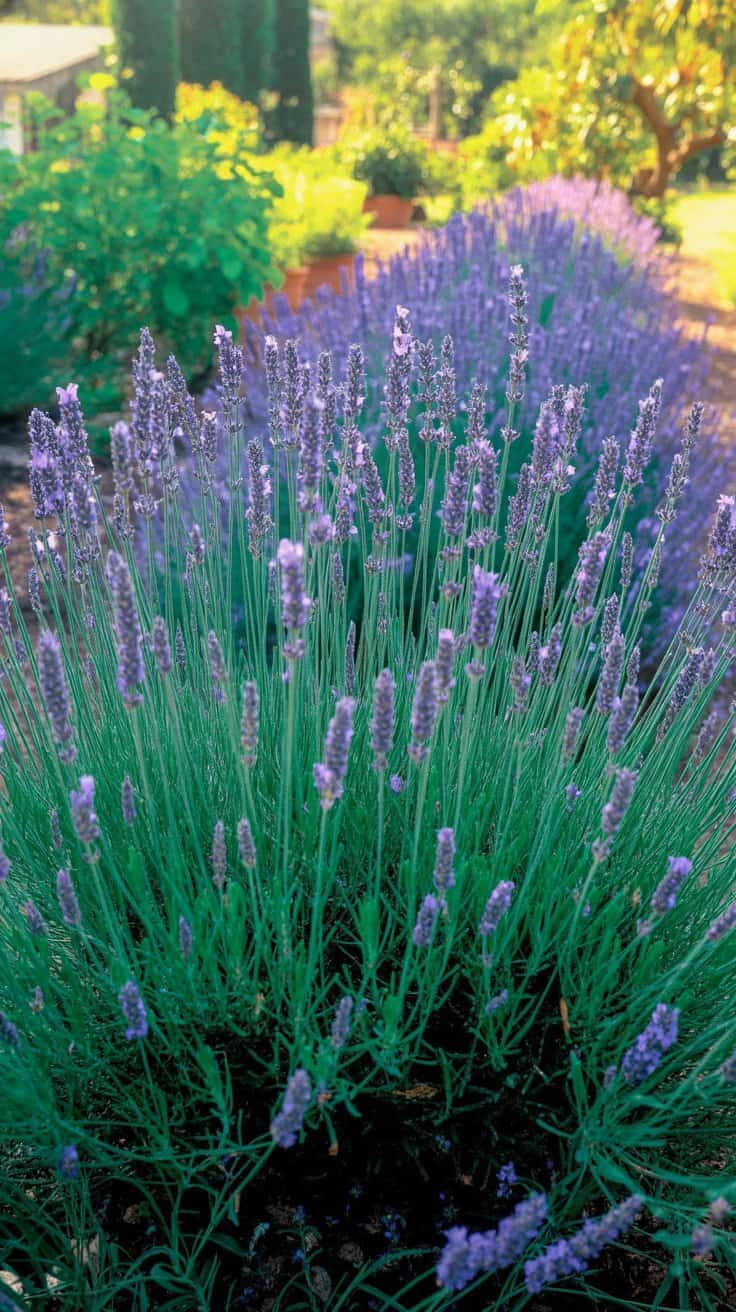
Scent is what makes a cottage garden feel truly immersive. Lavender, roses, jasmine, honeysuckle, rosemary, sweet peas, and scented geraniums all add fragrance as well as beauty.
Place scented plants near paths, gates, seating areas, and doors so you notice them as you move through the garden. Lavender beside a walkway is especially lovely because every brush of the leaves releases that calming herbal scent.
Lavender and roses are especially beautiful for adding scent, softness, and that classic English garden romance. These lavender and rose cottage garden ideas continue the same fragrant, romantic look.
- Best placement: beside paths, patios, benches, and entrances.
- Most romantic option: climbing roses mixed with honeysuckle.
- Low fuss choice: lavender and rosemary in a sunny, well drained spot.
14. Use Natural Stone Walls for Rustic Character
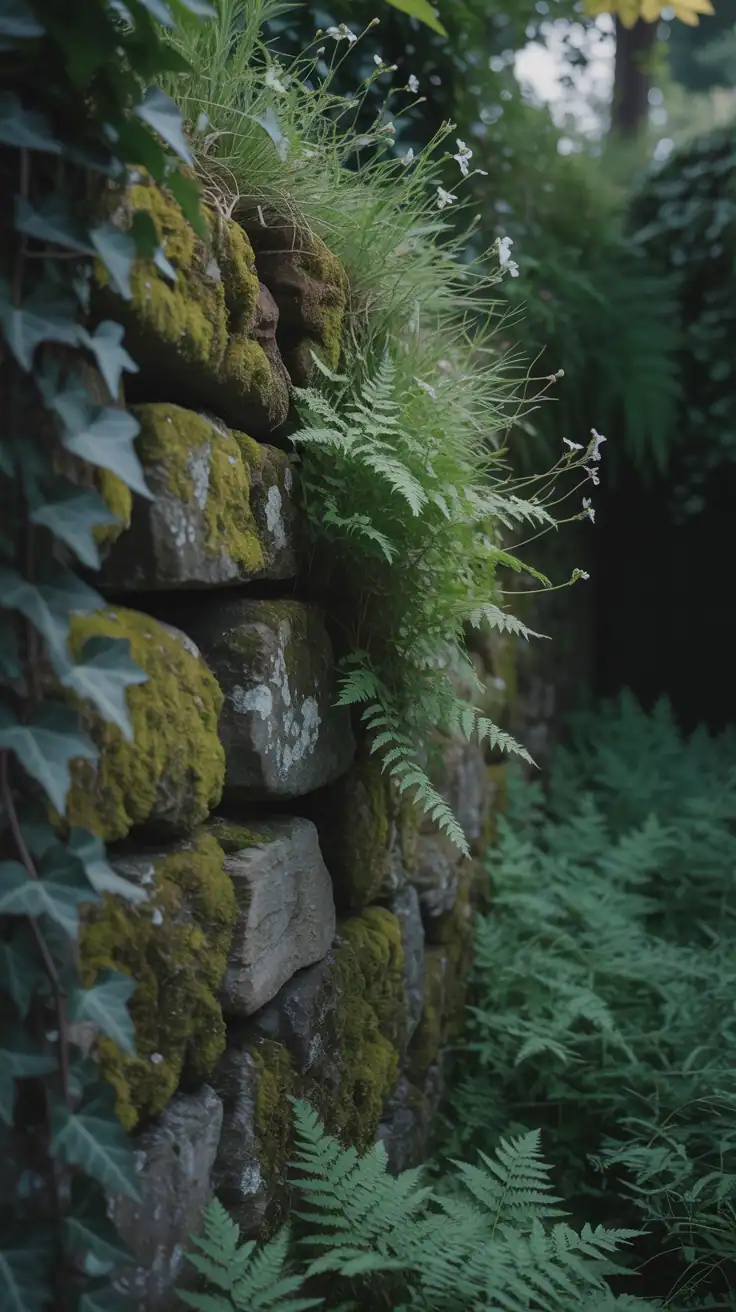
Natural stone brings instant age and character to a cottage garden. A low wall, raised bed, or mossy boundary gives the space that timeless countryside feeling, even if the garden itself is quite new.
Stone looks especially beautiful with soft planting spilling over it. Try creeping thyme, ivy, ferns, alpines, or trailing flowers to soften the edges and make the wall feel as though it has always been there.
- Designer detail: let plants spill gently over the stone edges.
- Best use: raised beds, path edges, boundary walls, or seating nooks.
- Creates this effect: old world texture and rustic garden depth.
15. Add a Garden Statue as a Romantic Focal Point
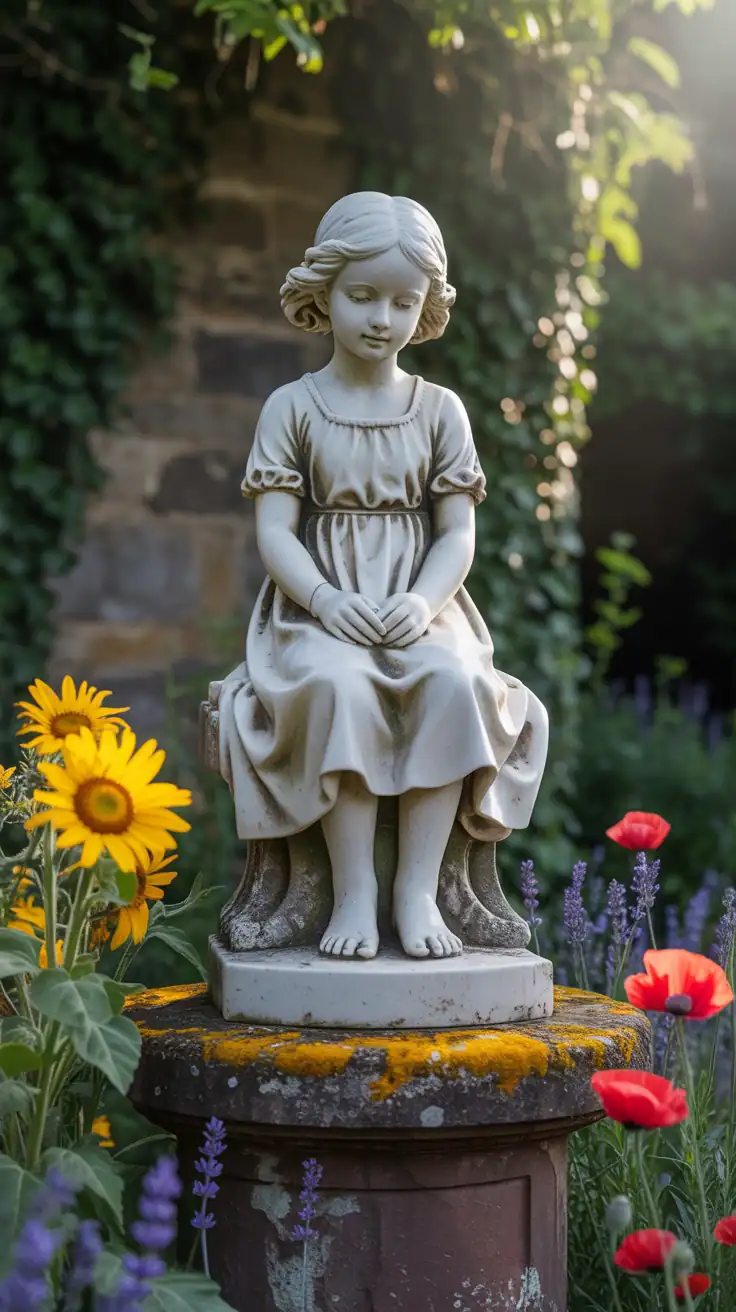
A small garden statue can add personality, nostalgia, and a sense of story. It works beautifully as a focal point tucked among flowers or placed at the end of a path where it gently draws the eye.
Choose something that suits the mood of your garden, whether that is classical, whimsical, romantic, or softly aged. Surround it with flowers and foliage so it feels discovered rather than staged.
- Best placement: at the end of a pathway or nestled inside a border.
- Style note: aged stone, weathered concrete, or antique finishes suit this look best.
- Try this with: lavender, roses, ferns, or daisies around the base.
16. Use Trellises to Add Vertical Cottage Garden Growth
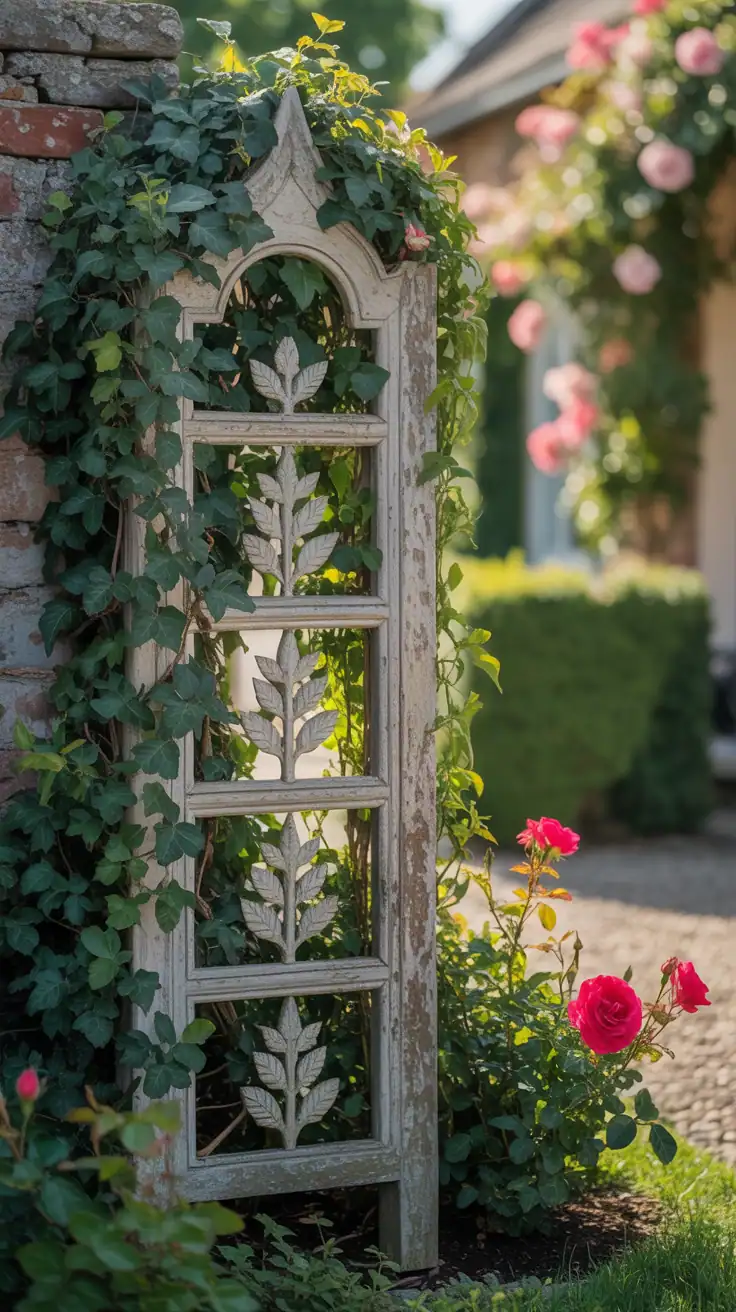
Trellises are perfect for adding height to a cottage garden, especially if you are working with a smaller space. They allow climbing plants to grow upward, which creates layers without taking up too much ground room.
Use them for sweet peas, clematis, climbing roses, honeysuckle, beans, or ivy. A wooden trellis against a wall, fence, or raised bed can instantly make the garden feel fuller and more charming.
- Small space tip: use vertical planting to make compact gardens feel lush.
- Best climbers: clematis, sweet peas, climbing roses, and honeysuckle.
- Budget friendly version: use simple wooden lattice panels painted sage, white, or natural wood.
17. Add a Cottage Greenhouse for Year Round Gardening
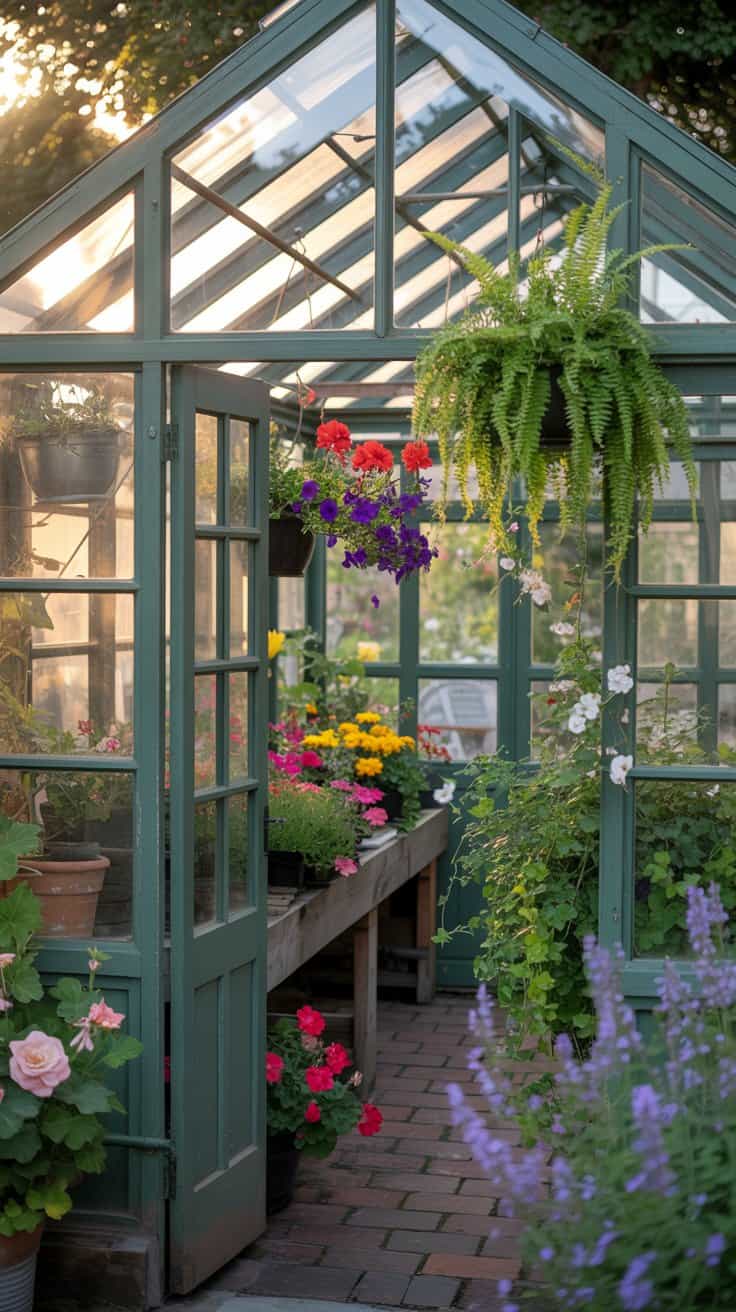
A greenhouse adds both beauty and function to an English cottage garden. It gives you somewhere to start seeds, protect tender plants, grow herbs, and enjoy a warm green space even when the weather is not cooperating.
For a cottage look, choose a greenhouse with timber details, vintage inspired styling, or plenty of potted plants around the entrance. Even a small greenhouse can become a charming focal point if you style it with terracotta pots, climbing plants, and flowers nearby.
- Best for: herbs, seedlings, tender plants, and winter gardening.
- Designer detail: add pots around the entrance so it blends into the garden.
- Small space tip: use a mini greenhouse or cold frame on a patio.
18. Create Gravel and Pebble Paths for Soft Texture
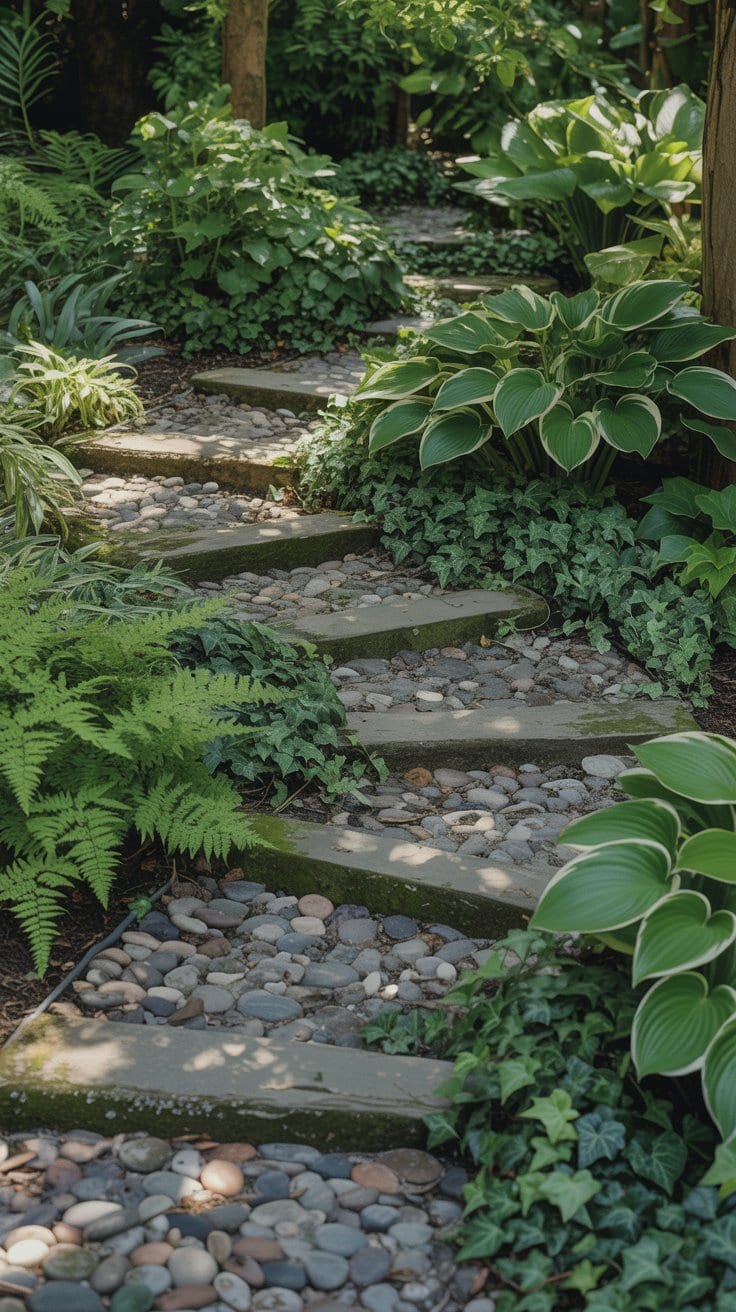
Gravel and pebble paths are practical, pretty, and wonderfully cottage garden friendly. They create texture underfoot and blend naturally with relaxed planting, especially when bordered with flowers or herbs.
Use brick, timber, stone, or metal edging to keep the path neat while still allowing plants to soften the sides. The gentle crunch of gravel adds another sensory detail, which is oddly satisfying and very cottage garden coded.
- Best placement: between flower borders, around seating areas, or through vegetable patches.
- Low maintenance note: add a weed membrane beneath gravel where suitable.
- Style tip: choose warm natural tones instead of bright white gravel for a softer look.
19. Add Birdhouses for Whimsical Garden Charm
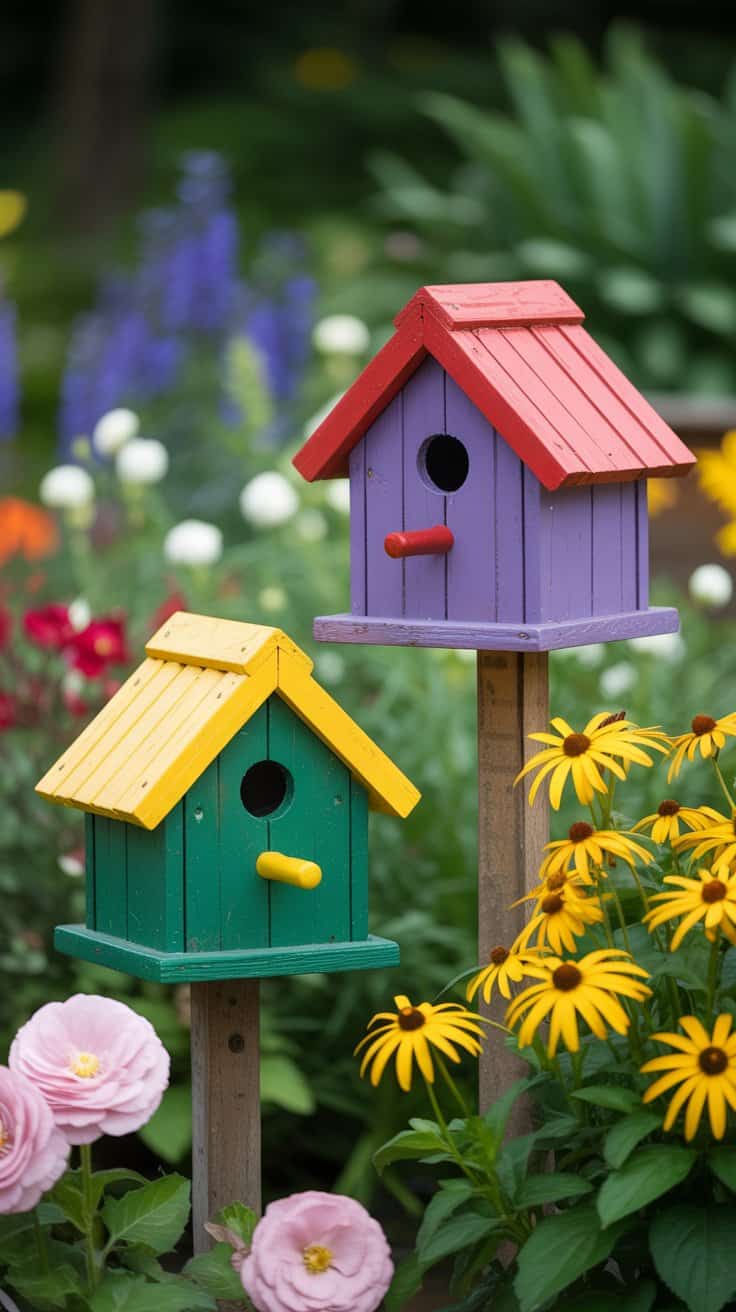
Birdhouses add color, charm, and a little storybook personality to a cottage garden. They look beautiful placed on fences, trees, posts, or tucked into flower filled corners.
Choose natural wood for a subtle look or painted designs for a playful touch. Just make sure they are placed safely and practically if you want birds to use them. Decorative charm is lovely, but actual birds do appreciate sensible real estate.
- Creates this effect: whimsical, welcoming, wildlife friendly charm.
- Best placement: quiet areas away from heavy foot traffic.
- Try this with: flowers, shrubs, and a nearby water source.
20. Use Seasonal Decorations to Keep the Garden Fresh
Seasonal decorating can make a cottage garden feel fresh throughout the year without needing a full redesign. A few thoughtful changes near the entrance, seating area, or pathway can shift the whole mood.
Use pastel pots and bulbs in spring, bright containers in summer, pumpkins and chrysanthemums in autumn, and evergreens or lanterns in winter. Keep it simple and natural so the garden still feels charming rather than overly themed.
- Spring idea: baskets, bulbs, primroses, and soft pastel planters.
- Summer idea: colorful pots, lanterns, and outdoor cushions.
- Autumn idea: pumpkins, gourds, mums, and rustic baskets.
- Winter idea: evergreens, simple lights, and natural wreaths.
21. Add Cottage Garden Lighting for Evening Atmosphere
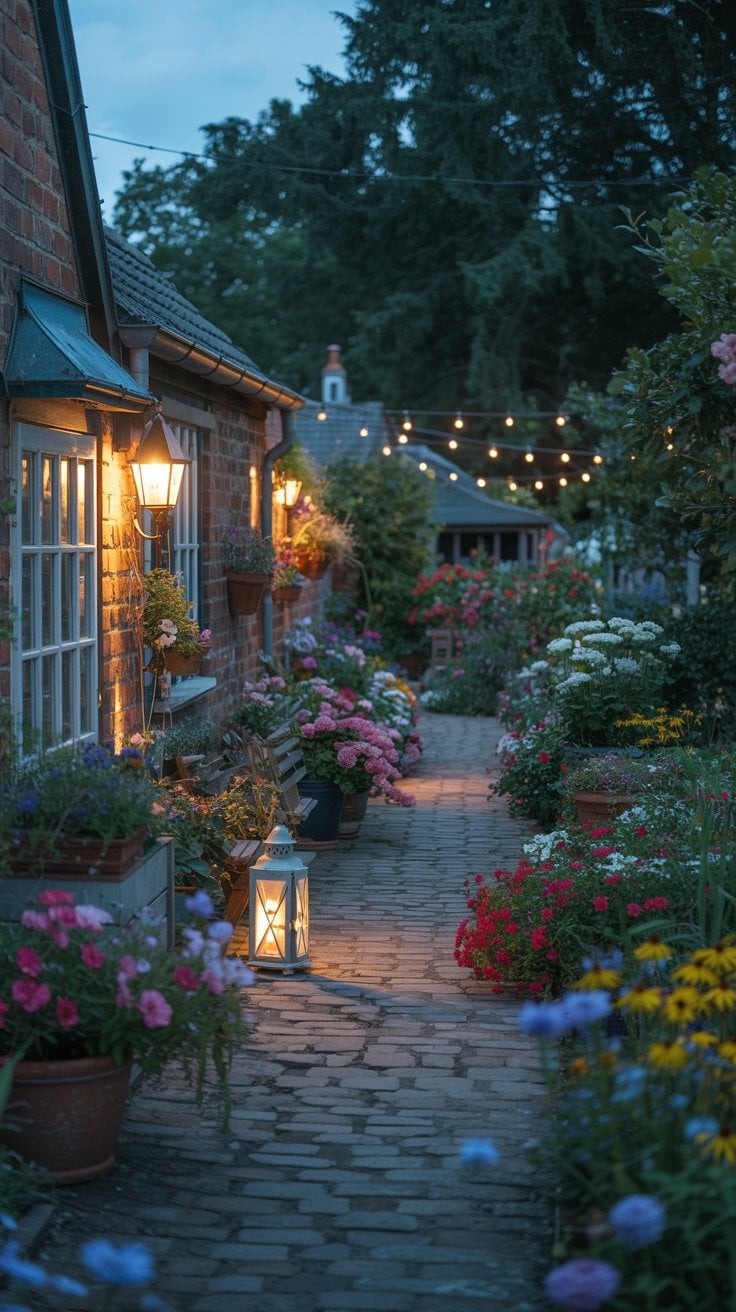
Soft lighting makes a cottage garden feel magical in the evening. Lanterns, string lights, solar path lights, and candle style lamps can highlight paths, seating areas, arches, and flower borders.
The key is to keep the glow warm and gentle. Cottage garden lighting should feel romantic and inviting, not like the garden is being interrogated.
- Best placement: along paths, around seating areas, and near arbors.
- Most charming option: lanterns tucked among flowers or beside steps.
- Style note: choose warm white lighting for a softer atmosphere.
22. Create a Sun Drenched Seating Area
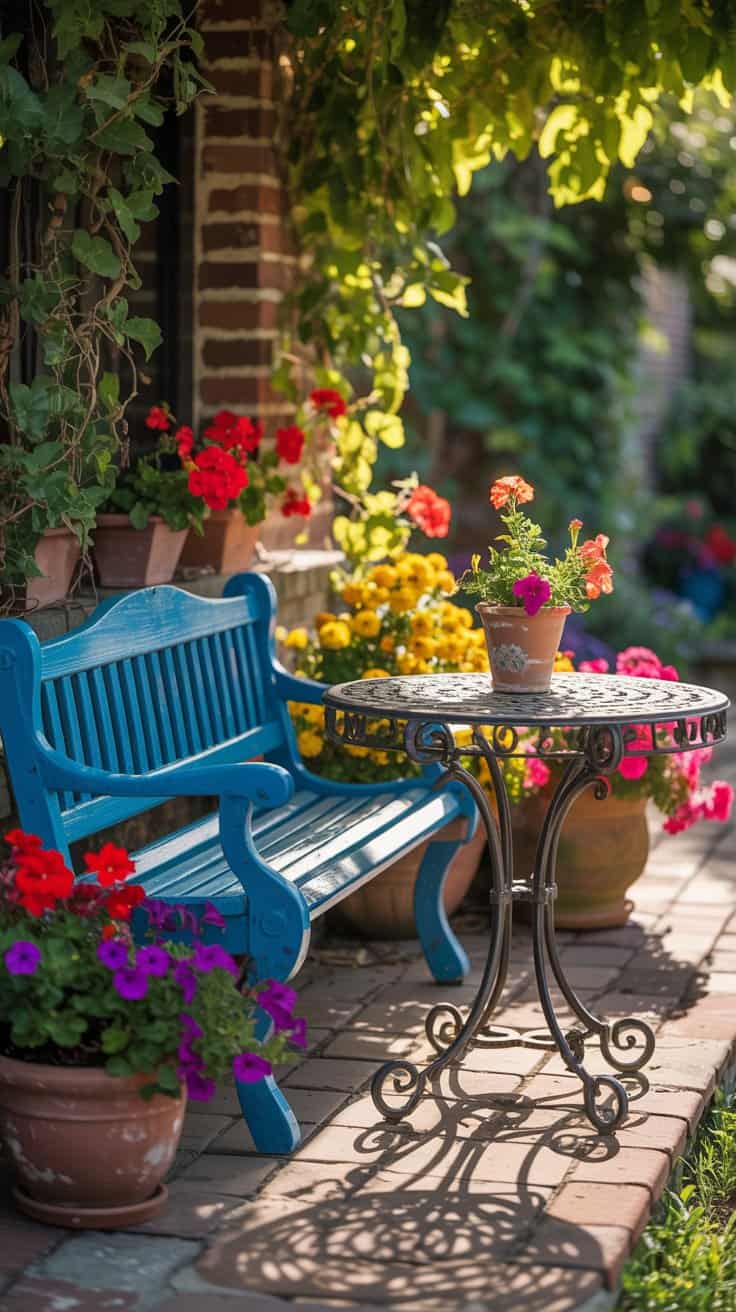
A sunny seating nook gives your cottage garden a destination. It is the place where the whole garden starts to feel less like a project and more like somewhere you actually want to spend time.
Use a bench, small table, outdoor cushions, and surrounding containers to make the space feel cosy and intentional. Place it where you catch morning light, afternoon warmth, or a pretty view across the flowers.
- Best placement: near fragrant plants, a water feature, or a flower border.
- Small space tip: use a narrow bench against a wall or fence.
- Designer detail: add pots around the seating area so it feels tucked into the garden.
23. Grow Edible Flowers for Beauty and Kitchen Charm
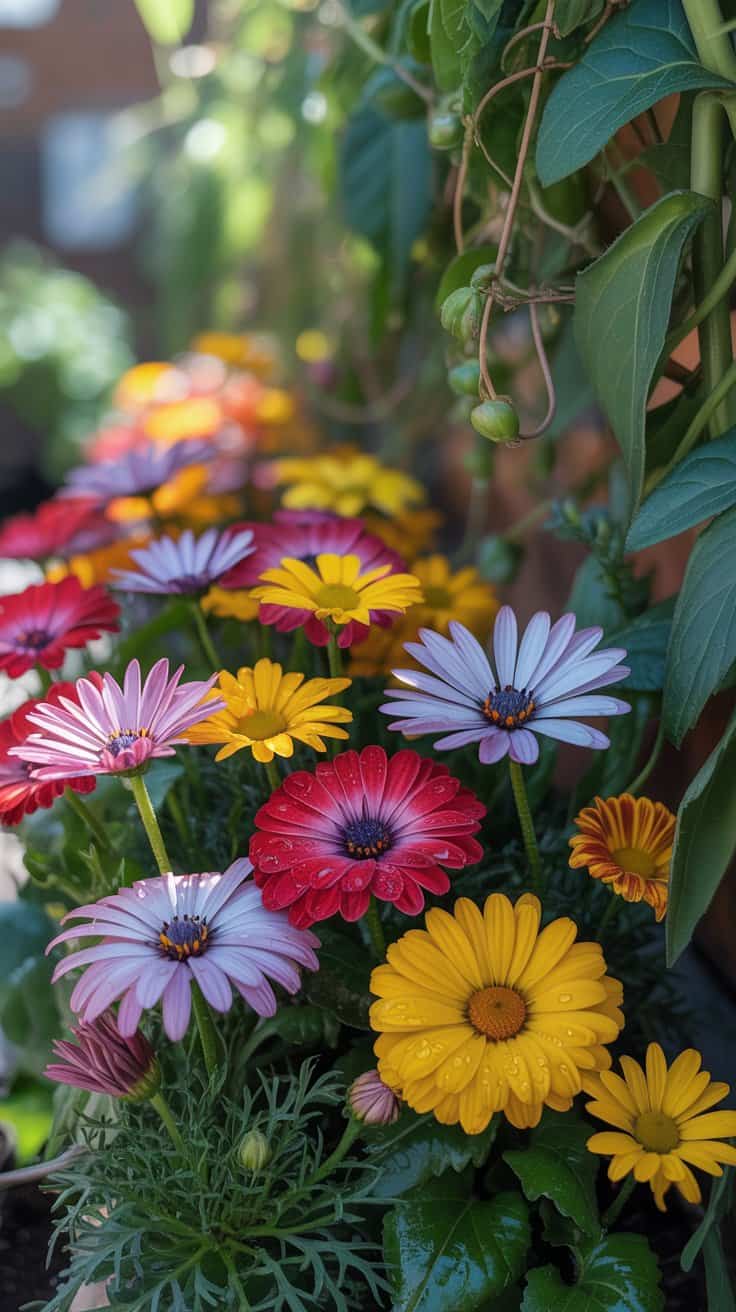
Edible flowers are a lovely way to make a cottage garden both beautiful and useful. Nasturtiums, pansies, calendula, violas, borage, and chive flowers can add color to salads, cakes, drinks, and summer platters.
Always make sure flowers are safe to eat and grown without pesticides before using them in food. Once you have that sorted, they bring a charming kitchen garden feel that looks especially pretty near herbs and vegetables.
- Best flowers: nasturtiums, pansies, calendula, violas, borage, and chive flowers.
- Try this with: herbs, salad greens, and terracotta pots.
- Practical note: only eat flowers you can confidently identify as edible and safe.
24. Add Dramatic Foliage for Depth and Contrast
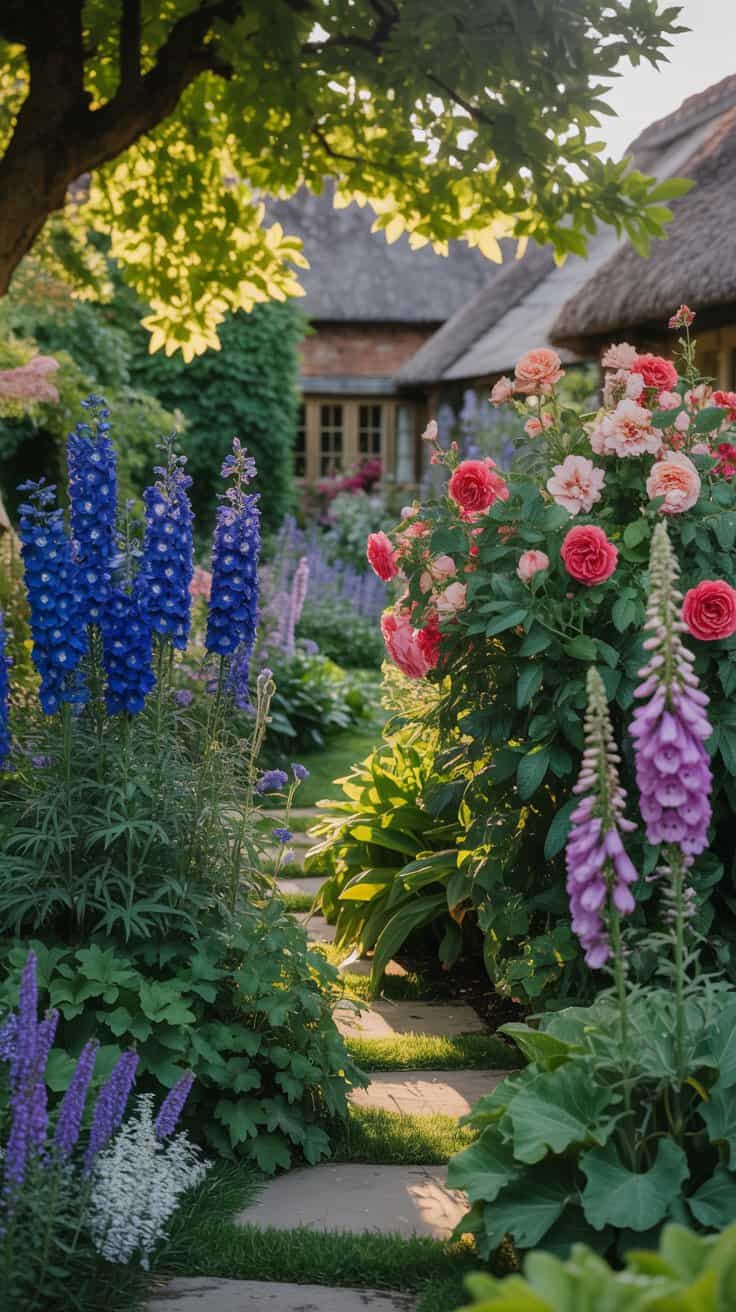
Flowers may get most of the attention, but foliage is what gives a cottage garden depth. Different leaf shapes, colors, and textures keep the garden looking full even when certain blooms fade.
Mix soft green leaves with darker burgundy foliage, silver toned plants, ferns, grasses, and large leafy perennials. This creates contrast and makes the flowers stand out even more.
- Creates this effect: richer layers and stronger visual structure.
- Best plants: ferns, hostas, heuchera, grasses, lamb’s ear, and euphorbia.
- Designer detail: repeat foliage colors through the garden for a more pulled together look.
25. Use Cascading Plants for a Lush Lived In Look
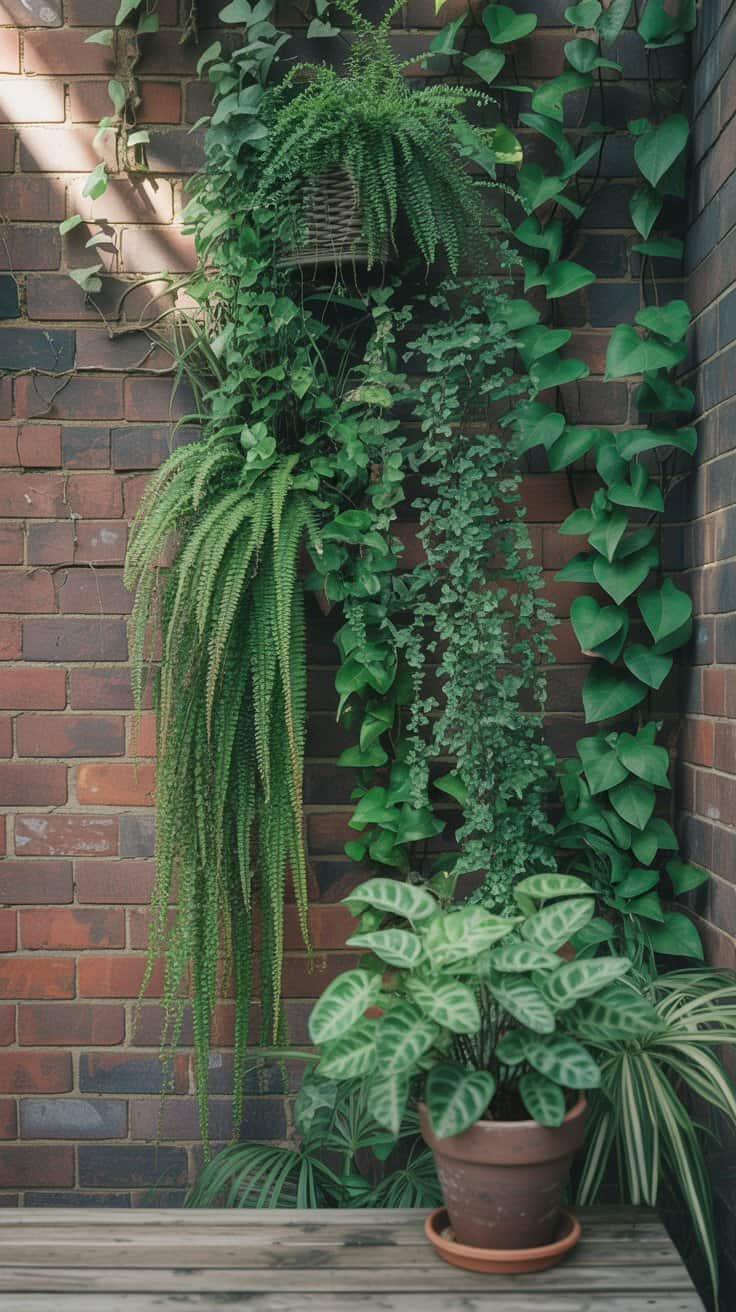
Cascading plants soften walls, pots, steps, and raised beds beautifully. They help remove harsh edges and give the garden that relaxed, established feeling that cottage gardens do so well.
Try ivy, creeping jenny, trailing rosemary, nasturtiums, ferns, lobelia, or sweet potato vine depending on your climate and space. Let them spill naturally rather than trimming everything too tightly.
- Best placement: over walls, from containers, beside steps, or along raised beds.
- Small space tip: use hanging baskets or wall planters to add vertical softness.
- Style note: trailing plants make a garden feel fuller without needing much ground space.
You Might Also Like
Final Thoughts on English Cottage Garden Ideas
An English cottage garden is not about perfect symmetry or spotless borders. It is about softness, scent, color, texture, and that lovely feeling of stepping into a garden that has a story.
Start small with a flower border, a few terracotta pots, a gravel path, or a climbing rose. Then build slowly. The best cottage gardens feel collected over time, which is excellent news if your garden plans tend to evolve one plant purchase at a time.
Stepping-Stone Path Kit
Add a meandering walkway for that wander-through-the-garden feel.
Shop on AmazonClimbing Rose Plant
Train over arches, fences, or trellises for lush vertical colour.
Shop on Amazon