

Walking Exercise Routines You Can Do Anywhere
You don’t need a treadmill, fancy trainers, or a perfectly planned route to get a solid workout. Walking is one of the most flexible forms of exercise, and with the right routine, it can fit into real life—busy days, small spaces, travel, and everything in between.
These walking exercise routines are designed to be simple, effective, and location-proof. No gym. No excuses.
1. Interval Walking (The Fat-Burning Classic)
This is the go-to routine when you want results without overthinking it. Interval walking alternates between higher and lower intensities to maximize calorie burn while keeping the workout manageable.

How it works:
- Walk fast for 1–2 minutes (brisk, purposeful pace)
- Slow down for 2–3 minutes
- Repeat for 20–30 minutes
Why it works:
- Boosts calorie and fat burn
- Keeps your heart rate responsive
- Prevents boredom and plateaus
You can do this on sidewalks, in parks, in airports, or even pacing your living room. The beauty of interval walking is its adaptability to any environment.
2. Power Walk Bursts
Perfect when you only have a short window of time, these power bursts pack a lot of exercise into minimal minutes. This routine is ideal for busy professionals who struggle to find time for longer workouts.

How it works:
- Walk at a strong, fast pace for 5 minutes
- Focus on arm swing and posture
- Cool down for 2–3 minutes
- Repeat once or twice if time allows
Why it works:
- Efficient and time-saving
- Engages your upper body
- Great for lunch breaks or errands
Short doesn’t mean ineffective—intensity matters more than duration here. Even a single 5-minute power burst can boost your energy and metabolism.
Ready to Walk With Purpose?
Grab the free Walking Workout Calendar and track your progress week by week—no pressure, just consistency.
Download the Free Calendar3. Indoor Walking Routine (Small-Space Friendly)
Rainy day? No problem. This routine transforms even the smallest living space into your personal walking track. It’s perfect for bad weather days or when you simply can’t leave home.

How it works:
- March in place for 2 minutes
- Walk laps around your space for 5 minutes
- Add knee lifts or heel taps for 1 minute
- Repeat the cycle for 15–25 minutes
Why it works:
- Keeps you moving without leaving home
- Ideal for beginners or low-impact days
- Easy to pair with music or a podcast
Consistency beats perfection—especially indoors. This routine ensures weather never becomes an excuse to skip your walking workout.
4. Hill or Incline Walking (Natural Strength Builder)
If you’ve got hills nearby—or stairs—use them to your advantage. This routine naturally builds lower body strength while boosting your cardiovascular fitness more efficiently than flat terrain.

How it works:
- Walk uphill or up stairs for 30–60 seconds
- Walk back down slowly
- Repeat 8–12 times
Why it works:
- Builds leg and glute strength
- Increases calorie burn quickly
- Improves cardiovascular fitness
No hills? Slightly increase pace and arm drive to mimic the effect, or use a sturdy step or curb to create your own mini-incline workout.
-
A Beginner’s Guide to Walking Meditation
Step-by-step introduction to mindful walking for presence and calm.
-
Walking for Weight Loss
Practical tips on using walking as an effective tool for weight management.
-
Interval Walking
Guide to alternating speeds for a more effective walk workout.
5. Mindful Walking (Low Stress, High Benefit)
This one’s underrated—and powerful. Mindful walking combines physical movement with mental focus, creating a walking meditation that benefits both body and mind.

How it works:
- Walk at a comfortable pace
- Focus on breathing and steps
- Keep your phone away
- Walk for 10–30 minutes
Why it works:
- Reduces stress and cortisol
- Supports consistency and recovery
- Encourages daily movement habits
Great for rest days or when motivation is low. Mindful walking can be your gateway to making walking a consistent habit rather than an occasional workout.
How to Make Any Walking Routine More Effective
You don’t need to make walking harder—just smarter. These simple adjustments can significantly increase the benefits of any walking routine.

Posture and Form
- Stand tall (posture changes everything)
- Look forward, not down at your feet
- Keep shoulders relaxed, not hunched
- Land heel-to-toe with each step
Timing and Consistency
- Swing your arms with intention
- Walk after meals when possible
- Choose consistency over intensity
- Track your walks to build momentum
Small upgrades add up fast. Even implementing just one of these techniques can transform a casual stroll into an effective workout.
Essential (and Optional) Walking Gear
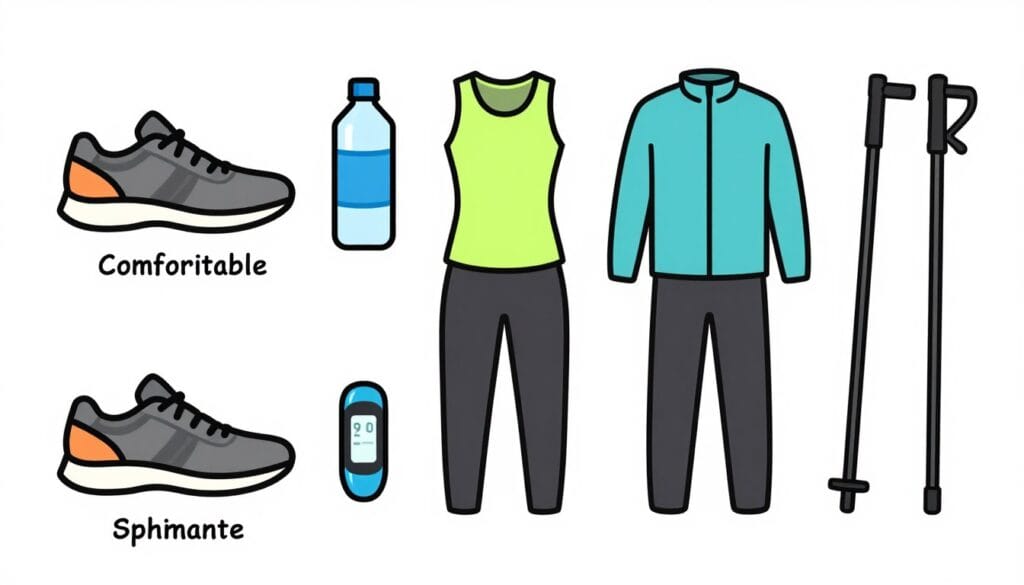
One of the best things about walking is how little equipment you need, but a few key items can enhance your experience.
Must-Haves
- Supportive shoes with good cushioning
- Weather-appropriate clothing
- Water bottle for longer walks
- Medical ID if you have conditions
Nice-to-Haves
- Pedometer or fitness tracker
- Walking poles for extra upper body work
- Reflective gear for low-light conditions
- Light backpack for essentials
Remember: the best gear is whatever gets you walking consistently. Don’t wait for perfect equipment to start your walking routine.
The Science-Backed Benefits of Regular Walking
Walking isn’t just convenient—it’s one of the most thoroughly researched forms of exercise with impressive health benefits.

Physical Benefits
- Improves cardiovascular health
- Helps maintain healthy weight
- Strengthens muscles and bones
- Enhances joint mobility
Mental Benefits
- Reduces stress and anxiety
- Improves mood and mental clarity
- Boosts creative thinking
- Enhances sleep quality
Long-Term Benefits
- Lowers risk of chronic diseases
- Increases longevity
- Improves immune function
- Maintains cognitive function
Just 30 minutes of walking most days can deliver these benefits, and they can be broken into smaller sessions throughout the day.
Common Questions About Walking Workouts

How many steps should I aim for daily?
While 10,000 steps is often cited as the gold standard, research shows significant benefits starting at 4,000-6,000 steps. Start where you are and gradually increase. Quality (pace and intensity) matters as much as quantity.
Is walking enough exercise on its own?
For many health benefits, yes! Walking can provide sufficient cardiovascular exercise, especially when you include intervals and hills. For complete fitness, consider adding some strength training and flexibility work 2-3 times weekly.
How can I make walking more challenging?
Add hills or stairs, increase your pace, use walking poles, add intervals, carry light weights, or try walking on different surfaces like sand or trails. Even changing your route can engage different muscles and keep things interesting.
What if I have joint pain or mobility issues?
Start with shorter, gentler walks and gradually build up. Walking in water (pool walking) offers excellent low-impact exercise. Proper footwear with good cushioning is essential. Always consult your healthcare provider if you have specific concerns.
Simple Ways to Track Your Walking Progress
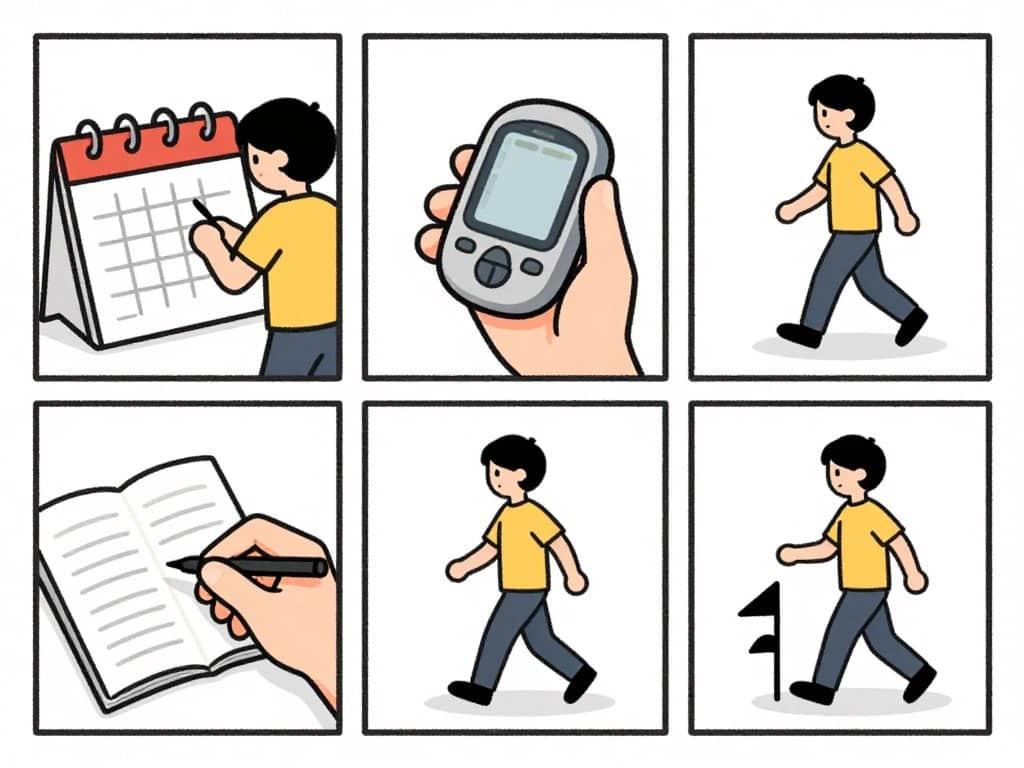
Tracking your walks helps maintain motivation and shows your improvement over time. Here are some easy methods that don’t require fancy technology.
Low-Tech Options
- Mark walks on a calendar
- Use a simple pedometer
- Keep a walking journal
- Time yourself between landmarks
Digital Options
- Smartphone step counters
- Free walking apps
- Fitness trackers
- Online walking communities
The best tracking method is the one you’ll actually use consistently. Start simple and upgrade only if needed.
The Takeaway
Walking doesn’t need perfect conditions or perfect planning. With the right routine, you can turn almost any space into a workout—whether you’re at home, traveling, or squeezing movement into a busy day.

No gym. No pressure. Just movement that actually fits your life.
Start with whichever routine appeals to you most, and remember that consistency trumps perfection every time. Your body will thank you for every step you take, wherever you take it.
Ready to Walk With a Plan?
Download the free Walking Exercise Routines You Can Do Anywhere PDF and get all 5 routines in one simple, printable guide—perfect for home, travel, or busy days.
Download the Free Walking Guide