

Thai Pineapple Chicken Curry – Bright, Sweet, and Comforting
This is the kind of weeknight dinner that wakes up your taste buds without wearing you out in the kitchen. Thai Pineapple Chicken Curry is creamy, tangy, slightly sweet, and just the right amount of spicy. The pineapple softens into juicy bursts that play off the savory chicken and aromatic curry paste.
It’s balanced, colorful, and a little bit addictive. Serve it with jasmine rice, and you’ve got a meal that feels special but still easy enough for a Tuesday.

Thai Pineapple Chicken Curry – Bright, Sweet, and Comforting
Ingredients
- 1.5 pounds (680 g) boneless, skinless chicken thighs, cut into bite-size pieces (breasts work too, but thighs stay juicier)
- 1 tablespoon neutral oil (canola, avocado, or grapeseed)
- 2–3 tablespoons Thai red curry paste (adjust to taste)
- 1 can (13.5–14 oz / 400 ml) full-fat coconut milk
- 1 cup low-sodium chicken broth (or water)
- 2 cups fresh pineapple chunks (or canned, drained well)
- 1 red bell pepper, thinly sliced
- 1 small onion or 2 shallots, thinly sliced
- 2 cloves garlic, minced
- 1 tablespoon fresh ginger, grated or minced
- 1 tablespoon fish sauce (or to taste)
- 1–2 teaspoons brown sugar or palm sugar (optional, to balance acidity)
- 1 tablespoon lime juice (plus more to taste)
- 4–5 kaffir lime leaves, torn (optional but lovely)
- 1 stalk lemongrass, bruised and cut into 2–3 pieces (optional)
- Fresh Thai basil or cilantro, for garnish
- Cooked jasmine rice, for serving
- Salt and black pepper, to taste
Instructions
- Prep your ingredients: Cut the chicken into bite-size pieces. Slice the bell pepper and onion. Mince the garlic and ginger. If using lemongrass, smash it with the back of a knife to release the oils.
- Warm the aromatics: Heat the oil in a large skillet or pot over medium heat. Add onion, garlic, and ginger. Cook 2–3 minutes until fragrant and slightly softened, stirring often.
- Bloom the curry paste: Stir in the red curry paste and cook for 30–60 seconds. This deepens the flavor and mellows any sharp edges in the paste.
- Add coconut milk and broth: Pour in the coconut milk and chicken broth. Stir until the curry paste is fully mixed in and the sauce looks smooth and red-orange.
- Add chicken and flavor boosters: Add the chicken, kaffir lime leaves, and lemongrass if using. Bring to a gentle simmer. Cook 8–10 minutes, stirring occasionally, until the chicken is just cooked through.
- Stir in pineapple and bell pepper: Add the pineapple and red bell pepper. Simmer another 4–5 minutes. You want the pepper tender-crisp and the pineapple warmed but still juicy.
- Season to balance: Add fish sauce, lime juice, and sugar if using. Taste and adjust. You’re aiming for a balanced mix of salty, tangy, spicy, and sweet.
- Finish and serve: Remove lemongrass and lime leaves. Sprinkle in chopped Thai basil or cilantro. Serve hot over jasmine rice. Add extra lime at the table if you like it brighter.
What Makes This Special
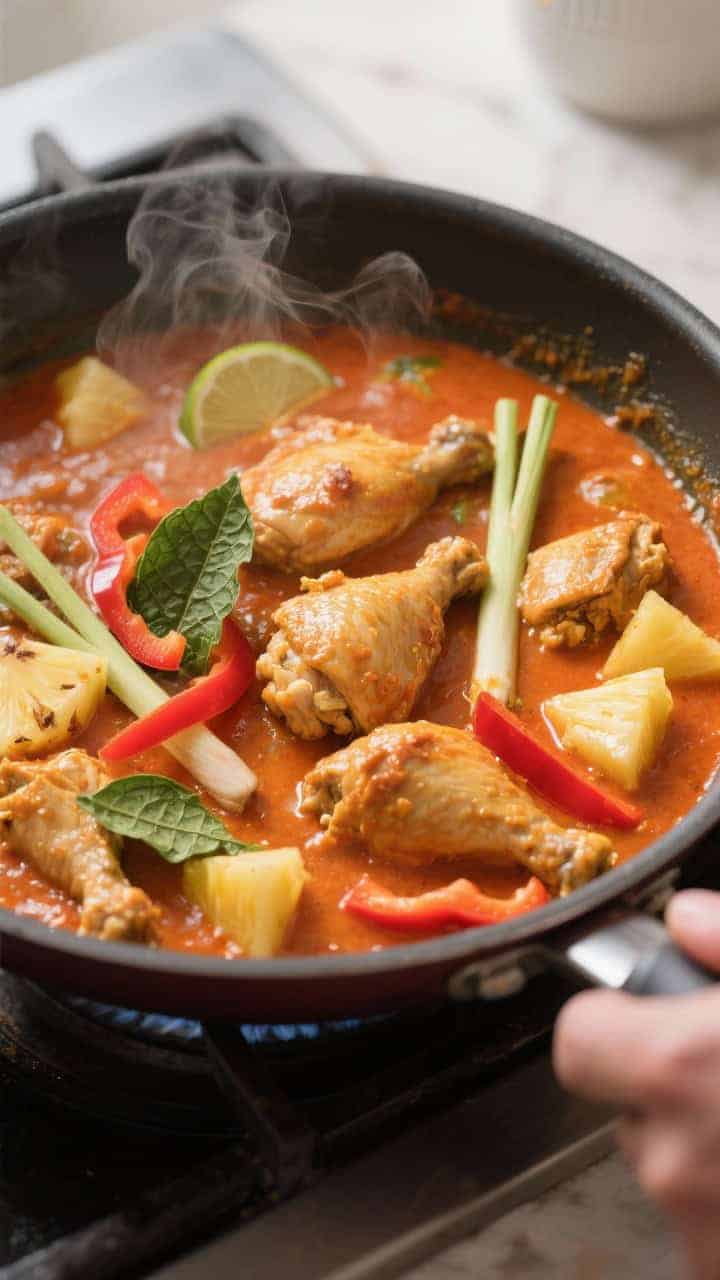
- Sweet meets savory: Pineapple adds a gentle sweetness that balances the heat and richness of coconut milk and curry paste.
- Fast but full of flavor: You can make this in about 30 minutes, yet it tastes like it simmered for hours.
- Flexible heat level: Use more or less curry paste to control the spice. It’s easy to tailor for the whole family.
- Restaurant-style results at home: Lemongrass, fish sauce, and lime give you that classic Thai finish without fuss.
Ingredients
- 1.5 pounds (680 g) boneless, skinless chicken thighs, cut into bite-size pieces (breasts work too, but thighs stay juicier)
- 1 tablespoon neutral oil (canola, avocado, or grapeseed)
- 2–3 tablespoons Thai red curry paste (adjust to taste)
- 1 can (13.5–14 oz / 400 ml) full-fat coconut milk
- 1 cup low-sodium chicken broth (or water)
- 2 cups fresh pineapple chunks (or canned, drained well)
- 1 red bell pepper, thinly sliced
- 1 small onion or 2 shallots, thinly sliced
- 2 cloves garlic, minced
- 1 tablespoon fresh ginger, grated or minced
- 1 tablespoon fish sauce (or to taste)
- 1–2 teaspoons brown sugar or palm sugar (optional, to balance acidity)
- 1 tablespoon lime juice (plus more to taste)
- 4–5 kaffir lime leaves, torn (optional but lovely)
- 1 stalk lemongrass, bruised and cut into 2–3 pieces (optional)
- Fresh Thai basil or cilantro, for garnish
- Cooked jasmine rice, for serving
- Salt and black pepper, to taste
Step-by-Step Instructions
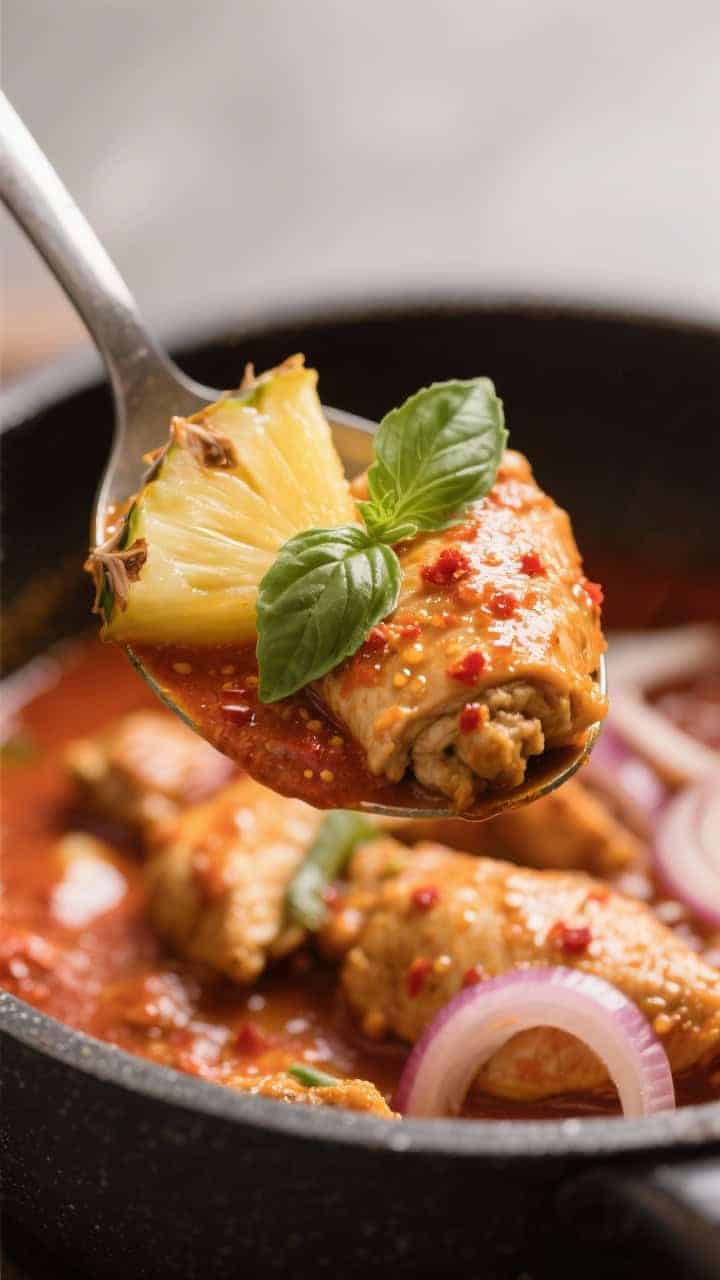
- Prep your ingredients: Cut the chicken into bite-size pieces.
Slice the bell pepper and onion. Mince the garlic and ginger. If using lemongrass, smash it with the back of a knife to release the oils.
- Warm the aromatics: Heat the oil in a large skillet or pot over medium heat.
Add onion, garlic, and ginger. Cook 2–3 minutes until fragrant and slightly softened, stirring often.
- Bloom the curry paste: Stir in the red curry paste and cook for 30–60 seconds. This deepens the flavor and mellows any sharp edges in the paste.
- Add coconut milk and broth: Pour in the coconut milk and chicken broth.
Stir until the curry paste is fully mixed in and the sauce looks smooth and red-orange.
- Add chicken and flavor boosters: Add the chicken, kaffir lime leaves, and lemongrass if using. Bring to a gentle simmer. Cook 8–10 minutes, stirring occasionally, until the chicken is just cooked through.
- Stir in pineapple and bell pepper: Add the pineapple and red bell pepper.
Simmer another 4–5 minutes. You want the pepper tender-crisp and the pineapple warmed but still juicy.
- Season to balance: Add fish sauce, lime juice, and sugar if using. Taste and adjust.
You’re aiming for a balanced mix of salty, tangy, spicy, and sweet.
- Finish and serve: Remove lemongrass and lime leaves. Sprinkle in chopped Thai basil or cilantro. Serve hot over jasmine rice.
Add extra lime at the table if you like it brighter.
Storage Instructions
- Refrigerate: Cool completely, then store in an airtight container for up to 3–4 days.
- Reheat gently: Warm on the stove over low to medium heat. Add a splash of water or broth if the sauce thickens too much.
- Freeze: This curry freezes well for up to 2 months. Thaw in the fridge overnight before reheating.
Note that peppers may soften slightly after freezing.
Health Benefits
- Protein-rich: Chicken provides lean protein to support muscle and keep you full.
- Vitamin boost: Pineapple and bell peppers add vitamin C and antioxidants that support immunity and skin health.
- Healthy fats: Coconut milk includes medium-chain triglycerides, which provide steady energy. Use light coconut milk if you prefer lower fat.
- Balanced meal: Pairing the curry with rice gives you a good mix of carbs, protein, and fat for sustained energy.
Common Mistakes to Avoid
- Boiling too hard: A rolling boil can split the coconut milk. Keep the heat at a gentle simmer for a creamy, cohesive sauce.
- Overcooking the pineapple: Too long on the heat can make it mushy.
Add it near the end so it stays juicy.
- Skipping the paste bloom: Cooking the curry paste in oil for a moment builds depth and aroma. Don’t rush past this step.
- Neglecting balance: Thai flavors rely on harmony. Taste and tweak with fish sauce, lime, and a touch of sugar until it sings.
- Crowding the pan: If your pot is small, the chicken may steam instead of simmer.
Use a wide pan for even cooking.
Alternatives
- Protein swaps: Try shrimp (simmer only 3–4 minutes), firm tofu, or thin-sliced pork. For tofu, pan-sear cubes first for better texture.
- Vegan version: Use tofu or chickpeas, vegetable broth, and soy sauce or tamari instead of fish sauce. Add mushrooms for extra umami.
- Curry paste options: Red paste is classic here, but yellow paste makes a milder, slightly sweeter curry.
Panang paste gives a richer, nuttier result.
- Veggie add-ins: Snow peas, green beans, zucchini, or baby corn all work. Add tender veggies near the end to keep them crisp.
- Fruit variations: Mango or lychee can replace some of the pineapple for a different twist. Keep the total fruit around 2 cups.
- Lighter sauce: Use half full-fat coconut milk and half light coconut milk or broth.
Simmer a bit longer to thicken.
FAQ
Can I use canned pineapple?
Yes. Just drain it very well so the curry doesn’t become watery. Fresh pineapple gives a brighter flavor and firmer texture, but canned works in a pinch.
Is this very spicy?
It’s as spicy as your curry paste and how much you use.
Start with 2 tablespoons and add more to taste. You can also stir in a little coconut milk at the end to soften the heat.
Can I make it ahead?
Absolutely. The flavors deepen overnight.
Store it in the fridge and reheat gently. Add fresh herbs and a squeeze of lime just before serving to revive the brightness.
What rice goes best with this?
Jasmine rice is traditional and aromatic, which pairs beautifully with coconut and curry. Brown jasmine rice or rice noodles are great alternatives if you prefer more fiber or a different texture.
How do I thicken the sauce?
Simmer uncovered a few extra minutes to reduce.
If you need more body, add a few tablespoons of coconut cream or a small splash of cornstarch slurry, but reduction is usually better for flavor.
Can I skip fish sauce?
You can. Substitute soy sauce or tamari, and add a pinch of salt if needed. Fish sauce adds depth and that signature savory note, but the curry will still be delicious without it.
What if my curry is too sour or too sweet?
If it’s too sour, add a bit more sugar or a splash of coconut milk.
If it’s too sweet, add a little more lime juice or fish sauce. Taste as you adjust so you don’t overshoot.
In Conclusion
Thai Pineapple Chicken Curry is the perfect mix of cozy and bright. It’s fast to make, loaded with color, and easy to tweak for your taste.
With a pot of warm jasmine rice and a handful of fresh herbs, you’ve got a balanced, satisfying dinner that feels like a getaway in a bowl. Keep these simple steps handy, and this will quickly become a weeknight favorite.

-
Thai Chicken Larb
A bright, zesty Thai chicken larb with herbs and lime for bold flavor.
-
Thai Green Chicken Curry
Creamy, fragrant green curry with tender chicken and aromatic herbs.
-
Thai Red Chicken Curry
Rich red curry with bold spices and succulent chicken.