

Thai Red Chicken Curry – A Cozy, Flavor-Packed Weeknight Favorite
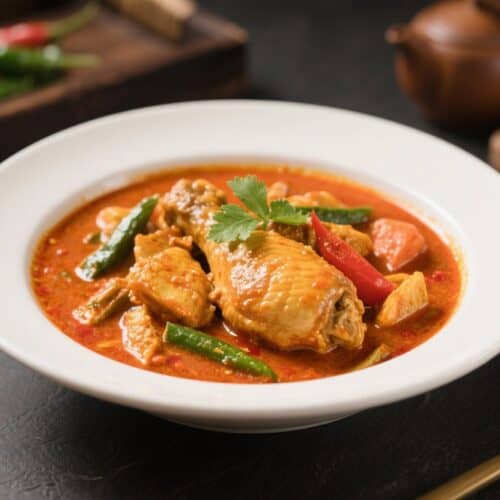
Thai red chicken curry is rich, creamy, and full of bold, fragrant flavors—but it’s also surprisingly easy to make at home. With the right ingredients and a little technique, you can have a restaurant-quality curry on the table in under 40 minutes. It’s the kind of dish that warms you from the inside out without feeling heavy.
Serve it over jasmine rice, and you’ve got a satisfying meal that tastes even better the next day. If you love a balance of sweet, salty, spicy, and aromatic, this is your kind of recipe.
Thai Red Chicken Curry – A Cozy, Flavor-Packed Weeknight Favorite
Ingredients
- 1–1.5 pounds boneless, skinless chicken thighs or breasts, thinly sliced
- 2 tablespoons neutral oil (canola, avocado, or vegetable)
- 2–3 tablespoons Thai red curry paste (adjust for heat)
- 1 can (13.5–14 oz) full-fat coconut milk
- 1/2 cup low-sodium chicken broth or water
- 1 small yellow onion, thinly sliced
- 1 red bell pepper, thinly sliced
- 1 cup sliced carrots or snap peas (optional)
- 2 cloves garlic, minced
- 1 teaspoon fresh ginger, grated (optional but recommended)
- 1–2 tablespoons fish sauce (to taste)
- 1–2 teaspoons brown sugar or palm sugar
- Juice of 1/2 lime, plus wedges for serving
- Fresh Thai basil or basil leaves, torn
- Fresh cilantro (optional), chopped
- Cooked jasmine rice, for serving
- Optional heat boosters: sliced red chili or chili flakes
Instructions
- Prep your ingredients. Slice the chicken thinly so it cooks quickly and stays tender. Have the vegetables, garlic, and ginger ready to go. Shake the coconut milk can to blend the cream and liquid.
- Heat the pan. Use a large skillet or wok over medium heat. Add the oil and let it warm until shimmering but not smoking.
- Bloom the curry paste. Stir in the red curry paste and cook for 1–2 minutes, stirring often. It should smell fragrant and slightly toasty. This step deepens the flavor.
- Sauté aromatics. Add the garlic and ginger and cook for 30 seconds. Don’t let them brown—just soften and release their aroma.
- Add coconut milk and broth. Pour in the coconut milk and chicken broth. Stir well to dissolve the curry paste into the liquid. Bring to a gentle simmer.
- Season the sauce. Add 1 tablespoon fish sauce and 1 teaspoon sugar to start. You’ll adjust later. Taste for saltiness and sweetness as it cooks.
- Cook the chicken. Add the sliced chicken to the simmering sauce. Keep the heat at a gentle simmer and cook for 6–8 minutes, stirring occasionally, until the chicken is just cooked through.
- Add vegetables. Stir in the onion, bell pepper, and any other vegetables. Simmer for 3–5 minutes, until tender but still vibrant. Avoid overcooking—crisp-tender is best.
- Finish with freshness. Turn off the heat. Stir in lime juice and a handful of torn basil leaves. Taste and adjust: add more fish sauce for salt, sugar for balance, or curry paste for more kick.
- Serve. Spoon over hot jasmine rice. Top with extra basil, cilantro, and sliced chili if you like it spicier. Serve with lime wedges.
Why This Recipe Works
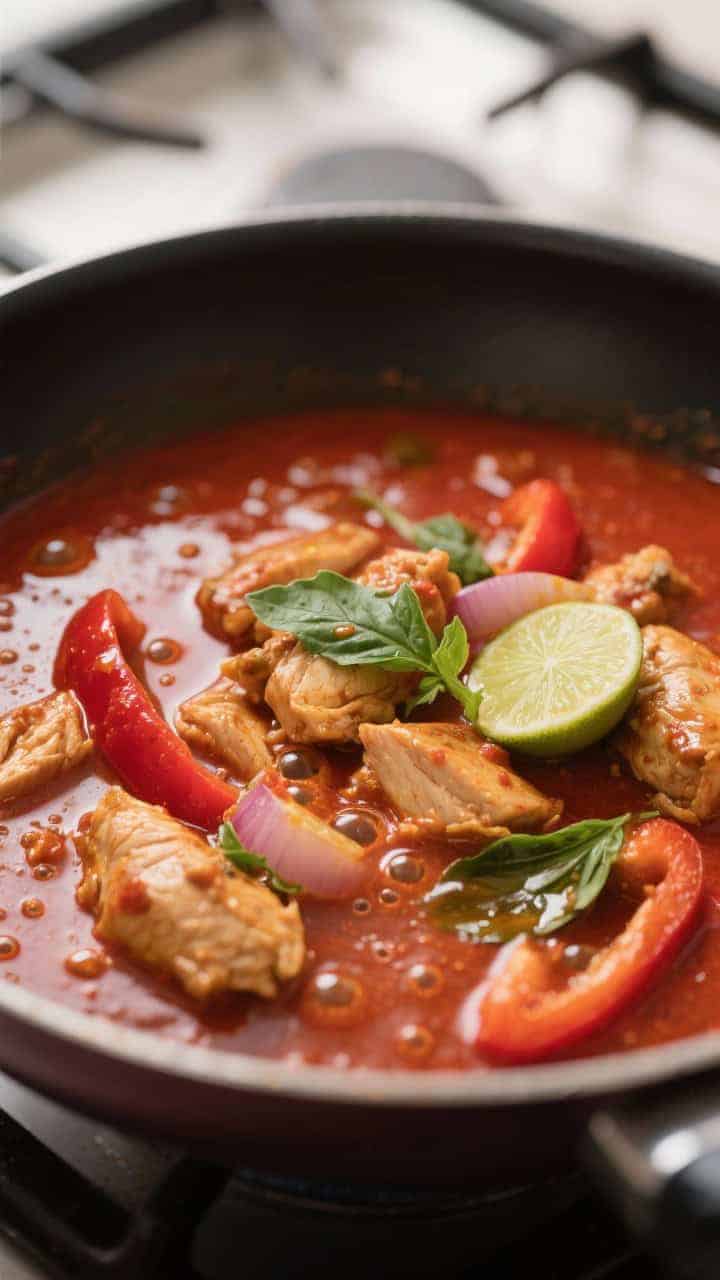
This curry uses Thai red curry paste as the flavor base, which packs depth and complexity with minimal effort. Coconut milk adds creaminess and softens the heat, making each bite silky and balanced. Blooming the curry paste in oil wakes up the spices and gives the sauce a richer, more aromatic flavor.
A splash of fish sauce and brown sugar brings that classic Thai harmony of savory and sweet. Fresh lime juice and basil finish it off with brightness and aroma, so nothing tastes flat.
What You’ll Need
- 1–1.5 pounds boneless, skinless chicken thighs or breasts, thinly sliced
- 2 tablespoons neutral oil (canola, avocado, or vegetable)
- 2–3 tablespoons Thai red curry paste (adjust for heat)
- 1 can (13.5–14 oz) full-fat coconut milk
- 1/2 cup low-sodium chicken broth or water
- 1 small yellow onion, thinly sliced
- 1 red bell pepper, thinly sliced
- 1 cup sliced carrots or snap peas (optional)
- 2 cloves garlic, minced
- 1 teaspoon fresh ginger, grated (optional but recommended)
- 1–2 tablespoons fish sauce (to taste)
- 1–2 teaspoons brown sugar or palm sugar
- Juice of 1/2 lime, plus wedges for serving
- Fresh Thai basil or basil leaves, torn
- Fresh cilantro (optional), chopped
- Cooked jasmine rice, for serving
- Optional heat boosters: sliced red chili or chili flakes
Step-by-Step Instructions

- Prep your ingredients. Slice the chicken thinly so it cooks quickly and stays tender. Have the vegetables, garlic, and ginger ready to go.
Shake the coconut milk can to blend the cream and liquid.
- Heat the pan. Use a large skillet or wok over medium heat. Add the oil and let it warm until shimmering but not smoking.
- Bloom the curry paste. Stir in the red curry paste and cook for 1–2 minutes, stirring often. It should smell fragrant and slightly toasty.
This step deepens the flavor.
- Sauté aromatics. Add the garlic and ginger and cook for 30 seconds. Don’t let them brown—just soften and release their aroma.
- Add coconut milk and broth. Pour in the coconut milk and chicken broth. Stir well to dissolve the curry paste into the liquid.
Bring to a gentle simmer.
- Season the sauce. Add 1 tablespoon fish sauce and 1 teaspoon sugar to start. You’ll adjust later. Taste for saltiness and sweetness as it cooks.
- Cook the chicken. Add the sliced chicken to the simmering sauce.
Keep the heat at a gentle simmer and cook for 6–8 minutes, stirring occasionally, until the chicken is just cooked through.
- Add vegetables. Stir in the onion, bell pepper, and any other vegetables. Simmer for 3–5 minutes, until tender but still vibrant. Avoid overcooking—crisp-tender is best.
- Finish with freshness. Turn off the heat.
Stir in lime juice and a handful of torn basil leaves. Taste and adjust: add more fish sauce for salt, sugar for balance, or curry paste for more kick.
- Serve. Spoon over hot jasmine rice. Top with extra basil, cilantro, and sliced chili if you like it spicier.
Serve with lime wedges.
Keeping It Fresh
For the best texture, store the curry and rice separately. Keep the curry in an airtight container in the fridge for up to 4 days. The flavors actually meld and improve overnight.
Reheat gently on the stove over low heat or in the microwave at half power to avoid splitting the coconut milk. If the sauce thickens too much, add a splash of water or broth to loosen it.

Benefits of This Recipe
- Weeknight-friendly: Ready in about 30–40 minutes with minimal prep.
- Flexible and forgiving: Swap veggies, adjust heat, use thighs or breasts, and tweak seasoning to suit your taste.
- Nutrient-rich: Protein from chicken, healthy fats from coconut milk, and fiber from vegetables.
- Balanced flavor: Combines spicy, sweet, salty, and tangy notes for a crowd-pleasing dish.
- Meal-prep friendly: Tastes even better the next day and reheats well.
Common Mistakes to Avoid
- Skipping the bloom: Adding curry paste straight to liquid without cooking it in oil first can lead to a dull sauce. Blooming activates the spices.
- Boiling too hard: A rolling boil can cause coconut milk to split and chicken to toughen.
Keep it at a gentle simmer.
- Overcooking vegetables: Add them toward the end so they keep color and crunch.
- Under-seasoning: Taste at the end and adjust fish sauce, sugar, and lime to get the right balance.
- Using light coconut milk: It can make the sauce thin and less velvety. Full-fat gives the best texture and flavor.
Recipe Variations
- Seafood Red Curry: Swap chicken for shrimp or a firm white fish. Add seafood in the last 3–4 minutes of simmering so it doesn’t overcook.
- Vegetarian/Vegan: Use tofu or chickpeas and vegetable broth.
Add extra vegetables like mushrooms, baby corn, and zucchini. Replace fish sauce with soy sauce or a vegan fish sauce.
- Pineapple Twist: Add pineapple chunks near the end for sweetness and brightness. This pairs especially well with shrimp.
- Extra Greens: Stir in spinach or kale during the last minute to wilt gently and boost nutrients.
- Peanut-Style: Whisk in 1–2 tablespoons peanut butter for a thicker, nutty sauce.
Adjust sugar and lime to keep balance.
- Low-Carb Option: Serve over cauliflower rice or steamed cabbage instead of jasmine rice.
FAQ
What’s the best curry paste to use?
Look for Thai brands like Mae Ploy or Thai Kitchen. They vary in heat and saltiness, so start with less and add more to taste. Freshness matters—use a recently opened jar for the best flavor.
Can I use light coconut milk?
You can, but the sauce will be thinner and less creamy.
If you prefer a lighter version, simmer a bit longer to reduce, or add a small cornstarch slurry to thicken slightly.
How spicy is this curry?
It depends on the curry paste and how much you use. Start with 2 tablespoons for moderate heat. Add sliced chilies or more paste if you like it hotter.
Can I freeze Thai red chicken curry?
Yes.
Cool completely, then freeze for up to 2 months. Thaw in the fridge overnight and reheat gently. The texture may be slightly looser after freezing, but the flavor stays great.
Do I need fish sauce?
Fish sauce adds depth and savory complexity.
If you don’t have it or prefer not to use it, substitute soy sauce or tamari, and adjust salt to taste. A squeeze of lime helps brighten the flavor.
What’s the best cut of chicken?
Chicken thighs stay juicier and are more forgiving. Breasts work too—just slice thinly and avoid overcooking to keep them tender.
How do I prevent the sauce from splitting?
Keep the heat moderate and avoid boiling hard.
Stir occasionally and reheat gently. If it begins to separate, whisk in a splash of warm water or more coconut milk.
Can I make it ahead?
Yes. It reheats well and often tastes better the next day.
Store the basil and lime separately and add them right before serving to keep the flavors fresh.
Final Thoughts
Thai red chicken curry is one of those rare dishes that feels special without being complicated. With a handful of pantry staples and fresh herbs, you can make a comforting, restaurant-worthy meal at home. Keep the heat gentle, balance the flavors, and finish with lime and basil.
Serve with fluffy jasmine rice, and enjoy a cozy, vibrant dinner any night of the week.
-
Thai Cashew Chicken Stir-Fry
Savory stir-fry with tender chicken, crunchy cashews, and bold Thai flavors.
-
Thai Chicken Larb
Zesty, fresh chicken larb with vibrant herbs and lime.
-
Thai Green Chicken Curry
Creamy, aromatic green curry with fragrant herbs.