
12 Raised Garden Bed Ideas for Tiny Yards That Still Produce Plenty
A small yard does not mean small results. With the right raised bed setup, even the tiniest outdoor space can feel productive, beautiful, and surprisingly abundant.
The secret is not cramming in more plants. It is choosing layouts that make every inch work harder while still feeling calm and well styled.
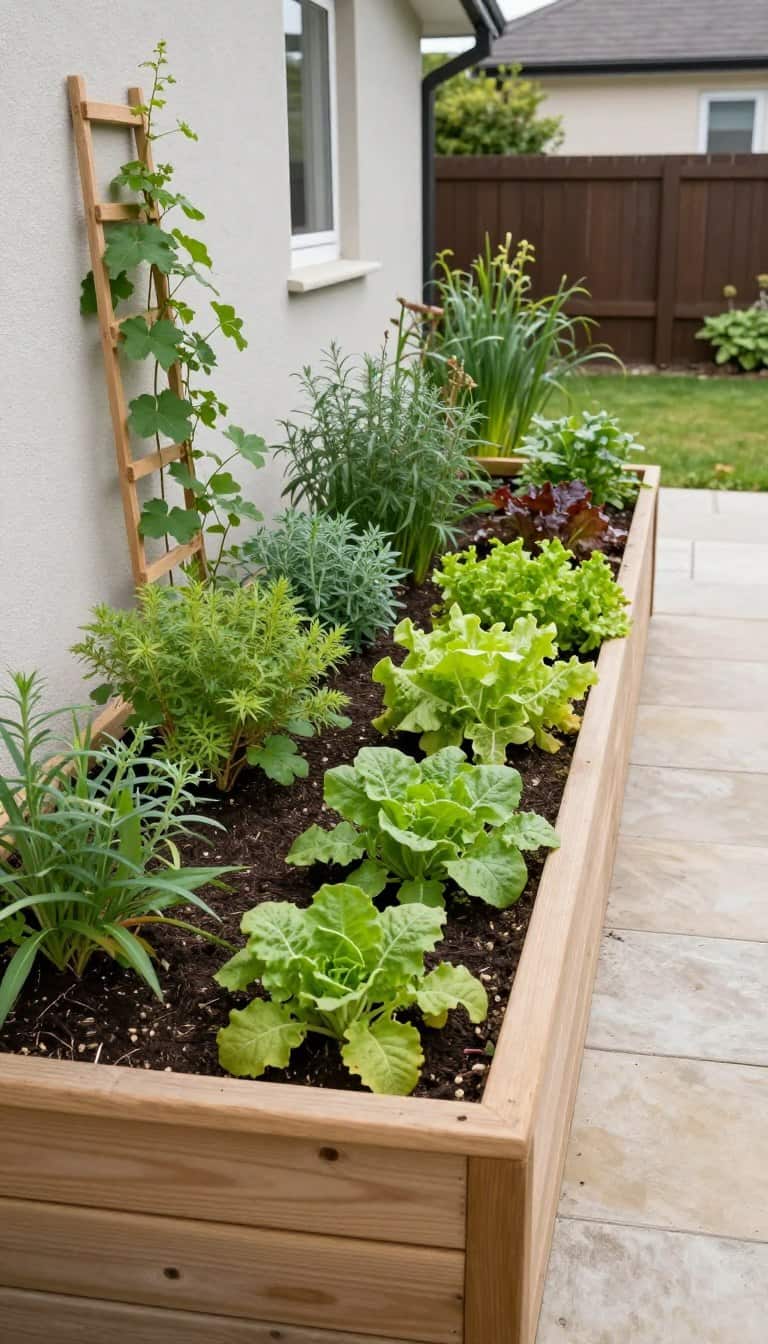
1. Narrow Side Yard Raised Beds

That awkward strip down the side of your house can become one of your most productive growing areas. Long, narrow raised beds fit neatly without blocking walkways.
It turns an overlooked space into something purposeful and quietly impressive.
- Best for herbs, leafy greens, climbing plants
- Keep width slim for easy reach
- Add a trellis for vertical growth
2. Corner Raised Bed Layout

Corners are often wasted space. An L shaped raised bed makes that area feel intentional while giving you more room to grow.
It also helps frame your yard in a way that feels more considered and balanced.
- Ideal for mixed vegetables and herbs
- Use taller plants at the back
- Keep pathways clear
3. Tiered Raised Garden Beds

When space is limited, building upward makes all the difference. Tiered beds create extra planting space while adding visual depth.
They help your garden feel fuller without taking up more ground.
- Top tiers for herbs and smaller plants
- Lower tiers for larger vegetables
- Ideal for slight slopes
4. Raised Beds With Built In Trellis

Vertical growing is one of the easiest ways to increase your harvest in a small space. A built in trellis allows plants to grow upward rather than outward.
This keeps everything neat while making better use of the space you have.
- Great for tomatoes, beans, cucumbers
- Use sturdy supports
- Position at the back of the bed
5. Compact Square Foot Garden Beds

Square foot gardening is perfect for tight spaces. Dividing your bed into sections helps you grow more without overcrowding.
It also keeps everything organised and easy to maintain.
- Use grid spacing
- Mix herbs and vegetables
- Rotate crops seasonally
6. Raised Beds Along Fencing

Placing beds along a fence keeps the center of your yard open and uncluttered while giving plants natural support.
It creates a clean layout that feels both practical and spacious.
- Use fences for climbing plants
- Keep beds narrow
- Add simple storage if needed
7. Portable Raised Planter Boxes

If flexibility matters, portable raised beds are a great option. You can move them to follow sunlight or change your layout easily.
- Ideal for herbs and small vegetables
- Choose lightweight designs
- Perfect for patios or rented spaces
8. U Shaped Raised Bed Design

A U shaped layout maximises planting space while keeping everything within easy reach.
It creates a compact growing zone that feels efficient and well planned.
- Great for dedicated garden corners
- Keep center space open
- Mix plant heights for balance
9. Raised Bed With Seating Edge

A wider edge transforms your raised bed into a place to sit as well as grow. It blends comfort and function in a simple way.
- Use sturdy materials
- Place near seating areas
- Keep planting simple
10. Minimalist Gravel and Raised Bed Combo

Combining raised beds with gravel keeps everything tidy and low maintenance while visually defining the space.
- Use light gravel to brighten space
- Add stepping stones
- Keep planting structured
11. Staggered Raised Beds for Depth

Staggering beds instead of lining them evenly adds depth and movement. It helps your garden feel more layered and less rigid.
- Vary heights slightly
- Leave space between beds
- Use consistent materials
12. Raised Beds With Mixed Edible and Decorative Plants

Your garden can be both productive and beautiful. Mixing vegetables, herbs, and flowers softens the look while still giving you plenty to harvest.
- Combine herbs with flowers
- Use colour for interest
- Encourage pollinators naturally
A Tiny Yard That Works Beautifully
A small yard can still feel abundant when it is designed with intention. Raised beds give you structure, control, and a simple way to make the most of limited space.
Start with one layout that suits your space, keep things simple, and let your garden grow naturally from there. Even the smallest outdoor corner can become something quietly productive and beautiful.