
12 Raised Garden Bed Layout Ideas That Just Make Sense
A garden can have great soil and healthy plants and still feel frustrating to use if the layout is off.
The right setup changes everything. It makes watering easier, harvesting quicker, and the whole space feel calm instead of chaotic.
These raised garden bed layouts focus on what actually works day to day while still looking beautifully put together.
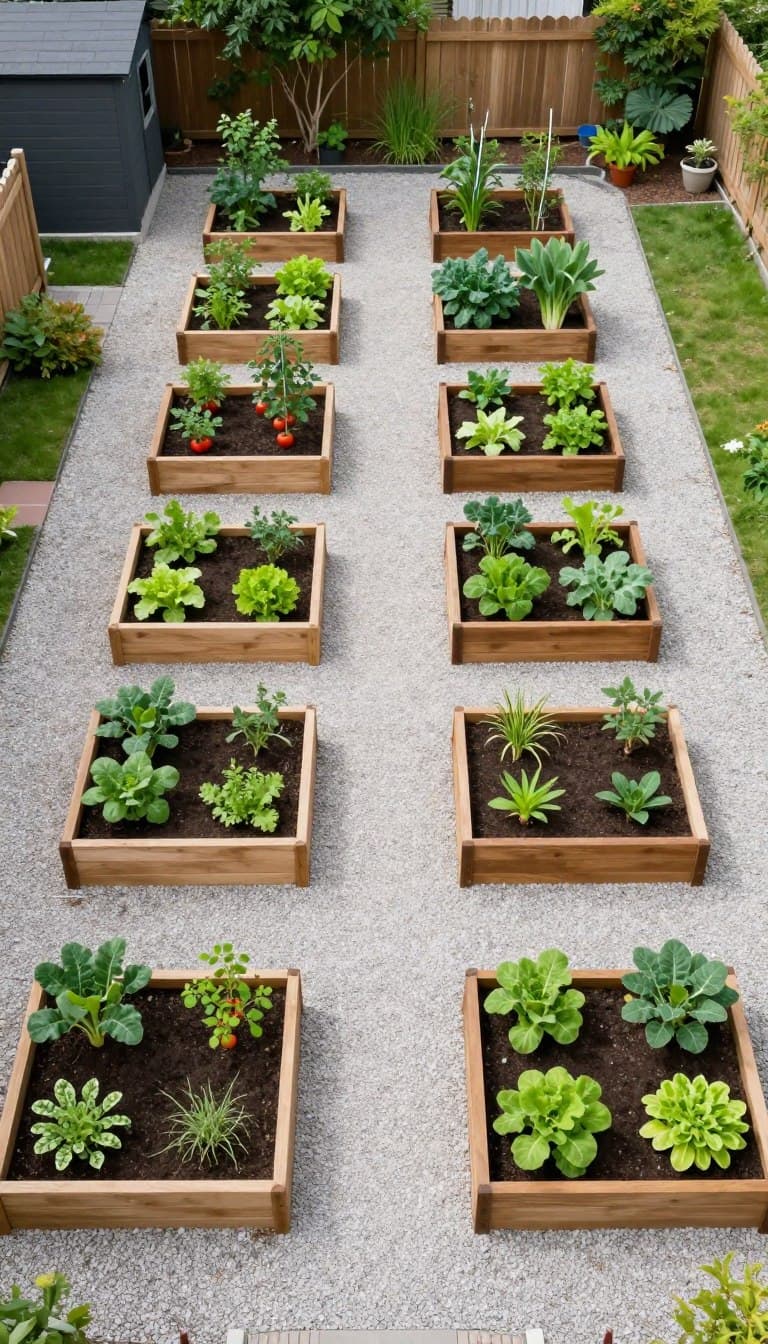
1. The Simple Grid That Keeps Everything Clear

A grid layout instantly brings structure. Beds sit in neat rows with clear paths, making everything easy to navigate.
It removes guesswork. You always know where things are and how to move around.
- Mood: Clean and organised
- Best for: Beginners
- Tip: Keep beds 4ft wide for easy reach
2. U-Shaped Layout That Brings Everything Close
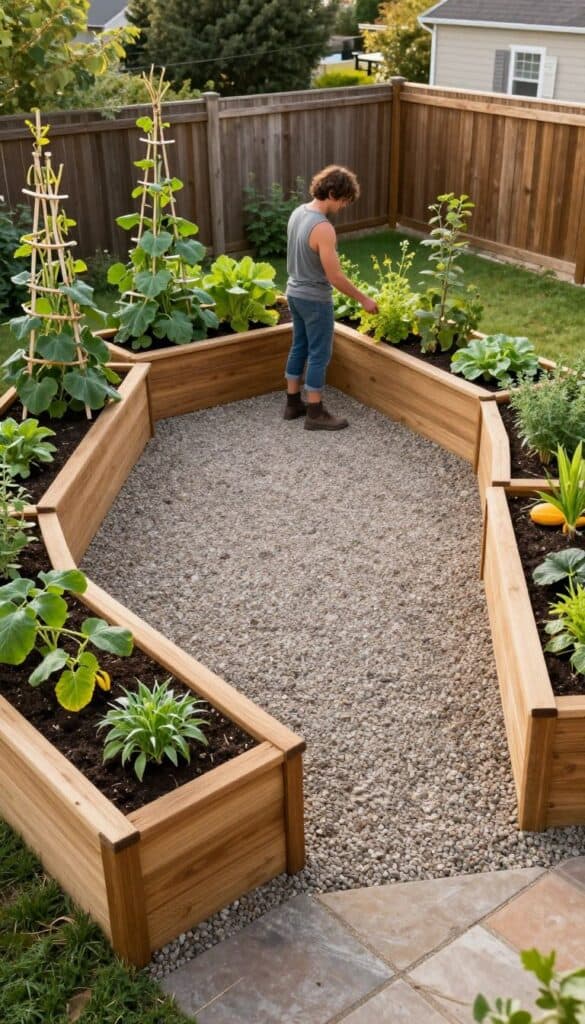
This layout wraps around you, keeping everything within reach.
It feels efficient and intuitive, perfect if you garden often.
- Mood: Practical and efficient
- Best for: Small spaces
- Tip: Keep herbs and daily picks nearby
3. Parallel Rows with Comfortable Walkways
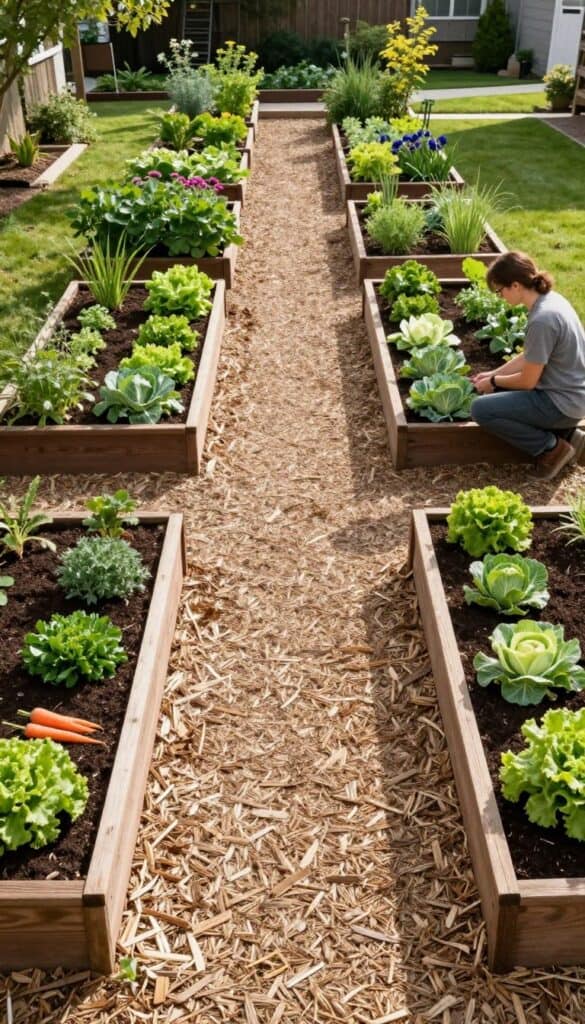
Long rows paired with wider paths make everything feel relaxed and easy to use.
You can move comfortably without squeezing between beds.
- Mood: Open and practical
- Best for: Larger gardens
- Tip: Allow at least 3ft walkways
4. L-Shaped Layout That Uses Corners Well

Corners often go unused, but this layout turns them into productive space.
It keeps the centre open while still giving you plenty of growing room.
- Mood: Smart and space-saving
- Best for: Compact gardens
- Tip: Match plants to sun direction
5. Central Bed That Anchors the Space

A central bed creates an instant focal point.
It makes the whole garden feel designed rather than scattered.
- Mood: Styled and intentional
- Best for: Feature gardens
- Tip: Use decorative edible plants
6. Tiered Layout for Sloped Gardens

Instead of fighting a slope, this layout works with it.
It creates flat planting areas and adds depth at the same time.
- Mood: Layered and structured
- Best for: Sloped yards
- Tip: Use upper beds for sun-loving plants
7. Perimeter Layout That Opens the Centre

Beds run along the edges, leaving the middle open and airy.
The space instantly feels bigger and more relaxed.
- Mood: Spacious and calm
- Best for: Multi-use gardens
- Tip: Use edges for trellis planting
8. Keyhole Layout for Compact Efficiency

This circular layout lets you reach everything without stepping into the soil.
It’s compact, efficient, and surprisingly productive.
- Mood: Efficient and compact
- Best for: Small productive gardens
- Tip: Add a compost centre
9. Symmetrical Layout That Feels Balanced
Matching beds on either side of a central path create instant calm.
Everything feels aligned, balanced, and easy to maintain.
- Mood: Calm and structured
- Best for: Formal gardens
- Tip: Mirror layout, not necessarily crops
10. Mixed Bed Sizes for Flexibility

Different bed sizes let you match the space to what you grow.
It feels more natural and avoids wasted space.
- Mood: Relaxed and organic
- Best for: Mixed planting
- Tip: Use large beds for sprawling crops
11. Narrow Path Layout for Maximum Growing Space

If your goal is to grow as much as possible, this layout makes every inch count.
Beds sit closer together with just enough room to move between them, which means more space goes to planting instead of pathways.
- Mood: Productive and focused
- Best for: High-yield kitchen gardens
- Tip: Keep beds narrow enough to reach from both sides
12. Zoned Beds for Easier Crop Planning

Giving each bed a purpose makes the whole garden easier to manage.
One bed for herbs, one for leafy greens, one for root crops. It keeps planting more organised and makes crop rotation feel much less messy.
- Mood: Organised and easy to maintain
- Best for: Gardeners who want a clear system
- Tip: Group crops by type or by how often you harvest them
A good layout does not shout for attention, but you feel the difference every time you step into the garden.
Start with the setup that fits your space best, then build from there. The goal is not perfection. It is a garden that feels easier to use and nicer to spend time in.