
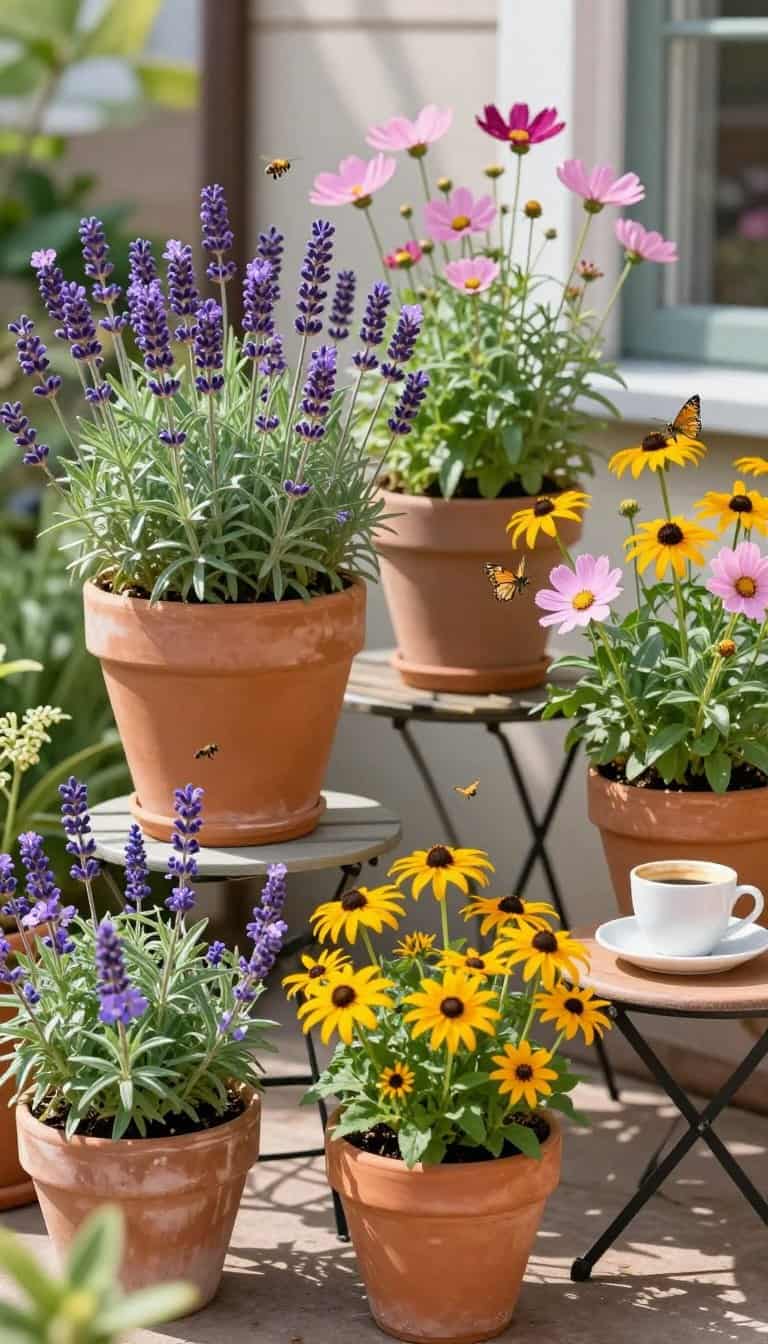
How to Create a Pollinator-Friendly Patio Garden in Pots
Creating a pollinator friendly patio garden is one of the easiest ways to bring more life, colour, and movement into a small outdoor space. Even a tiny balcony or compact patio can become a buzzing little sanctuary filled with butterflies and bees when the right plants and containers are used.
The best part is that you do not need a huge garden or complicated landscaping to make it happen. A few thoughtfully arranged pots overflowing with nectar rich flowers can completely transform an ordinary patio into a lively, beautiful retreat.
And honestly, watching bees happily bounce from flower to flower while you drink your morning coffee feels oddly luxurious.
1. Choose Pots in Different Heights and Sizes
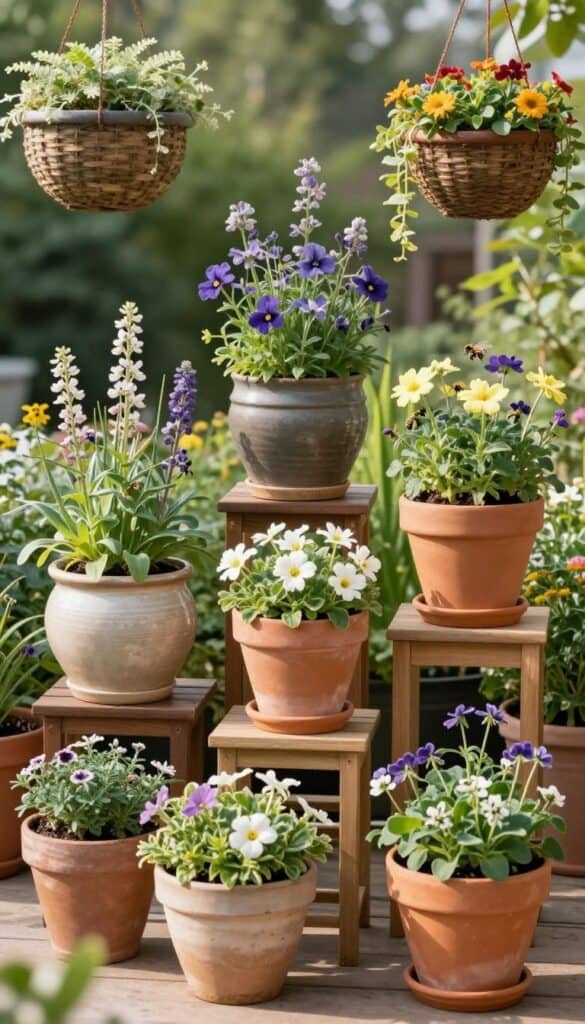
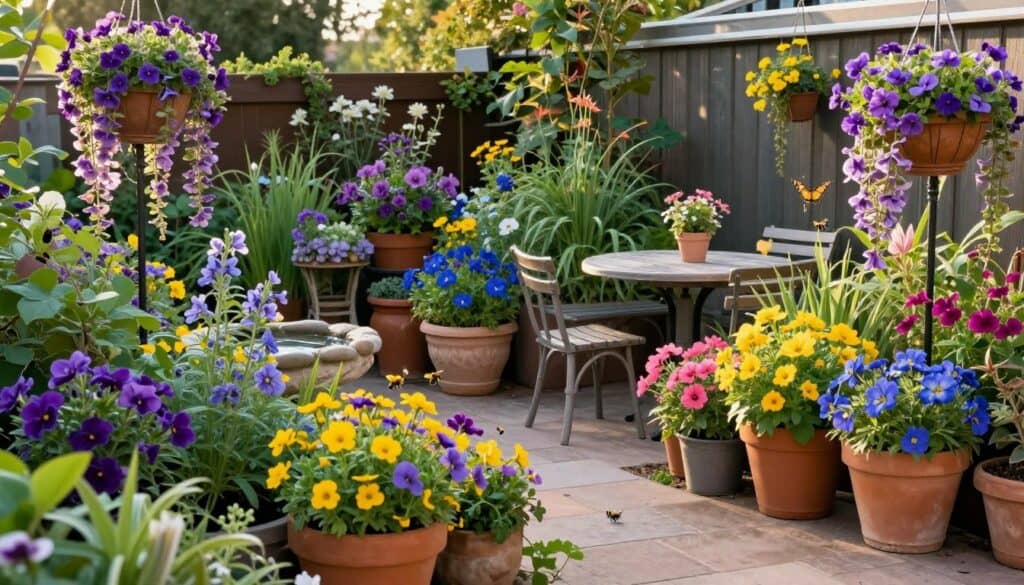
A pollinator garden looks far more natural and inviting when containers are layered at different heights instead of lined up in one stiff row against the wall.
Use a mix of tall planters, hanging baskets, window boxes, and low terracotta pots to create visual depth. Pollinators are naturally drawn to dense flower groupings because they can feed more efficiently without travelling far between blooms.
- Best containers: Terracotta, ceramic, wood planters
- Looks best with: Mixed flower heights and trailing plants
- Accent idea: Add a small wooden plant stand for layering
This layered approach creates a mini meadow effect even on the smallest patio.
2. Fill Your Pots With Nectar Rich Flowers
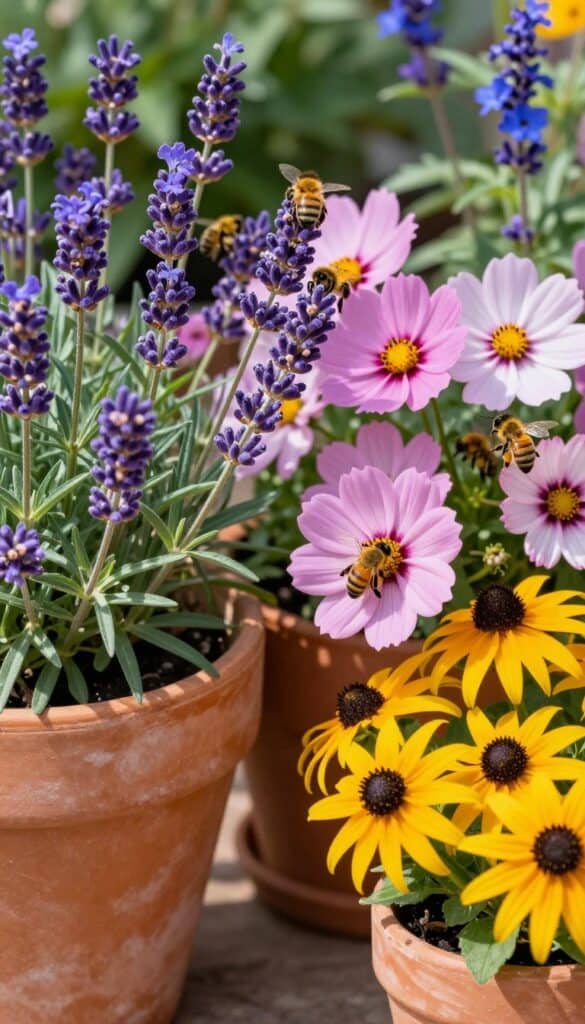
The flowers themselves are the real stars of a pollinator patio garden. Bees and butterflies are especially drawn to nectar rich blooms with bright colours and open flower shapes.
Lavender, salvia, echinacea, cosmos, verbena, and black eyed Susans are excellent choices for containers because they flower generously and attract pollinators for months.
- Best flowers: Lavender, cosmos, salvia, verbena
- Best for: Bees and butterflies
- Style tip: Stick to 2–3 flower colours for a calmer patio look
Grouping similar flowers together creates stronger visual impact for both pollinators and people.
3. Add Herbs That Pollinators Love
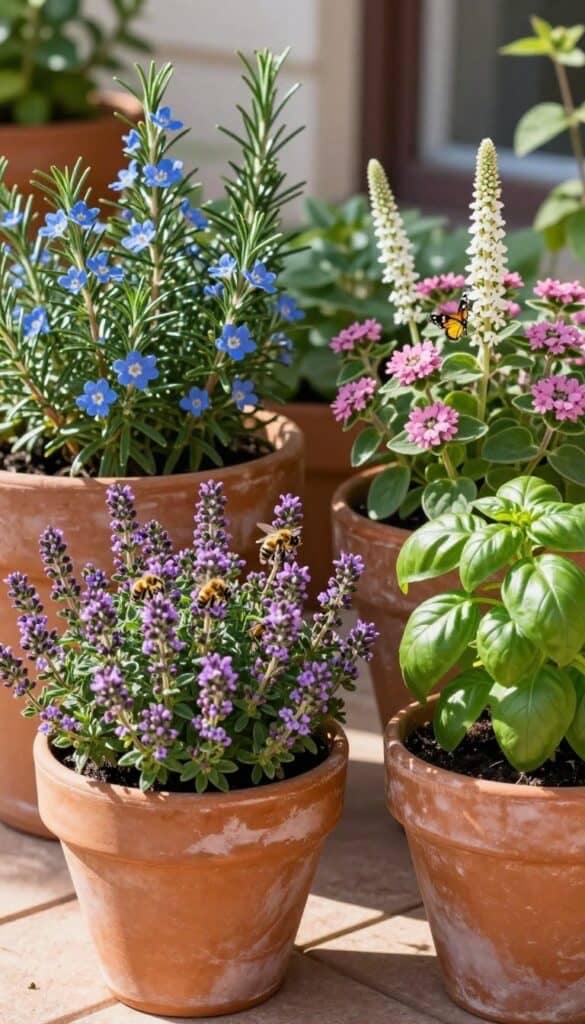
Herbs are quietly brilliant patio plants. They smell wonderful, are useful in the kitchen, and many become pollinator magnets once they flower.
Bee friendly herbs like thyme, oregano, basil, rosemary, and mint all work beautifully in pots. Let some of them flower instead of trimming everything back constantly. The bees will appreciate your generosity.
- Best herbs: Thyme, rosemary, oregano, basil
- Why it works: Edible and pollinator friendly
- Accent idea: Use rustic clay herb pots for a cottage feel
Flowering herbs also add lovely fragrance that makes the whole patio feel more immersive and relaxed.
4. Include Trailing Flowers for Softness
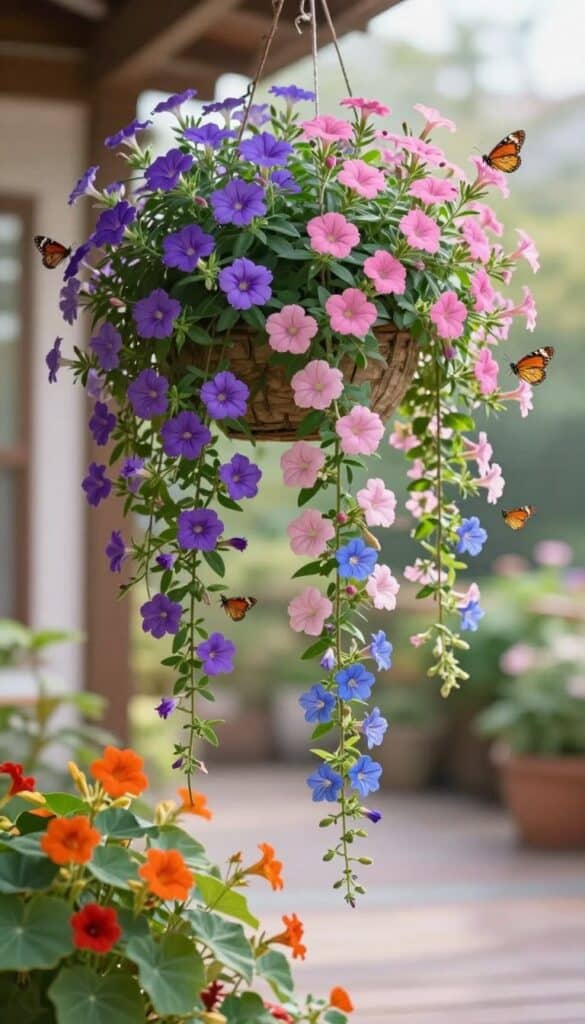
Trailing flowers instantly make patio gardens feel softer and fuller. They help containers look lush rather than sparse, especially in small outdoor spaces.
Trailing verbena, calibrachoa, nasturtiums, and lobelia spill beautifully over pot edges while still providing nectar for pollinators.
- Best trailing plants: Lobelia, nasturtiums, calibrachoa
- Looks best with: Upright flowering plants mixed together
- Style tip: Let plants overflow naturally for a relaxed look
The contrast between upright flowers and trailing greenery gives containers a far more layered and professional look.
5. Use Bright Colours Pollinators Notice Easily
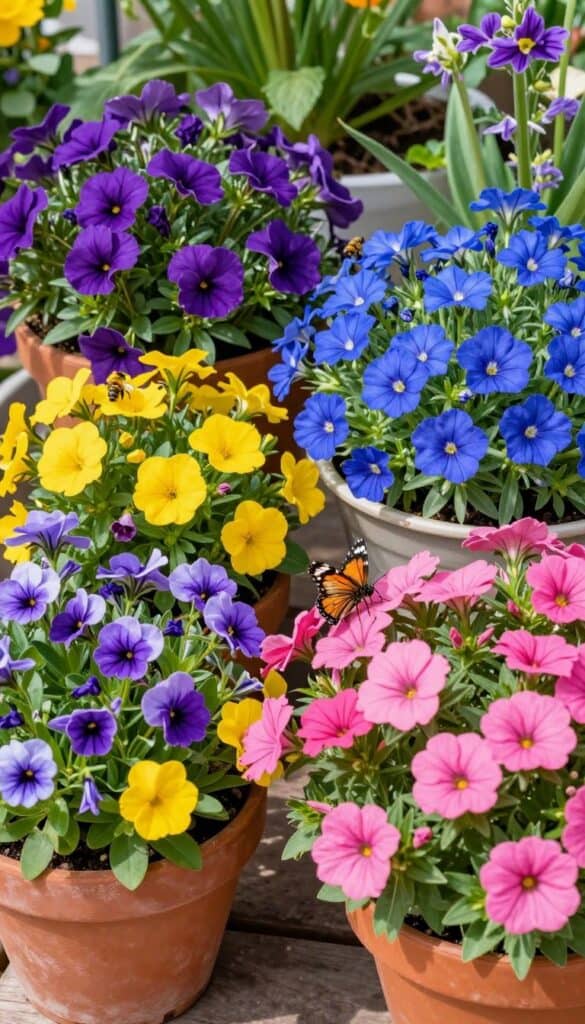
Pollinators are naturally drawn to certain colours, especially purple, yellow, blue, and pink. Filling your patio with these shades helps bees and butterflies spot flowers more easily.
Mix bright blooms with softer greenery so the patio still feels balanced rather than visually overwhelming.
- Best colours: Purple, blue, yellow, pink
- Best for: Attracting bees and butterflies
- Style tip: Repeat flower colours across multiple pots
Repeating colours throughout the patio also creates a more cohesive and thoughtfully designed look.
6. Add a Small Water Source
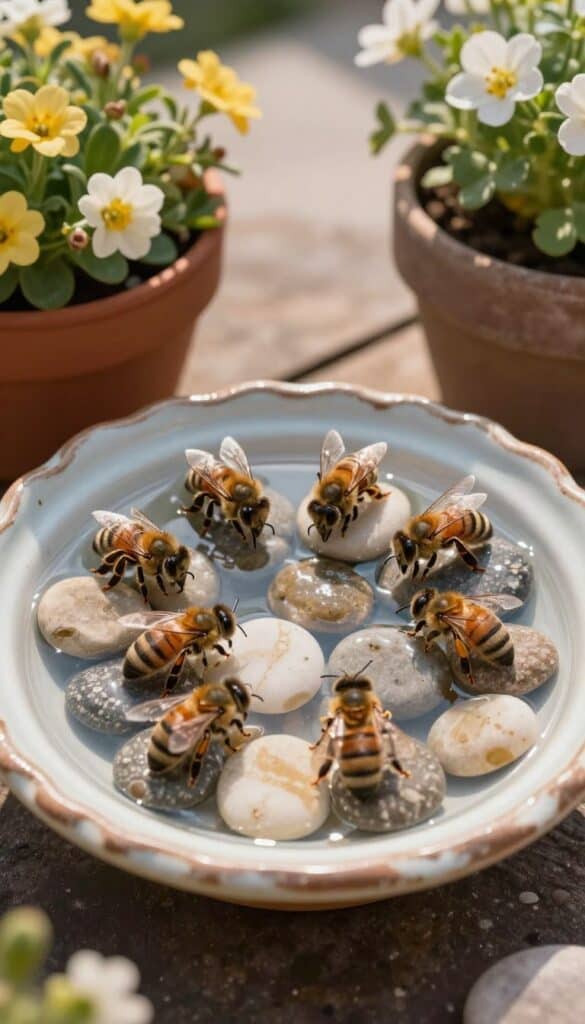
Pollinators need water too, especially during warmer months. A shallow dish filled with pebbles and fresh water creates a safe landing spot for bees and butterflies.
You do not need a huge fountain or elaborate feature. Even a simple ceramic saucer tucked between containers can make your patio more inviting to wildlife.
- Best option: Shallow dish with stones
- Why it works: Gives pollinators safe access to water
- Accent idea: Use a vintage style bird dish for charm
Refresh the water regularly during hot weather so it stays clean and useful for visiting insects.
7. Avoid Chemical Pesticides
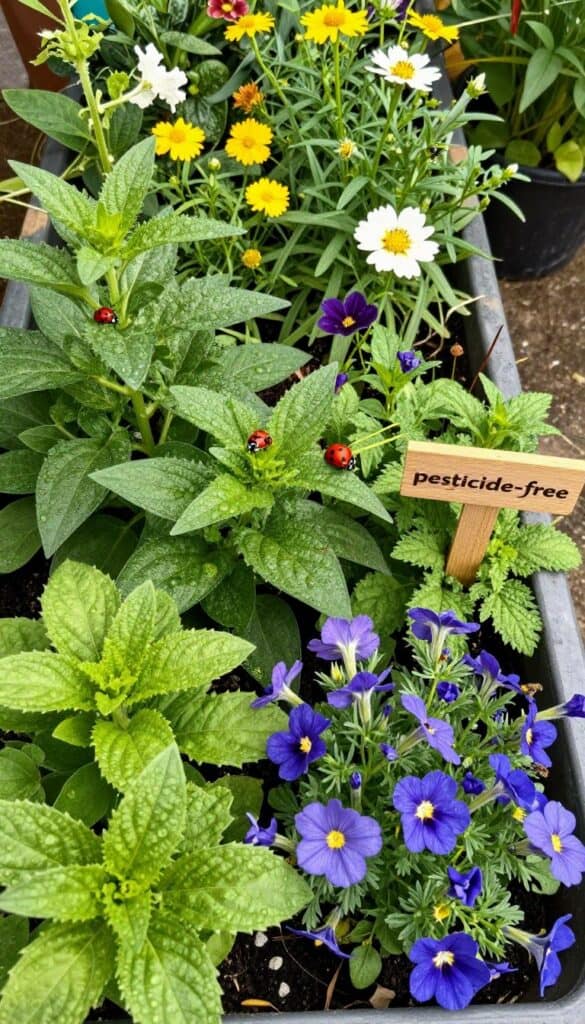
One of the most important parts of creating a pollinator friendly garden is avoiding harsh pesticides that can harm bees and butterflies.
Instead, encourage natural balance by mixing flowers, herbs, and companion plants together. Healthy container gardens often attract beneficial insects naturally which helps reduce pest problems over time.
- Best approach: Natural gardening methods
- Why it matters: Protects pollinator health
- Quick tip: Remove pests manually before using sprays
Strong healthy plants grown in quality soil usually experience far fewer pest problems anyway.
8. Create a Cozy Seating Area Within the Pots
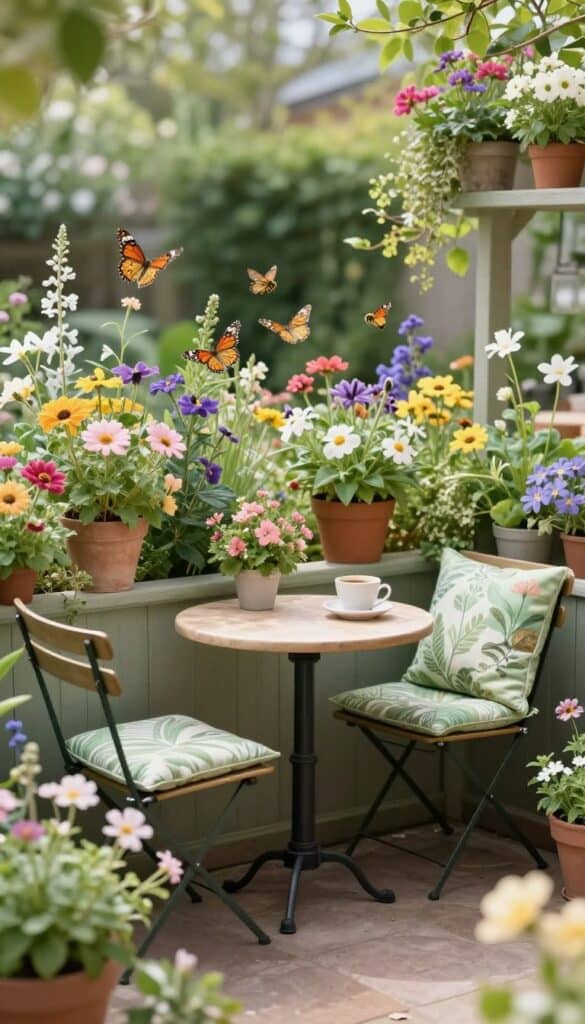
A pollinator patio garden feels even more magical when you actually sit inside it instead of simply admiring it through the window while dramatically holding coffee.
Tuck a small bistro table, bench, or cosy chair between the containers so the flowers surround the seating area. The movement of butterflies and bees adds life and calmness that makes even tiny patios feel immersive and peaceful.
- Best seating: Small bistro sets or wooden benches
- Looks best with: Pots grouped closely around seating
- Style tip: Add outdoor cushions in soft botanical colours
This setup transforms even the smallest patio into a cosy little wildlife retreat.
9. Include Native Plants Where Possible
Native plants are especially valuable in pollinator gardens because they evolved alongside local pollinator species. They often provide exactly the nectar, pollen, and habitat native bees and butterflies need.
Many native flowers adapt beautifully to containers and usually require less maintenance once established.
- Container friendly natives: Coneflower, black eyed Susan, asters
- Why it works: Supports local ecosystems
- Style tip: Mix native flowers with herbs and trailing plants
Even adding a few native species can make your patio significantly more valuable to local pollinators.
10. Add a Small Bee Hotel or Nesting Spot
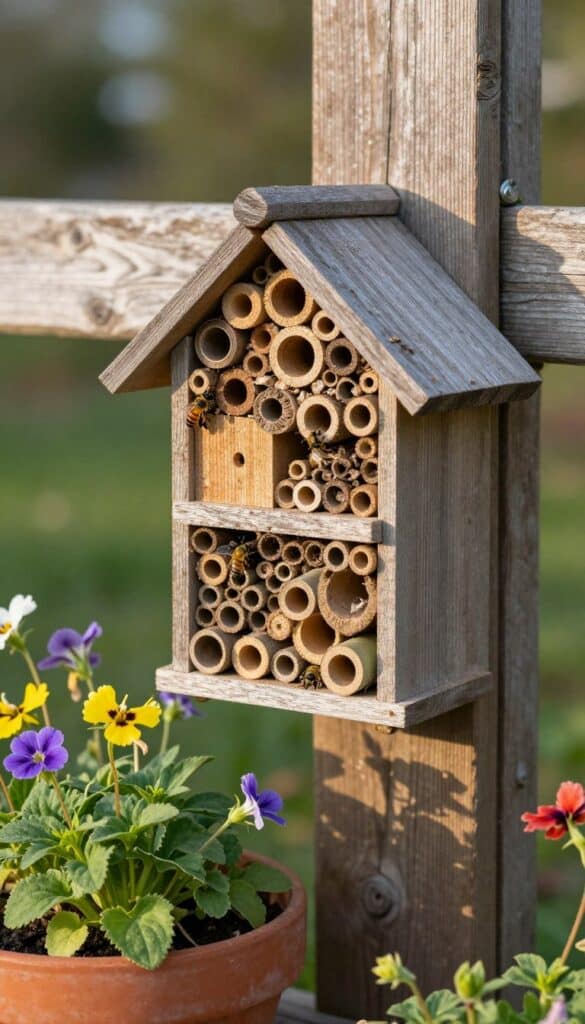
Supporting pollinators is not only about flowers. Many native bee species also need safe places to nest and shelter.
A small bee hotel tucked near your containers provides nesting spots for solitary bees while adding a charming natural touch to the patio.
- Best option: Small wooden bee hotel
- Best for: Supporting native solitary bees
- Style tip: Position in a sunny sheltered spot
Leaving a few hollow stems standing through winter also provides natural shelter for beneficial insects.
11. Keep Blooms Going Through the Seasons
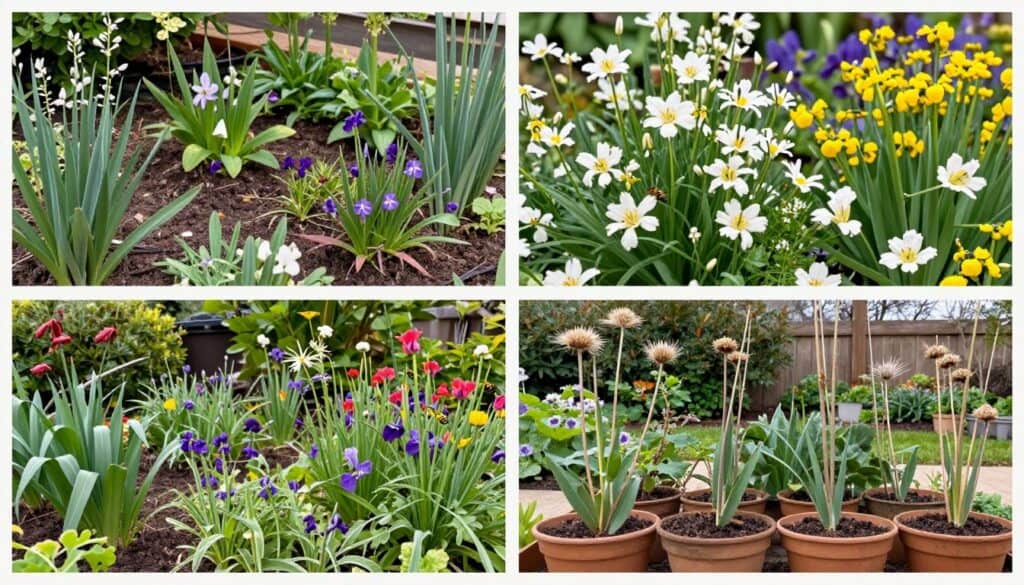
Pollinators need food sources throughout the growing season, not just during one brief burst of summer flowers.
Mix early bloomers, summer favourites, and late flowering plants together so there is always something in bloom from spring through autumn.
- Spring flowers: Crocus, primrose, flowering herbs
- Summer favourites: Cosmos, salvia, lavender
- Autumn bloomers: Asters, sedum, late salvias
This succession planting approach keeps your patio lively for much longer while continuously supporting pollinators.
12. Let the Garden Feel Slightly Wild
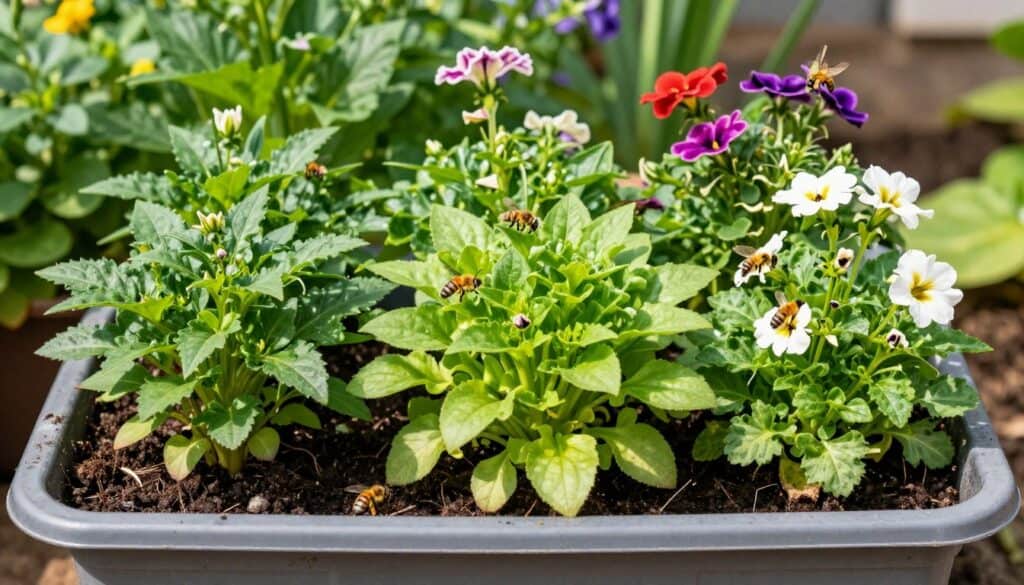
The most beautiful pollinator gardens usually feel slightly relaxed rather than perfectly trimmed and controlled.
Allow flowers to spill over pot edges, leave some seed heads standing, and embrace a little natural movement. Pollinators tend to prefer gardens that feel abundant and layered rather than overly formal.
- Best approach: Relaxed cottage garden inspired planting
- Why it works: Mimics natural pollinator habitat
- Style tip: Focus on texture and fullness over perfection
A slightly wild patio garden feels softer, more inviting, and wonderfully alive.
Creating a Pollinator Friendly Patio Garden
A pollinator friendly patio garden proves you do not need a huge backyard to create something beautiful and full of life. With a few carefully chosen containers, nectar rich flowers, flowering herbs, and layered greenery, even the smallest patio can become a thriving retreat for bees, butterflies, and yourself.
The secret is creating abundance without clutter. Layer containers at different heights, repeat flower colours for cohesion, and mix upright blooms with trailing plants so the patio feels lush and balanced.
Adding thoughtful details like shallow water dishes, bee hotels, and cosy seating areas transforms a simple container garden into a small wildlife sanctuary that feels peaceful and immersive.
And honestly, patios feel significantly more charming when tiny pollinators treat them like the hottest brunch destination in the neighbourhood.