
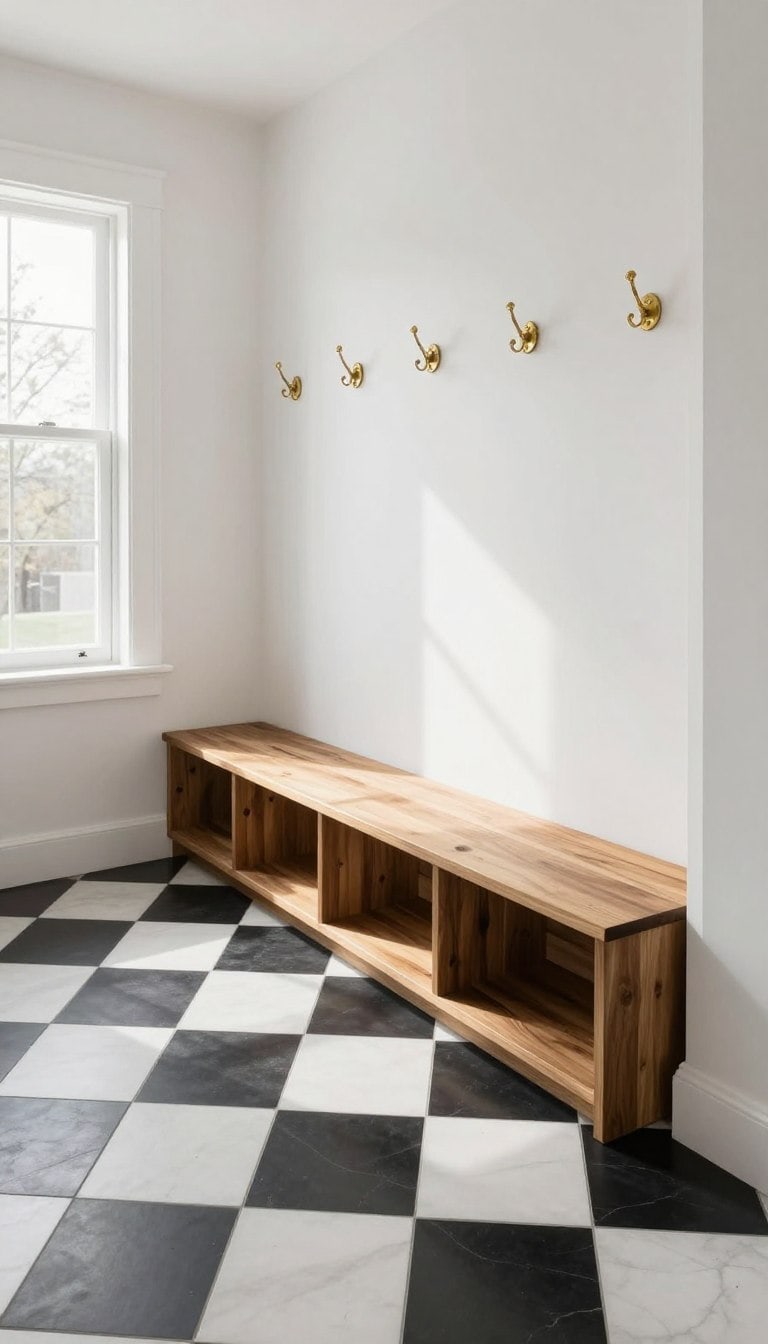
8 Mudroom Tile Patterns That Instantly Elevate Your Entryway
A beautiful mudroom floor can completely change the first impression of a home. It makes the entryway feel cleaner, more polished, and more intentional, while still dealing with muddy boots, wet umbrellas, mystery puddles, and the occasional grocery bag disaster.
The right mudroom tile pattern does more than protect the floor. It gives the space personality, structure, and that quietly stylish feeling that says yes, this home has its life together, even if the school bags say otherwise.
These mudroom tile patterns are practical enough for everyday family life, but stylish enough to make your entryway feel like a proper design moment.
Quick Mudroom Tile Pattern Guide
| If You Want… | Try This Tile Pattern |
|---|---|
| Classic contrast | Checkerboard tile |
| Warm texture | Herringbone brick tile |
| Modern farmhouse style | Hexagon tile |
| Easy cleaning | Large format stone look tile |
| Cottage charm | Vintage patterned tile |
| Timeless detail | Basketweave tile |
| A larger looking small entryway | Diagonal tile layout |
| Moody sophistication | Dark slate style tile |
1. Classic Checkerboard Tile Pattern
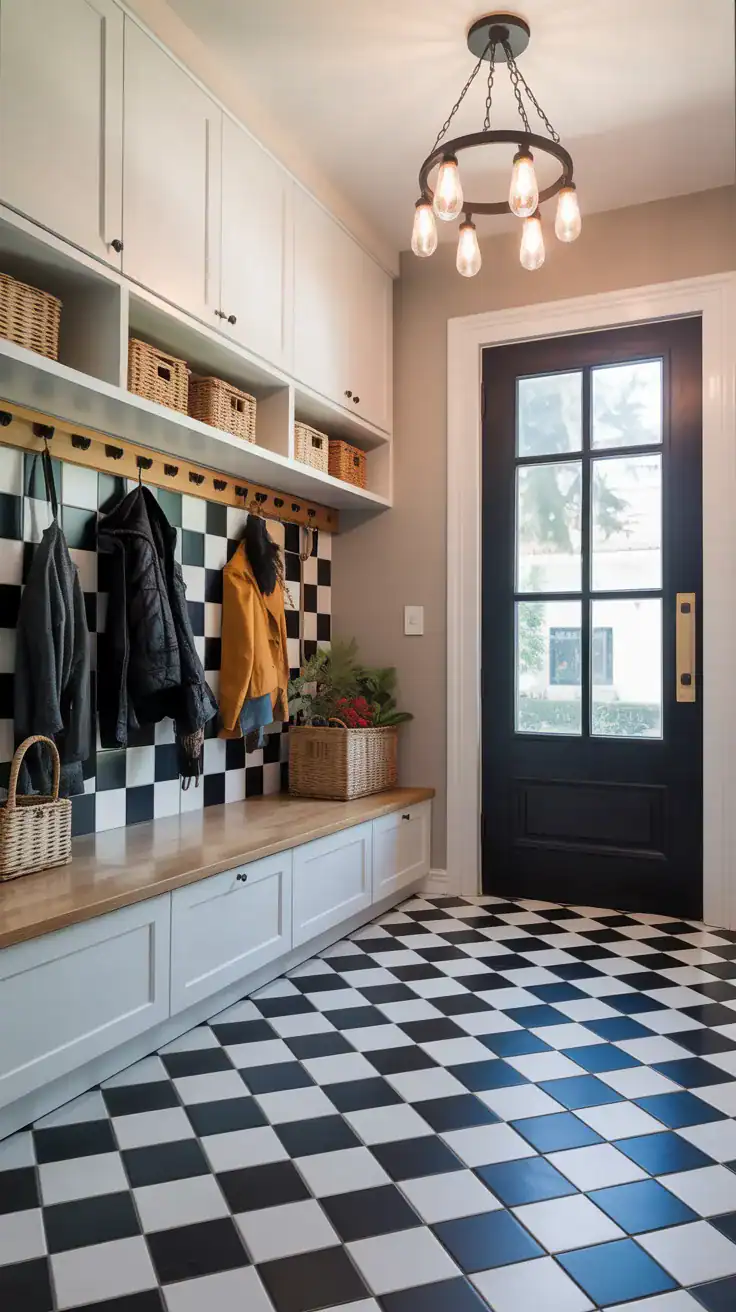
Checkerboard tile never really disappears because it manages to feel vintage, modern, playful, and elegant all at once.
In a mudroom, a soft black and white checkerboard floor instantly creates impact without needing complicated decor. It gives a simple entryway more structure and makes the whole space feel styled from the moment someone walks in.
Large scale checks feel fresher and more modern, while smaller checks lean more traditional and European inspired.
Why It Works
- Adds instant contrast and structure
- Makes small mudrooms feel more designed
- Pairs well with almost any wall color
- Hides everyday dirt surprisingly well
Style note: Use warm whites instead of stark white if you want the floor to feel softer and less harsh.
2. Herringbone Brick Tile Layout
This pattern instantly gives a mudroom movement, warmth, and a little old house charm.
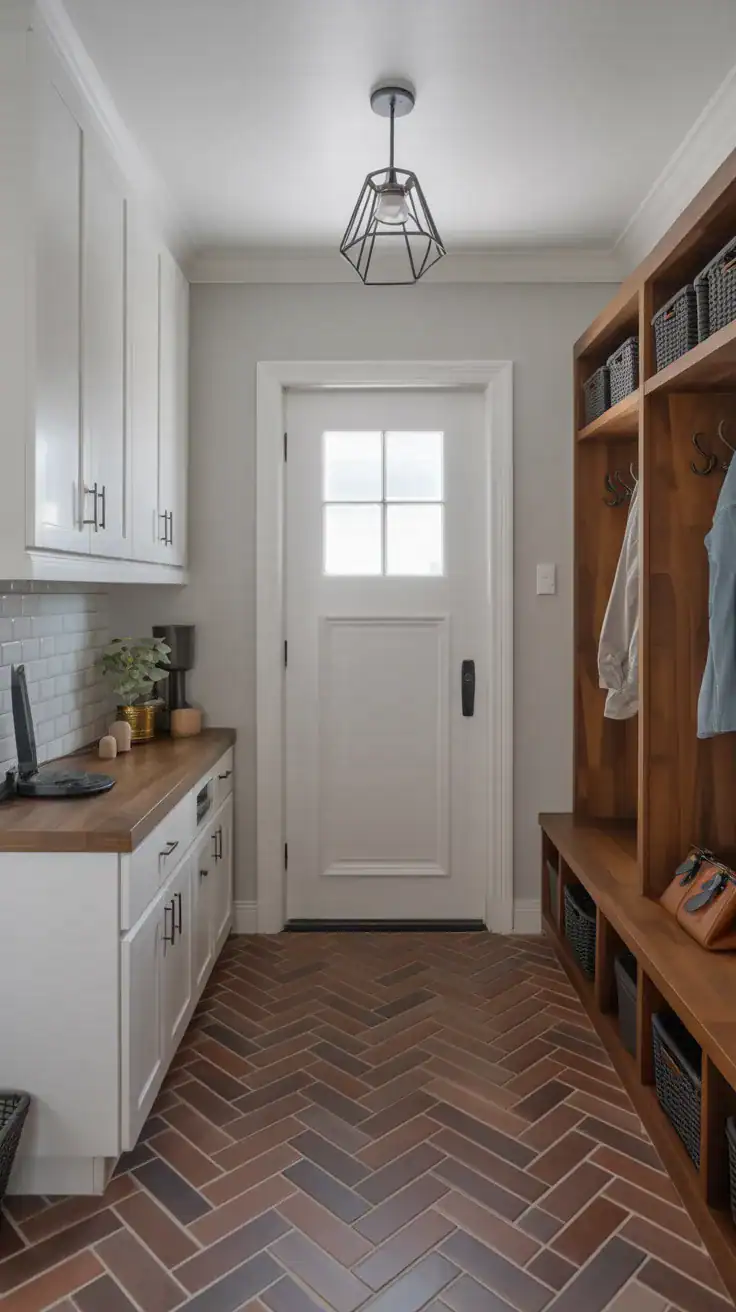
Herringbone layouts bring movement to a mudroom floor without feeling too busy. The angled pattern naturally draws the eye through the space, which helps narrow entryways feel longer and more dynamic.
Brick style porcelain tiles are especially useful because they mimic the warmth of real brick while being easier to maintain. You get the charming look without signing up for constant fussing, which is always appreciated.
Looks Best With
- Warm neutral walls
- Matte black hardware
- Oak benches
- Woven baskets and textured rugs
3. Hexagon Mudroom Floor Tiles
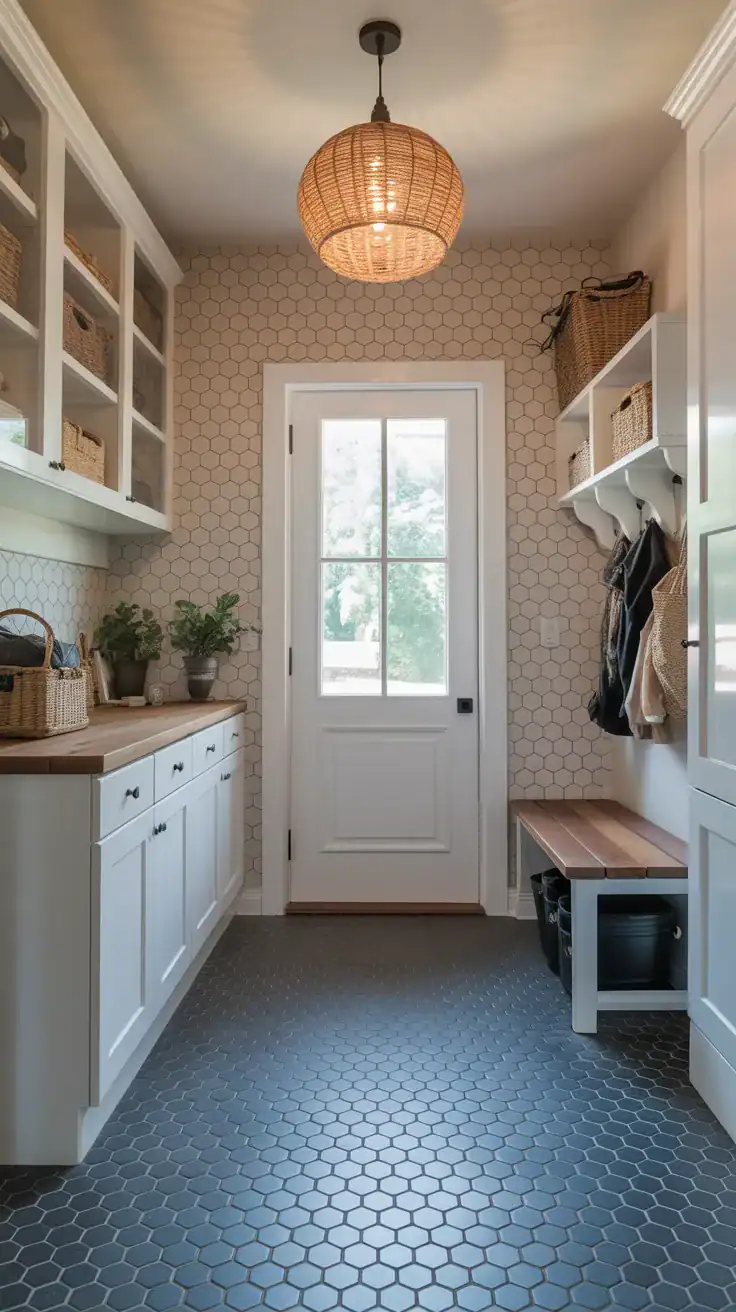
Hexagon tiles instantly make an entryway feel more custom and architectural. They add softness compared to square tiles while still keeping the floor visually clean and structured.
Small hexagon mosaics feel classic and slightly vintage, while oversized hexagon tiles create a cleaner modern look. This makes the pattern surprisingly flexible for farmhouse, Scandinavian, cottage, and minimalist mudrooms.
Imagine soft gray hexagon tiles, pale oak lockers, linen cushions, and warm sunlight catching the floor pattern. The whole mudroom suddenly feels calm, clean, and quietly luxurious.
- Best for modern farmhouse homes
- Great for small mudrooms
- Works beautifully with neutral palettes
4. Large Format Stone Look Tiles
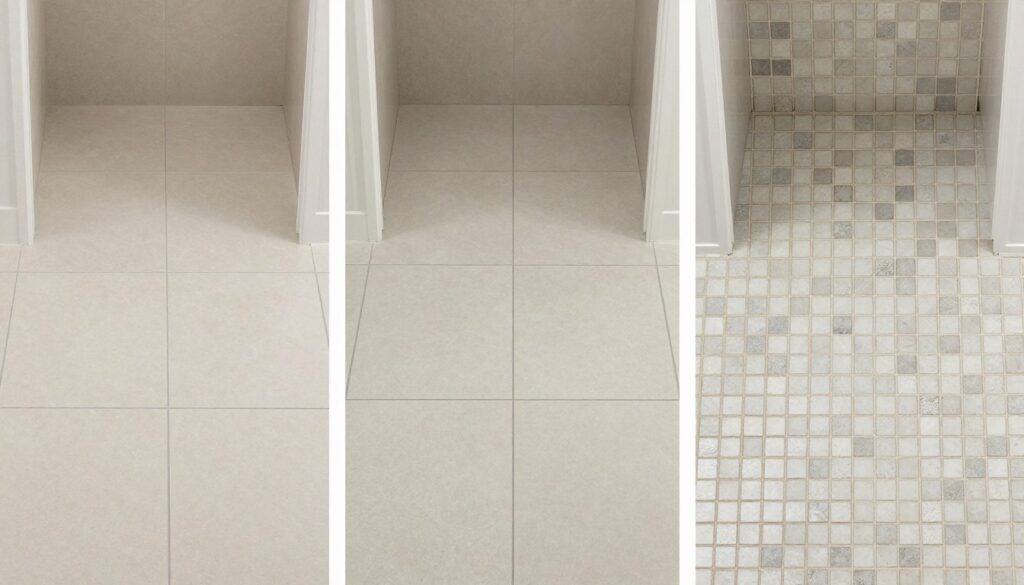
If you want the mudroom to feel bigger and easier to clean, large format tile is your friend.
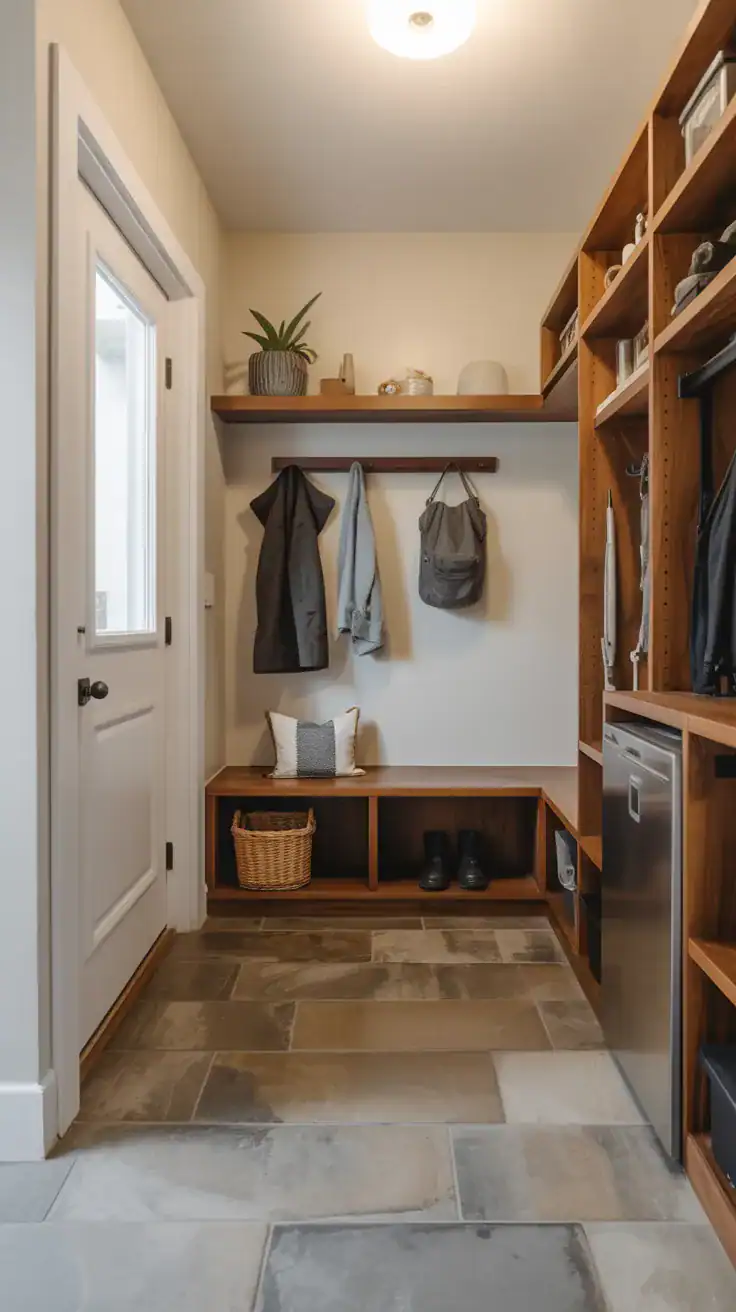
Large format tiles create a seamless, high end appearance that makes mudrooms feel calmer and less cluttered. Fewer grout lines also mean less cleaning, which becomes very important after rainy weeks and muddy shoes.
Stone look porcelain is a smart choice because it gives the impression of limestone, slate, or travertine without the higher maintenance of natural stone.
- Easier to clean than small detailed tile
- Makes compact spaces feel larger
- Feels modern, simple, and elegant
- Works well in high traffic entryways
Smart detail: Choose a slightly textured finish instead of a polished surface to help make the floor more practical near wet entryways.
5. Vintage Inspired Patterned Tiles
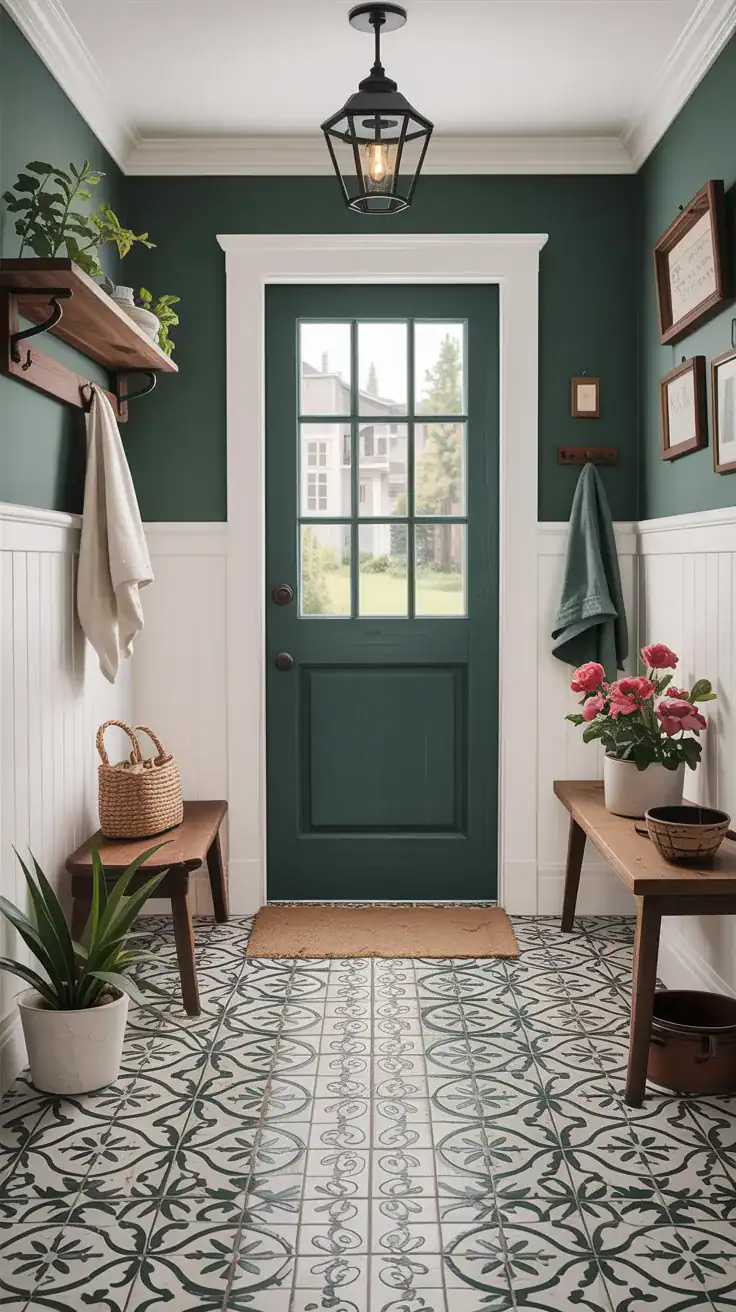
Vintage inspired patterned tiles bring personality into a mudroom in a way that feels charming, collected, and full of character.
Muted black, gray, terracotta, faded blue, or soft cream motifs can create an old world feel without overwhelming the space. The pattern gives the floor presence, while simple cabinetry and quiet wall colors keep everything balanced.
This is a lovely choice for cottage homes, farmhouse interiors, and older properties where a plain floor would feel a little too timid.
How To Use It
- Keep surrounding decor simple
- Pair with neutral cabinetry
- Repeat one tile color elsewhere in the room
- Use warm lighting to soften the pattern
6. Basketweave Tile Pattern
Basketweave tile is subtle from a distance, but beautifully detailed up close.
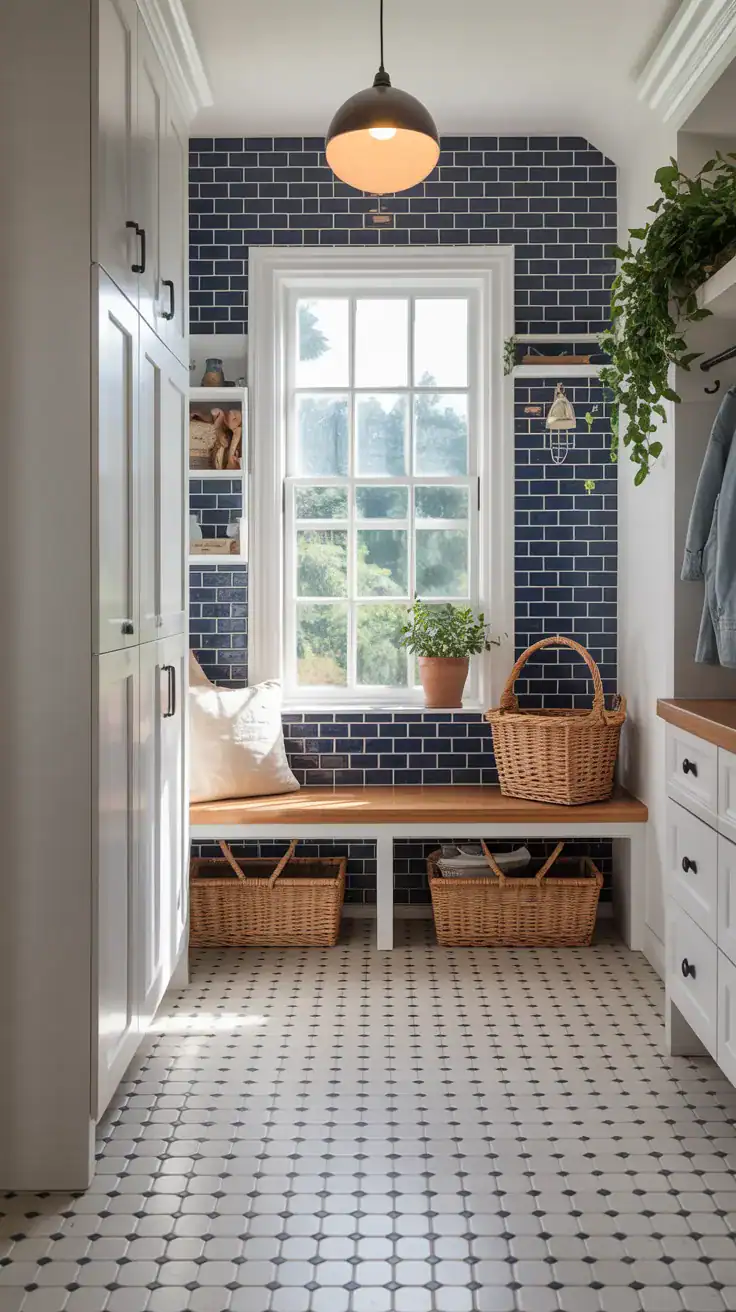
This classic pattern adds texture and visual depth without making the mudroom feel chaotic. It works especially well in transitional homes where you want the entryway to feel timeless rather than trend heavy.
Basketweave tile also brings a slightly upscale vintage feeling, especially when paired with marble look finishes, warm wood, or elegant wall hooks.
- Adds detail without visual clutter
- Feels classic and elegant
- Pairs well with stone look finishes
- Works in both modern and traditional homes
7. Diagonal Tile Layout for Small Entryways
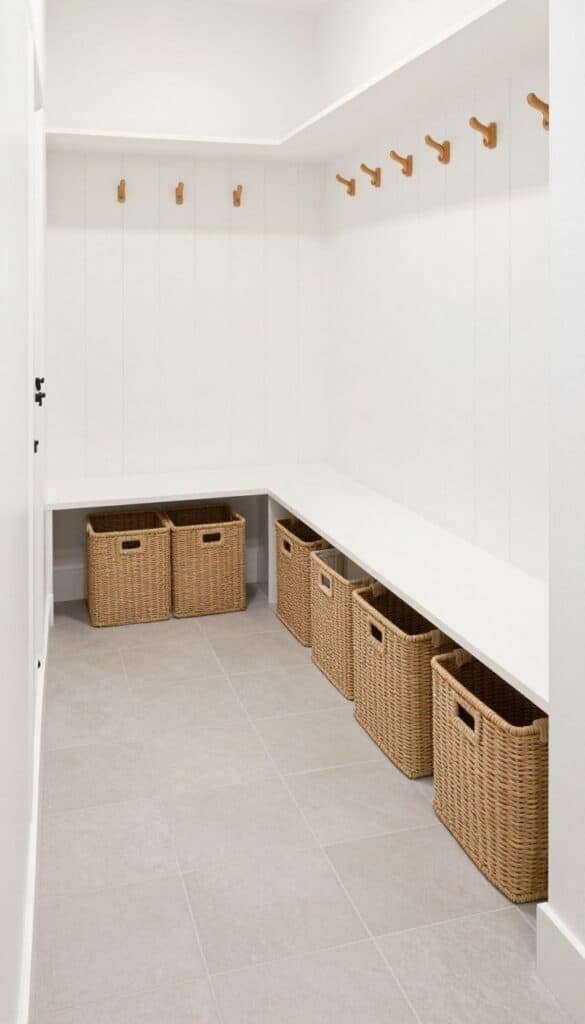
Sometimes the layout matters just as much as the tile itself. Installing square tiles diagonally can make a small mudroom feel wider, more open, and less boxy.
The angled lines create movement across the floor, which helps visually stretch the space. It is one of the simplest ways to make a compact entryway feel more considered without changing the actual footprint.
Picture a narrow mudroom with warm gray diagonal tiles, simple wood hooks, and woven baskets tucked beneath a bench. The space still does all the hard work, but it suddenly feels lighter and more welcoming.
- Use medium sized tiles for balance
- Choose lighter neutral tones for smaller spaces
- Keep clutter low so the pattern stays visible
- Pair with vertical wall paneling for extra height
8. Dark Slate Style Mudroom Tiles
This is the tile style for a mudroom that wants to feel moody, practical, and quietly sophisticated.
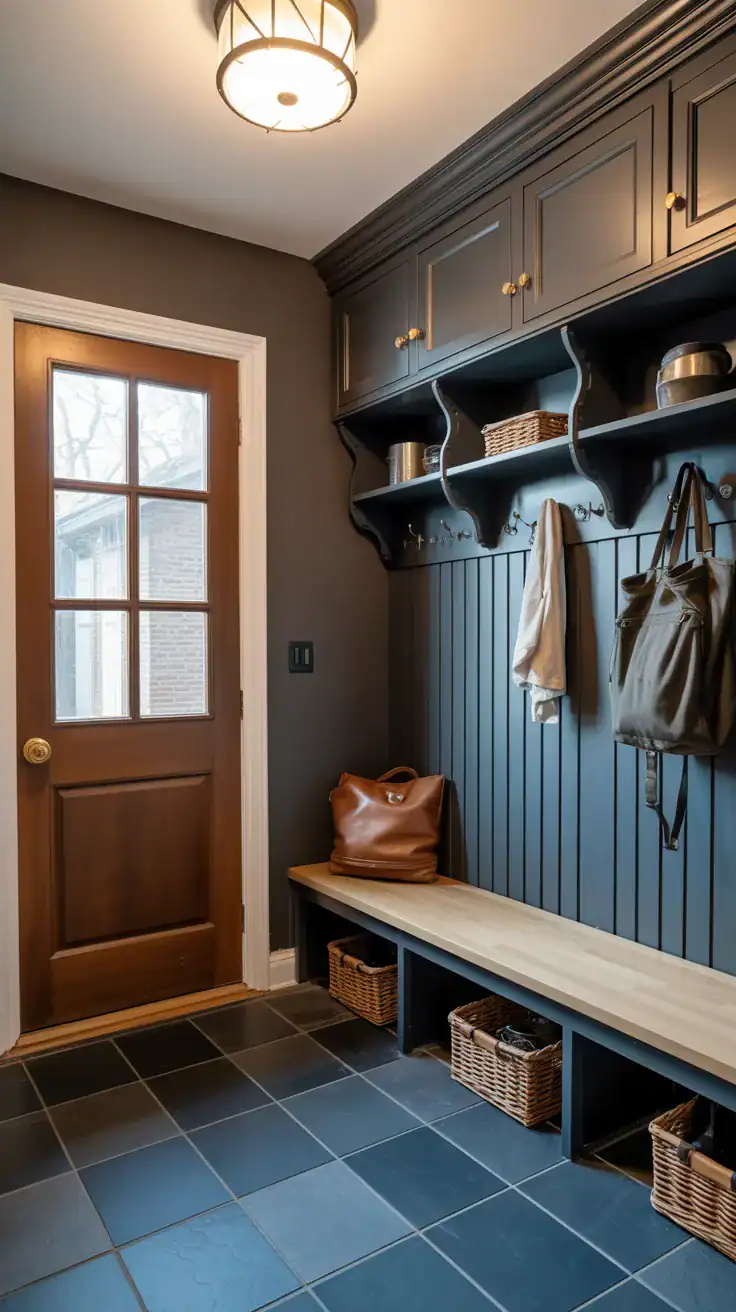
Dark slate inspired tiles instantly create a richer entryway that feels grounded and elegant. Charcoal, deep gray, and soft black stone look tiles pair beautifully with warm wood accents and creamy walls.
This style is also very forgiving for busy households because darker, textured flooring naturally hides dirt, moisture, and everyday wear better than pale solid tiles.
Perfect Pairings
- Warm walnut benches
- Brass or matte black hooks
- Cream painted cabinetry
- Soft textured runners
Choosing the Right Mudroom Tile Material
The pattern gives your mudroom personality, but the material decides how well the floor handles real life. Mudrooms need tile that can cope with moisture, dirt, heavy shoes, and constant foot traffic.
Porcelain is usually the most practical choice because it is durable, water resistant, and available in endless designs. Natural stone looks beautiful but usually needs more maintenance. Ceramic can work well for lighter use spaces, while mosaic tile adds grip and detail but comes with more grout to clean.
| Tile Material | Best For | Keep In Mind |
|---|---|---|
| Porcelain | Busy family mudrooms | Durable and low maintenance |
| Natural stone | Organic, timeless style | Needs sealing and more care |
| Ceramic | Budget friendly updates | Best for lighter use areas |
| Mosaic | Detail and added grip | More grout to maintain |
How Tile Size Changes the Look of a Mudroom
Tile size can completely change how a mudroom feels. Large tiles create fewer grout lines, which makes the space feel cleaner, calmer, and more open. Smaller tiles add detail and charm, but they can make a compact entryway feel busier.
If your mudroom is narrow or small, larger tiles or a diagonal layout can help the space feel wider. If your mudroom is spacious, patterned mosaics, basketweave, or vintage inspired designs can add character without overwhelming the room.
- Large tiles make small mudrooms feel more spacious
- Medium tiles work well in most entryways
- Small tiles add traditional detail and grip
- Rectangular tiles can help narrow spaces feel longer
- Mosaic sheets create pattern but need more grout care
The Most Practical Mudroom Tile Colors
Mudroom tile color needs to be pretty, but it also needs to be realistic. This is not the place for a floor that panics every time someone walks in with wet shoes.
Medium tones are often the most forgiving. Soft grays, warm beiges, muted taupes, stone look finishes, and patterned tiles naturally hide dust, water marks, and everyday wear better than pure white or pure black.
- Medium gray hides dirt and scuffs well
- Warm beige feels inviting and practical
- Muted terracotta adds vintage warmth
- Patterned tiles disguise marks between cleans
- Charcoal works well for busy family entryways
Quick tip: If you love a light floor, choose warm off white or stone look tile rather than bright white. It will feel softer and be far kinder to real life.
Do Not Forget Grout and Texture
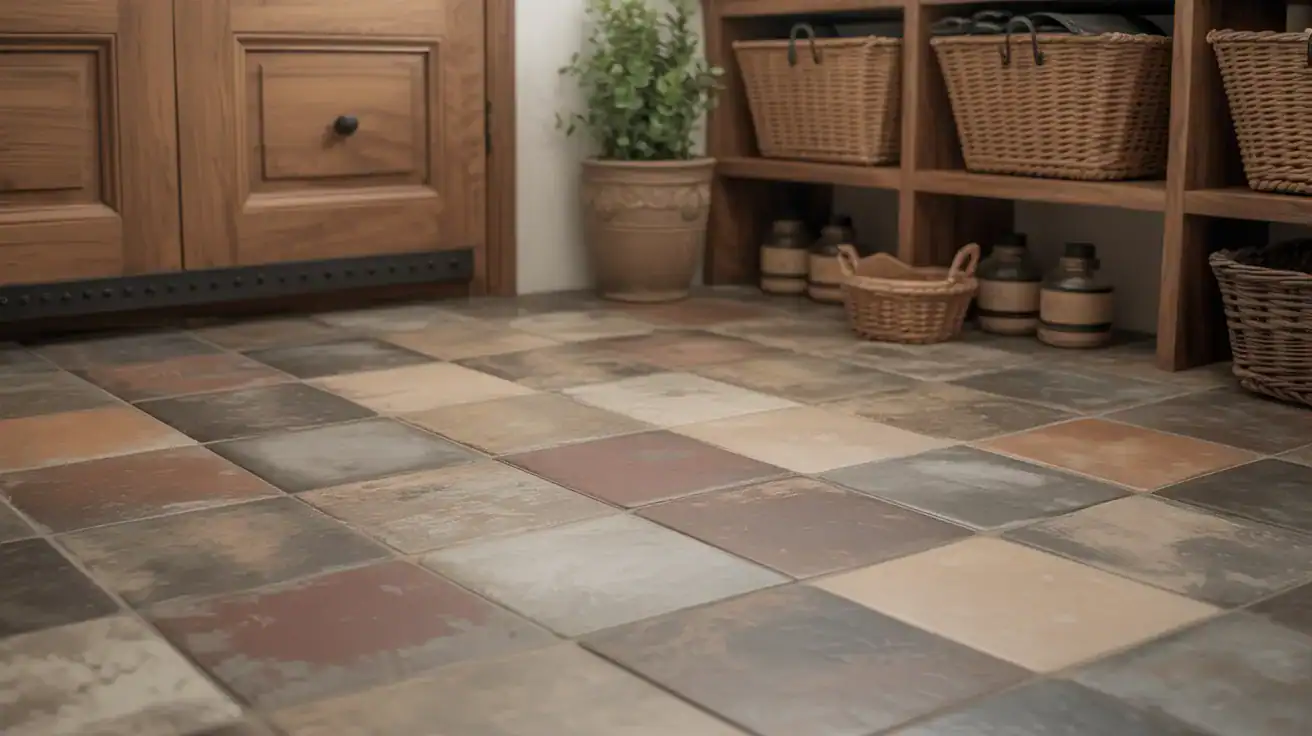
Grout and texture are not the glamorous part of choosing tile, but they make a huge difference in a mudroom. Matching grout to the tile creates a cleaner look and helps hide dirt. Contrasting grout shows off the pattern but needs more upkeep.
Texture matters too, especially near doors where rain, snow, and wet shoes are part of daily life. Matte and lightly textured tiles are usually more practical than glossy polished finishes.
- Medium gray grout is forgiving in busy spaces
- Matching grout creates a calmer look
- Darker grout hides dirt better than white grout
- Matte finishes are more practical near wet entryways
- Small mosaic tiles can add natural grip
Final Thoughts on Mudroom Tile Patterns
The right mudroom tile pattern can make a hardworking entryway feel cleaner, calmer, and far more stylish.
Whether you choose checkerboard, herringbone, hexagon, vintage patterned tile, or dark slate, the best option is the one that balances beauty with the way your home actually functions. A mudroom has to handle daily chaos, but that does not mean it has to look like it gave up.
With the right pattern, practical texture, and forgiving color, your mudroom floor can become one of the most quietly impressive details in the whole home.