
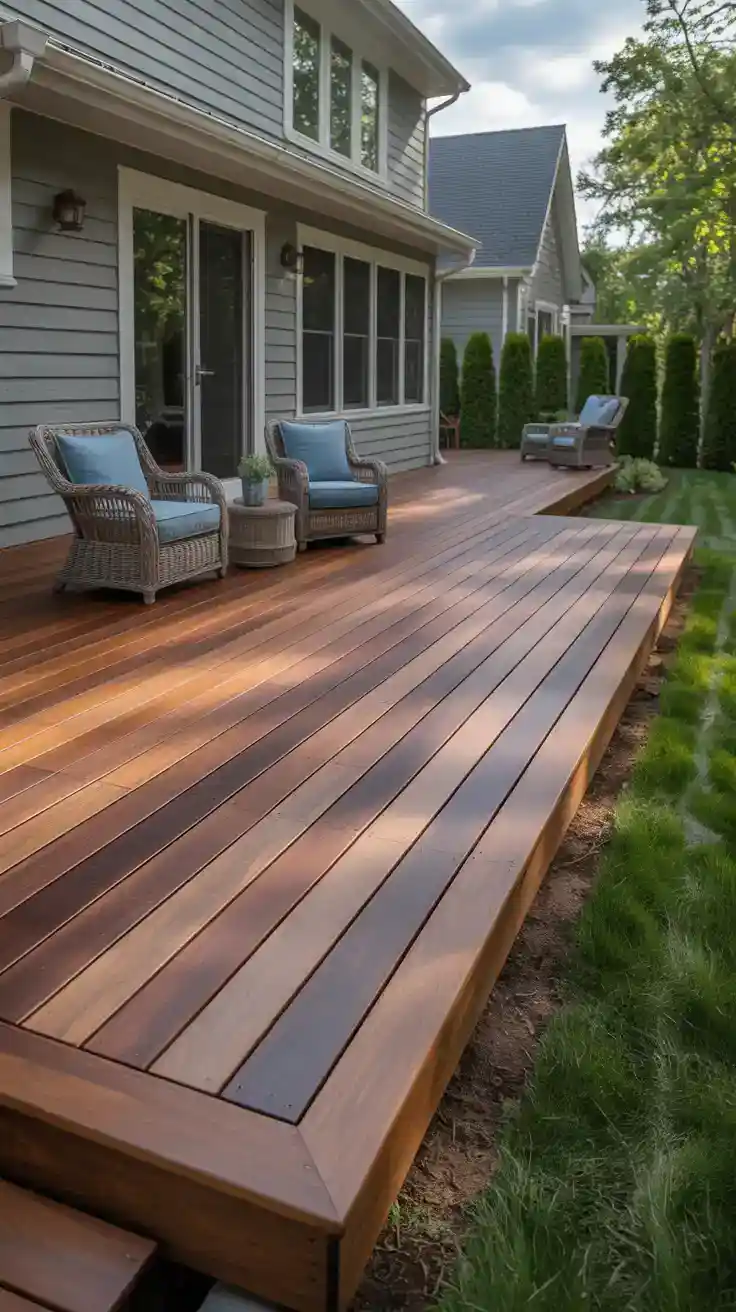
How to Choose the Right Deck Stain Color for Your Home: Tips & Tricks
📥 Free PDF Guide
Download NowChoosing a deck stain color sounds simple until you are staring at twenty different shades of brown and suddenly questioning every outdoor decision you have ever made.
The right stain can completely change the look of your deck. It can make tired wood feel fresh again, help your outdoor space look more expensive, and tie your deck beautifully into your home’s exterior.
Whether you love warm cedar, modern charcoal, soft driftwood gray, or a two-tone deck stain look, this guide will help you choose a color that feels stylish, practical, and worth the effort.
This post contains affiliate links. If you purchase through these links, I may earn a small commission at no extra cost to you. Learn more here.
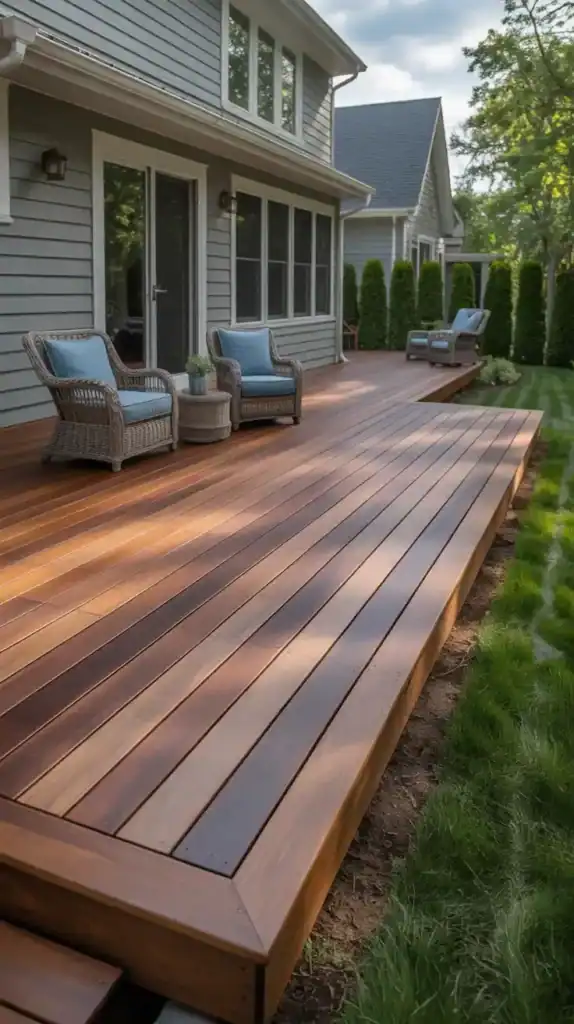
Quick Guide: Which Deck Stain Color Should You Choose?
If you want the fastest way to narrow down your options, start with your home’s exterior. Your deck stain should feel like it belongs with your siding, trim, roof, garden, and outdoor furniture.
If your home is white or cream: try cedar, walnut, honey oak, or driftwood gray.
If your home is gray: try warm cedar, golden pine, rich brown, or charcoal.
If your home is beige or tan: try redwood, chestnut, teak, or warm walnut.
If your home is black or modern: try slate, ebony, espresso, or smoky gray.
If your home has a coastal look: try weathered gray, light oak, driftwood, or soft taupe.
1. Match Your Deck Stain to Your Home First
Your deck is not just a wooden platform sitting outside. It is basically an outdoor room, so the stain color should work with the rest of your home instead of fighting for attention.
Warm homes usually look better with warm stains like cedar, chestnut, redwood, or walnut. Cooler homes often suit gray, charcoal, driftwood, or espresso tones. If your home has a lot of greenery around it, redwood and warm brown stains can look especially rich against the natural background.
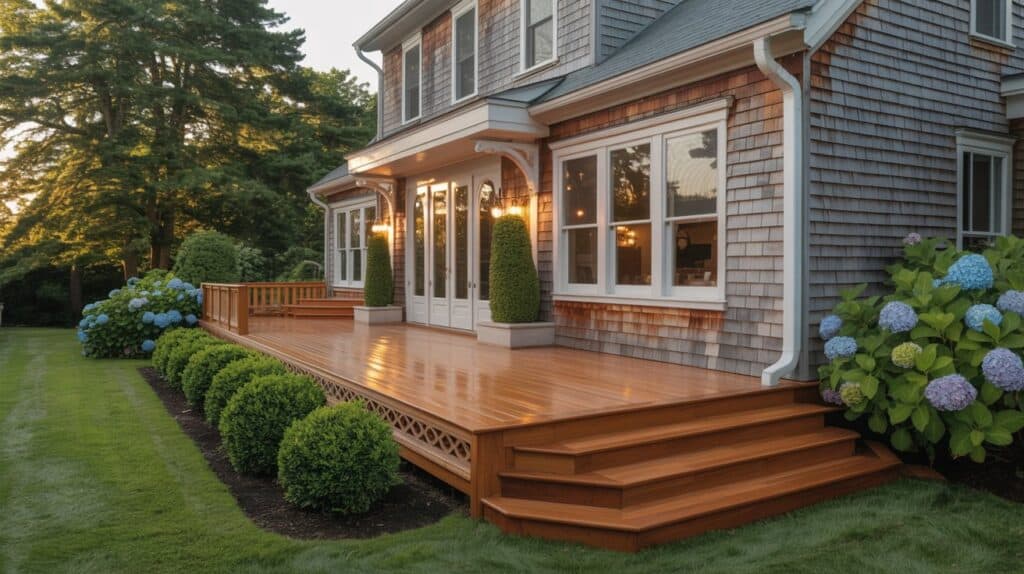
A helpful rule is to treat your deck stain as the finishing detail. Your siding is the main color, your trim is the supporting color, and your deck stain should be the accent that pulls everything together.
Designer tip: Do not choose a stain color from the tin or sample card alone. Test it directly on your deck wood because stain can look very different once it hits real timber.
2. Explore Popular Deck Stain Colors
Before choosing a stain, it helps to know the mood each color creates. Some stains feel warm and classic, while others look modern, bold, or coastal.
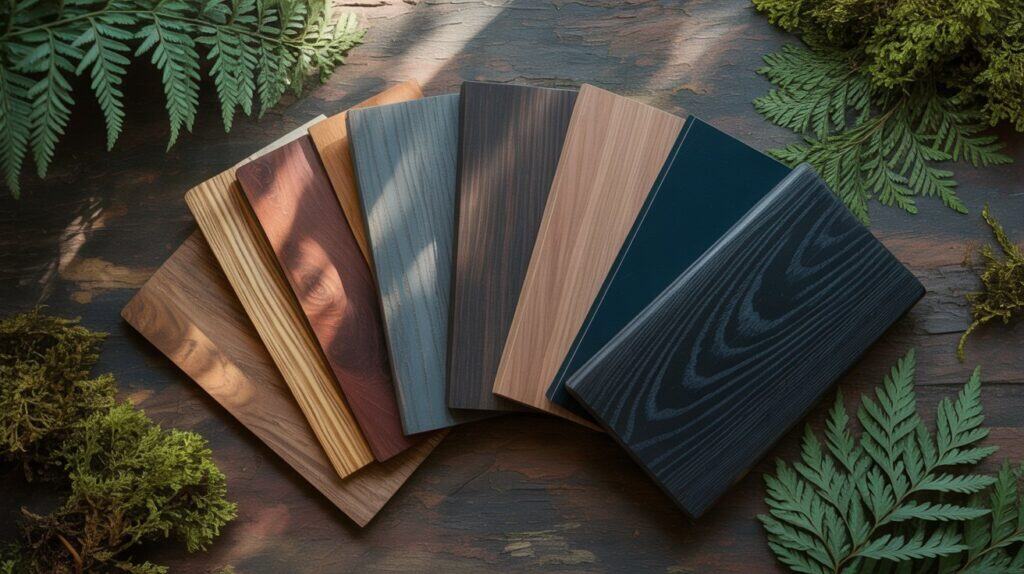
Warm Cedar
Cedar is one of the safest and most timeless deck stain colors. It adds warmth without feeling too dark and works beautifully with white, cream, gray, and beige homes.
Weathered Gray
Weathered gray gives a softer, coastal-inspired finish. It works well on modern homes, beachy spaces, and gardens where you want the deck to feel calm and understated.
Redwood
Redwood feels rich, traditional, and slightly dramatic. It looks beautiful with greenery and can make a deck feel warm and established.
Walnut Brown
Walnut is a great option if you want a deeper, more polished finish without going fully black. It pairs well with outdoor furniture, black railings, and neutral siding.
Charcoal or Ebony
Dark deck stains can look incredibly stylish, especially on modern homes. Just remember that darker colors can absorb more heat, so they may not be ideal if your deck gets strong sun and you like walking barefoot.
📌 Love these color combos? Pin this guide for later so you can compare deck stain shades when you’re ready to choose.
3. Try a Two-Tone Deck Stain Look for Extra Style
📥 Free Printable Guide
Want the full step-by-step tutorial for creating a two-tone deck stain look? Download this free PDF and keep it handy while you work.
Download the Free PDFIf you want your deck to look more designed, a two-tone stain combination is one of the best ways to do it. This works especially well if your deck has railings, steps, skirting, borders, or multiple levels.
Two-tone staining adds contrast and helps highlight the shape of your deck. It can also be practical because you can use a darker shade on high-traffic areas or railings while keeping the main floorboards lighter and warmer.
For a detailed visual tutorial, check out this two-tone deck stain guide. It walks you through the process step by step.
Gray and Warm Cedar
This combination is perfect if your home has cool-toned siding. The gray keeps the deck feeling modern, while the cedar adds warmth so the space does not feel flat or cold.

Dark Border and Light Center
A dark border with a lighter center can make your deck feel more finished, almost like an outdoor rug effect. Espresso, ebony, or dark walnut around the edge pairs beautifully with honey oak, cedar, or golden pine in the middle.
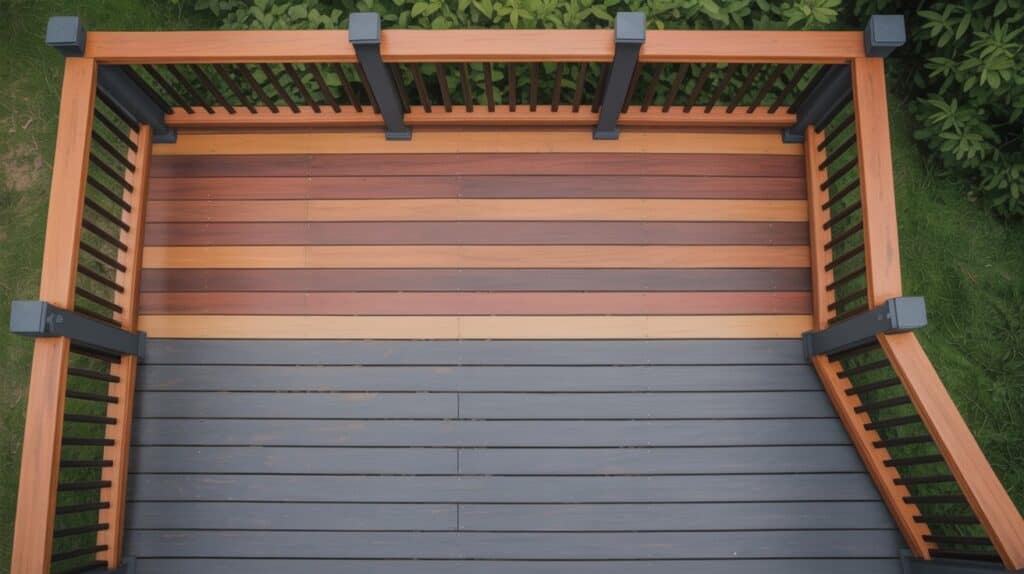
Dark Railings with Warm Floorboards
This is a great option if you want contrast without making the entire deck dark. Use a deeper stain on railings, stairs, or skirting, then choose a warmer semi-transparent stain for the deck boards.
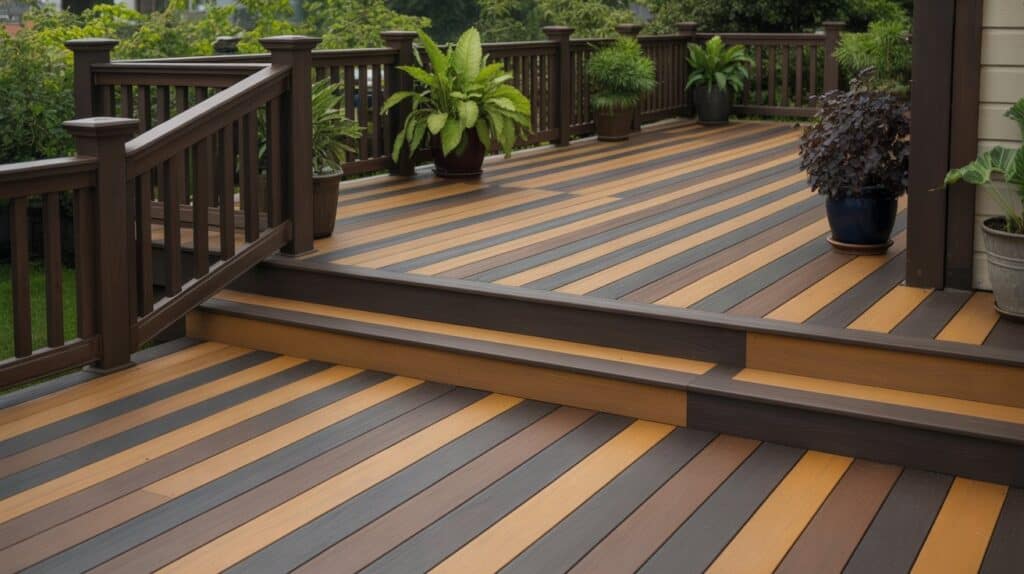
Important: Always test both colors together before staining the full deck. Two shades can look perfect separately but slightly off once they sit next to each other in natural light.
🎥 Watch this quick 2-minute breakdown from Olympic Stains:
“How to Choose a Stain Color and Transparency” explains how grain, light, and stain opacity work together so you can pick a finish you will actually love outside, not just in the shop.
4. Avoid These Deck Stain Color Mistakes
A deck stain color can look beautiful in theory and completely wrong once it is across a large outdoor surface. This is where a little patience saves a lot of regret.
- Choosing from a tiny sample card only: colors look much stronger once they cover a full deck.
- Ignoring your siding color: your deck should complement your house, not compete with it.
- Going too dark in full sun: dark stains can look sleek, but they may feel hotter underfoot.
- Skipping sample tests: stain reacts differently depending on the wood type and age.
- Following trends too closely: choose a color you can live with for years, not just one that looks good on Pinterest today.
The best test is simple: apply a few stain samples directly onto a hidden area of your deck and check them in morning light, afternoon sun, and evening shade. Outdoor light changes everything.
5. Choose the Right Stain Opacity
Once you have a color direction, think about opacity. This simply means how much of the wood grain will show through after staining.
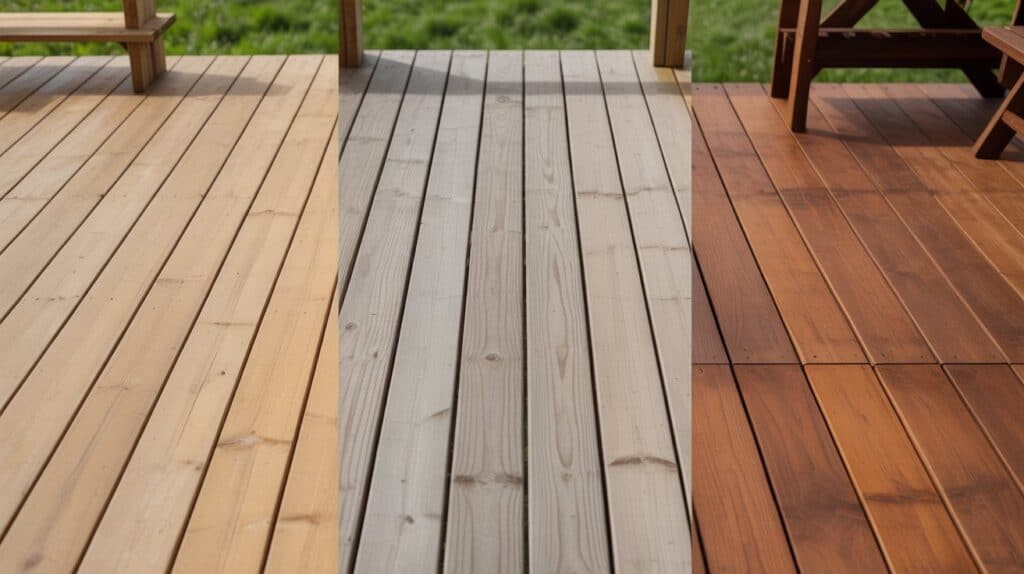
- Clear or translucent stain: best if your wood is already beautiful and you want the grain to show.
- Semi-transparent stain: a great middle ground because it adds color while still showing some natural texture.
- Semi-solid stain: useful if you want more coverage but do not want to completely hide the wood.
- Solid stain: best for older decks, imperfect boards, or a more painted-looking finish.
Think of opacity like a sliding scale. Less coverage shows more wood character. More coverage hides more imperfections.
6. Know How Your Wood Type Affects the Final Color
Different woods absorb stain differently, which means the same color can look completely different from one deck to another.
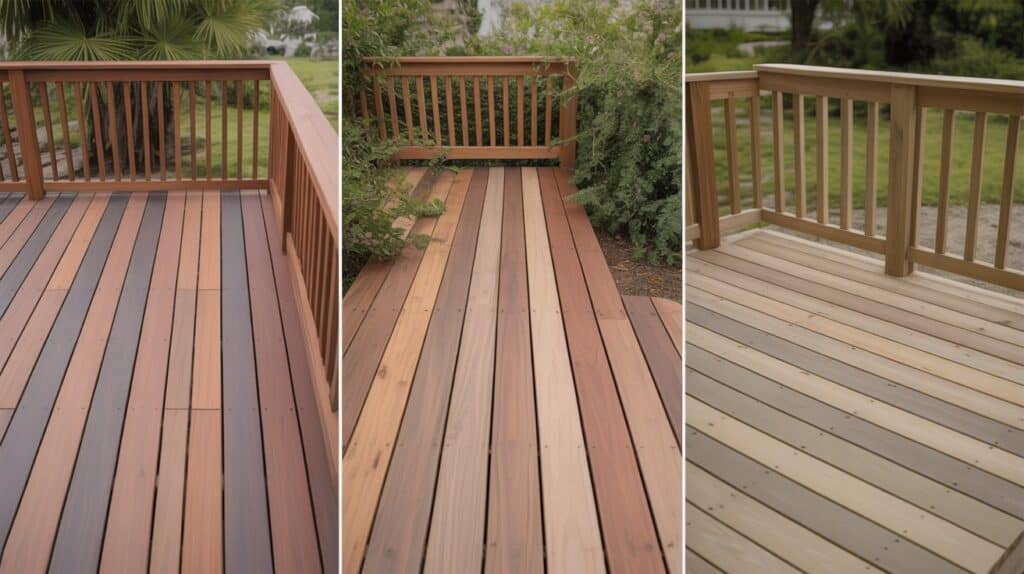
- Redwood: naturally rich and warm, so it works beautifully with clear, cedar, or red-toned stains.
- Cedar: warm and attractive but can absorb stain unevenly, so testing first matters.
- Pressure-treated pine: affordable and common, but often benefits from semi-transparent, semi-solid, or solid stain.
- Hardwoods like ipe or mahogany: dense and beautiful, usually best with transparent or lightly tinted finishes.
If your deck is older or has uneven boards, a semi-solid or solid stain can help create a more consistent finish. If the wood is in great condition, a lighter or more transparent finish can let the grain shine through.
7. Compare Clear, Semi-Transparent, and Solid Finishes
Still unsure which finish to choose? This is where a side-by-side comparison helps.
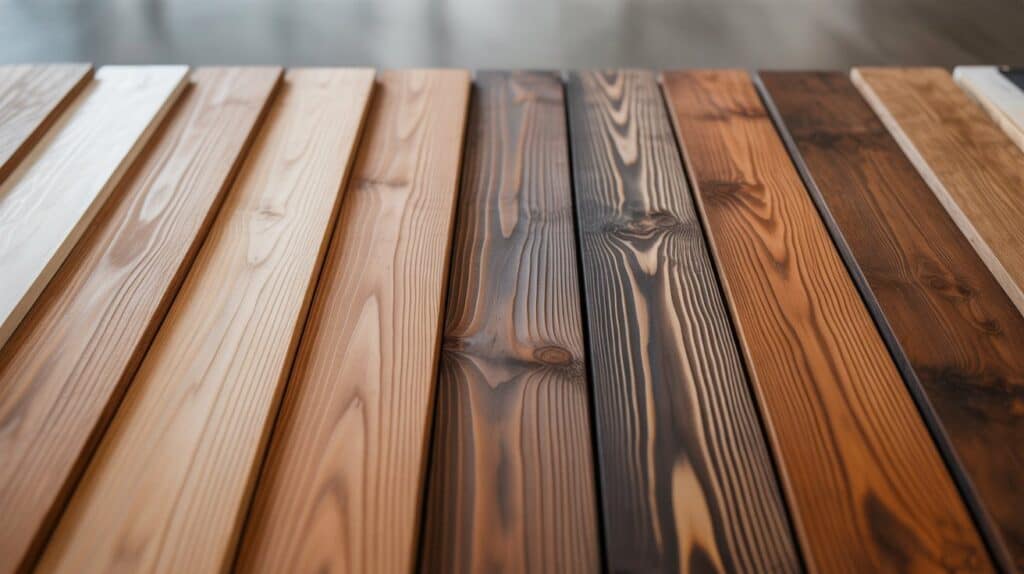
Clear finishes feel the most natural but offer the least color change. Semi-transparent stains add more personality while keeping some grain visible. Solid stains create the most dramatic transformation but hide the natural wood texture.
Heads-up: Once you choose a solid stain, switching back to a transparent finish later usually means stripping the deck first. So if you still love the look of natural wood, think carefully before going fully solid.
8. Prep Your Deck Before Staining
Even the prettiest stain color will not look good if it goes onto dirty, damp, or uneven wood. Preparation is not glamorous, but it is what makes the final finish look smooth instead of patchy.
- Clean the deck: remove dirt, mildew, old residue, and loose debris.
- Let the wood dry: staining damp wood can lead to uneven color and poor absorption.
- Sand rough areas: if a sock would snag on the boards, the wood probably needs smoothing.
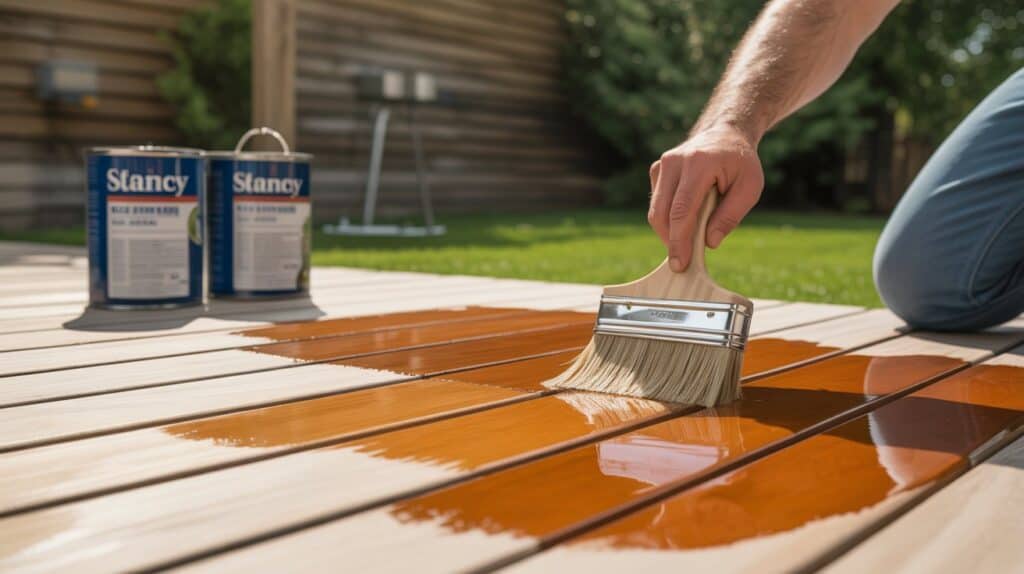
- Apply stain with the grain: work in manageable sections so the finish stays even.
- Maintain it regularly: clean the deck seasonally and recoat when the finish starts to fade.
Final Thoughts: Choose a Deck Stain You Will Still Love Later
The best deck stain color is not always the trendiest one. It is the shade that works with your home, your garden, your lighting, and how you actually use the space.
If you want a classic look, warm cedar, walnut, or redwood are hard to beat. If you prefer something softer and more modern, driftwood gray, charcoal, or a two-tone design can give your deck a fresh, updated feel.
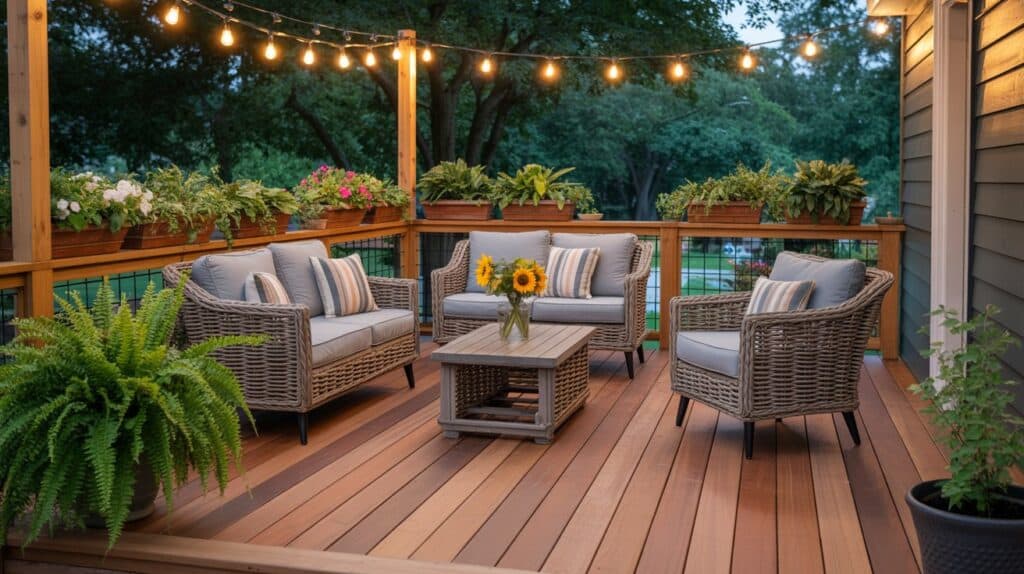
Before you commit, order a few samples and test them directly on your deck. Look at them in different light, compare them beside your siding, and imagine them with your outdoor furniture. That small step can save you from a very large staining regret later.
For even more inspiration, explore these deck stain color ideas to see how different tones work with outdoor spaces.