
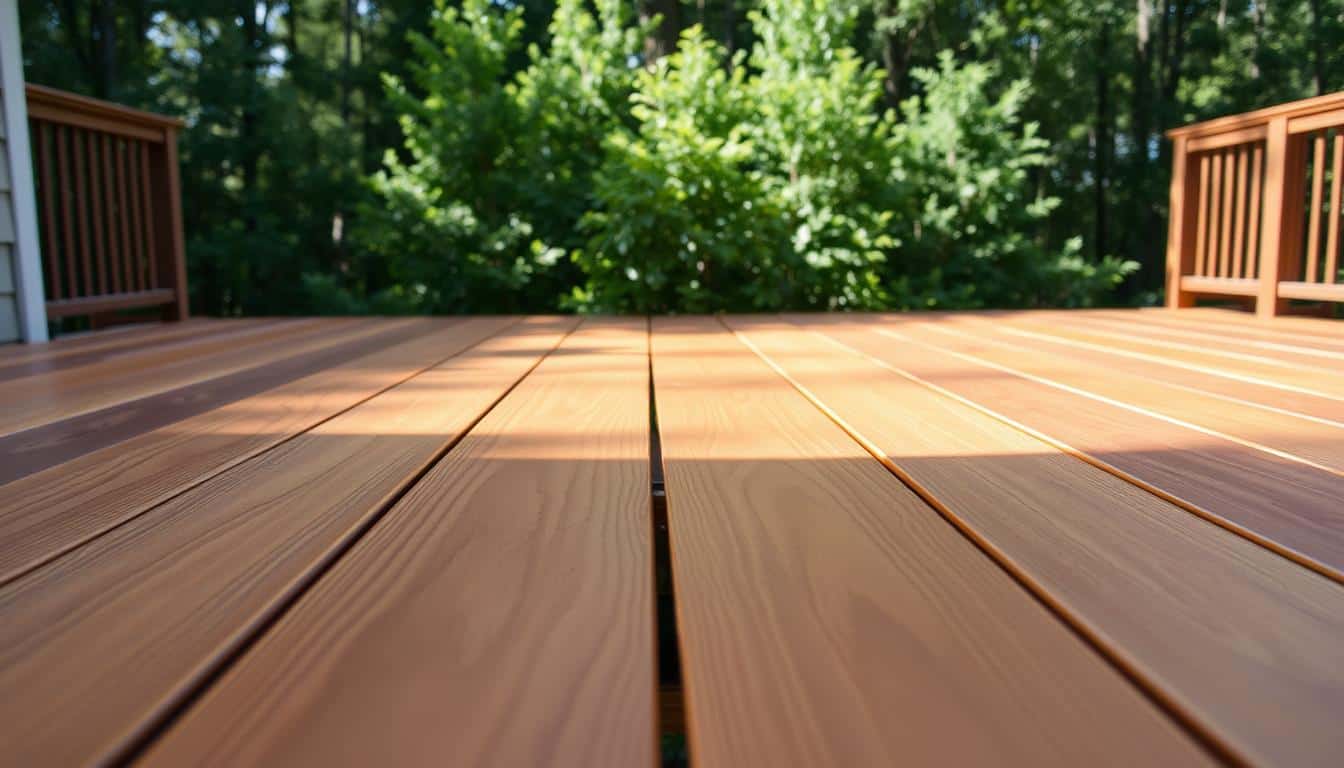
Two Tone Deck Stain Ideas and Application Tips
Two tone deck stains instantly make outdoor spaces feel more custom, layered, and expensive looking. Instead of covering every surface in one flat color, contrasting stains help define railings, steps, borders, and seating areas while highlighting the natural texture of the wood.
The best part is that two tone decks are not just beautiful. They are practical too. Solid stains and paints often work well on vertical surfaces, while semi transparent stains help horizontal boards show off the wood grain and age more naturally over time.
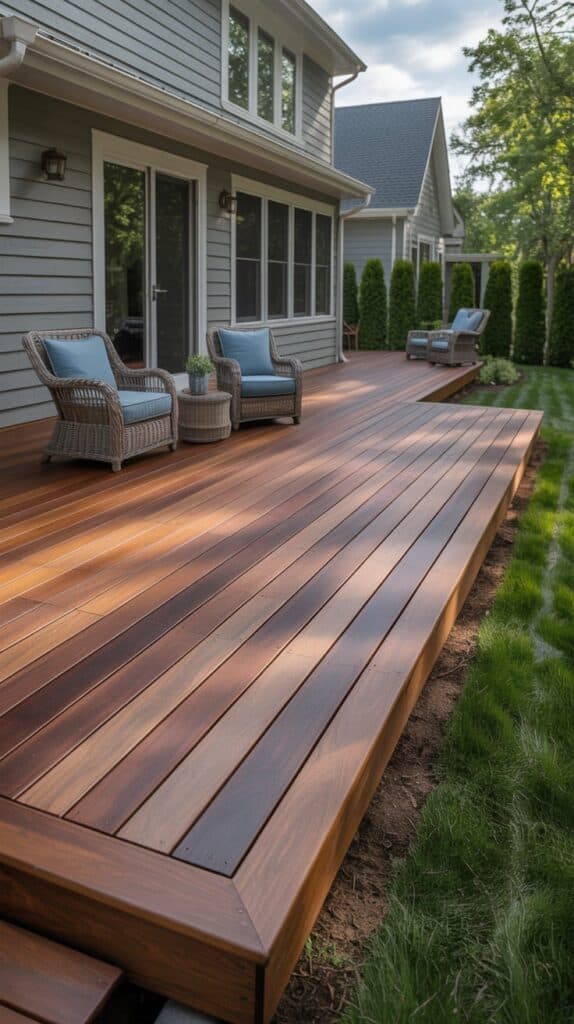
And honestly, once the railings, borders, and deck boards start looking intentionally layered instead of builder basic, the entire backyard suddenly feels far more polished.
Quick Two Tone Deck Color Pairing Ideas
- Modern homes: Charcoal railings + warm cedar decking
- Coastal style: Driftwood gray + crisp white railings
- Farmhouse look: Walnut brown + matte black accents
- Small decks: Light oak + soft greige borders
- Luxury feel: Deep espresso + black railings
- Natural cottage style: Weathered gray + soft sage accents
Why Two Tone Deck Stains Work So Well
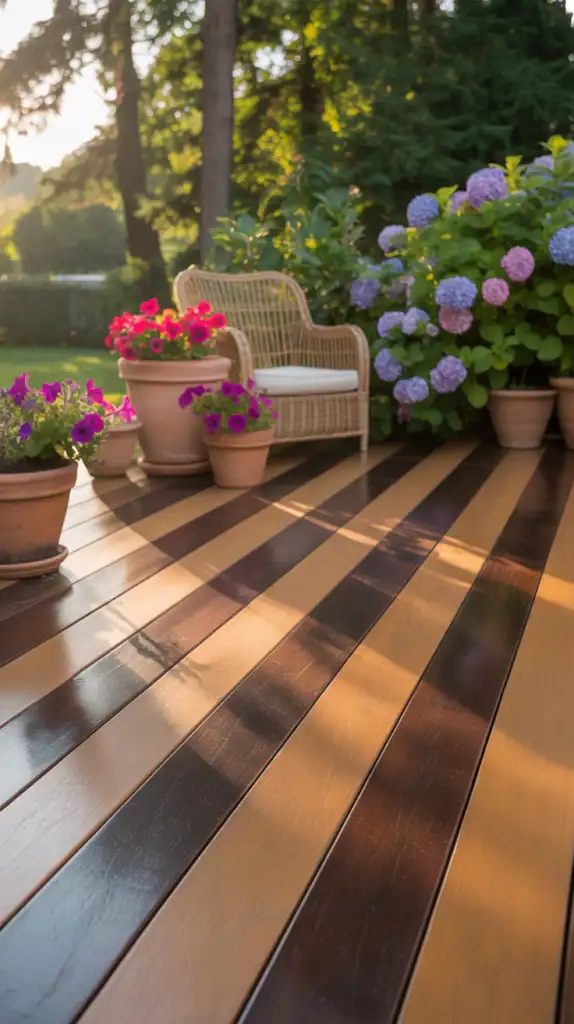
Two tone staining creates visual separation that makes decks feel more thoughtfully designed. Railings become architectural features instead of disappearing into the background, while contrasting borders and steps help define the layout more clearly.
The layered look also helps large decks feel more balanced and smaller decks feel more styled. Even simple backyard spaces suddenly feel more custom once multiple tones are introduced. If you want more inspiration for the color side of the design, these two tone deck color ideas are a helpful next read.
It also happens to be one of the easiest ways to make older decking feel refreshed without replacing the entire structure.
Start With Proper Deck Preparation
Good prep work makes an enormous difference in how stain looks and how long it lasts. Dirt, mildew, old finishes, and trapped moisture all interfere with stain adhesion and can create uneven color patches later.
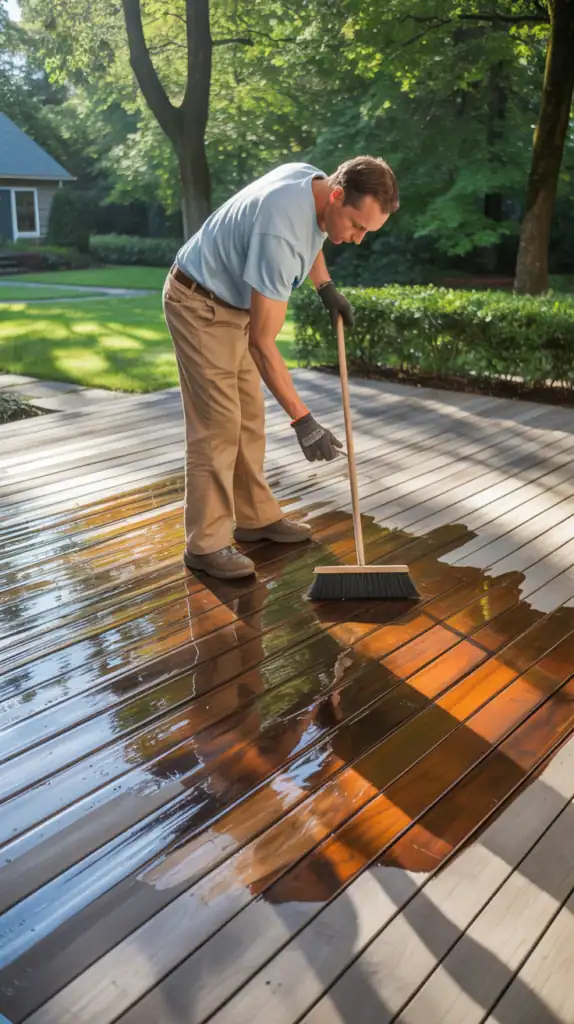
Begin by sweeping away leaves and debris thoroughly. For stubborn dirt and mildew, use a deck cleaner designed for exterior wood surfaces. Always rinse fully and allow the wood to dry completely before staining.
Surface Prep Checklist
- Inspect for loose boards or nails
- Clean away mildew, dirt, and old residue
- Allow the wood to dry fully before staining
- Sand rough areas for smoother stain absorption
- Protect nearby plants before rinsing cleaners
Patience matters here. Even beautiful stain colors can fail quickly if the wood underneath is still damp.
Best Two Tone Deck Color Combinations
1. Warm Cedar With Matte Black Railings
This combination feels modern without looking harsh. The warm cedar keeps the space inviting, while black railings add contrast and structure.
Looks best with: Black outdoor furniture, modern landscaping, neutral siding.
2. Driftwood Gray With Crisp White Railings
Soft gray decking creates a relaxed coastal feel, especially when paired with bright white railings and light outdoor fabrics.
Creates this effect: Bright, airy backyard spaces that feel calm and open.
3. Walnut Brown With Soft Greige Borders
This layered neutral combination feels understated and elegant. The lighter border subtly frames the darker wood without creating extreme contrast.
Why designers love it: It works beautifully with both traditional and modern homes.

4. Espresso Decking With Black Railings
Deep espresso stains instantly create a more dramatic and upscale outdoor look. Black railings help everything feel cohesive and polished.
Best placement: Larger decks with plenty of sunlight to balance darker tones.
If you prefer richer outdoor finishes, these modern two tone deck color ideas show how darker contrasts can still feel sleek and elevated.
5. Weathered Gray With Natural Wood Accents
Weathered gray tones paired with natural cedar accents feel relaxed, layered, and slightly cottage inspired without looking overly rustic.
Small space tip: Lighter deck colors can help compact patios feel more open.
The Easiest Two Tone Layout Strategy
The simplest and most durable layout is usually:
- Solid stain or paint on vertical surfaces
- Semi transparent stain on horizontal boards
Railings, skirting, and posts generally hold solid finishes better because they receive less direct wear and standing moisture. Horizontal deck boards benefit from stains that allow the wood grain to remain visible while aging more naturally.
This combination creates contrast while keeping maintenance more manageable long term.
Tools That Make the Job Easier
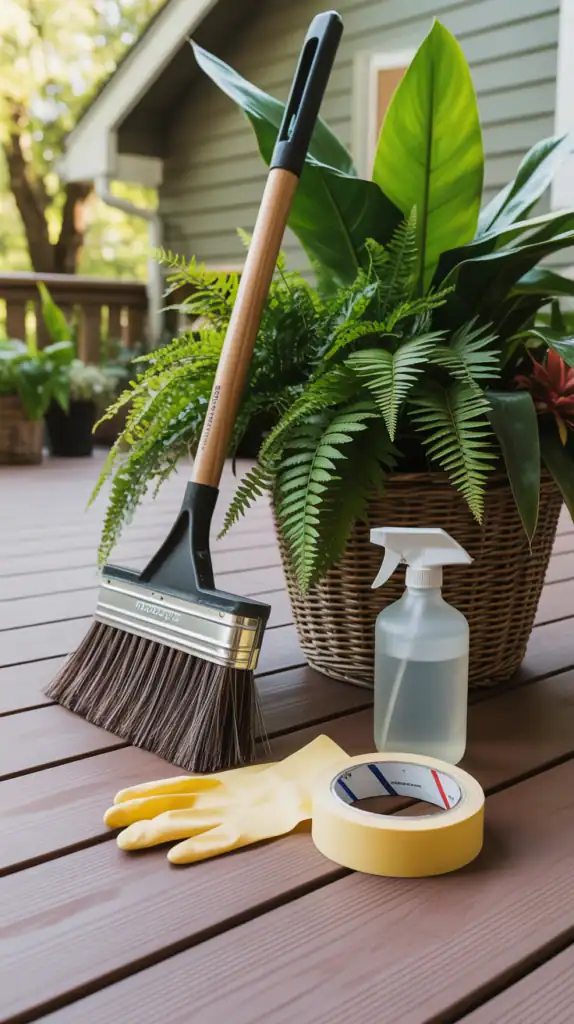
Using the right tools helps stain apply more evenly and reduces wasted product.
Recommended Supplies
- Exterior wood stain in two coordinating tones
- Outdoor painter’s tape
- Deck brush with extension pole
- Angled brush for railings and edges
- Canvas drop cloths
- Deck cleaner and scrub brush
- Sandpaper or pole sander
- Gloves and safety glasses
Brushes usually provide the most even finish for detailed areas, while deck brushes work well for larger floor surfaces.
Application Tips for a Cleaner Finish
- Stain railings and vertical surfaces first
- Use painter’s tape carefully between tones
- Apply thin coats instead of thick heavy layers
- Avoid staining in direct harsh sunlight
- Allow proper drying time between coats
Most stains perform best in mild, dry weather with no rain expected while the finish cures. Rushing the process can lead to patchiness, sticky boards, or uneven color.
And honestly, rushing stain projects almost always creates extra work later.
How Long Two Tone Deck Finishes Usually Last
Vertical solid stains and paints often last longer than horizontal deck boards because they receive less foot traffic, less standing water, and less direct wear. Horizontal semi transparent stains usually need refreshing more often, especially on stairs and high traffic zones.
Regular sweeping and gentle annual cleaning help maintain color much longer while preventing dirt buildup and trapped moisture.
Simple Maintenance Routine
- Sweep regularly to remove debris
- Wash gently once or twice yearly
- Touch up stairs and high traffic zones as needed
- Inspect railings and borders seasonally
Final Thoughts on Two Tone Deck Stains
Two tone deck stains are one of the simplest ways to make outdoor spaces feel more intentional, layered, and visually custom without rebuilding the entire deck.
Whether you prefer soft weathered grays, rich cedar tones, dramatic espresso finishes, or modern black railings, the contrast adds depth that single color decks often lack. For even more darker finish inspiration, these dark stained deck ideas are worth exploring next.
And once the deck starts looking thoughtfully designed instead of flat and faded, the entire backyard suddenly feels more inviting.
FAQs
What is the easiest two tone deck combination?
Solid stain or paint on railings and posts combined with semi transparent stain on deck boards is usually the easiest and most durable option.
Can I combine different stain brands?
It is usually best to stick with compatible products from the same system whenever possible.
Do darker deck stains get hotter?
Yes. Darker stains absorb more heat in direct sunlight, especially during summer.
How often should deck stain be refreshed?
Horizontal surfaces usually need maintenance more often than vertical surfaces because they deal with foot traffic, rain, sun exposure, and everyday wear.