
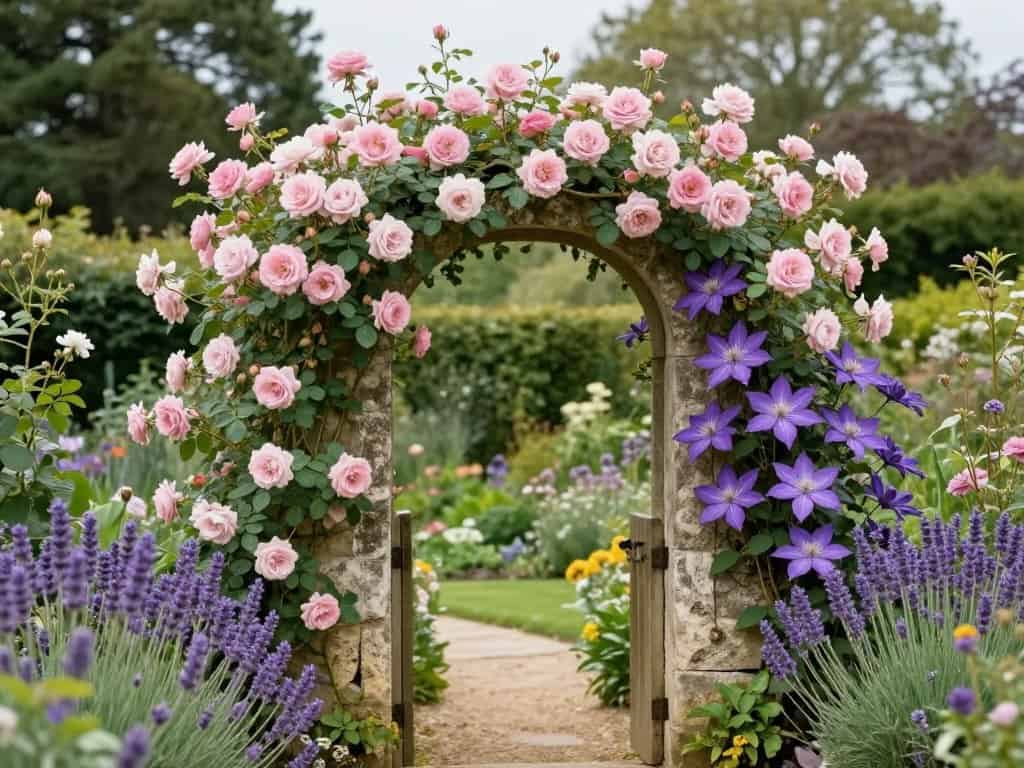
15 Best English Cottage Garden Climbing Plants for Romantic Gardens
Few plants create English cottage garden romance quite like climbing roses and flowering vines. They soften fences, spill over arches, scramble across pergolas, and make even the plainest garden wall feel like it has been charming people for generations.
The secret is choosing climbers that feel relaxed, abundant, and naturally layered rather than too formal or overly controlled.
From scented roses to frothy clematis and dreamy wisteria, these cottage garden climbers add height, fragrance, colour, wildlife interest, and that slightly wild beauty that makes a garden feel wonderfully lived in.
And honestly, once roses start climbing over an arch, the whole garden suddenly feels like it belongs in a countryside novel.
Quick Guide: Choosing the Right Cottage Garden Climber
- For arches: New Dawn, Gertrude Jekyll, The Generous Gardener
- For fences: Honeysuckle, Clematis Montana, Zephirine Drouhin
- For pergolas: Wisteria, Rambling Rector, climbing roses
- For shade: Madame Alfred Carrière, Climbing Hydrangea, Zephirine Drouhin
- For fragrance: Honeysuckle, Gertrude Jekyll, Star Jasmine
- For smaller gardens: Eden Rose, Nelly Moser, Star Jasmine
1. New Dawn Climbing Rose
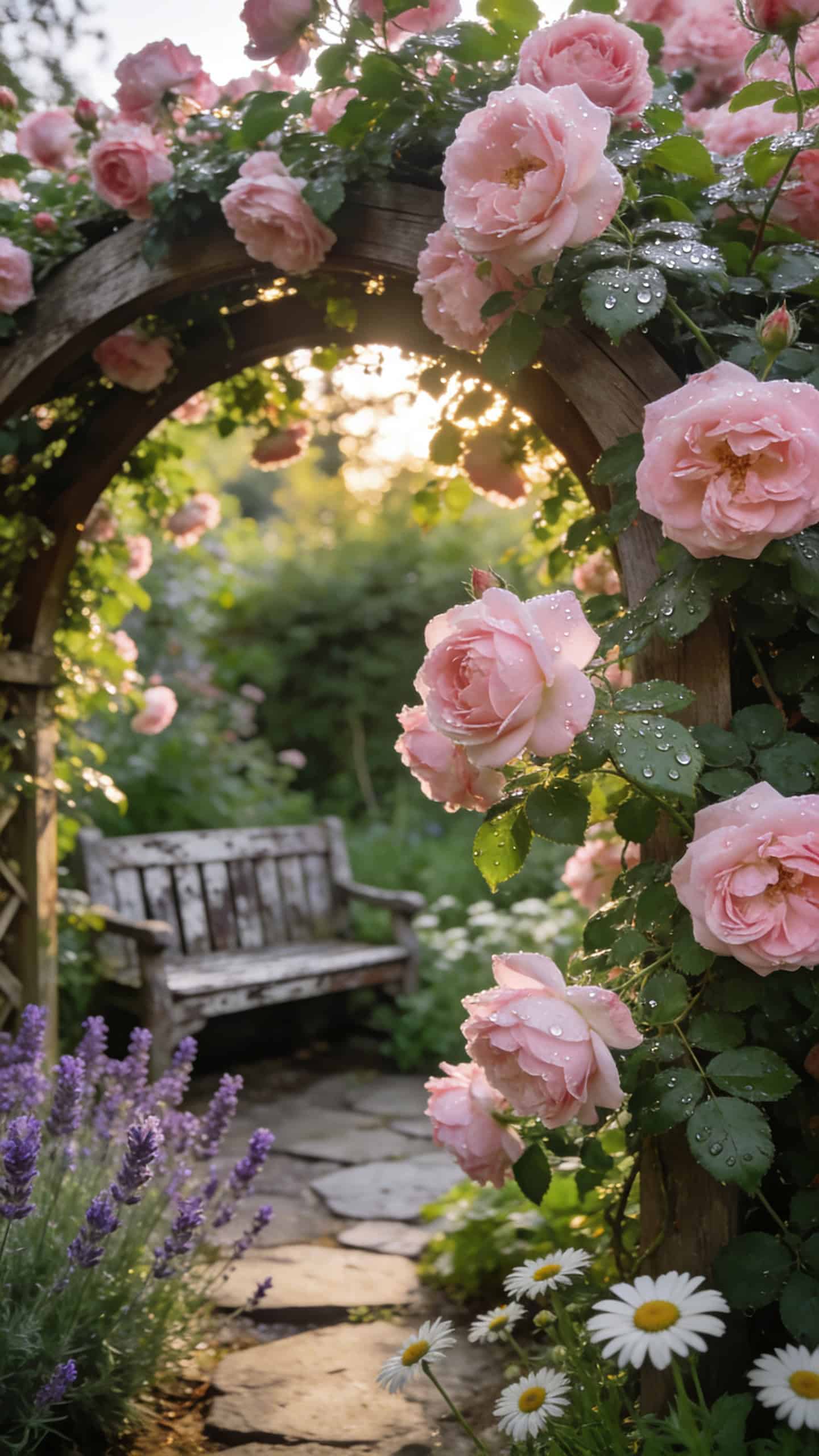
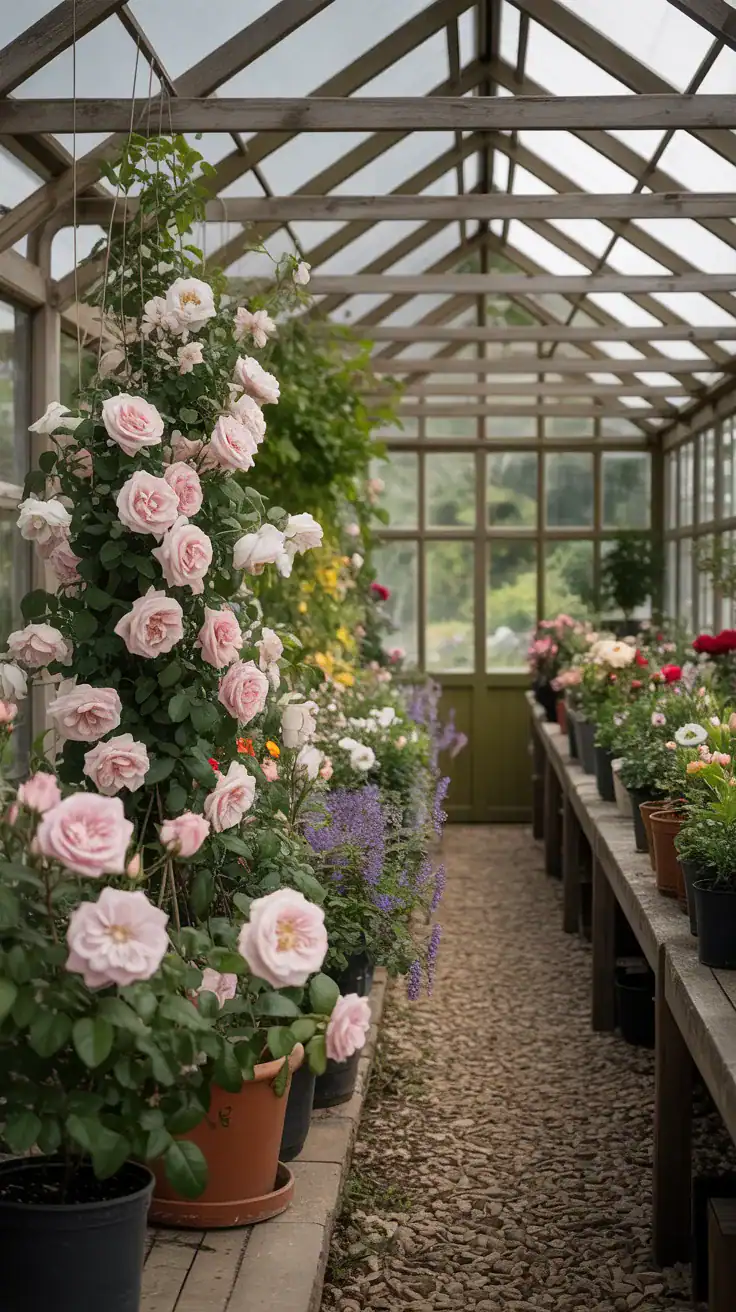
New Dawn is one of the dreamiest climbing roses for a cottage garden. Its soft blush pink flowers, repeat blooming habit, and graceful growth make it perfect for arches, fences, walls, and romantic garden entrances.
The flowers open from deeper pink buds into delicate pale petals, giving the whole plant a soft, faded vintage look. It is also more tolerant of partial shade than many climbing roses, which makes it useful for slightly trickier garden spots.
Why It Works
- Soft pink blooms suit classic cottage garden planting
- Repeat flowers from late spring into autumn
- Flexible canes are easy to train over arches
- Works beautifully with lavender, catmint, and purple clematis
Style tip: Let the canes arch naturally instead of tying everything too rigidly. That loose, slightly overflowing shape is what gives cottage gardens their charm.
2. Eden Climbing Rose
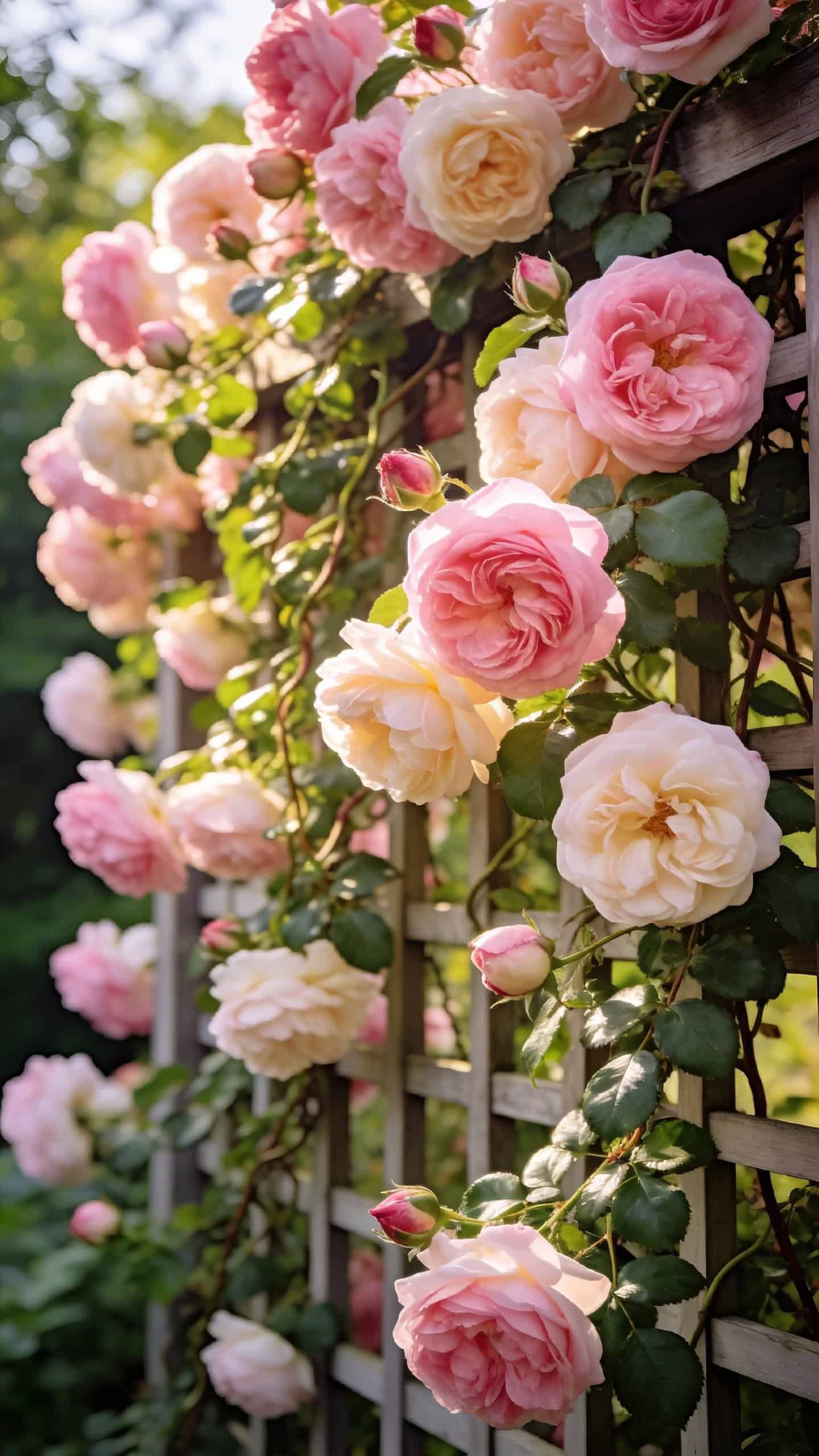
Eden is a wonderfully romantic climbing rose with large cream and soft pink blooms. The flowers have that full, old rose look that feels elegant without becoming stiff or formal.
This is a lovely choice for smaller structures because it usually stays more manageable than the very vigorous ramblers. It works especially well on trellises, garden walls, and compact arches.
Why It Works
- Large romantic blooms create instant visual impact
- Soft cream and pink tones pair well with cottage borders
- Good option for smaller gardens and tighter spaces
- Looks beautiful beside lavender and silvery foliage
Designer detail: Train the canes horizontally along a fence or wall to encourage more flowering shoots. Roses are surprisingly cooperative when gently persuaded.
3. Gertrude Jekyll Rose
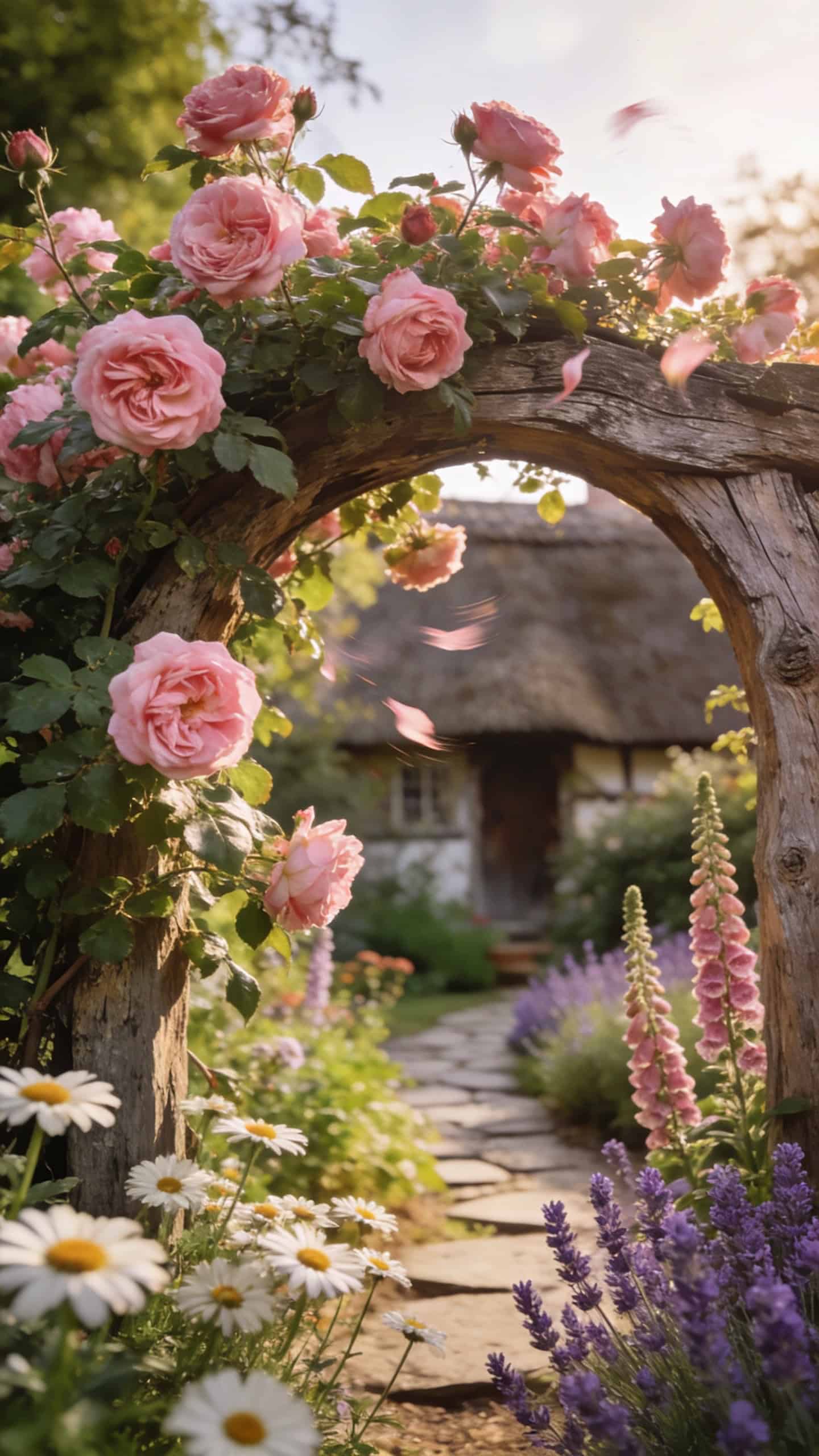
Gertrude Jekyll is a classic choice if fragrance matters. Its rich pink flowers have a strong old rose scent, making it perfect for doorways, seating areas, arches, and paths where you can actually enjoy the perfume.
The blooms form full rosettes packed with petals, giving the plant a lush and traditional cottage garden look. It is especially effective when grown over a rustic wooden arch.
Why It Works
- Strong fragrance adds a sensory cottage garden feel
- Rich pink flowers create a bold romantic focal point
- Ideal for arches, entrances, and larger supports
- Pairs beautifully with honeysuckle, jasmine, and lavender
Best placement: Plant it near somewhere you pause often, such as a bench, doorway, or patio edge. A scented rose hidden at the back of the garden is a tiny tragedy.
4. Clematis Montana
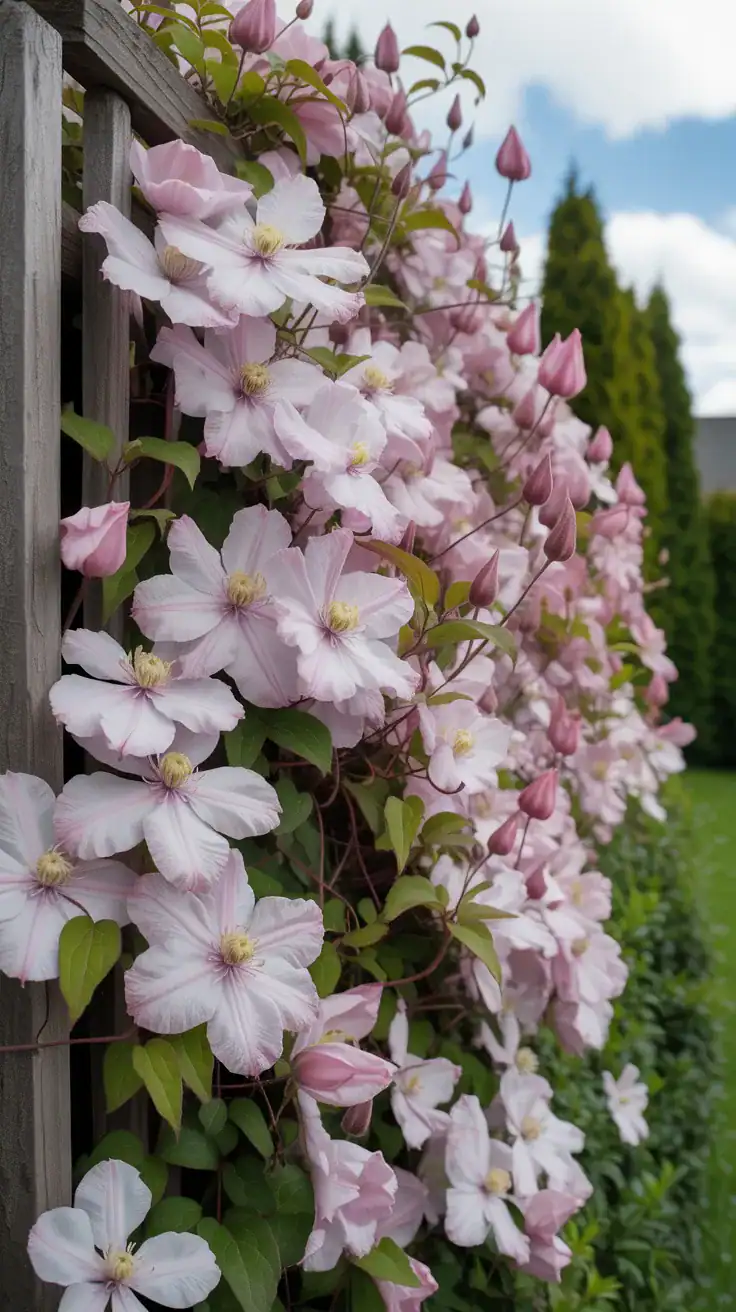
Clematis Montana is perfect when you want a dramatic spring display. It produces masses of small pink or white flowers that can cover fences, sheds, walls, and old garden structures in a soft cloud of bloom.
This is a vigorous climber, so it needs room. In the right place, though, it can turn an ordinary boundary fence into one of the prettiest features in the garden.
Why It Works
- Creates a spectacular spring flower display
- Excellent for covering fences, sheds, and large structures
- Soft pink or white flowers suit cottage garden schemes
- Needs little pruning once established
Small garden note: This one can be enthusiastic. Choose it for a generous fence, pergola, or outbuilding rather than a tiny trellis by the back door.
5. Honeysuckle
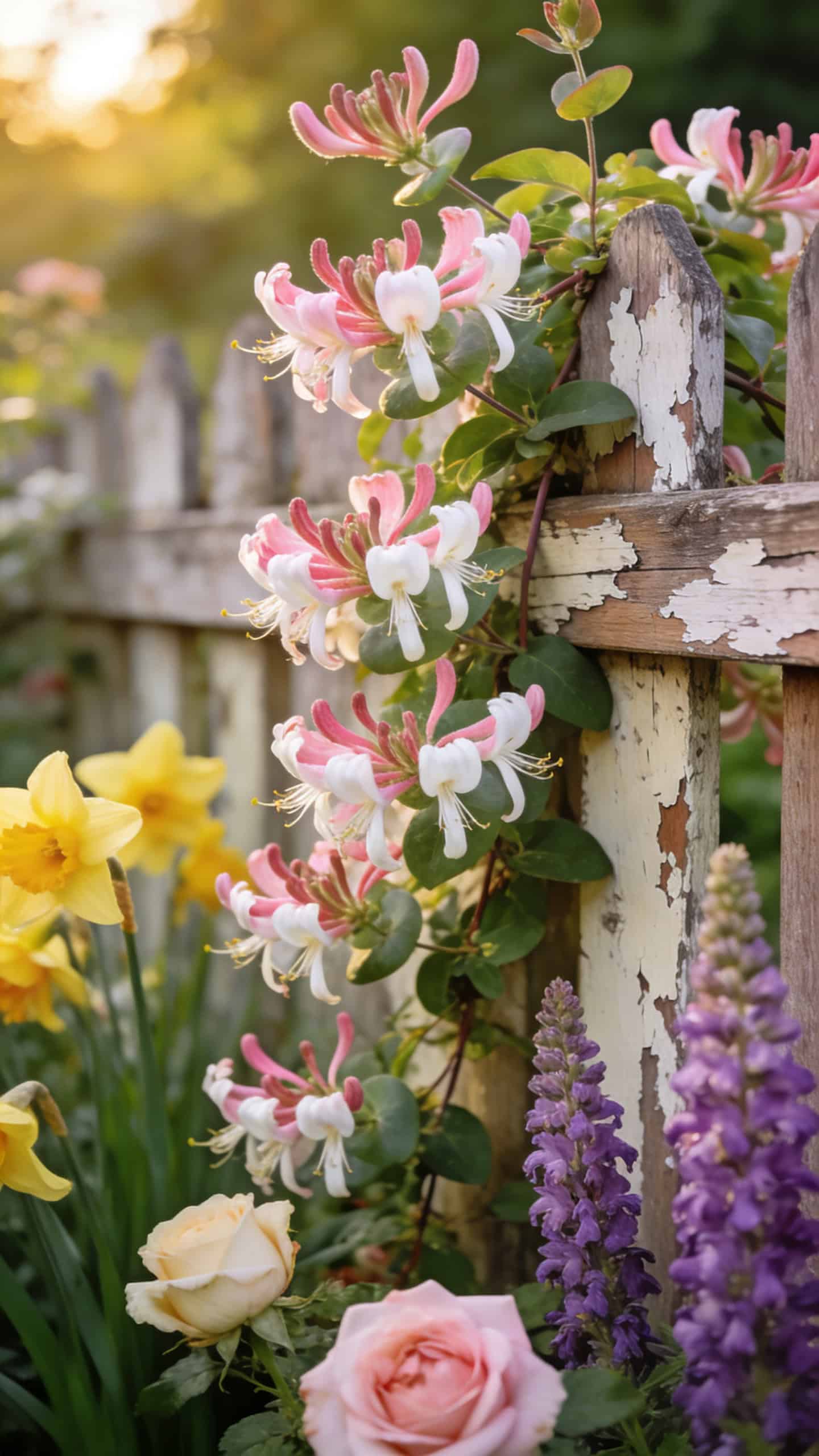
Honeysuckle brings fragrance, movement, and wildlife friendly beauty to a cottage garden. Its twining stems weave naturally through fences, trellis, and other climbers, giving the garden that relaxed, slightly untamed feeling.
The flowers are especially fragrant in the evening, making honeysuckle a lovely choice near seating areas, windows, and garden paths.
Why It Works
- Evening fragrance feels wonderfully romantic
- Attracts pollinators and wildlife
- Twines naturally through trellis and other plants
- Pairs beautifully with climbing roses and clematis
Try this with: Grow honeysuckle beside a climbing rose so the flowers weave together. The effect feels collected over time rather than designed in a panic the night before guests arrive.
6. Rambling Rector Rose
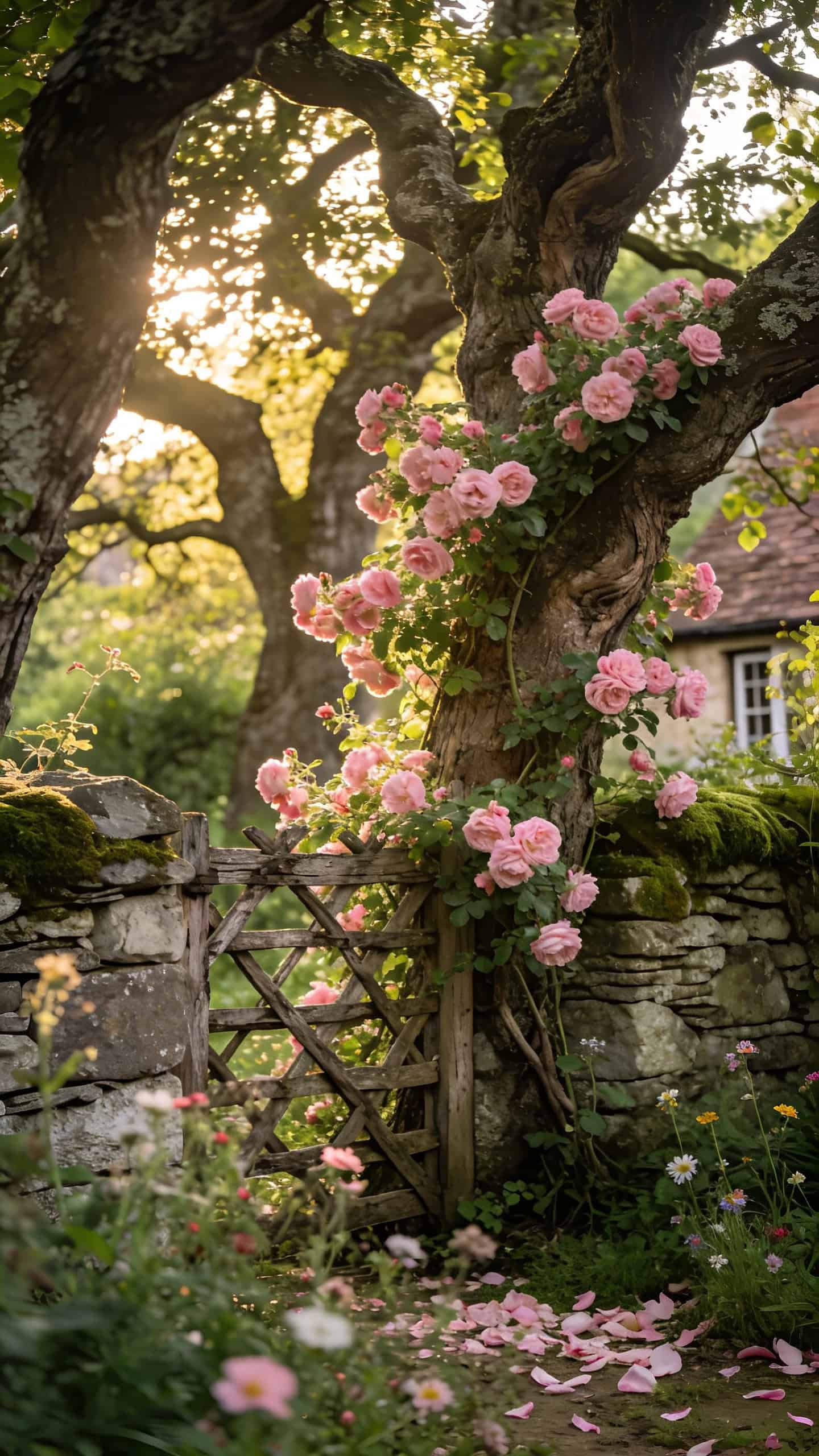
Rambling Rector is made for larger cottage gardens. It produces huge clusters of small creamy white flowers in early summer, often creating a breathtaking cascade when allowed to climb through trees or over large pergolas.
This is not a polite little rose for a tiny support. It wants space, strength, and permission to be dramatic.
Why It Works
- Creates an unforgettable early summer display
- Perfect for mature trees, large pergolas, and garden walls
- Produces red hips for autumn and winter interest
- Ideal for a romantic, slightly wild cottage garden look
Best placement: Use it where it has room to tumble and spread. A mature tree, large arch, or generous boundary wall is ideal.
7. Sweet Autumn Clematis
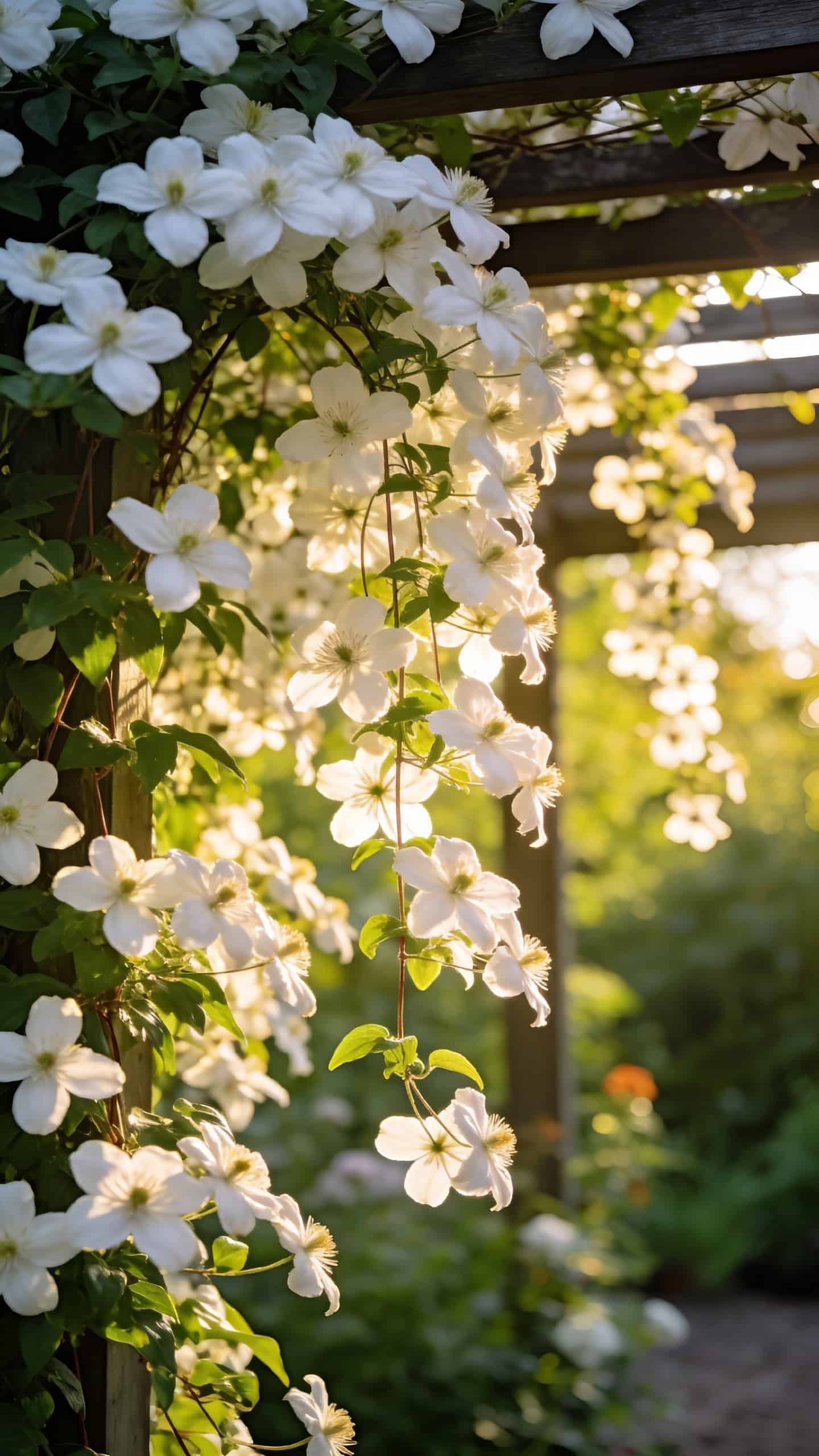
Sweet Autumn Clematis is useful for extending the cottage garden season. When many summer flowers are starting to fade, this climber produces masses of small white star shaped blooms that look light, airy, and beautifully fresh.
It works especially well cascading over fences, pergolas, and walls, where the white flowers can create a soft waterfall effect.
Why It Works
- Flowers in late summer and early autumn
- Creates a frothy white display over structures
- Useful for extending seasonal interest
- Looks beautiful with asters, sedums, and late roses
Designer detail: Use it against a darker fence or wall so the small white flowers really stand out.
8. Zephirine Drouhin Rose
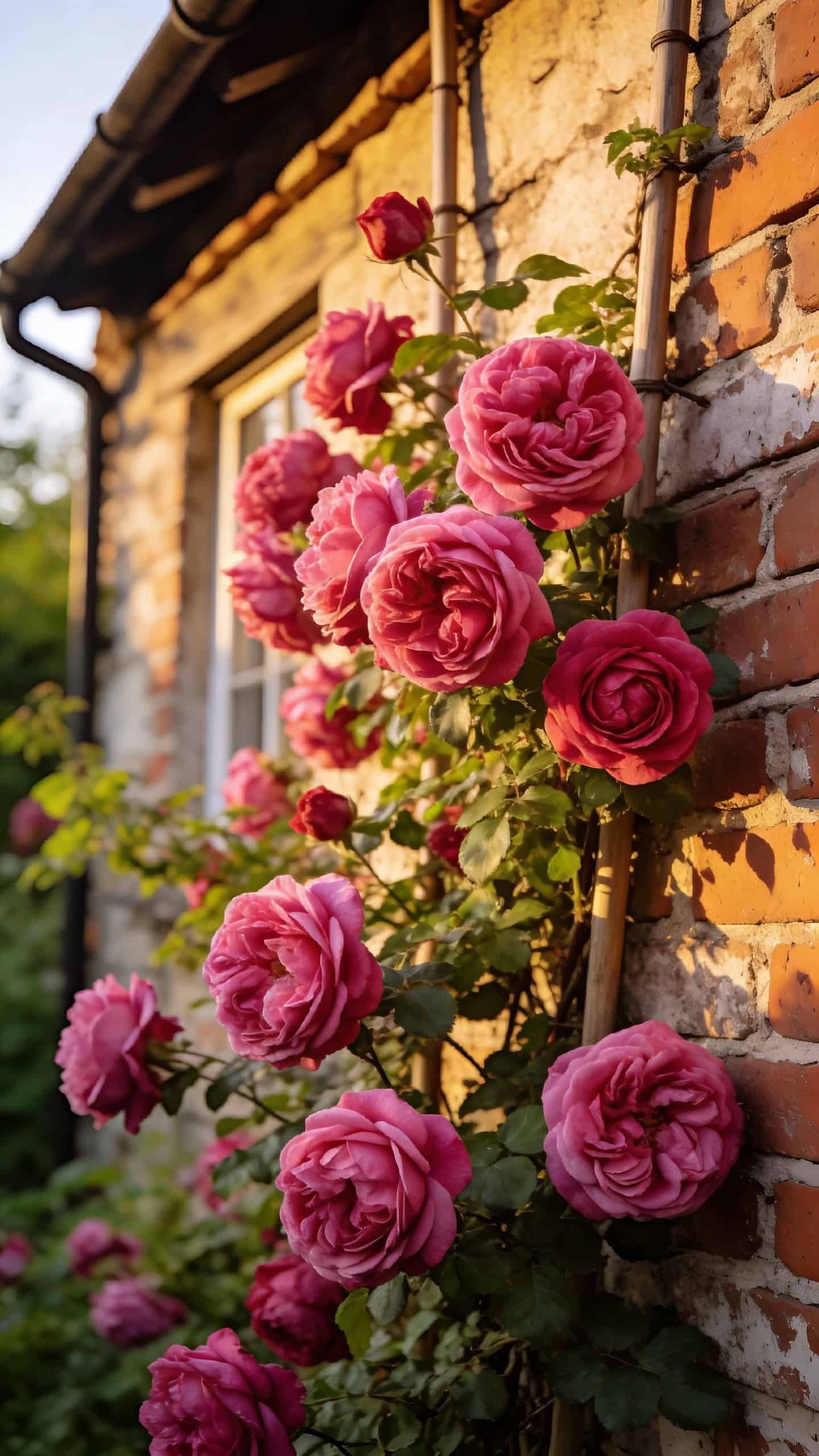
Zephirine Drouhin is a brilliant choice for paths, doorways, and entrances because it is famously thornless. That means you can enjoy romantic rose covered walkways without the plant grabbing your sleeves like it has unresolved issues.
Its deep pink blooms are strongly scented and repeat through the season. It also tolerates partial shade better than many roses, making it useful for less sunny garden walls.
Why It Works
- Thornless stems are ideal for high traffic areas
- Deep pink flowers add bold cottage garden colour
- Repeat flowers through the season
- Can cope with partial shade and north facing walls
Easiest upgrade: Train it over a low arch or along a path where people can enjoy the scent without being scratched.
9. Star Jasmine
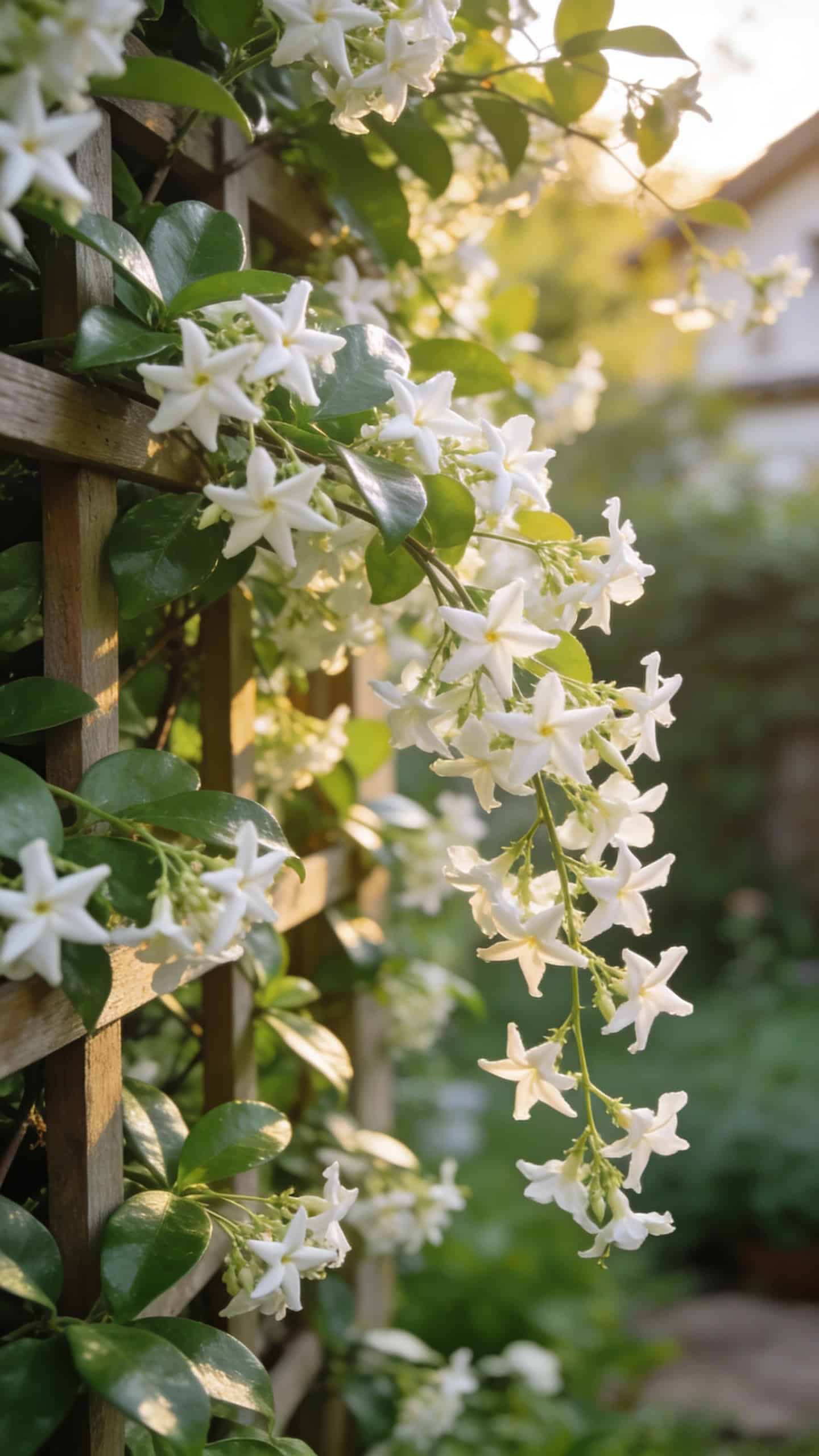
Star Jasmine adds glossy evergreen foliage and beautifully scented white flowers. It has a slightly more polished look than some cottage garden climbers, but it still works beautifully when softened with roses, lavender, herbs, and loose planting.
It is especially lovely near seating areas or windows, where the fragrance can drift through the garden on warm evenings.
Why It Works
- Evergreen foliage gives year round structure
- White flowers add freshness and fragrance
- Works well on warm walls, fences, and trellis
- Can be grown in containers in cooler climates
Best placement: Give Star Jasmine a warm, sheltered position. It looks especially pretty trained around a seating nook or sunny patio wall.
10. The Generous Gardener Rose
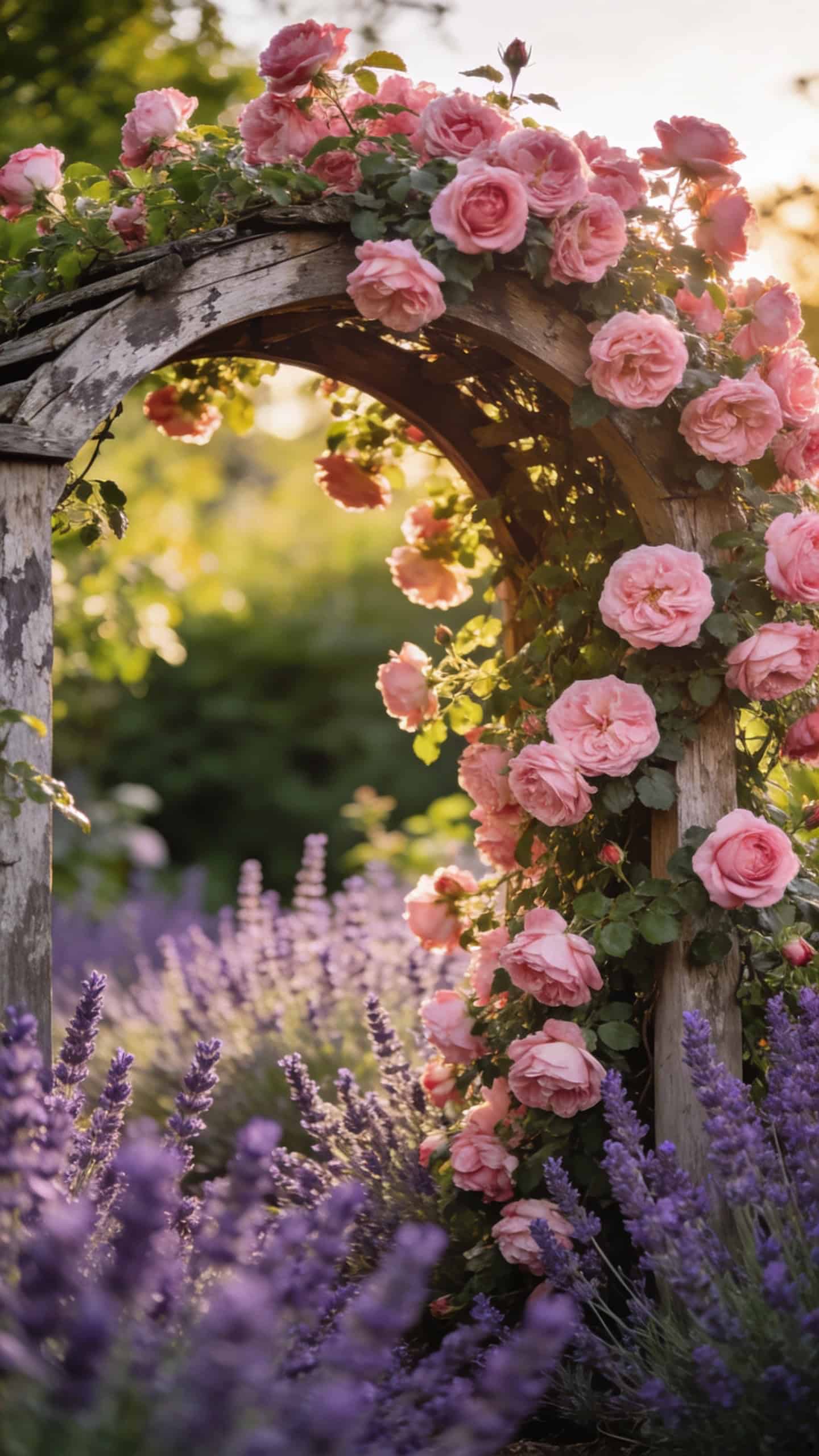
The Generous Gardener is a soft pale pink climbing rose with beautifully full blooms and a strong fragrance. It has that classic English rose look that feels romantic, timeless, and very at home in a cottage garden.
It looks especially beautiful trained over arches and pergolas, where the flowers can hang slightly and create a soft canopy overhead.
Why It Works
- Pale pink blooms create a soft romantic effect
- Strong fragrance adds sensory appeal
- Excellent for arches, pergolas, and large supports
- Pairs perfectly with lavender and catmint
Creates this effect: A romantic rose canopy that makes even a simple garden path feel special.
11. Wisteria
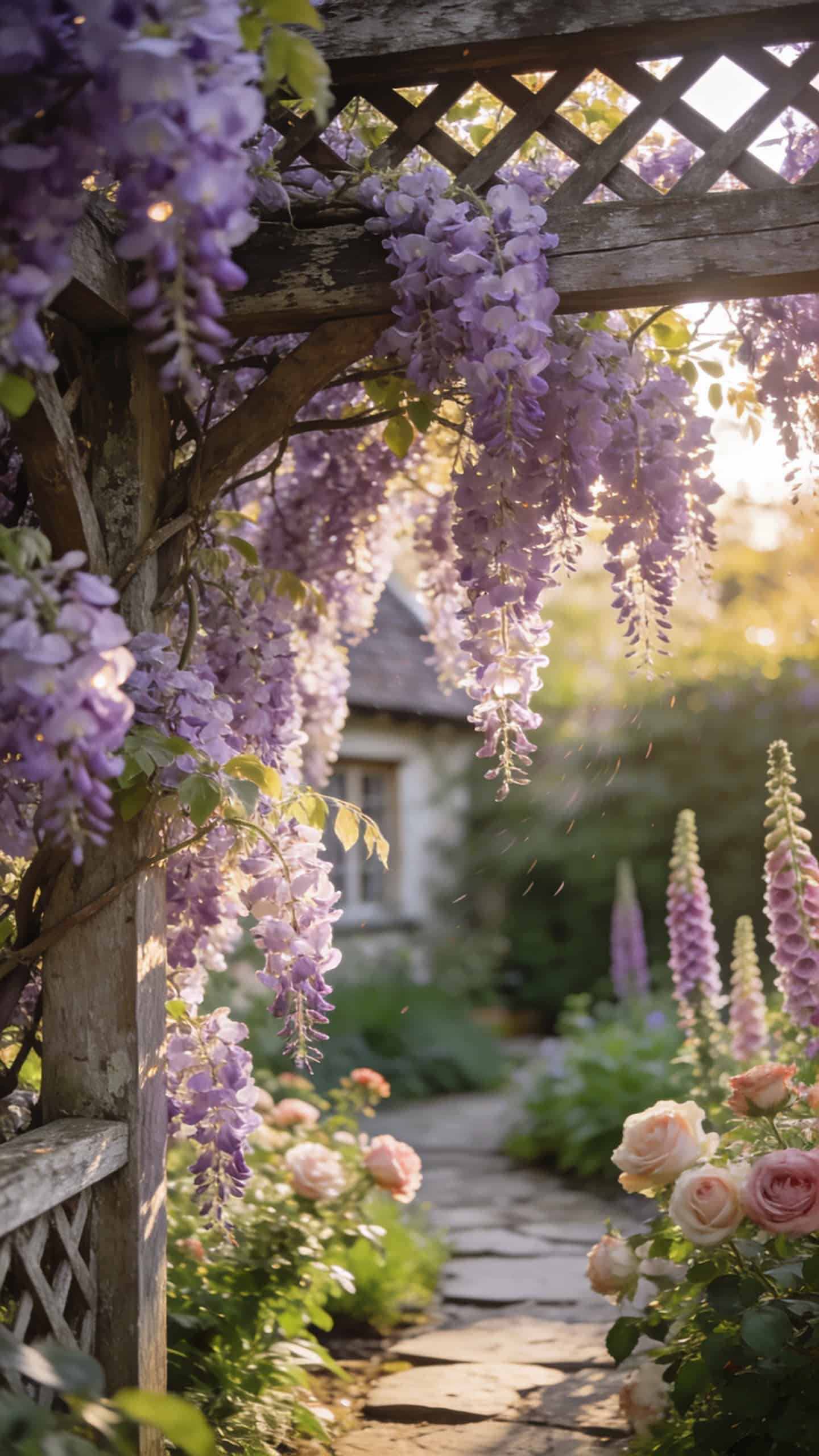
Wisteria creates one of the most dramatic spring displays in any cottage garden. Its long purple or white flower clusters hang from pergolas, arches, and walls like fragrant curtains.
This is a powerful climber, so it needs a strong structure and regular pruning. But when it is happy, it becomes a true garden showpiece.
Why It Works
- Creates a spectacular spring focal point
- Perfect for pergolas, house walls, and large arches
- Long flower racemes add movement and drama
- Mature trunks become beautiful sculptural features
Important note: Install strong supports before planting. Mature wisteria becomes heavy, and flimsy structures will not thank you later.
12. Madame Alfred Carrière Rose
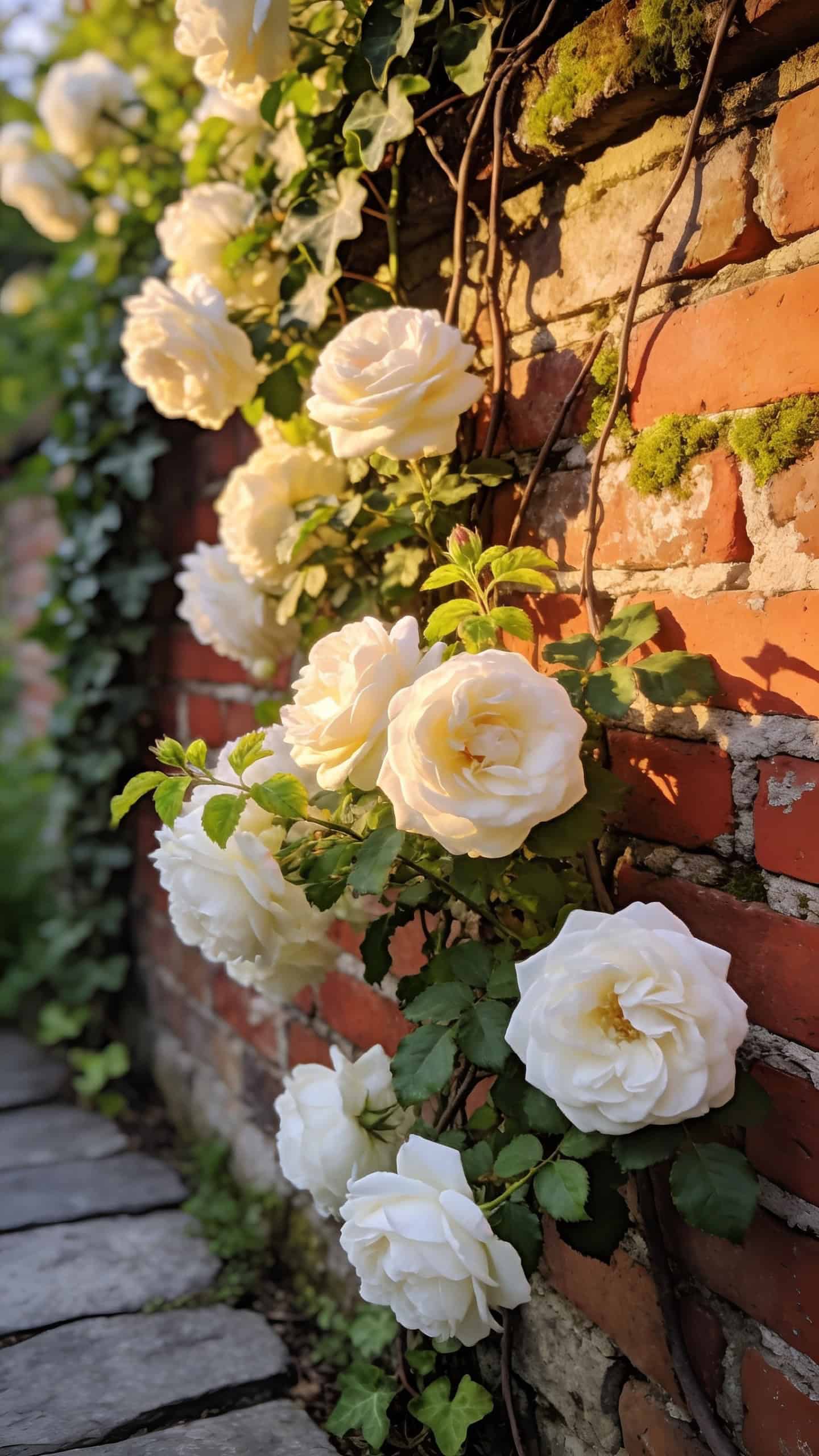
Madame Alfred Carrière is a beautiful heritage climbing rose with creamy white flowers touched with the faintest blush of pink. It has a soft, graceful look that works wonderfully against brick, stone, and weathered timber.
One of its biggest advantages is shade tolerance. It can perform well on north facing walls, where many other roses would sulk dramatically.
Why It Works
- Soft white blooms lighten darker garden areas
- Tolerates shade better than many roses
- Nearly thornless stems make training easier
- Looks beautiful with blue or purple clematis
Best placement: Use it on a shaded wall, old brick surface, or cottage style doorway where the pale flowers can brighten the space.
13. Clematis Nelly Moser
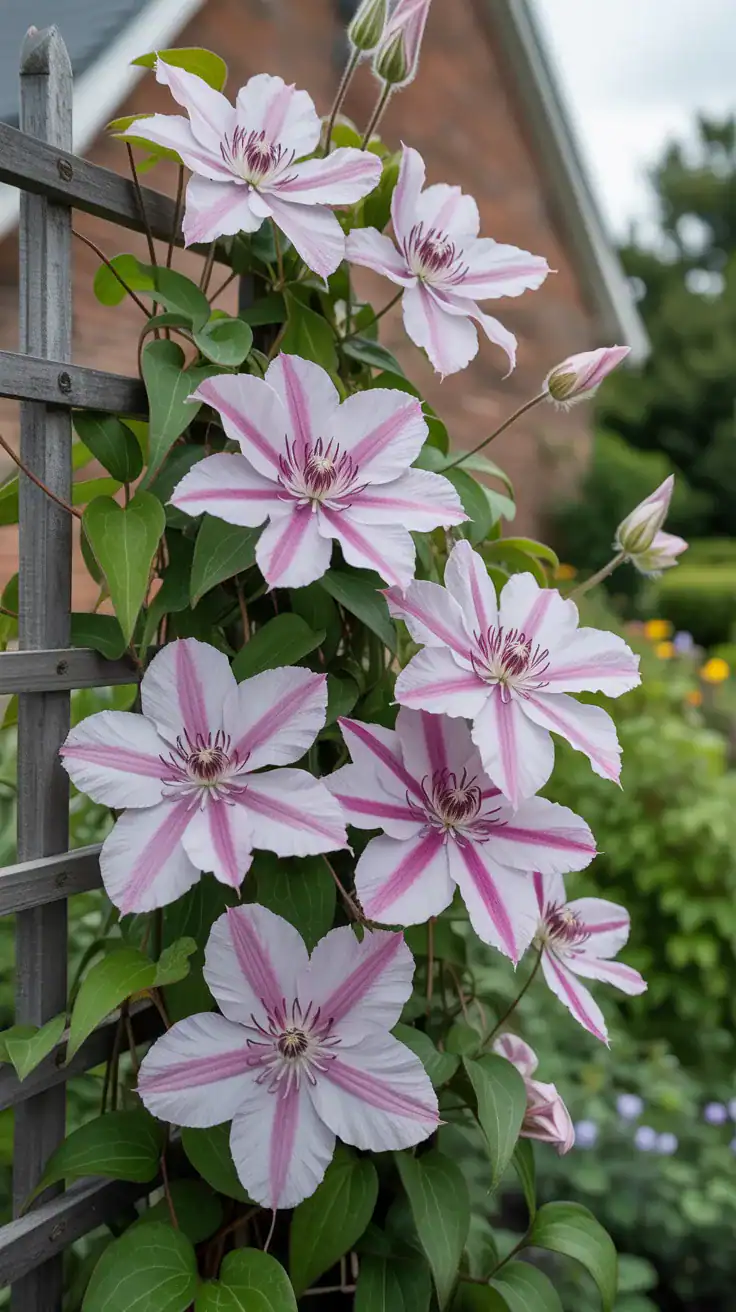
Clematis Nelly Moser is known for its large pink and white striped flowers. It brings a more dramatic look to cottage garden planting while still feeling soft and romantic.
This variety prefers partial shade because strong sun can fade the flower colour. It is a lovely choice for training through roses or growing on a trellis where the blooms can be seen up close.
Why It Works
- Large striped blooms create strong visual interest
- Good choice for partial shade
- Works beautifully trained through climbing roses
- Adds a soft pink accent to mixed cottage planting
Small space tip: Nelly Moser is more manageable than many vigorous climbers, making it a good option for a compact trellis or smaller garden corner.
14. Lady of Shalott Rose
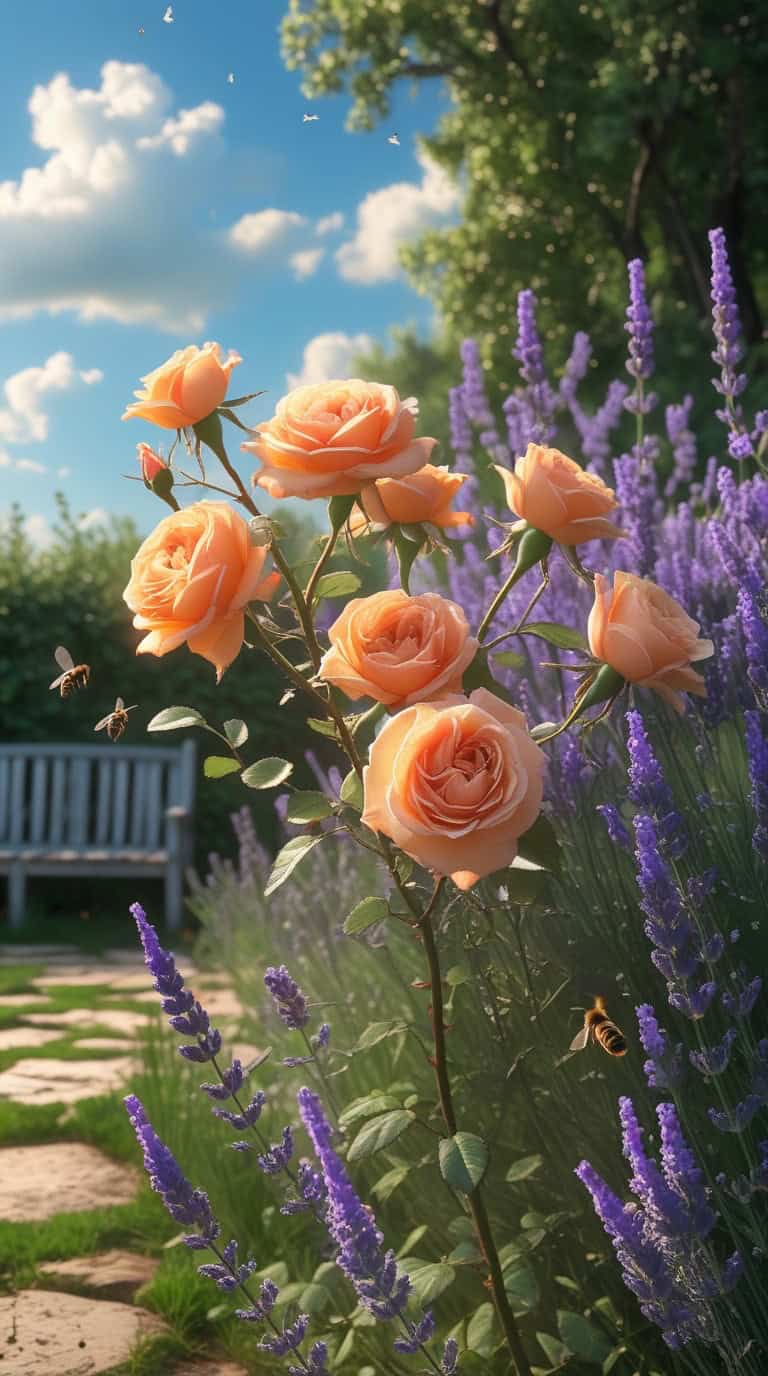
Lady of Shalott brings warm apricot, coral, and salmon pink tones to the cottage garden. It is perfect if you want something softer than red but warmer than classic pale pink.
The colour looks especially beautiful in morning or evening light, giving the garden a golden, romantic glow.
Why It Works
- Warm apricot tones add contrast to pink and purple borders
- Repeat flowering gives long seasonal interest
- Good disease resistance makes it practical as well as pretty
- Pairs beautifully with blue, purple, cream, and soft green planting
Try this with: Pair apricot roses with blue campanulas, lavender, or delphiniums for a cottage garden colour combination that feels rich but still gentle.
15. Climbing Hydrangea
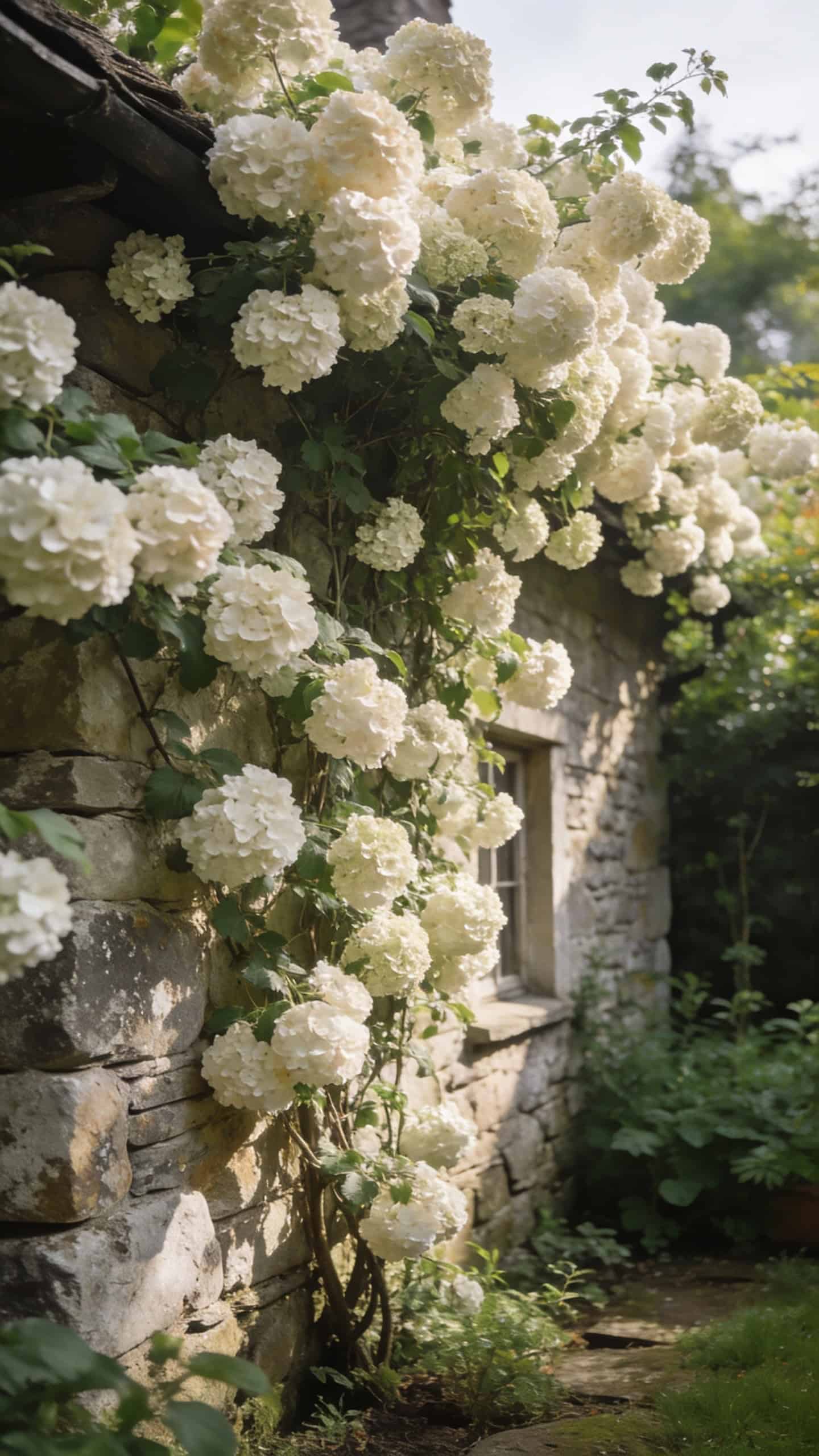
Climbing Hydrangea is ideal for shady walls, old stone surfaces, and areas where roses may struggle. It produces creamy white lacecap flowers in early summer and has handsome heart shaped leaves that turn golden in autumn.
It is slow to establish, but once settled, it becomes a long lasting and elegant climber. Think of it as the quiet one that eventually becomes the most impressive person in the room.
Why It Works
- Excellent for shade and north facing walls
- Self clinging, so it does not need wires or trellis
- Creamy lacecap flowers suit soft cottage planting
- Autumn foliage adds extra seasonal interest
You Might Also Like
Patience note: Climbing Hydrangea can take several years to flower well, but it is worth the wait once it settles in.
How to Plant Cottage Garden Climbers
Climbing plants are long term garden features, so it is worth preparing their planting spot properly. A little effort at the beginning helps them establish faster and flower more generously later.
- Choose the right position: Check the mature size, sun needs, and support requirements before planting.
- Prepare the soil: Add well rotted compost or organic matter to improve structure and moisture retention.
- Install support first: Add arches, wires, trellis, or pergola supports before roots start spreading.
- Water well: Keep new climbers consistently watered during their first growing season.
- Tie stems loosely: Use soft ties so stems can grow without being damaged.
Simple Care Tips for Healthy Climbers
Most cottage garden climbers are not difficult once established, but regular care keeps them looking abundant rather than abandoned. There is a fine line between romantic and completely feral.
- Water deeply during dry spells: Wall trained plants often need extra water because walls create dry rain shadow areas.
- Feed roses in spring: Use a rose feed or well rotted manure as new growth begins.
- Mulch annually: Add a 2 to 3 inch layer of organic mulch, keeping it clear of the stems.
- Prune by plant type: Climbing roses, ramblers, clematis, and wisteria all have different pruning needs.
- Check supports yearly: Replace weak ties and repair damaged structures before heavy growth begins.
Cottage Garden Design Tips for Climbers
The best cottage garden climbers look layered, generous, and slightly relaxed. They should soften the garden rather than look like they have been forced into perfect lines.
- Layer different heights: Combine roses, clematis, foxgloves, hollyhocks, and border perennials for depth.
- Mix bloom times: Use spring clematis, summer roses, and late flowering climbers for a longer season.
- Repeat soft colours: Pink, white, lavender, blue, and apricot create a classic cottage garden palette.
- Add fragrance near paths: Place honeysuckle, jasmine, and scented roses where people pass or sit.
- Choose rustic supports: Weathered wood, old brick, woven willow, and natural arches suit the cottage look beautifully.
Best Companion Plants for Cottage Garden Climbers
Climbers look even better when the base is softened with traditional cottage garden planting. This helps the whole garden feel layered from ground level to the top of the arch.
- Lavender: Perfect beneath pink and white roses.
- Catmint: Adds hazy blue flowers and soft foliage.
- Hardy geraniums: Fill gaps and provide long lasting colour.
- Foxgloves: Add vertical drama near arches and fences.
- Delphiniums: Pair beautifully with pink roses and clematis.
- Peonies: Bring full romantic flowers to the base of climbing structures.
- Campanulas: Add soft blue and purple tones to the border.
Final Thoughts on Cottage Garden Climbers
Climbing roses and flowering vines are some of the most powerful plants for creating an English cottage garden feel. They add height, movement, fragrance, softness, and that wonderfully romantic sense of abundance.
Choose varieties that suit your space, give them strong support, and allow them to grow with a little freedom. The goal is not perfection. It is softness, charm, and flowers spilling just enough to make the garden feel alive.
And once roses, clematis, honeysuckle, and wisteria start weaving through the garden together, afternoon tea outside suddenly feels less like an option and more like a legal requirement.