
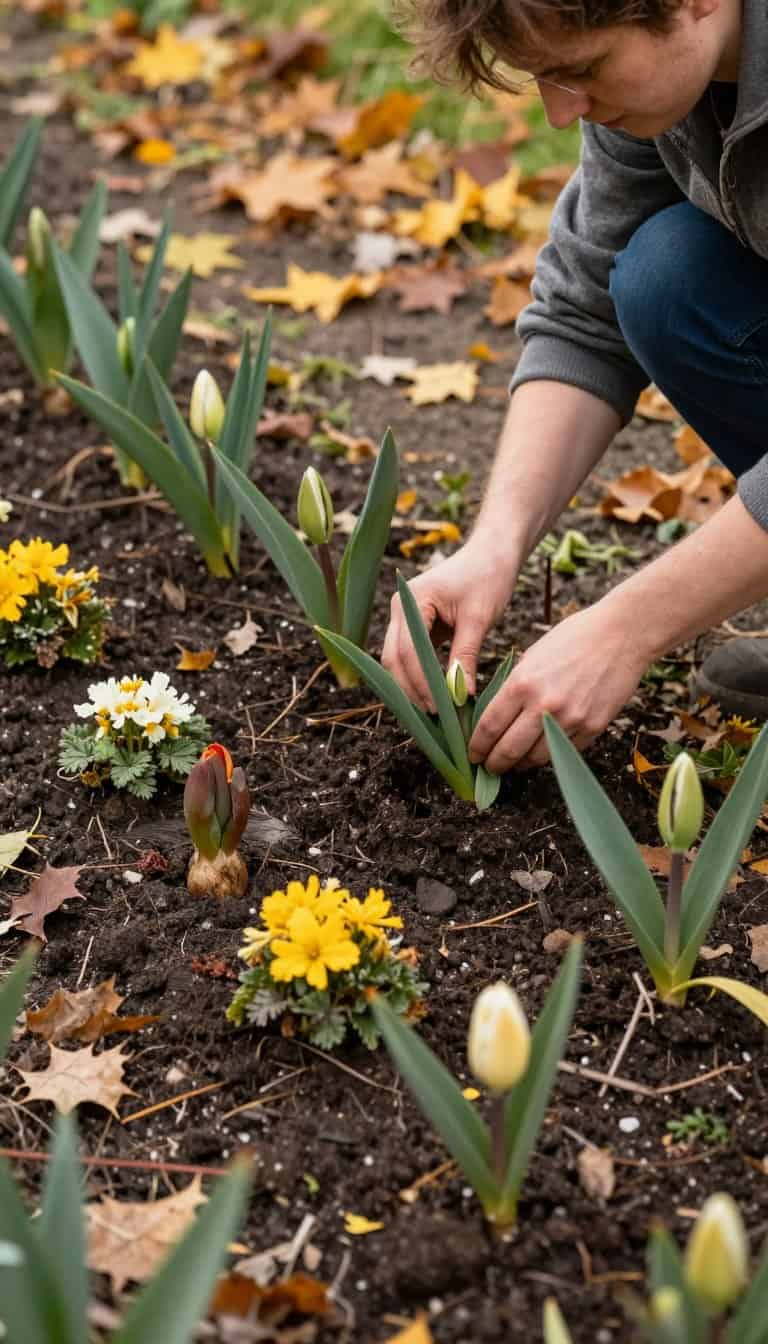
Autumn Bulb Planting Guide: 12 Beautiful Bulbs to Plant Now
Planting bulbs in autumn is one of those wonderfully optimistic garden jobs. You spend an afternoon putting rather unremarkable-looking bulbs into the soil, then months later they suddenly appear as some of the first and most welcome flowers of spring.
It’s also an easy way to add a surprising amount of colour without redesigning your garden. Bulbs can be slipped between established perennials, planted beneath deciduous shrubs, scattered through suitable lawn areas, or layered into containers when garden space is limited.
The important part is choosing bulbs that suit your climate and growing conditions and planting each type at the right time. From early crocuses and cheerful daffodils to dramatic alliums and elegant tulips, this autumn bulb planting guide covers 12 beautiful choices to consider for a colourful spring garden.
Quick Guide: Which Autumn Bulbs Should You Plant?
- For early spring colour: Crocuses, snowdrops, and winter aconites.
- For reliable spring impact: Daffodils and grape hyacinths.
- For cottage gardens: Tulips, narcissus, fritillaries, and alliums.
- For naturalising: Choose suitable species of crocus, narcissus, scilla, or grape hyacinth for your conditions.
- For containers: Layer smaller and larger bulbs to create successive displays in limited space.
- For late spring height: Ornamental alliums can rise beautifully above lower-growing plants.
Planting dates and recommended depths vary by bulb, variety, and climate, so use the supplier’s instructions as your starting point. Choose firm, healthy bulbs without obvious mould, severe damage, or extensive soft areas, and avoid planting into persistently waterlogged soil.
1. Daffodils for Cheerful Spring Colour
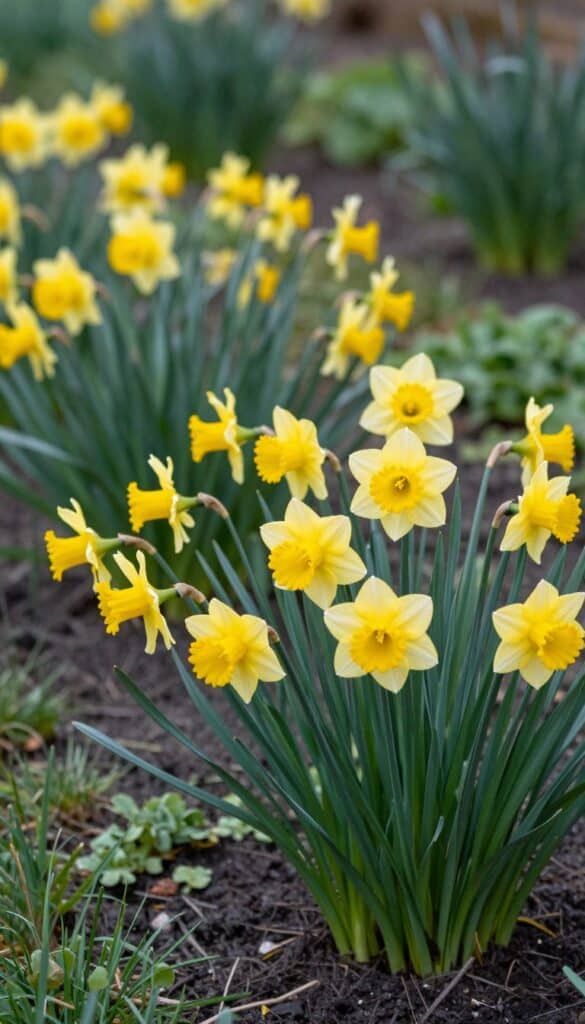
Daffodils are spring classics for good reason. Their yellow, cream, white, peach, and even softly pink-toned varieties can bring colour to borders, containers, woodland-style planting, and areas beneath deciduous trees.
There are varieties flowering at different points in the season, so combining more than one type can extend the display. Smaller narcissus varieties are particularly useful in pots and at the front of borders, while taller daffodils can create larger drifts of colour.
Plant bulbs according to the depth and spacing recommended for the variety, generally with the pointed growing tip facing upward. Well-drained soil is important, particularly during periods when the bulbs are dormant.
Where Daffodils Work Well
- Cottage garden borders.
- Spring containers.
- Beneath suitable deciduous trees.
- Informal drifts and naturalised planting.
Why gardeners love them: With the right conditions, many daffodils can return for years and gradually create a more generous spring display.
2. Tulips for an Elegant Spring Display
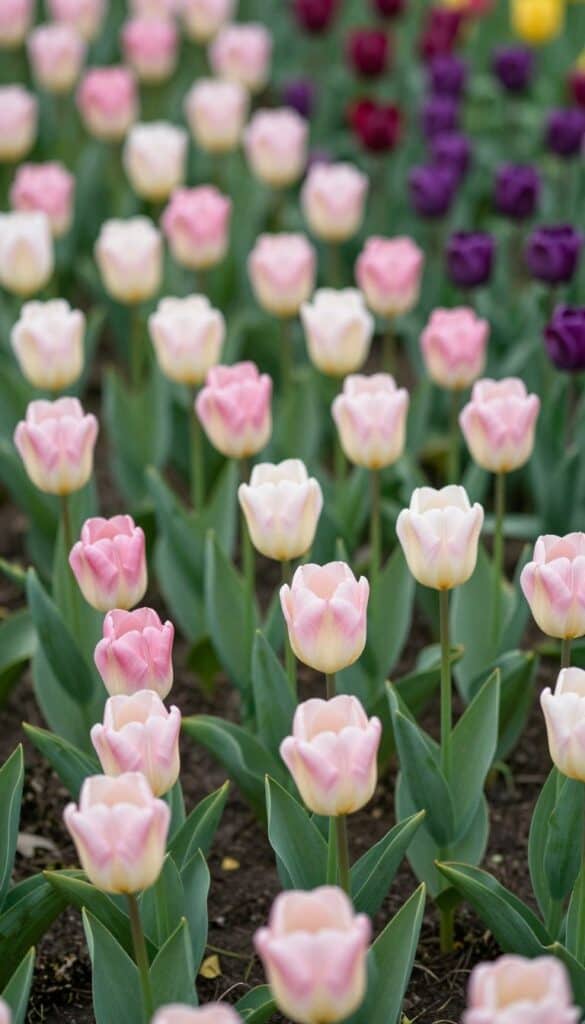
If you want spring colour with almost unlimited possibilities, tulips are difficult to beat. They range from restrained whites and pastels to deep burgundy, orange, purple, pink, and almost-black shades, with flower shapes ranging from beautifully simple to wonderfully extravagant.
Tulips look particularly effective planted in generous groups rather than appearing individually throughout a border. Try combining two or three complementary colours for a display that feels abundant without becoming chaotic.
Tulips are often planted later in autumn than many other spring bulbs, although the best timing depends on your location and conditions. Follow local and supplier recommendations rather than assuming every bulb needs to go into the ground on the same weekend.
Beautiful Tulip Palettes
- Blush pink and cream.
- Apricot and soft yellow.
- Burgundy and dusty rose.
- White and deep purple.
Designer detail: Repeating the same tulip colours in several areas of a border creates a more cohesive effect than using a completely different variety in every available gap.
3. Crocuses for Some of the Earliest Colour
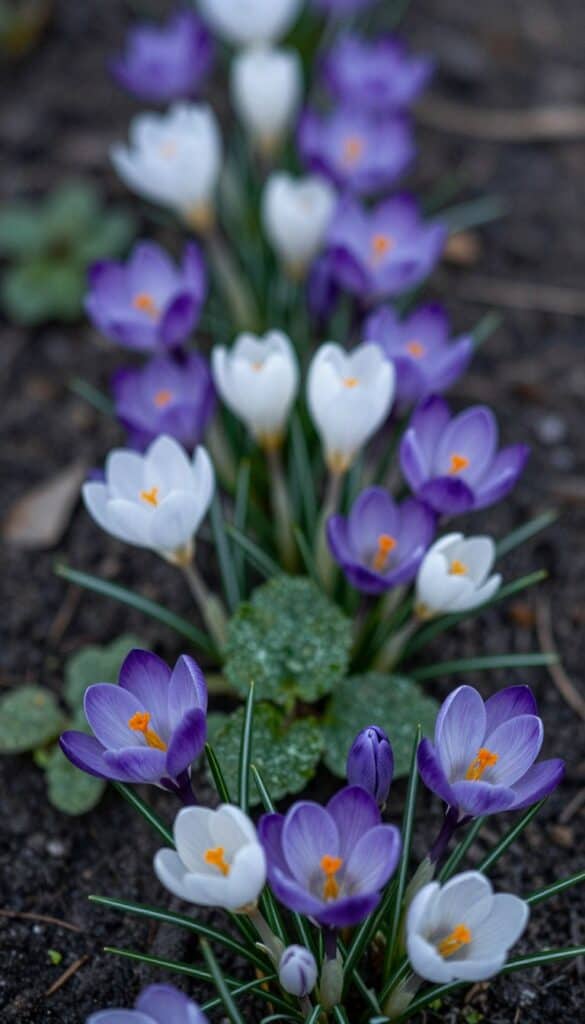
Crocuses are small, but their timing gives them enormous impact. Their purple, white, lilac, striped, and golden flowers can appear when much of the garden is still only beginning to wake up.
Plant them in groups where their small flowers won’t be lost among larger plants. They can work beautifully along border edges, beneath suitable deciduous planting, in containers, and in informal lawn planting where conditions and maintenance allow.
If you’re planting into grass, remember that the foliage generally needs time after flowering to replenish the bulb before it is cut back, so choose an area where delaying mowing is practical.
Best Placement
- Border edges.
- Rock gardens.
- Spring containers.
- Suitable areas of lawn.
Small garden tip: Crocuses provide plenty of seasonal colour without requiring much visible space once their foliage has died back.
4. Alliums for Height and Drama
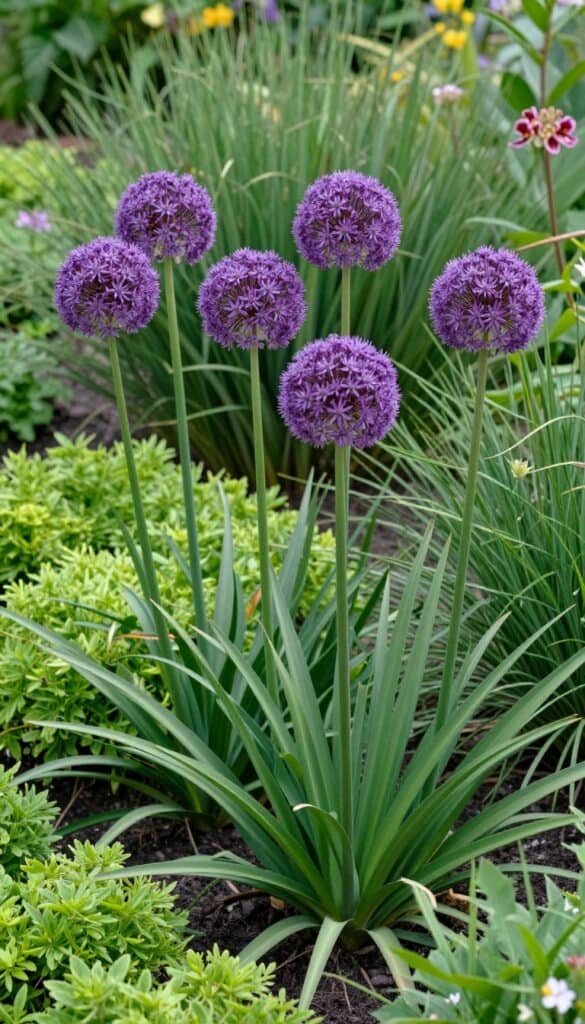
Ornamental alliums bring something completely different to a spring border. Their spherical flower heads appear to float above surrounding plants on tall stems, introducing height and a strong architectural shape without taking up much visual space at ground level.
Purple varieties are the most familiar, but alliums are also available in white, pinkish, and softer mauve shades. They look especially effective threaded between perennials that can eventually disguise the bulb foliage as it begins to fade.
Different alliums vary significantly in size and growing requirements, so check the mature height before planting. A variety that looks charming at the front of a border on the packet may have other ideas once it reaches full size.
Pair Alliums With
- Ornamental grasses.
- Salvias.
- Hardy geraniums.
- Other leafy perennials.
Creates this effect: Tall alliums add vertical punctuation to a border, helping a relatively simple planting scheme feel much more designed.
5. Grape Hyacinths for Beautiful Blue Drifts
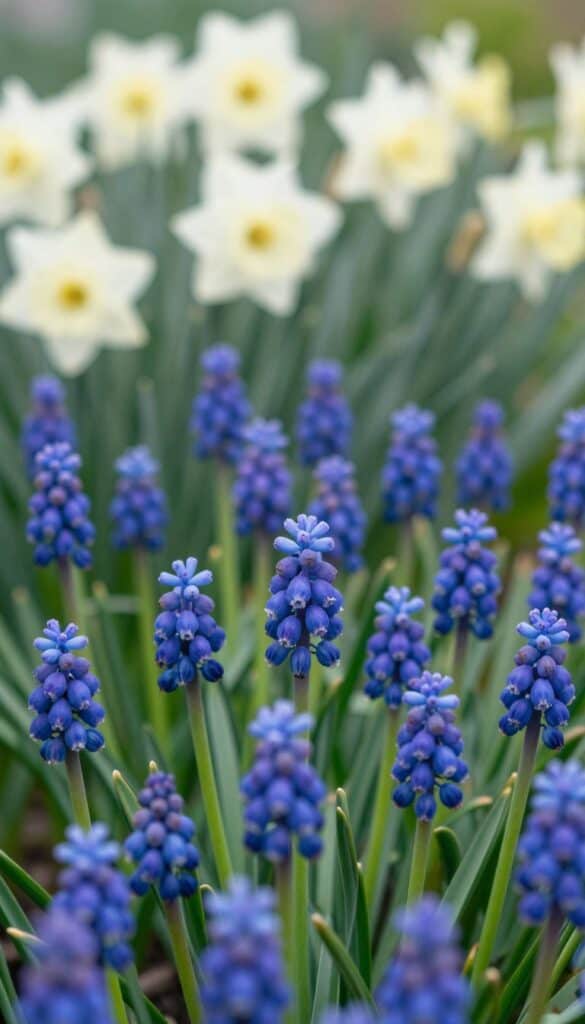
Grape hyacinths, or muscari, produce compact clusters of tiny bell-like flowers, most commonly in beautiful shades of blue. Their low-growing habit makes them useful along paths, at the front of borders, beneath taller bulbs, and in spring containers.
They can look particularly striking planted in generous groups, where the blue creates a ribbon of colour beneath taller daffodils or tulips. White varieties can also be lovely when you want a quieter spring palette.
Some muscari can spread readily when they’re happy, which is wonderful if you want natural-looking drifts but worth considering if you prefer extremely controlled planting.
Try Grape Hyacinths With
- White daffodils.
- Blush tulips.
- Yellow narcissus.
- Early spring foliage.
Budget friendly choice: Where conditions suit them, grape hyacinths can gradually spread and create a fuller display without needing to replant the entire area each year.
6. Snowdrops for Delicate Late-Winter Flowers
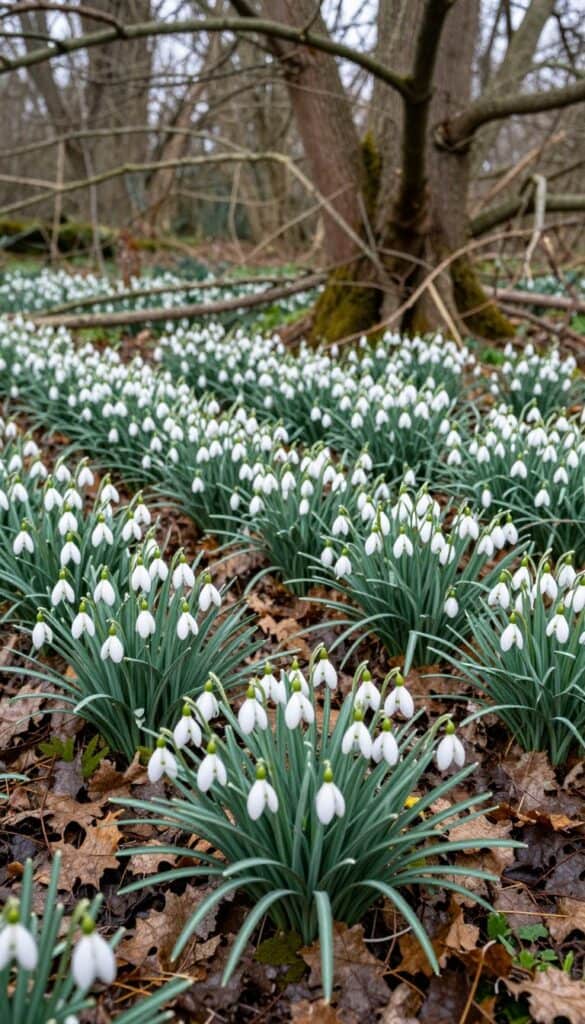
Snowdrops bring an understated kind of beauty to the garden, often appearing while winter still seems very much in charge. Their small white flowers work particularly well in woodland-style areas, beneath deciduous shrubs and trees, and along informal garden edges.
Rather than expecting one or two bulbs to create a dramatic display immediately, think of snowdrops as plants that look best in colonies and drifts. Given suitable conditions, established groups can become one of the loveliest signs that spring is approaching.
Snowdrops are sold in different forms and may be established in different seasons depending on how they’re supplied, so follow the grower’s planting recommendations for the plants or bulbs you purchase.
Where Snowdrops Look Natural
- Beneath deciduous trees.
- Woodland-style borders.
- Informal garden edges.
- Among suitable low-growing ground cover.
Why they’re worth planting: Snowdrops provide interest at a point in the year when even a handful of flowers can make the entire garden feel as though it’s beginning again.
7. Fritillaries for Something a Little Different
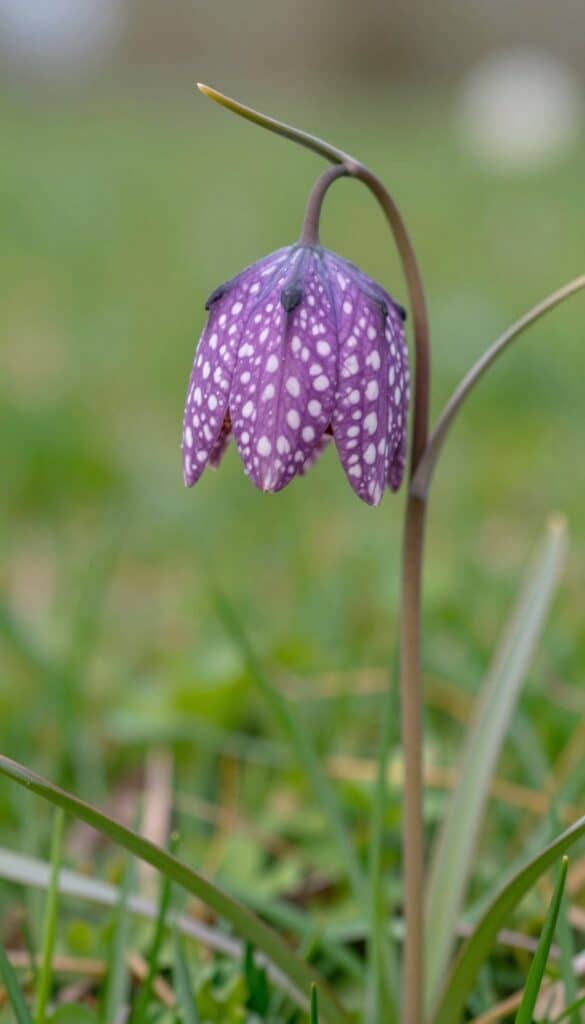
Fritillaries are a lovely choice when you want spring bulbs that feel a little less expected. The group includes everything from delicate snake’s head fritillaries with distinctive chequered flowers to much taller crown imperials that create a dramatic focal point.
The smaller varieties work beautifully in informal, cottage, and meadow-style planting, where their nodding flowers can weave naturally between grasses and other low-growing plants. Taller fritillaries need more deliberate placement because they can become substantial features in a border.
Growing requirements vary between species, particularly when it comes to moisture and drainage, so choose a fritillary suited to the conditions you can provide rather than treating them all the same.
Fritillaries to Explore
- Snake’s head fritillary.
- Crown imperial.
- Persian fritillary.
- Other varieties suited to your growing conditions.
Cottage garden favourite: Snake’s head fritillaries have an unusual chequered pattern that looks particularly charming when allowed to mingle naturally with surrounding planting.
8. Hyacinths for Fragrance and Rich Spring Colour
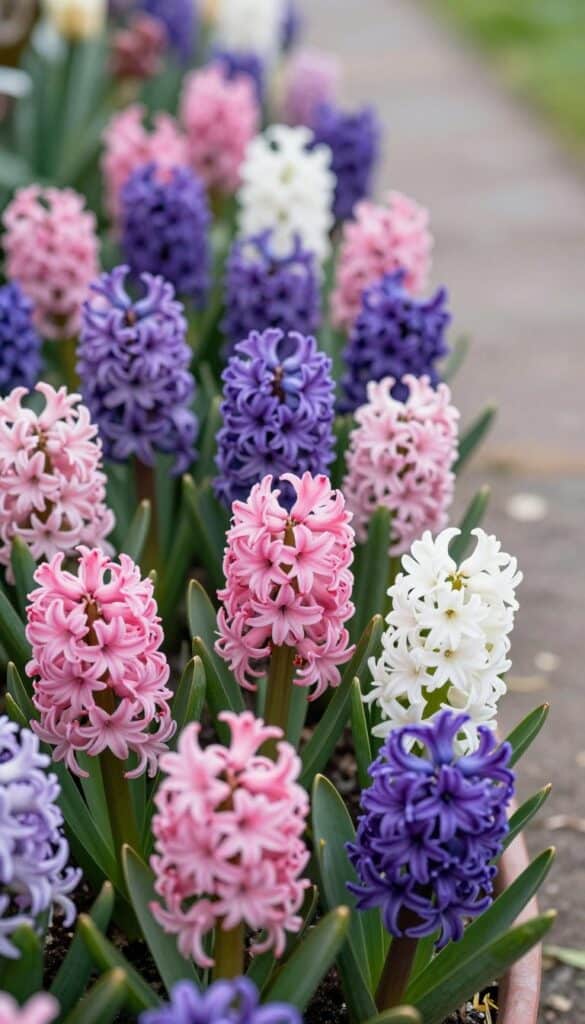
Hyacinths bring fragrance as well as colour, which makes them particularly enjoyable near entrances, patios, paths, and seating areas where you can appreciate their scent. Their dense flower spikes come in shades including blue, purple, pink, white, and softer pastel tones.
Because the flowers have such a strong shape, you don’t necessarily need huge numbers to make an impact. A compact group in a container or repeated clusters through the front of a border can be enough.
Hyacinths generally prefer good drainage, and bulbs sold specifically for indoor forcing may be treated differently from those intended for ordinary outdoor planting, so check the supplier’s instructions when buying.
Best Places for Hyacinths
- Near the front door.
- Beside a garden path.
- In spring containers.
- Close to outdoor seating.
Best placement: Put fragrant bulbs somewhere you regularly pass rather than hiding them in the furthest corner of the garden.
9. Scilla for a Carpet of Blue
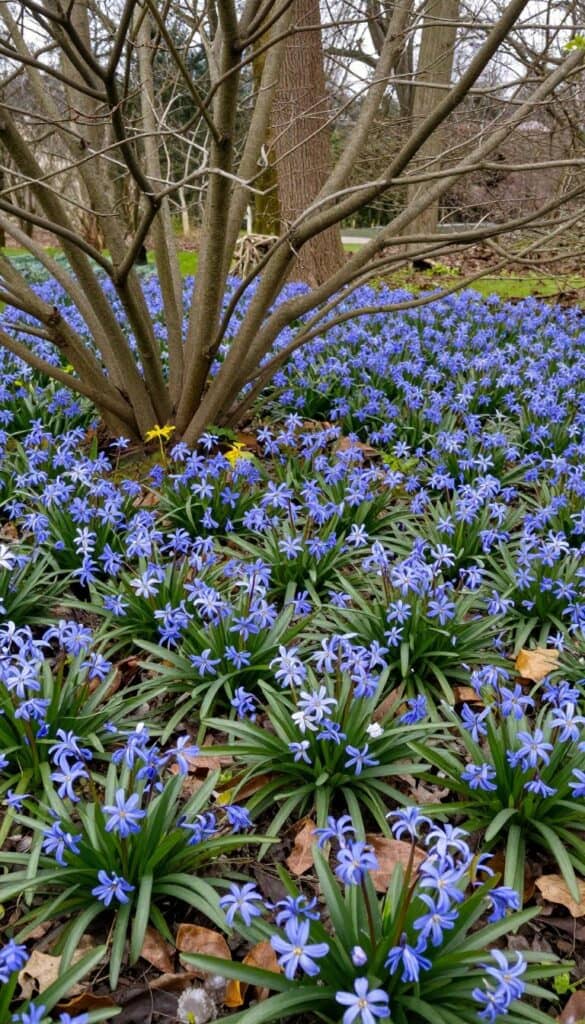
Scilla can create beautiful pools of blue through an informal spring garden. These relatively small bulbs work particularly well beneath deciduous trees and shrubs, along woodland-style edges, and in areas where they have enough room to create a natural-looking display.
The blue flowers pair beautifully with white and yellow spring bulbs, especially daffodils. Rather than dotting individual bulbs evenly through a border, groups tend to create a much stronger visual effect.
Some types can spread readily where conditions suit them, so check the characteristics and local suitability of the particular species before planting.
Beautiful Combinations
- Blue scilla and white daffodils.
- Scilla beneath deciduous shrubs.
- Blue flowers with pale crocuses.
- Natural drifts among early foliage.
Creates this effect: Repeated patches of blue can make a woodland-style garden feel as though the flowers appeared there naturally rather than being carefully arranged one by one.
10. Iris Reticulata for Jewel-Like Early Flowers
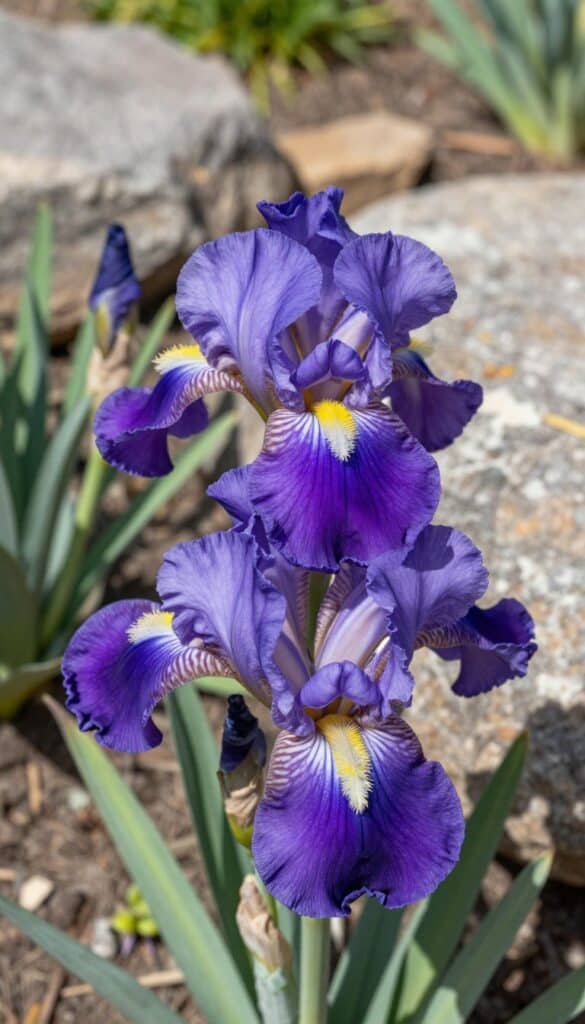
Iris reticulata may be small, but the flowers are remarkably detailed. Rich violet, blue, purple, and yellow markings give these early irises the appearance of tiny jewels emerging while much of the garden is still fairly bare.
Their compact size makes them especially useful at the front of borders, in rock gardens, gravel gardens, and containers where the intricate flowers can be appreciated up close.
Good drainage is particularly important for many of these bulbous irises. Choose a position suited to the variety and avoid locations that remain persistently wet.
Try Them In
- Rock gardens.
- Gravel gardens.
- Small spring containers.
- The front of sunny borders.
Small space tip: Plant these diminutive irises in pots near a doorway or path so their detailed flowers aren’t lost at the back of a larger border.
11. Winter Aconites for a Burst of Golden Yellow
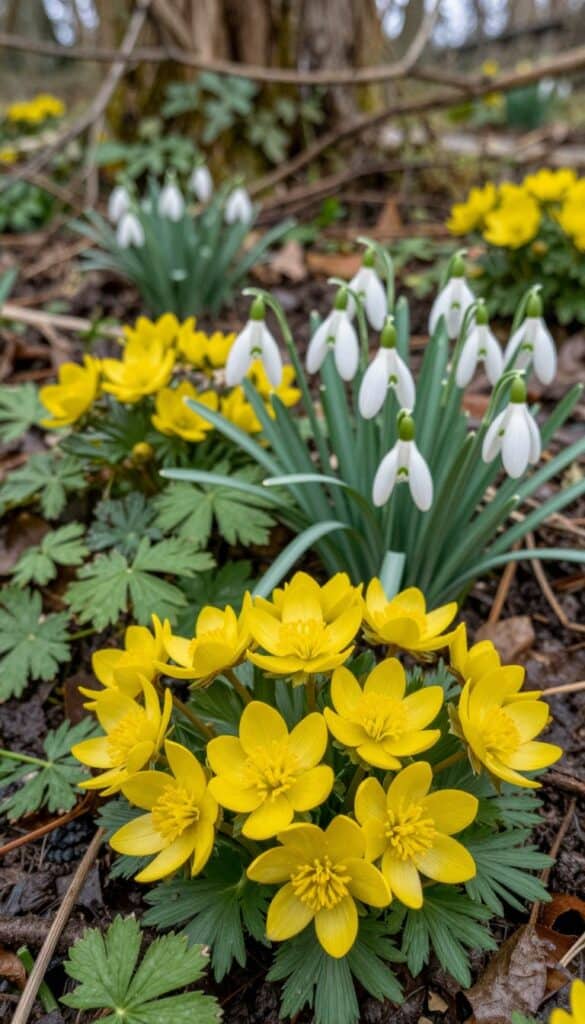
Winter aconites bring an almost impossibly cheerful flash of yellow to the late-winter garden. Their small cup-shaped flowers sit above a collar of green foliage and can look wonderful mingling with snowdrops beneath deciduous trees.
They suit informal and woodland-style planting particularly well, where established groups can form bright patches before many spring perennials have started growing strongly.
As with snowdrops, how and when they’re best established can depend on the form in which they’re supplied. Follow the grower’s recommendations and choose a site appropriate for the species.
Pair Winter Aconites With
- Snowdrops.
- Early crocuses.
- Deciduous shrubs.
- Woodland-style planting.
Early-season impact: Yellow aconites and white snowdrops make a particularly lovely combination when very little else is flowering.
12. Anemones for Romantic Spring Colour
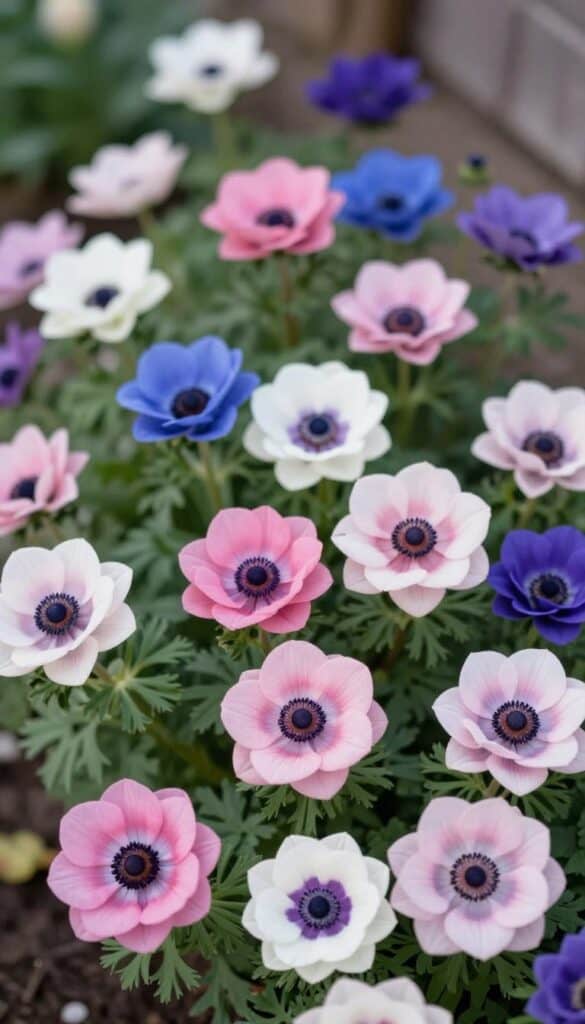
Anemones can bring beautiful jewel tones and softer romantic shades to spring containers and borders. Depending on the type, flowers may appear in white, pink, red, blue, or purple, often with striking dark centres.
They work especially well when you want a slightly looser, more romantic alternative to the formal shape of tulips. Try them in containers near the house or woven through suitable cottage-style planting.
Anemones include different species with different planting and growing requirements, and some are supplied as corms rather than conventional bulbs. Check the instructions for the particular type you buy, including any recommended preparation before planting.
Lovely Colour Combinations
- Blush pink and white.
- Blue and cream.
- Burgundy and soft pink.
- Mixed jewel tones.
Cottage garden detail: Mix anemones with softer foliage and other spring flowers rather than planting them in rigid rows for a more relaxed effect.
When Should You Plant Spring Bulbs in Autumn?
There isn’t one perfect planting date for every spring bulb. Timing varies according to the bulb, your climate, soil conditions, and local weather, which is why the instructions supplied with your bulbs should always take priority over a universal calendar.
- Early to mid-autumn: Many daffodils, crocuses, alliums, muscari, and other spring bulbs can be planted during this part of the season where local conditions are suitable.
- Later in autumn: Tulips are commonly planted later than many other spring bulbs.
- Before planting: Check the recommended timing for your particular variety and growing region.
- If conditions are poor: Avoid forcing bulbs into saturated, frozen, or otherwise unsuitable soil simply because the calendar says it’s planting time.
Choose the best time by checking your local hardiness zone, the bulb label, and the condition of the ground. Healthy roots need air as well as moisture, so wait if the soil is too wet.
You Might Also Like
How Deep Should You Plant Autumn Bulbs?
Planting depth depends on the bulb, so the packet or supplier’s instructions are the most reliable guide. As a general principle, larger bulbs are usually planted more deeply than tiny bulbs, but individual species can have particular requirements.
Prepare the planting area so the soil drains appropriately, place the bulb in the recommended orientation, and refill the hole without compacting the soil excessively. Watering requirements after planting will depend on existing soil moisture, rainfall, climate, and the type of bulb.
If you’re planting several varieties together, don’t assume they all belong at exactly the same depth. Check each packet before you start digging.
Create a Layered Bulb Container for Spring
Layered bulb containers are particularly useful for patios, balconies, and small gardens because several types of bulbs can occupy the same pot at different depths. Sometimes called a bulb lasagne, the idea is to combine varieties with compatible growing requirements and different flowering periods.
- Lower layer: Larger, deeper-planted bulbs suited to container growing.
- Middle layer: Medium-sized bulbs planted at their recommended depth.
- Upper layer: Smaller bulbs such as suitable crocuses or muscari.
- Top: Finish with the appropriate growing medium while leaving suitable watering space below the rim.
Use a container with adequate drainage and choose bulbs that suit the conditions where the pot will be positioned. Follow the planting depths for the individual varieties rather than relying solely on a generic layering diagram.
Autumn Bulb Planting Ideas for Small Gardens
A tiny garden can still have an impressive spring bulb display. In fact, bulbs are particularly useful in small spaces because many disappear back underground after their foliage has completed its job, leaving room for later-season planting to take over.
- Use containers: Fill pots with coordinated bulb combinations and place them where they’ll be seen from the house.
- Plant between perennials: Bulbs can provide early colour before many established plants reach full size.
- Use border edges: Smaller bulbs such as crocuses and iris reticulata can create impact without occupying much space.
- Think vertically: Taller alliums add height without requiring a huge planting footprint.
- Repeat rather than scatter: Several bulbs of one variety grouped together usually create more impact than lots of unrelated single flowers.
Small areas benefit from repeated colour. A few well-placed groups can make the garden look fuller than many isolated bulbs.
Common Autumn Bulb Planting Mistakes to Avoid
Bulbs are wonderfully straightforward, but a few simple mistakes can reduce the display you’ve been patiently waiting all winter to see.
- Planting every bulb at the same depth: Follow the recommendations for each species and variety.
- Ignoring drainage: Many bulbs dislike sitting in persistently waterlogged soil.
- Planting damaged bulbs: Choose healthy, firm planting material and discard bulbs showing serious deterioration.
- Using too few bulbs: Groups and repeated drifts usually create a stronger garden display than isolated single bulbs.
- Forgetting mature plant height: Keep smaller flowers where they’ll remain visible and use taller bulbs toward or through the middle and back of suitable borders.
- Removing foliage too early: After flowering, bulb foliage generally needs time to photosynthesise and replenish the bulb before naturally dying back.
Protecting Bulbs From Squirrels
Squirrels may disturb freshly planted bulbs, especially in loose soil. If this is a problem in your area, cover the planting area with chicken wire or another suitable protective wire. Secure it well, then remove or reposition it as plants emerge.
An Easy Spring Bulb Combination
If choosing between dozens of bulb packets is starting to feel suspiciously like another full-time job, keep the planting scheme simple and use a few varieties that flower at different stages.
- Late winter: Snowdrops or winter aconites.
- Early spring: Crocuses and iris reticulata.
- Mid-spring: Daffodils, muscari, and hyacinths.
- Later spring: Tulips and ornamental alliums, depending on the varieties selected.
Repeating a limited colour palette across these different flowering periods can make the garden feel coordinated even though the display changes from week to week.
Autumn Bulb Planting Checklist
Before you head outside with a bag of bulbs and a trowel, run through this simple checklist:
- Choose bulbs suited to your climate and growing conditions.
- Check the recommended planting time for each variety.
- Choose firm, healthy bulbs without extensive soft or damaged areas.
- Make sure the planting area has suitable drainage.
- Check the recommended planting depth and spacing.
- Group bulbs together for a stronger visual display.
- Consider flowering time so you can extend colour through spring.
- Mark planting areas if you’re likely to forget where bulbs have been placed.
- Allow foliage to die back naturally after flowering whenever possible.
Final Thoughts
Autumn bulb planting is a relatively small garden job with an exceptionally satisfying payoff. A few thoughtfully placed groups of daffodils, tulips, crocuses, alliums, and smaller early-flowering bulbs can transform borders and containers just when the garden needs colour most.
Choose varieties suited to your growing conditions, follow their individual planting instructions, and think in groups and repeated colours rather than isolated bulbs. Then comes the difficult part: forgetting about them for several months until the first green shoots appear and remind you that your slightly muddy afternoon in the garden was absolutely worth it.