
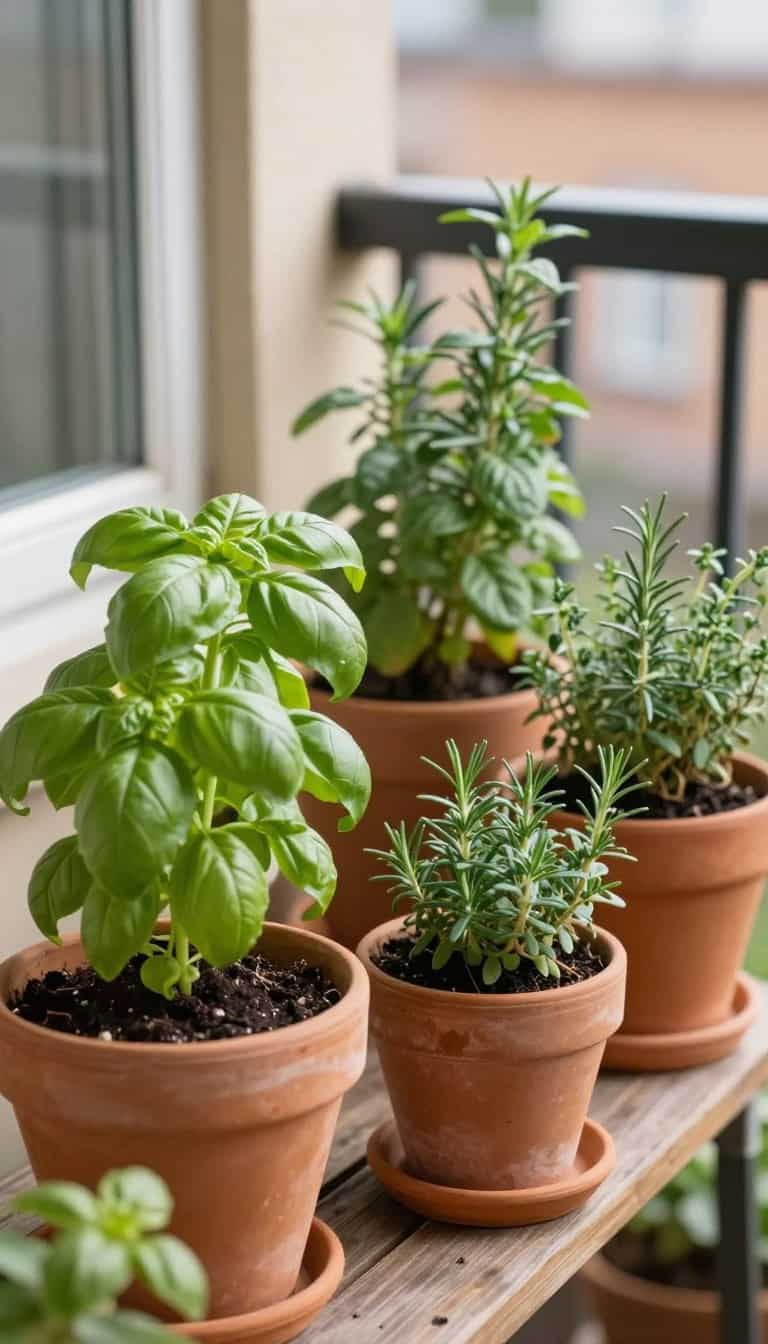
15 Herb Garden Ideas That Make Small Spaces Feel Lush
Herb gardens have a way of making even the smallest outdoor spaces feel alive. A few pots of rosemary, some trailing thyme, maybe a little basil catching the sunlight, and suddenly your balcony or patio starts looking like the sort of place where someone casually cooks with fresh herbs every evening instead of ordering takeaway again.
The beauty of herbs is that they work almost anywhere.
Tiny patios, balconies, windowsills, courtyards, and compact backyards can all feel greener, softer, and far more inviting with a thoughtfully designed herb garden. And unlike some plants that require approximately twelve emotional support routines to stay alive, many herbs are surprisingly easy to grow.
And honestly, fresh rosemary alone makes a garden feel significantly more expensive.
1. Group Herbs in Matching Terracotta Pots
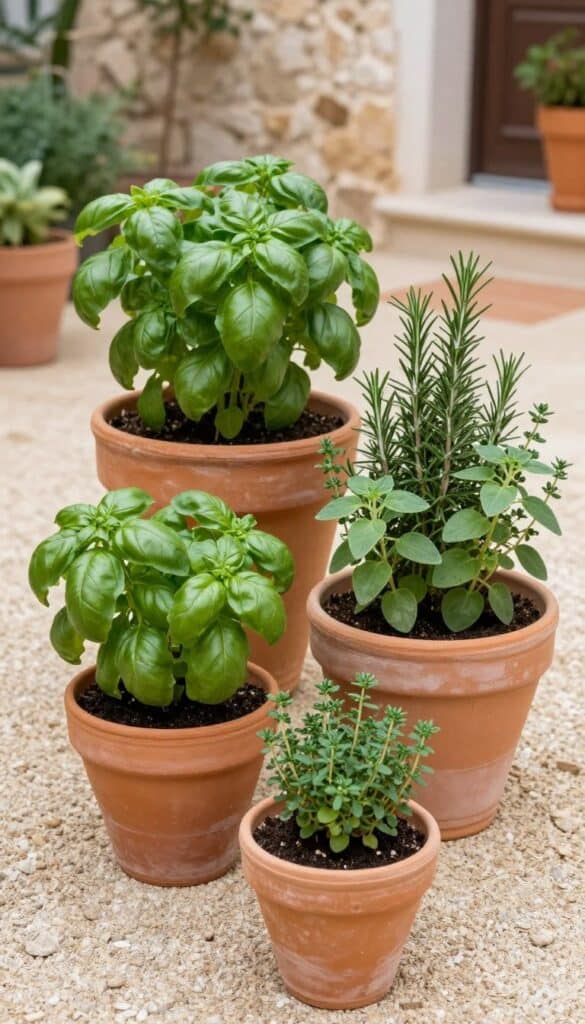
Terracotta pots instantly give herb gardens warmth and timeless charm while helping small spaces feel cohesive instead of cluttered.
Grouping matching pots together creates visual rhythm and makes even simple herbs feel styled and intentional. This works beautifully on patios, balconies, gravel corners, and sunny courtyard edges.
- Best herbs: Basil, thyme, rosemary, oregano
- Looks best with: Gravel or stone patios
- Style tip: Vary plant heights for layering
2. Create a Vertical Herb Wall
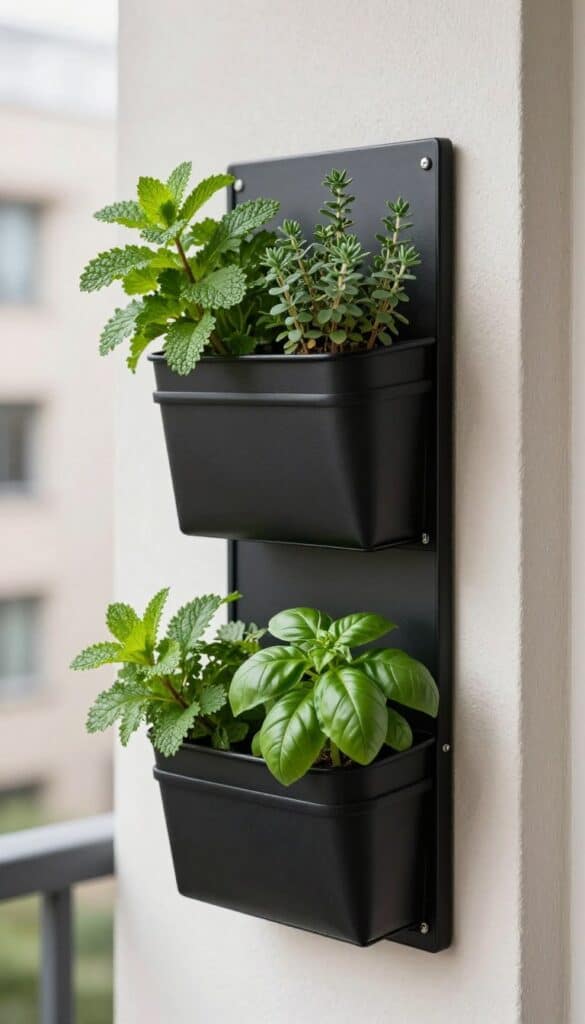
Vertical gardens are perfect for tiny spaces because they add lush greenery without using precious floor space.
Wall planters, hanging pockets, or mounted rails filled with herbs instantly transform blank walls into living features. This is especially useful on balconies, narrow patios, and side walls that need softening.
- Best herbs: Mint, parsley, thyme, basil
- Why it works: Maximizes vertical space
- Accent idea: Use black metal wall planters for contrast
3. Mix Herbs With Cottage Flowers
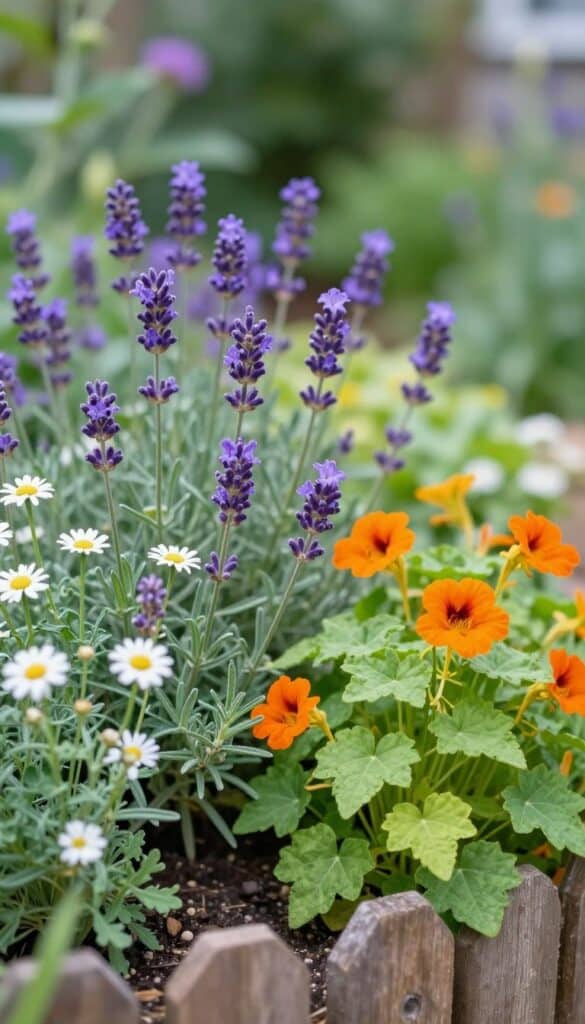
Combining herbs with flowers creates a softer and more layered look that feels charming instead of purely practical.
Lavender, chamomile, and nasturtiums pair beautifully with edible herbs while also attracting pollinators. The result feels more like a relaxed cottage garden and less like a very serious kitchen project.
- Best flowers: Lavender, nasturtiums, chamomile
- Looks best with: Rustic cottage style gardens
- Style tip: Repeat flower colors throughout the space
4. Use Raised Beds for Structure

Raised beds instantly make herb gardens feel more organized and polished.
Even slim raised planters can hold plenty of herbs while helping small spaces feel neat and intentional. They are also useful if you want herbs grouped together instead of scattered around in random pots.
- Best materials: Timber or corten steel
- Best for: Compact patios and urban gardens
- Accent idea: Add gravel around raised beds
5. Add Hanging Herb Baskets
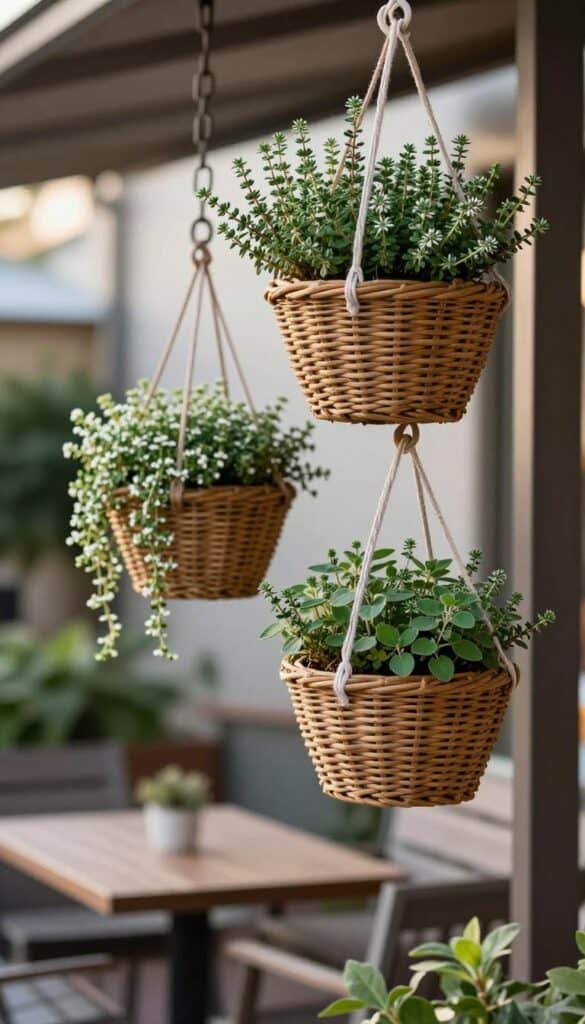
Hanging baskets soften patios and balconies beautifully while freeing up floor space.
Trailing herbs like thyme and oregano spill elegantly over basket edges and add texture overhead. This is a lovely option if your floor space is already doing the absolute most.
- Best herbs: Thyme, oregano, trailing rosemary
- Why it works: Adds greenery at different heights
- Style tip: Hang baskets near seating areas
6. Create a Mediterranean Herb Corner

A Mediterranean inspired herb garden instantly makes small outdoor spaces feel warmer and more relaxed.
Terracotta pots filled with rosemary, sage, lavender, and olive trees create a timeless sun drenched look. Add pale gravel beneath and the whole space starts to feel like a tiny courtyard somewhere much more glamorous.
- Best herbs: Rosemary, sage, lavender
- Looks best with: Pale gravel and warm stone
- Style tip: Stick to earthy natural tones
7. Grow Herbs Along Path Edges

Lining pathways with herbs makes small gardens feel immersive and wonderfully fragrant.
Creeping thyme works beautifully between stepping stones or along gravel paths. Chamomile can also soften edges and create that relaxed cottage look without needing a huge planting area.
- Best herbs: Creeping thyme, chamomile
- Best for: Cottage style pathways
- Accent idea: Add natural stone pavers
8. Use Window Boxes for Kitchen Herbs
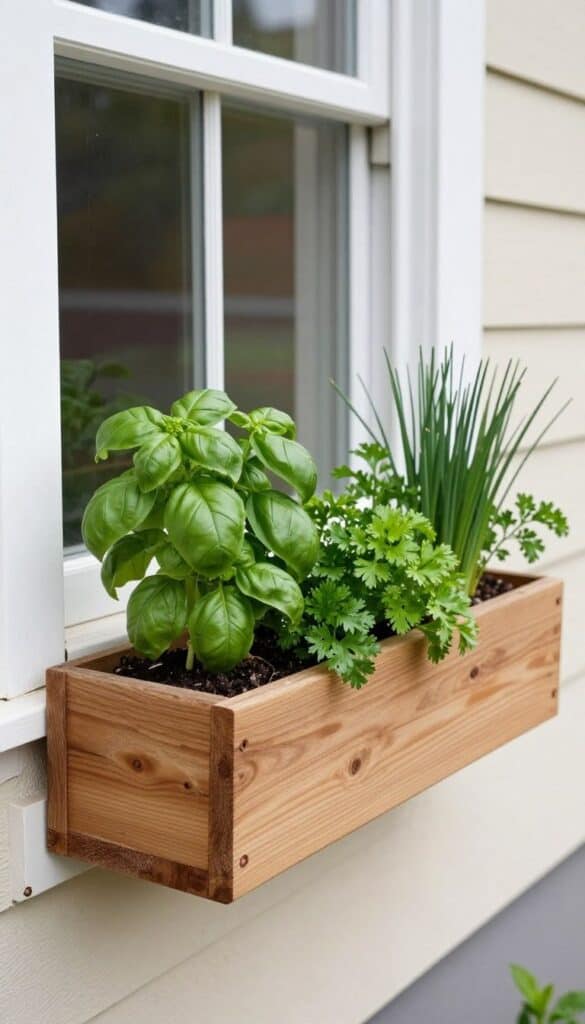
Window boxes are one of the easiest ways to grow herbs in tiny homes or apartments.
They keep herbs easily accessible while adding greenery to plain walls and windows. If you can place them near a kitchen door or window, even better. Fresh basil within arm’s reach is the kind of domestic luxury we fully support.
- Best herbs: Basil, parsley, chives
- Why it works: Easy access for cooking
- Style tip: Mix textures and leaf shapes
9. Add a Rustic Potting Bench

A slim potting bench instantly makes herb gardens feel more charming and lived in.
It also creates extra styling space for pots, lanterns, labels, and gardening tools. Choose reclaimed wood or weathered timber for a softer rustic feel.
- Best furniture: Reclaimed wood benches
- Looks best with: Terracotta pots and herbs
- Accent idea: Add hanging gardening tools nearby
10. Mix Different Leaf Textures
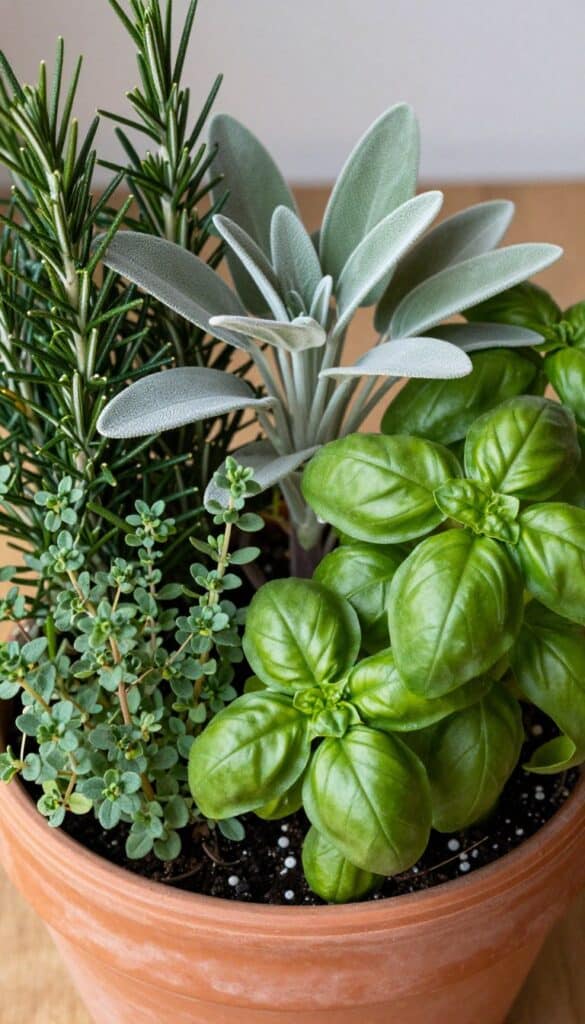
Herb gardens become far more visually interesting when different leaf shapes and textures are layered together.
Soft sage, spiky rosemary, trailing thyme, and rounded basil leaves all create beautiful contrast. This is especially useful when you want a lush green garden without relying heavily on flowers.
- Best texture mix: Rosemary, sage, basil, thyme
- Why it works: Adds depth and softness
- Style tip: Repeat textures throughout the space
11. Use Gravel for a Relaxed Look

Gravel instantly gives small herb gardens a relaxed Mediterranean atmosphere while keeping maintenance low.
It also pairs beautifully with terracotta, olive trees, and lush greenery. Pale gravel is especially useful in smaller spaces because it helps reflect light and keeps the garden feeling open.
- Best gravel colors: Cream, beige, pale gray
- Looks best with: Olive trees and herbs
- Style tip: Keep pathways simple and uncluttered
12. Add a Small Bistro Seating Spot
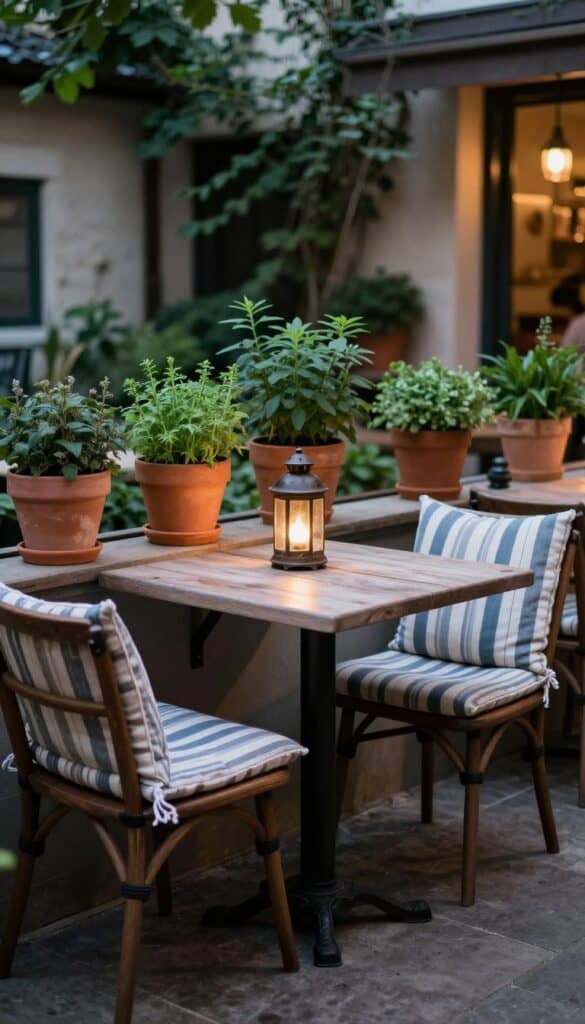
Even tiny herb gardens feel dramatically more inviting with somewhere comfortable to sit.
A small café table surrounded by herbs creates the feeling of a hidden courtyard retreat. It also lets you enjoy the scent of rosemary, mint, and basil while pretending you definitely planned dinner from scratch.
- Best seating: Bistro chairs or foldable café sets
- Looks best with: Potted herbs and lantern lighting
- Accent idea: Add soft striped cushions
13. Label Herbs With Simple Markers
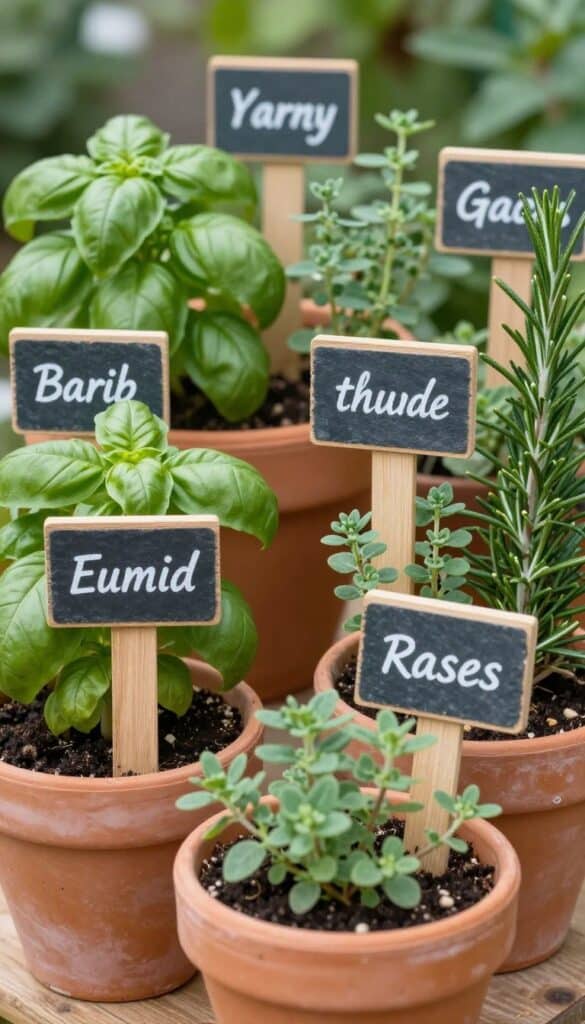
Herb labels add charm while helping the garden feel more styled and organized.
Wooden markers, slate labels, or simple engraved tags work beautifully in compact gardens. Keeping the marker style consistent helps the whole space feel intentional rather than busy.
- Best markers: Slate, wood, or metal labels
- Why it works: Adds structure and character
- Style tip: Keep labels consistent in style
14. Let Herbs Spill Naturally Over Pots
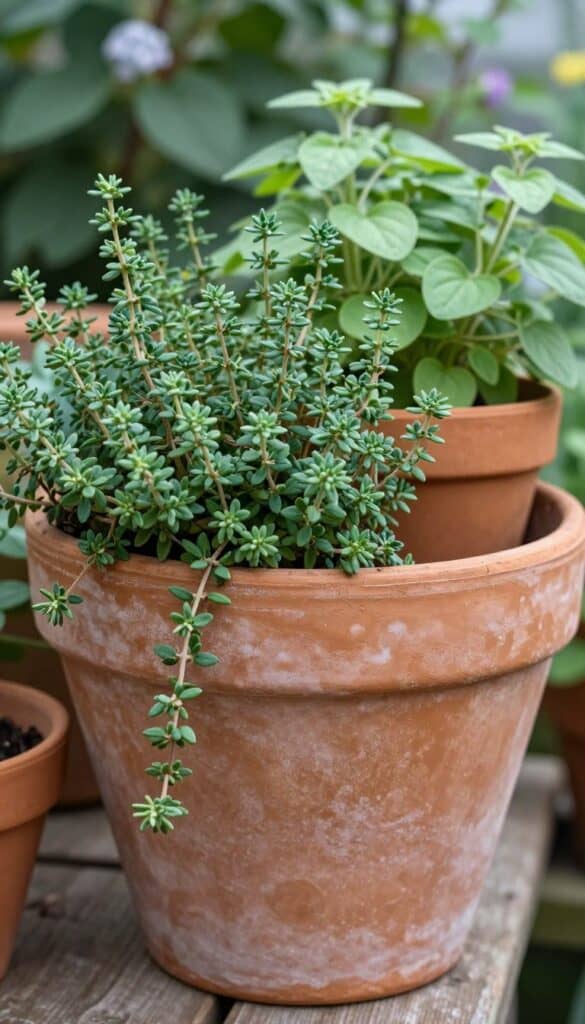
Trailing herbs instantly soften hard container edges and make herb gardens feel fuller and more relaxed.
Allowing some plants to spill naturally creates that effortless layered look cottage gardens do so well. Thyme and oregano are especially lovely for this because they bring texture without looking messy.
- Best herbs: Thyme, oregano, trailing rosemary
- Looks best with: Aged terracotta containers
- Style tip: Avoid overly tight pruning
15. Keep the Layout Simple and Calm

One of the easiest ways to make small herb gardens feel lush is actually by avoiding overcrowding.
Repeating pots, limiting materials, and leaving small pockets of open space keeps everything feeling airy and balanced. A calm layout lets the herbs become the feature instead of forcing them to compete with too many decorative bits.
- Best approach: Repeat key herbs and materials
- Why it works: Prevents visual clutter
- Style tip: Focus on quality over quantity
Quick Tips for Growing Herbs in Small Spaces
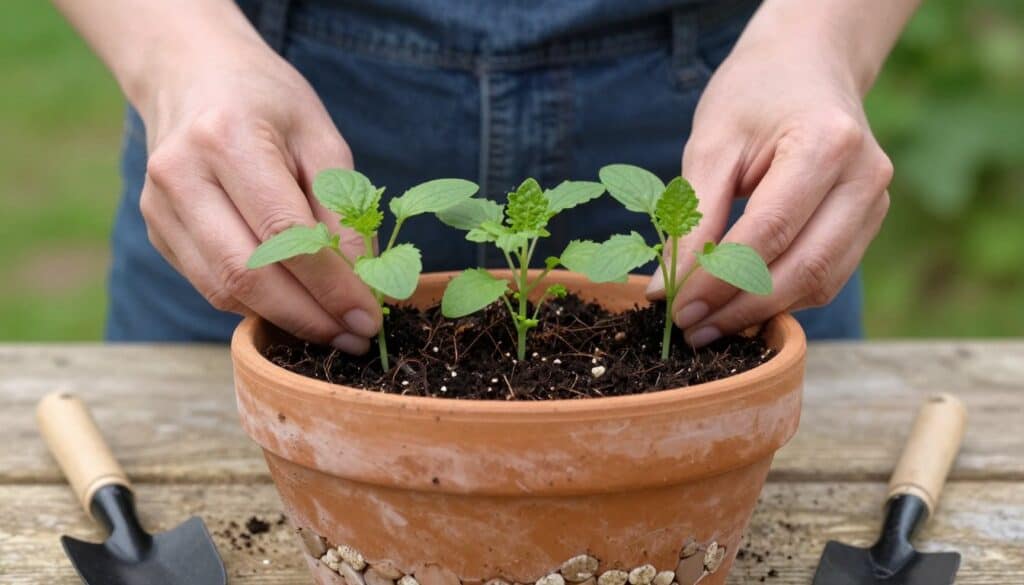
Herbs are generally easy to grow, but small space gardens still need a few basics to keep everything looking fresh and healthy.
- Choose sunny spots: Most herbs love plenty of light, especially basil, rosemary, thyme, oregano, lavender, and sage.
- Use good drainage: Containers should have drainage holes so herbs do not sit in soggy soil.
- Water consistently: Pots dry out faster than garden beds, so check the soil regularly in warm weather.
- Group similar herbs together: Mediterranean herbs like rosemary, thyme, oregano, and sage prefer drier soil, while mint, parsley, and chives like a little more moisture.
- Harvest often: Regular snipping encourages herbs to grow bushier and keeps them looking full.
If you are just starting out, begin with a few reliable herbs instead of trying to grow every herb known to humanity in one afternoon. Basil, thyme, rosemary, parsley, mint, and chives are all useful, attractive, and beginner friendly.
Creating Your Perfect Small Space Herb Garden
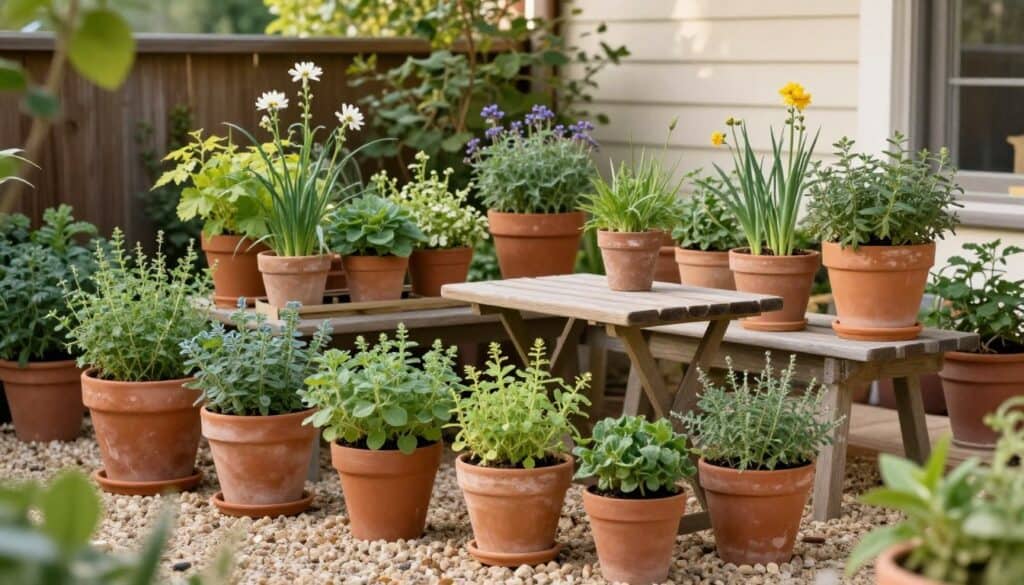
Herb gardens prove that small spaces can still feel rich with texture, fragrance, and life. With layered pots, vertical greenery, rustic materials, and thoughtful planting, even the tiniest patio or balcony can become a lush little retreat filled with charm and practicality.
The most successful small herb gardens are usually simple. A few repeated pots, a calm material palette, good sunlight, and a handful of hardworking herbs can create far more impact than a crowded collection of plants fighting for attention.
Whether you love a Mediterranean courtyard look, a cottage style herb border, or a neat balcony herb wall, the key is choosing a layout that suits your actual space and daily routine.
And honestly, brushing past rosemary every time you walk outside feels unnecessarily luxurious in the best possible way.