
12 Classic Layouts for an English Cottage Garden
English cottage garden layouts are all about softness, movement, and that beautifully relaxed feeling of a garden that has grown into itself over time. Instead of sharp perfection, think winding paths, layered borders, romantic planting, and quiet corners that invite you to slow down.
The best layout depends on your space. A long narrow garden may need deep side borders, while a small courtyard might shine with vertical planting, pots, and one charming focal point. The goal is to create flow first, then let the flowers soften everything beautifully.
Quick Guide: Which Cottage Garden Layout Suits Your Space?
- Long garden: Central path with overflowing borders
- Small garden: Courtyard layout with vertical planting
- Family garden: Open lawn with deep perimeter borders
- Romantic garden: Meandering path with hidden seating
- Productive garden: Kitchen garden mixed with flowers and herbs
- Front garden: Entry led layout with a rose covered arch
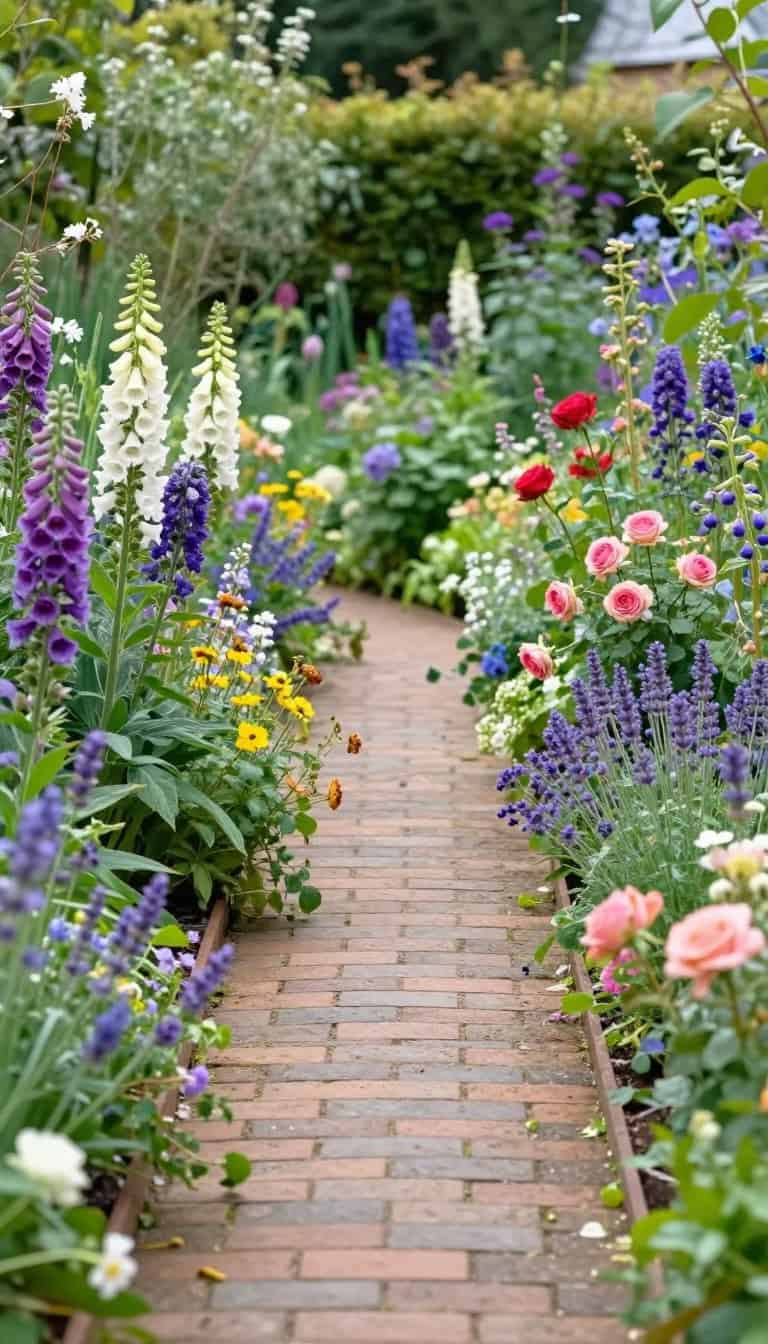
1. Central Path With Overflowing Borders

This is the classic English cottage garden layout. A narrow path runs through the centre while flowers spill generously from both sides, creating that immersive, slightly wild feeling cottage gardens are loved for.
It works especially well in long or rectangular gardens because the path naturally draws the eye forward while the planting softens the edges.
- Best for: Long or rectangular gardens
- Planting idea: Roses, foxgloves, lavender, catmint, and geraniums
- Finishing touch: Gravel or reclaimed brick path with self seeding flowers
Picture this: A narrow gravel path edged with lavender, roses leaning in from both sides, and every step feeling like you are walking deeper into a storybook garden.
2. Informal Grid of Garden Rooms
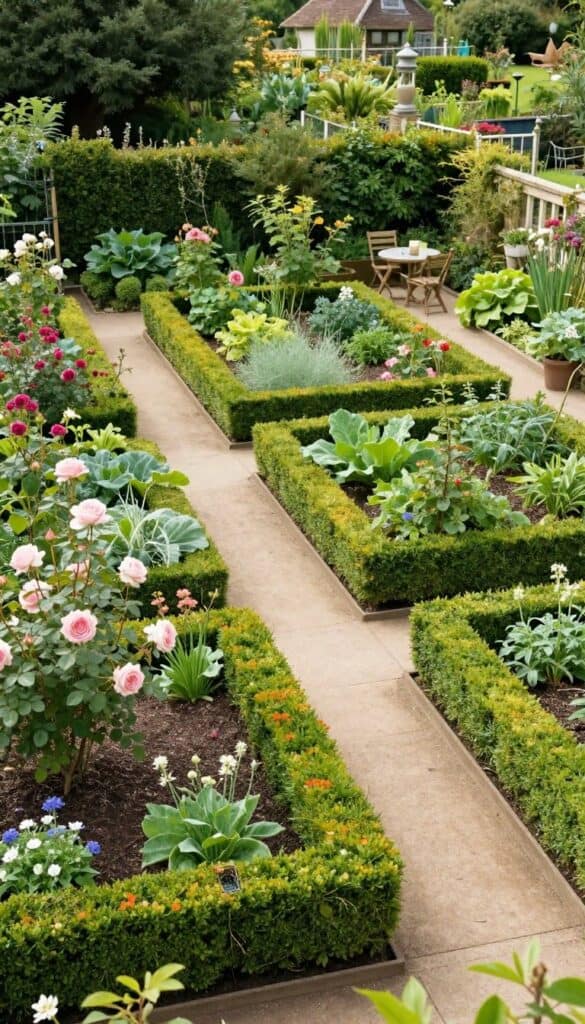
An informal garden room layout gives structure without making the garden feel stiff. Paths, low hedges, arches, or planting beds divide the space into smaller areas, each with its own mood.
One section might be full of roses and soft pastel flowers, while another could hold herbs, a bench, or a small dining area.
- Best for: Medium to large gardens
- Why it works: Creates variety and a sense of discovery
- Finishing touch: Arches or narrow openings between each garden room
3. Perimeter Borders With an Open Lawn Centre
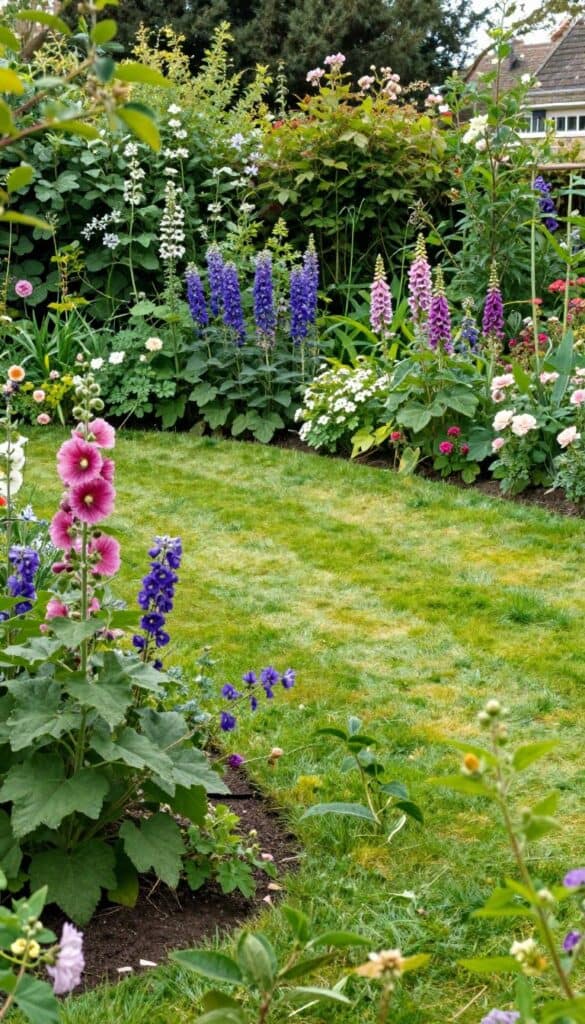
This layout keeps the centre of the garden calm and usable while the edges do all the floral showing off. Deep borders around the perimeter create abundance without making the whole garden feel crowded.
It is a lovely option for family gardens because you still keep an open area for children, pets, or outdoor seating.
- Best for: Family friendly gardens
- Small space tip: Use curved lawn edges to soften the shape
- Planting idea: Taller blooms at the back, softer low plants at the front
4. Meandering Path Layout
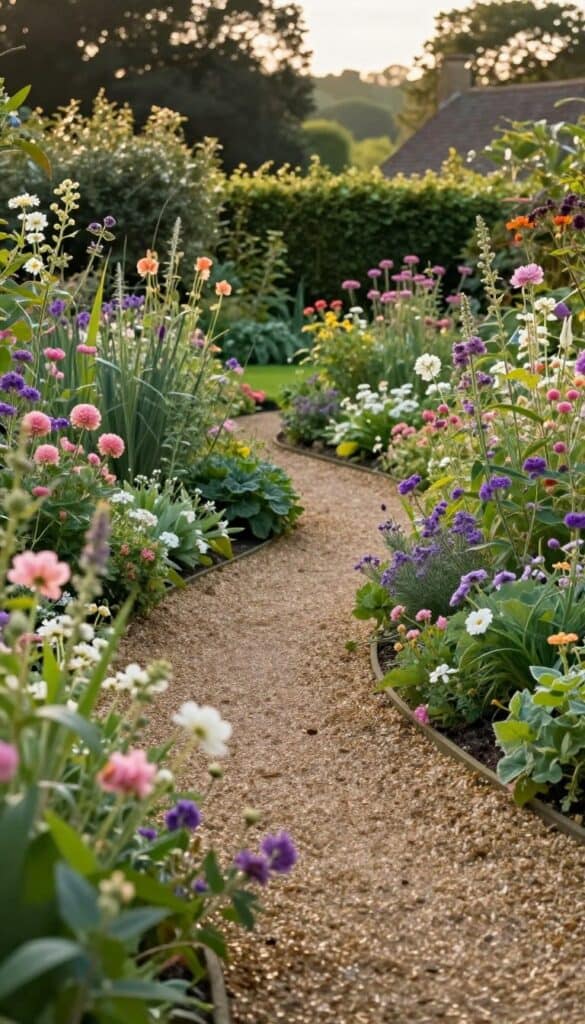
A meandering path is perfect if you want the garden to feel romantic and slightly mysterious. Instead of seeing everything at once, the path reveals the space gradually.
This is especially effective when planting gently overlaps the path edges, creating that soft, tucked away feeling.
- Best for: Romantic cottage gardens
- Designer detail: Add subtle bends rather than sharp turns
- Finishing touch: A bench or birdbath placed around a curve
Picture this: A curved stone path disappearing behind roses, with a weathered bench just visible beyond the flowers.
5. Courtyard Style Cottage Garden
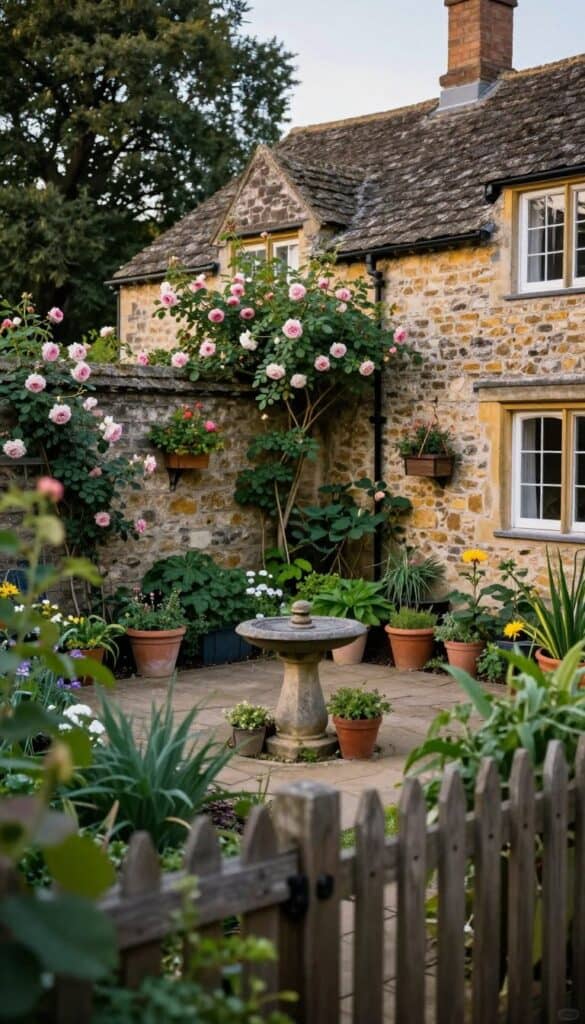
A courtyard cottage garden feels intimate, sheltered, and wonderfully atmospheric. Walls, fences, or hedges create enclosure, while vertical planting keeps the space full without taking up too much floor area.
Use climbing roses, clematis, wall trained plants, and grouped terracotta pots to create height and texture.
- Best for: Small, enclosed, or urban gardens
- Try this with: Climbing roses, potted herbs, and a small bistro table
- Finishing touch: A central pot, urn, or simple fountain
6. Cross Axis Layout With a Focal Point

This layout uses two intersecting paths to create gentle symmetry. Where the paths meet, you can place a small focal point such as a birdbath, sundial, urn, or compact tree.
The structure gives the garden shape, while loose planting keeps it feeling soft rather than formal.
- Best for: Square gardens
- Why it works: Creates order without losing charm
- Finishing touch: Cottage flowers spilling onto the path edges
7. Kitchen Garden Meets Cottage Garden
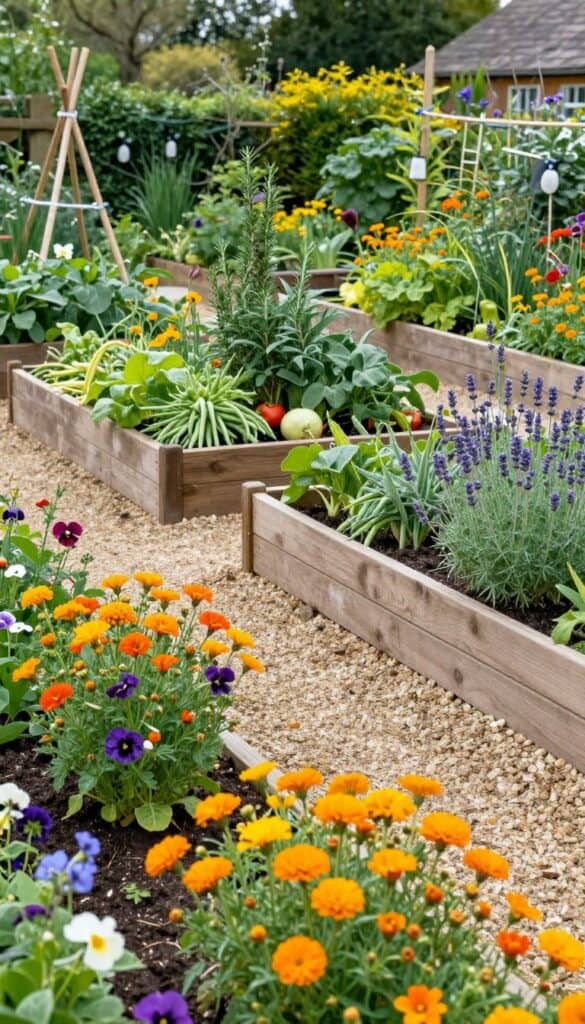
A cottage garden does not have to be purely decorative. This layout blends vegetables, herbs, flowers, and fruiting plants together so the garden feels both beautiful and useful.
Raised beds, gravel paths, and mixed planting create a charming potager style layout that still feels relaxed.
- Best for: Gardeners who love to grow
- Planting idea: Herbs, lettuce, roses, calendula, lavender, and strawberries
- Finishing touch: Gravel paths between raised beds
Creates this effect: A practical garden that still feels romantic, layered, and full of life.
8. Border Focused Narrow Garden Layout

Long narrow gardens can easily feel like corridors, but layered side borders help soften the shape. A simple central path or slim lawn strip keeps the layout practical while flowers bring the drama.
Varying plant heights is especially important here because it stops the garden from feeling flat.
- Best for: Terraced houses and townhouse gardens
- Small space tip: Place taller climbers at the far end to draw the eye forward
- Planting idea: Layer foxgloves, roses, lavender, and trailing ground cover
9. Cottage Garden With Hidden Seating Nooks
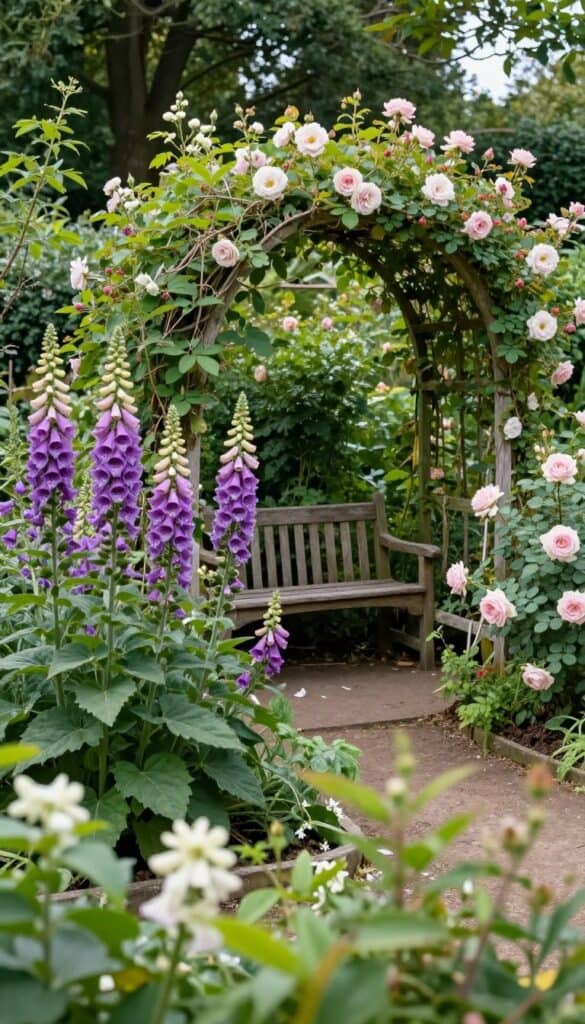
Instead of one main seating area, this layout creates several little places to pause. A bench under an arch, a chair beside a border, or a small table near herbs can all become charming moments.
The key is making seating feel discovered rather than overly staged.
- Best for: Relaxed and romantic gardens
- Why it works: Encourages slow wandering and lingering
- Finishing touch: Add roses, jasmine, or lavender nearby for scent
10. Wild Edge With Tamed Core
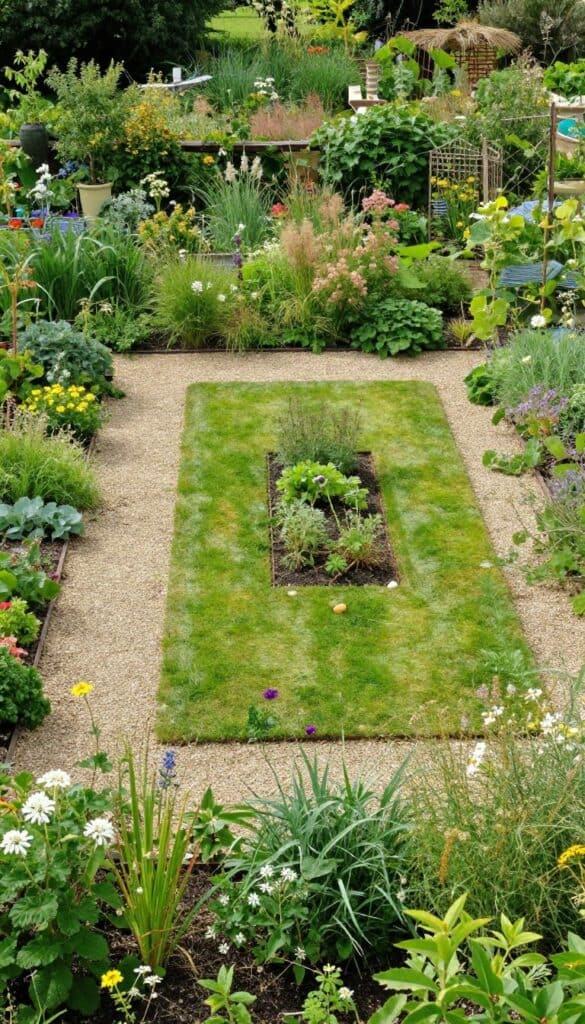
This layout keeps the centre of the garden neat while allowing the outer edges to feel looser and more natural. It is a clever way to balance structure with that slightly untamed cottage garden feeling.
The core might include a lawn, patio, or simple path, while the boundaries are filled with taller flowers, grasses, and wildlife friendly planting.
- Best for: Larger gardens
- Why it works: Combines control with softness
- Finishing touch: Native plants along boundaries for a natural look
11. Cottage Garden Around a Tree
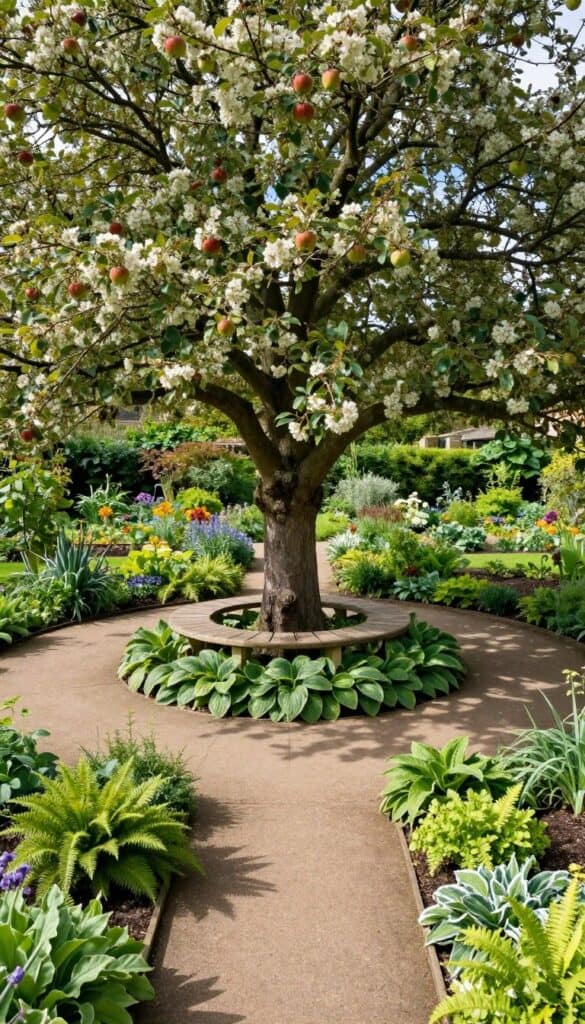
If your garden already has a mature tree, use it as the anchor. Paths, planting beds, or seating can radiate gently around it, giving the whole space a naturally established feeling.
Shade loving planting beneath the tree helps create a layered, woodland cottage atmosphere.
- Best for: Gardens with existing trees
- Planting idea: Ferns, hardy geraniums, foxgloves, hellebores, and bulbs
- Finishing touch: A circular bench or low border around the trunk
12. Entry Led Cottage Garden Layout
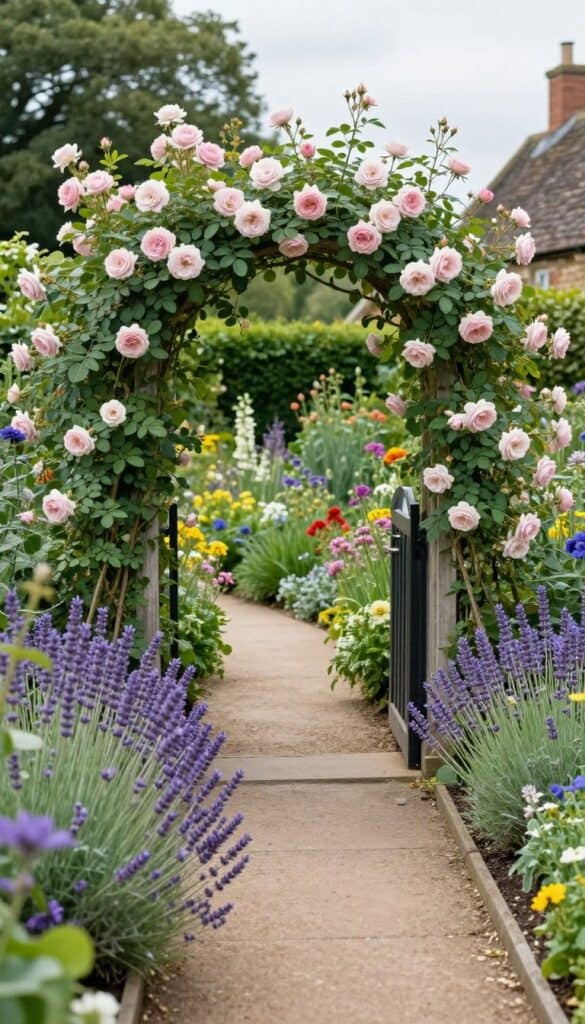
An entry led layout focuses all the charm near the entrance. It is perfect for front gardens, side gates, or pathways leading to the house.
Planting softens the route from the first step, making the home feel more welcoming before anyone even reaches the door.
- Best for: Front gardens and side entrances
- Designer detail: Frame the entrance with roses, lavender, or climbers
- Finishing touch: A rose covered arch or wooden gate
Final Thoughts
The beauty of an English cottage garden layout lies in its flow, not perfection. A good layout gives the garden gentle structure, then lets plants soften the edges, spill over paths, and create those romantic little surprises that make the space feel alive.
Start with the layout that suits your garden best, then layer in flowers, herbs, seating, paths, and climbing plants over time. The most charming cottage gardens always feel as though they have evolved naturally, which is exactly what makes them so timeless.