

20 English Cottage Garden Ideas That Feel Romantic and Timeless
An English cottage garden never feels forced. It spills over edges, softens pathways, climbs up old structures, and somehow looks more beautiful when it is not trying too hard. Think layered florals, winding paths, romantic roses, weathered wood, and that gently untamed charm that makes a garden feel as though it has been loved for years.
This post includes affiliate links. If you make a purchase through them, I may earn a small commission at no extra cost to you. More details here.
The beauty of English cottage garden ideas is that they work in almost any outdoor space. You do not need a grand country garden or rolling lawn. A small backyard, narrow side path, patio corner, or tiny front garden can still feel romantic and layered with the right mix of blooms, texture, and relaxed planting.
Here are 20 timeless English cottage garden ideas to help you create that soft, storybook atmosphere, whether you are starting from scratch or simply trying to make your garden feel a little more magical.
Quick Guide: How to Get the English Cottage Garden Look
- Small garden: Use climbing roses, window boxes, terracotta pots, and vertical planting.
- Romantic look: Choose soft pink, lavender, cream, pale yellow, and peach flowers.
- Low maintenance version: Focus on lavender, herbs, hardy perennials, and self seeding wildflowers.
- Classic cottage style: Add gravel paths, a wooden bench, climbing plants, and relaxed flower borders.
- Instant charm: Use a garden arch, birdbath, aged pots, or soft white fencing.
1. Climbing Roses Over an Arched Entryway

Nothing says English cottage garden quite like climbing roses spilling over a weathered arch. It creates a soft, storybook entrance before you have even reached the flower beds. Very main character, but in a muddy boots and secateurs sort of way.
Let the roses grow with a little freedom rather than trimming them into a stiff shape. The charm comes from the movement, the softness, and the feeling that the garden has gently taken over.
- Best blooms: Blush pink, cream, or soft peach climbing roses
- Designer detail: Choose aged wood or black metal for a timeless structure
- Small space tip: Use a narrow arch over a path, gate, or patio entrance
This idea looks especially beautiful when paired with a gravel or brick path beneath, because the rough texture stops the roses from feeling too polished.
2. Layered Flower Borders That Spill Into Pathways
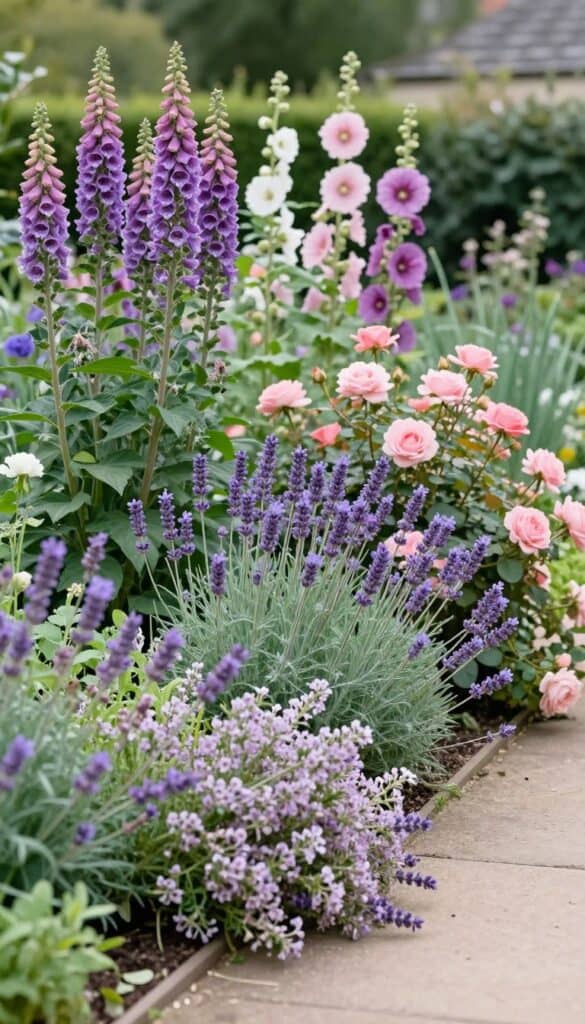
Cottage gardens are all about depth. Instead of planting everything in one neat row, layer tall flowers at the back, softer mid height blooms through the center, and low growing plants tumbling forward at the edge.
This gives the garden that lush, abundant look where flowers seem to lean into the path. It feels romantic, natural, and far more interesting than a perfectly controlled border.
- Back row: Foxgloves, hollyhocks, delphiniums
- Middle layer: Roses, peonies, salvias
- Front edge: Lavender, alyssum, creeping thyme
Creates this effect: A fuller, more established garden that looks as though it has been growing beautifully for years.
3. Winding Gravel or Brick Paths

Straight paths can feel formal and controlled. Cottage gardens prefer a little mystery. A gently winding path encourages you to slow down, wander, and notice what is blooming around each bend.
Gravel, reclaimed brick, and irregular stone all work beautifully because they bring texture and an aged quality. Let plants soften the edges so the path feels tucked into the garden rather than placed on top of it.
- Material choice: Pale gravel, reclaimed brick, or irregular stone
- Best placement: Through flower borders, toward a bench, or beside a gate
- Small space tip: Add even one gentle curve to make a tiny garden feel more layered
This one is especially useful if your garden feels flat or too rectangular. A curved path instantly adds movement.
4. A Weathered Wooden Garden Bench

A simple bench tucked beneath blooms creates an instant resting moment. It gives the garden a destination, even if the destination is just sitting down with tea and pretending the weeds are part of the design.
The bench does not need to be ornate. In fact, slightly faded paint, natural wood aging, or a gently worn finish often looks more authentic than anything too new and glossy.
- Best placement: Under a tree, beside a path, or framed by climbing plants
- Color idea: Soft sage, cream, weathered grey, or natural wood
- Designer detail: Add a linen cushion or folded throw for softness
For smaller gardens, choose a slim bench against a wall or fence and surround it with pots, herbs, and climbing flowers to create a cozy little retreat.
5. Lavender Lining a Walkway

Lavender brings fragrance, softness, and that unmistakable countryside feeling. Planted along a path, it creates a gentle border that looks beautiful and smells even better when you brush past it.
It also works well because it gives structure without feeling stiff. The silvery foliage keeps the garden looking pretty even when the flowers are not at their peak.
- Color pairing: Lavender with pale pink roses, white blooms, or soft yellow flowers
- Best placement: Along paths, near seating, or beside a sunny border
- Low maintenance note: Lavender loves sun and well drained soil
Small space tip: Use lavender in pots along a patio edge if you do not have room for a full border.
6. A Rustic Stone Birdbath

A rustic stone birdbath adds height, movement, and a quiet focal point without feeling too grand. It brings that collected, old garden character that suits cottage planting beautifully.
Over time, moss, weathering, and a little natural age only make it prettier. This is one of those rare garden pieces where looking slightly imperfect is the entire point.
- Style: Classic pedestal, shallow bowl, or aged stone design
- Best surrounding plants: Low florals, creeping thyme, alyssum, or soft ground cover
- Designer detail: Place it slightly off center so it feels natural, not staged
This works beautifully in a front garden too, especially if you want charm without adding anything too large or high maintenance.
7. Overflowing Window Boxes

Window boxes are one of the fastest ways to add English cottage garden charm, especially if your outdoor space is small. They bring flowers up to eye level and make even a plain exterior feel softer and more romantic.
The trick is to let them look full and slightly overflowing. A few trailing stems, mixed blooms, and textured foliage will always look more charming than a stiff, perfectly symmetrical arrangement.
- Plant mix: Trailing ivy, petunias, geraniums, violas, and sweet alyssum
- Color palette: Soft pinks, purples, whites, and gentle peach tones
- Container style: Aged wood, muted metal, or simple painted boxes
Best for: Small patios, cottage fronts, balconies, narrow gardens, and anyone who wants instant charm without redesigning the entire garden.
8. Soft White Picket Fencing

A low white picket fence might be one of the most recognizable features of a traditional English cottage garden. It adds just enough structure to frame the planting without blocking the view or making the space feel enclosed.
The beauty of a cottage garden is the balance between order and abundance. A simple fence provides that framework while allowing flowers and vines to spill through naturally.
- Height: Keep it low and welcoming
- Finish: Slightly weathered white paint looks more authentic than a perfect finish
- Looks best with: Climbing roses, clematis, and lavender planted nearby
Creates this effect: Storybook charm without feeling formal or overly manicured.
9. A Cottage Style Herb Corner

English cottage gardens have always mixed beauty with practicality. Herbs fit perfectly into this approach because they add texture, fragrance, and usefulness all at the same time.
Rather than creating a formal herb garden, allow the plants to mingle naturally with flowers and pathways. A slightly overflowing look feels far more in keeping with the cottage style.
- Classic picks: Rosemary, thyme, sage, mint, and chives
- Layout: Informal clusters or raised beds
- Designer detail: Add simple plant markers or aged terracotta pots
Small space tip: Herbs work beautifully in containers if you do not have room for dedicated beds.
10. Wildflower Patches for Natural Movement

Perfect lawns are lovely, but wildflower patches often feel far more magical. They add movement, attract pollinators, and create the relaxed, natural atmosphere that cottage gardens are known for.
Wildflowers also change throughout the seasons, giving your garden an evolving look that feels alive and unpredictable.
- Best placement: Sunny corners and unused lawn areas
- Color mix: Blues, yellows, pinks, and white blooms
- Care tip: Allow plants to reseed naturally where possible
Why gardeners love it: It is one of the easiest ways to create that effortless cottage garden feel.
11. Climbing Clematis on Garden Walls
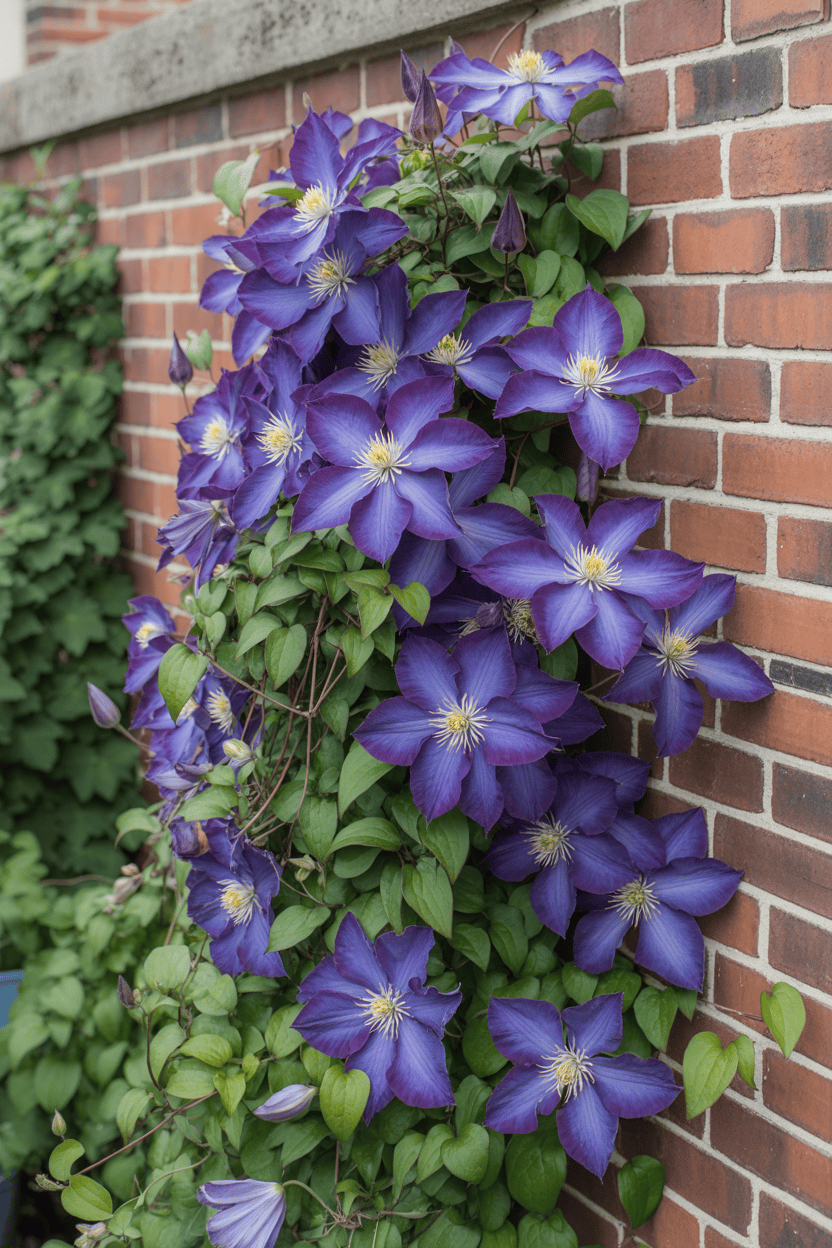
Clematis brings a softer, more delicate look than many climbing plants. Its star shaped blooms seem to float across walls, fences, and trellises, adding height without heaviness.
It works especially well alongside climbing roses, creating the layered planting style that defines traditional English gardens.
- Color choice: Pale lilac, dusty pink, white, or soft purple
- Pair it with: Climbing roses for a romantic combination
- Structure: Brick walls, arches, trellises, and pergolas
This combination looks particularly beautiful in spring and early summer when both plants are flowering together.
12. Terracotta Pots in Clusters

One oversized planter can look nice. A cluster of terracotta pots looks like it has been collected over decades. That layered, gathered feel is exactly what cottage gardens do so well.
Mix different sizes and allow some plants to spill over the sides. The more relaxed the arrangement feels, the more authentic it looks.
- Arrangement: Mix heights and pot sizes
- Plant choices: Lavender, geraniums, ivy, herbs, and trailing flowers
- Best finish: Naturally weathered terracotta
Easiest upgrade: Group existing pots together rather than spreading them throughout the garden.
13. A Garden Gate Framed in Blooms
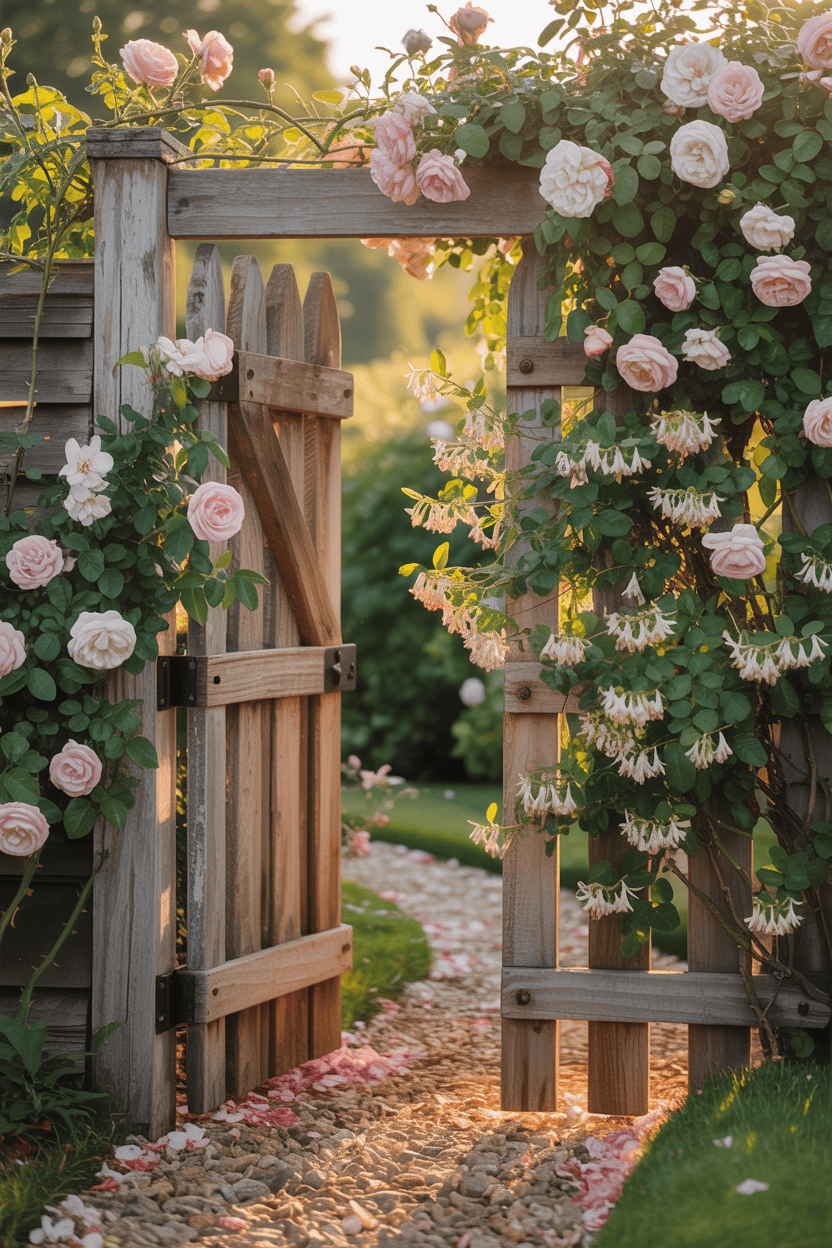
A simple wooden gate becomes something special when it is surrounded by flowers. It creates anticipation and a sense of discovery, even in a small garden.
Garden gates help break up spaces and encourage movement through the landscape. They feel inviting rather than restrictive.
- Material: Natural wood or painted white
- Floral frame: Roses, clematis, honeysuckle, and jasmine
- Ground detail: Gravel, brick, or stepping stones
Creates this effect: A garden that feels larger, more layered, and full of hidden corners.
14. Mossy Stone Edging

Neat borders have their place, but cottage gardens thrive on softness. Mossy stone edging helps define beds while still looking relaxed and natural.
The slightly uneven placement is what makes it charming. This is one design feature where imperfection genuinely improves the result.
- Stone type: Reclaimed stone, limestone, or fieldstone
- Layout: Informal and slightly irregular
- Best paired with: Creeping thyme, alyssum, and low ground covers
Why it works: It creates age and character even in a newly planted garden.
15. A Small Water Feature

A cottage garden is not only about what you see. It is also about what you hear. The gentle sound of moving water instantly makes a garden feel calmer and more established.
You do not need a grand fountain to create the effect. Even a small stone bowl with a gentle trickle can become a beautiful focal point tucked among flowers.
- Style: Classic urn fountain, stone bowl, or vintage pump
- Placement: Nestled into planting beds rather than centered formally
- Best effect: Soft water movement instead of dramatic splashing
Picture this: Lavender swaying in the breeze while the soft sound of water drifts through the garden on a warm summer afternoon.
16. Soft Pastel Color Palettes

One reason English cottage gardens feel so romantic is their color palette. Rather than dramatic blocks of color, the shades tend to blend softly into one another.
Blush pinks, lavender purples, creamy whites, and pale yellows create a layered look that feels peaceful and timeless.
- Core colors: Blush pink, lavender, cream, pale yellow, and soft blue
- Avoid: Large blocks of intense primary colors
- Balance: Use plenty of green foliage between flowering plants
Designer detail: Repeating the same flower color in several areas helps the garden feel cohesive without looking planned.
17. Tall Hollyhocks Along Walls

Few plants capture the spirit of a traditional English cottage garden quite like hollyhocks. Their tall flower spikes create instant height while still feeling relaxed and informal.
Placed against walls, fences, or outbuildings, they soften hard surfaces and create beautiful vertical interest.
- Colors: Cream, blush pink, plum, and soft burgundy
- Placement: Sunny walls and sheltered locations
- Companion plants: Roses, foxgloves, and lavender
Why gardeners love them: They provide dramatic height without making the garden feel formal.
18. A Rose Covered Pergola

A rose covered pergola feels like something lifted straight from an English countryside estate. It provides structure, shade, and an unmistakably romantic focal point.
Whether it shelters a bench, a dining table, or simply a pathway, it becomes a destination within the garden.
- Material: Weathered timber or painted wood
- Underneath: Bistro seating, bench, or gravel sitting area
- Best climbers: Pale pink, cream, or blush climbing roses
Picture this: Dappled sunlight filtering through rose blooms while the scent of flowers drifts through the air.
19. Cottage Style Stepping Stones

Stepping stones create a sense of discovery. Instead of directing visitors down a formal route, they encourage a slower, more relaxed journey through the garden.
The slightly irregular spacing feels natural and allows plants to soften the gaps between stones.
- Material: Natural stone or reclaimed flagstone
- Layout: Gentle curves rather than straight lines
- Planting: Creeping thyme, moss, or low ground covers between stones
Creates this effect: A garden that feels established, relaxed, and inviting to explore.
20. Letting It Feel Slightly Untamed

Perhaps the most important cottage garden idea is also the simplest. Do not over-perfect it.
The magic of a cottage garden comes from the feeling that it has evolved naturally over time. Flowers self-seed, plants mingle together, and unexpected combinations appear from season to season.
- Allow: Self-seeding flowers to appear naturally
- Embrace: Slight overgrowth and gentle informality
- Remember: Charm often comes from imperfection
Why it works: The most beautiful cottage gardens look loved rather than controlled.
Creating Your Romantic Cottage Garden
An English cottage garden is not about strict rules or perfect symmetry. It is about creating a feeling. Soft pathways, overflowing flowers, weathered materials, and quiet corners all work together to create a space that feels welcoming and timeless.
Start small if you need to. Add a climbing rose, tuck in a weathered bench, or plant a border filled with layered blooms. Over time, these simple additions will grow into a garden that feels beautifully established and full of character.
The best cottage gardens are never truly finished. They evolve, change, and become more charming with every season.
You Might Also Like
Shop English Cottage Garden Essentials
Create that timeless English countryside look with a few carefully chosen garden pieces that add charm, structure, and romance.