

Transform Your Home with a Beautiful Sunroom
Ever wish you could enjoy the outdoors without rain, bugs, or cold? That’s what a sunroom does for your home.
Imagine sipping coffee by windows, feeling the sun but staying cozy. Sun rooms mix indoor comfort with outdoor views.
And it’s smart to add one. Angi says you’ll get a 49% return on investment. HomeAdvisor notes the cost is about $47,000, but it’s worth it.
Want a cozy spot, a plant room, or a game area? Your sunroom can be anything. Add cool features like retractable windows and bold colors to make it yours.
Key Takeaways
- Sunrooms provide year-round outdoor enjoyment with indoor comfort and protection
- This home addition offers a strong 49% return on investment according to industry data
- Average construction costs around $47,000 but vary based on size and features
- Versatile spaces can serve as reading nooks, plant rooms, offices, or entertainment areas
- Customizable features include retractable windows and bold design elements
- Perfect solution for homeowners wanting more natural light without weather concerns
What is a Sunroom?
A sunroom is a smart way to bring the outdoors in. It’s a mix of indoor comfort and outdoor beauty. You get natural light and views, but stay bug-free and dry.
Definition and Purpose
So, what is a sunroom? It’s a room with lots of windows for natural light. It’s also called a solarium or conservatory.
Its main purpose is to give you a spot to enjoy the sun and garden views all year. You can read, tend to plants, or relax without worrying about the weather. It’s like your own retreat at home.
Whether you want a cozy reading nook or a summer-inspired sunroom for parties, it’s yours. It connects you with nature while keeping you cozy indoors.
Types of Sunrooms
There are many types of sunrooms. Each one fits different needs and budgets.
Four-season sunrooms are the fancy option. They’re insulated and climate-controlled for year-round use. They’re great for extending your living space in any weather.
Three-season sunrooms are good for spring to fall but might be cold in winter. They cost less than four-season rooms but are fun for most of the year.
Screen rooms are like fancy porches with screens. They keep bugs out and let in the breeze. They’re perfect for mild climates where you want to feel outdoors without bugs.
Benefits of Having a Sunroom
Sunrooms offer more than just extra space. They bring in lots of natural light, which can make you happier and more energetic.
Plants love sunrooms because of the sunlight. It’s the perfect place for herbs and houseplants to grow.
Also, sunrooms are versatile. You can use them as a home office, dining area, or a quiet spot. Their flexibility makes them a great choice.
Feeling connected to the outdoors while staying inside is magical. It’s the best of both worlds without any downsides.
Designing Your Perfect Sunroom
Ready to make your sunroom dreams come true? This is where the magic happens. You’ll turn your vision into a beautiful, functional space you’ll love. The key is making smart choices about location, style, and materials.
Choosing the Right Location
Location is key for your sunroom. Think about how the sun moves across your property. South-facing spots get the most natural light all year.
East-facing areas are great for morning coffee lovers. West-facing spots offer beautiful golden hour and sunset views. Just think about what you’ll see from your new spot.
Don’t overlook privacy and noise levels. You don’t want to overlook the neighbor’s trash or a busy street. Think about how the room will connect to your home.
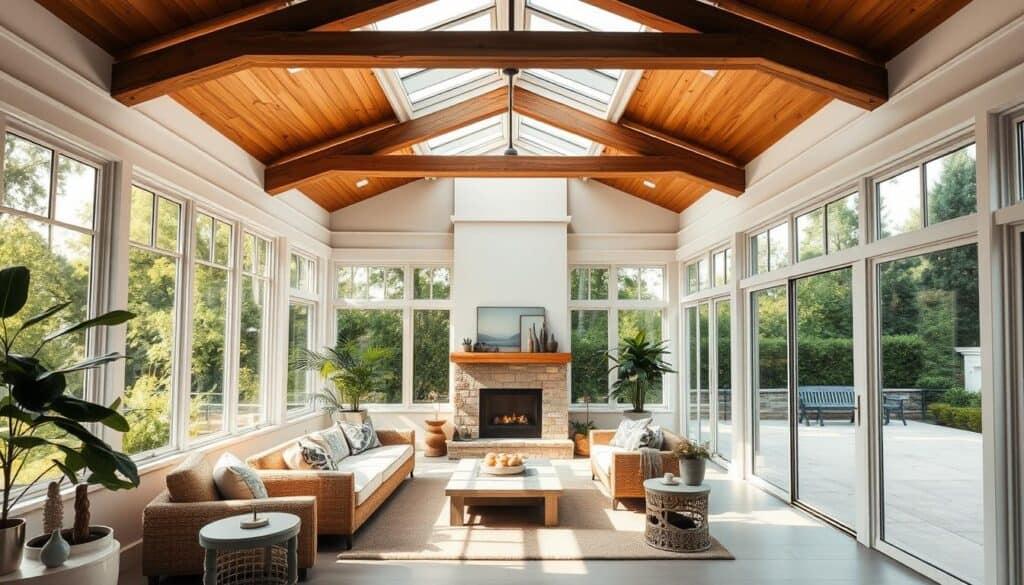
Design Styles to Consider
Your sun porch should match your home, not feel like an add-on. We’ve seen many styles, from modern to cottage-style. Each has its own charm.
Some like the elegant conservatory look. Others prefer a casual sun porch vibe. The key is to choose a style that fits your home and taste.
Don’t be afraid to mix styles. A modern home can have a cozy sunroom. A traditional house can have a contemporary sunspace.
Materials and Construction Options
Choosing the right materials is important. Wicker and rattan furniture are popular for their durability and natural look.
But there are many other options. Curved sofas and custom built-in seating can add comfort and style. Retractable windows let you control the air flow.
Look for materials that handle temperature changes and sunlight well. High-gloss finishes are easy to maintain. Natural materials like wood and stone add warmth.
Sunroom Interior Ideas
Now it’s time to make your greenhouse room your own. You can mix comfort with function. Think about how light, temperature, and humidity will affect your choices.
Find furniture and decor that’s both durable and stylish. Your garden room should feel like home, even with its special environment.
Furniture Selection
Choosing furniture for your sunroom is more than just looks. It must handle lots of sunlight well. Wicker and rattan are great because they resist humidity and look relaxed.
But you can also use other materials. Plush sectionals and velvet armchairs can add luxury. Just pick fabrics that won’t fade in sunlight.
Custom sectionals are perfect because they fit your space well. Some people even add fun things like foosball tables or pianos.

Decor and Ambiance
Let your creativity shine here! Some like lots of plants, while others choose a few special pieces. You can also add seasonal decorations like dried hydrangeas.
Window treatments are important for both looks and function. Try using boat cleats for a coastal feel. Striped fabrics can add interest and control light.
Bold paint colors can also make a statement. We’ve seen sunroom ideas with oxblood walls or pool-blue lacquer. They make great backgrounds for plants and furniture.
Lighting Options
Natural light is great during the day. But evenings need careful planning. Table lamps make cozy reading spots, while string lights add magic for dinner or quiet nights.
A big chandelier can change your garden room’s look at night. Pick fixtures that match your style, whether it’s rustic or modern.
Use different lights to make your sunroom flexible. Mix overhead lights with task and accent lights. This way, your sunroom will be perfect all day and night.
Energy Efficiency in Sunrooms
Building a comfy four-season room means being smart about energy. All those beautiful windows are great for light but can raise your bills. You’re making a greenhouse, which is good for light but bad for your wallet.
But, you don’t have to give up comfort or style to save money. With the right steps, your room can be both beautiful and energy-smart.

Insulation Considerations
Insulation is your sunroom’s best friend. It keeps temperatures comfy all year. Without it, you’ll lose heat in winter and gain it in summer.
Don’t forget the floor. Insulating it stops cold drafts. Many people are surprised at how much it improves comfort.
The goal is to create a thermal barrier that fits your climate. In cold places, use higher R-values to keep warmth in. In warm areas, keep hot air out.
Energy-Efficient Windows
Your windows are key – and tricky for energy efficiency. Invest in quality. Double or triple-pane windows with low-E coatings keep temperatures right while letting in light.
Look for these features in your windows:
- Low-E coatings that reflect heat while allowing light through
- Argon or krypton gas fills between panes for better insulation
- Insulated frames that don’t conduct heat or cold
- Proper weatherstripping to eliminate drafts
Some people use smart glass that changes tint with the sun. It’s cool tech that helps control temperature.
Sustainable Materials
Choosing sustainable materials is good for the planet and often better for your room. Bamboo flooring is durable and resists moisture and temperature changes.
Reclaimed wood adds charm and reduces environmental harm. Eco-friendly insulation like recycled denim or sheep’s wool performs well and improves air quality.
Think about your room’s direction when picking materials. South-facing rooms need materials that handle sun well. North-facing rooms need materials that keep heat in.
Adding shading like awnings or pergolas helps in summer. These work with sustainable materials to make a comfy, energy-efficient space.
Expanding Your Living Space
Adding an all-season room to your home opens up a world of possibilities. It’s not just extra square footage. It’s a space that can change how your family lives, works, and plays together.
The key is making sure this new addition feels like it belongs. You don’t want it to look like an afterthought.
Integrating with Your Home’s Layout
The secret to a successful sunroom addition is how well it flows with your current living space. You want guests to think, “This has always been here!”
Start by considering the flooring transition between your home and the new space. Matching or complementing your existing flooring creates that seamless flow you’re after.
Paint colors should work with your current palette too. You don’t need an exact match, but they should feel like they belong in the same home.
Think about the architectural style as well. A modern glass sunroom might look odd attached to a traditional colonial home. But with the right design touches, you can bridge different styles beautifully.
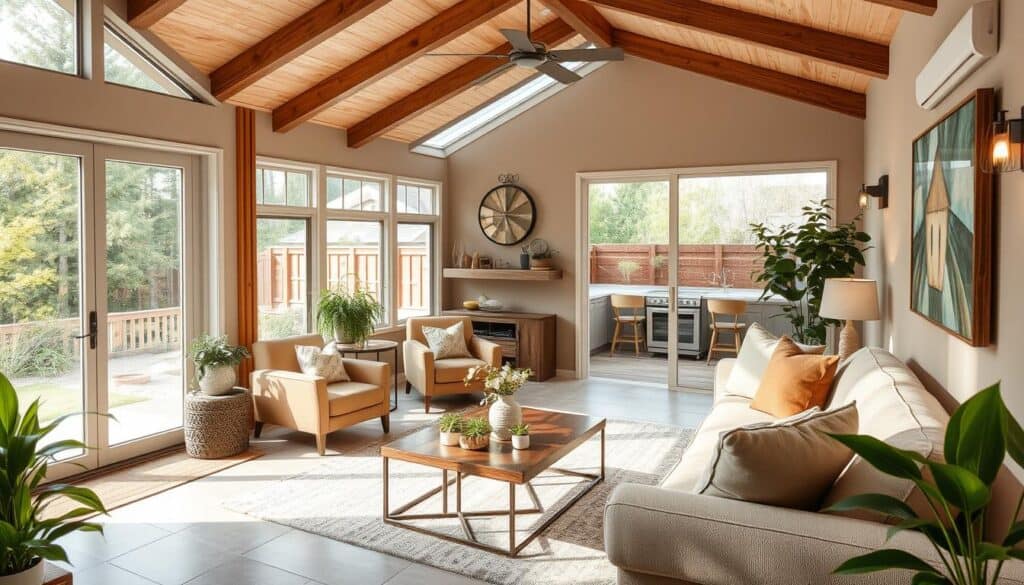
Multi-Functional Uses for Sunrooms
Sunrooms really shine in their versatility! We’ve seen homeowners turn them into amazing breakfast nooks. The natural light makes everything feel more welcoming.
Your sunroom could become the perfect home office. Imagine tackling your daily tasks surrounded by natural light and garden views. Talk about a productivity boost!
Entertainment zones are another popular choice. Picture a foosball table, comfortable seating, and game storage all in one bright, airy space. Some families create music rooms with pianos and instruments, while others design reading retreats or plant sanctuaries.
The beauty is that your sunroom can change with your needs. It might be a playroom when kids are young, then transform into a teen hangout, and eventually become a peaceful retirement retreat.
Enhancing Property Value
Let’s talk numbers because this investment makes financial sense too. According to Angi, building a sunroom yields a solid 49% return on investment. That’s not just about the money you’ll get back – it’s about creating value that buyers love.
Buyers are drawn to extra living space, and natural light is a big plus. They can envision their own family using the space in countless ways. Plus, that indoor-outdoor connection we all crave? It’s a major selling point in today’s market.
Your sunroom becomes a standout feature that sets your home apart from others in the neighborhood. It’s the kind of addition that makes people say, “I have to have this house!”
Maintenance Tips for Sunrooms
Maintenance in sunrooms isn’t the most exciting topic. But, it keeps your space looking great and working well. Most tasks are easy once you know what to do. You’ll spend a lot of time cleaning those beautiful windows.
Think of maintenance as protecting your investment. A little care each day keeps everything looking and working well.
Cleaning and Care
Window cleaning supplies will become your best friends. Your sunroom has more glass than any other room. Every smudge and spot shows up when sunlight hits.
Don’t worry, cleaning is simple once you get into a routine. You’ll need a squeegee, glass cleaner, and maybe a telescoping pole for hard spots.
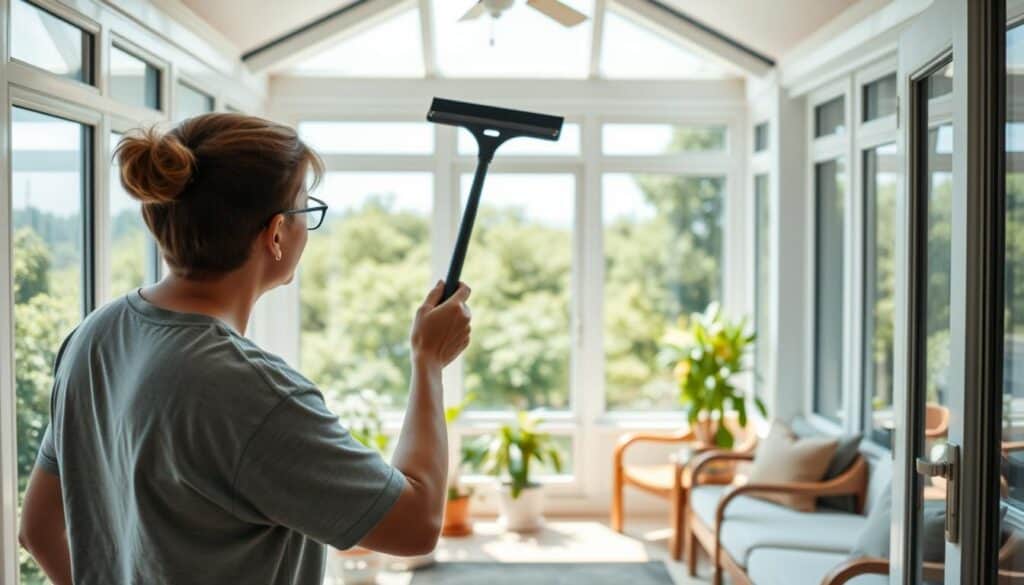
Stay on top of cleaning to avoid big messes. Clean your windows every few weeks to keep things easy.
For the rest of your sunroom, dust and vacuum like any other room. Quality materials last a long time. Painted trim and built-ins can look great even with kids around.
Seasonal Maintenance Checks
Each season has different needs for your sunroom. Spring is a great time to start fresh after winter.
Check window seals for damage from cold weather. Clean gutters if your sunroom has them. Give furniture and decor a deep clean after winter.
Summer maintenance is about keeping things cool. Check cooling systems and screens or awnings. Also, inspect for sun damage to fabrics or furniture.
Fall is about getting ready for cold weather. Check insulation and clean leaves from drainage areas. Look for small repairs before winter.
Winter maintenance is mostly watching for issues. Look out for ice and condensation. But mostly, enjoy the warmth and beauty of your sunroom.
Small efforts every day are better than big cleanups. Your sunroom will thank you with years of beauty and comfort.
Legal and Zoning Considerations
Let’s talk about the legal side of adding a conservatory to your home. You might not want to deal with this part. But, it’s important to do it right away to avoid problems later.
These rules are in place to protect your investment. They make sure your conservatory is safe for you and your family.
Building Permits
Most places need building permits for conservatory additions. The rules can change a lot depending on where you live. Some places treat it like any other room addition. Others have special rules for lots of glass or rooms not fully climate-controlled.
Getting a permit might seem like a hassle. But, it’s really important. It makes sure your conservatory is safe and meets building standards. This is key for your family’s safety and your home’s value.
Call your local building department early in your planning. They’ll tell you what you need and what inspections are required. Don’t wait until you’re ready to start building – some permits take weeks.

Zoning Regulations
Zoning rules are important too. They control how close your conservatory can be to property lines and how tall it can be. Some areas even have rules on what materials you can use.
If you live in a historic district, expect extra rules. These areas often have strict architectural guidelines. The same goes for areas with specific looks they want to see.
Before you fall in love with a design, check your local zoning laws. It’s easier to change your plans early than to rebuild something that doesn’t fit.
Homeowners Association Guidelines
Living in an HOA community? You have another approval to get. HOA guidelines can be specific about exterior changes. Your conservatory will likely be visible, so you’ll need their okay.
Most HOAs want to help you. They just want to make sure your project fits with the community’s vision. Submit your plans early and be ready to make changes if needed.
The good news is that most HOAs are reasonable. They know that home improvements like conservatories can make everyone’s property value go up.
Cost of Building a Sunroom
Thinking about your dream sunroom? It costs about $47,000 on average, says HomeAdvisor. But, the price can change a lot based on your plans and what you want.
Budgeting and Financing Options
There are smart ways to pay for your sunroom. Home equity loans often have the best rates because sun rooms increase your home’s value. Personal loans are good for smaller projects. Some people add sunroom costs to bigger renovation loans for better deals.
Average Costs by Design Type
A simple three-season sunroom costs less than $47,000. But, a four-season room with climate control can cost more. The size of your sunroom also affects the price.
A small 10×12 room costs less than a big 16×20 room. The type of foundation, windows, and HVAC also play a role in the cost.
Long-Term Value Assessment
Sun rooms are a great investment, returning 49% of their cost. They add valuable living space and natural light to your home. This makes your home more appealing to buyers, which is great in today’s market.
Your sunroom is more than just an expense. It’s an investment in your home’s value and your family’s happiness.