

Beautiful Sunroom Ideas to Transform Your Home Space
Imagine adding a room to your home that makes you happy every day. That’s what a perfect sunroom does.
Have you ever felt better when sunlight fills a room? A sunroom does that every day. It’s where you enjoy your morning coffee, read, and hang out with friends.
The best thing about sunrooms is they’re not just pretty. They also make your home worth more, says Angi. They cost about $47,000 to build, but it’s worth it for the happiness and value they add.
Looking for sunroom ideas? You can have anything from windows that open to comfy seating. There’s a sunroom for every budget and weather.
Key Takeaways
- Sunrooms provide a 49% return on investment while making life better
- Average construction cost is $47,000, varying by size and features
- Three main types: insulated year-round, three-season, and screen rooms
- Natural light and outdoor views create instant mood-boosting benefits
- Retractable windows and custom seating maximize functionality
- Design choices like high-gloss paint can enhance natural light effects
1. Understanding the Benefits of a Sunroom
A sunroom is more than just a room. It changes your life in many ways. It’s a bright, versatile space that many love.
Increased Natural Light
Walking into a sunroom feels like a mood boost. It’s filled with sunshine. This isn’t just pretty; it’s good for you.
The light in your sunroom helps you sleep better and feel more awake. In winter, it’s a warm escape. You’ll want to spend more time here.
But, all those windows mean more cleaning. Yet, enjoying morning light with coffee makes it worth it.
Improved Home Value
A good sunroom can make your home more valuable. Experts say it’s a smart investment. It’s a space you’ll love and a smart choice financially.
Choose quality materials and sunroom decor that appeals to buyers. A well-designed sunroom is a big plus when selling your home.
Versatile Usage Options
Sunrooms are very flexible. They can be a yoga spot, a reading nook, or a dinner party area. They work for many activities.
You can pick furniture for relaxing or a home office. Some use it for dining, others for kids’ play. It’s a space for hobbies too.
Remember, sunrooms might use more energy. But, the comfort they offer is worth it, even in winter.
2. Popular Sunroom Styles to Consider
Every sunroom tells a story. The style you choose is the first chapter of your personal retreat. Whether you like classic elegance or modern boldness, your sunroom style makes every day special.
Sunroom design is very flexible. You can make a fancy conservatory or a cozy cabin. Let’s look at the most loved styles by homeowners.

Traditional Sunrooms
Traditional sunrooms are always in style. They have classic charm and neutral colors that feel elegant and welcoming. Imagine relaxing in a beautiful garden conservatory with crisp whites, soft creams, and fancy furniture.
These spaces use natural light well through big windows. The classic style connects your indoor and outdoor areas smoothly. You’ll see wicker furniture, flowing curtains, and lots of plants.
Here are key elements of traditional sunroom design:
- Neutral color palettes with whites and creams
- Classic wicker or rattan furniture
- Flowing fabrics and soft textures
- Abundant plants and natural elements
- Elegant lighting fixtures that complement natural light
Modern Sunroom Designs
Modern sunrooms are exciting and rule-breaking. Designer Marie Flanigan used high-gloss oxblood paint for a bold look. Sunrooms don’t have to be all white and beige.
Designer Doniphan Moore used pool-blue lacquer for a light-reflecting effect. These bold colors show how natural light can work with deeper hues.
Modern sunroom features include:
- Bold, unexpected color choices
- Clean lines and minimal furniture
- High-gloss finishes that reflect light
- Contemporary art and accessories
- Sleek lighting that enhances the modern aesthetic
Rustic Sunroom Retreats
Rustic sunrooms offer a cozy, lived-in feel. Designer Nina Nash Long used old-world charm with gilt details and antiques. This creates a space that feels both historic and welcoming.
Rustic sunrooms love natural textures and earthy tones. They feel like a warm hug with weathered wood, stone, and comfy seating. The lighting often has vintage touches that add to the cozy feel.
You’ll love these rustic elements:
- Reclaimed wood and natural stone
- Vintage and antique furnishings
- Earthy, warm color palettes
- Cozy textiles like wool throws and linen cushions
- Lantern-style or wrought iron lighting fixtures
3. Choosing the Right Location for Your Sunroom
Finding the perfect spot for your sunroom is like choosing the best seat in a restaurant. It can make or break your experience. You wouldn’t want a space that’s too hot or too dark.
The location you choose will affect how much you use and enjoy your sunroom. It’s important to think about three key factors. These are the sun’s path, what you’ll see through the windows, and how it connects to your home.
Orientation and Sunlight
The sun’s path is like a daily dance. You want your sunroom to have the best view. South-facing locations have gentle light all day, perfect for a bright space.
East-facing sunrooms are great for morning people. Imagine sipping coffee as the soft morning light comes in. West-facing spots are lovely for evening relaxation but can get hot in summer.
North-facing sunrooms have even, indirect light all day. They’re cooler in summer and good for offices or studios where sunlight is a problem.

Landscape Considerations
Your landscape changes with every season. You want your sunroom windows to frame the best view. Designer Jeremiah Brent chose a Vermont sunroom for stunning ski slope views.
Think about what you’ll see year-round. Do you have a beautiful garden or trees with fall colors? Or a peaceful backyard for bird watching?
Don’t forget about privacy. You want to enjoy your sunroom without feeling exposed. Strategic positioning can give you views while keeping it cozy and private.
Proximity to Existing Spaces
Your sunroom should feel like a natural part of your home. Think about which rooms you spend most time in. How can your sunroom connect to them smoothly?
A sunroom off the kitchen is perfect for breakfast or casual dining. Connected to the living room, it expands your entertaining space. Off the master bedroom, it’s a private retreat for mornings.
Consider daily life too. You don’t want to have to go far to get to your sunroom. The easier it is to access, the more you’ll use and enjoy it.
4. Essential Sunroom Materials and Structures
The materials for your sunroom are very important. They can make your daily life better or worse. It’s like making a recipe – each ingredient must be just right.
Do you want a cozy room or a breezy one? The choice of materials is the first step. Some people even choose screen rooms for an outdoor feel.
Glass Types and Choices
Double-pane glass is great for comfort all year. It keeps you warm in winter and cool in summer. It’s like having a climate control system in your walls.
Tempered glass is safe for homes with kids or pets. Retractable windows are amazing. They can open or close with just a touch, perfect for Florida homes.
Frame Materials: Wood vs. Aluminum
Wood frames make your sunroom look warm and inviting. But, they need care to keep looking good. You’ll need to stain or paint them often.
Aluminum frames are strong and easy to care for. They can handle weather well. They might not look as cozy as wood, but they save time and money.
Flooring Options for Comfort
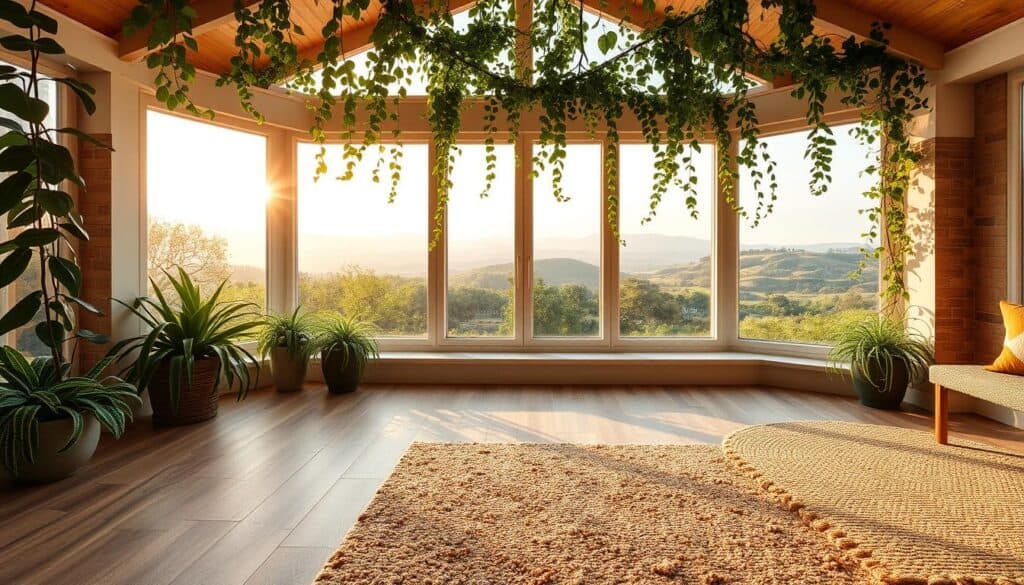
Your sunroom floor must be tough and easy to clean. Tile is a good choice because it looks nice and is easy to clean. It’s perfect for spills.
Luxury vinyl looks like wood or stone but is very durable. Polished concrete is cool and looks great. It’s perfect for hot days.
Choose flooring that fits your lifestyle. If you use your sunroom all year, pick something that can handle temperature changes well.
5. Decorating Your Sunroom: Color and Style
Decorating your sunroom is where function meets fun. It’s your chance to show off your style. Use natural light to your advantage.
Choosing a Color Palette
Color in a sunroom is like seasoning in cooking. It can make or break the whole experience. Designer Sarah Vaile showed that with her stunning curved blue sofa.
Remember, natural light changes how colors look. Morning light might look different at golden hour. Designer Sasha Bikoff used floor-to-ceiling sheer drapes in cornflower blue for a dreamy effect.
Adding contrast is key. Designer Wendy Labrum added black trim to avoid a stark look. Dark accents ground the space and make it feel more intentional.
Furniture Selection and Arrangement
Think about how you’ll use your sunroom. Do you want to read or entertain? Choose furniture that fits your needs.
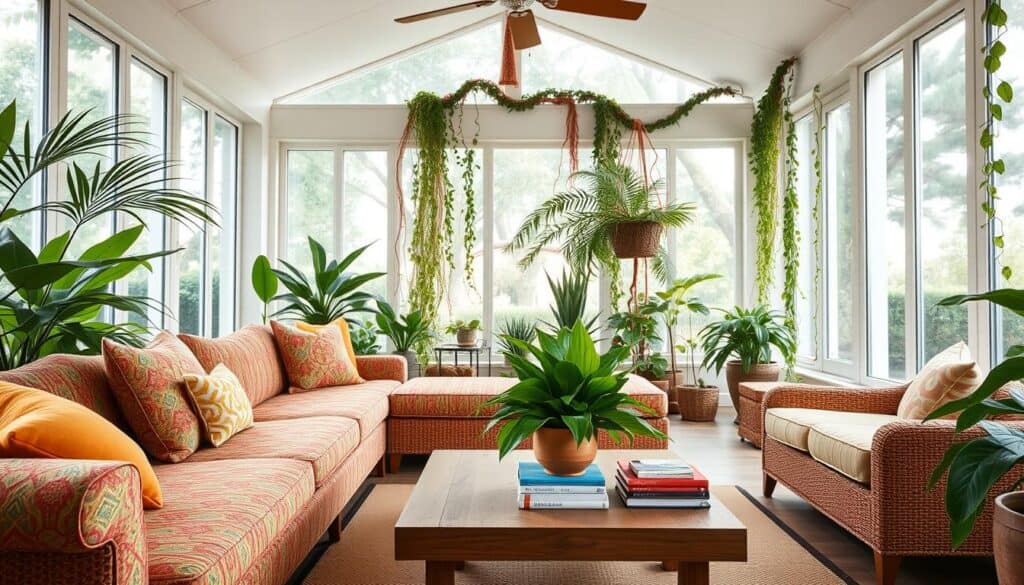
For entertaining, a sectional is great. It offers comfort for everyone. Sunroom furniture combines indoor comfort with outdoor durability.
How you arrange furniture is important. Create cozy areas and leave paths for movement. This makes your sunroom inviting.
Personalizing with Décor Accents
Now, make your space truly yours. Add family photos, favorite throw pillows, and unique lamps. These touches make your room special.
Add textures that feel good. Use soft throws, woven baskets, and vintage rugs. These details warm up your space.
Don’t forget seasonal touches. Change pillow covers, add fresh flowers, or update artwork. Your sunroom should change with the seasons, always feeling welcoming.
6. Incorporating Nature into Your Sunroom Design
A sunroom becomes magical when you bring nature into it. You can make it feel like part of your garden. You don’t need to be a pro gardener to do this. Just be open to adding living things that make your space lively.
Indoor Gardening and Plants
Sunroom plants are key to a nature-inspired design. Ariel Okin uses wicker, rattan, vines, ferns, and flowers to create a lush garden inside. This is what we all dream of.
Here are some easy plants that love the sun:
- Pothos for easy, trailing greenery
- Snake plants for height and clean air
- Fiddle leaf figs for a dramatic look
- Boston ferns for a soft, garden feel
- Climbing jasmine for scent and romance
Brigette Romanek took gardening indoors to a new level. She has lots of potted trees and a green wall. This makes you feel like you’re eating outside, even in the snow. Mix heights and textures for interest.

Water Features and Wildlife
Water elements add calm to your sunroom. They make it a peaceful retreat. Here are some ideas:
- Small tabletop fountains for soothing sounds
- Wall-mounted water features that save space
- Shallow bird baths for wildlife views
- Aquarium gardens with fish and plants
The sound of water calms you. It also helps keep your plants happy.
Natural Textures and Materials
Claire Staszak’s yellow treillage ceiling is genius. It brings sunshine and interest. Natural textures can change your space.
Use these materials to mix indoors and outdoors:
- Wicker and rattan for a natural feel
- Jute rugs for moisture and foot traffic
- Reclaimed wood for warmth and character
- Natural stone for planters and decor
- Bamboo blinds for organic privacy
The goal is to make a space that feels natural and yours. Mix textures, accept imperfections, and let nature guide you.
7. Seasonal Uses for Your Sunroom Space
Sunrooms change with the seasons and your needs. They are like chameleons, adapting to weather and activities. They offer comfort and function all year.
Summer Retreats and Relaxation
Summer turns your sunroom into a cool escape. You enjoy the outdoors without bugs or UV rays. Imagine sipping a cold drink and reading with a breeze.
Make it a summer haven with light furniture and breathable fabrics. Ceiling fans keep air moving. Many enjoy yoga or naps here when it’s too hot inside.

Cozy Winter Gatherings
Winter makes your sunroom magical. It’s a sunny spot while outside is gray. Natural light warms you even on cold days.
Add cozy throws and a space heater for hot cocoa and games. It’s a bright spot in winter. Families love it for holiday mornings or New Year’s brunches.
Year-round Entertaining Ideas
Smart sunrooms are flexible for any time. Stephanie Hall’s Nantucket sunroom has a foosball table and games. It’s perfect for any season.
Redmond Aldrich Design made a sunroom for breakfast, games, or work. Furniture changes for different activities. It’s great for coffee, work, or game nights.
Get multi-purpose furniture like storage ottomans or tables. They change with your needs. Your sunroom becomes many rooms, saving space and function.
8. Tips for Maintaining Your Sunroom
Having a sunroom means you’ll get to know your squeegee and window cleaner well. All those windows that let in light need regular cleaning. This keeps your space bright and welcoming.
Keeping Glass Surfaces Crystal Clear
Dirty windows can block up to 25% of natural light. Clean the inside every month and the outside every few months. Spotless glass lets in more sunshine.
Seasonal Care Routines
Make a simple checklist for each season. Check window seals, clean gutters, and check your heating and cooling. Catching small problems early saves you from big headaches.
Managing Energy Costs
Yes, your energy bills might go up with all that glass. But you can lower the cost. Add ceiling fans, use programmable thermostats, and choose energy-efficient window treatments. These changes help a lot.
By keeping up with maintenance, your sunroom will bring you joy for years. The effort is worth it when you enjoy your bright, beautiful space.