
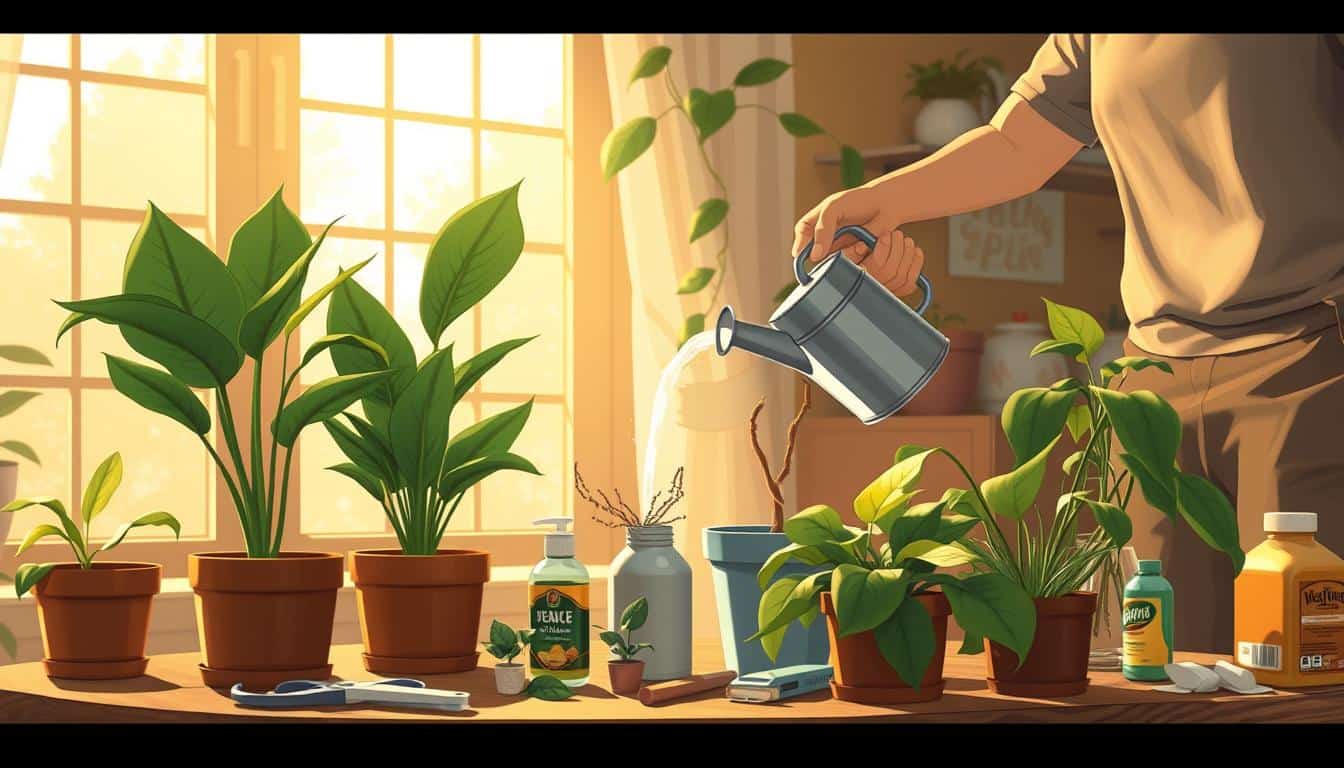
Revive Dying Indoor Plants: Quick Tips
Ever walked through your indoor space and saw a sad plant? That’s a sign your plant needs help. Don’t worry, you can save your plants with a few quick tips for reviving dying indoor plants. It’s not hard; it’s all about indoor plant care and simple tricks.
Are you ready to help your plants get better? We’ll show you how to save your wilted plants. You’ll learn how to bring them back to life.
Key Takeaways
- Look for signs like droopy leaves—it’s time to act.
- Learning a few quick tips for reviving dying indoor plants is key to plant longevity.
- Don’t underestimate the power of proper indoor plant care; it’s your best defense.
- Simple adjustments to your routine can mean the world of difference in rescuing dying houseplants.
- Regular maintenance is the unsung hero in the life of lush, vibrant indoor plants.
Identifying Common Signs of Distress in Indoor Plants
Before you become a plant-saving hero, look for signs of plant distress. Spotting these early signs is key to helping your plants thrive again. It’s not just about houseplant troubleshooting.
Yellowing Leaves
Yellow leaves are like neon signs saying, “Hey, look at me!” They often mean your plant is getting too much water or has poor drainage. It’s like loving them too much!
Drooping or Wilting Leaves
Seeing your plants droop is sad. It usually means they need more water. Check if you’re watering them too little or too much.
Dry, Crispy Edges on Leaves
Crunchy leaf edges mean your plant is thirsty. It might be due to low humidity or not enough water.
Slow Growth or No Growth
If your plant isn’t growing, it’s a warning sign. Slow growth can mean it needs more nutrients or a fresh pot.

These symptoms help you figure out and fix problems. Watching for signs of plant distress ensures your plants live long, happy lives.
Quick Tips for Reviving Dying Indoor Plants
Let’s talk about how to keep indoor plants alive. It’s easier than you think! A few simple steps can make your plants healthy and look great. Whether it’s watering right or giving them the right light, it’s all about the details.
Let’s learn how to make your plants happy and strong. They should be thriving, not just surviving.
Adjusting Watering Habits
Watering: Finding the right balance is key. Too much water can hurt your plant, while too little can make it dry and sad. Check the soil moisture before watering.
Think of it like checking your car’s oil. Your plant will be grateful!
Ensuring Proper Light Conditions
Light is very important for plants. Most plants like bright, indirect sunlight. This helps them feel like they’re outside.
Find a spot near a window with filtered light. But, some plants don’t like direct sunlight. Rotate your plant to make sure all sides get light.
Improving Air Circulation
Good air flow is important for plants. They like fresh air, just like we do. Don’t put plants in tight spots where air can’t move.
This helps prevent diseases and makes plants grow better.
Repotting with Fresh Soil
Repotting is like giving your plant a new home. Fresh soil means new nutrients. Choose a pot that’s a bit bigger than the old one.

Starting fresh can really help your plants. These steps are key to keeping them alive and thriving. Give your plants what they need to be happy.
The Importance of Regular Indoor Plant Maintenance
Think of indoor plant care like going to the gym for your plants. Just like we need exercise and good food, plants need regular care. Keeping up with indoor plant maintenance makes your home better, keeps plants healthy, and saves you from needing to fix them often.

But it’s not just about water and sunlight. It’s about taking care of your plants in every way. Here are some tips:
- Water your plants the right amount, based on what they need.
- Make sure they get the right amount of light, like they would outside.
- Wipe off their leaves to help them make food from sunlight.
- Give them the right food to grow strong and healthy.
No one likes to rush to the plant doctor. With regular indoor plant care, you won’t need to. Spend a bit of time each week with your plants. They’ll give you back beautiful leaves, clean air, and a happier home. By making indoor plant maintenance a regular thing, your plants will not just survive but really thrive.
Conclusion
Well, friend, we’ve explored the highs and lows of saving dying houseplants. Now, you have lots of tips to revive your indoor plants. No more worrying about wilted leaves or dry soil.
It’s time to take charge of your plant care. Spotting problems early can save your plants. This way, they can come back to life.
Learn to water just right and give them enough sunlight. This will help your plants grow strong. They’ll make your home a green oasis.
Be gentle and patient with each plant. They’re not just decorations. They’re living beings that add life and magic to our homes.
Use these tips to make your plants happy and healthy. Each saved plant shows your hard work and green thumb skills. Here’s to a home full of green and life. Happy gardening!