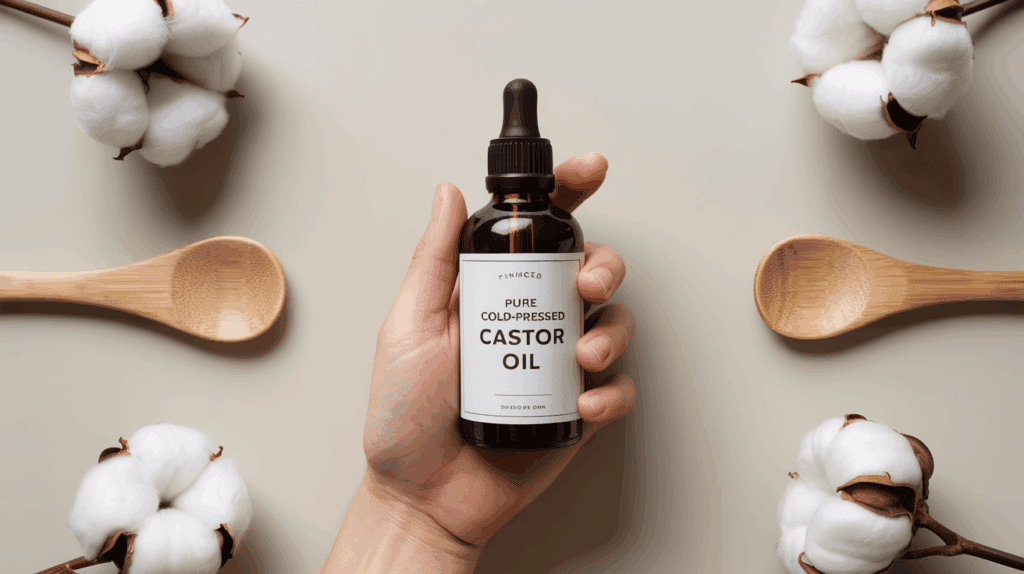
How to Spot Pure, Cold-Pressed Castor Oil
Ever wonder why some beauty products might be nothing more than watered-down disappointment? You’re not alone.
Many products claim to be pure cold-pressed castor oil but are filled with additives. Your hair and skin need the real thing. It’s made below 122°F to keep its nutrient-packed benefits intact.
This guide will teach you how to spot high-quality castor oil. You’ll learn to check labels, look for certain signs, and avoid fakes.
Whether you want hair growth or skin hydration, knowing what’s authentic matters. Let’s cut through the marketing noise. This way, your beauty routine won’t be based on guesswork.
Key Takeaways
- Authentic products are extracted at temperatures below 122°F, preserving essential nutrients and antioxidants for maximum effectiveness
- Check labels carefully for additives, preservatives, or synthetic substances that dilute quality and may cause unwanted reactions
- Visual inspection matters — genuine varieties have distinct color, consistency, and smell indicators
- Third-party certifications and transparent sourcing information signal trustworthy brands
- Price often reflects quality, but expensive doesn’t always mean authentic — learn to read beyond marketing claims
- Understanding extraction methods helps you distinguish between genuinely beneficial products and overpriced imposters
Understanding Castor Oil Basics
Before we start, let’s learn why castor oil is so special. Not all oils called “castor oil” are the same. The real deal can make your skin look amazing, but fake versions might not work at all.
The Source Behind the Bottle
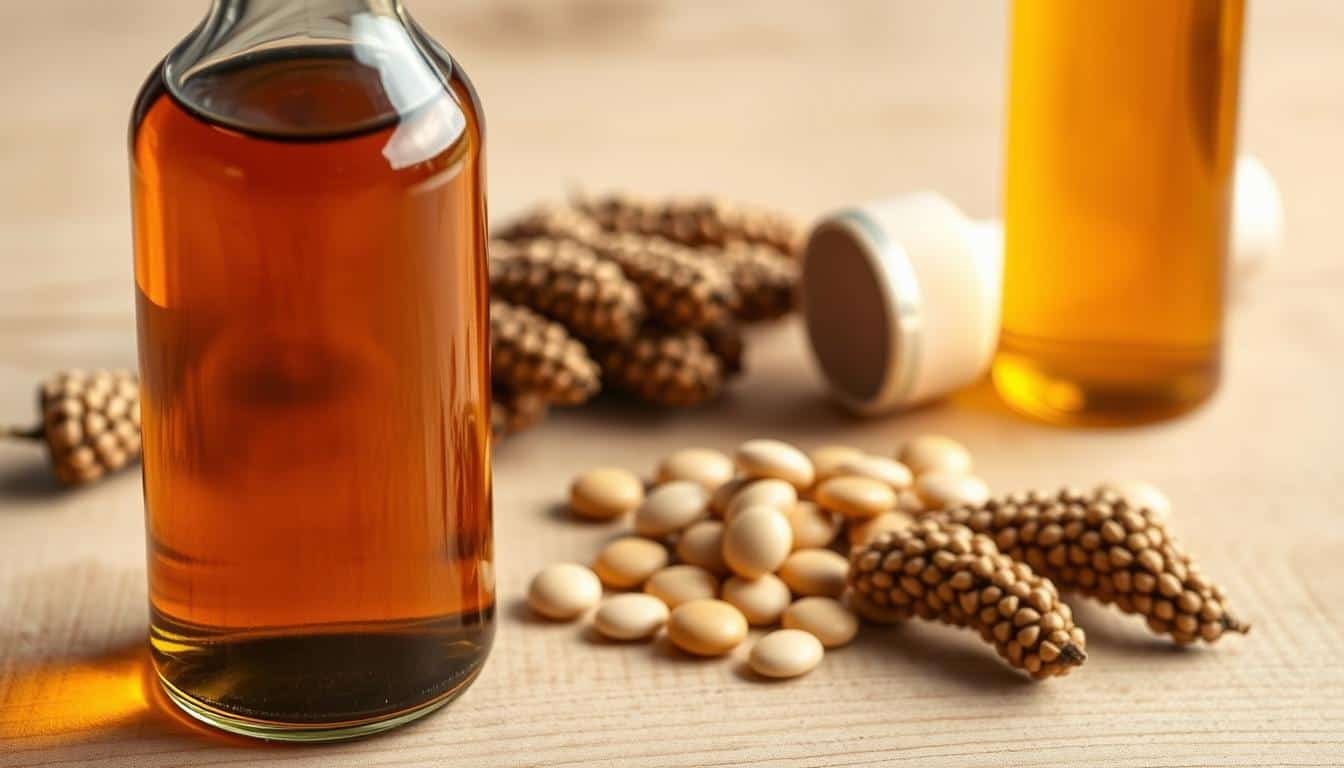
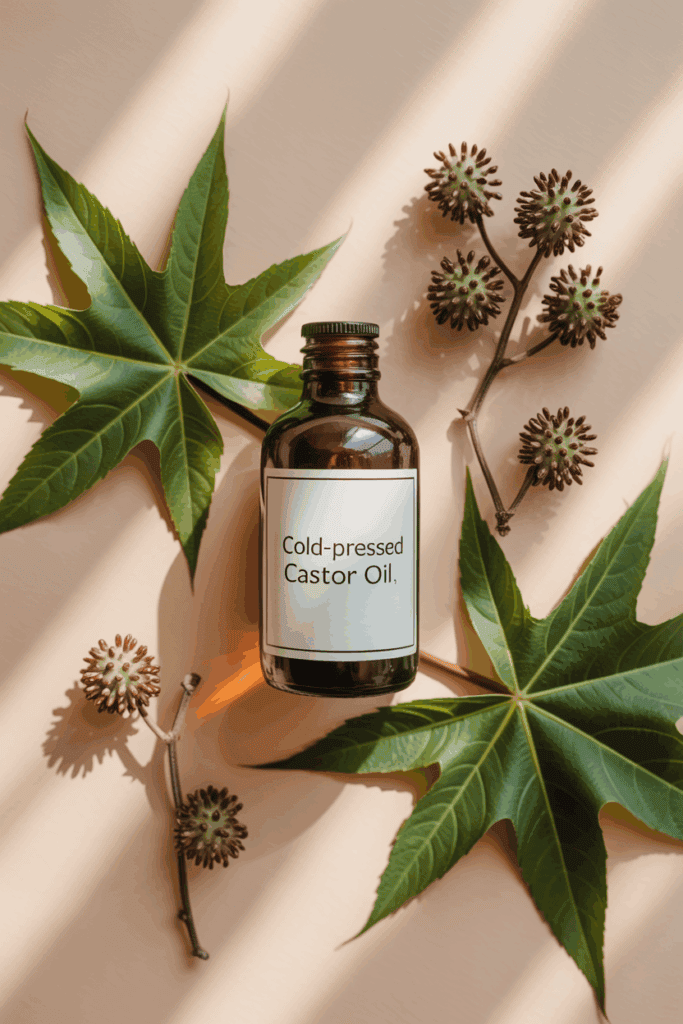
Castor oil comes from the seeds of the castor plant, known as Ricinus communis. These plants love hot weather, and India grows most of the world’s castor oil. The oil from these seeds is thick and sticky, unlike most beauty products.
This oil is special because it has a lot of ricinoleic acid. This acid pulls in moisture and helps your skin. It goes deep into your skin, bringing moisture and reducing inflammation.
How the oil is made matters a lot. Heat can ruin the good stuff in castor oil. Cold-pressed extraction is the best way to get the real deal.

Why Cold-Pressed Makes All the Difference
Cold-pressed extraction keeps the oil cool, below 122°F. It’s like the difference between fresh orange juice and canned concentrate. Cold-pressed keeps all the good stuff in.
This method keeps the oil full of nutrients and antioxidants. Genuine cold-pressed castor oil works better. Heated oils lose the good stuff.
Real cold-pressed castor oil does more than just moisturize. It:
- Hydrates your skin deeply
- Reduces inflammation for skin issues
- Helps your hair and scalp grow
- Fights acne with its antimicrobial properties
- Supports your digestion for regular bowel movements
The best castor oil for skin offers these benefits. But only if it’s made the right way. Ricinoleic acid stays strong if the oil is cold-pressed and pure.
Your skin can tell the difference between good oil and bad. Real cold-pressed castor oil absorbs well and doesn’t feel greasy.
Knowing the basics helps you find the real deal. Spotting genuine cold-pressed castor oil means you know what to look for. Fake oils can’t match the real thing, no matter what they say.
Now you know why cold-pressed castor oil is important. You’re ready to find the pure stuff and avoid the fakes.
The Difference Between Pure and Impure Castor Oil
Knowing the difference between real and fake castor oil saves you money and skin problems. Not all “castor oil” is the same. Some products are pure, while others are not.
Pure castor oil is good for your skin and hair. But fake versions can cause problems.
What Pure Castor Oil Really Means
Pure castor oil has only one thing in it: castor oil. No extra stuff.
It’s made from castor beans, just like nature intended. No preservatives or cheap oils are added.
Imagine getting a coffee with cream and sugar when you asked for black. Pure castor oil is like that. It’s just castor bean extract, nothing else.
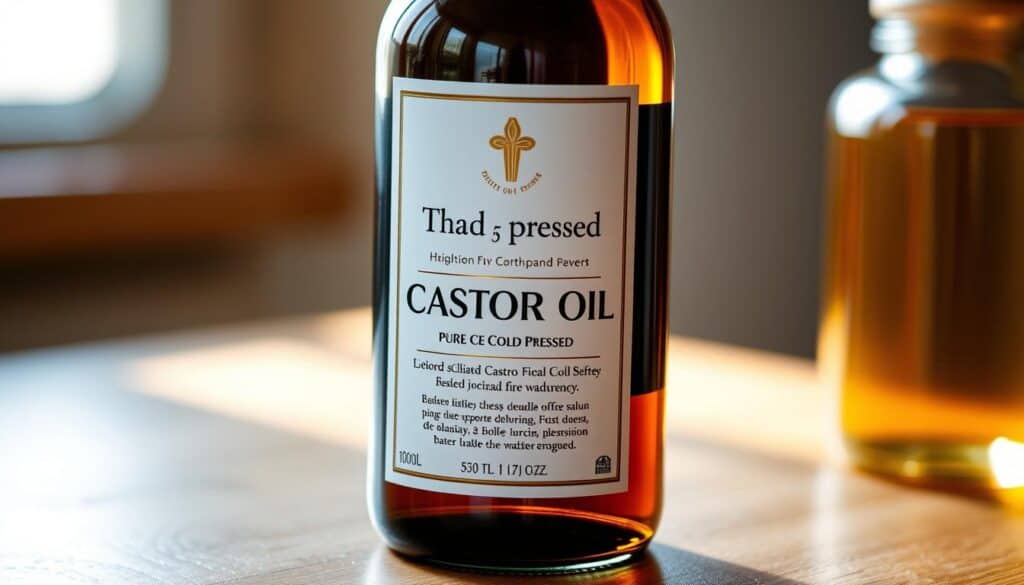
But, some makers add things to make it last longer or change its smell and color. They might make it lighter or add fake smells. They also add things to make more money.
The Sneaky World of Adulterants
Impure castor oil is not good. Makers try to make more money by adding cheap stuff. Your skin suffers.
To find good castor oil, you need to know what’s fake.
Common fakes include:
- Cheaper carrier oils — like mineral oil, mixed in to save money
- Synthetic preservatives — chemicals that can irritate skin
- Artificial fragrances — can cause allergies
- Petroleum-based substances — bad for your face
- Hexane residues — chemicals from bad extraction methods
Some castor oil is made for industrial use, not for your face. It’s not safe for you.
These bad additives can make your skin break out or get irritated. It’s like getting a green smoothie with lots of food coloring.
When looking for real castor oil, watch out for these bad things. Once you know what’s real, fake products are easy to spot. Your skin is worth it.
Knowing the difference helps you choose the right castor oil. You can find the real deal and keep your skin and wallet safe.

Identifying Cold-Pressed Castor Oil
Want castor oil that really works? You must know what cold-pressed means. It’s not just a term. It’s about quality and getting real nutrients.
Think of it like orange juice. Fresh-squeezed is better than concentrate. Cold-pressed oil keeps nutrients, unlike other methods.
Every good castor oil guide starts with extraction. Get this right, and you find real quality.
What Does Cold-Pressed Mean?
Cold-pressed is simple. It means oil is made without heat. Temperatures stay below 122°F.
Heat hurts nutrients and antioxidants. Keep it cool to keep them. This makes the oil good for skin and hair.
Heat ruins the oil. It loses its power. For skin care and hair growth, you need the good stuff.

Methods of Extraction: Cold-Pressed vs. Others
Let’s look at how oil is made. There are four main ways. Knowing the difference helps you choose the best oil.
Here’s a quick look:
- Cold-Pressed: Made without heat. Keeps nutrients and antioxidants. Good for skin and hair.
- Expeller-Pressed: Uses pressure and friction. Loses nutrients. Used for soaps and lubricants.
- Chemical Extraction: Uses solvents. Loses quality. Not good for body care.
- Pale-Pressed: Lighter oil. Less acidity. Good for cosmetics.

Expeller-pressed is fast but loses nutrients. Chemical extraction is bad. Cold-pressed is best for beauty.
Pale-pressed is good for some uses. But cold-pressed is better for serious care.
Cold-pressed is the best for beauty. It’s more expensive but keeps nutrients. Any good guide will say this.
Don’t settle for less. Your skin deserves the best.
Reading Labels: Important Terms to Look For
The small print on the back of the bottle is like a secret message. It tells you if the product is real or not. Knowing how to spot pure cold-pressed castor oil can save you money.
Many people just look at the front of the bottle and buy it. But the important info is on the back. It’s hidden in small print that few people read.
That’s what some companies count on.
Magic Words That Matter
To check if castor oil is real, look for certain words. These words show if the product is good or not.
Make sure it says “100% pure castor oil” clearly. This means it’s not mixed with anything else.
The word “cold-pressed” is important too. Good companies will tell you they used cold-pressing. They might even say how hot it was.
“Unrefined” means the oil wasn’t heavily processed. This keeps all the good stuff in.
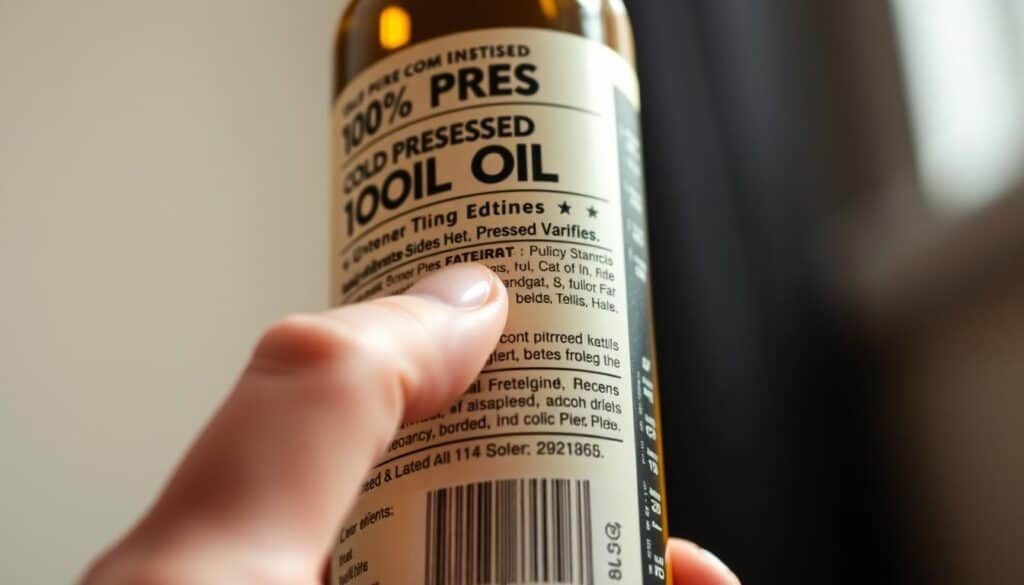
If you want to avoid pesticides, look for “organic”. It means the castor beans were grown without harmful chemicals.
But remember, these words need to be together. If it says “with castor oil” or “castor oil formula,” it’s not pure.
Decoding the Ingredients List
Turn the bottle around to see the ingredients. This is where you find the truth.
Pure castor oil should only have one ingredient: Castor Oil. Sometimes it’s called Ricinus communis.
There should only be one ingredient. If there’s more, it’s not pure castor oil.
Watch out for these bad signs:
- Parfum or Fragrance: Added to hide the smell
- Tocopherol: Vitamin E to keep it fresh longer
- Other carrier oils: Used to make it cheaper
- Additives you can’t pronounce: Stabilizers and colorants
Companies add these to change the oil. They might make it thinner or smell better. But it’s not the real deal.
These additions don’t make the oil better. They just make it different. And not in a good way.
If it doesn’t say how it was made, that’s a red flag. Companies that use cold-pressing are proud to say so. Silence means they might be using bad methods.
Look for certifications too. Good brands show they’ve been checked by others. This means someone else says they’re good.
Reading labels takes just thirty seconds. It’s a quick way to make sure you’re buying the real thing. Learn this trick and save money on fake castor oil.
Visual Characteristics of Quality Castor Oil
Good castor oil looks different from bad stuff right away. Your eyes can spot quality castor oil quickly. Knowing what to look for is key.
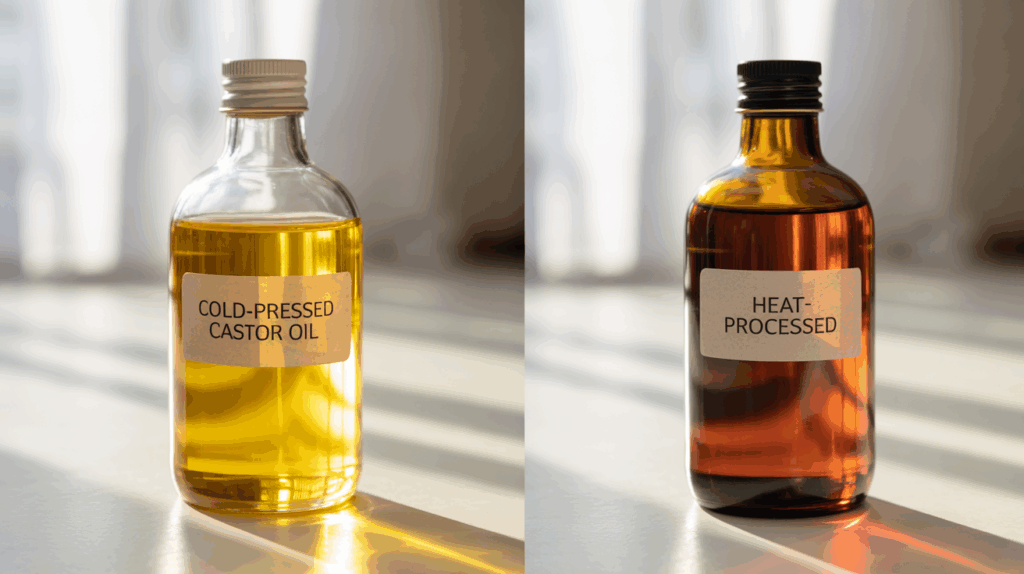
Quality castor oil has a special look. It’s pale yellow or almost colorless. Imagine light honey or champagne, not dark amber.
It should be crystal clear with no cloudiness. Clear oil means pure oil. No particles or sediment should be there.
If the oil looks dark brown or cloudy, it’s not right. It might be processed wrong or mixed with bad stuff. You didn’t pay for that.
Jamaican Black Castor Oil is an exception. It’s dark because the beans are roasted. But regular cold-pressed castor oil is light and clear.

Why Packaging Quality Actually Matters
The bottle tells you a lot about the oil. Quality oils are in dark glass bottles. This isn’t just for looks.
Light can harm oil over time. Dark glass keeps it safe. It’s a simple but important reason.
Clear plastic bottles are a bad sign. It means the maker doesn’t care about quality. Not good.
Good packaging shows a company cares. It means proper seals, clear labels, and a professional look. Cheap packaging means a cheap product. It’s that simple.
Your castor oil should look worth the money. When picking pure castor oil, look is as important as the label. Clear color, clarity, and quality glass are must-haves.

Assessing Aroma and Texture
Let’s talk about the sniff-and-touch method. It’s your best way to find real castor oil. Your senses are very good at telling quality.
This isn’t just wellness guru stuff. It’s about real chemical signs that show if oil is pure or not.
Think of this as your castor oil authenticity test. You need no special tools. Just your nose and fingers.
The Telltale Scent Profile
Open your bottle and smell it. Real castor oil smells mild, earthy, and slightly nutty. It’s nice, like a quiet garden.
Don’t look for strong smells or chemicals. If it smells like vanilla or tropical paradise, it’s not real.
Here’s what different smells mean:
- Mild, nutty, earthy: You’ve got the real deal
- No smell at all: Likely over-processed or refined heavily
- Strong perfume: Added fragrances covering up impurities
- Rancid or sour: Old oil or poor storage conditions
- Chemical or gasoline-like: Solvent extraction residue or contamination
Your nose knows more than you think. Trust it when something smells off.
The Thickness Test That Never Lies
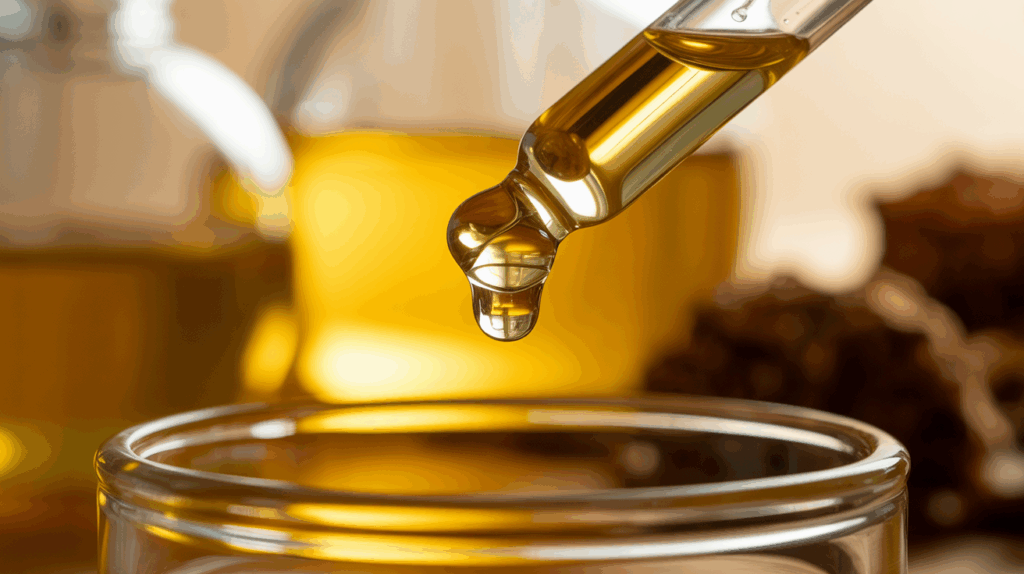
Now, let’s check the texture. Castor oil is thick, sticky, and viscous. It’s like honey on a cold day.
Pour a small amount on your palm. Rub it between your fingers. It should feel syrupy.
The best castor oil for skin is thick. It sticks and penetrates well. It doesn’t spread easily.
What different textures tell you:
- Thick and sticky: Pure, authentic castor oil
- Thin and watery: Diluted with cheaper oils
- Too slippery: Mixed with mineral oil or other additives
- Gritty or separated: Poor quality or contaminated
If your “pure” castor oil feels like regular massage oil, it’s not real. It’s probably mixed with cheaper stuff.
This thickness test is one of the easiest ways to check if oil is real. Pure castor oil is heavy and sticky. Anything else is trying to fool you.
The thick texture is what makes castor oil work well. It stays on long enough to do its job.
So, don’t be scared of the thick texture. That’s the whole point. The stickiness means it’s real.
The Role of Certifications
Ever wonder if those organic labels are real or just marketing tricks? Certifications are like professional credentials. Anyone can say they have them, but only real companies can prove it.
In the castor oil market, certifications show who’s real and who’s not. These aren’t just buzzwords. They’re official verifications that need testing and approval from known groups.
Seeing certification seals on a bottle means someone else checked the claims. This is important because companies often lie.
Official Stamps That Matter

Not all certifications are equal. Some are top-notch, while others are just for show.
For organic checks, look for these big names:
- USDA Organic — The top mark in the U.S., showing castor beans were grown without fake pesticides
- COSMOS — A European mark for natural and organic cosmetics with strict rules
- Ecocert — A global organic check with tough third-party audits
These marks mean auditors checked everything from farm to bottle. It’s not just the maker saying it’s organic — it’s verified.
When you’re looking for real cold-pressed castor oil, these seals are key. They show the product meets high standards. The castor beans come from certified farms, and the oil is made the right way.
Beyond Organic Labels
Quality assurance marks do more than just check for organic. They also look at how things are made and if they’re safe.
Look for these quality signs:
- GMP (Good Manufacturing Practices) — Makes sure the place follows safety and quality rules
- ISO Certifications — International standards for managing quality
- Non-GMO Project Verified — Shows the castor beans weren’t genetically changed
- Leaping Bunny or Cruelty-Free — Means no animals were tested during making
Real castor oil brands show off their certifications. They’re proud of them because getting them takes work and money.
Here’s your task: check every certification claim you see. Look on the company’s website — real companies show their certifications, often with numbers you can check.
If a brand says they’re organic but can’t show proof? That’s a warning sign.
Real certifications come with documents. Honest companies share these easily, often on product pages or in a quality section.
No proof means no certification, which means someone’s not telling the truth. It’s that simple.
When comparing two similar products, the one with verified certifications is better. These marks aren’t just extras. They show you’re getting real cold-pressed castor oil from a company that follows quality rules.
Don’t just take claims at face value. Ask for proof, check credentials, and pick brands that show their documents.
Price Point: What to Expect
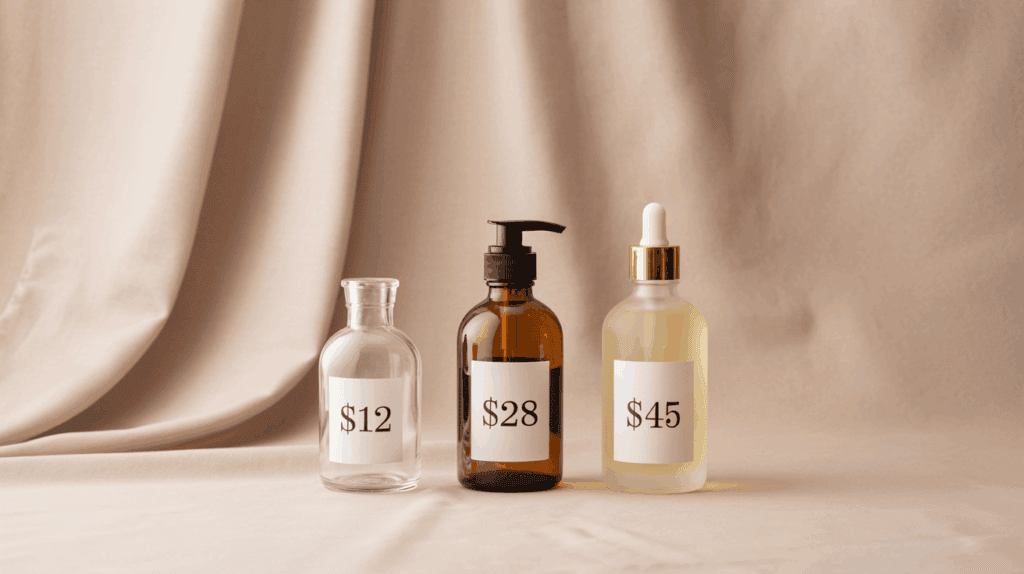
Price is more than just a number. It tells you what’s inside. When picking pure castor oil, knowing the price helps you find good products.
Pure, cold-pressed castor oil costs more. This is because it’s made better. Quality is more important than price.
Why Price Matters
Cold-pressed castor oil is made slowly and carefully. This keeps its natural nutrients safe. It can’t be made fast like other oils.
This slow process means less oil from the same beans. So, it costs more to make.
Special equipment is needed for this slow process. This makes the oil better but more expensive.
A good guide will tell you that cheap castor oil might not be good. If it’s too cheap, it could be bad. It might be mixed with cheaper oils or not cold-pressed.
How to Spot Overpriced Products
Expensive doesn’t always mean good. Some brands charge more just because they can. They think more money means better quality.
Expensive packaging and marketing can raise prices. You might be paying for looks instead of quality.
Here’s how to find overpriced products:
- Compare price per ounce across different brands
- See if one brand is way more expensive than others
- Read reviews to see if it works well
- Check if the price matches the quality and ingredients
- Look for clear information on how it’s made
If a brand is much more expensive than others, it’s likely for the brand. A good guide says mid-range prices are usually best.
Expect to pay more than regular castor oil. But the most expensive isn’t always the best.
The best price is where quality and price meet. Look for products that are well-made but not too expensive.
Your wallet and skin deserve a good deal. Good castor oil is worth it, but it shouldn’t cost too much.
Where to Buy Pure, Cold-Pressed Castor Oil
Choosing the right store is key when looking for real castor oil. Not all places check their suppliers well. This means some stores might sell fake products.
Go for stores that sell natural and organic stuff. They usually have high standards and work with real makers. Health food stores and natural shops are good choices because they care about what they sell.
Before buying on sites like Amazon, check the castor oil brand’s website first. This helps you find the real deal. You’ll learn about how it’s made, how it’s extracted, and more.
Trusted Retailers and Brands
Some brands are known for being honest and good. Mountain Rose Herbs, Sky Organics, and Heritage Store are great choices. They share lots of info and answer your questions.
Health food stores and local shops are also good. Their buyers check suppliers before selling. But, be careful in beauty stores. Not all products are the same.
Try small amounts first. Testing a little before buying more is smart. Some brands offer small sizes for new buyers.

Company websites have lots of useful info. You can learn about how it’s made, see certifications, and get help from customer service. This way, you avoid fake products.
Online vs. In-Store Purchases
Both online and in-store shopping have good points. It depends on what you value most. Let’s look at the benefits of each.
In-store shopping lets you see the product first. You can check the packaging and labels. This way, you avoid surprises when you get home.
Online shopping offers more choices. You can find small brands, compare prices, and get it delivered. Online, you can find more products than any store.
When buying online, do your research first. Compare what’s listed with what the brand’s website says. If something doesn’t match, buy from the brand directly.
Here are places to avoid:
- Random sellers on marketplaces with no history or reviews
- Deals that seem too cheap — they usually are
- Gas station or convenience store beauty and health sections
- Stores that don’t let you return or check products
- Websites without clear contact info or addresses
Quality is more important than convenience. A little research can save you money. Buy wisely, and you’ll get the good castor oil your skin and hair need.
Performing Your Own Tests
You don’t need a chemistry degree to check if your castor oil is real. Simple home tests can tell you if it’s the real deal. These tests use things you have at home and take just minutes.
It’s like being a detective, but for your skin. And it’s actually fun.
Simple Home Tests for Purity
Testing your castor oil at home makes you sure of what you’re using. Here are five easy ways to check if your oil is good quality. You don’t need any special equipment.
The Freezer Test is a good start. Put some oil in a container and freeze it for two hours. Pure castor oil gets thick but doesn’t freeze solid.
The Alcohol Solubility Test shows the truth through chemistry. Mix your oil with rubbing alcohol and stir gently. Pure castor oil won’t mix with alcohol.
If it blends easily, it’s not pure. This is because castor oil doesn’t mix with alcohol like cheaper oils do.
The Texture Check uses your fingers. Rub some oil between your fingers. Real castor oil feels thick and sticky.
It’s hard to spread quickly. If it’s thin and slippery, it’s not right.
The Smell Test uses your nose. Smell your oil. Real castor oil smells mild and earthy.
A strong chemical smell or something bad means trouble. Your nose can tell.
The Visual Inspection needs good light. Hold your bottle up to light. Real castor oil is pale yellow or clear.
It should be clear with no cloudiness. Dark or murky oil is a problem.
Here’s your complete testing checklist:
- Freezer test — thickens but doesn’t freeze solid
- Alcohol test — separates instead of dissolving
- Texture test — thick and sticky between fingers
- Smell test — mild, nutty, earthy scent
- Visual test — pale yellow or clear, no cloudiness

One extra step is important: the patch test. This isn’t just about purity. It’s about safety. Put a small amount on your arm and wait 24 hours.
No reaction? You’re good. But redness, itching, or irritation means trouble. It could be an allergy or something bad in the oil.
These simple tests help you know if your castor oil is good quality. They make buying easier.
Seeking Professional Testing Options
Sometimes you want to be really sure. This is true if you’re buying a lot or using it for business. Professional labs can check your oil’s chemical makeup.
These labs use special methods to find out what’s in your oil. They can tell you everything, down to the molecular level.
Is it too much for just one bottle? Probably. But if you’re really unsure or need proof for business, it’s an option.
Professional testing costs $50 to $200 per sample. For most people, home tests are enough. But if you’re really worried, it’s worth it.
Professional testing gives you solid proof. It’s good for your peace of mind.
You have choices. Home tests are great for everyday checks. But if you need to be really sure, professional testing is there for you.
Science helps protect your skin and money. These tests give you control.
Conclusion: Making an Informed Choice
You now know how to find real cold-pressed castor oil. No more guessing about quality or spending on fake stuff. You have a complete guide to check if it’s pure.
Essential Quality Markers
Pure castor oil has only one ingredient. It’s made without heat, below 122°F. It looks pale yellow and clear.
It feels thick and sticky. It comes in dark glass bottles to keep it safe from light.
Certifications like USDA Organic are important. Cheap prices often mean low quality. Try it at home to see if it feels right.
Getting Real Results
Good castor oil helps your skin and hair grow. It hydrates and reduces inflammation. These benefits come from quality, not just promises.
Use it every day and wait for results. Always test it first. Quality products need careful use.
Now you can shop with confidence. You know what to look for. Your skin, hair, and wallet will thank you.