
Natural Spider Repellent for Home: Effective Solutions
What if you could send spiders packing without poisoning your home — and actually enjoy the scent they leave behind?
When you see a spider, you don’t have to use toxic spray. Natural spider repellent works because spiders taste with their legs. Peppermint, citronella, or cinnamon tastes bad to them, like walking on onions.
House spiders aren’t enemies. They help by eating mosquitoes, roaches, and bed bugs. Chemical-free solutions let you keep them away without harming them. You’ll need to make new homemade spider spray every week in spider season. But your home will smell nice, not like a lab.
Spiders just want food, a place to live, and peace. Natural repellents tell them to go somewhere else. This way, your home is safe for kids and pets, without harming any creatures.
Key Takeaways
- Spiders taste through their legs and hate strong scents like peppermint and cinnamon
- Natural spider repellent for the home requires weekly reapplication but smells amazing
- Most house spiders are harmless pest controllers eating mosquitoes and roaches
- Homemade spider spray is safer for families and pets than chemical pesticides
- Chemical-free spider solutions work by making your home unappetizing, not deadly
- Spiders seek food, shelter, and quiet spaces — natural repellents make them look elsewhere
Understanding Why Spiders Enter Your Home and Their Benefits

Before you grab that diy spider deterrent, let’s talk about why spiders come in. They’re not trying to take over. They want food, a place to live, and sometimes a friend. Your home is perfect for them because it has dark spots, steady warmth, and lots of bugs to eat.
Common Entry Points and Attraction Factors
Spiders are sneaky and can get into homes through tiny gaps. They sneak in through cracks, under doors, and through torn screens. They love spots where cables and pipes go into your walls.
What brings them in? Clutter gives them places to hide. Humidity makes them feel at home. That messy basement or couch pile is perfect for them. They’re really after other bugs living in your home.
The Role of Spiders in Pest Control
Spiders are actually good for you. They eat lots of bugs. One spider can eat 2,000 insects a year. They eat mosquitoes, flies, fleas, and roaches. Think of them as tiny cleaners working at night.
Identifying Dangerous vs. Harmless Spider Species
Only two spider types are dangerous in North America. Black widows have a red hourglass and like warm places. Brown recluses have a violin mark and hide in closets or woodpiles. Most spiders, like the big yellow-striped Joro spiders, look scary but are safe.
Essential Oils and Natural Spider Repellent for the Home

Nature has great ways to keep spiders away. Essential oils for spiders confuse their legs. This makes spiders not want to come near.
Peppermint Oil: The Most Effective Spider Deterrent
Peppermint oil spider repellent is the best. Mix 20 drops of pure peppermint oil with water in a big spray bottle. This makes a strong barrier.
For extra protection, use cotton balls with peppermint oil. Put them in corners and cracks.
Other Powerful Essential Oils: Spearmint, Citronella, and Cloves
Peppermint isn’t the only choice. Spearmint, citronella, eucalyptus, cinnamon, and clove oils also keep spiders away. Each oil has its own smell.
Citronella smells like lemon. Clove oil smells warm and spicy. This makes your home smell nice.
Creating Your Own Essential Oil Spray Mixture
Make your own spray with 5 drops of oil and 5 drops of dish soap in 1 quart of water. Shake well before use. Spray on places spiders like.
Application Methods and Safety Considerations
Test your essential oils for spiders on hidden spots first. Oils can stain some fabrics. Reapply peppermint oil spider repellent every week or after cleaning.
Keep oils away from pets and kids. Your home will smell good, and spiders will stay away.
DIY Spider Deterrent Solutions Using Household Items
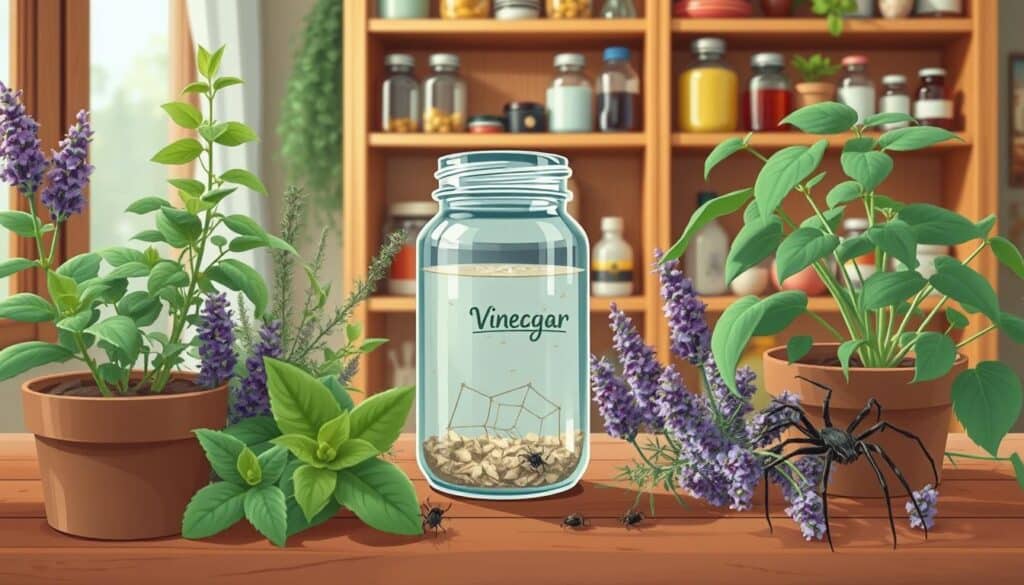
Your kitchen has tools for keeping spiders away without using harsh chemicals. These items make barriers and sprays that spiders don’t like. They are safe for your pets and kids.
Vinegar and Dish Soap Spray Recipes
White vinegar is bad for spiders. Mix it with water in a spray bottle. This homemade spray hurts their legs and makes them leave quickly.
For a milder option, try this dish soap mix:
- 2 cups warm water
- 3 tablespoons Dawn dish soap
- 10 drops lemon essential oil
Use it on webs and corners every week. The soap stops spiders from walking on treated areas.
Using Chestnuts as a Chemical-Free Spider Solution
Chestnuts keep spiders away naturally. Put them by windows, doors, and corners. They last three months and look nice.
Diatomaceous Earth for Long-Term Protection
Diatomaceous earth is safe and lasts a long time. It harms spiders’ outer shells. Sprinkle it in hidden spots. It dries out spiders in 48 hours.
| Application Area | Amount Needed | Reapplication Frequency |
|---|---|---|
| Window frames | 1/8 cup per window | Every 3 months |
| Basement perimeter | 2 cups total | Twice yearly |
| Behind furniture | 1/4 cup per area | Every 6 months |
Eco-Friendly Spider Prevention Through Home Maintenance

Your daily home maintenance can fight off spiders. Simple cleaning and organizing make your home less welcoming to them. You won’t need harsh chemicals or expensive treatments.
Music might keep spiders away. Spiders use vibrations to find food. Your favorite tunes can stop them from hunting. Play music while you clean to keep them away.
Cedar is a natural spider repellent. Use cedar blocks in closets and install cedar hangers. Cedar chips in storage areas also help. This chemical-free spider solution works all month without effort.
Your yard is important too. Keep bushes and trees away from your house. Spiders use plants to get to your walls. Use yellow sodium vapor bulbs for porch lights to attract fewer bugs.
- Play music during cleaning to disrupt spider vibrations
- Use cedar in closets and storage spaces
- Maintain an eight-foot vegetation-free zone
- Switch to yellow outdoor lighting
- Remove debris piles near your home
These habits protect your home from spiders. You don’t need toxic sprays or expensive treatments. Your home stays spider-free with smart prevention.
Non-Toxic Spider Control with Plants and Herbs

Make your home a spider-free zone with plants and herbs. They keep spiders away without using chemicals. Certain scents that humans like, but spiders hate, create a barrier.
Indoor Plants That Repel Spiders Naturally
Some houseplants are great for looks and keeping spiders away. Lavender, peace lilies, and spider plants are top picks. Lavender smells nice to us but not to spiders.
Eucalyptus by windows keeps spiders out. Chrysanthemums have pyrethrin, a natural bug repellent. Put them where spiders are seen.
| Plant Type | Best Location | Spider-Repelling Strength |
|---|---|---|
| Lavender | Bedroom windowsills | Strong |
| Eucalyptus | Near doorways | Very Strong |
| Chrysanthemums | Living areas | Moderate |
| Marigolds | Kitchen windows | Moderate |
Creating Spider-Repelling Herb Gardens
Make a functional herb garden for your kitchen. Use spearmint, peppermint, and lemon balm near doors. These herbs keep spiders away.
Group rosemary, thyme, and oregano for a strong scent. Their smell keeps spiders out.
Strategic Placement of Mint and Basil
Where you put herbs matters. Put basil in the kitchen to keep other bugs away. Mint in the bathroom fights moisture-loving spiders.
Put peppermint in corners where spiders like to hide. Refresh mint leaves weekly to keep the scent strong.
Organic Pest Control Methods and Long-Term Strategies

Smart organic pest control is more than just quick fixes. It’s about making your home a place spiders don’t want to be. You can do this by keeping your home clean and using natural ways to keep spiders away.
Sealing Cracks and Entry Points
Spiders see every small gap as an invitation. Use caulk to seal cracks in walls, around windows, and door frames. Also, put mesh screens over vents and fix torn window screens.
Weather-stripping helps with gaps under doors. Don’t forget to check where cables and pipes enter your home. Regularly check and seal these spots to keep spiders out.
Managing Humidity and Moisture Levels
Spiders love moisture, so keep it low. Avoid overwatering plants and dry wet towels fast. Use dehumidifiers in damp areas.
Fix any leaks quickly. Your goal is to keep humidity below 50%.
Regular Cleaning and Decluttering Routines
Being consistent is key to keeping spiders away. Vacuum webs and egg sacs right away. Store food in sealed containers to stop bugs.
Get rid of old magazines, boxes, and clothes. A clean home is less welcoming to spiders.
Natural Predators and Companion Animals
Cats are great at catching spiders. Some people even keep garden frogs to eat spiders. For quick action, use your vacuum to kill spiders without chemicals.
Conclusion
To keep spiders away, make your home less welcoming than the outdoors. Use peppermint oil sprays and place chestnuts wisely. Cedar blocks in closets and mint and basil at doors help too.
These methods work best together. No one trick can keep spiders away.
Using natural repellents means you need to do them often. But they’re safe for your family and the planet. Spray your homemade solution weekly and seal up any holes.
Keep your home clean and clutter-free. Most spiders are good for controlling pests. But dangerous ones like black widows need a pro.
Spiders are just looking for food and a place to stay. Keep your home smelling good and clean with natural methods. Your home will be pest-free without harmful chemicals.
Going chemical-free takes time and effort. Start with one or two methods and add more as needed. Essential oils, diatomaceous earth, or a mix can work. Be patient for at least a month before seeing results.
Your home can be spider-free and fresh without toxic chemicals. It’s worth the effort.