
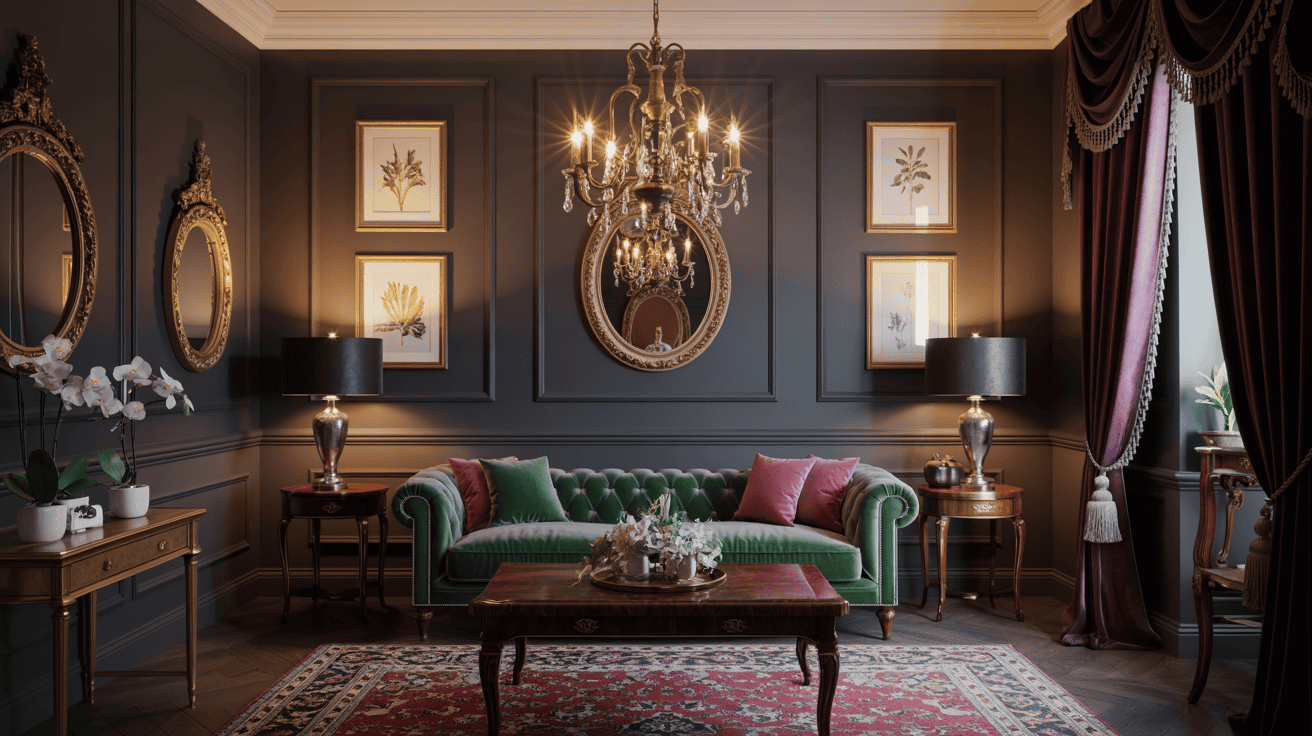
15 Ways to Achieve Moody Elegance with Dark Paints in Modern Victorian Homes
Dark paint can completely change the character of a Victorian-inspired room. Deep navy, forest green, burgundy, charcoal, chocolate brown, and near-black shades can make decorative moldings feel more pronounced, antique furniture more intentional, and an otherwise ordinary room considerably more atmospheric.
This post includes affiliate links. If you make a purchase through them, I may earn a small commission at no extra cost to you. More details here.
But decorating with dark colors is not simply a case of choosing the deepest shade on the paint chart and hoping for the best. Light, undertones, furniture, textiles, and the finish of the paint all influence how the color actually looks once it is on the wall.
The modern Victorian approach works particularly well because it balances old and new. You can pair elaborate architectural details and vintage furniture with cleaner contemporary pieces, then use a rich wall color to bring everything together.
Whether you want to experiment with one dramatic accent wall or embrace a fully enveloping room, these ideas show how to use dark paint while keeping the space layered, comfortable, and beautifully considered.
Quick Guide: Choosing Dark Paint for a Modern Victorian Home
- Deep navy: A versatile choice for living rooms, bedrooms, studies, and dining rooms, particularly with warm wood and brass.
- Forest green: Works beautifully with antique furniture, botanical artwork, leather, dark timber, and traditional moldings.
- Burgundy: Brings warmth and richness to dining rooms, libraries, bedrooms, and smaller atmospheric spaces.
- Charcoal: A useful alternative to pure black when you want drama with a slightly softer finish.
- Chocolate brown: Creates a warm, cocooning backdrop and pairs particularly well with cream, rust, brass, and natural wood.
- Near-black: Best when you want architectural details, artwork, or contrasting furniture to become the focus.
Before you commit: Sample the actual paint in the room and look at it during the morning, afternoon, and evening. A color that appears beautifully muted on a screen or paint card can look surprisingly blue, green, purple, or almost black once your own lighting gets involved.
1. Use Mood Lighting to Enhance Dark Paint
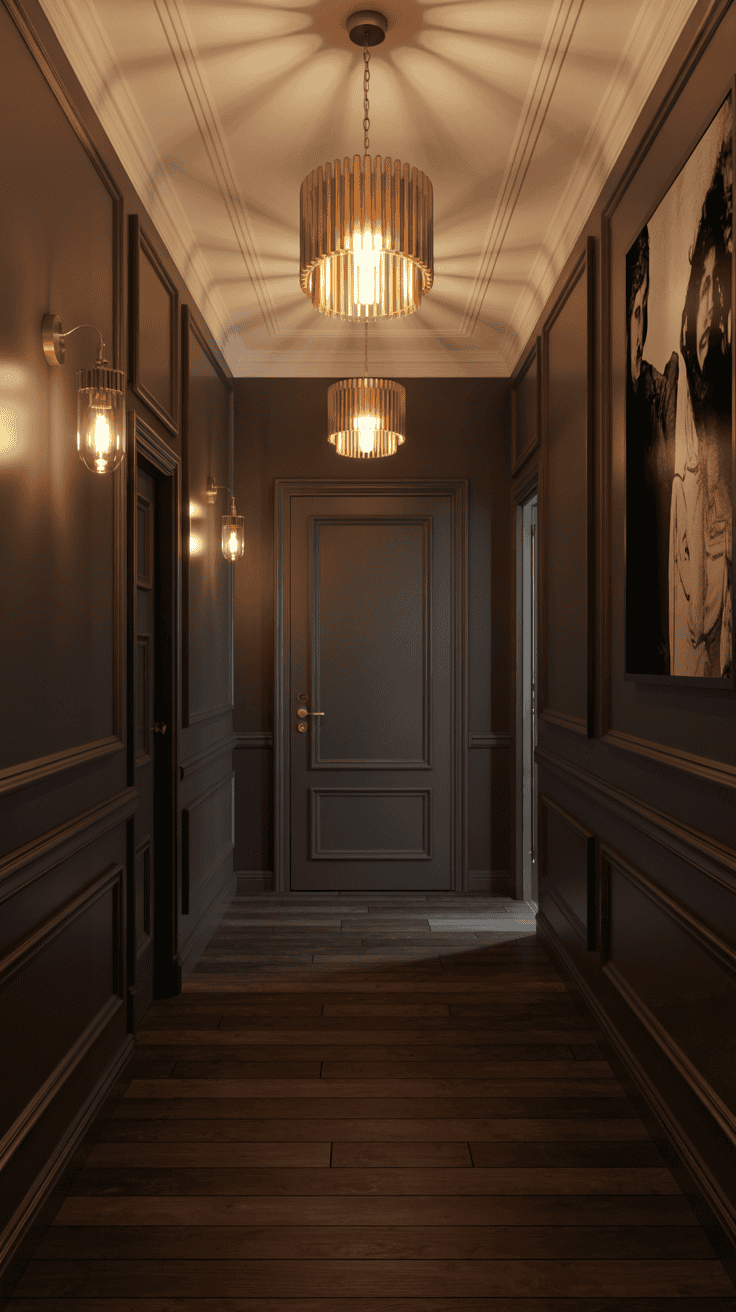
Lighting becomes especially important once you introduce dark walls. Deep colors absorb and reflect light differently from pale ones, so a room that looks dramatic during the day can feel very different after sunset.
Rather than relying entirely on one bright ceiling fixture, build the lighting in layers. A chandelier can provide the decorative Victorian element, while sconces, table lamps, floor lamps, and picture lights create smaller pools of light around the room.
This is particularly effective with dark green, navy, burgundy, and brown because the softer lighting allows the color to shift subtly as you move around the space.
Layer the Lighting
- Use a decorative ceiling fixture for general light.
- Add table or floor lamps around seating areas.
- Use picture lights to highlight artwork.
- Consider suitable wall sconces for hallways and alcoves.
- Choose lighting that complements the undertone of your paint and the way you use the room.
Designer detail: Metallic finishes become particularly effective against dark walls. Antique brass, bronze, and aged gold can introduce small points of reflected light without taking away from the moody atmosphere.
2. Pair Dark Walls With Antique Furniture
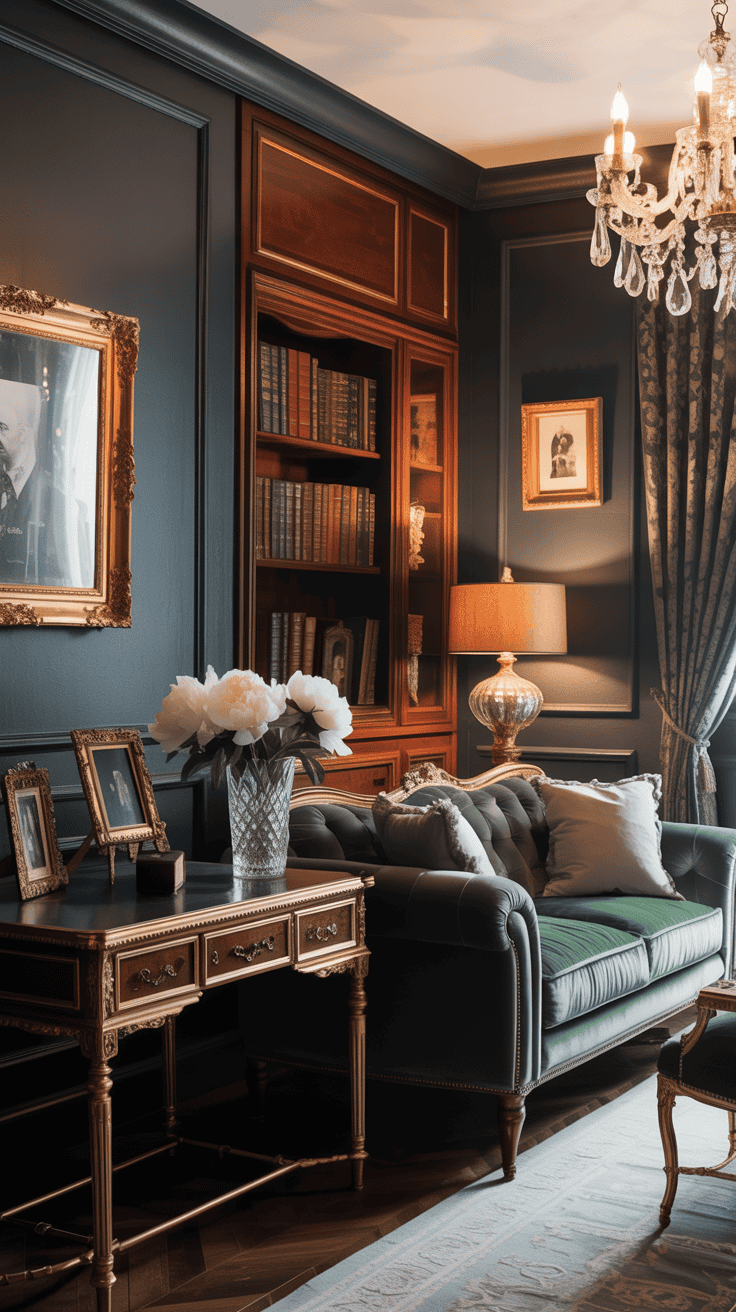
Dark walls make a wonderful backdrop for antique and vintage furniture because they emphasize carved edges, aged wood, curved legs, and decorative silhouettes that can disappear against a busier or similarly toned background.
You do not need an entire room of antiques. One beautiful chest, traditional armchair, old mirror, or wooden side table can provide enough Victorian character when surrounded by simpler pieces.
Dark timber can work against dark walls too. Just introduce contrast elsewhere through lighter upholstery, a rug, lampshades, artwork, or reflective finishes so individual pieces remain visually distinct.
Mix Old and New
- Choose one or two antique pieces as focal points.
- Mix ornate furniture with simpler contemporary shapes.
- Repeat wood tones rather than trying to match them perfectly.
- Use modern lighting or upholstery to keep the room from feeling like a period set.
- Leave some visual space around particularly decorative pieces.
Budget-friendly version: Look for one characterful secondhand piece rather than buying a complete reproduction furniture collection. An old wooden side table or framed mirror can be enough to change the personality of the room.
3. Layer Textiles Against Dark Walls
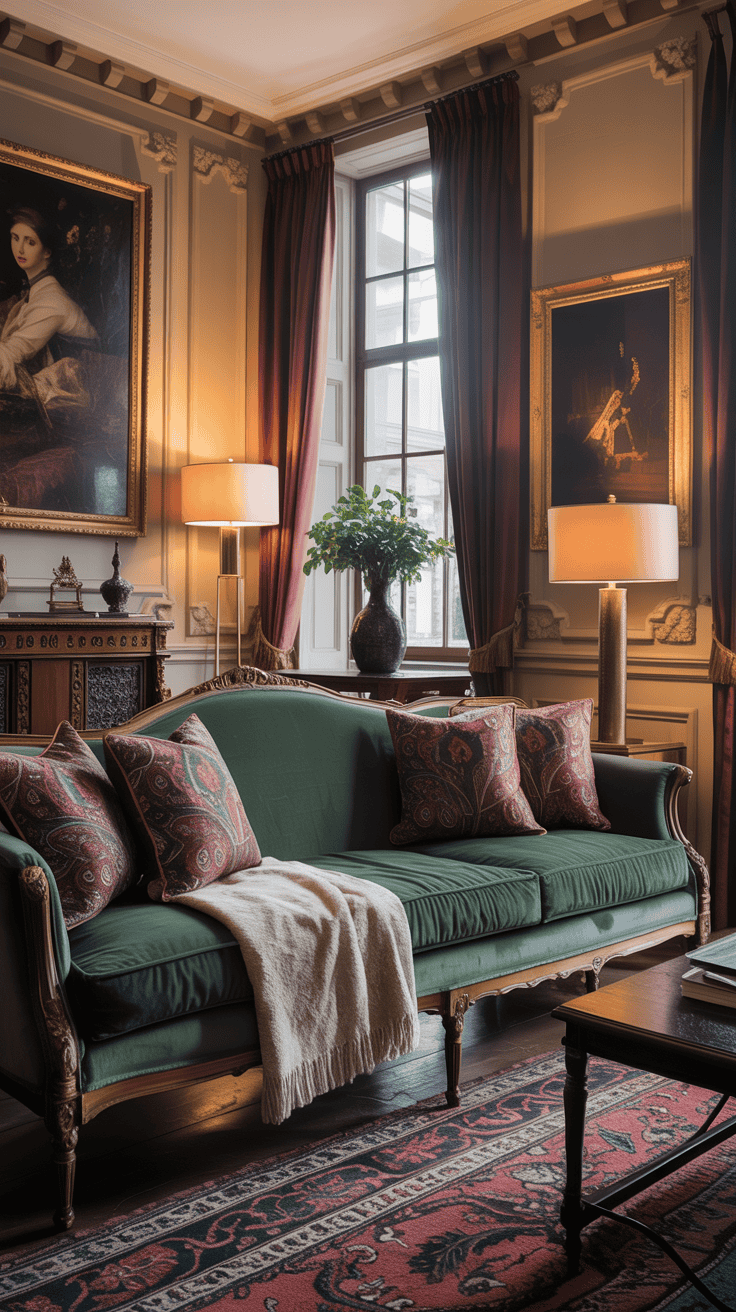
Dark paint gives a room visual depth, but textiles are what stop it from feeling hard or overly formal. Rugs, curtains, throws, cushions, and upholstery introduce softness while giving you an easy way to lighten or warm the palette.
Victorian-inspired interiors are particularly suited to layered fabrics. Velvet can sit beside linen, wool, embroidery, or a traditional patterned rug without everything needing to match.
The modern part comes from editing. Instead of covering every surface in pattern, choose a few strong textiles and give them enough room to be noticed.
A Simple Textile Formula
- Start with one substantial rug.
- Add curtains that soften the wall color.
- Choose one rich texture such as velvet.
- Introduce one traditional pattern through cushions, upholstery, or a throw.
- Leave some fabrics plain to give the patterns breathing room.
Small-space tip: In a compact dark room, use lighter textiles on the largest upholstered pieces and reserve deeper colors for smaller cushions and throws. You can keep the atmosphere without making every surface visually heavy.
4. Create Contrast With Brighter Accents
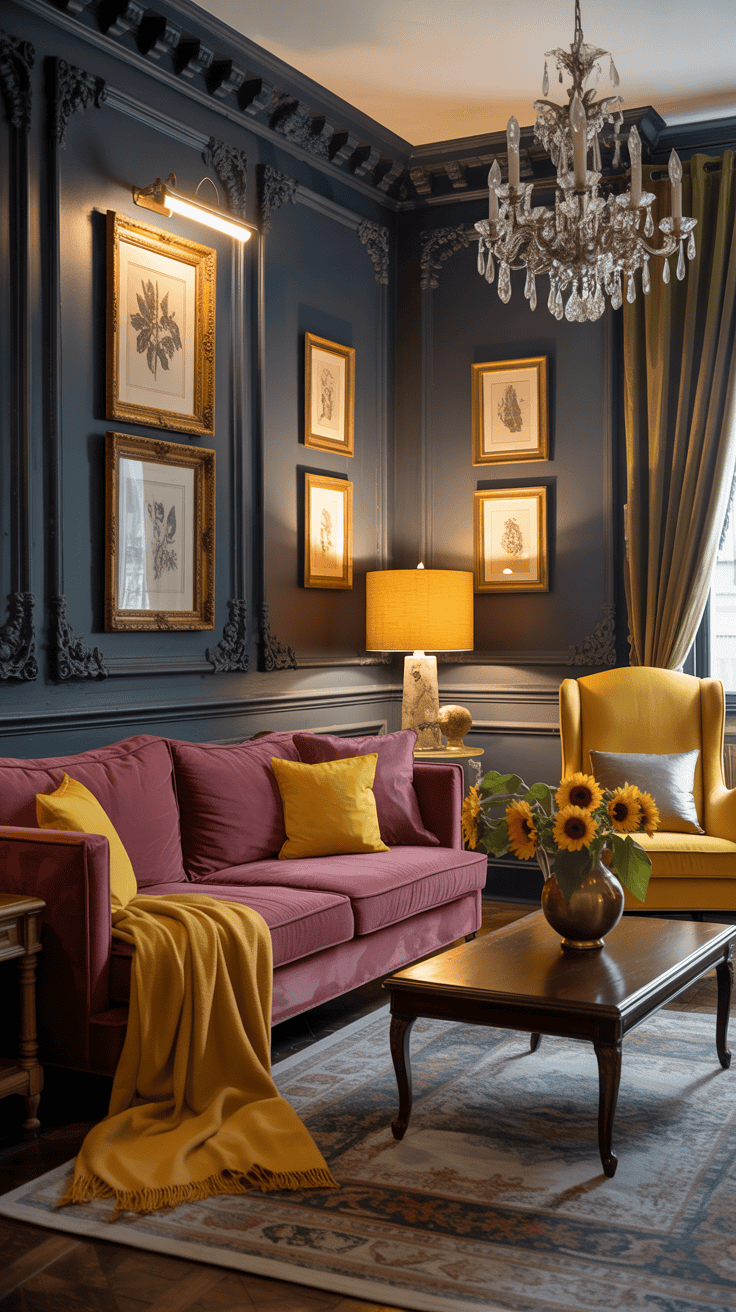
A dark Victorian-inspired room does not have to consist entirely of serious, muted colors. A brighter accent can provide contrast and stop the palette from becoming visually flat.
Ochre and mustard look particularly striking against navy, charcoal, and deep green. Rust and burnt orange bring warmth, while dusty pink can soften very dark walls without making the room feel overly sweet.
You only need a small amount. A chair, lampshade, cushion, artwork, or vase can provide enough contrast to wake up the whole palette.
Dark Paint and Accent Color Pairings
- Navy: Ochre, rust, cream, or warm pink.
- Forest green: Burgundy, blush, tan, or aged brass.
- Charcoal: Mustard, terracotta, ivory, or warm wood.
- Chocolate brown: Cream, dusty blue, muted pink, or ochre.
- Burgundy: Olive, warm cream, muted blue, or antique gold.
Easiest upgrade: If you already have a dark room that feels a little too serious, introduce one contrasting cushion or throw before repainting anything. Sometimes the missing ingredient is simply a small break in the palette.
5. Consider How Natural Light Changes Dark Paint
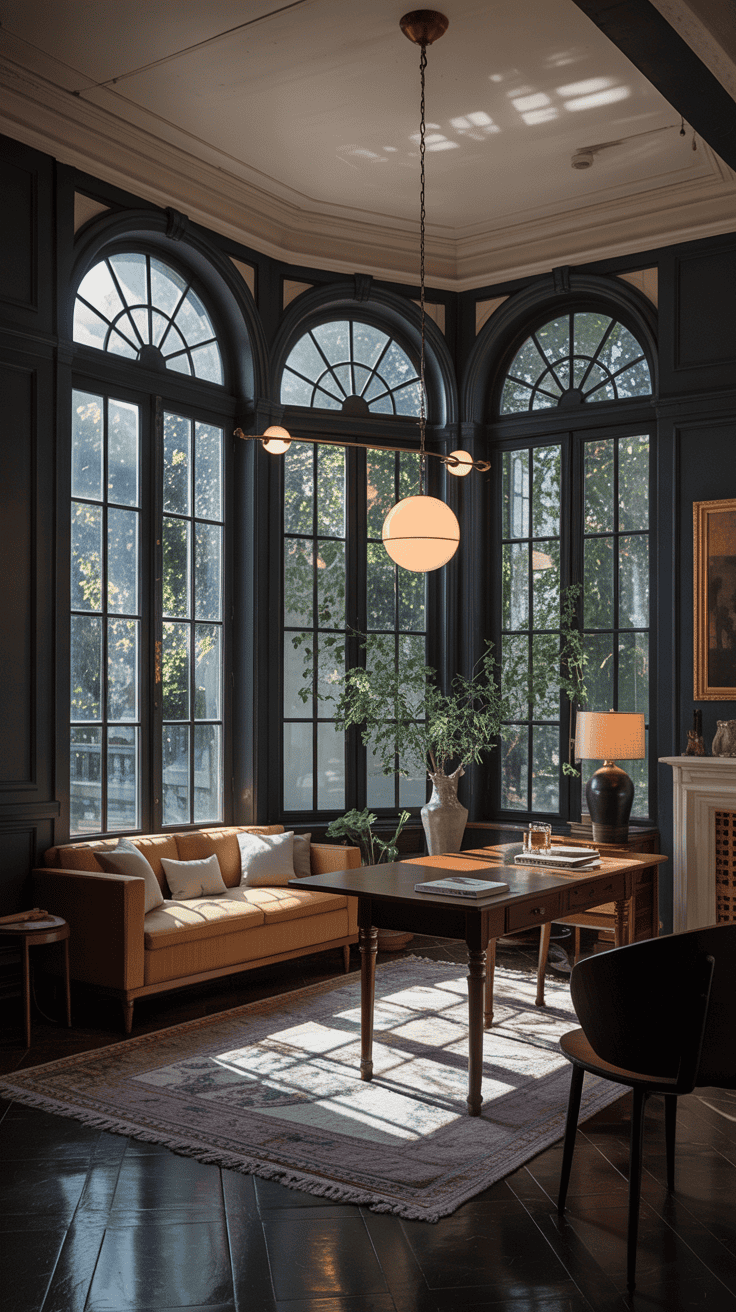
Natural light has a huge influence on how dark paint appears. The same shade can look soft and colorful beside a bright window, then become much deeper and moodier as daylight fades.
This does not mean a dark room automatically needs pale paint. A room with limited natural light can sometimes look wonderfully intentional in a deep shade. The important thing is knowing what effect you want rather than expecting dark paint to behave the same way in every room.
Window direction, surrounding buildings, trees, curtains, and even the colors outside can influence what you see on the wall, which is why testing paint in the actual space matters so much.
Test Before Painting the Whole Room
- Look at the sample in daylight and after sunset.
- Check it beside your flooring and main furniture.
- Notice whether the undertone becomes blue, green, purple, red, or brown.
- Test near both the brightest and darkest areas of the room.
- Consider the paint finish as well as the color.
Why it works: Sampling removes much of the guesswork. Paint charts and screens are useful starting points, but your own room is the only place that can show you how the color will actually behave.
6. Try a Dark Victorian Accent Wall
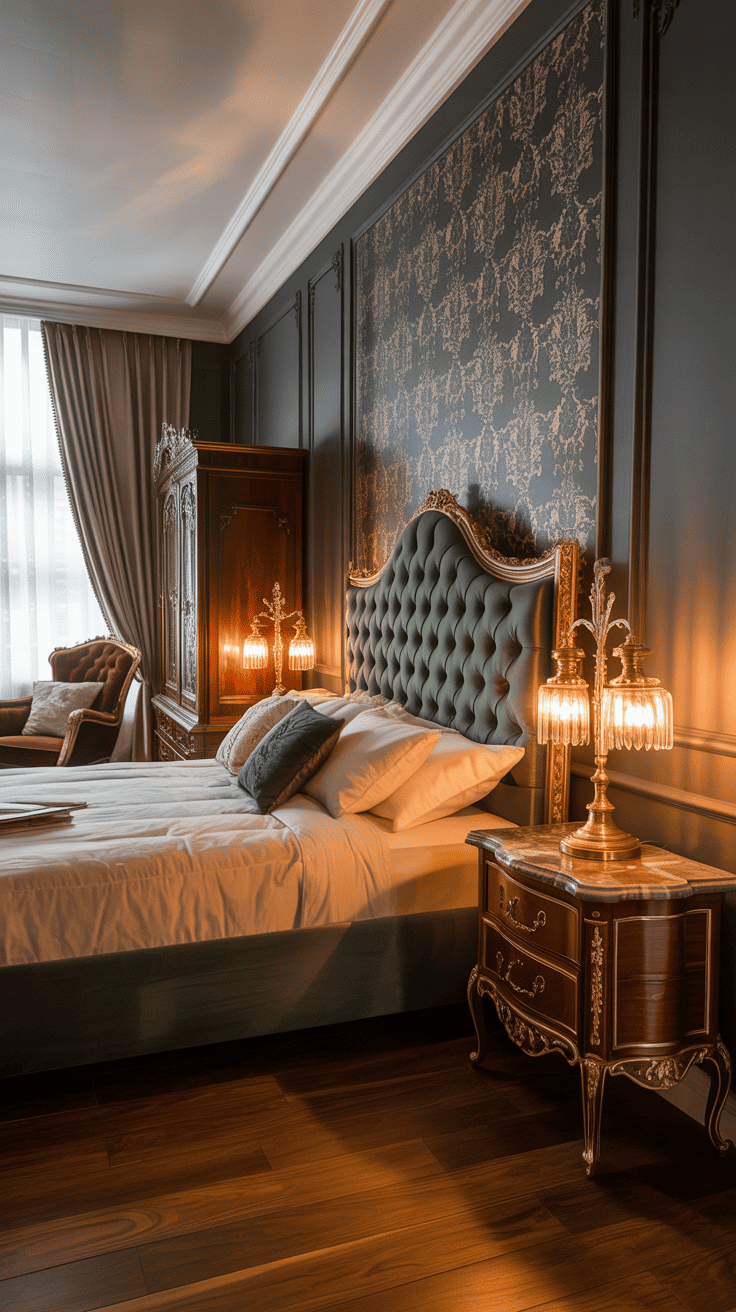
If you like dark interiors but are not ready to paint an entire room, an accent wall can introduce the drama in a more concentrated way.
Choose a wall that already has a reason to attract attention. Behind a bed, fireplace, console table, or substantial piece of furniture usually works better than selecting a wall at random.
Victorian architectural details can make the idea even stronger. Paneling, molding, a fireplace surround, or an alcove gives the dark color natural boundaries and makes the feature feel integrated with the room.
Good Places for a Dark Accent
- Behind an upholstered or wooden bed.
- A fireplace or chimney-breast wall.
- Inside an architectural alcove.
- Behind a console and large mirror.
- On a paneled wall with decorative molding.
Designer detail: Repeat the accent-wall color once or twice elsewhere through artwork, upholstery, or accessories. That small repetition makes the feature wall feel connected to the rest of the room rather than stranded on its own.
7. Add Depth With Textured Dark Finishes
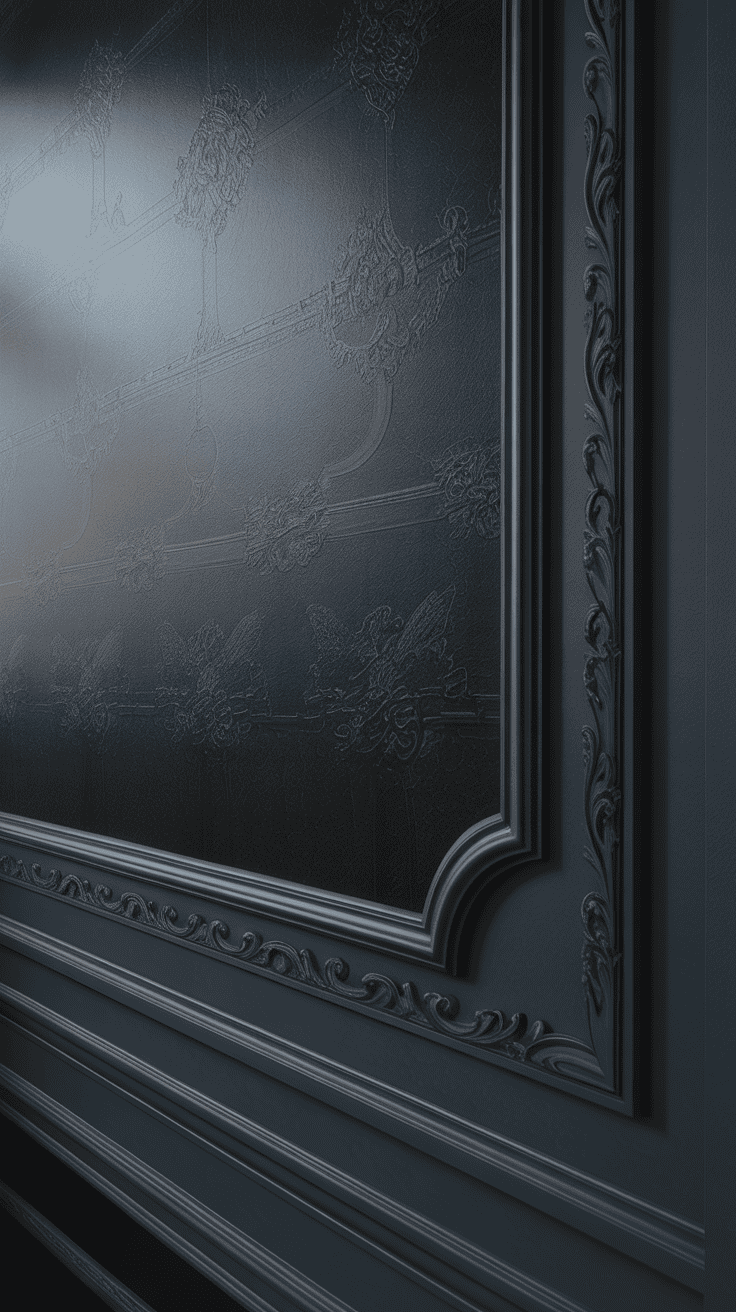
Dark paint becomes particularly interesting when it is combined with architectural texture. Panel molding, decorative trim, tongue-and-groove boards, or other appropriate wall detailing creates shadows and highlights that change throughout the day.
Painting the wall and molding in the same deep color can create a more enveloping effect because the architectural shapes remain visible without breaking the room into lots of contrasting sections.
Paint finish also matters. Flatter finishes can create a softer appearance on walls, while a more durable or subtly contrasting finish on appropriate woodwork can make trim stand out without introducing another color. Choose finishes according to the surface, room conditions, and paint manufacturer’s recommendations.
Where Texture Makes the Biggest Difference
- Decorative wall molding.
- Paneled hallways.
- Fireplace walls.
- Built-in bookcases.
- Period doors and architectural trim.
Most timeless option: Let genuine architectural details provide the texture where you have them. In a newer property, simple molding or paneling can reference Victorian interiors without trying to imitate every historical detail at once.
8. Embrace Deep Victorian-Inspired Hues
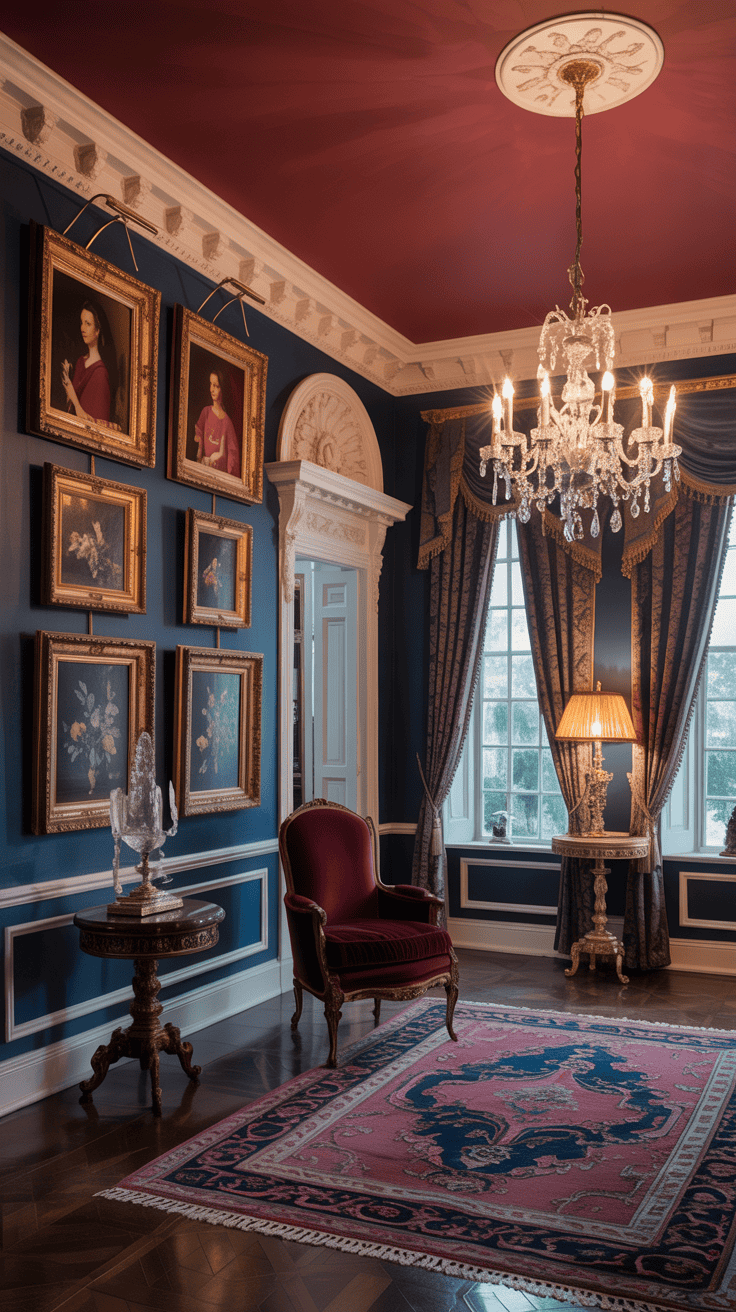
Dark Victorian interiors do not have to mean black walls. Deep blues, wine reds, forest greens, brown-based plums, and rich earthy shades can create just as much drama while giving the room more obvious color.
These shades work especially well with vintage artwork, carved furniture, patterned rugs, and warm metallic finishes. They can also make cream upholstery, pale lampshades, and gilded frames stand out beautifully.
If you are feeling more adventurous, the ceiling can become part of the palette too. A deeper ceiling color can create an enveloping effect, particularly in a dining room, bedroom, snug, or study. If you prefer a lighter result, keep the ceiling pale and allow the walls to provide the drama.
Dark Colors Worth Considering
- Inky navy: Dramatic without being completely neutral.
- Forest green: Rich and particularly effective with wood and brass.
- Wine or burgundy: Warm and atmospheric in evening rooms.
- Deep plum: An interesting alternative to navy or charcoal.
- Chocolate brown: Warm, earthy, and easy to layer with cream.
- Soft black or charcoal: Useful when you want artwork and architectural details to take center stage.
Creates this effect: Using a deep color across a larger area can make the architecture, furniture, artwork, and textiles feel like parts of one complete scheme rather than separate decorative elements. The secret is to balance that depth with enough variation in texture, tone, and lighting.
9. Use Dark Paint to Create a Dramatic Bathroom
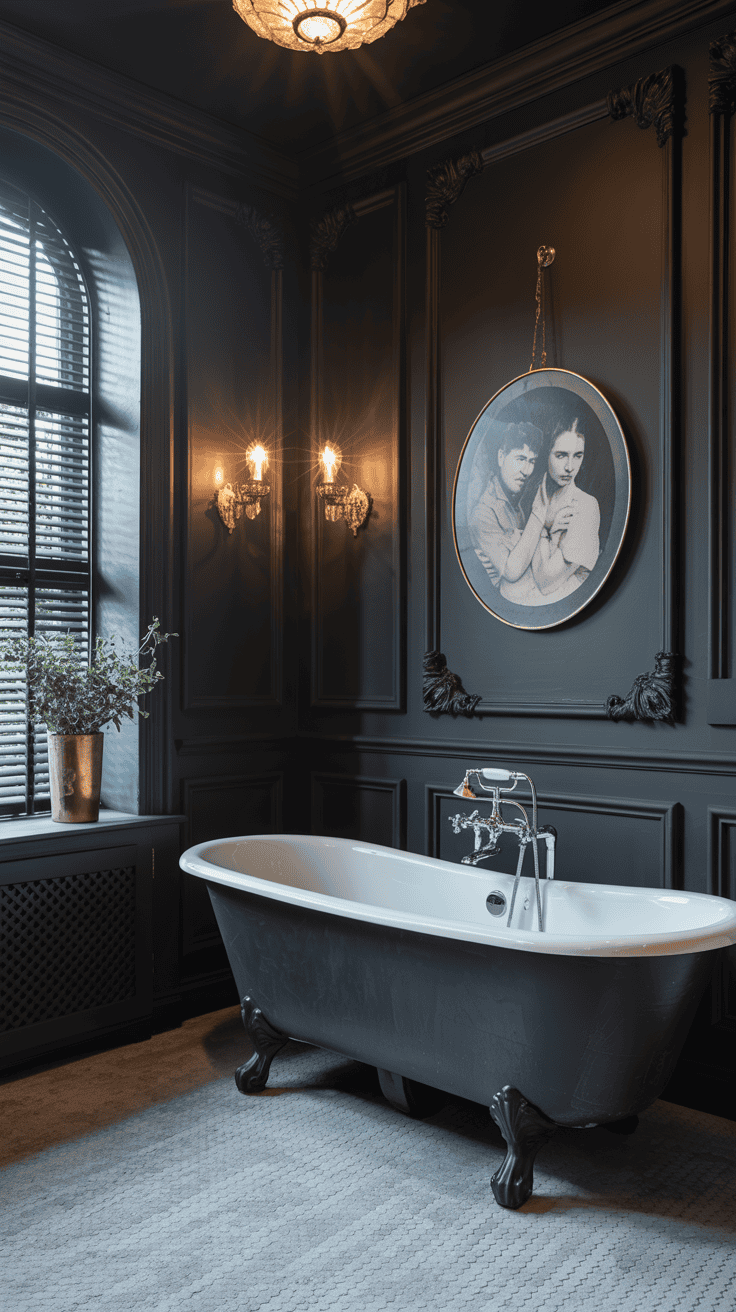
Bathrooms are surprisingly good places to experiment with dark Victorian-inspired colors. Deep green, navy, charcoal, burgundy, and chocolate brown can turn a practical room into something much more atmospheric.
Traditional fixtures work particularly well against dark walls. A freestanding bath, pedestal basin, vintage-style taps, paneled cabinetry, or an ornate mirror immediately becomes more noticeable when surrounded by a deeper color.
Balance is important, especially in a smaller bathroom. White sanitaryware, pale stone, reflective mirrors, metallic fixtures, and good lighting can provide contrast without taking away from the moody effect.
A Simple Dark Victorian Bathroom Formula
- Choose one deep wall color.
- Keep the bath, basin, or other large fixtures lighter for contrast.
- Add an ornate or traditionally shaped mirror.
- Introduce brass, nickel, chrome, or another considered metal finish.
- Use several appropriate light sources rather than relying on one dim fixture.
Practical detail: Bathrooms need paint and finishes suitable for their conditions. Check the manufacturer’s recommendations for moisture resistance, ventilation requirements, surface preparation, and where the product can safely be used.
10. Highlight Victorian Architectural Details With Dark Paint
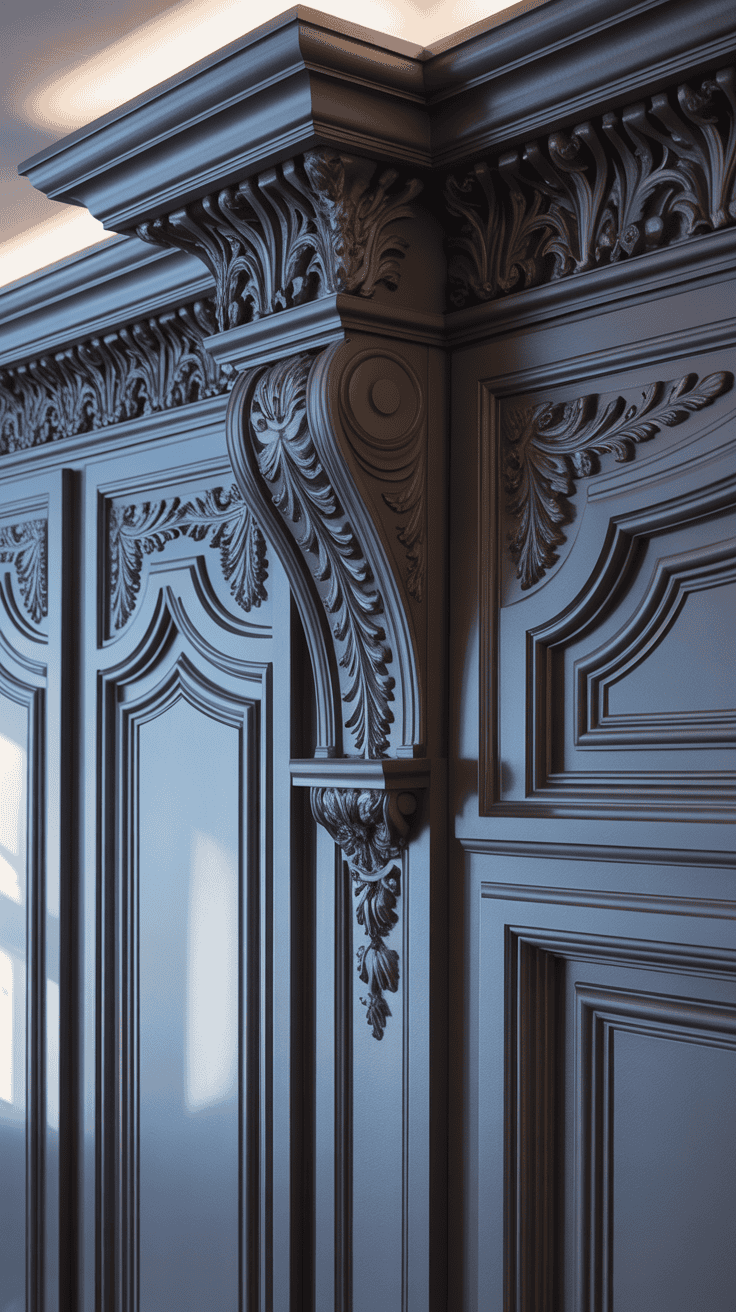
If your home has decorative moldings, ceiling roses, paneled doors, picture rails, cornices, or an ornate fireplace, dark paint can help make those details much more noticeable.
You can create contrast by keeping the trim lighter than the walls, but that is not the only option. Painting walls and architectural details in the same deep color can produce a sophisticated, enveloping look while allowing shadows to reveal the shape of the molding.
Which approach works best depends on how much contrast you want. Pale trim creates a sharper, more traditional division, while tonal or color-drenched schemes tend to feel quieter and more contemporary.
Choose Your Level of Contrast
- Dark walls + white trim: Crisp and architectural.
- Dark walls + cream trim: Softer and warmer.
- Dark walls + tonal trim: Subtle and layered.
- One color across walls and woodwork: Dramatic and enveloping.
- Dark woodwork + lighter walls: An interesting way to reverse the usual contrast.
Designer detail: Before painting original period woodwork or architectural features, consider their condition and significance. Sometimes restoration or preserving an existing finish is more appropriate than covering it.
11. Create a Cozy Dark Victorian Home Office
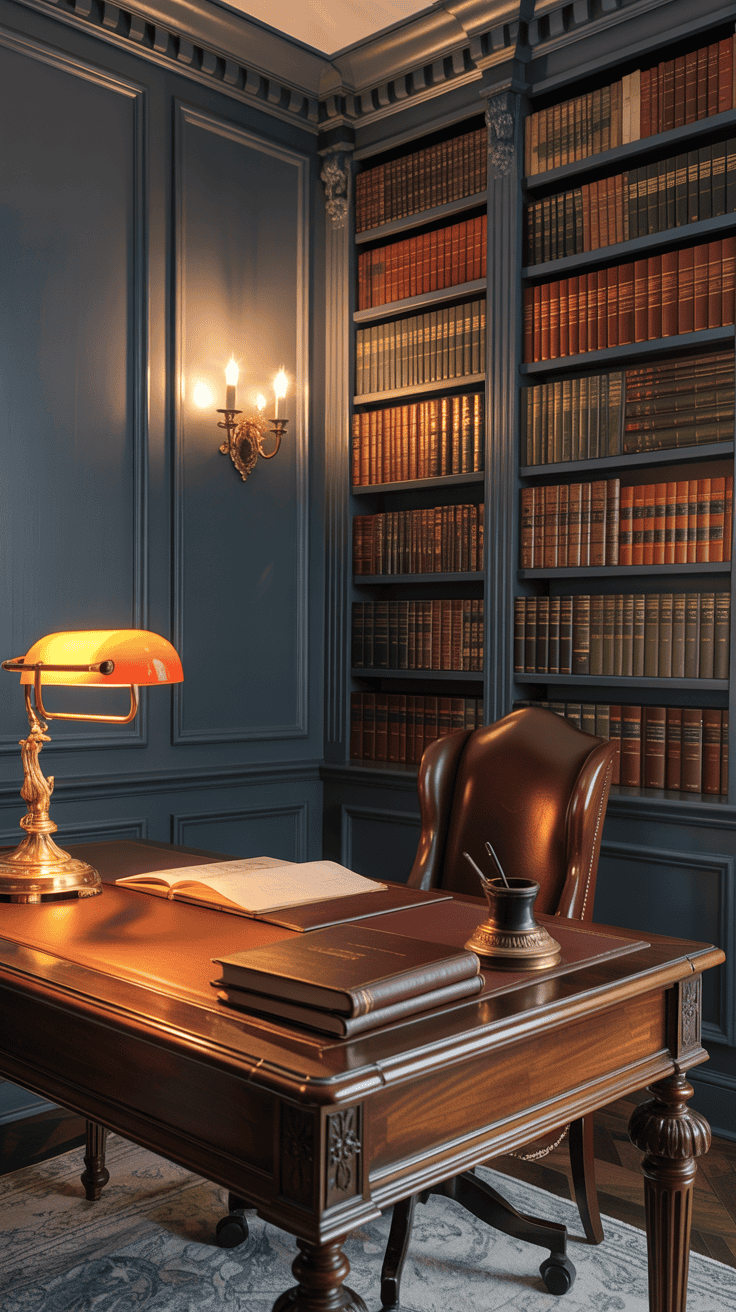
A study or home office is one of the easiest rooms in which to embrace a darker palette. Bookcases, timber furniture, framed artwork, and pools of task lighting naturally suit deeper colors.
Rather than choosing a color because it is supposed to create a particular psychological effect, think about how you personally want the room to feel and function. Some people enjoy working in a cocooning dark space; others prefer much brighter surroundings.
Deep green, navy, charcoal, and brown are particularly easy to combine with books and wooden furniture. Add a lighter rug, warm desk lamp, or pale upholstered chair if the scheme needs a little contrast.
Build a Dark Victorian Study With
- Deeply colored walls or built-in bookcases.
- A substantial wooden desk.
- Good task lighting at the work surface.
- Books, framed artwork, and a few collected objects.
- A comfortable chair and rug to soften the harder surfaces.
Why it works: Bookshelves naturally create lots of smaller shapes and colors. A dark wall behind them can act as a quiet backdrop rather than introducing yet another competing element.
12. Change Dark Rooms With Seasonal Decor
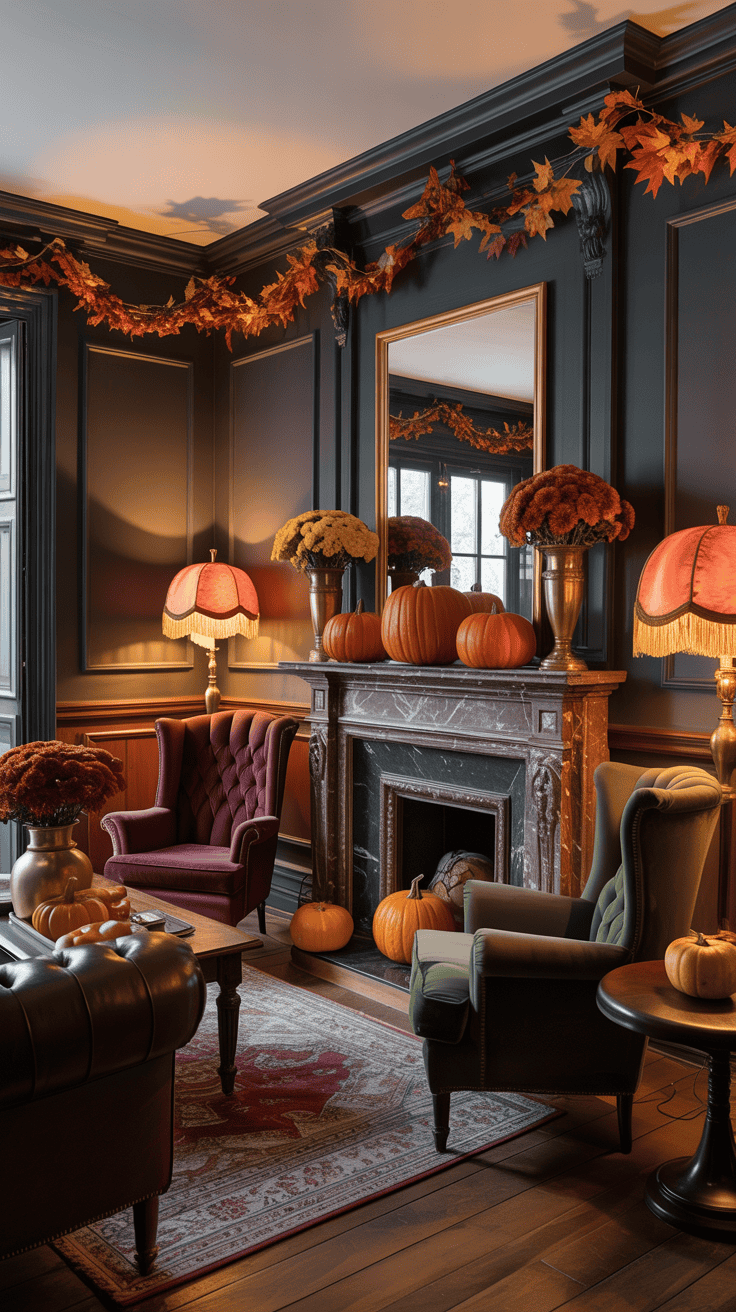
One advantage of a deep wall color is that it can provide a strong backdrop for seasonal changes. Instead of repainting or dramatically altering the room, switch a handful of smaller accessories as the year moves on.
Autumn colors such as rust, ochre, burgundy, and warm brown look particularly rich against dark green, navy, and charcoal. During winter, cream textiles, greenery, candlelight, and warm metallic finishes can create a completely different mood.
Spring and summer do not mean dark walls suddenly stop working. Lighter linens, fresh greenery, pale ceramics, and brighter artwork can lift the room while allowing the deeper background to remain.
Easy Seasonal Changes
- Autumn: Rust, ochre, branches, and earthy textiles.
- Winter: Cream, greenery, warm lighting, and richer fabrics.
- Spring: Soft florals, fresh green, and lighter textiles.
- Summer: Linen-look fabrics, pale ceramics, and simpler surfaces.
Budget-friendly version: Keep the expensive pieces neutral or timeless and change smaller items such as cushion covers, flowers, branches, and table decor. Dark walls can remain the constant backdrop throughout the year.
13. Mix Modern Furniture With Victorian Character
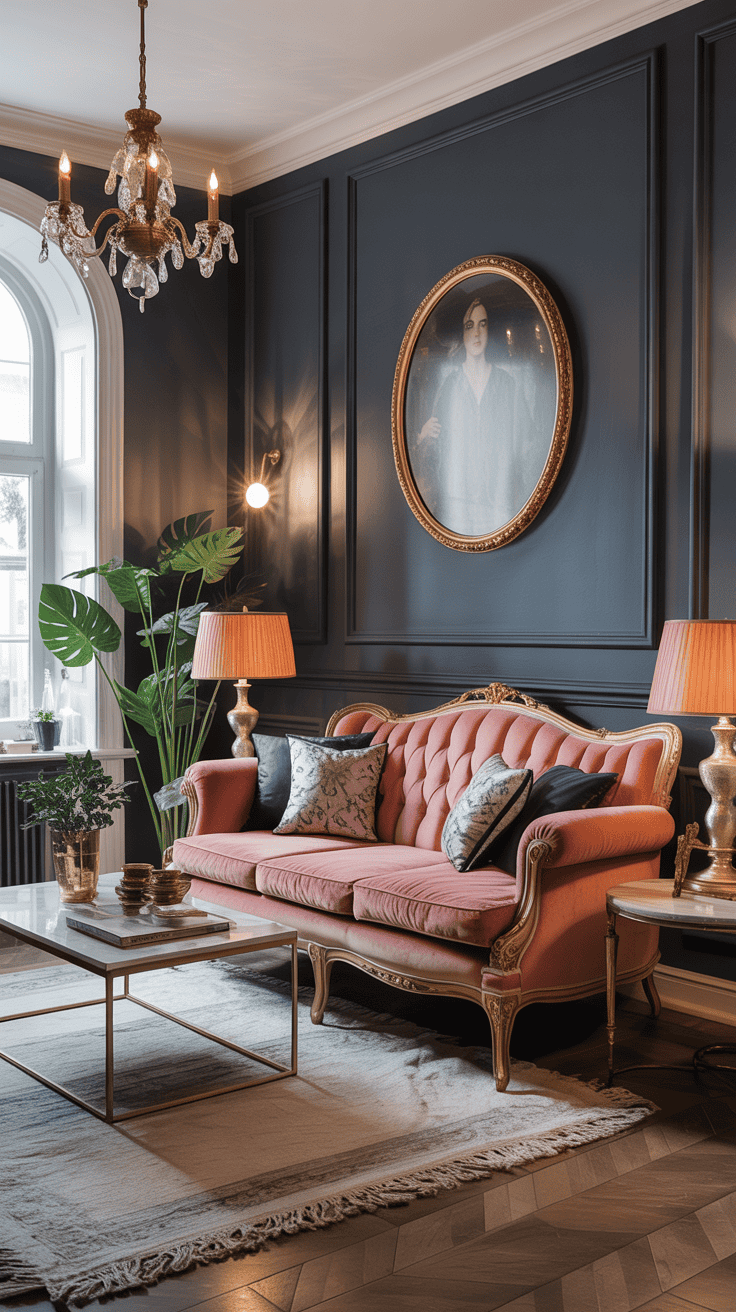
A modern Victorian room is often more interesting when it does not try to reproduce a nineteenth-century interior exactly. Dark paint can provide the historical drama while contemporary furniture keeps the space practical and fresh.
For example, pair ornate wall molding with a clean-lined sofa, an antique chest with a modern lamp, or a traditional fireplace with contemporary artwork. The contrast allows both styles to stand out.
The easiest way to keep the combination coherent is to repeat something across old and new pieces. That might be a color, wood tone, metal finish, curved shape, or fabric.
A Simple Old-and-New Formula
- Choose one strong Victorian feature.
- Add one or two genuine or vintage-inspired pieces.
- Keep the largest upholstered furniture relatively simple.
- Repeat one metal or wood finish around the room.
- Use artwork to bridge traditional and contemporary elements.
Most timeless option: Avoid making every item ornate. Decorative Victorian architecture becomes more noticeable when it is balanced by a few quieter modern shapes.
14. Make a Dining Room Feel More Intimate With Dark Paint
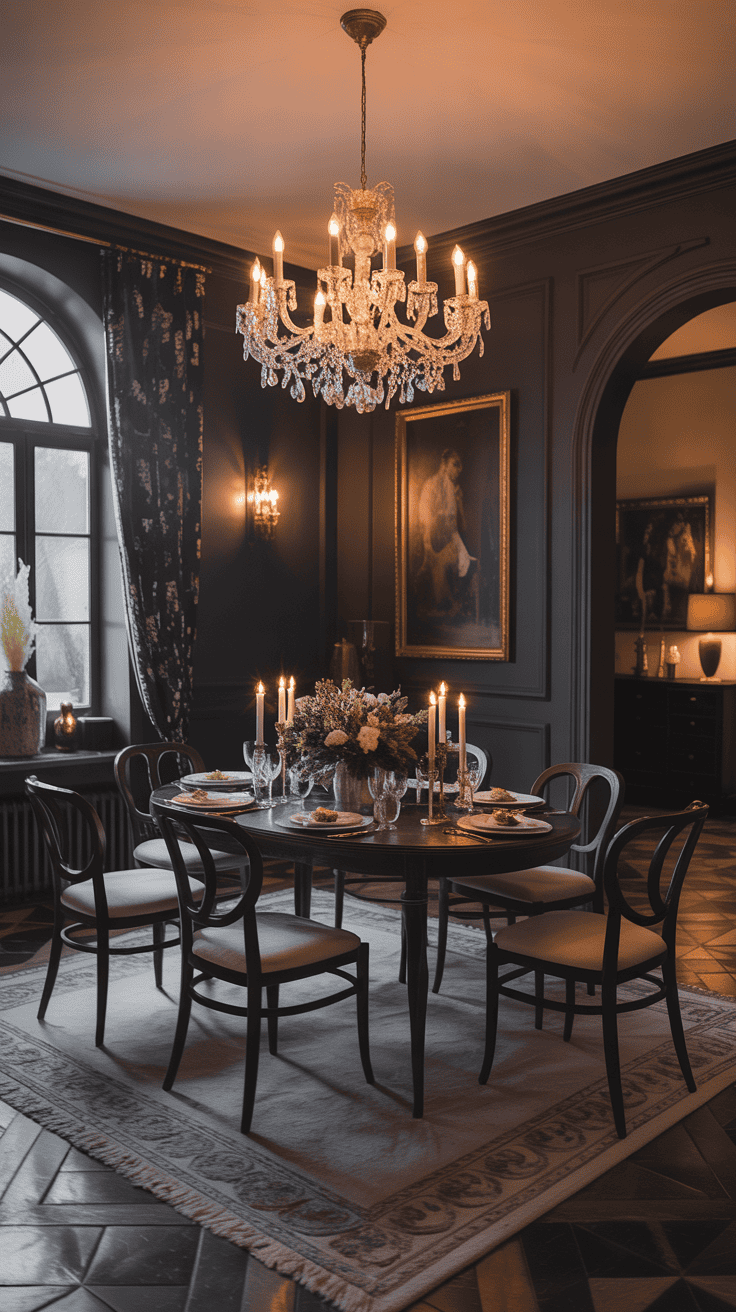
Dining rooms are ideal for experimenting with deeper colors because they are often used most when artificial lighting becomes part of the atmosphere. Navy, burgundy, dark green, chocolate brown, and charcoal can all create a striking backdrop for a dining table.
A chandelier or pendant over the table helps define the center of the room, while wall lights, lamps, or other appropriate secondary lighting can soften the edges of the space.
Then use the table itself to introduce contrast. Warm timber, pale linen, glassware, candles, ceramics, and metallic details all become more noticeable against darker surroundings.
Create a Layered Dining Room
- Use a deep wall color as the backdrop.
- Center the lighting over the dining table.
- Introduce warm wood or lighter upholstery.
- Add a rug if practical for your dining space.
- Use mirrors or artwork to break up large expanses of dark wall.
Easiest upgrade: If the room already has dark walls, changing the lampshade or pendant and adding lighter table linens can alter the evening atmosphere without touching the paint.
15. Use Dark Walls to Create a Gallery Effect
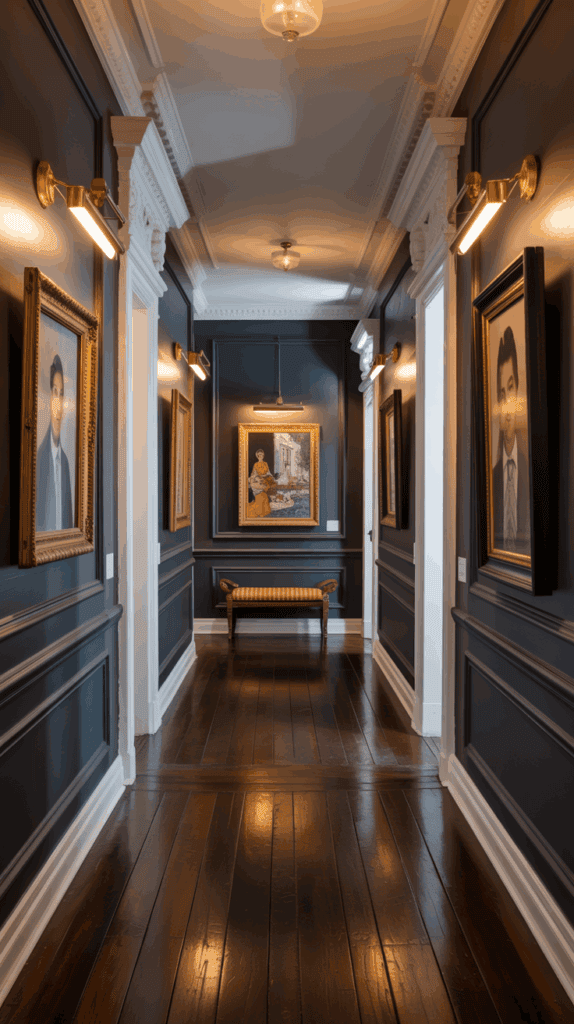
Dark walls can make artwork look wonderfully deliberate. Rather than disappearing into a pale background, paintings, prints, photographs, and gilded frames can become the main decorative feature of the room.
This works particularly well in hallways, staircases, studies, and living rooms where you have enough uninterrupted wall space to create a gallery arrangement.
You can mix frame styles for a collected Victorian feel or use more consistent frames for a cleaner modern interpretation. Either way, leave enough space between pieces for individual works to remain visible.
Create a Dark-Wall Gallery
- Mix vintage landscapes, portraits, botanical prints, and contemporary pieces.
- Use brass or gilded frames for warmth.
- Add black or dark wood frames to quiet the arrangement.
- Include different artwork sizes rather than making everything identical.
- Consider suitable picture lighting for important pieces.
Designer detail: Artwork containing a small amount of the wall color can help connect a gallery arrangement to the room, while cream mounts, pale areas of artwork, or metallic frames provide useful contrast.
Best Dark Victorian Paint Colors by Room
There is no single dark shade that works in every home, but certain color families lend themselves particularly well to different spaces. Use these as a starting point, then test actual samples in your own lighting.
- Living room: Forest green, inky navy, charcoal, chocolate brown, or muted plum.
- Bedroom: Deep blue, warm burgundy, dark olive, aubergine, or soft charcoal.
- Dining room: Wine red, dark green, chocolate brown, navy, or near-black.
- Home office or study: Library green, navy, brown, charcoal, or deep blue-green.
- Hallway: Deep green, navy, charcoal, or a warm near-black, balanced with appropriate lighting.
- Bathroom: Navy, dark green, charcoal, or deep blue-gray using a paint system appropriate for the room conditions.
Remember: The name on the paint tin matters far less than the undertone. Two colors described as “charcoal” can behave completely differently once one leans blue and the other brown.
You Might Also Like
How to Use Dark Paint Without Making the Room Feel Flat
The biggest challenge with a dark room is not necessarily making it look smaller. It is preventing large areas of similar color from losing definition. The solution is to introduce variation through texture, shape, lighting, and tone.
- Vary the textures: Combine velvet, wood, metal, glass, wool, ceramics, and smoother painted surfaces.
- Add lighter moments: Cream upholstery, pale lampshades, artwork, or a lighter rug can provide visual relief.
- Use reflective details selectively: Mirrors, brass, glass, and polished hardware can catch both natural and artificial light.
- Layer the lighting: Combine general, task, and accent lighting according to the needs of the room.
- Give furniture some separation: Avoid having every major piece exactly match the depth and undertone of the walls.
- Use architectural detail: Moldings, paneling, bookcases, and fireplaces give a dark color different surfaces on which to play.
- Leave some breathing room: Dark Victorian style can be richly layered without every wall and tabletop being completely filled.
Small-space tip: A small room does not automatically need pale walls. If you love a dark color, use it deliberately and balance it with good lighting, appropriately scaled furniture, and enough contrast to keep individual elements visible.
Final Thoughts
Dark paint and Victorian-inspired interiors are natural partners, but the most successful rooms are not dark simply for the sake of drama. They use deeper color to emphasize architecture, provide a backdrop for artwork and furniture, and create a stronger sense of atmosphere.
You can start cautiously with an accent wall or painted bookcase, or take the color across the entire room for a more enveloping effect. Neither approach is automatically better—the right choice depends on the room, its light, and how you want it to feel.
Mix those deeper walls with beautiful lighting, tactile fabrics, vintage pieces, modern furniture, and enough contrast to let every detail breathe. That is where modern Victorian style becomes particularly interesting: historic character without making your home feel frozen in another century.
Shop the Moody Victorian Look
Pick a category to see what’s behind each idea above.
As an Amazon Associate I earn from qualifying purchases. Prices and availability can change.