

Green Cleaning Products: Sustainable Solutions for a Clean Home
Ever wonder why that “natural” cleaner costs twice as much but seems to work half as well? You’re not alone in this frustration.
The cleaning aisle is full of confusing labels and bold promises. Traditional cleaners fight grime well but have toxic chemicals that harm us and the planet. Green cleaning products offer a better choice.
Here’s the truth you need. Not all eco-friendly products live up to their claims. Some just put a leaf logo on their bottle.
The EPA’s Safer Choice Program helps find real eco-friendly cleaning supplies. These products use biodegradable ingredients and avoid harsh chemicals. They also help fight plastic waste in our oceans.
This guide helps you find sustainable solutions that work in real homes. It cuts through the marketing noise.
Key Takeaways
- Not all products labeled “natural” or “eco-friendly” meet strict environmental standards
- The EPA’s Safer Choice Program provides reliable guidelines for identifying truly sustainable options
- Traditional cleaners often contain toxic chemicals that harm both health and the environment
- Biodegradable ingredients break down naturally without polluting waterways
- Effective eco-friendly alternatives can reduce plastic waste and chemical exposure
- Reading beyond marketing claims helps you find products that deliver real results
What Are Green Cleaning Products?
When you look at cleaning products, you see many with “natural” and “eco-friendly” labels. But not all of these claims are true. True green cleaning products really help the environment and your health.
Let’s find out what makes a cleaning product truly green. You should know what you’re using at home.
Definition and Ingredients
Natural cleaning solutions use ingredients that are safe for the planet. They use coconut-based surfactants instead of chemicals from oil. They also use essential oils instead of synthetic fragrances.
The ingredients are like things you find at a farmer’s market. You’ll see citrus extracts, plant-based enzymes, baking soda, and vinegar. These ingredients are just as effective but don’t harm the environment.
But, terms like “natural,” “green,” and “non-toxic” aren’t checked by any government. Companies can use these labels without proof. Smart shoppers check the ingredients instead of just the labels.
Good eco-friendly cleaning products don’t have harmful chemicals. They avoid VOCs, ammonia, bleach, and synthetic dyes. They also don’t have phosphates, which harm waterways.
Importance of Eco-Friendly Solutions
Why choose eco-friendly cleaning products? They’re better for your health. Traditional cleaners can make you sick. Your family breathes in these chemicals when you clean.
Kids and pets are more at risk because they touch surfaces and then put their hands in their mouths. This can make them sick.
Using these products also helps the environment. They don’t harm waterways like traditional cleaners do. Biodegradable formulas break down naturally, keeping water clean.
Many green cleaning brands use less packaging. This means less plastic waste. It’s good for the planet.
Benefits of Using Green Cleaning Products
Non-toxic cleaning supplies change things in big ways. Switching to sustainable cleaning products means you’re choosing health, safety, and the planet. It makes cleaning better for you and the Earth.

Healthier Indoor Air Quality
Traditional cleaners harm your home’s air. They release harmful gases that stay in your air for days. These gases can make you sick and hurt your breathing.
Green cleaners avoid these bad chemicals. They use plants to clean without harming your air. You’ll feel better right away, without that strong smell.
This is key for families with breathing problems. Clean air means better sleep and fewer allergies. It makes your home healthier.
Reduced Toxic Exposure
Regular cleaners have many harmful chemicals. These can make you sick and upset your hormones. They’re bad for your body over time.
Kids and pets are most at risk. They touch and play on surfaces you’ve cleaned. Their bodies can’t handle these chemicals well.
Non-toxic cleaning supplies are safe. They use natural things like citrus and plants. Your family can play safely on clean floors.
Environmental Impact
Throwing away regular cleaners pollutes water. They harm fish and damage water systems. They also mess up septic systems.
Sustainable cleaning products are better. They break down naturally and don’t harm water. Your cleaning helps the planet, not hurts it.
Many green brands also cut down on waste. They offer refillable containers and concentrated formulas. This reduces plastic waste and helps the Earth.
| Benefit Category | Conventional Cleaners | Green Cleaning Products | Health Impact |
|---|---|---|---|
| Indoor Air Quality | Release VOCs, ammonia, bleach | Plant-based, no toxic fumes | Reduced respiratory issues |
| Toxic Exposure | Synthetic chemicals, allergens | Natural ingredients, safer formulas | Lower risk of skin/health problems |
| Environmental Effect | Water pollution, septic damage | Biodegradable, eco-friendly packaging | Cleaner ecosystems, less waste |
| Long-term Safety | Chemical buildup over time | Sustainable, renewable ingredients | Better health outcomes |
Popular Types of Green Cleaning Products
Today, green home cleaning products are everywhere. You can find all-purpose cleaners and special treatments for surfaces. No more choosing between clean and green.
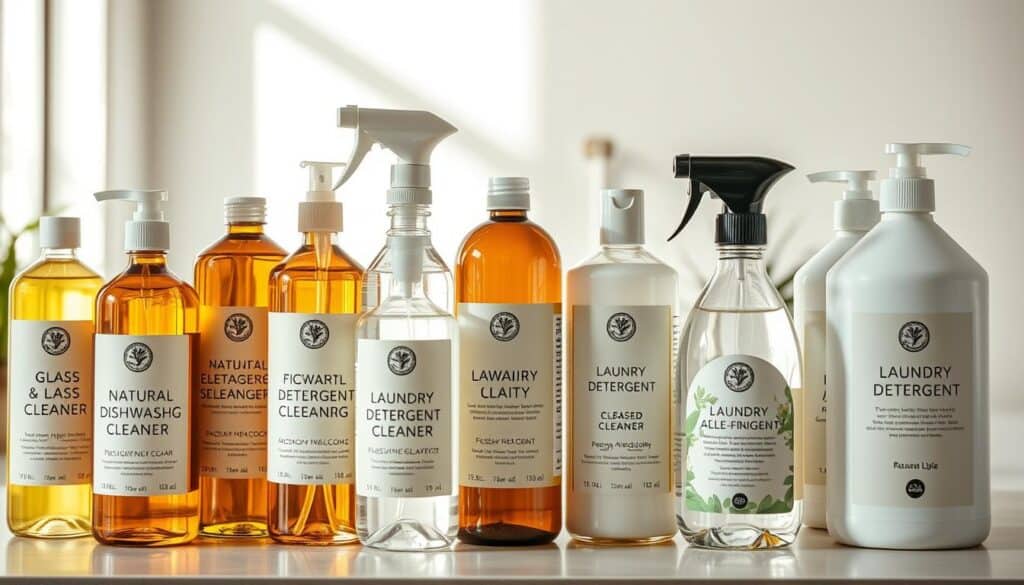
All-Purpose Cleaners
All-purpose cleaners are essential. Dr. Bronner’s makes them with Castile soap. They clean countertops and bathroom tiles well.
These cleaners use natural ingredients like coconut oil and essential oils. They remove dirt without leaving harmful chemicals. You can use one bottle for your whole house. It’s easy to clean your home.
Dishwashing Liquids
Dishwashing liquids have improved a lot. Mrs. Meyer’s makes them with biodegradable ingredients. They cut grease and are gentle on your hands and the planet.
They smell like gardens, not factories. Using them is a pleasure. You can find eco-friendly cleaning products that work well.
Laundry Detergents
Laundry detergents have seen big changes. Tru Earth made ultra-concentrated strips to get rid of plastic jugs.
Dropps was the first to make detergent pods. They use compostable packaging. These formulas clean clothes well and are good for the planet.
Surface Wipes
Surface wipes are a challenge in green cleaning. But, AIRNEX makes biodegradable alternatives that break down.
These wipes decompose naturally. They don’t harm the planet. You can clean quickly without hurting the environment.
| Product Type | Key Brand | Main Benefit | Best For |
|---|---|---|---|
| All-Purpose Cleaners | Dr. Bronner’s | Versatile Castile soap formula | Multiple surfaces |
| Dishwashing Liquids | Mrs. Meyer’s | Biodegradable surfactants | Grease cutting |
| Laundry Detergents | Tru Earth | Concentrated strips | Plastic-free washing |
| Surface Wipes | AIRNEX | Biodegradable material | Quick cleanups |
Each type has its own benefits. They all meet sustainability standards. The key is to find what works for you without losing quality.
How to Choose the Right Green Cleaning Products
Finding the right chemical-free cleaning supplies is not easy. The cleaning aisle is full of products that say they are “natural” or “eco-friendly.” But not all of them are true. You need to look beyond the packaging to find safe and effective products.
Think of yourself as a label detective. Your job is to find real green products among the fake ones. Luckily, some trusted groups have made it easier. They have created programs that help you choose safer cleaning products.
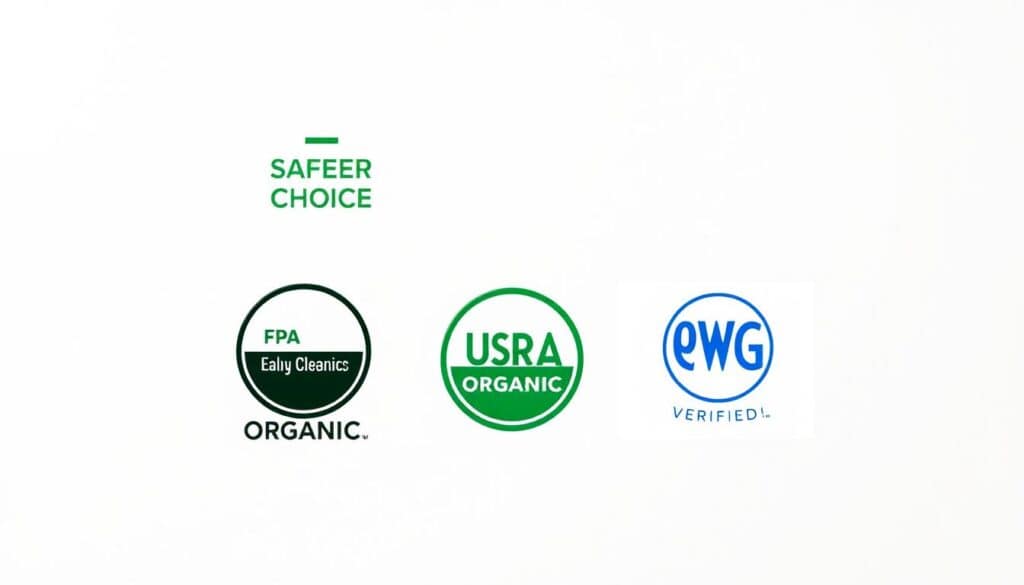
Understanding Certifications
The EPA’s Safer Choice Program is very helpful when shopping for green products. This program checks if products are safe for the environment and our health. If a product has this label, you know it meets strict standards.
The Design for Environment (DfE) label is for products that fight germs. If you need to kill germs, look for this label. It means the product is safe and effective.
The Environmental Working Group (EWG) has a letter-grade system. They rate products from A to F based on safety and environmental impact. Choose products with A and B ratings for the safest options.
Evaluating Ingredients
Shorter ingredient lists are better. You should be able to recognize what’s in your cleaner. Look for natural ingredients like baking soda, which is great for cleaning and removing odors.
Distilled white vinegar is also a great ingredient. It cuts through grease and kills germs naturally. Ingredients like quartz and limestone are gentle but effective. These chemical-free cleaning supplies have been trusted for a long time.
Be careful of synthetic fragrances, artificial dyes, and long chemical names. Remember, if you wouldn’t eat it, don’t use it in your home.
Reading ingredient lists gets easier with practice. Start with home cleaning tips that use natural solutions. Then, learn about safe ingredients. The best green products have a few simple, effective ingredients.
DIY Green Cleaning Solutions
Your great-grandmother’s cleaning tips are back in style. And it’s easy to see why—homemade cleaners are great. Natural cleaning solutions are effective, cheap, and you know what’s in them.
DIY is all about control. You pick every ingredient. No weird chemicals or hard-to-pronounce stuff. Just clean power from your kitchen.
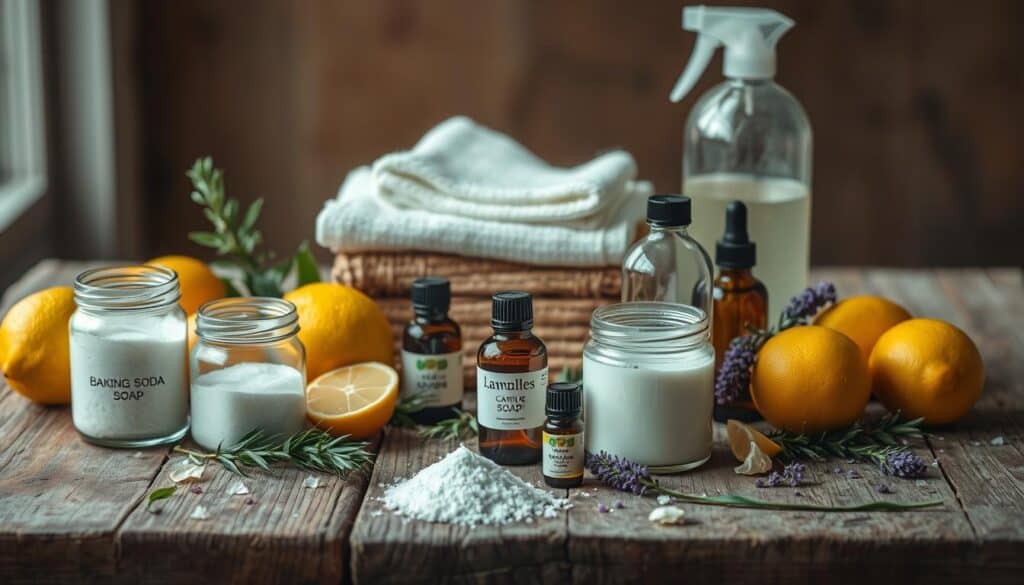
Simple Recipes for Home Cleaners
Three ingredients are key for homemade cleaners. Baking soda, white vinegar, and castile soap can handle most cleaning jobs.
Baking soda and water make a soft scrub. It works on bathtub rings and burnt pans. It gets rid of grease and stains without harm.
White vinegar fights grease and soap scum. It also disinfects surfaces. But don’t use it on marble or granite.
Castile soap and water make a safe cleaner for all surfaces. Add essential oils for a fresh smell and extra cleaning.
| Ingredient | Best Uses | Mixing Ratio | Special Properties |
|---|---|---|---|
| Baking Soda | Scrubbing, deodorizing | 2 tbsp per cup water | Gentle abrasive, neutralizes odors |
| White Vinegar | Glass, soap scum, disinfecting | 1:1 with water | Natural disinfectant, cuts grease |
| Castile Soap | All-purpose cleaning | 1 tbsp per cup water | Plant-based, biodegradable |
| Lemon Juice | Stain removal, brightening | 1/4 cup per cup water | Natural bleaching, fresh scent |
Tips for Effective Cleaning
When using green cleaning products, timing is key. Let your DIY cleaners sit for a few minutes. This lets them work on grime.
Essential oils do more than smell good. Tea tree oil fights germs, and lemon oil cuts sticky stuff. A little goes a long way.
DIY cleaners let you customize. You can change how strong they are for different jobs. You’re not stuck with someone else’s formula.
Also, you’ll save money and cut down on plastic. Your wallet and the planet will thank you.
Comparing Green Cleaning Products Brands
Not all green cleaning products are the same. Some brands really care about the planet. Others just pretend.
Look for brands that do more than just say they’re green. The best ones change how they do business to be better for the planet.
Popular Brands to Consider
Tru Earth changed laundry with their plastic-free strips. They’re a B Corp certified company that got rid of big plastic jugs. Their strips are small but pack a big clean punch.
Puracy makes cleaners that are backed by science. They tell you exactly what’s in their products. Their cleaners are safe for families and pets.
Bon Ami shows that old ways can be best. They’ve been making simple, effective cleaners for over 130 years. Their formulas are effective without harsh chemicals.
ECOS runs on clean energy and does more than that. They remove more carbon than they produce. That’s a big step for the planet.
Ecover uses only renewable energy. They’re B Corp certified and always looking for new ways to be green.
What to Look for in a Brand
Don’t get fooled by fancy words. Look for real certifications. B Corp status and EPA Safer Choice labels mean a lot. They’re hard to get.
Want to know what’s in your cleaners? The best brands list every ingredient. No vague claims here.
Check how they package their products. Good brands use stuff you can recycle or refill. They don’t waste packaging.
Look for brands that care about more than just their products. The best ones pay their leaders less, support fair trade, and use clean energy. They give back to the planet too.
Real green brands change their whole business to be better. That’s true leadership, not just greenwashing.
Reducing Waste with Green Cleaning Products
Using eco-friendly cleaning products means more than just what’s in the bottle. It’s about the bottle itself. The green home cleaning world has seen big changes. These changes help cut down on waste while keeping your home clean.
Smart brands know that true sustainability looks at the whole product life. They think about shipping emissions and how much waste goes to landfills. Every part of the product matters when you want to clean up the environment.
Refillable Packaging
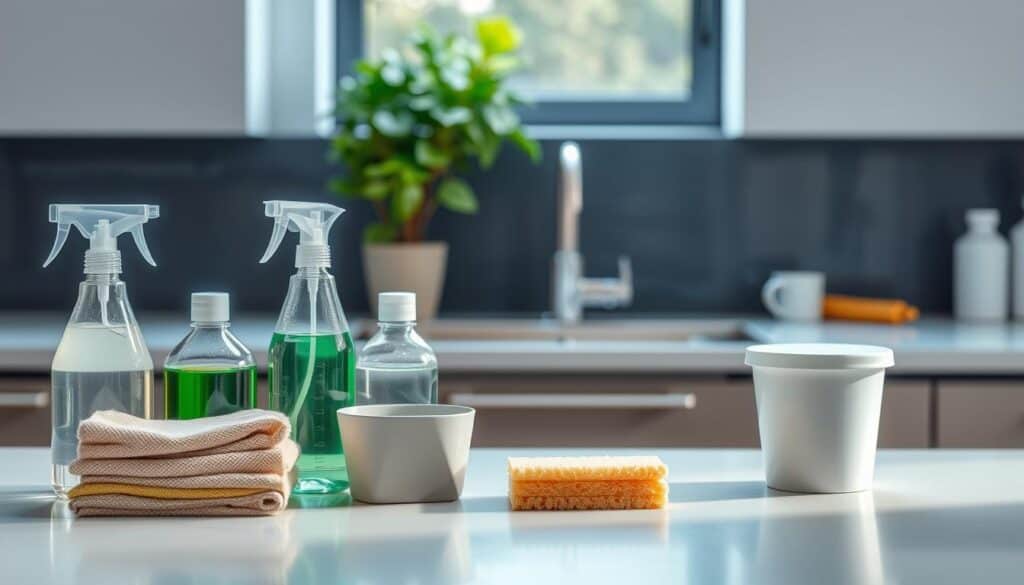
Refillable packaging is changing the game for green home cleaning. Bona has a great system where you can keep the same spray bottle forever.
Just swap in a new cleaning concentrate cartridge when it’s empty. No more throwing away plastic bottles every few weeks. It’s simple and cuts down on plastic waste a lot.
One refillable bottle can replace many single-use containers. This means less manufacturing, shipping, and waste in landfills.
Concentrated Formulas
Concentrated formulas are another big step in eco-friendly cleaning products. Companies like Tru Earth put a lot of cleaning power into tiny, lightweight strips.
Dropps also uses concentrated pods. They cut down on shipping by not sending water across the country. This greatly reduces fuel use and emissions.
These concentrated solutions can cut packaging by up to 90% compared to liquid cleaners. Less packaging means fewer trucks and smaller carbon footprints.
ECOS uses recycled plastic and works to reduce packaging. They know the best package is often none at all—or one you can use many times.
Look for brands that think about packaging as part of the environmental solution. The best green home cleaning products show that cleaning and reducing waste can go together.
Tips for a More Sustainable Cleaning Routine
Changing your cleaning habits means thinking differently about what you use and when. A green cleaning routine is about building systems that work with your life. It’s not about being perfect. With the right approach and organic products, you’ll use less and keep your home clean.
Stop seeing cleaning as a crisis and start seeing it as maintenance. You wouldn’t wait until your car breaks down to change the oil. The same goes for your home.

Creating a Cleaning Schedule
A good cleaning schedule stops those big cleaning days that waste products. Consistency beats intensity every time. Divide tasks into three parts that fit your natural rhythms.
Daily cleaning takes 10-15 minutes and stops big messes. Clean counters, load the dishwasher, and sweep quickly. These small steps make your green products work better.
Weekly deep cleans focus on bathrooms, floors, and busy areas. Your organic products shine here. They tackle grime gently. Monthly tasks cover appliances, baseboards, and hidden spots.
| Frequency | Tasks | Time Required | Products Needed |
|---|---|---|---|
| Daily | Counter wipes, dishes, quick sweep | 10-15 minutes | All-purpose cleaner, microfiber cloths |
| Weekly | Bathrooms, floors, vacuuming | 1-2 hours | Bathroom cleaner, floor cleaner, glass cleaner |
| Monthly | Appliances, baseboards, deep organizing | 2-3 hours | Specialized cleaners, degreasers |
Involving the Whole Family
Make green cleaning a family value, not just one person’s effort. When everyone knows why, they’re more likely to help. Kids enjoy making DIY cleaners and learning about green choices.
Set up cleaning stations in your home. Each area has the right tools and green supplies. This stops overuse and makes cleaning more effective.
Teach by example, not lectures. Show how a microfiber cloth cleans windows with water, or how baking soda tackles stains. When cleaning becomes a life skill, everyone benefits.
The goal is simple: clean well with little harm to the environment. Good tools last, concentrated products do more, and smart planning keeps you ahead of messes.
Common Misconceptions About Green Cleaning
Time to clear up some cleaning myths that have been around too long. These old beliefs keep people in the same cleaning habits. But non-toxic cleaning supplies have changed a lot in the last ten years.
The cleaning world has changed, but many people don’t know it. Let’s sort out what’s true and what’s not. This will help us understand why these myths stick around.
Performance vs. Conventional Cleaners
The biggest myth is that green cleaners don’t work as well. This might have been true a long time ago. But today, natural cleaning solutions are just as good.
Today’s plant-based cleaners are top-notch. Brands like Puracy and ECOS have made cleaners that are just as strong as old ones. But they’re better for you and the planet.
Tests show eco-friendly cleaners work just as well. People who use them are very happy. The science behind green cleaning has caught up and even passed old formulas.
Choosing green doesn’t mean you’re getting less clean. You’re getting the same clean with safer ingredients. This is good for your family and the Earth.
Price Comparisons
The price myth is tricky. Yes, non-toxic cleaning supplies might cost more at first. But the real cost is different.
Things like Tru Earth’s strips or Dropps’ pods clean more for less money. Green cleaners often do more than one job. So, one bottle can replace many old cleaners.
Think about the costs of old cleaners. Health problems, cleaning up the environment, and plastic waste add up. In the long run, natural cleaning solutions are cheaper.
Don’t just look at the price tag. Think about what you’re really paying for. Some green products cost more because they’re made better and ethically.
It’s like comparing fast fashion to sustainable clothing. You’re paying for different values and benefits. Spending on your health and the planet is worth it in the long run.
The Future of Green Cleaning Products
The cleaning world is changing fast. We’re moving from harsh chemicals to plant-based ones. Soon, green cleaning will be smarter, better, and full of new ideas.
Innovations in Sustainable Cleaning
New tech is changing eco-friendly cleaning. Companies like Blueland and Grove Collaborative are leading the way. They offer refill systems that cut out single-use packaging.
Soon, we’ll have enzyme cleaners that keep working long after use. And probiotic formulas that keep surfaces clean naturally.
Smart packaging is also a big deal. It measures exact doses, cutting down on waste and making cleaning better. Some are even using packaging made from farm waste that composts at home.
Trends to Watch in Eco-Friendly Products
Waterless cleaning is becoming popular, mainly in dry areas. These products are strong and don’t need water to work.
The circular economy is key in green cleaning now. Brands are making systems where nothing is wasted. From refillable containers to compostable packaging.
The best part is, sustainable cleaning is for everyone. As it gets more common, it won’t just be for those who care about the planet. The future is about cleaning that works with nature, not against it.