
How to Frame Your Front Door With Flowers
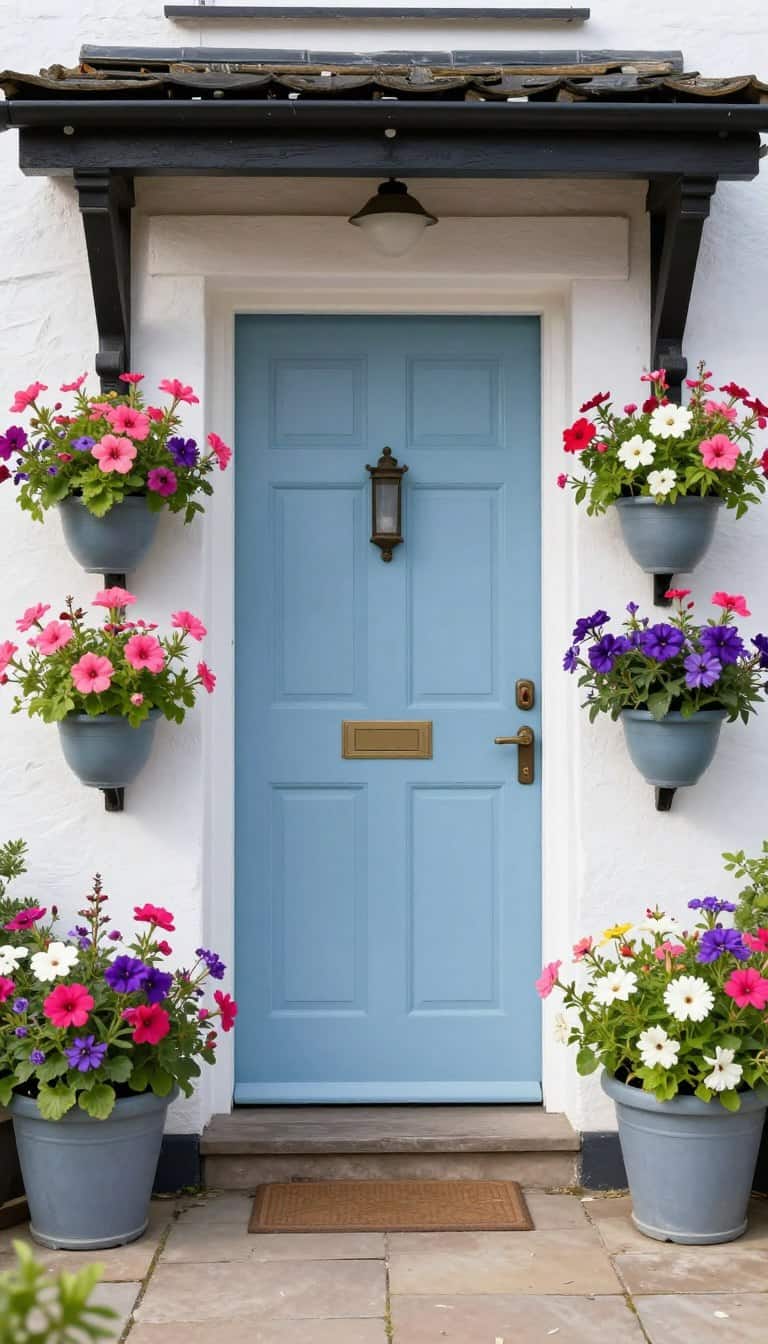
Framing your front door with flowers is one of those small updates that quietly transforms your whole home. It adds warmth, personality, and that someone lives happily here feeling, without repainting, replacing, or overthinking anything. Whether your style leans cottage, classic, or relaxed modern, these ideas help you create a welcoming entrance that feels intentional but easy.
Your front entrance makes the first impression on visitors and sets the tone for your entire home. By thoughtfully framing your doorway with flowers, you create an inviting pathway that draws people in and showcases your personal style before they even step inside.
1. Matching Pots on Either Side for Instant Balance

This is the classic go-to for a reason. Placing matching planters on either side of your front door creates symmetry and makes the entrance feel grounded and cared for. Choose pots that suit your home’s scale—tall urns for grand doorways, lower rounded pots for cottages and terraces. Fill them with seasonal flowers or evergreen shrubs and swap the blooms as the months change.
When selecting containers, consider materials that complement your home’s exterior. Terracotta pots bring warmth to brick facades, while ceramic or concrete planters work beautifully with modern architecture. For year-round appeal, choose **frost-resistant** containers that won’t crack during winter freezes. The soil mix matters too—use a high-quality potting mix with slow-release fertilizer to give your flowers the best start.
For maximum impact, choose flowers in colors that either complement or pleasantly contrast with your door color. A red door pops dramatically when flanked by white blooms, while a navy door looks stunning with yellow or orange flowers. Remember that symmetrical doesn’t mean identical—you can use the same containers with similar but slightly different plant combinations for a more relaxed look.
- Works beautifully for traditional and cottage homes
- Keeps things tidy and visually calm
- Easy to refresh with seasonal flowers

2. Cascading Flowers to Soften the Door Frame
Trailing flowers add movement and softness, especially around hard edges like brick or stone. Hanging baskets or wall-mounted planters draw the eye upward and gently frame the doorway without crowding it. This works particularly well for narrow porches or homes without space for large pots. Choose varieties that spill naturally for that relaxed, welcoming look.
The secret to successful cascading arrangements is layering plants with different growing habits. Start with **thriller** plants for height and structure in the center, add **filler** flowers for color and mass, then finish with **spiller** varieties that trail over the edges. Popular trailing options include calibrachoa, bacopa, trailing petunias, and sweet potato vine. For year-round appeal, consider evergreen options like trailing ivy or creeping jenny.
Hanging baskets require more frequent watering than ground planters, especially during hot weather. Consider installing a simple drip irrigation system with a timer if you’re concerned about maintenance. Self-watering baskets with water reservoirs are another excellent option for busy homeowners who still want that lush, cascading look.
- Ideal for small entryways
- Adds height and softness
- Looks lush even with fewer plants

3. Layered Heights for a Collected Look
Instead of strict symmetry, try layering different pot heights around your door. A tall planter paired with a medium pot and a low bowl creates a relaxed, lived-in feel. Keep the colour palette simple so the arrangement feels cohesive rather than busy. This approach suits cottage, farmhouse, and slightly rustic homes beautifully.
The key to successful layering is creating a visual rhythm through repetition. While your containers may vary in height and shape, tie them together with a common element—perhaps the same material, color family, or plant type. For example, terracotta pots in different sizes create a cohesive look despite their varying heights. Similarly, using the same **trailing ivy** in each container creates unity while still allowing for different feature plants.
Consider the visual weight of your arrangement too. Place larger, taller containers toward the back and smaller ones in front. This creates natural depth and prevents smaller elements from being visually overwhelmed. For homes with steps leading to the door, use the different levels to your advantage by placing progressively taller arrangements as you move up the stairs.
- Feels natural and effortless
- Great for uneven or wide entrances
- Adds depth without clutter

4. Seasonal Colour Framing the Door
Using flowers to echo the season instantly makes your home feel in tune with the time of year. Soft pastels for spring, vibrant greens and whites for summer, warm tones for autumn, and evergreen accents for winter all work wonderfully. You don’t need to change everything—just switch out one or two plants to keep things fresh.
Spring arrangements shine with bulbs like tulips, daffodils, and hyacinths, paired with pansies and primroses for extended color. Summer calls for heat-lovers like **geraniums**, petunias, and verbena in bold, saturated hues. Fall brings opportunities for chrysanthemums, ornamental kale, and ornamental grasses with seed heads. Winter arrangements can incorporate evergreens, holly with berries, and cold-tolerant flowering plants like hellebores.
Consider creating a “base” arrangement with evergreen elements that stay in place year-round, then add seasonal accents as needed. This approach reduces the work of complete replanting while still giving you that fresh, seasonal look. Container inserts or liners make seasonal swaps even easier—simply lift out the old arrangement and drop in the new one.
- Keeps your entrance feeling current
- Easy to update through the year
- Makes a strong first impression
5. Flower Boxes Beside or Below the Door
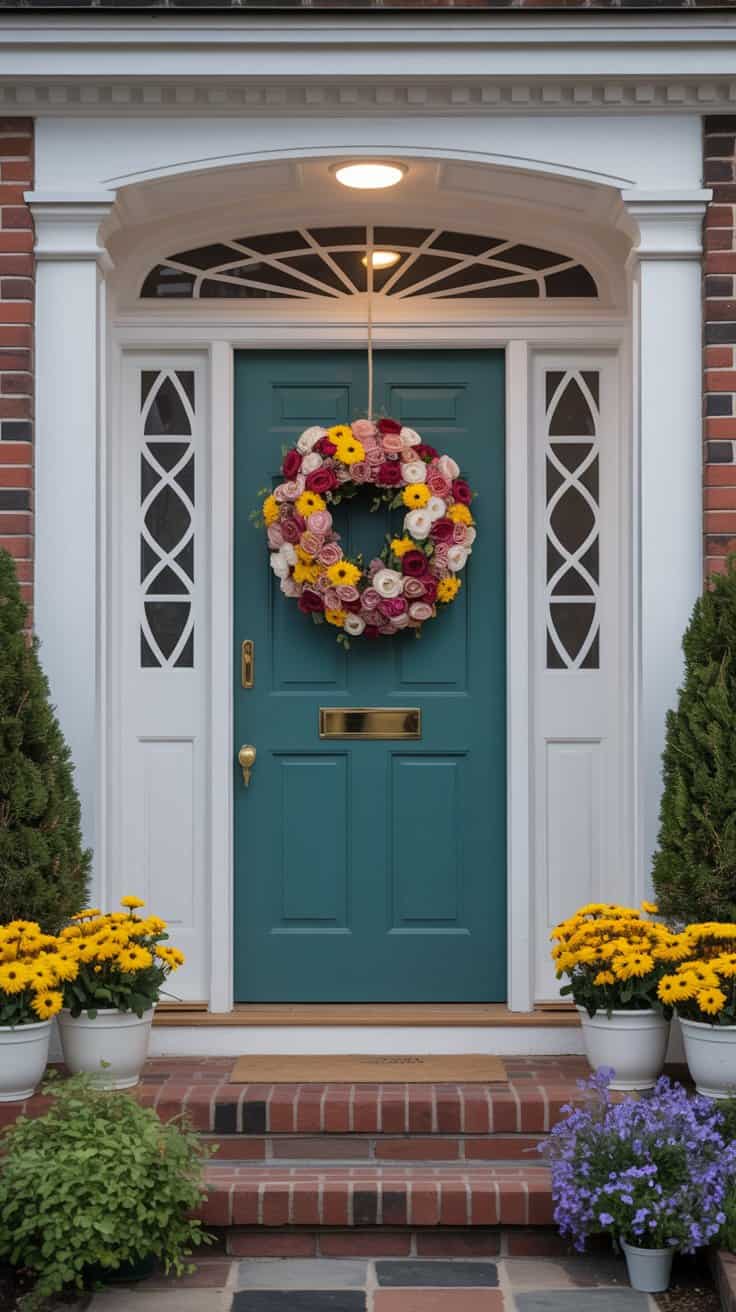
If your door sits close to the ground or has sidelights, window-style flower boxes can help frame the entrance horizontally. They soften the base of the doorway and visually anchor it. Choose compact flowers or greenery so the area still feels open and welcoming rather than crowded.
When selecting plants for door-adjacent flower boxes, consider both height and spread. Avoid varieties that will grow too tall and block views or pathways. Good choices include compact **begonias**, dwarf marigolds, and low-growing herbs like thyme or creeping rosemary. For year-round structure, incorporate small evergreens like dwarf boxwood or compact holly varieties that can be easily maintained at the desired height.
Window boxes require proper drainage to prevent water damage to your home. Make sure boxes have drainage holes and consider raising them slightly off the surface with small feet or spacers. For homes with sidelights (windows flanking the door), choose plants that won’t completely block natural light from entering. Semi-transparent grasses or airy flowers like cosmos or gaura allow light to filter through while still providing that framing effect.
- Perfect for cottages and townhouses
- Adds charm without taking up floor space
- Works well with painted doors

6. Mixing Flowers with Greenery for Balance
All flowers can sometimes feel a little busy. Mixing blooms with simple greenery—like boxwood, olive, or ferns—creates balance and lets the door itself stand out. This approach is especially effective if you have a bold or colourful front door and want the flowers to complement rather than compete.
The ideal ratio typically falls around 70% greenery to 30% flowers, though this can be adjusted based on your personal preference. For a sophisticated look, limit your flower selection to just one or two varieties in complementary colors. **Evergreen foliage** provides year-round structure and requires less maintenance than flowering plants, making this approach practical as well as beautiful. Consider plants like dusty miller, silver sage, or Japanese forest grass for interesting foliage texture.
This mixed approach works particularly well for those who appreciate a more subdued, elegant aesthetic. The greenery provides a consistent backdrop while seasonal flowers can be rotated for periodic color changes. For low-maintenance options, consider drought-tolerant succulents mixed with lavender or rosemary, which offer both structure and subtle flowering with minimal watering needs.
- Keeps the look calm and elegant
- Highlights the door colour
- Works year-round with minor tweaks

7. Framing the Door, Not Blocking It
The key to a beautiful flower-framed entrance is restraint. Leave breathing room so the doorway feels inviting, not boxed in. Aim to guide the eye toward the door, not overwhelm it. Step back once you’ve arranged everything and check that the door remains the star of the show.
Consider the practical aspects of your entrance when planning your flower arrangements. Ensure there’s enough clearance for the door to open fully without disturbing the plants. Leave at least 18-24 inches of clear space on the latch side of the door for comfortable access. For frequently used entrances, position taller plants further from the door and avoid thorny varieties like roses in areas where people might brush against them when entering or exiting.
The most successful door framings enhance rather than compete with architectural features. If your door has beautiful **sidelights** or transom windows, choose lower-profile plants that won’t obscure these elements. Similarly, if your home has distinctive columns, stonework, or trim details near the entrance, select flower arrangements that complement these features rather than hiding them. Remember that negative space—the empty area around your plants—is just as important as the plants themselves in creating a balanced, welcoming entrance.
- Prevents cluttered entrances
- Keeps the space practical
- Makes the styling feel intentional

A flower-framed front door doesn’t need to be perfect or elaborate—it just needs a little thought and a few well-placed touches. Even one planter can change the feel of your entrance, so start small and build from there. The goal is simple: a door that feels welcoming every time you come home.

Thinking about refreshing your front entrance?
This free Seasonal Front Door Flowers Guide walks you through what works best throughout the year, with simple plant lists, easy-care timelines, and arrangement ideas you can actually use.