
DIY Potting Bench Ideas That Make Gardening So Much Easier
A good potting bench does more than give you somewhere to work. It changes the whole rhythm of gardening.
Instead of balancing pots on the ground, hunting for tools, or dragging soil bags from one side of the garden to the other, everything starts to happen in one place. It feels tidier, easier, and a lot more enjoyable. These DIY potting bench ideas are practical, charming, and simple enough to make your garden feel more organised without losing that relaxed outdoor feel.
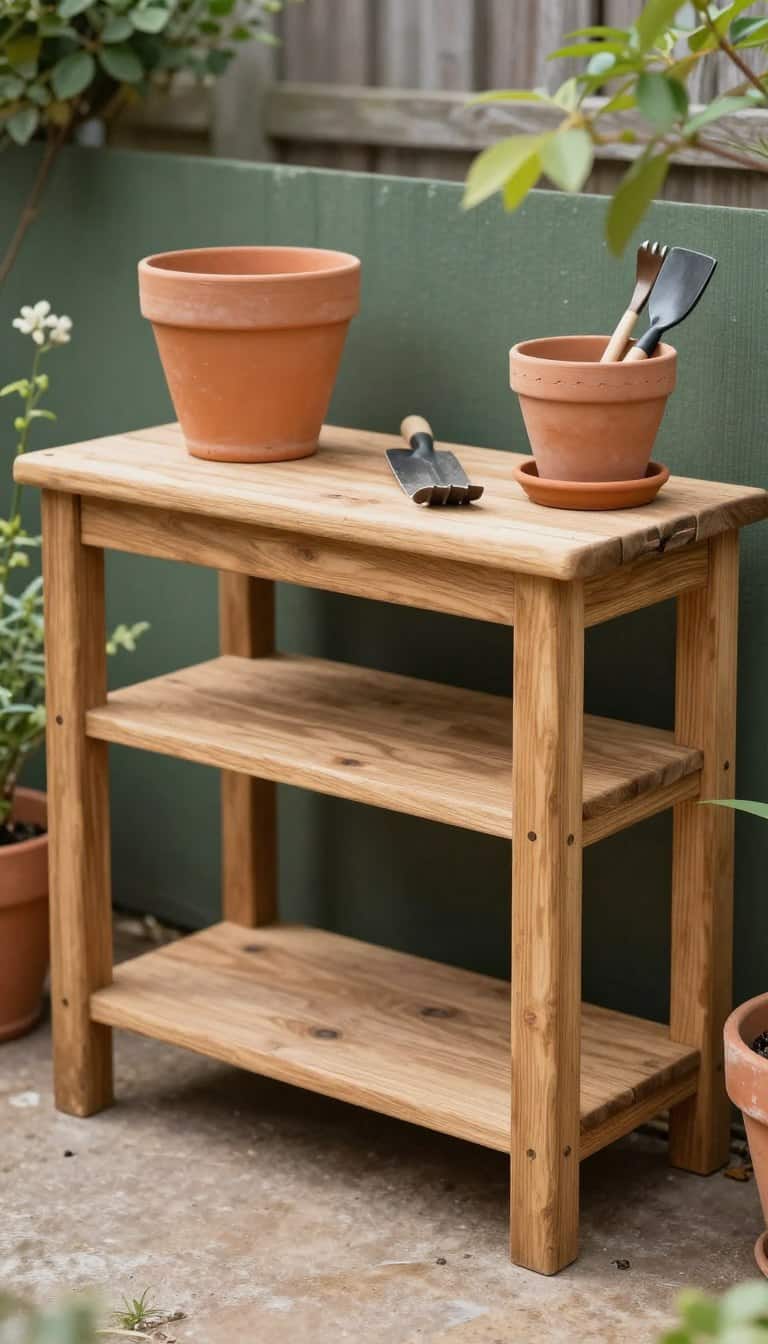
1. A Simple Wooden Bench with Open Shelving

This is the kind of potting bench that works almost anywhere. A solid wooden top gives you room to repot, sort tools, and clear away mess, while open shelves underneath keep the everyday essentials close by.
It feels natural in a garden setting because there is nothing overly fussy about it. The open design keeps it practical, but the wood adds just enough warmth to stop it feeling purely functional.
- Mood: Rustic, simple, hardworking
- Key detail: Open shelving that keeps everything easy to grab
- Finishing touch: Slide baskets or crates underneath for extra storage
2. A Repurposed Table Turned Potting Station

An old table can become a beautiful potting bench with only a few practical updates. Add hooks for tools, protect the top with a weather friendly layer, and suddenly a forgotten piece of furniture becomes a hardworking garden station.
This idea works especially well if you like a slightly collected look outdoors. The imperfections are part of the charm, and the weathered finish makes the whole setup feel like it has belonged in the garden for years.
- Best for: Vintage finds and easy upcycles
- Why it works: Gives old furniture a useful second life
- Style note: Hooks on the back or sides make a big difference
3. A Compact Bench for Small Spaces

If your garden space is limited, a narrow potting bench still gives you that dedicated work zone without taking over the whole area. It is proof that you do not need a large setup to make gardening feel more organised.
The beauty of a compact design is that it stays useful without getting in the way. One shelf underneath is often enough for pots, gloves, and a few tools, especially when the top surface stays clear and easy to use.
- Best for: Small patios, side returns, and narrow garden spots
- Smart detail: Slim depth with one practical lower shelf
- Extra idea: Foldable elements help keep the footprint light
4. A Potting Bench with Built In Soil Bin

A built in soil bin is one of those upgrades that sounds small but changes everything. It cuts down the mess, makes repotting easier, and stops you having to wrestle with half open compost bags every five minutes.
It also gives the whole bench a more thought through feel. When the messy parts of gardening have their own place, the workspace feels calmer and much more efficient.
- Why it works: Keeps soil contained and easy to reach
- Best feature: A removable container for simpler cleaning
- Layout tip: Place the bin to one side so the main surface stays usable
5. A Pallet Wood Potting Bench

Pallet wood is one of the easiest ways to build a potting bench without spending much at all. It instantly gives you that weathered, relaxed finish that works so well outdoors, especially if you like a more rustic garden style.
This kind of bench feels approachable and unfussy. It does not need perfect lines or polished details to look good. In fact, the rougher finish is often what makes it feel right in the first place.
- Mood: Budget friendly and full of character
- Key detail: Reclaimed wood with natural texture
- Practical note: Sand lightly so the surface feels safer to use
6. A Bench with Hanging Tool Storage
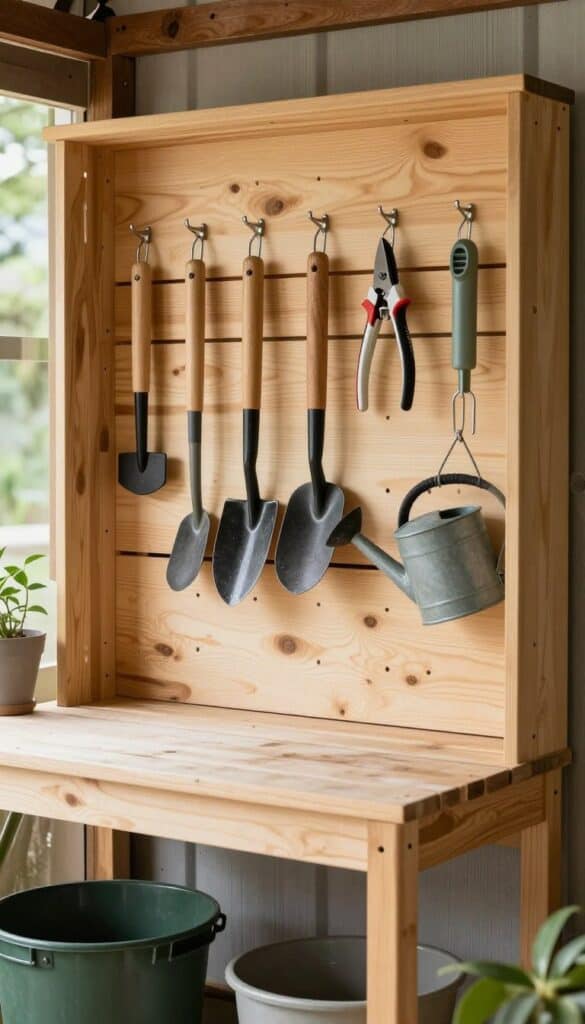
Adding vertical storage instantly makes a potting bench feel more complete. Tools stay easy to grab, the worktop stays clearer, and the whole setup starts to feel like a proper station instead of just a table pushed outside.
It is a simple improvement, but it adds a surprising amount of order. A row of hooks, a rail, or a narrow board mounted behind the bench can be enough to keep everyday tools visible and tidy.
- Best for: Keeping tools visible and organised
- Strong choice: Metal hooks that can handle regular use
- Design tip: Do not overcrowd the backboard or it starts to feel messy
7. A Potting Bench with a Sink Insert

A small sink or basin makes a potting bench feel surprisingly efficient. Washing muddy tools, rinsing pots, and cleaning up becomes far less awkward when you do not need to keep running back indoors.
This type of setup works especially well if your bench sits near a water source, but even a simple repurposed sink bowl can make the whole area more useful. It gives the bench that proper work zone feeling gardeners always appreciate.
- Best feature: Easy clean up while you work
- Budget idea: Use a reclaimed sink or large basin
- Practical tip: Keep drainage simple and easy to maintain
8. A Fold Down Potting Bench for Flexibility

A fold down bench is such a smart option for tighter spaces. It gives you a proper work surface when you need one, then folds neatly away so the area still feels open and easy to move through.
This design is especially useful in a shed, greenhouse, or narrow side garden where every inch matters. It is practical without feeling overly engineered, which is exactly why it works so well.
- Best for: Small gardens and multipurpose spaces
- Key detail: Strong hinges and a simple secure frame
- Extra storage: Add one small shelf above for everyday bits
9. A Rustic Bench with Crate Storage
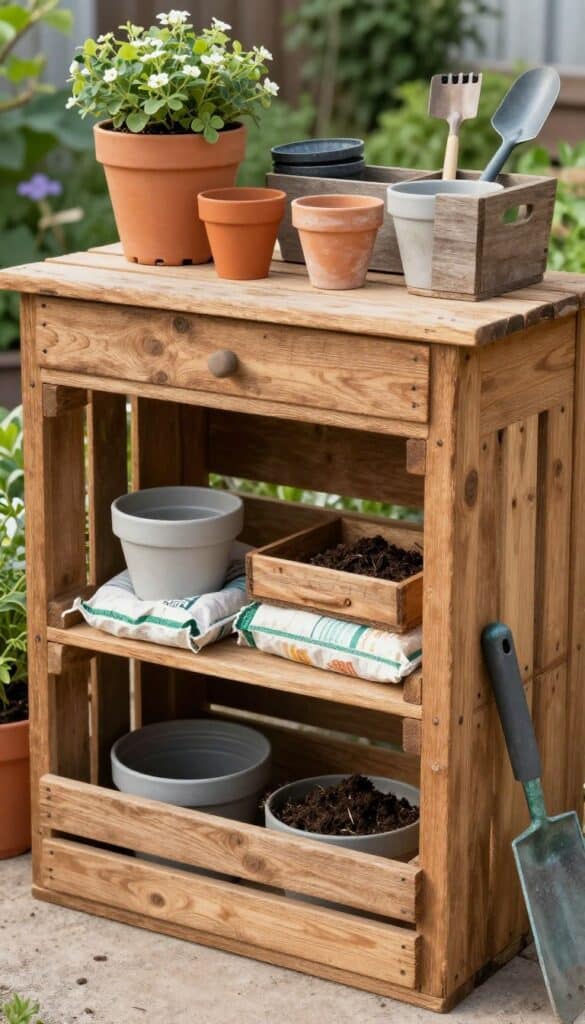
Wooden crates under a bench are one of the easiest storage solutions going. They keep pots, soil bags, and hand tools organised without needing custom cabinetry or complicated building work.
The look is casual in the best possible way. A few slightly mismatched crates actually make the whole bench feel more relaxed and garden appropriate, rather than too polished or fixed.
- Why it works: Instant storage with very little effort
- Style note: Slightly uneven or vintage crates add charm
- Useful detail: Easy to slide out when you need something quickly
10. A Painted Bench for a Soft Cottage Feel

A coat of paint can completely shift the mood of a potting bench. Soft greens, worn whites, and muted blues all give it that cottage garden character that feels practical and pretty at the same time.
Paint helps the bench feel more intentional, especially if you want it to tie in with the rest of your garden styling. A slightly matte finish always looks softer and more natural outdoors than anything too glossy.
- Mood: Gentle, cottage inspired, slightly vintage
- Best colour direction: Soft pastels and weathered neutrals
- Finish tip: Let small imperfections show through for character
11. A Bench with a Raised Back Shelf

A raised shelf across the back adds storage without eating into the work surface, which is exactly what makes it so useful. It gives you somewhere for small pots, twine, labels, and the things you reach for most often.
Because the shelf sits above the bench, the main area still feels open enough for proper gardening work. It is a simple layout trick, but one that makes the whole bench feel much more organised.
- Best for: Smaller tools and frequently used supplies
- Layout tip: Keep the shelf low and balanced, not bulky
- Look to aim for: Useful but still visually tidy
12. A Corner Potting Bench Setup

Using a corner for your potting bench is such an effective way to define a workspace without letting it sprawl across the whole garden. The bench feels tucked in, contained, and naturally part of the layout.
This kind of setup also leaves more room for movement around it, which matters more than people think. A clear area around the bench keeps gardening easier and stops the whole space from feeling too cramped.
- Best for: Sheds, greenhouses, and corners that would otherwise go unused
- Practical move: Add shelves above if you need extra storage
- Keep in mind: Leave enough room around the bench to move comfortably
13. A Bench with Integrated Planter Boxes
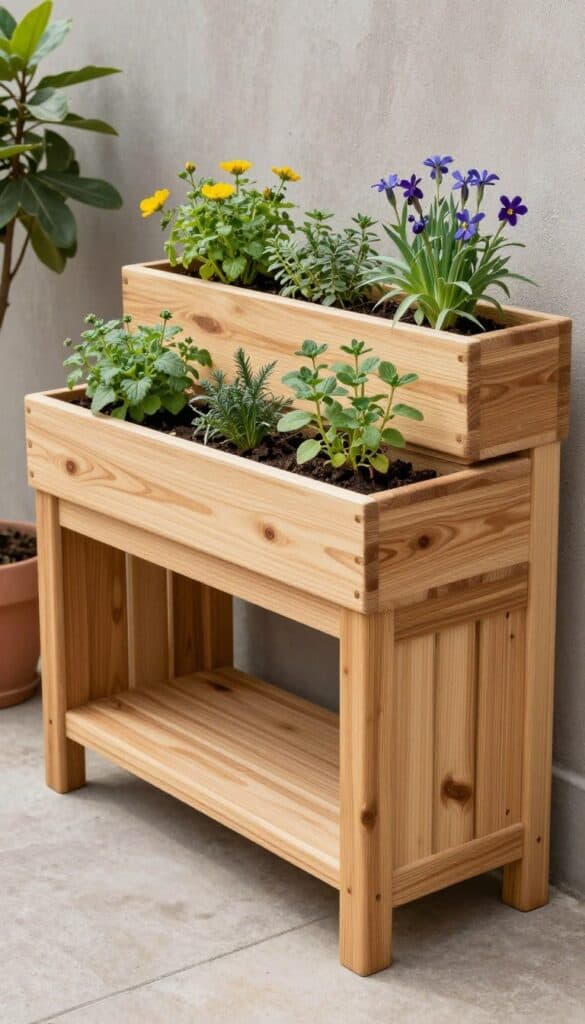
Adding planter boxes to a potting bench makes the whole setup feel more connected to the garden around it. Instead of one separate work zone, it becomes a working and growing space all in one.
This works beautifully with herbs, trailing plants, or small flowers that soften the bench and make it feel more alive. It is practical, but it also gives the whole piece more personality.
- Why it works: Blends storage, work, and planting together
- Best use: Herbs, compact flowers, or soft trailing plants
- Design tip: Keep the planter sizes balanced with the bench frame
14. A Minimalist Bench with Clean Lines

If your garden style leans more modern, a clean lined potting bench can still feel warm when the materials stay natural and the overall look remains simple. It does not need rustic extras to feel inviting.
The strength of this design is in its restraint. Clear surfaces, a neutral palette, and a few well chosen tools create a calm workspace that feels uncluttered and easy to use.
- Mood: Calm, practical, modern
- Best with: Neutral colours and simple materials
- Key rule: Let function lead and avoid visual clutter
15. A Personalised Bench That Grows With You

The most useful potting benches are rarely the ones that are finished all at once. They are the ones that evolve. A few hooks added later, an extra shelf, a better crate arrangement, small changes that make the setup fit you more closely over time.
That is what makes a bench feel personal. It is not just a garden project anymore. It becomes part of your routine and starts to reflect the way you actually like to work outdoors.
- Best approach: Start simple and improve it gradually
- Why it matters: Your real habits should shape the design
- Long term tip: Keep the layout flexible so it can change with you
A Potting Bench That Makes Gardening Feel Easier
A DIY potting bench does not need to be elaborate to make a difference. Even a very simple setup can make gardening feel tidier, calmer, and much more enjoyable. The right surface, a bit of storage, and a layout that works with your space are often all you need.
Start with what you already have, keep it practical, and let the bench evolve naturally. That is usually when it feels the most useful and the most like part of your garden, not just another project added to it.