
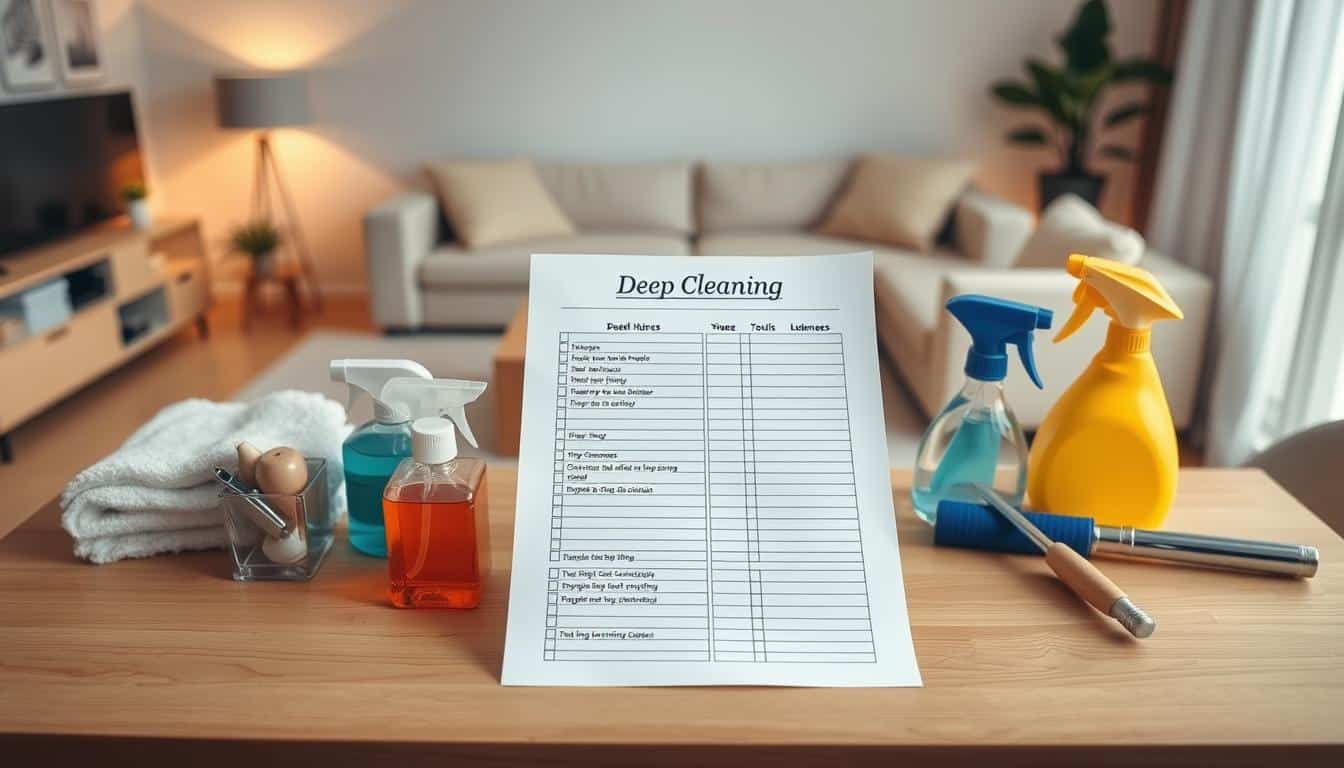
The Essential Deep Cleaning Checklist for a Spotless Home
Ever wonder why your weekend cleaning sessions feel like you’re fighting an uphill battle? It’s not just you. Many people struggle with dust bunnies and sticky spots.
Let’s face it, cleaning your whole house isn’t a fun Sunday activity. It’s more like a battle against soap scum, forgotten corners, and stubborn stains.
But there’s a way to change this. With the right systematic approach, you can make your home look amazing. This guide will show you a thorough cleaning routine that works for busy people.
No more getting sidetracked or spending hours on small tasks. We have a plan to help you clean your home efficiently. It’s your guide to a spotless home, even with a busy schedule.
Key Takeaways
- A systematic approach prevents cleaning distractions and ensures thorough coverage of your entire home
- Proper planning and organization make overwhelming tasks feel manageable and achievable
- Room-by-room strategies help maintain focus and deliver consistent results throughout your house
- The right supplies and tools can significantly reduce cleaning time and effort
- Breaking large tasks into smaller chunks creates a sense of accomplishment and momentum
- A structured routine eliminates guesswork and creates repeatable success patterns
What is Deep Cleaning and Why is it Important?
Deep cleaning is like a full makeover for your home. It’s more than just a quick clean. It gets rid of hidden dirt and dust.
It makes your home truly clean. You’ll see every corner of your home spotless. It’s a deep clean that goes beyond daily cleaning.
Understanding the Difference Between Regular and Deep Cleaning
Regular cleaning is like your daily routine. You clean counters and do dishes. It keeps your home looking good.
Deep cleaning is when you really get into it. You clean behind appliances and dust ceiling fans. Deep cleaning follows detailed cleaning plans that regular cleaning misses.
Here’s what makes them different:
- Scope: Regular cleaning focuses on what you can see. Deep cleaning gets into hidden spots.
- Frequency: Daily cleaning is routine. Deep cleaning is done less often but more thoroughly.
- Tools: You use basic stuff for regular cleaning. Deep cleaning needs special tools and products.
- Time investment: Regular cleaning is quick. Deep cleaning takes more time but is worth it.
Benefits of Deep Cleaning for Your Health
Deep cleaning is good for your health. It gets rid of allergens and bacteria, making it easier to breathe.
It removes:
- Dust mites and allergens that can make you sick
- Bacteria and germs hiding in corners
- Mold and mildew that can harm your health
- Pet dander and other things that irritate you
Cleaning deeply can also make you feel better. A clean home means a clear mind. A detailed cleaning checklist helps you not miss important areas.
When to Schedule a Deep Clean
Experts say to deep clean four times a year. But you’ll know when it’s time.
When you think, “This place needs more than a quick tidy-up,” it’s time. Other signs include:
- Allergies getting worse
- Visible dirt in ignored areas
- Feeling overwhelmed by mess
- Getting ready for guests
- At the start of a new season
Using a detailed cleaning checklist helps you clean everything. Don’t wait until your home is a mess. Regular deep cleaning keeps your home healthy and stress-free.
Essential Tools for Effective Deep Cleaning
Having the right tools makes deep cleaning easier. It’s not about being fancy. It’s about working smarter, not harder. Your step-by-step cleaning checklist will be easier with the right supplies.
Cleaning Supplies You Should Have
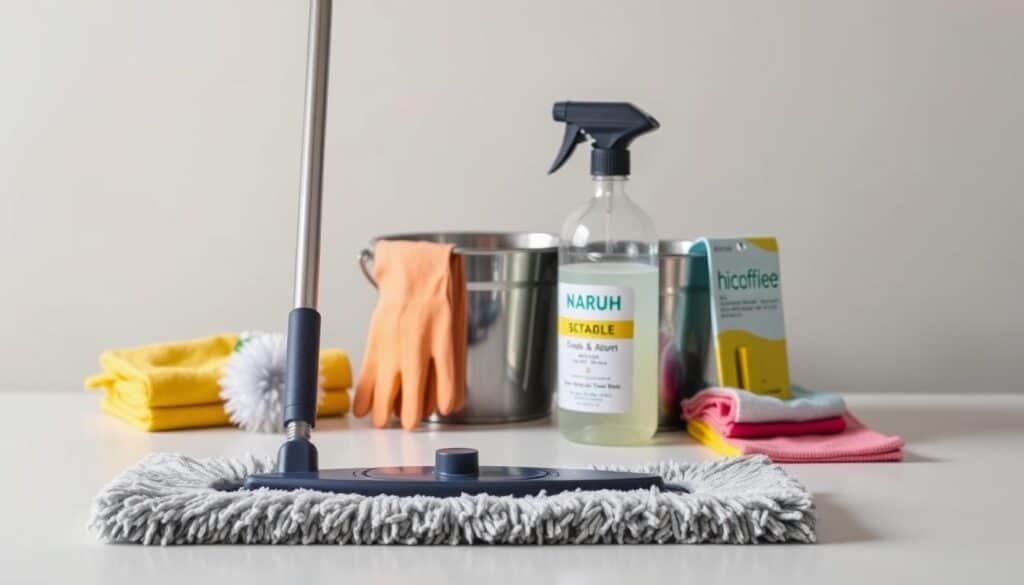
Cleaning supplies are like your cleaning crew’s uniform. You need the basics to get the job done. Microfiber cloths are great because they trap dust and won’t scratch surfaces.
Here are the essentials for your ultimate deep clean checklist:
- All-purpose cleaner for most surfaces
- Glass cleaner for windows and mirrors
- Disinfectant for high-touch areas
- Bathroom-specific cleaner for soap scum
- Degreaser for kitchen surfaces
Mr. Clean Magic Erasers are amazing for scuff marks and stains. Keep a few on hand for tough spots.
Must-Have Equipment and Gadgets
Your equipment lineup is key. A good vacuum with attachments is essential. It reaches places you miss.
Swiffer Dusters are great for dusting high surfaces. Use a modern mop instead of old string mops.
Get a cleaning caddy or bucket to carry supplies. It saves time and keeps you moving.
Eco-Friendly Options
Going green doesn’t mean losing cleaning power. Eco-friendly cleaning products work well without harsh chemicals. Your lungs and the planet will thank you.
Try these green swaps:
- Plant-based all-purpose cleaners
- Vinegar solutions for glass and mirrors
- Baking soda for scrubbing power
- Reusable microfiber cloths instead of paper towels
Many eco-friendly brands offer concentrated formulas. They reduce waste and save money.
Build a toolkit that works with you. When your supplies and equipment are good, deep cleaning is easier.
Preparing Your Home for Deep Cleaning
Think of deep cleaning prep as laying a foundation for your home. Skipping it leads to trouble. You need to do some work before you start cleaning.
An organized cleaning plan starts with knowing your space and limits. You’re not trying to change your home into a museum overnight. You’re making a plan that fits your life, including kids, pets, and work.

Decluttering: The First Step to Success
Before you start cleaning, you must declutter. This means getting rid of a lot of stuff. You can’t clean well if your surfaces are cluttered.
Use the “trash, donate, keep” method to declutter. Be honest about what you really use. That old bowl? Donate it. Those old magazines? Throw them away.
Try “Declutter Bingo” to make it more fun. Make a list of clutter items and mark them off as you find them. It makes the task a bit more enjoyable.
Creating a Cleaning Schedule
Creating a cleaning schedule is smart, not obsessive. Plan which rooms to clean and when. Be realistic about your time and energy.
You might clean one room a night or do it all in two days. The important thing is to stick to your plan.
Think about your household’s rhythm. Don’t clean the kitchen when you usually cook. Work with your schedule, not against it.
Gathering Your Deep Cleaning Checklist
Your effective deep cleaning checklist is your best friend. Print it out or put it on your phone. It helps you stay focused and feel accomplished.
Your checklist should be detailed. Instead of “clean bathroom,” say “scrub toilet, clean shower tiles, organize medicine cabinet.” A detailed list helps you not miss important steps.
Don’t forget to include prep tasks on your checklist. Things like “move furniture” and “gather cleaning supplies” are important. They help you stay motivated.
Deep Cleaning Different Areas of Your Home
Every room in your home has its own cleaning story. From kitchen grease battles to bathroom mold wars. Knowing these challenges helps you make a detailed cleaning schedule that works.
Use the right tools and techniques for each space. Your complete home cleaning checklist should match these needs. Different areas collect different dirt types and need different cleaning methods.

Kitchen: Tackle Grease and Grime
Your kitchen is like a science experiment with grease. Every time you cook, you create a sticky film. This film is made of cooking oils, food particles, and steam.
Focus on degreasing cabinet fronts, where hands touch often. Don’t forget the tops of your refrigerator and range hood. These areas often get overlooked but are key to a clean kitchen.
Bathroom: Banish Mold and Mildew
Bathrooms are humid, perfect for mold and mildew. These are health concerns that need serious attention. Moisture, warmth, and organic matter create ideal conditions.
Target areas where water sits or splashes. Check behind toilets, around tub edges, and in shower corners. Ventilation is your best friend – run that exhaust fan during and after showers.
Living Room: Dust and Freshen Up
Your living room might look clean but is actually a dust magnet. Electronics and decorative items attract allergens.
Pay special attention to surfaces you don’t clean regularly. Like the tops of picture frames, lamp shades, and baseboards. A systematic approach works best here, starting from top to bottom.
Bedrooms: Focus on Fabrics and Surfaces
Bedrooms are all about fabrics. Fabrics hold onto dust, dead skin cells, and allergens. Your bedding, curtains, and carpets need more than surface cleaning.
Don’t just change the sheets; flip and vacuum your mattress too. Dust accumulates on nightstands, dressers, and windowsills while you sleep. Fresh air circulation helps prevent mustiness and keeps your sleeping space healthier.
| Room | Primary Challenge | Key Focus Areas | Recommended Frequency |
|---|---|---|---|
| Kitchen | Grease and food residue | Appliances, cabinets, countertops | Monthly deep clean |
| Bathroom | Mold and mildew | Shower, toilet, ventilation | Bi-weekly deep clean |
| Living Room | Dust accumulation | Electronics, upholstery, surfaces | Monthly deep clean |
| Bedroom | Fabric care and dust | Bedding, mattress, surfaces | Monthly deep clean |
Remember, your detailed cleaning schedule should reflect these different needs. What works in your kitchen won’t necessarily work in your bedroom. By understanding each room’s personality, you’ll clean more effectively and maintain a healthier home environment.
Deep Cleaning Your Kitchen
Your kitchen is probably the messiest room in your house. It needs the most love during deep cleaning. This space handles everything from morning coffee spills to dinner prep disasters.
Think of your kitchen as command central. It’s where life happens, messes accumulate, and germs love to party. A thorough cleaning routine here pays dividends throughout your entire home. You’ll tackle grease, grime, and those mysterious sticky spots that seem to appear overnight.
Appliances: Inside and Out
Your appliances work overtime, so they deserve some serious attention. Start with your microwave — when’s the last time you actually cleaned inside it? Heat a bowl of water with lemon slices for two minutes, then wipe away the loosened grime.
Your refrigerator is probably harboring science experiments in the back. Pull everything out, toss expired items, and wipe down every shelf and drawer. Don’t forget to vacuum those coils on the back or bottom — they collect dust and make your fridge work harder.
The coffee maker needs descaling with white vinegar, and your oven requires more than just the self-clean cycle. Remove the racks, soak them in Dawn dish soap, and tackle any burnt-on disasters that could start a fire. Your stovetop grates need a proper soak too — they’re grease magnets that regular cleaning misses.
Cabinets and Countertops
Cabinets are sneaky grease collectors, specially near your stove. Mix warm water with a few drops of dish soap for a gentle degreaser that won’t damage your finish. Don’t forget the cabinet interiors — they collect crumbs, spills, and sticky residue from containers.
Your countertops need more than a quick wipe-down. Move everything off them first, then clean with appropriate products for your surface type. Granite needs different care than laminate or butcher block. Pay special attention to areas around your sink and stove where splashes accumulate.
Cabinet hardware gets grimy too. Remove knobs and pulls if possible, or clean them thoroughly with a degreasing solution. A Mr. Clean Magic Eraser works wonders on stubborn spots, but test it in an inconspicuous area first.
Floors: The Unsung Heroes
Kitchen floors catch every dropped crumb, spill, and splash — they’re the unsung heroes of your cleaning routine. They deserve more than a quick sweep and mop. Start by moving appliances to reach hidden areas where crumbs and grease accumulate.
Sweep thoroughly, getting into corners and under cabinets where dust bunnies hide. Then mop with a solution appropriate for your flooring type. Tile floors need grout attention too — use an old toothbrush with baking soda paste to brighten dingy grout lines.
Don’t forget your baseboards and toe kicks under cabinets. These areas collect cooking grease and need regular attention during your thorough cleaning routine. A damp cloth with mild cleaner will remove built-up grime and make your entire kitchen look fresher.
| Kitchen Area | Cleaning Method | Frequency | Key Products |
|---|---|---|---|
| Microwave Interior | Steam with lemon water, wipe clean | Weekly deep clean | Lemon, water, microfiber cloth |
| Refrigerator Coils | Vacuum with brush attachment | Every 6 months | Vacuum, coil brush |
| Cabinet Exteriors | Degrease with soap solution | Monthly | Dawn dish soap, warm water |
| Stovetop Grates | Remove and soak in soapy water | Monthly deep clean | Dawn dish soap, scrub brush |
| Floor Grout | Scrub with baking soda paste | Quarterly | Baking soda, old toothbrush |
Your kitchen transformation starts with tackling these three major areas systematically. Remember that consistency beats perfection — a regular deep cleaning schedule prevents overwhelming buildup and keeps your kitchen functioning as the heart of your home.
Deep Cleaning Your Bathroom
The bathroom is the biggest challenge in comprehensive cleaning guidelines. It needs your full effort and best methods. A clean bathroom shows your cleaning skills.
Bathrooms get wet, dirty, and full of germs. Your detailed house cleaning checklist must be very detailed here. We aim for a clean, healthy space, not just looks.
Toilets: The Deep Clean Method
Your toilet needs more than a quick clean. Real toilet deep cleaning means cleaning every part you can reach.
First, take everything off the toilet base. Spray disinfectant on the whole outside, including hinges and handle. Don’t miss the area behind the toilet.
For the bowl, use a pumice stone on hard spots. Clean under the rim where germs hide. The floor around the toilet also needs cleaning.
Showers and Bathtubs
Your shower and bathtub are soap scum battlegrounds. The film on surfaces is not just ugly, it’s bad for health.
Start with your showerhead. Soak it in white vinegar overnight. This trick gets rid of mineral deposits and germs.
For the tub and shower walls, mix baking soda and dish soap. This combo removes soap scum easily. Don’t forget the grout lines.
Don’t overlook your shower door tracks. They collect hair, soap, and dirt. Use a toothbrush to clean every corner.
Sinks and Mirrors
Bathroom sinks attract fingerprints and water spots. Your mirror might look like a crime scene.
Clean your sink faucet with vinegar and water. Use a soft cloth to avoid scratches. For the mirror, use newspaper and glass cleaner for a streak-free shine.
Don’t forget to clean your bathroom exhaust fan. It’s probably full of dust and not working well. A clean fan means better air and less moisture.
Cleaning your bathroom goes beyond obvious surfaces. Check light fixtures, switch plates, and door handles. These areas need regular cleaning to stay healthy.
Deep Cleaning Living and Dining Rooms
Make your living and dining areas clean and welcoming. These rooms are where you spend time together. They get dirty fast with dust, pet hair, and more.
Follow a step-by-step cleaning checklist for these rooms. Start from the top to avoid dust settling again. This way, you won’t have to clean twice.
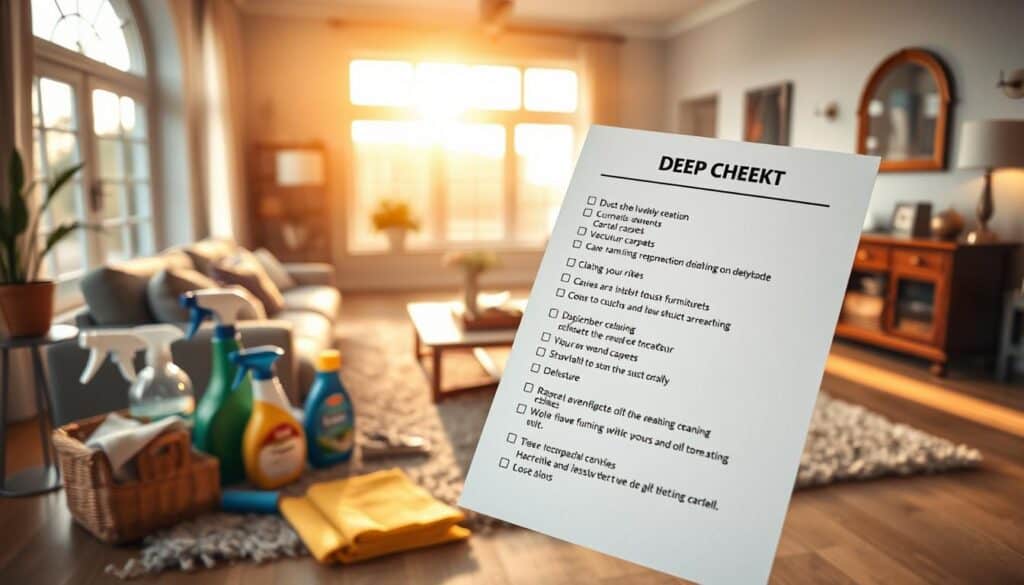
Dusting Surfaces and Accessories
Start by dusting the ceiling. Clean ceiling fans, light fixtures, and crown molding first. They collect a lot of dust that falls down later.
Then, dust electronics, picture frames, and decorations. Each item needs its own cleaning. Take things off shelves to dust them properly.
Remember to clean baseboards and door frames too. These areas are often missed but are key to a clean room. A good cleaning plan covers all surfaces.
Upholstery and Carpets
Carpet and furniture hold a lot of dirt. Vacuum them well with the right tools. This is your first step.
Use special attachments for upholstery. Clean sofa cushions and chair arms well. For carpets and upholstery, shampoo or steam clean them.
Always check the care labels before cleaning. Some fabrics need professional cleaning. Test any cleaning product first.
Windows and Window Treatments
Clean windows make a big difference. They let in more light, making your room brighter. Start by cleaning window sills and tracks.
Blinds collect a lot of dust. Use a microfiber cloth or a blind-cleaning tool to clean each slat. Check if fabric curtains can be washed at home or need professional cleaning.
Your ultimate deep clean checklist must include windows and curtains. Clean windows and fresh curtains make your room look new.
Deep Cleaning Bedrooms
A clean bedroom is more than just making the bed. It means cleaning every surface, fabric, and hidden spot. Your bedroom should be a peaceful place, not a storage area. An organized cleaning plan focuses on three key areas often missed during regular cleaning.
Think of your bedroom as your own special place. It needs deep cleaning just like public areas in your home. And maybe even more, because you spend about eight hours here every day.
Bedding and Mattresses
Begin by taking everything off your bed — everything. Wash sheets, pillowcases, duvet covers, mattress protectors, and decorative pillows. Don’t forget about comforters and bed skirts.
Your mattress needs a lot of attention. Rotate it first, then vacuum it with your upholstery attachment. Focus on seams and crevices where dust mites hide. If you see stains, use baking soda and water to clean them.
Now is a great time to get a good mattress protector. Your future self will be happy when you do.
Closets: Declutter and Clean
Closets are often forgotten when cleaning bedrooms. When was the last time you cleaned the closet floor or sorted through clothes you haven’t worn in months? It’s time to be tough with decluttering.
Take everything out of your closet — yes, everything. Donate clothes you haven’t worn in over a year and organize what’s left by type or season. Clean the floor, walls, and shelves with the right cleaners.
An effective deep cleaning checklist for closets includes wiping down surfaces, vacuuming corners, and checking for moisture or pests. Replace old hangers with new ones for a neater look.
“A cluttered closet is a cluttered mind. When you organize your space, you organize your thoughts.”
Decorative Items
Picture frames, lamps, jewelry boxes, and knick-knacks around your bedroom are dust magnets. Each item needs special care during deep cleaning.
Take all decorative items off surfaces before cleaning. Dust each one carefully, focusing on details and crevices. Clean the surfaces they were on before putting them back.
This is a chance to decide if you really love these items or if they’re just taking up space. Keep only pieces that bring you joy or are useful in your bedroom.
Your bedroom should be calm, clean, and good for rest. After this detailed cleaning, you’ll have a space where you can relax and recharge for tomorrow.
Deep Cleaning Hallways and Entryways
Hallways and entryways are hardworking spaces in your home. They need a detailed cleaning schedule to stay clean. These areas get a lot of use, like your living room during a Super Bowl party.
Every person who comes in leaves their mark. Think about what these spaces go through every day. Muddy shoes, wet umbrellas, and grocery bags all leave marks.
High Traffic Areas That Need Attention
These spots are germ highways that need extra care. First, find the busiest spots in your hallways and entryways. Look for where people touch, lean, or pause.
Focus on these high-traffic zones:
- Door frames and trim — collect fingerprints and scuff marks
- Wall corners — where bags and coats brush against surfaces
- Coat closet areas — often neglected but heavily used
- Stair railings — touched by every person going up or down
- Floor transitions — where different flooring types meet
These areas get dirty fast. They need more cleaning than other parts of your home.
Surfaces and Fixtures
Light switches and door handles are germ magnets. Clean them with disinfectant wipes or spray. Don’t forget thermostats, intercoms, or wall sconces.
Walls in hallways have stories to tell. Use a gentle cleaner and clean from top to bottom. Magic erasers work wonders on scuff marks.
Ceiling fixtures and fans collect dust. Use a duster or microfiber cloth to clean them. Clean light covers and replace bulbs while you’re at it.
Floors and Baseboards
Hallway floors take a lot of abuse. They see salt, snow, leaves, and lawn clippings. Start by sweeping or vacuuming thoroughly, focusing on corners.
Mop with the right cleaner for your floor. For dirty areas near entrances, scrub on hands and knees. It’s not glamorous, but it works.
Baseboards are dust bunnies’ favorite spot. Clean them with a damp microfiber cloth or vacuum brush. Don’t forget the tops of baseboards, which collect dust and pet hair.
For tough marks on baseboards, mix warm water and dish soap. Use an old toothbrush for grooves. Your hallways will look fresh and welcoming when you’re done.
Post Deep Cleaning: Maintenance Tips
The hard work is done, and your home sparkles from top to bottom. Now, let’s talk about making it last. Think of your freshly cleaned space like a garden: without regular care, weeds creep back in.
The good news? Maintaining your spotless home doesn’t require another marathon cleaning session. Your deep cleaning checklist got you here, but smart maintenance strategies will keep you from needing it again anytime soon. The secret lies in creating systems that work with your lifestyle, not against it.
Routine Cleaning Schedule
Consistency beats perfection every single time. A thorough cleaning routine doesn’t mean spending hours each day with a mop in hand. Instead, it’s about finding your rhythm and sticking to it.
Some people thrive on 15 minutes a day — tackling one small area before coffee or after dinner. Others prefer weekend cleaning sessions where they knock out everything at once. The key is choosing what actually fits your life.
Here’s what works for most busy households:
- Daily: Make beds, wipe kitchen counters, load dishwasher
- Weekly: Vacuum main areas, clean bathrooms, dust surfaces
- Monthly: Deep clean appliances, wash windows, organize closets
Spot Cleaning Techniques
Spot cleaning is your secret weapon against chaos. When you see a mess, tackle it immediately — before it becomes a situation that requires your entire deep cleaning checklist again.
Spilled coffee on the counter? Clean it now, not later. Muddy footprints in the entryway? Don’t let them set into the floor. These small actions prevent the buildup that makes cleaning feel overwhelming.
Keep cleaning supplies in strategic locations around your home. A caddy under each bathroom sink, cleaning wipes in the kitchen, and a small vacuum upstairs can make spot cleaning effortless.
Keeping It Organized
Organization is the foundation of easy maintenance. When everything has a designated home — and actually returns to that home — cleaning becomes infinitely simpler.
You’re not constantly moving things around just to dust or vacuum. Instead, you can focus on the actual cleaning. This simple shift makes your thorough cleaning routine feel less like work and more like a quick refresh.
The goal isn’t perfection. It’s creating systems that support the clean, organized home you just worked so hard to achieve. Small, consistent efforts will keep your space looking great without the stress of another deep cleaning marathon.
When to Hire Professional Deep Cleaners
Even the best cleaning tips can’t fix every mess at home. Sometimes, you need to call for help. And that’s okay.
Professional cleaners are for anyone who values their time and wants lasting results. They’re not just for the rich or lazy.
Signs You Need Professional Help
Some signs mean it’s time to stop cleaning yourself. Persistent odors that won’t go away are a big clue.
Maybe you’ve tried many products on stains, but they won’t disappear. Or, your grout is now gray, no matter how hard you scrub.
Life events can also make you need professional help. Moving, being sick, or feeling overwhelmed are good reasons.
- Stubborn stains and odors that resist DIY methods
- Time constraints that make thorough cleaning impossible
- Physical limitations preventing certain cleaning tasks
- Move-in/move-out situations requiring intensive cleaning
- Post-renovation cleanup needs
What to Expect from the Service
Professional cleaners use industrial-grade equipment and special products. They can steam clean carpets, tackle tough grout, and do tasks in hours that take you days.
Most services have a detailed checklist for cleaning your home. They start with a walk-through to see what needs to be done.
They bring their own stuff, including supplies and equipment. Quality services are insured and bonded, so you don’t have to worry about accidents.
Evaluating Cost vs. Benefit
Don’t think professional cleaning is too pricey without doing the math. Think about your hourly wage, the cost of supplies, and your time.
Consider the quality of results you get versus doing it yourself. Professional cleaners can do a lot in hours that would take you days.
Paying for professional help might actually save you money. It’s about making smart choices that fit your lifestyle and budget.
Remember, it’s not about giving up. It’s about making choices that work for you.
Conclusion: A Cleaner, Healthier Home Awaits
You’ve reached the end of your deep cleaning journey. Your home now shines more than just on the surface. It’s a healthier place that helps you feel better every day.
The Real Benefits You’ve Unlocked
Your cleaning checklist did more than make your home look good. It got rid of hidden allergens that hurt your family’s health. Dust mites, pet dander, and mold spores are gone from hidden spots.
Your tidy spaces help you work better and feel less stressed. You’re now more productive and relaxed.
Building Long-Term Success
Regular deep cleaning is like saving money for your home. Small steps add up over time, avoiding big cleaning jobs. You’ll find things easier and enjoy your home more.
Guests will feel welcome, not like a big deal. This makes your home a place of peace and joy.
Your Next Steps Forward
Don’t rush to clean everything at once. Your deep clean plan can take weeks or months. Start with one room and get your cleaning stuff ready.
Every task you finish makes you ready for the next one. Your future self will thank you for today’s work. Turn your messy home into a peaceful place, room by room. You have the tools and knowledge to keep it up.