

Crispy Sweet Potato Fries That Don’t Get Soggy – Simple, Reliable, Delicious
Sweet potato fries are irresistible—sweet, salty, and perfectly snackable—but getting them crisp can feel impossible. If yours tend to steam and flop, you’re not alone. The trick isn’t more oil or higher heat; it’s smart prep and a few small technique tweaks.
This guide shows you exactly how to make sweet potato fries that stay crunchy on the outside and tender inside, whether you bake or air-fry. No fancy tools, just a few pantry staples and dependable steps.
What Makes This Special
Many recipes skip the steps that actually prevent sogginess. This method focuses on moisture control, even slicing, and the right starch/oil balance.
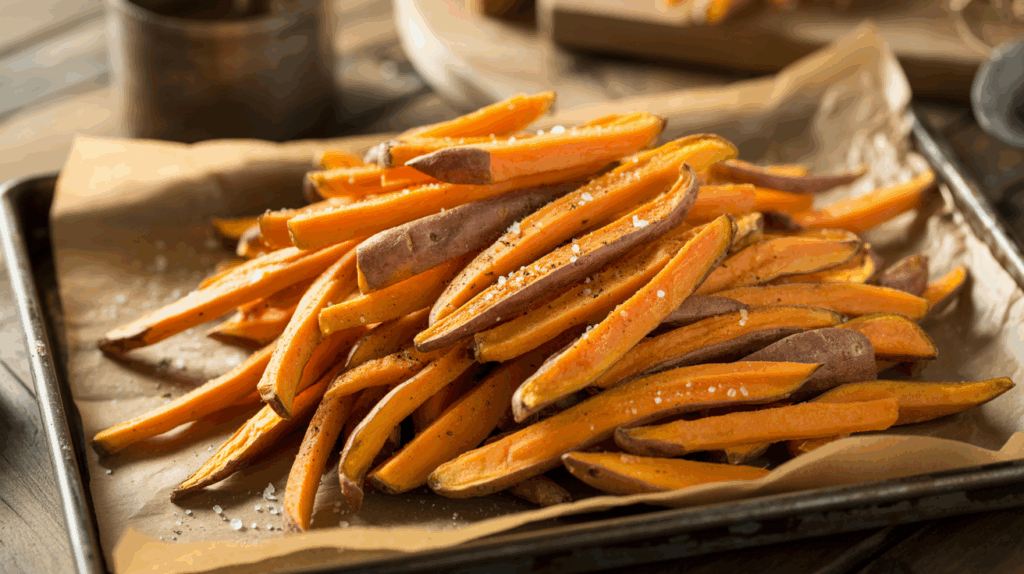
You’ll get golden edges, sturdy texture, and real crunch without deep-frying. Plus, the flavor stays clean: lightly seasoned, naturally sweet, and perfect for dipping.
Shopping List
- 2 large sweet potatoes (about 2 pounds), scrubbed and peeled if you prefer
- 2 tablespoons cornstarch (or arrowroot powder)
- 2–3 tablespoons neutral oil with a high smoke point (avocado, grapeseed, or canola)
- 1 teaspoon fine sea salt, plus more to taste
- 1/2 teaspoon black pepper
- Optional spices: 1/2 teaspoon smoked paprika, 1/2 teaspoon garlic powder, 1/4 teaspoon cayenne
- Optional for serving: chopped parsley, flaky salt, and your favorite dipping sauce
Step-by-Step Instructions
- Preheat and prep your pans. Heat the oven to 425°F (220°C). Place two rimmed baking sheets inside to heat up.
A hot pan helps the fries sear instead of steam. If air-frying, preheat to 380°F (193°C).
- Cut even sticks. Slice the sweet potatoes into 1/4-inch to 1/3-inch thick sticks. Uniform size is crucial for even crisping.
Avoid super thin shoestrings—they burn before they crisp.
- Soak briefly to reduce surface starch. Place the sticks in a bowl of cold water for 15–20 minutes. This helps remove excess starch that can cause sogginess. Don’t soak longer than 30 minutes or they’ll absorb water.
- Dry thoroughly. Drain, then spread the sticks on a clean kitchen towel.
Pat very dry. The drier the fries, the crispier they’ll get.
- Dust with cornstarch first. In a large bowl, toss the fries with cornstarch until lightly coated. You want a thin, even film—no clumps.
Shake off excess. Starch before oil is key for a crisp shell.
- Add oil and seasonings. Drizzle with oil and toss to evenly coat. Season with salt, pepper, and any optional spices. The fries should look glossy, not greasy.
- Arrange with space. Remove hot pans from the oven.
Line with parchment for easier cleanup. Spread fries in a single layer with room between each piece. Crowding leads to steaming.
- Roast, then flip once. Bake for 15 minutes.
Flip the fries with a spatula, rotate the pans, and bake another 10–15 minutes until deep golden on the edges. If using an air fryer, cook in batches for 14–18 minutes, shaking halfway, until crisp.
- Finish with a quick blast. For extra crunch, switch the oven to 450°F (232°C) for the last 3–5 minutes. Watch closely to prevent burning.
- Season and rest briefly. Transfer fries to a wire rack and sprinkle with a pinch of salt.
Let them sit for 2 minutes to set the crust, then serve hot with your favorite dip.
Keeping It Fresh
If you have leftovers, let fries cool completely on a wire rack. Store in an airtight container lined with a paper towel in the fridge for up to 3 days. To re-crisp, spread on a dry baking sheet and heat at 425°F (220°C) for 7–10 minutes, or air-fry at 370°F (188°C) for 4–6 minutes.
Avoid microwaving—it softens the crust.
Benefits of This Recipe
- Consistently crispy results. The soak, dry, starch, and high heat steps work together to prevent sogginess.
- Flexible cooking methods. Oven or air fryer both work great.
- Healthier than deep-fried. You use a moderate amount of oil while still getting a satisfying crunch.
- Simple pantry ingredients. No specialty coatings or equipment needed.
- Easy to customize. Change up the seasoning without altering the method.
Pitfalls to Watch Out For
- Cutting fries too thick or uneven. Thick sticks stay soft inside before the outside crisps. Go for 1/4 to 1/3 inch and keep pieces consistent.
- Skipping the drying step. Surface moisture is the enemy of crisp fries.
- Adding oil before cornstarch. Oil first makes starch clump and creates gummy spots.
- Crowding the pan. If fries touch or overlap, they steam. Use two pans or cook in batches.
- Low oven temperature. Too low and you’ll get pale, limp fries.
Stay at 425°F, then finish hotter if needed.
- Overly thin fries. Shoestrings burn quickly, especially with sweet potatoes’ natural sugars.
Variations You Can Try
- Spicy-Smoky: Smoked paprika, cayenne, and a squeeze of lime at the end.
- Garlic-Parmesan: Toss with garlic powder before baking, then add finely grated Parmesan and parsley right after baking.
- Curry Style: Curry powder, ground cumin, and a pinch of turmeric; serve with yogurt-lime dip.
- Maple-Chile: Light drizzle of maple syrup and chipotle powder in the last 5 minutes of baking for caramelized heat.
- Everything Seasoning: Sprinkle with everything bagel seasoning after baking and serve with scallion cream cheese dip.
FAQ
Why do my sweet potato fries get soggy?
Excess moisture and crowding are the main culprits. Dry the fries well, use cornstarch before oil, and give each piece space on a hot pan. High heat and a single flip also help keep the crust intact.
Can I skip the cornstarch?
You can, but you’ll lose some crunch.
Cornstarch (or arrowroot) creates a thin, crisp shell that helps lock in texture. If you avoid starches, keep fries extra dry and don’t overcrowd the pan.
Is parchment paper necessary?
It’s helpful for sticking and cleanup, but not mandatory. If skipping parchment, preheat the bare sheet so the fries sear on contact, and don’t move them too early.
What oil works best?
Use a neutral, high-smoke-point oil like avocado, grapeseed, or canola.
Olive oil can work, but it may smoke at higher temperatures and add stronger flavor.
How do I cut the fries evenly?
Slice the potato into 1/4–1/3 inch planks, stack them, then cut into sticks. A sharp chef’s knife and a flat, stable cutting surface make consistent cuts easier and safer.
Can I make them ahead?
You can cut and soak the fries up to 8 hours ahead. Keep them submerged in cold water in the fridge, then dry thoroughly before cooking.
Cooked fries are best fresh but re-crisp well in the oven or air fryer.
Do these work in a convection oven?
Yes. Reduce the temperature by about 25°F and check a few minutes early. Convection fans can speed browning, so watch the edges to avoid burning.
What’s the best dip for sweet potato fries?
Try chipotle mayo, garlic aioli, spicy ketchup, honey mustard, or a yogurt-lime-cilantro sauce.
The slight sweetness of the fries pairs well with tangy or smoky dips.
Can I leave the skin on?
Absolutely. The skin adds texture and fiber. Just scrub well to remove any dirt and rough spots.
How do I scale the recipe?
Double the ingredients and use extra pans.
Keep that single-layer rule. Bake in batches rather than overcrowding one pan to maintain crispiness.
In Conclusion
Crispy sweet potato fries aren’t about luck—they’re about technique. Soak briefly, dry well, dust with cornstarch, and bake hot with space to spare.
The result is a pile of fries that are browned, sturdy, and genuinely crunchy, ready for any dip or topping you love. Once you nail this method, soggy fries will be a thing of the past.