
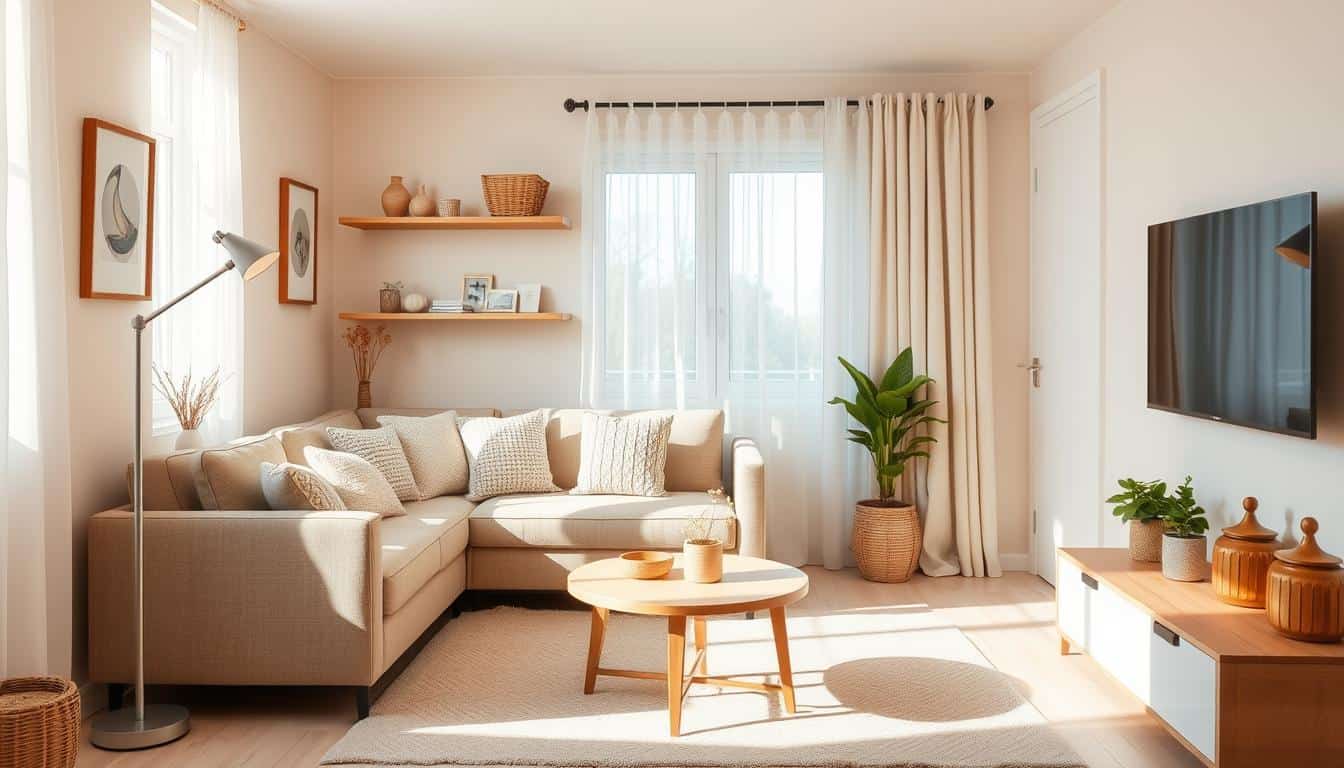
How to Make a Small Space Feel Cozy, Not Cluttered
Living in a small space presents a unique challenge: how do you create that warm, inviting atmosphere without your home feeling cramped and cluttered? The line between “cozy retreat” and “chaotic mess” can be surprisingly thin. But don’t worry—with intentional design choices, your compact home can feel both spacious and snug. This guide will walk you through practical strategies to add warmth, texture, and personality to your small space while maintaining an open, breathable feel that makes every square foot count.
Use Fewer, Larger Pieces
When decorating a small space, your first instinct might be to choose smaller furniture. However, several tiny pieces actually create more visual clutter than a few statement items. Opt for one comfortable sofa rather than multiple small chairs, or choose a statement armchair that becomes the room’s focal point.
This approach reduces the visual noise in your room and creates a more cohesive look. A larger area rug can also make the space feel more expansive, while too many small rugs will chop up your floor space and make it feel disjointed.
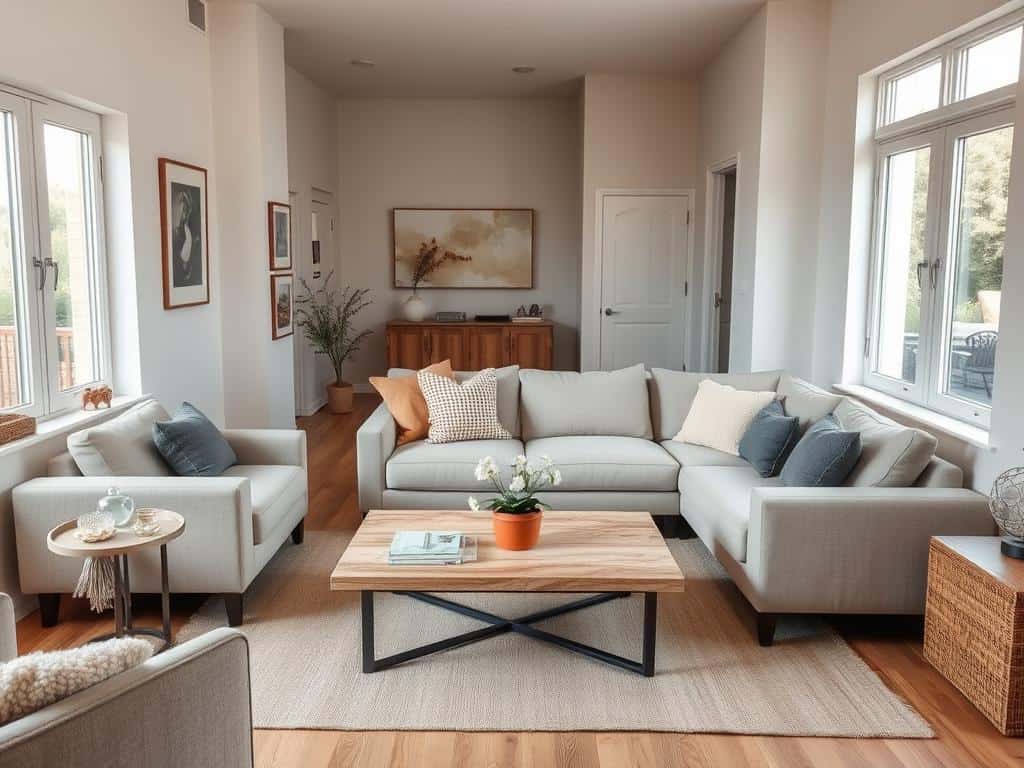
Looking for the perfect statement piece? This compact yet comfortable sofa from Wayfair provides ample seating without overwhelming your space.
Incorporate Vertical Storage
In small spaces, your walls are valuable real estate. By utilizing vertical storage solutions, you can keep essential items accessible while freeing up precious floor space. Wall-mounted shelves, hanging organizers, and tall, narrow bookcases draw the eye upward, creating the illusion of height while providing practical storage.
Consider floating shelves above doorways, hanging pot racks in kitchens, or installing hooks behind doors. These solutions help maintain a clutter-free environment while adding architectural interest to your walls.
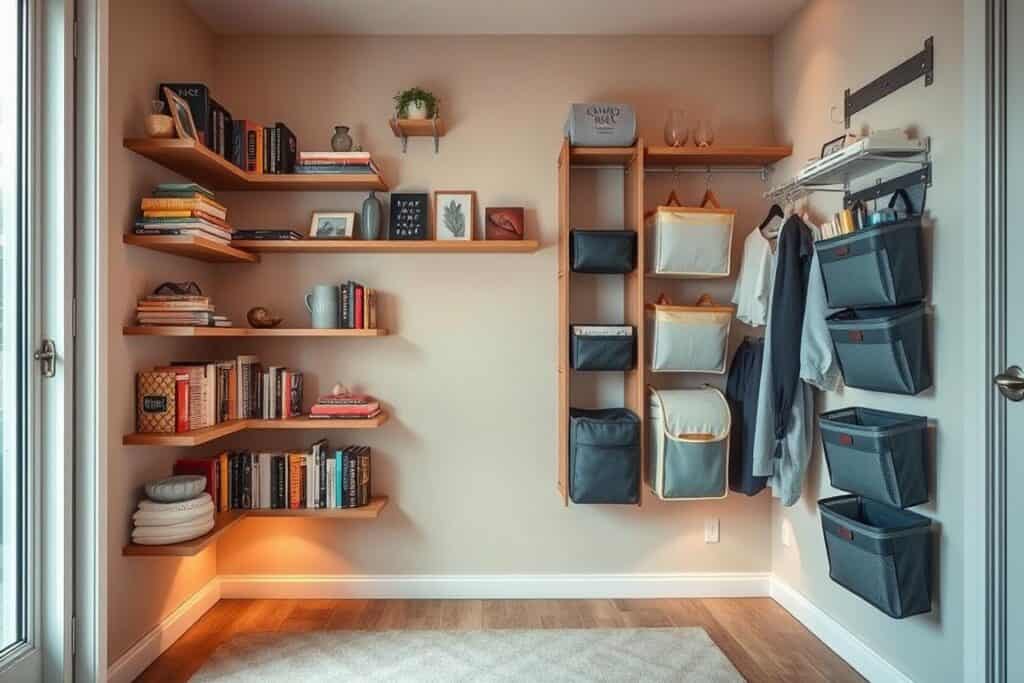
These rustic floating shelves from Amazon add both storage and style to your walls without taking up any floor space.
Stick to a Warm Color Palette
Color has a profound impact on how spacious a room feels. While light colors generally make spaces feel larger, that doesn’t mean you’re limited to stark whites. Warm neutrals like soft creams, gentle beiges, and light terracottas create an inviting atmosphere without closing in your space.
Consider a monochromatic color scheme with varying textures to add depth without visual clutter. If you crave color, incorporate it through small accessories that can be easily changed with the seasons rather than committing to bold walls or large furniture pieces.
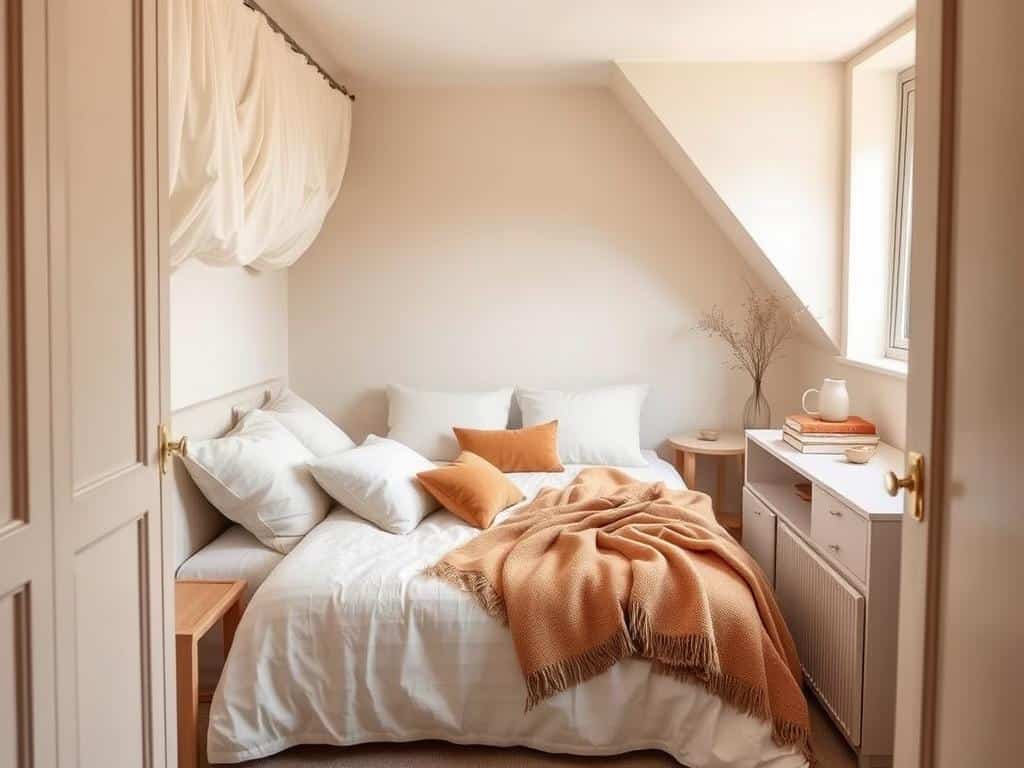
Layer Textures, Not Objects
The secret to creating coziness without clutter lies in texture. Instead of filling your space with numerous decorative objects, focus on incorporating varied textural elements. A chunky knit throw draped over a smooth linen sofa, a soft wool rug on hardwood floors, or velvet pillows against a cotton backdrop create visual interest and tactile comfort.
This approach adds warmth and dimension to your space without requiring additional items. Remember that texture can come from architectural elements too—exposed brick, wooden beams, or textured wall treatments add character without taking up any space at all.
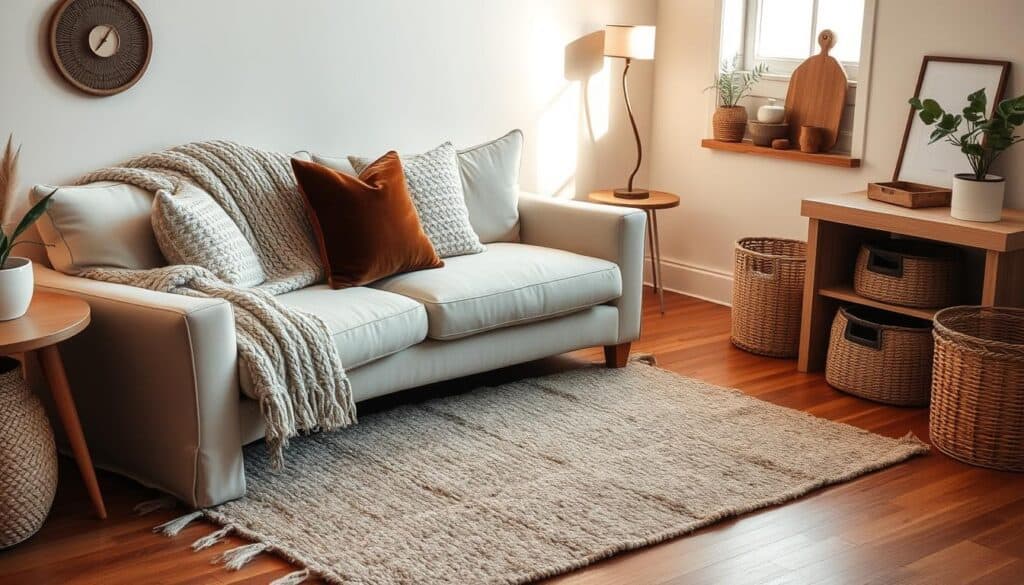
Add instant texture with this chunky knit throw blanket that brings warmth without taking up much space.
Let Natural Light In
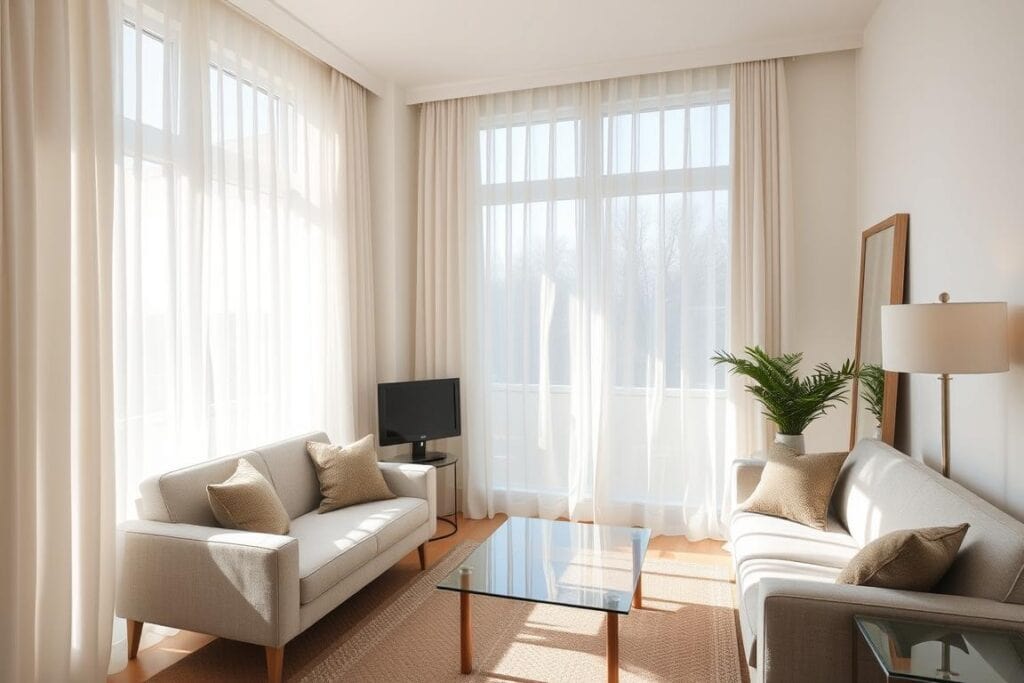
Natural light is perhaps the most powerful tool for making a small space feel larger and more inviting. Maximize the light you have by using sheer window treatments that filter light without blocking it completely. Position mirrors strategically to reflect light deeper into your space, effectively doubling the natural illumination.
Keep furniture arrangements from blocking windows, and consider glass or acrylic pieces that allow light to pass through. If privacy is a concern, try bottom-up blinds that let light in while maintaining seclusion, or frosted window film that diffuses light beautifully.
Choose Multipurpose Furniture
In small spaces, every piece of furniture should earn its keep. Look for items that serve multiple functions: a storage ottoman that works as a coffee table, seating, and hidden storage; a murphy bed that transforms into a desk during the day; or nesting tables that can be expanded when needed and tucked away when not in use.
These versatile pieces reduce the total number of items in your space while maximizing functionality. Consider furniture with exposed legs rather than pieces that sit directly on the floor—seeing more floor creates a sense of openness and flow.
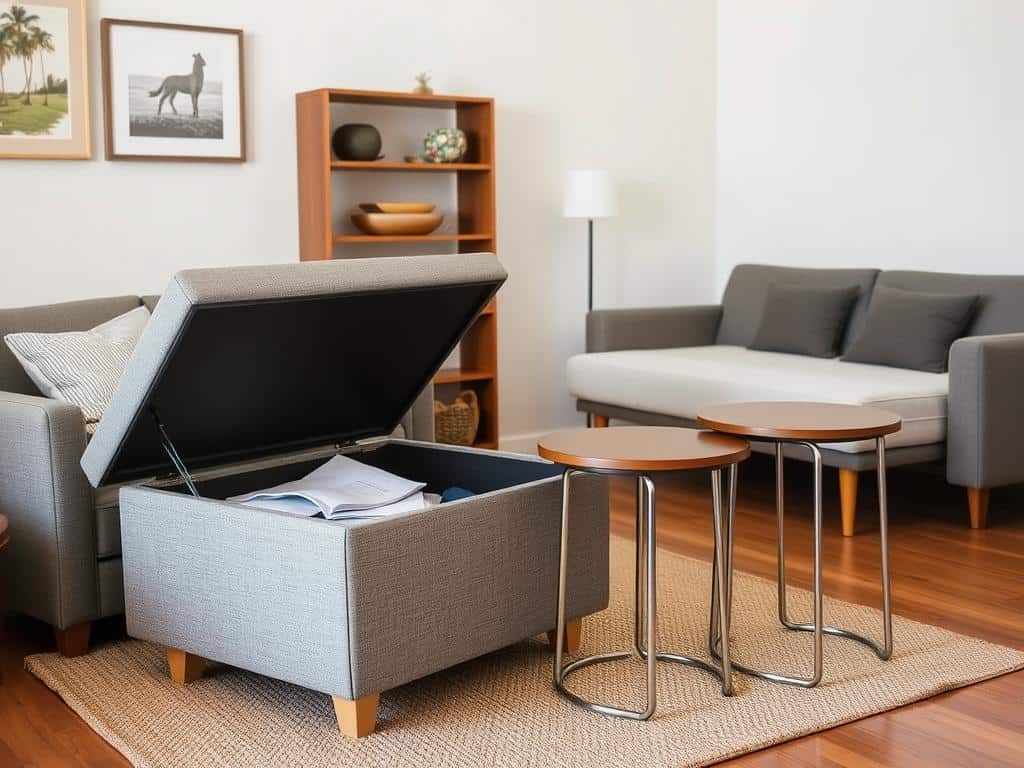
This storage ottoman triples as seating, a coffee table, and hidden storage—perfect for small spaces.
Add Ambient Lighting
Good lighting transforms a small space from cramped to cozy. Create layers of light with a mix of overhead fixtures, wall sconces, and table or floor lamps. Soft, warm-toned bulbs (2700-3000K) cast a more flattering glow than harsh overhead lighting and instantly make a space feel more inviting.
Consider space-saving options like wall-mounted reading lamps beside beds or sofas, clip lights for shelving units, or LED strip lighting under cabinets. Dimmer switches allow you to adjust the mood according to time of day or activity, adding flexibility to your lighting scheme.
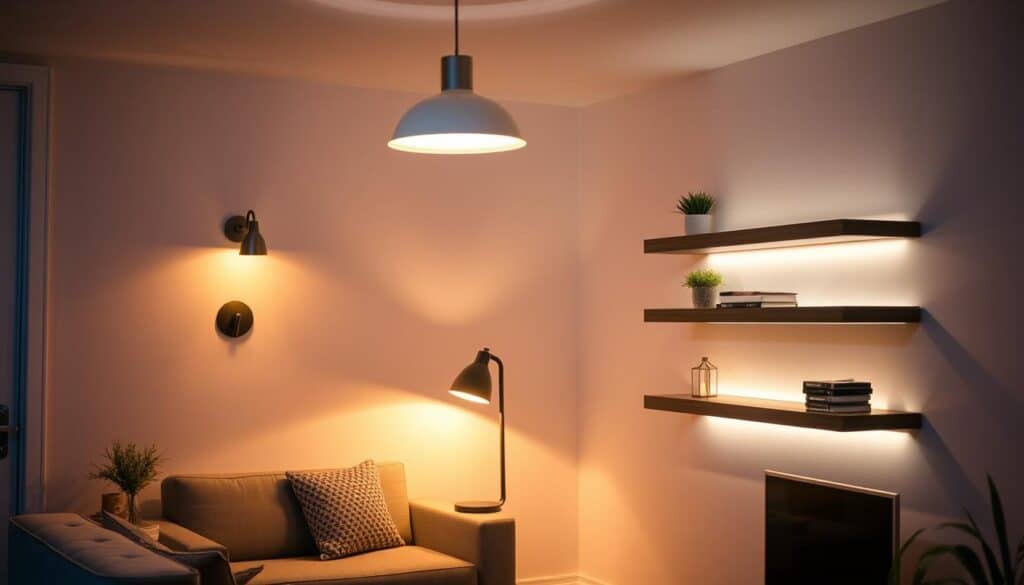
These wireless puck lights add ambient lighting anywhere without requiring electrical work—perfect for renters.
Keep Decor Intentional
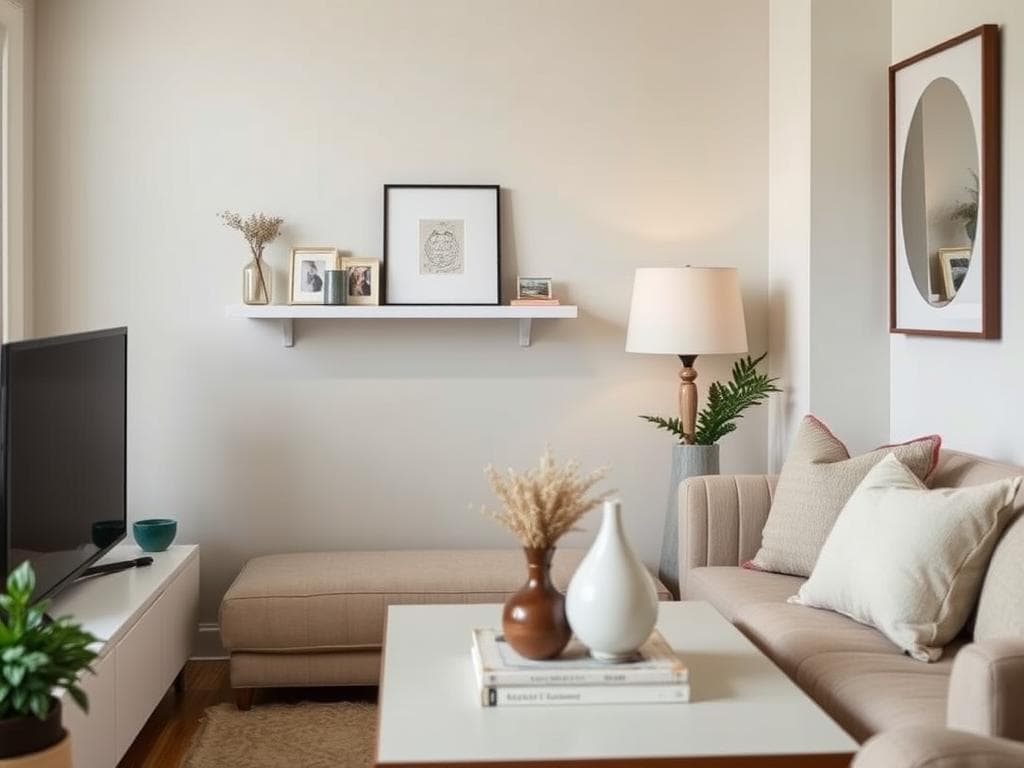
In small spaces, the “less is more” philosophy truly shines. Instead of displaying every treasured item, rotate your collections seasonally or choose only the pieces that bring you the most joy. Group similar items in odd-numbered clusters (threes work particularly well) for a balanced, intentional look that feels curated rather than cluttered.
Consider the negative space around objects as part of your design—breathing room between items allows each piece to stand out. When selecting decorative objects, choose larger statement pieces over numerous small items for a cleaner, more cohesive appearance.
Float Furniture Away From Walls
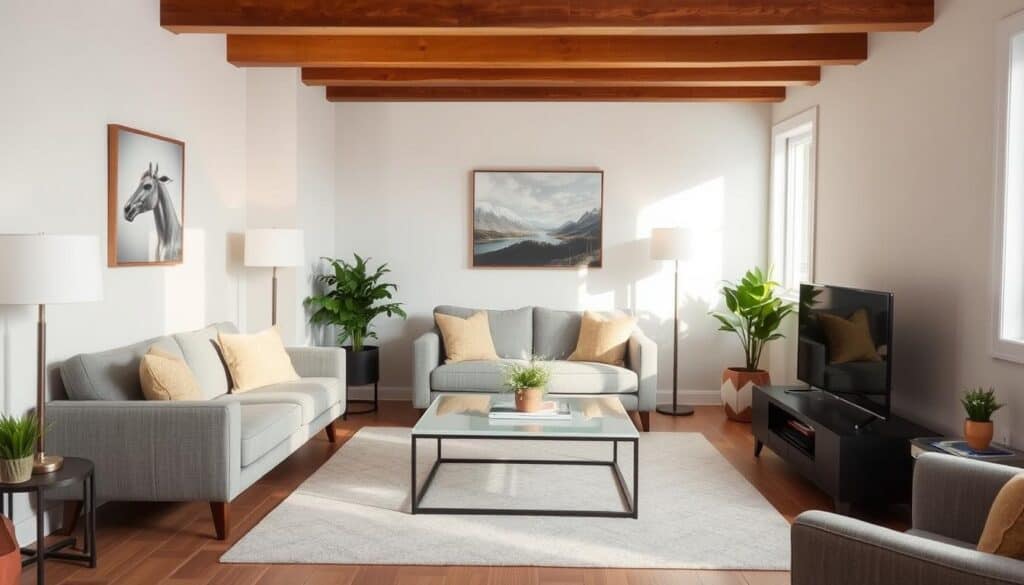
It might seem counterintuitive, but pulling furniture slightly away from walls can actually make a small room feel larger. This technique creates a sense of movement and breathing room around your pieces. Even a few inches of space between your sofa and the wall can make a difference in how the room feels.
In very small rooms, consider a loveseat or apartment-sized sofa positioned perpendicular to the longest wall rather than a full-sized sofa pushed against it. This arrangement creates better flow and can make the space feel more open and conversational.
Use Mirrors to Expand the Space
Mirrors are magical in small spaces—they reflect light, create the illusion of depth, and visually double your square footage. Position a large mirror across from a window to bounce natural light throughout the room, or use a collection of smaller mirrors as an artistic focal point that also expands the space.
Consider mirrored furniture pieces like side tables or cabinet fronts that add function while visually receding into the space. Even metallic or high-gloss finishes can create mirror-like reflections that help a room feel more expansive and bright.
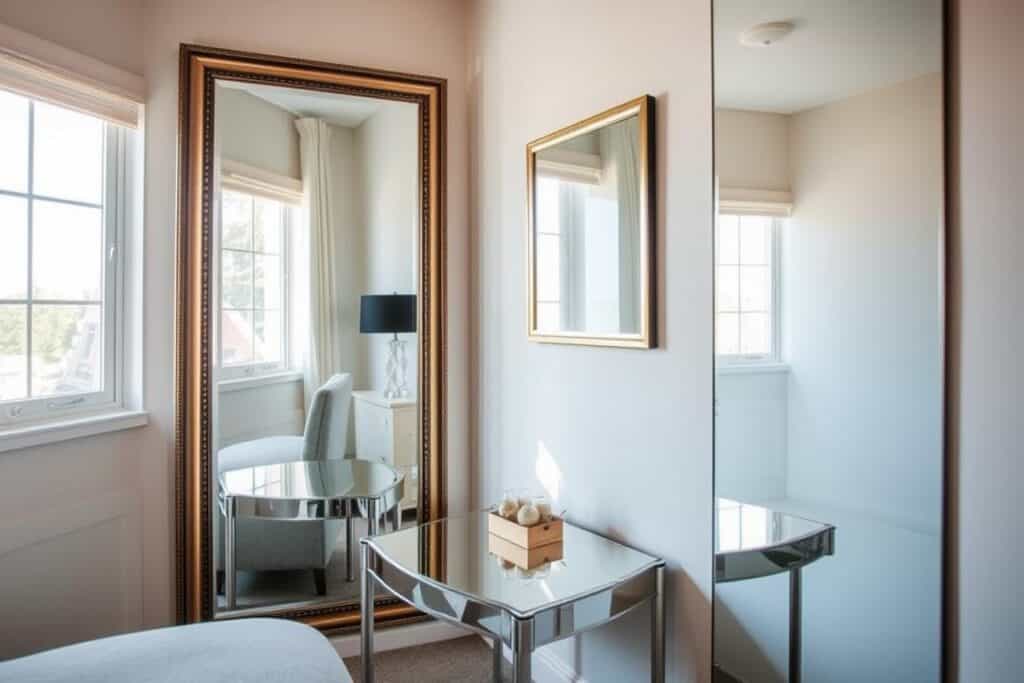
This large wall mirror with a slim frame maximizes reflection while taking up minimal visual space.
Embrace Awkward Corners
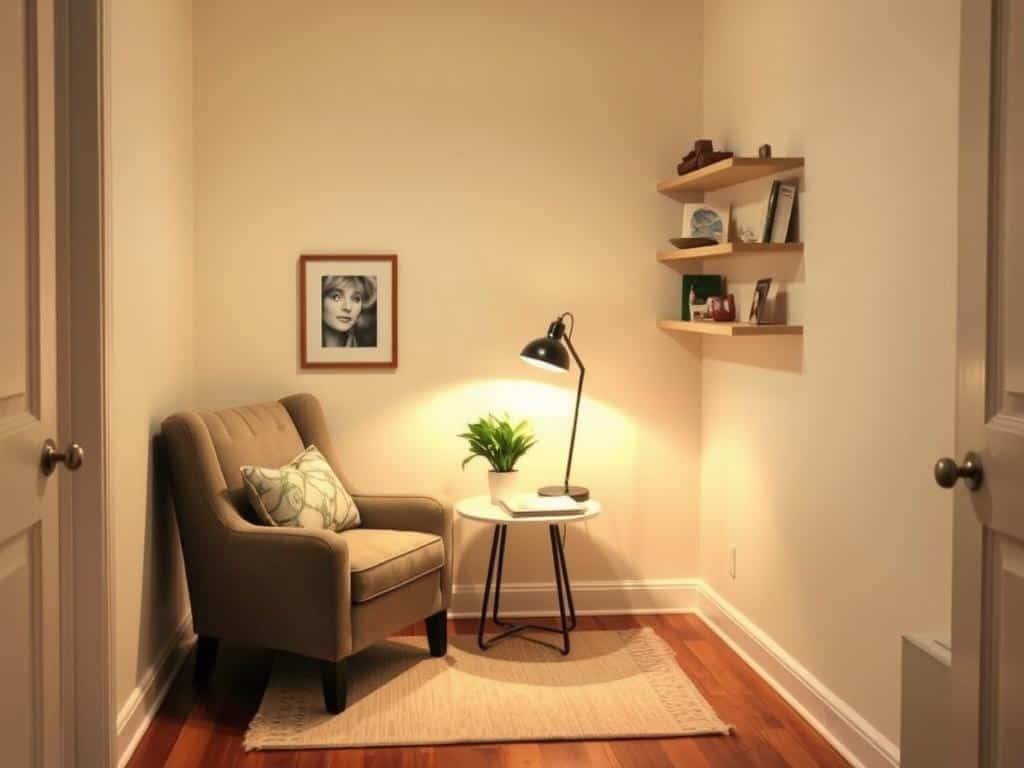
Small spaces often come with challenging architectural features like awkward corners, sloped ceilings, or unusual nooks. Instead of trying to hide these quirks, embrace them as opportunities for custom solutions. Transform a tight corner into a reading nook with a small chair and wall-mounted lamp, or add floating corner shelves to utilize otherwise wasted space.
Under-stair areas can become mini home offices or storage zones, while sloped ceilings create perfect spots for low bookcases or platform beds. These customized solutions not only maximize your square footage but also add character and uniqueness to your space.
Create Your Perfect Cozy Haven
Designing a small space that feels both cozy and uncluttered is all about intentional choices. By focusing on quality over quantity, embracing smart storage solutions, and creating warmth through texture and lighting rather than excess objects, you can create a home that feels both spacious and snug.
Remember that the most inviting spaces reflect the people who live in them—so while these guidelines provide a framework, the most important element is incorporating what makes you feel at home. With these strategies, your small space can become the cozy, clutter-free haven you’ve been dreaming of.
Ready to transform your small space?
🪴 A small space doesn’t have to feel cramped. With a few smart styling tricks, you can make it feel warm, personal, and perfectly cozy—without the clutter.