

12 Cozy Cabin Living Rooms You’ll Love
There is something about a cabin living room that makes you want to stay put. Warm wood, soft blankets, deep comfortable seating, and gentle lighting can make even the coldest evening feel considerably more inviting.
This post contains affiliate links. If you purchase through these links, I may earn a small commission at no extra cost to you. Learn more here.
The good news is that you do not need exposed beams, a mountain view, or an actual log cabin to create the feeling. Many of the details that make cabin interiors so cozy—natural wood, earthy colors, layered textiles, warm lighting, and vintage pieces—work beautifully in ordinary living rooms too.
These cozy cabin living room ideas range from simple weekend updates to bigger design features, so you can borrow one or two elements or build the entire room around the rustic look.
Quick Guide: How to Make Any Living Room Feel Like a Cozy Cabin
- For an easy update: Add a wool-look throw, earthy cushions, warm lamps, and a few natural wood accessories.
- For a small living room: Use cabin textures and colors without filling the room with oversized rustic furniture.
- For a modern home: Combine clean-lined furniture with warm wood, stone, woven textiles, and simple nature-inspired artwork.
- For a darker cozy look: Try forest green, chocolate brown, rust, burgundy, charcoal, and warm wood tones.
- For a lighter cabin look: Choose oatmeal, cream, warm white, pale wood, taupe, and muted sage.
- For the biggest impact: Concentrate on one focal feature such as a fireplace, wood-paneled wall, substantial coffee table, or statement light.
Easiest place to start: Before buying new furniture, change the textiles and lighting. A warmer lamp, textured throw, new cushion covers, and natural-fiber rug can make an ordinary sofa suddenly feel much more cabin appropriate.
1. Embrace Natural Wood Elements
Natural wood is one of the quickest ways to give a living room genuine cabin character. Exposed beams and log walls are wonderful if you already have them, but they are certainly not required.
A chunky wooden coffee table, reclaimed-style shelving, timber side table, or simple wooden mantel can introduce enough warmth to change the feeling of the room. Look for visible grain, knots, and slightly imperfect finishes rather than furniture that feels overly polished.
You can also mix wood tones. A cabin-inspired room often feels more natural when everything is not made from one perfectly matching furniture set. The trick is to repeat a couple of similar warm tones around the room so the mix still feels intentional.
Easy Ways to Add More Wood
- Install one or two chunky floating shelves.
- Swap a glossy coffee table for a warm or weathered wood version.
- Add wooden picture frames around nature-inspired artwork.
- Use a vintage wooden stool as a small side table.
- Display wooden bowls, boxes, or carved accessories sparingly.
Small-space tip: You do not need a huge reclaimed-wood feature wall. A couple of substantial wooden shelves can introduce the same rustic texture without making a compact living room feel smaller.
A rustic reclaimed wood floating shelf is an easy way to introduce both useful storage and cabin-style texture.
2. Make a Stone Fireplace the Focal Point
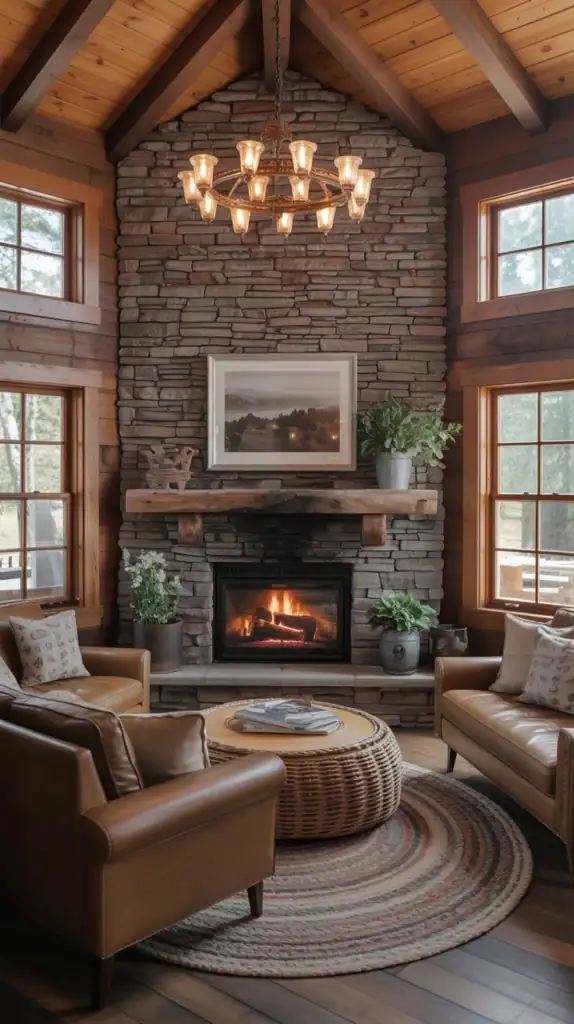
Few features create a cabin atmosphere quite as effectively as a fireplace surrounded by natural-looking stone. The rough texture gives the room weight and character while creating an obvious focal point for the seating arrangement.
If you already have a fireplace, you may not need to rebuild anything. Sometimes simplifying the mantel, introducing warmer colors nearby, or arranging the furniture to face the fire can make it feel much more central to the room.
If a traditional fireplace is not part of your home, an appropriate electric fireplace can still provide the visual warmth of a glowing fire. A convincing cabin look comes from the whole composition—the mantel, surrounding materials, lighting, furniture, and textiles—not simply whether the flames are real.
Style the Fireplace Without Overdoing It
- Keep the mantel relatively simple.
- Try one large landscape, mirror, or rustic artwork above it.
- Add a substantial wooden mantel if appropriate for the fireplace and installation.
- Repeat the stone colors through cushions, rugs, or upholstery.
- Arrange seating so the fireplace feels connected to the conversation area.
Safety note: Functional fireplaces, stoves, mantels, hearths, and combustible materials need appropriate clearances and installation for the specific appliance and local requirements. Follow the manufacturer’s instructions and use a qualified professional where required rather than treating a working fireplace as a purely decorative DIY project.
Decorative birch logs can bring in a pale natural texture when used as decor in a suitable location away from active heat and flames.
3. Layer Warm and Cozy Textiles
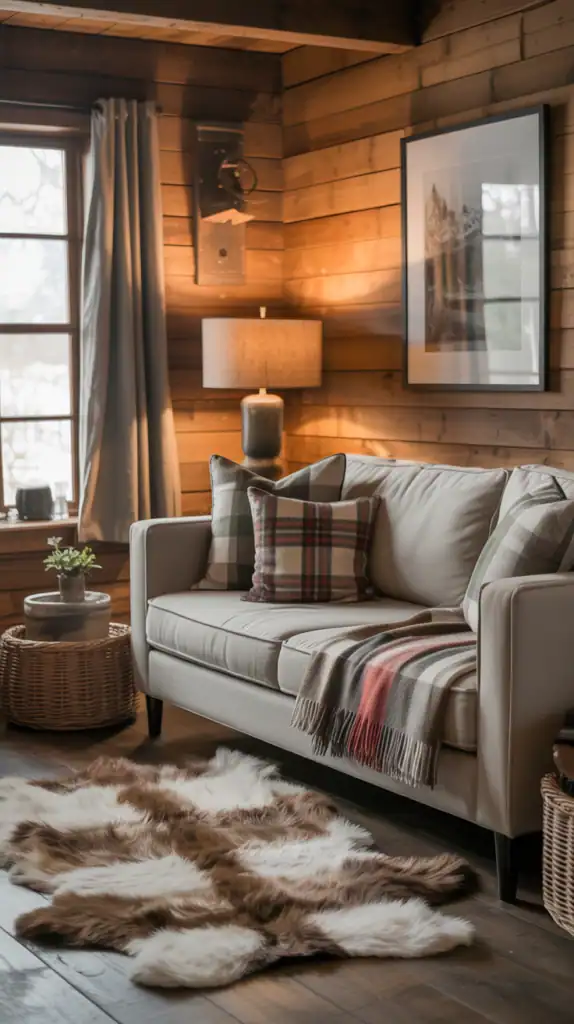
If you want the room to feel cozier tonight rather than after a six-week renovation, start with textiles. They are one of the easiest ways to soften a living room and introduce cabin character without changing the furniture.
Mix different textures rather than covering everything in the same fabric. A chunky knit throw can sit beside smoother cushions, while a plaid blanket introduces pattern and a thick rug makes hard flooring feel warmer underfoot.
The key is layering without burying the sofa. You still need somewhere to sit after you have finished arranging all those beautiful cushions.
A Simple Cabin Textile Mix
- One chunky or textured throw.
- One plaid or checked pattern.
- A couple of plain cushions in earthy colors.
- A soft rug large enough to connect the main seating area.
- Optional faux-fur or teddy texture for extra winter coziness.
Budget-friendly version: Keep your existing sofa and change the layers around it. New cushion covers and one substantial throw are much less expensive than replacing upholstery and can completely change the mood.
A buffalo plaid throw is an easy way to introduce a classic cabin pattern without committing to patterned furniture.
4. Build an Earthy Cabin Color Palette
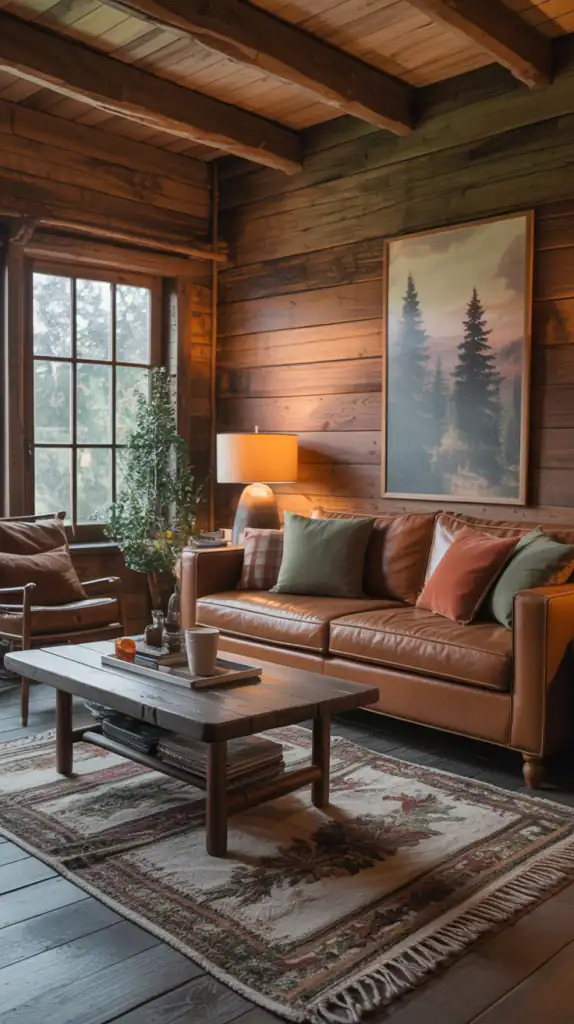
Cabin colors tend to borrow from the landscape outside: forest green, bark brown, stone gray, rust, warm cream, and muted ochre. You do not need all of them in one room. Choosing three or four gives you plenty to work with.
If your living room already has neutral walls and furniture, use earthy colors as accents through cushions, blankets, curtains, artwork, and ceramics. For a moodier room, forest green or a warm brown can become a larger part of the scheme.
Warm undertones are particularly useful when the room contains lots of timber. Cream, rust, olive, and deep green tend to sit comfortably beside natural wood without fighting for attention.
Three Easy Cabin Color Schemes
- Light and cozy: Cream + oatmeal + warm wood + sage.
- Classic cabin: Forest green + rust + brown + warm cream.
- Moody lodge: Charcoal + deep green + burgundy + dark wood.
Easiest upgrade: Choose one earthy accent color and repeat it three times around the room—for example, green cushions, a small green detail in the artwork, and a green ceramic vase. Repetition makes the color feel intentional.
Forest green cushions are an easy way to introduce a deeper woodland color without repainting the room.
5. Add Vintage and Collected Accents
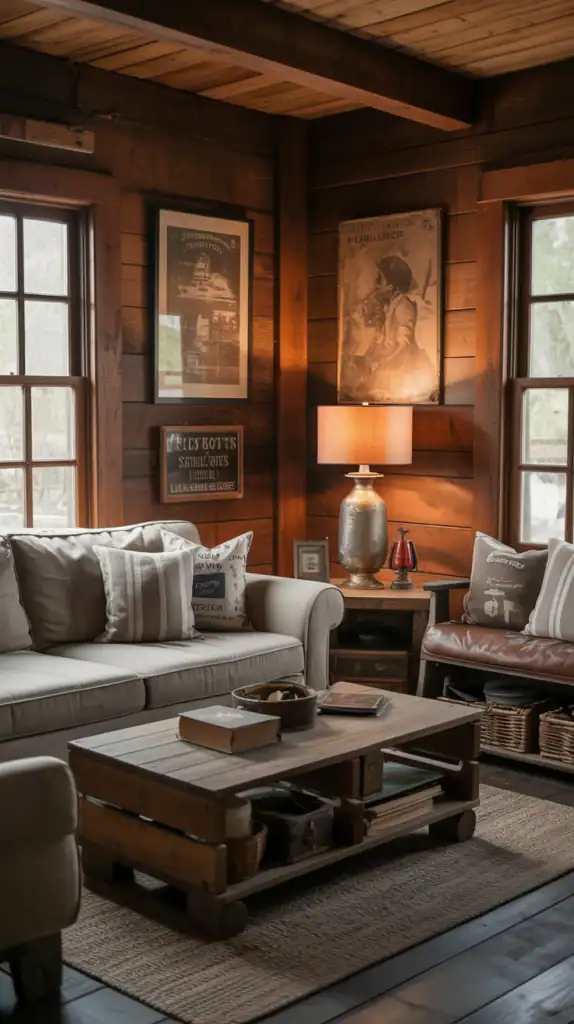
Cabin interiors tend to look better when they feel collected rather than newly purchased as one complete set. Vintage and secondhand pieces are perfect for adding that sense of history.
Try an old wooden trunk, vintage landscape painting, stack of worn books, pottery, lantern, or weathered frame. One interesting piece with age and character can do more for the room than a shelf filled with mass-produced rustic signs.
Thrift stores, flea markets, antique centers, and even pieces already tucked away elsewhere in your home are worth checking before buying new. Cabin style is unusually forgiving of scratches, worn finishes, and mismatched pieces—in fact, they often make the room better.
Vintage Pieces Worth Looking For
- Old landscape or wildlife artwork.
- Wooden trunks and boxes.
- Traditional lantern-style decor.
- Stoneware and pottery.
- Old books with earthy covers.
- Wooden stools and small side tables.
Why it works: Rustic rooms benefit from a little imperfection. Pieces with different ages, finishes, and textures prevent all that wood and plaid from feeling like a staged cabin-themed set.
A vintage-inspired lantern can add rustic character and another layer of ambient light to a shelf, side table, or mantel.
6. Use Rustic Statement Lighting
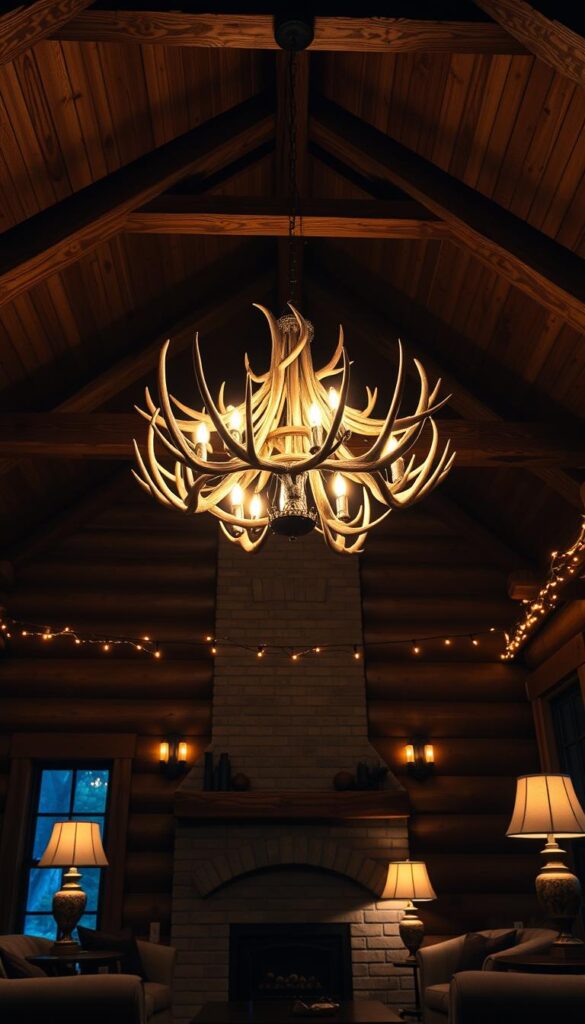
Lighting has an enormous effect on whether a cabin-inspired living room feels genuinely cozy. One harsh ceiling light can flatten all those beautiful textures, while several softer light sources create pockets of warmth around the room.
A rustic pendant or chandelier can become a focal point in a larger room, but statement lighting does not have to mean enormous antlers hanging over the coffee table. Wood, aged metal, simple lantern shapes, and warm-toned shades can all introduce the same character more subtly.
Then layer the main fixture with table lamps, floor lamps, or suitable wall lights. Having several sources allows you to reduce the overhead lighting in the evening and create the softer atmosphere that makes cabin rooms feel so inviting.
Layer Your Cabin Lighting
- Overhead: A pendant, chandelier, or simple rustic ceiling fixture.
- Beside seating: A floor or table lamp for reading.
- Accent lighting: A small lamp on a console, shelf, or side table.
- Bulb choice: Use an appropriate warm-looking light temperature if you want a softer evening atmosphere.
Small-space tip: Skip the oversized lodge chandelier if your ceiling is low or the room is compact. A smaller wood-and-metal fixture paired with a good floor lamp can create the same layered effect without dominating the room.
A rustic wood and metal pendant can introduce lodge-inspired character while still working with more modern furniture.
7. Bring Nature Indoors
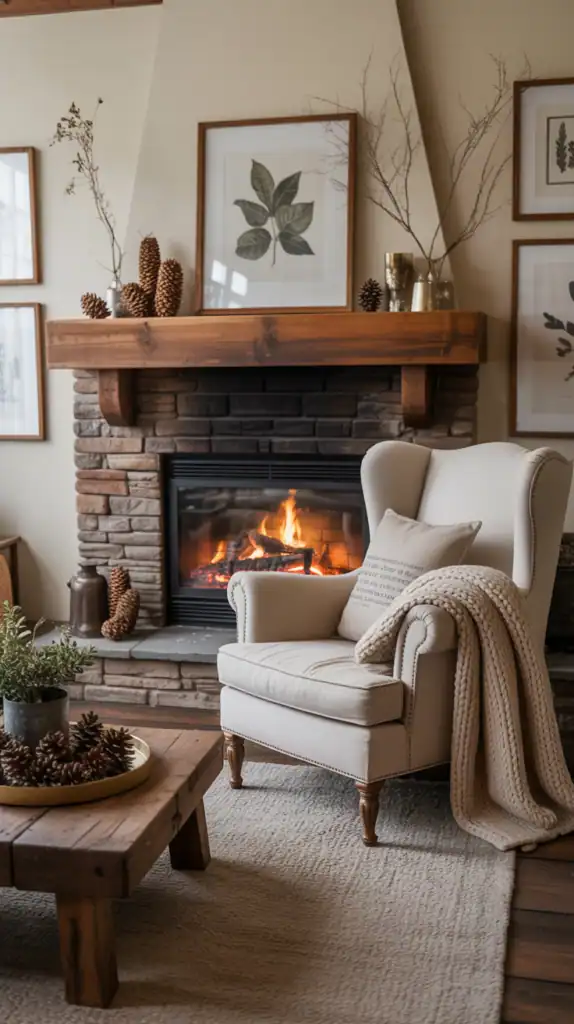
Cabin style feels most convincing when it takes inspiration from nature rather than relying entirely on rustic-themed decorations. Branches, pinecones, botanical artwork, greenery, stone, and natural wood can all help connect an ordinary living room with the outdoors.
Keep arrangements simple. A few branches in a substantial vase can look far more striking than filling every shelf with tiny woodland ornaments. Likewise, one group of framed botanical prints can give a wall character without making the room feel busy.
If you collect natural materials yourself, make sure you are allowed to take them from the location and check them carefully before bringing them indoors. You can get much the same effect with dried branches, greenery, pinecones, or botanical pieces intended for decorating.
Easy Nature-Inspired Details
- A large vase filled with simple branches.
- Framed fern, tree, or botanical prints.
- Pinecones displayed in a wooden or stoneware bowl.
- A few houseplants in earthy pots.
- Landscape photography or woodland artwork.
Most timeless option: Botanical and landscape artwork gives you the connection to nature without being tied to one particular season. It can stay on the wall long after the Christmas greenery has gone back into hiding.
A coordinated set of botanical prints is an easy way to bring woodland character to an empty wall.
8. Choose Comfortable Cabin Seating
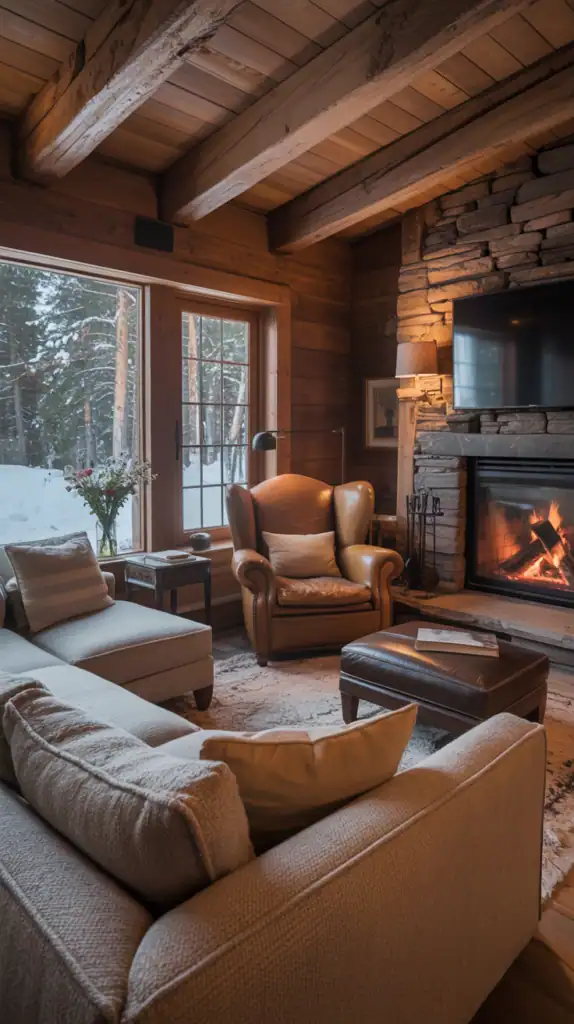
A cozy cabin living room should actually be comfortable to use. Deep sofas, generous armchairs, and somewhere to put your feet make far more difference than squeezing in another decorative log basket.
Leather works particularly well with rustic interiors because its smooth surface balances rougher materials such as wood, stone, jute, and chunky knits. Fabric upholstery works just as well, especially in warm taupe, oatmeal, olive, brown, or charcoal.
Arrange the seating around how you genuinely use the room. That might mean facing a fireplace, creating a conversation area, or positioning a comfortable chair beside a window with a reading lamp and small table.
Make the Seating Area Feel Cozier
- Add a comfortable chair beside the fireplace or window.
- Include an ottoman or footstool if space allows.
- Keep a small table within easy reach of the main seats.
- Add one or two substantial cushions rather than covering every seat.
- Keep a throw nearby for colder evenings.
Small-space tip: Oversized seating only feels cozy when the room can accommodate it. In a compact living room, one generous armchair paired with a sensibly sized sofa can give you the same inviting effect while preserving comfortable walkways.
A leather armchair can introduce warmth and create a dedicated reading spot within a larger cabin-inspired seating area.
9. Keep Window Treatments Simple
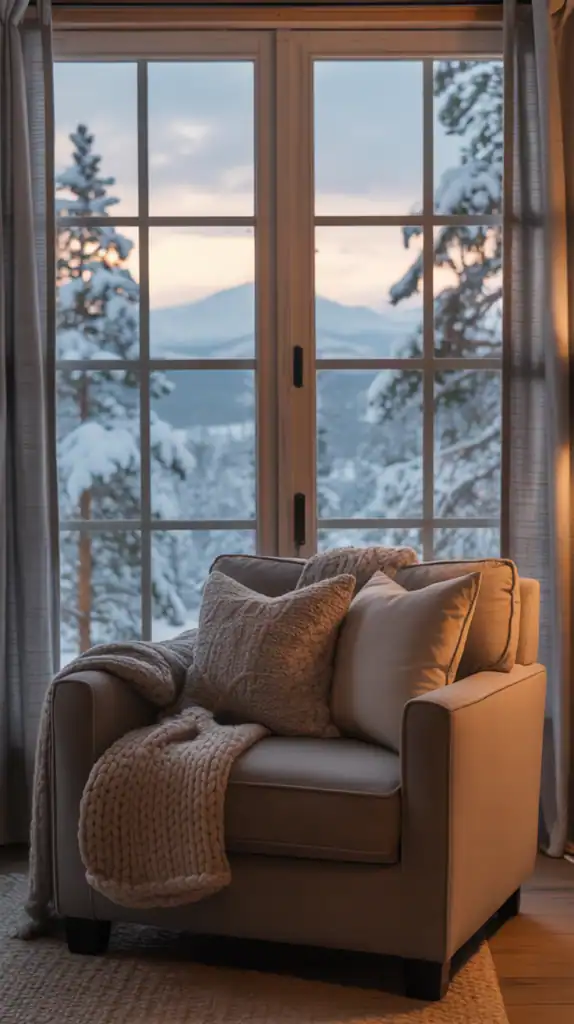
Even if the view outside is considerably more suburban street than snow-covered mountain, simple window treatments can help create the relaxed cabin feeling inside.
Natural woven shades, relaxed linen-look curtains, or understated checks work particularly well because they introduce texture without competing with wood, stone, rugs, and other rustic elements already in the room.
If privacy is important, choose window coverings based on what the room actually needs rather than appearance alone. Layering a practical blind or shade with softer curtains can give you privacy and light control while still creating the relaxed look.
Choose Window Treatments to Suit the Room
- For a lighter cabin: Try relaxed cream or oatmeal curtains.
- For natural texture: Consider woven shades where suitable.
- For classic cabin style: Introduce a restrained plaid or buffalo check.
- For privacy: Layer decorative curtains with an appropriate blind or shade.
Designer detail: Hang curtains high enough to emphasize the height of the window and choose enough fabric for a relaxed drape. Rustic does not have to mean skimpy curtains hanging halfway down the wall.
Buffalo check curtains can introduce a recognizable cabin pattern while still keeping the rest of the room relatively simple.
10. Layer Area Rugs for Warmth and Texture

A rug does several jobs in a cabin-style living room. It softens hard flooring, adds color and texture, and helps visually pull the seating arrangement together.
If you like a layered look, start with a larger, quieter rug and place a smaller patterned rug over it. Natural-looking flatweaves make useful foundations, while vintage-inspired, Southwestern, plaid, or softly patterned rugs can introduce more character on top.
You do not have to layer rugs, though. One appropriately sized rug is often better than two undersized ones. Ideally, the rug should feel connected to the furniture rather than floating like a small island beneath the coffee table.
A Simple Rug Formula
- Choose a rug large enough to visually connect the main seating.
- Use earthy colors already found elsewhere in the room.
- Mix pattern with plain upholstery rather than competing with several other strong prints.
- Use an appropriate rug pad or anti-slip solution where needed.
- If layering, keep the larger bottom rug relatively simple.
Why it works: A patterned rug can introduce rust, brown, cream, green, or charcoal all at once, giving you a ready-made color palette to repeat through cushions and throws.
A Southwestern-inspired rug can bring pattern and earthy color into a cabin living room without changing the furniture.
11. Create a Cozy Wood Stove Focal Point
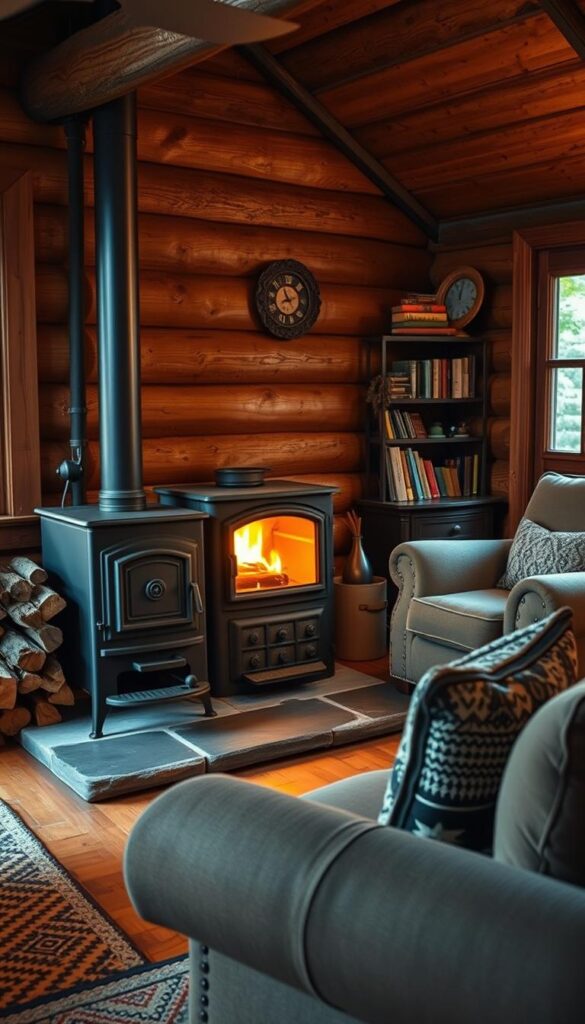
A traditional wood-burning stove has undeniable cabin appeal, particularly when paired with stone, brick, timber, and comfortable seating. Its compact shape can also create a strong focal point without the visual scale of a large stone fireplace.
A real stove is not simply a decorating accessory, however. Installation, ventilation, hearth construction, clearances, chimney or flue requirements, and local regulations all matter, so installation should follow the appliance manufacturer’s requirements and applicable regulations, using qualified professionals where required.
If you mainly want the visual effect rather than a solid-fuel heating appliance, an electric stove-style heater can provide a similar focal point with a very different installation process. Follow its own operating and clearance instructions and avoid blocking ventilation or placing unsuitable materials against the unit.
Style Around the Stove
- Let the stove remain the focal point rather than surrounding it with clutter.
- Repeat black or dark metal elsewhere through lighting or small accessories.
- Use stone, brick, or wood tones elsewhere in the room for continuity.
- Arrange seating to enjoy the focal point while maintaining required clearances.
- Keep combustible decor away from working heating appliances as directed by the manufacturer.
For an easier alternative: An electric stove-style heater can introduce the shape and glow associated with a cabin stove without pretending to be the same thing as a wood-burning installation.
An electric stove-style heater can create a cozy visual focal point where it is suitable for your room and used according to the manufacturer’s instructions.
12. Add Character With Textured Walls
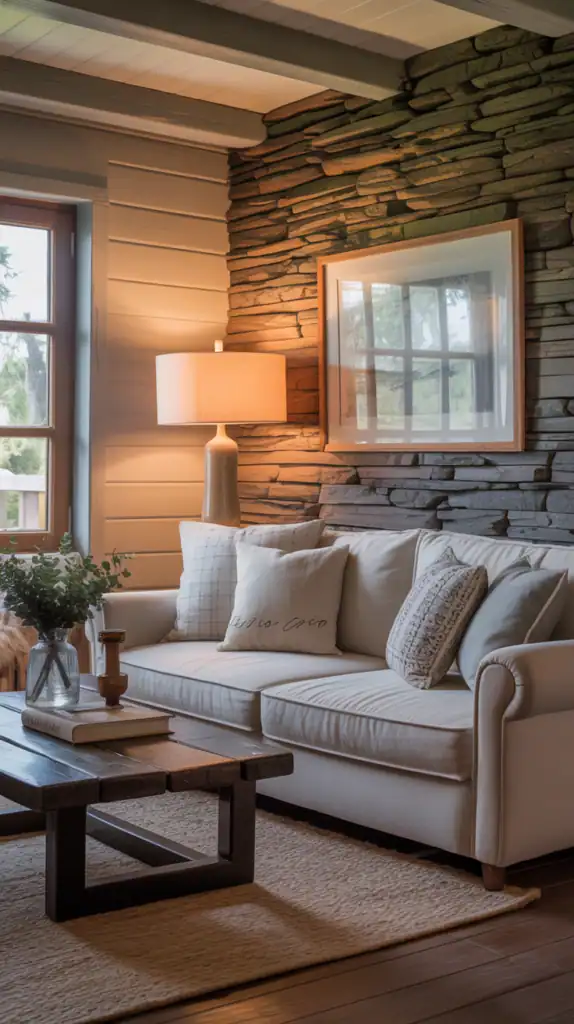
When a living room feels a little too plain for the cabin look, adding texture to one wall can make a surprisingly big difference. Wood paneling, tongue-and-groove boards, stone accents, or simple painted paneling can all introduce architectural character.
You do not need to cover all four walls. In many ordinary homes, one carefully chosen feature wall is enough—particularly behind a sofa, around a suitable fireplace, or on the wall that naturally catches your eye when you enter the room.
Peel-and-stick and other removable products can offer a less permanent alternative in some spaces, but check the manufacturer’s instructions carefully. Suitability and removability depend on the product and the condition and finish of the wall underneath.
Choose a Wall Treatment to Suit Your Cabin Style
- Rustic cabin: Weathered or reclaimed-look wood.
- Modern cabin: Simple vertical wood paneling or clean-lined boards.
- Mountain lodge: Stone or convincing stone-inspired texture.
- Light cabin: Warm-white or cream-painted paneling.
- Budget refresh: Concentrate the treatment on one focal wall rather than the entire room.
Small-space tip: If dark timber would overwhelm the room, choose a lighter wood tone or painted paneling. You can still get the architectural texture without making the walls feel as though they are slowly closing in on the sofa.
Peel-and-stick wood planks can offer a quicker decorative route to a wood-look feature wall when the product is suitable for your surface.
The Cozy Cabin Living Room Formula
If you love the look but do not know where to begin, you can build a cabin-inspired living room in layers. You certainly do not need all 12 ideas at once.
- Start with warm neutrals: Cream, oatmeal, brown, taupe, or warm gray give you an easy foundation.
- Add natural wood: Introduce it through a coffee table, shelves, frames, side tables, or architectural details.
- Choose one deeper nature-inspired color: Forest green, rust, burgundy, charcoal, or muted navy can add depth.
- Layer the textiles: Add a rug, textured throw, and a restrained mix of cushions.
- Soften the lighting: Combine your main light with table or floor lamps so the room is not dependent on one bright overhead fixture.
- Add something collected: A vintage landscape, old wooden stool, pottery, books, or an interesting secondhand piece gives the room personality.
- Finish with nature: Greenery, branches, botanical art, or natural materials connect everything back to the cabin inspiration.
Most important: Cozy comes from the combination of comfort, texture, warmth, and lighting. You do not need to turn your living room into a film set for a wilderness adventure.
How to Get the Cabin Look in a Small or Modern Living Room
Cabin style can work surprisingly well in a small apartment, newer house, or modern living room. The trick is borrowing the atmosphere rather than trying to reproduce every traditional cabin feature.
- Choose fewer substantial pieces: One wooden coffee table will usually look better than filling a small room with rustic furniture.
- Keep the walls lighter: If the room lacks natural light, use cream, warm white, oatmeal, or pale taupe and bring deeper cabin colors in through accessories.
- Use vertical space: Floating shelves and wall-mounted lighting can introduce character without taking up valuable floor space.
- Mix rustic and modern: A clean-lined sofa can look wonderful beside a rough wooden table, vintage landscape, and textured rug.
- Avoid oversized everything: Cabin style should feel comfortable, not crowded. Scale the furniture to the actual dimensions of the room.
- Let texture do the work: Wood, woven fabrics, wool-like textures, stoneware, and warm lighting can create the atmosphere without adding clutter.
Easiest small-room combination: Try a neutral sofa, warm wooden coffee table, earthy rug, forest-green cushions, one textured throw, and a warm table or floor lamp. That is enough to establish the look without sacrificing half the room to cabin decor.
Bring Cabin Coziness Home
Creating a cozy cabin living room is less about owning the right house and more about creating the right feeling. Warm wood, comfortable seating, natural textures, earthy colors, and soft pools of light can bring that relaxed cabin atmosphere into almost any home.
You can start small with a textured throw, a vintage landscape, and warmer lighting, or make a bigger change with a feature wall, fireplace, or new rug. There is no need to tackle everything at once.
And perhaps that is why cabin style is so easy to live with. A slightly worn table is character, mismatched furniture is collected, and an enormous blanket draped over the sofa is practically part of the design scheme.
Build the room around comfort first, then add the rustic details that make it feel like your own little retreat—even if the nearest mountain is several hours away.