

Cleaning Schedule: Your Guide to a Tidy Home
Imagine walking into a clean home every day without spending all weekend cleaning. It feels great to have a spotless home. But keeping it that way is hard.
You have work, family, and friends to take care of. You don’t have to be a superhero. You just need a plan that fits your life.
Clorox expert Mary Gagliardi says to break down cleaning into small tasks. Sort them by day, week, month, season, and year. This makes cleaning easy and automatic.
This guide will help you make a cleaning plan for your home. It won’t make you a weekend cleaning machine. You’ll have a system that lets you focus on what’s important.
Key Takeaways
- Break down housework into daily, weekly, monthly, and seasonal tasks for better management
- Create a realistic cleaning schedule that fits your actual lifestyle and commitments
- Put your routine on autopilot to eliminate decision fatigue about where to start
- Focus on manageable tasks instead of long weekend cleaning sessions
- Customize your system based on your home’s specific needs and your available time
The Importance of a Cleaning Schedule
Your home should be a calm place, not a source of stress. A good organizational cleaning schedule makes it so. It turns your home into a peaceful space.
Studies show that cleaning routines cut down stress by 40%. Knowing what to do and when helps you feel in control. This control affects your whole life.
Benefits of Following a Schedule
Keeping to a daily cleaning routine has big benefits. It saves time and makes cleaning easier. You won’t spend whole weekends cleaning anymore.
Clean spaces help you think better. Clean spaces promote clear thinking. You’ll be more focused and creative without clutter.
It also saves money. Regular cleaning stops expensive repairs. Your things last longer, and you avoid costly cleaning services.
| Cleaning Frequency | Time Investment | Stress Level | Long-term Benefits |
|---|---|---|---|
| Daily routine | 15-30 minutes | Low | Consistent maintenance, reduced deep-cleaning needs |
| Weekly sessions | 2-3 hours | Moderate | Good maintenance, some buildup between sessions |
| Monthly marathons | 6-8 hours | High | Overwhelming tasks, possible health risks |
| Crisis cleaning | 10+ hours | Very high | Expensive repairs, health hazards, damaged items |
Reducing Stress and Clutter
Clutter makes your mind noisy. A organizational cleaning schedule keeps things tidy. This lets your mind relax.
Clutter raises stress levels. Visual clutter increases cortisol levels. Cleaning routines lower your stress.
With everything in its place, you won’t get stressed about where things are. Your daily cleaning routine becomes automatic. This frees your mind for other important things.
Creating Healthy Living Spaces
Keeping your home clean is good for your health. Mary Gagliardi says cleaning food surfaces daily stops germs. This keeps your family safe.
Clean air is also important. Dusting and vacuuming regularly keeps allergens away. This helps people with asthma or allergies a lot.
Keeping your home clean stops pests. Crumbs and spills don’t attract pests when you clean them right away. This saves you from pest problems later.
Clean spaces also improve your mental health. They reduce anxiety and help you sleep better. You’ll feel more confident and relaxed at home.
How to Create Your Cleaning Schedule
Creating a cleaning schedule that works means making it fit your life. It’s about being realistic and not trying to be a cleaning robot. You want your home to feel good without feeling overwhelmed.
Think of your cleaning schedule as a personal roadmap. It should help you have a tidier home while respecting your energy and family time. The goal is to make cleaning easy and not stressful.
Assessing Your Cleaning Needs
Start by looking at your space and lifestyle. Walk through each room and note what gets dirty fast. Kitchens and bathrooms need more cleaning than guest rooms.
Think about your household size and who lives there. A big family or pets means more cleaning. Be honest about your mess-makers like shoes or pet hair.
Also, think about when you have energy. Are you a morning person or do you clean better at night? Your schedule should match your energy.

Setting Realistic Goals
Don’t set goals that are too hard. Start with 30-60 minutes of cleaning each day or week. This helps avoid burnout and builds good habits.
Break big tasks into smaller ones. Instead of “deep clean the kitchen,” try “wipe down counters and load dishwasher.” These tasks are easier and help you get ready for bigger jobs.
Remember, it’s okay to make progress, not perfection. Your cleaning routine should make you feel good, not bad. Celebrate small wins to see big changes over time.
Choosing a Format That Works for You
Your cleaning checklist format should match you. Some like digital apps, while others prefer paper lists.
Here are some popular formats:
- Digital apps — Great for tech lovers who want reminders
- Paper planners — Perfect for those who like writing
- Wall charts — Good for families who need to work together
- Simple notebooks — Best for those who like flexibility
| Format Type | Best For | Key Benefits | Potential Drawbacks |
|---|---|---|---|
| Mobile Apps | Busy professionals | Automatic reminders, progress tracking | Requires phone access, can be distracting |
| Paper Checklist | Traditional planners | Tactile satisfaction, no tech needed | Can get lost, no updates |
| Wall Calendar | Families with kids | Everyone can see it, shared goals | Not portable, limited space |
| Whiteboard System | Visual learners | Easily changed, customizable | Needs wall space, markers dry out |
The best format is the one you’ll use all the time. Don’t overthink this choice — you can always change it later. Just start with something that feels right and keeps you motivated.
Try your chosen format for two weeks before making big changes. This lets you see if it fits your daily life without getting too frustrated.
Daily Cleaning Tasks
Think of daily cleaning as your home’s daily dose of TLC. It’s small actions that prevent big messes. Your maintenance cleaning calendar starts here, with simple tasks that keep chaos at bay. These aren’t marathon cleaning sessions. They’re quick hits that make your space livable and welcoming.
Daily cleaning works best when you focus on what experts call “waistline down” areas. These spots get the most action and show dirt fastest. Kitchen counters collect crumbs, bathroom sinks gather toothpaste splatters, and floors become magnets for everything from pet hair to yesterday’s snack remnants.

Quick Chores to Incorporate
Start with the non-negotiables that transform your space instantly. Making beds takes two minutes but makes bedrooms look pulled together. Loading and unloading the dishwasher prevents kitchen chaos from spiraling out of control.
Your daily cleaning routine should include these essential tasks:
- Make beds (instant room transformation)
- Wipe down kitchen counters and stovetop
- Load dirty dishes into dishwasher
- Take out trash when full
- Do a 10-15 minute clutter catch
- Sweep or vacuum high-traffic floor areas
The clutter catch deserves special attention. Set a timer for 15 minutes and tackle visible mess. Put items back where they belong. This prevents the avalanche effect where small messes become overwhelming disasters.
“Focus on the areas that get the most action: kitchen counters, bathroom sinks, and those floors that seem to collect everything from crumbs to pet hair.”
Prioritizing High-Traffic Areas
Not all areas need daily attention, but high-traffic zones do. These spaces see constant use and show dirt quickly. Kitchen counters, bathroom sinks, and main walkways top the priority list.
Focus your energy where it counts most. The entryway collects shoes, bags, and outdoor debris. Kitchen counters become dumping grounds for mail, keys, and random items. Bathroom sinks show water spots and toothpaste buildup.
Create a simple rotation system for these areas. Monday might focus extra attention on the kitchen. Tuesday could target bathrooms. This approach ensures nothing gets neglected while keeping daily tasks manageable.
| Area | Daily Task | Time Required | Impact Level |
|---|---|---|---|
| Kitchen | Wipe counters, load dishwasher | 5-7 minutes | High |
| Bathroom | Quick sink wipe, toilet check | 3-5 minutes | High |
| Living Room | Fluff cushions, clear surfaces | 3-4 minutes | Medium |
| Bedrooms | Make beds, quick tidy | 2-3 minutes | Medium |
Involving Family Members in Daily Tasks
Daily cleaning shouldn’t fall on one person’s shoulders. Family members can contribute age-appropriate tasks that lighten everyone’s load. Even toddlers can put toys in designated bins.
Assign tasks based on ability and schedule. Teenagers can handle their own laundry and bathroom cleaning. Elementary-age kids excel at making beds and feeding pets. Preschoolers love sorting tasks and putting away toys.
Make it routine, not punishment. When everyone pitches in for 10-15 minutes after dinner, the whole house stays manageable. Create a simple chart or use apps to track contributions without turning it into a chore war.
The key is consistency over perfection. Some days the bed won’t have hospital corners. Other days the counter might have a few crumbs. That’s normal life, not failure.
Remember that building these habits takes time. Start small and add tasks gradually. Your home cleaning tips should work with your lifestyle, not against it. The goal is creating a system that feels natural and sustainable for your family’s unique rhythm.
Weekly Cleaning Tasks
Weekly cleaning is like a tune-up for your home. It tackles the dirt that daily cleaning misses. This keeps messes from getting too big.
Weekly cleaning is easier because you do a little each day. This makes cleaning less stressful.

Areas to Focus on Each Week
Bathrooms need a good clean every week. This includes the toilet, shower, and floors.
Dusting helps keep your home clean and healthy. Clean furniture, baseboards, and light fixtures.
Don’t forget laundry. Wash towels, change bed sheets, and clean clothes. Fresh linens make your home feel cleaner.
- Deep-clean kitchen appliances and countertops
- Vacuum all carpeted areas and rugs
- Mop hard floors throughout the house
- Clean mirrors and glass surfaces
- Wipe down frequently touched surfaces
Tips for Effective Weekly Cleaning
Start with the toughest tasks first. This makes you feel accomplished. Have all your cleaning supplies ready.
Listening to music or podcasts makes cleaning easier. Choose music that keeps you moving.
Don’t aim for perfection. Weekly cleaning is about keeping things tidy. Focus on what makes your home look and feel better.
Customizing Your Weekly Schedule
Make your cleaning schedule fit your life. You can clean a little each day. Or, do bigger tasks on certain days.
Don’t clean when you’re tired. Clean when you have energy. The goal is to keep up, not to be perfect.
Think about your family’s schedule too. Clean when everyone is awake and ready. You can also clean more on weekends.
Change your cleaning schedule as needed. It should fit your life, not the other way around.
Monthly Cleaning Tasks
Monthly cleaning is like a spa day for your home. It focuses on areas that often get ignored. These tasks make you feel like a cleaning queen.
Think about deep-cleaning your oven, organizing the pantry, or fixing grout. These tasks stop small problems from getting big. They also make your things last longer.

Seasonal Deep-Cleaning Checklist
Your seasonal deep-cleaning list should target areas that get dirty slowly. Focus on these key monthly tasks for a big impact.
Start with your kitchen. Clean your oven, fridge, and garbage disposal. Don’t forget to dust ceiling fans.
Then, clean your bathrooms. Use a toothbrush and baking soda on grout. Clean shower heads with vinegar and replace old caulk.
Your HVAC system needs monthly care too. Change air filters, vacuum vents, and clean baseboards. This improves air quality and reduces allergens.
Organizing and Decluttering Strategies
Monthly decluttering keeps your home tidy. Tackle one area at a time to avoid feeling overwhelmed.
Begin with your junk drawer. Sort items and ask if you’ve used them in six months. If not, it’s time to let it go. Create spots for things you keep.
Closets need monthly attention too. Donate clothes you haven’t worn. Check expiration dates on items.
Use the one-in, one-out rule during organizing. When you get something new, get rid of something old. This keeps your spaces organized.
Make seasonal storage rotations during these sessions. Store winter clothes in spring and vice versa. This keeps your spaces tidy.
When to Schedule Specialized Cleaning Services
Some tasks are better left to professionals. Don’t feel like you need to do everything yourself — your time is valuable.
Get your carpets professionally cleaned every 12-18 months. Schedule this during your monthly planning. Clean carpets last longer and improve air quality.
Outsource window washing too. Professional cleaners have the right tools and know-how. Schedule this twice a year for best results.
Consider professional deep-cleaning for your oven, fridge, or other appliances if they’re really dirty. These services use special equipment and products for better results.
Make time in your monthly schedule to book these services. Planning ahead gets you the best rates and availability. Many services offer discounts for regular customers or off-season bookings.
Remember, outsourcing some tasks saves you time for things you enjoy. A professional can do a job in two hours that takes you a weekend.
Cleaning Products and Tools You Need
Success in cleaning comes from having the right stuff, not too much. You don’t need a huge collection. Just the essentials that make your daily cleaning routine effective.
Think of your cleaning tools like a smart wardrobe. A few good pieces that can be used in many ways are better than lots of single-use items.

Must-Have Cleaning Supplies
Begin with the basics: microfiber cloths, all-purpose cleaner, and a good vacuum. Microfiber cloths are amazing at picking up dust and dirt.
Your all-purpose cleaner should do it all. Look for one that cleans grease, grime, and messes without streaks. Pro tip: If it works on counters and mirrors well, it’s a good choice.
A good vacuum saves you time and effort. Pick one that’s easy to use and doesn’t make you want to throw it away. Bagless vacuums with strong suction and easy-empty canisters are great for busy homes.
Eco-Friendly Cleaning Options
Green cleaning is smart, not just trendy. It’s best for homes with kids or pets. Eco-friendly products clean well without harsh chemicals.
White vinegar and baking soda are natural cleaning wonders. They clean soap scum and carpet odors. Add castile soap for gentle yet effective cleaning.
Many eco-friendly brands now offer concentrated formulas. These reduce waste and clean well. Look for products with plant-based and biodegradable ingredients.
Efficient Tools to Simplify Your Tasks
Get tools that do more than one thing. A steam mop cleans and sanitizes floors. It’s great for keeping floors clean every day.
Handheld vacuums are perfect for quick cleanups. They handle crumbs, pet hair, and dirt without needing the big vacuum.
Extension tools make cleaning easier. A telescoping duster reaches high places. A squeegee with an extension handle cleans windows and shower doors without straining.
Build a toolkit that makes you feel equipped, not overwhelmed. Choose tools that do more so you can do less.
How to Stick to Your Cleaning Schedule
You’ve made a great cleaning plan, but sticking to it is hard. It’s like building a habit. It needs time, patience, and kindness to yourself.
It’s not just about willpower. It’s about making systems that fit you, not fight you. See your cleaning plan as a flexible friend, not a strict boss.

Tips for Staying Motivated
Start by celebrating small wins. Did you make your bed for three days? That’s something to be proud of. Did you clean the kitchen counters without being told? You should be proud of that too.
Create visual progress markers to see your hard work. A chart on your fridge or a before-and-after photo can really motivate you. Some people like to reward themselves after completing tasks.
Remember why you started cleaning. Was it to feel less stressed or to live healthier? Keep that reason in mind when you feel unmotivated.
Holding Yourself Accountable
Being accountable doesn’t mean being strict. Find what works for you. Maybe it’s a cleaning buddy or a family member helping out.
Technology can help too. Use phone reminders, apps for tracking habits, or join online groups for cleaning tips and support.
The most important thing is to choose accountability that supports you. You want encouragement, not criticism when things get tough.
Adjusting Your Schedule as Needed
Remember, it’s okay to adjust your plan. Your cleaning schedule should be flexible, not rigid. Life can change, and so should your cleaning plan.
Missed a day? Just start again. Feeling too busy? Scale back instead of giving up. Sometimes, just doing the minimum is enough when you’re really busy.
The goal is to make progress, not to be perfect. A flexible plan means your cleaning routine can change with your life and energy. That’s not failure — that’s wisdom.
Adapting Your Schedule to Your Lifestyle
Creating an efficient cleaning routine is all about finding what works for you. It should fit your life like a custom-made suit. It should be comfortable, functional, and uniquely yours.
Different lifestyles need different cleaning plans. A busy executive’s morning routine is different from a stay-at-home parent’s. And that’s perfectly fine.
The key is to be honest with yourself. Look at your real schedule, not the one you wish for. Think about your energy, family, and what you can do. This will help you make the best choices.
For Busy Professionals
Your time is valuable, and your efficient cleaning routine should respect that. Start your day with a quick clean. Spend 10 minutes making beds, loading the dishwasher, and tidying up.
Use weekends for bigger cleaning tasks. Spend 2-3 hours on Saturday or Sunday to tackle big jobs. This stops small messes from getting out of hand.
Here are some tips for busy professionals:
- Get your cleaning supplies ready the night before
- Plan your cleaning during your commute
- Get tools that save time, like robot vacuums
- Do quick 15-minute cleaning sessions
Consistency is more important than perfection. A sustainable routine is better than trying to clean everything at once.
For Families with Children
Kids change everything, including how you clean. Your efficient cleaning routine should handle the chaos of family life. It should also teach kids to help out.
Give kids chores that fit their age. Toddlers can sort toys. School-age kids can sort laundry. Teenagers can clean bathrooms.
Make cleaning fun with these ideas:
- Play games with timers and music
- Have “10-minute tidy” sessions before dinner
- Use colorful bins and labels
- Give rewards for chores
Remember, progress is more important than perfection. Some days, just keeping everyone happy is enough.
For Seniors or Individuals with Mobility Issues
Physical challenges don’t mean you can’t have a clean home. Your efficient cleaning routine should focus on safety, comfort, and what you can do.
Focus on what’s most important to you. Clean bathrooms and kitchens first. Work with your energy, not against it.
Here are some smart tips:
- Use tools that are easy to handle
- Do big tasks when you have the most energy
- Break big jobs into smaller ones
- Ask for help with hard tasks
The goal is to stay independent and keep your space welcoming.
| Lifestyle Type | Best Cleaning Times | Key Strategies | Time Investment |
|---|---|---|---|
| Busy Professionals | Early morning, weekends | Batch cleaning, prep work | 10 min daily, 2-3 hours weekly |
| Families with Children | After school, evenings | Age-appropriate chores, games | 15-20 min daily, 1-2 hours weekly |
| Seniors/Mobility Issues | Peak energy periods | Adaptive tools, task prioritization | 5-10 min sessions, flexible weekly |
| Single Adults | Evenings, weekend mornings | Routine building, maintenance focus | 15 min daily, 1 hour weekly |
Your efficient cleaning routine should change as your life does. New jobs, growing families, health changes all mean you need to adjust. The beauty of a custom routine is its flexibility.
Don’t be afraid to try new things. Experiment with different times, tools, and methods. Your perfect cleaning routine is waiting to be found, not copied.
Overcoming Common Cleaning Challenges
Cleaning challenges can ruin your organizational cleaning schedule. You plan everything, but then life gets in the way. Time slips away, motivation drops, and your family ignores your cleaning plan.
But, these problems are common. Every homeowner faces them. And every homeowner can beat them with the right strategies.
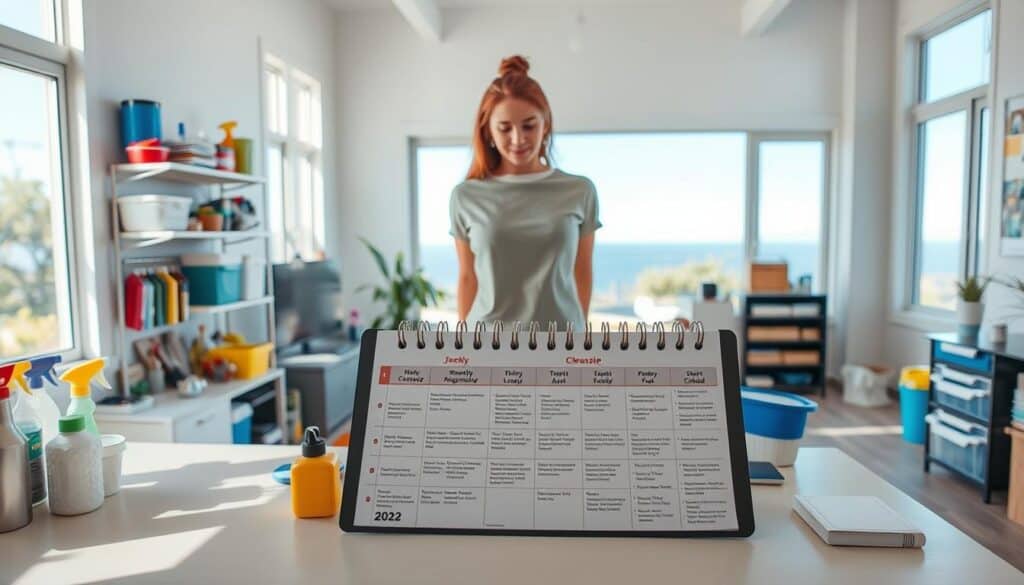
Managing Time Effectively
Time management is not about finding more hours. It’s about using the hours you have better. The biggest mistake is thinking cleaning needs a lot of time.
Break tasks into small sessions. Fifteen minutes of cleaning is better than three hours of delay. Set a timer and clean one area at a time. You’ll be amazed at what you can do in just a few minutes.
Try cleaning as you go. Clean the counter while your coffee brews. Do dishes during commercial breaks. These small actions add up to big results without feeling too much.
Dealing with Inertia or Burnout
Cleaning burnout is real and it happens to everyone. Some days, you just can’t deal with the mess. That’s okay.
When burnout hits, lower your standards a bit. Just do the basics like dishes and trash. Your cleaning plan should be flexible, not rigid.
Make a “bare minimum” cleaning plan. Maybe just make beds and clear surfaces. This keeps you going without feeling overwhelmed.
Give yourself rewards for small victories. Finished the kitchen? Treat yourself to a fancy coffee. Cleaned the bathroom? Enjoy a relaxing bath in your clean tub.
Facing Reluctant Housemates
Getting others to help can be tough. Clear communication is better than sneaky notes (even though we’ve all done it).
Start with realistic goals. Don’t expect everything to be perfect right away. Give specific tasks instead of vague requests. Say “please load the dishwasher after dinner” instead of “help with cleaning.”
Make it easy for them to help. Put cleaning supplies where they need them. Create simple checklists. Sometimes, people want to help but don’t know where to start.
Try the “one thing” rule. Each person does just one cleaning task a day. It’s easy and builds good habits slowly.
The Role of Technology in Your Cleaning Schedule
Smart tools and apps can change how you clean. They make your maintenance cleaning calendar easier. The right tech turns hard tasks into fun ones.
Think of tech as your cleaning buddy. It keeps track of your cleaning and reminds you gently. It lets you live your life while it does the work.
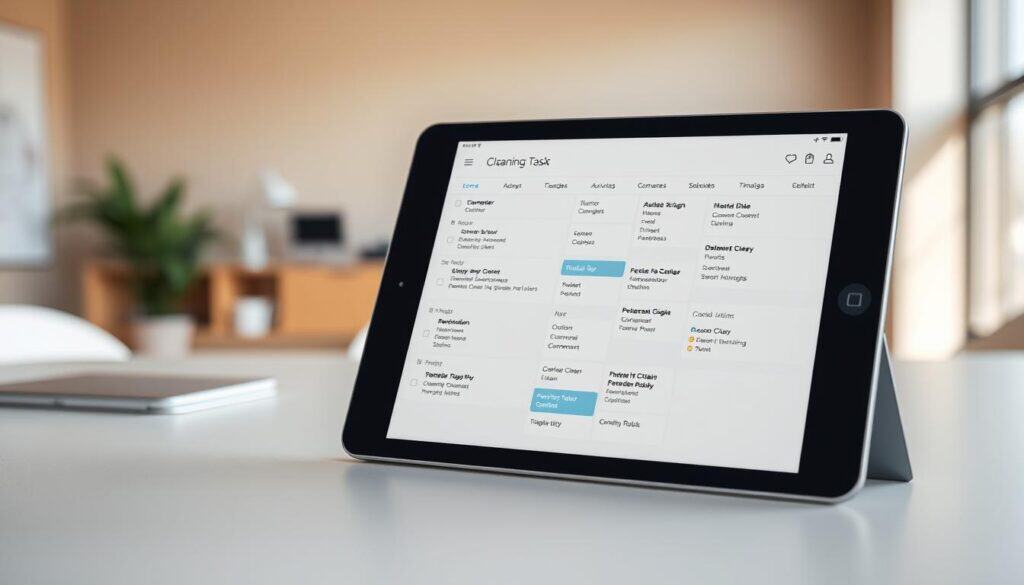
Apps and Tools for Organizing Your Tasks
Cleaning apps make cleaning fun. They give you points and show your progress. Tody and Sweepy are great for this.
Apps for cleaning have many benefits:
- Visual progress tracking shows what you’ve done
- Customizable schedules fit your life
- Task sharing features help everyone
- Habit building tools make cleaning a habit
Choose apps that are easy to use. If it’s hard to figure out, pick something simpler. You want help, not headaches.
Automating Cleaning with Smart Devices
Smart devices do the easy tasks for you. Robot vacuums clean floors every day. Dishwashers run when it’s cheap to do so.
Smart devices work together for a smooth cleaning process. Your robot vacuum starts when you leave, and your dishwasher runs when it’s cheapest.
Here are some devices to consider:
- Robotic cleaners for floors, pools, and windows
- Smart appliances that you can schedule
- Automated air fresheners that go off on a timer
- Self-cleaning systems for ovens and coffee makers
Reminders and Alerts to Stay on Track
Good reminders help you, not bother you. Set them up to be helpful, not annoying. Maybe a soft phone alert or a smart speaker saying it’s time to clean.
Reminders should fit your life. They can wait if you’re busy or remind you early if you’re free. Some apps even suggest the best times to clean based on your habits.
The best reminders are flexible. You can delay or reschedule tasks as needed. Tech should help you clean, not stress you out.
Keeping Your Home Fresh and Inviting
Your cleaning plan is more than just cleaning. It’s about making your home feel like a cozy place. Adding special touches makes your house feel welcoming.
Maintaining Your Cleaning Schedule
Check your cleaning plan every few months. Life changes, and so should your cleaning schedule. If Tuesday cleaning time clashes with your workout, change it.
See what works and what doesn’t. If you skip tasks often, it might be because they’re too hard or at the wrong time. Make changes to fit your life better.
Incorporating Home Fragrance Strategies
You don’t need harsh chemicals for nice smells. Use fresh flowers, essential oils, or clean laundry. Open windows for fresh air when you can.
Baking soda is great for getting rid of bad smells in carpets and furniture. Sprinkle it, wait, then vacuum.
Creating a Welcoming Atmosphere
Cleaning is just the start. Add personal touches to make your space special. Organize books by color, display photos, or have a small plant.
Your home should be a clean, organized, and true reflection of you. That’s what a good cleaning plan aims for.