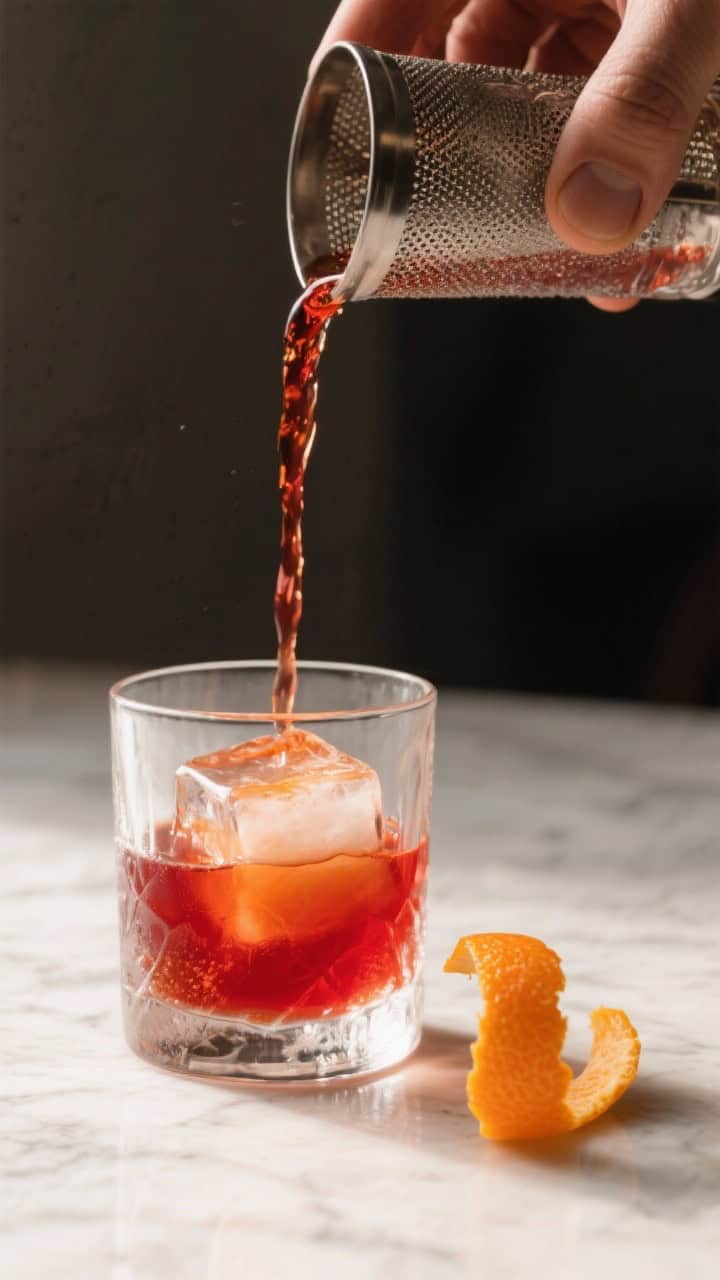
Blood Orange Negroni – A Bright, Bitter-Sweet Classic
The Blood Orange Negroni is a seasonal twist on a beloved classic. It keeps the drink’s signature balance of bitter, sweet, and botanical, but adds a juicy hit of citrus and a glowing ruby color. If you love a traditional Negroni but want something fresher and a little softer around the edges, this is it.
It’s easy to make, looks gorgeous in the glass, and feels special without being fussy. Perfect for happy hour at home or a small gathering with friends.

Blood Orange Negroni – A Bright, Bitter-Sweet Classic
Ingredients
- 1 ounce gin (London Dry or a citrus-forward gin works well)
- 1 ounce Campari
- 1 ounce sweet vermouth (Italian, such as Carpano Antica or Cocchi)
- 1–1.5 ounces fresh blood orange juice (to taste)
- Ice (a large cube if serving on the rocks)
- Blood orange slice or peel, for garnish
- Optional: A dash of orange bitters to deepen the citrus notes
Instructions
- Chill your glass: Place a rocks glass in the freezer for a few minutes, or fill it with ice and water while you build the drink.
- Prep the garnish: Cut a thin wheel of blood orange or peel a wide strip of zest. Express the oils by gently bending the peel over the glass later.
- Build the drink: In a mixing glass, add gin, Campari, sweet vermouth, and fresh blood orange juice. If you like a brighter profile, use the full 1.5 ounces of juice.
- Add ice and stir: Fill the mixing glass with ice. Stir for 20–25 seconds until well-chilled and slightly diluted. You want the edges to soften without losing structure.
- Prepare the serving glass: Discard any ice water from your rocks glass. Add a large clear cube if you have one—it melts slowly and keeps the drink crisp.
- Strain and garnish: Strain the cocktail into the glass. Express the blood orange peel over the drink, rub it along the rim, and drop it in. Or tuck a thin blood orange wheel against the cube for a clean look.
- Taste and adjust: If you crave extra citrus, add a small splash more juice and give it a gentle stir.
What Makes This Recipe So Good

- Balanced flavor: Blood orange brightens the classic mix of gin, Campari, and sweet vermouth with a mellow citrus sweetness.
- Simple technique: No shaking, no syrups, no complicated tools—just stir, strain, and garnish.
- Seasonal appeal: Blood oranges are at their best in winter, when we all appreciate a little color and brightness.
- Gorgeous presentation: The deep red hue and a neat orange twist look striking with almost zero effort.
- Easy to batch: Make a pitcher for a crowd and keep the good vibes going with minimal work.
Ingredients
- 1 ounce gin (London Dry or a citrus-forward gin works well)
- 1 ounce Campari
- 1 ounce sweet vermouth (Italian, such as Carpano Antica or Cocchi)
- 1–1.5 ounces fresh blood orange juice (to taste)
- Ice (a large cube if serving on the rocks)
- Blood orange slice or peel, for garnish
- Optional: A dash of orange bitters to deepen the citrus notes
Step-by-Step Instructions

- Chill your glass: Place a rocks glass in the freezer for a few minutes, or fill it with ice and water while you build the drink.
- Prep the garnish: Cut a thin wheel of blood orange or peel a wide strip of zest. Express the oils by gently bending the peel over the glass later.
- Build the drink: In a mixing glass, add gin, Campari, sweet vermouth, and fresh blood orange juice.
If you like a brighter profile, use the full 1.5 ounces of juice.
- Add ice and stir: Fill the mixing glass with ice. Stir for 20–25 seconds until well-chilled and slightly diluted. You want the edges to soften without losing structure.
- Prepare the serving glass: Discard any ice water from your rocks glass.
Add a large clear cube if you have one—it melts slowly and keeps the drink crisp.
- Strain and garnish: Strain the cocktail into the glass. Express the blood orange peel over the drink, rub it along the rim, and drop it in. Or tuck a thin blood orange wheel against the cube for a clean look.
- Taste and adjust: If you crave extra citrus, add a small splash more juice and give it a gentle stir.
Keeping It Fresh
If you’re making just one or two drinks, always squeeze the blood orange juice right before mixing.
Fresh juice keeps the flavors lively and the color bright. Store any extra juice in a sealed container in the fridge for up to 24 hours.
For batching, combine the gin, Campari, sweet vermouth, and blood orange juice in a bottle and keep it chilled. Don’t add ice until serving to avoid over-dilution.
The batched mix will taste best within 24 hours, since citrus can fade and separate. Give it a good shake before pouring over ice and garnishing.

Why This is Good for You
We’re not calling this a health drink, but there are a few perks worth noting. Blood oranges are rich in vitamin C and contain anthocyanins, the pigments that give them their deep red color. These antioxidants support overall wellness and add a lovely tart-sweet flavor.
Compared to overly sweet cocktails, a Negroni’s balanced bitterness encourages slower sipping.
The botanicals in gin and the herbal notes in vermouth and Campari offer complexity without piling on sugar. Sensible portions, thoughtful ingredients, and a mindful pace can make this a smarter choice for cocktail hour.
Common Mistakes to Avoid
- Using bottled citrus: Packaged blood orange juice often tastes flat and overly sweet. Fresh juice makes a big difference.
- Over-shaking or frothing: A Negroni is a stirred cocktail.
Shaking can water it down and rough up the texture.
- Skipping the garnish: The expressed oils from the peel add aroma and bring the whole drink together.
- Bad vermouth storage: Sweet vermouth is wine-based. Keep it in the fridge, tightly sealed, and use it within a month for best flavor.
- Over-diluting: Stir just until cold. Too much stirring thins out the bold, bittersweet profile.
- Unbalanced juice: Add blood orange juice to taste.
Too much can overwhelm the bitters and turn the drink into a citrus cocktail rather than a Negroni.
Alternatives
- Zero-proof: Use a non-alcoholic gin alternative, a zero-proof bitter aperitif, and a non-alcoholic sweet vermouth. Keep the blood orange juice the same. Stir as usual and garnish with the peel.
- Sbagliato-style: Replace the gin with dry sparkling wine for a bubbly twist.
Reduce the blood orange juice to 0.5–1 ounce to keep it snappy.
- Mezcal Negroni: Swap gin for mezcal. The smoky notes play beautifully with blood orange. Consider a quarter-ounce less juice to let the smoke shine.
- Boulevardier riff: Use bourbon instead of gin for a rounder, warmer profile.
Blood orange brightens the caramel notes without making it heavy.
- Different bitters: A dash of chocolate or orange bitters can deepen the finish without changing the structure.
FAQ
Can I use regular orange instead of blood orange?
Yes. Cara Cara or navel oranges will work, though you’ll miss the tart edge and deep color. If using regular oranges, add a tiny squeeze of lemon for balance.
What gin works best?
A classic London Dry gin keeps things crisp and botanical.
If you like a softer, fruit-forward profile, try a citrus-led gin. Avoid heavy, sweetened gins, which can muddle the balance.
Is Campari required, or can I use another bitter?
Campari is traditional and gives that signature bite. You can swap in another Italian red bitter (like Cappelletti or Luxardo Bitter) if needed, but expect a slightly different sweetness and spice.
How do I batch this for a party?
Combine equal parts gin, Campari, and sweet vermouth, then add 0.75–1 part fresh blood orange juice.
Chill thoroughly. To serve, pour 3–3.5 ounces over a large cube and garnish. Add a splash of cold water if you want the dilution that stirring usually provides.
What glass should I use?
A rocks glass is ideal.
If you prefer it up, strain into a chilled coupe and use a thinner orange twist for a cleaner look.
How long does vermouth last once opened?
Store it in the fridge, tightly sealed. It’s best within 3–4 weeks, though many enjoy it up to two months. If it tastes dull or oxidized, it’s time to replace.
Can I make it less bitter?
Use a touch more blood orange juice and a slightly sweeter vermouth.
You can also add a tiny bar spoon of simple syrup, though most people find the juice adjustment enough.
In Conclusion
The Blood Orange Negroni delivers everything you love about the original, with the added lift of fresh, seasonal citrus. It’s bold but approachable, elegant without trying hard, and simple to make at home. Keep your ingredients fresh, stir with care, and let that beautiful color do the rest.
Whether you’re mixing for one or batching for friends, this riff is a keeper.