
Top Cleaning Techniques to Keep Your Home Spotless
Ever wonder why your weekend cleaning marathon leaves you exhausted but your home looks meh? You’re not alone in this struggle.
Scrubbing isn’t the highlight of anyone’s weekend. But a spotless home is pure magic. You feel like you can conquer the world when you walk into a perfectly clean space.
This guide isn’t about Pinterest fantasies that need a full-time housekeeper. You’ll find practical, professional-grade strategies that work in real homes with real messes.
Professional cleaners start with a solid plan. They assess areas needing attention and work systematically. These best cleaning techniques turn chaotic spaces into serene sanctuaries — without spending your whole Saturday scrubbing.
From time-saving shortcuts to deep-cleaning secrets, these effective cleaning methods will change how you maintain your home. Ready to create that Instagram-worthy space you’ve dreamed of? Let’s explore strategies that help you clean your house fast and efficiently.
Key Takeaways
- Professional cleaners always start with a systematic plan and assess problem areas first
- Working one room at a time from start to finish creates maximum efficiency
- Gathering all supplies in one portable location saves valuable time
- Cleaning from top to bottom prevents redundant work and missed spots
- Using the right tools for specific tasks dramatically improves results
- Establishing consistent routines cuts down overall cleaning time
The Importance of Maintaining a Clean Home
Clean homes are more than pretty pictures on Instagram. They are key to your family’s health and happiness. Keeping a clean home might seem hard when you’re busy. But, a clean home offers benefits that go beyond looks.
Your home is the base of your life. A clean, organized home makes everything else easier. Professional cleaning strategies help your family thrive, not just impress guests.
Health Benefits of a Clean Environment
Clean homes keep your family healthy in many ways. Clean surfaces kill 99% of harmful germs that make you sick. Using top cleaning tips regularly helps fight off allergens and germs.
Steam cleaning is a top choice for cleaning. It kills germs without using harsh chemicals. It’s great for homes with kids or pets because it gets deep into surfaces.
Cleaning also cuts down on harmful chemicals in your home. A clean home means better sleep, fewer allergies, and a stronger immune system.
Mental Clarity through Organization
Cleaning is more than just making things look nice. Organization helps your brain work better. Clutter makes your mind work harder, even when you’re not thinking about it.
Clean spaces make you feel calm and in control. You’ll be more focused, less stressed, and more creative when your home supports you.
Professional cleaning helps create systems that stay organized. When everything has its place, your family keeps things tidy. This saves mental energy for other tasks.
Think of cleaning as investing in your mind. A clean, organized home is your own special place to relax and get ready for challenges.
Basic Cleaning Supplies You Need
Smart cleaning starts with smart shopping. Knowing what supplies work best is key. You don’t need lots of gadgets for a clean home. The right optimal cleaning solutions make cleaning easier.
Cleaning supplies are an investment in your time and peace. Good basics save you from hard scrubbing. Start with the basics and add more as needed.
Must-Have Cleaning Tools
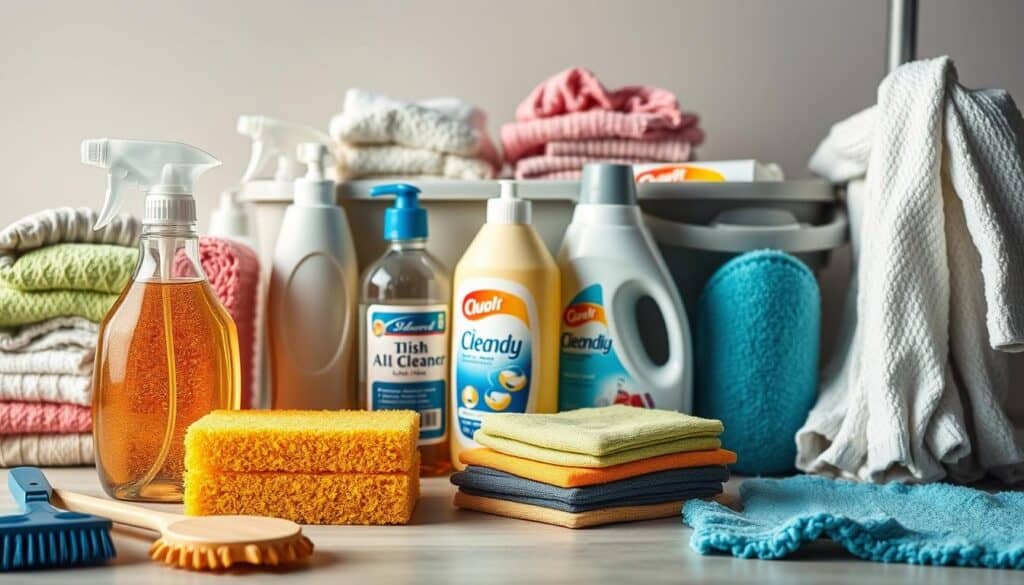
Your cleaning toolkit should have these essentials. High-quality microfiber cloths pick up dust and dirt well. Avoid cheap cloths that leave lint.
A good vacuum with attachments changes cleaning. Choose one for carpets and hard floors. Also, get a mop that really cleans.
Make a portable cleaning caddy for easy access. It makes cleaning more efficient. This tip helps a lot, check out efficient cleaning approaches online.
- Microfiber cloths in various sizes
- All-purpose spray bottles
- Scrub brushes with different bristle strengths
- Rubber gloves for protection
- Squeegee for windows and shower doors
Eco-Friendly Cleaning Products
You don’t need harsh chemicals for a clean home. Natural cleaning powerhouses like baking soda and vinegar work well. They show you can clean without harsh chemicals.
Baking soda is gentle and removes odors. Use it on carpets before vacuuming. White vinegar is great for grease and mineral deposits.
Use these natural ingredients for optimal cleaning solutions. Mix water and vinegar for a cheap all-purpose cleaner. Add essential oil for a nice smell.
Professional cleaners use these ingredients for good results. They’re safe for your family and pets. Your wallet and health will benefit from these alternatives.
Daily Cleaning Techniques for Busy Households
Keeping your home clean every day is easier than you think. It’s all about superior cleaning practices that fit your life. With smart habits, cleaning becomes easy, not a weekend task.
Start by cleaning before messes happen. It’s like taking care of your health. Small actions every day stop big problems. This makes cleaning a part of your daily routine, not a chore.
Quick Tips for Daily Tidying
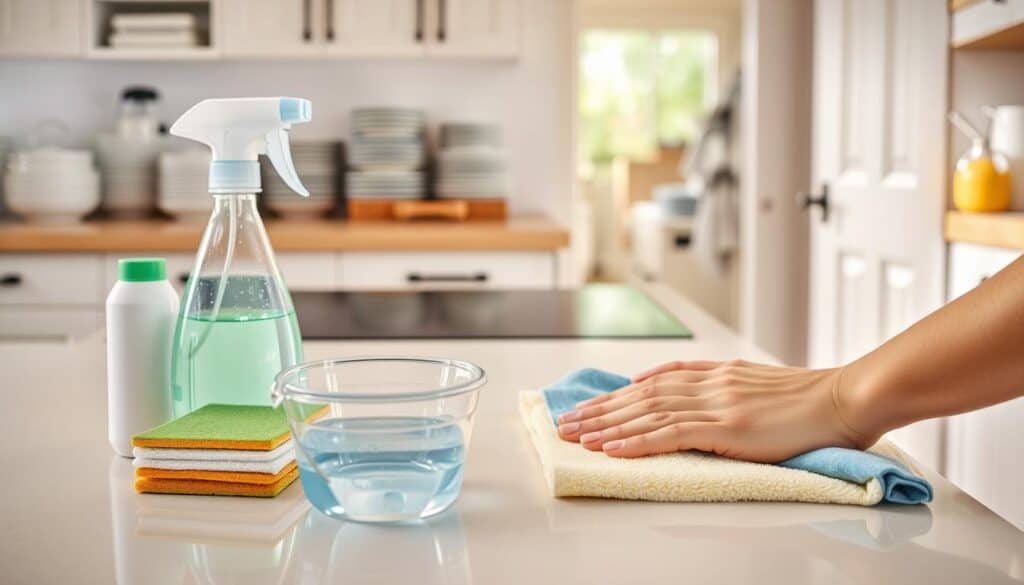
Adopt the “clean as you go” way of life. Wipe down kitchen counters while your coffee brews. This stops sticky messes before they start.
Use a timer for 10 minutes each night to tidy up. Just pick up clutter, not deep clean. This keeps your space ready for tomorrow.
Before cleaning, declutter first. Decide quickly: put away, toss, or donate. This smart decluttering helps you keep order.
Speed Cleaning Techniques That Work
Speed cleaning means doing it right, not fast. Use expert cleaning advice to clean from top to bottom and left to right. This saves time and effort.
Carry a cleaning caddy with what you need. This saves trips to get supplies. Focus on areas guests see and your family uses most.
| Time Frame | Focus Area | Key Tasks | Impact Level |
|---|---|---|---|
| 5 Minutes | Kitchen | Wipe counters, load dishwasher, sweep floor | High |
| 3 Minutes | Bathroom | Quick toilet wipe, mirror clean, towel straightening | High |
| 7 Minutes | Living Room | Fluff cushions, dust surfaces, vacuum high-traffic areas | Medium |
| 2 Minutes | Bedroom | Make bed, clear nightstands, quick floor pickup | Medium |
These daily habits make cleaning easier. They help you keep your home welcoming without big cleaning days. Your home stays clean without taking up your whole weekend.
Best Practices for Deep Cleaning
Deep cleaning is like a health check for your home. It finds what daily cleaning misses. It cleans hidden dirt and forgotten spots that build up over time. These best cleaning techniques clean deep, making your home fresh and clean.
Steam cleaning is a top choice for pros. It kills germs and gets rid of tough dirt on floors, carpets, and furniture. It also makes kitchen appliances clean by removing grease and food.
Deep cleaning needs a plan. Don’t clean everything at once. Focus on one area at a time to clean well and avoid getting tired.
Your Complete Deep Cleaning Checklist
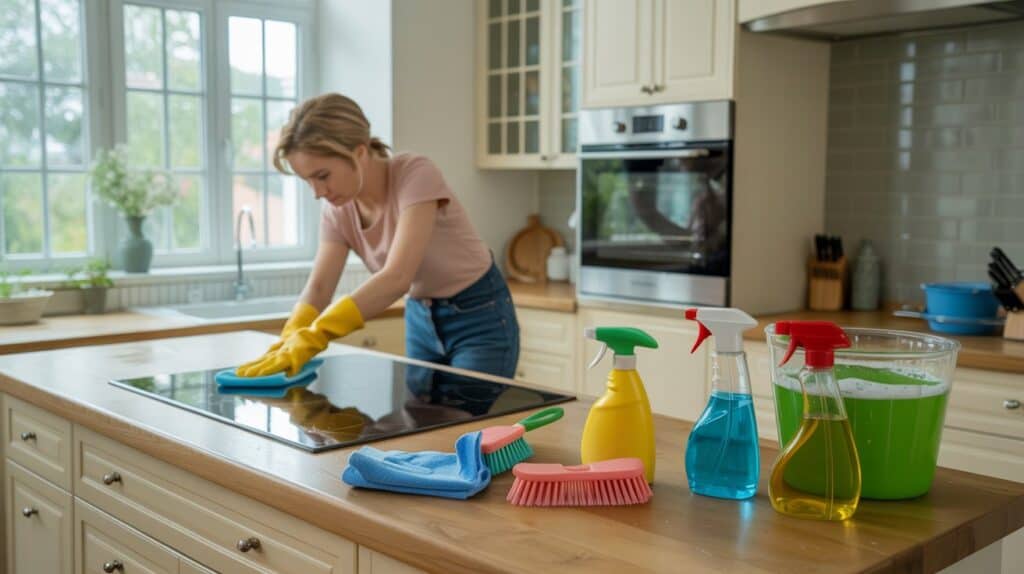
A checklist helps you stay on track and miss nothing. Start with big tasks and then do smaller ones.
Don’t forget your mattress. Steam it to kill germs, then vacuum to get rid of dust mites. This makes your bed smell fresh and clean.
Here are key areas to clean during deep cleaning:
- Kitchen appliances: Clean coffee makers, ovens, and fridge shelves
- Bathroom fixtures: Remove mineral buildup from faucets and showerheads
- Forgotten spaces: Clean baseboards, light fixtures, and behind furniture
- Soft furnishings: Steam clean furniture and wash throw pillows
For a detailed plan, see this ultimate deep cleaning house checklist. It covers every room. These best cleaning techniques help you not miss any important spots.
Finding Your Deep Cleaning Rhythm
How often to deep clean depends on your home and life. Most homes need it every three months. But busy areas might need it more often.
Experts suggest a seasonal cleaning plan. Spring is for windows and carpets. Summer is for outdoor spaces and appliances. Fall is for storage and getting ready for winter. Winter focuses on air and surfaces.
This plan helps you not feel overwhelmed. You keep your home clean without spending all weekend cleaning.
The best cleaning techniques are the ones you use often. Start small and add more as you get better. Your home will be cleaner and you’ll enjoy it more.
Effective Strategies for Different Surfaces
Every surface in your home has its own cleaning needs. It’s like learning to talk to different people. What works for one might not work for another.
Understanding each material’s needs is key. Effective cleaning methods are not the same for all. They are custom-made to meet each surface’s preferences and dislikes.
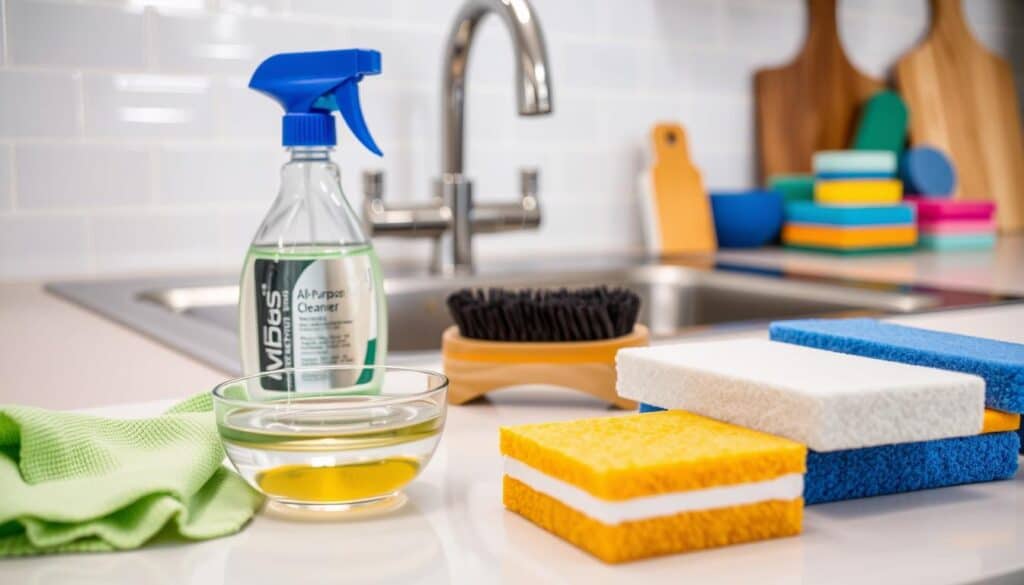
Once you learn this, cleaning becomes easy and precise. Your surfaces will stay beautiful longer and need less care over time.
Cleaning Hardwood Floors
Hardwood floors are like a sensitive friend. They despise too much water but love a gentle sweep and mop.
Here’s how to clean hardwood floors:
- Always sweep first — in kitchens and bathrooms, where dirt piles up
- Mop from the farthest corner to the doorway
- Use just a little water — your mop should be almost dry
- Choose cleaners made just for wood
Pro tip: Never mop yourself into a corner. Trust me, I learned the hard way!
Best Techniques for Upholstery
Upholstery needs a gentle touch. These fabrics need special cleaners and must never get too wet.
Here’s how to care for upholstery:
- Regular vacuuming to keep dirt out
- Test cleaners in a hidden spot first
- Use cleaners for carpets and upholstery on furniture
- Consider steam cleaning for deep cleaning
Fabric holds moisture longer than you think. Use less liquid cleaner.
Caring for Granite Countertops
Granite countertops look tough but are actually sensitive. They handle heat well but get upset by acidic cleaners.
Keep your granite looking great with these tips:
- Avoid acidic cleaners like lemon juice or vinegar
- Use cleaners made for stone or dish soap and water
- Wipe up spills fast to avoid stains
- Seal your granite every year to keep it protected
Granite care is like preventive medicine. A little daily care prevents big problems later. These effective cleaning methods keep your granite looking great for years.
Decluttering: A Key Step in Cleaning
The secret to faster, more efficient cleaning isn’t a fancy product. It’s removing what doesn’t belong. You can scrub and polish all day, but if your surfaces are covered with random items, you’re just cleaning around the mess. Decluttering transforms your cleaning routine from a frustrating shuffle to a streamlined process.
Think about it this way: every item without a home becomes a decision you have to make during cleaning time. Should this go here? Where does this belong? That mental energy adds up quickly. When everything has its place, cleaning becomes automatic.
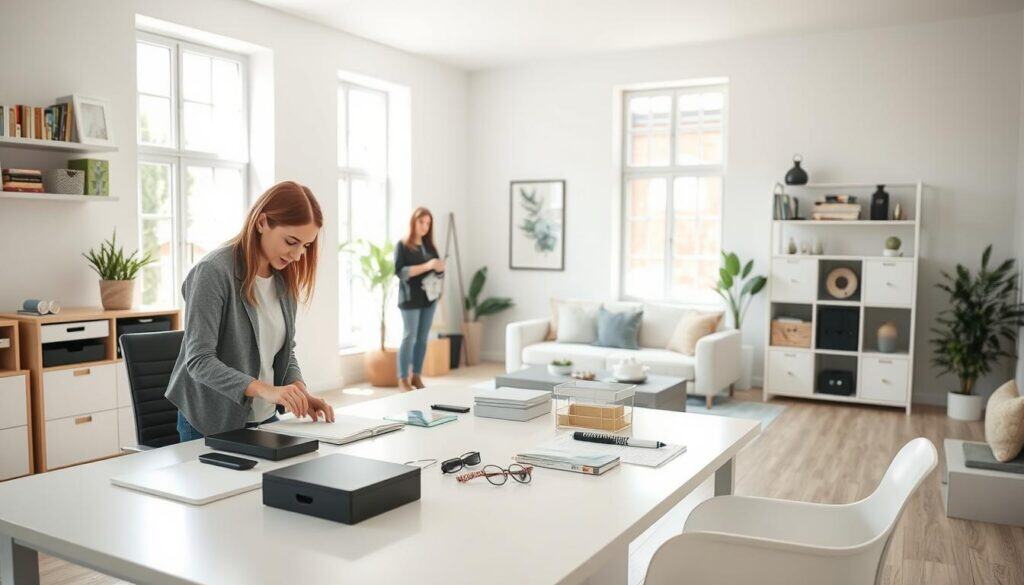
Tips for Effective Decluttering
Professional cleaning strategies always start with the same principle: deal with clutter first, clean second. The most effective approach is the three-box method that professional organizers swear by. Grab three containers and label them: keep, donate, and trash.
Start with one small area — maybe your kitchen counter or bedside table. Pick up each item and make an immediate decision. The key is being ruthless but realistic. That bread maker you used twice in 2019? It’s not suddenly going to become your best friend.
Apply the one-touch rule whenever possible. When you pick something up, deal with it immediately. This simple habit prevents clutter from migrating around your home.
For more tips on decluttering, check out this home organization and decluttering guide. It breaks down room-by-room strategies.
How to Organize Your Space
Organization isn’t about creating Instagram-worthy spaces. It’s about functionality. Every item should have a designated home that makes sense for how you actually live. Store frequently used items in easily accessible spots, and reserve higher shelves for seasonal or occasional items.
Group similar items together and use the “zone” concept. Create a coffee zone near your machine with mugs, filters, and sweeteners. Establish a mail zone by your entrance with a basket for incoming mail and a small trash can for junk mail.
The goal isn’t minimalism unless that’s your thing. It’s creating a system where putting things away becomes as natural as taking them out. When your space is organized, cleaning becomes faster, more efficient, and dare I say it — almost enjoyable.
| Decluttering Method | Time Required | Best For | Difficulty Level |
|---|---|---|---|
| Three-Box Method | 30-60 minutes per room | Beginners and major overhauls | Easy |
| One-Touch Rule | Ongoing daily habit | Preventing clutter buildup | Easy |
| Zone Organization | 2-4 hours per area | Long-term maintenance | Moderate |
| 15-Minute Pickup | 15 minutes daily | Busy households | Easy |
Remember, decluttering isn’t a one-time event — it’s an ongoing process. Regular assessment of your belongings keeps clutter from creeping back in. Schedule monthly mini-decluttering sessions to stay ahead of the game. Your future cleaning self will thank you.
The Role of Technology in Cleaning
Modern cleaning tech offers optimal cleaning solutions that are smarter. No more hours of scrubbing or carrying a mop bucket everywhere.
Today, cleaning tools can plan their own schedules and check your home’s cleanliness. They even send you messages when they’re done. These tools are not just cool gadgets. They make your life easier.
Smart Home Devices for Cleaning
Smart home cleaning devices make cleaning easy. They connect to your phone and home systems. This way, they create personalized cleaning schedules for you.
Air quality monitors watch for dust and allergens. They turn on purifiers when needed. Smart thermostats work with humidity sensors to stop mold before it grows.
Steam cleaning is a big step in cleaning without chemicals. These devices use heat and moisture to kill germs. It’s great for families with kids or pets.
Voice-activated reminders help you stay on top of cleaning. Just ask your smart speaker to remind you to vacuum the kitchen cabinets. It will tell you when it’s time.
Robot Vacuums: Do They Live Up to the Hype?
Robot vacuums have become real helpers in cleaning. They keep floors clean between deep cleans.
They work best in tidy homes. If your floors are cluttered, they won’t do as well.
Today’s robot vacuums map your home and clean efficiently. Some even empty their own dustbins and charge on their own.
But, they can’t replace your regular vacuum. Use them for daily cleaning. You’ll need a traditional vacuum for deep cleaning and tight spots.
| Technology Type | Best Use Case | Maintenance Level | Cost Range |
|---|---|---|---|
| Robot Vacuum | Daily floor maintenance | Low | $200-$800 |
| Steam Cleaner | Chemical-free sanitizing | Medium | $100-$400 |
| Smart Air Purifier | Continuous air quality | Low | $150-$600 |
| Automated Mop | Hard surface cleaning | Medium | $250-$500 |
Remember, tech should enhance your cleaning, not do it all. Think of these tools as your cleaning sidekicks. They handle the routine while you focus on the important stuff.
Seasonal Cleaning Techniques
Smart homeowners know that seasonal cleaning is key. It’s not just a tradition. It’s efficient home maintenance that happens when we feel like spring is coming. This cleaning matches nature’s cycles and stops small problems from growing big.
Seasonal cleaning is smart because it fixes problems when they’re easy to solve. Spring cleaning gets rid of winter’s mess. Fall cleaning makes your home cozy for the cold months. This way, your home stays in top shape all year.
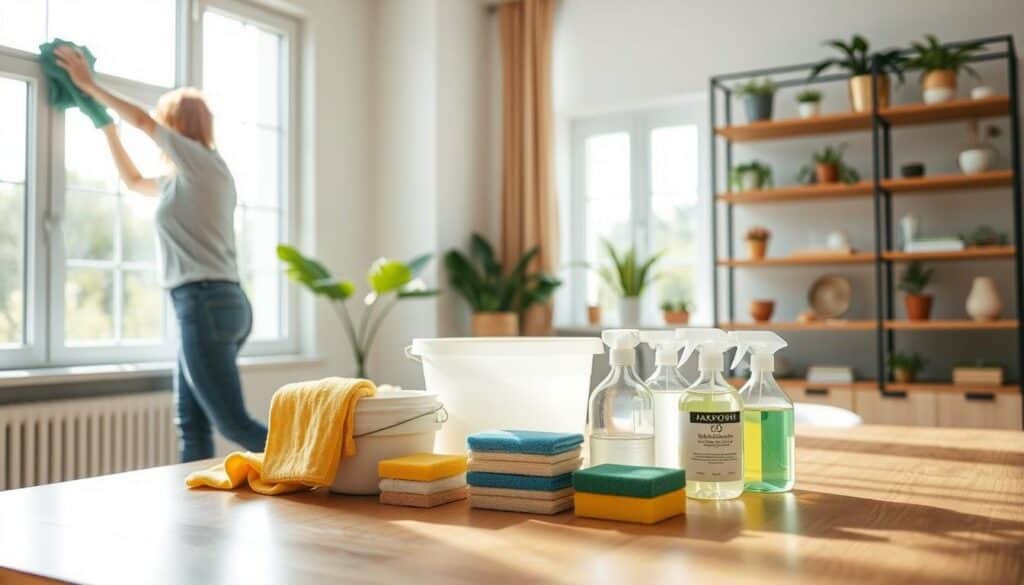
Spring Cleaning Tips and Tricks
Spring cleaning is more than just a deep clean. It’s about renewal and prevention. Start by opening windows to let in fresh air. This makes cleaning easier and gets rid of old air.
Here are some high-impact spring tasks to do:
- Vacuum dryer vents annually by disconnecting the hose and using your vacuum’s extension
- Clean windows inside and out for maximum natural light
- Deep-clean carpets that survived muddy boots and winter salt
- Restore shower pressure by soaking your showerhead in vinegar solution overnight
- Clean gutters professionally or install gutter covers to prevent debris buildup
These tasks improve air quality and prevent fires. They make your home feel fresh and new again.
Preparing Your Home for Winter
Winter prep makes your home a healthy indoor environment. You’ll spend more time inside. So, focus on comfort, air quality, and avoiding winter damage.
Key winter tasks include:
- Deep-clean heating systems and replace filters for optimal air quality
- Check for drafts around windows and doors
- Clean and inspect fireplaces and chimneys
- Organize storage areas for winter gear and holiday decorations
- Test smoke and carbon monoxide detectors
These tasks keep your home cozy and safe in the cold. Make sure air flows well and your heating works right. This is important when you can’t open windows for months.
Seasonal cleaning is all about strategic timing. It’s not just cleaning. It’s keeping your home healthy and stopping problems before they start. This saves you time, money, and stress, and keeps your home comfy all year.
Maintaining a Clean Home Long-Term
Cleaning becomes easy when it’s part of your daily life. It’s not a big fight every weekend. It’s a smooth flow that fits your life.
Building Your Personal Cleaning Rhythm
Your cleaning schedule should match your energy. Morning people might clean bathrooms early. Night owls might tidy up in the evening.
Start with small tasks. Clean bathrooms on Mondays, floors on Wednesdays, and the kitchen on Fridays. The goal is to be consistent, not to do too much at once.
A short daily routine is better than a long weekend clean. Try cleaning for 15 minutes each day.
Making Cleaning a Team Sport
When everyone helps, cleaning is easier. Kids can put away toys and wipe surfaces. Teens can vacuum and clean mirrors.
Make cleaning fun with music or games. Turn it into a challenge. This way, cleaning becomes a habit, not a chore.
A clean home is for your peace, not to impress others. It’s where you can relax and be your best.