
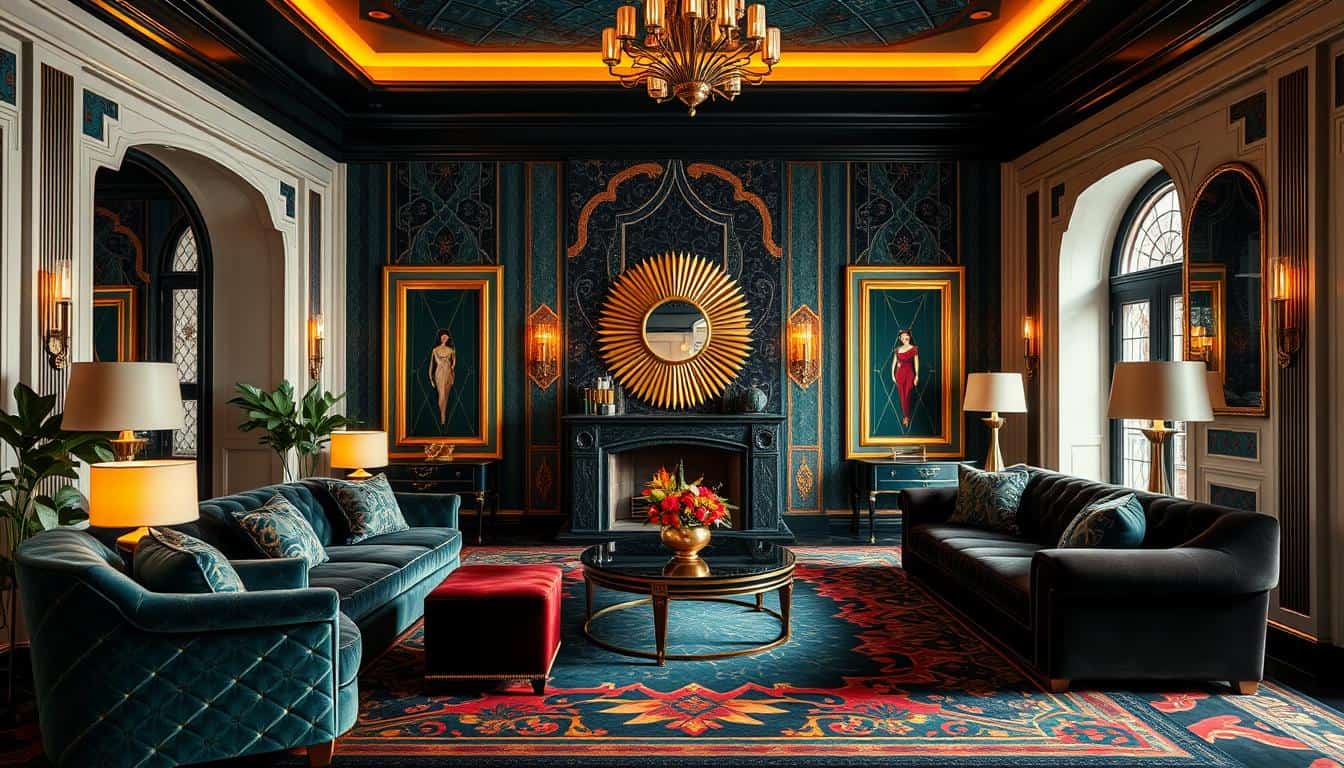
20 Iconic Art Deco Interior 1920s Design Ideas That Still Shine
The glamorous Art Deco style of the 1920s continues to captivate interior design enthusiasts nearly a century later. With its bold geometric patterns, luxurious materials, and dramatic contrasts, Art Deco interior design brings a sense of opulence and sophistication that transcends time. Today’s designers are rediscovering these iconic elements and reimagining them for contemporary spaces. Let’s explore 20 stunning Art Deco interior 1920s design ideas that continue to shine in modern homes.
1. Bold Geometric Patterns: The Signature of Art Deco

Geometric patterns were the hallmark of 1920s Art Deco interiors, representing the era’s fascination with modernity and industrial progress. These striking designs featured zigzags, chevrons, triangles, and stepped forms that created visual rhythm and movement throughout a space.
To incorporate this element, start with a statement wallpaper on a feature wall or add geometric-patterned cushions and throws to your sofa. For a subtle approach, choose artwork or mirrors with Art Deco-inspired frames featuring these distinctive patterns.
2. Luxurious Materials: Exotic Woods and Veneers

The 1920s Art Deco movement embraced exotic woods like ebony, zebrawood, and rosewood, often featuring dramatic grain patterns. These materials symbolized luxury and global exploration during a time when international travel was becoming more accessible to the wealthy.
Modern interpretation: Look for furniture pieces with rich wood veneers or inlays. A sleek sideboard or cocktail cabinet with geometric wood patterns makes a stunning focal point. Even small accent pieces like picture frames or decorative boxes in these materials can add authentic Art Deco flair.
3. Metallic Accents: Chrome, Brass, and Gold
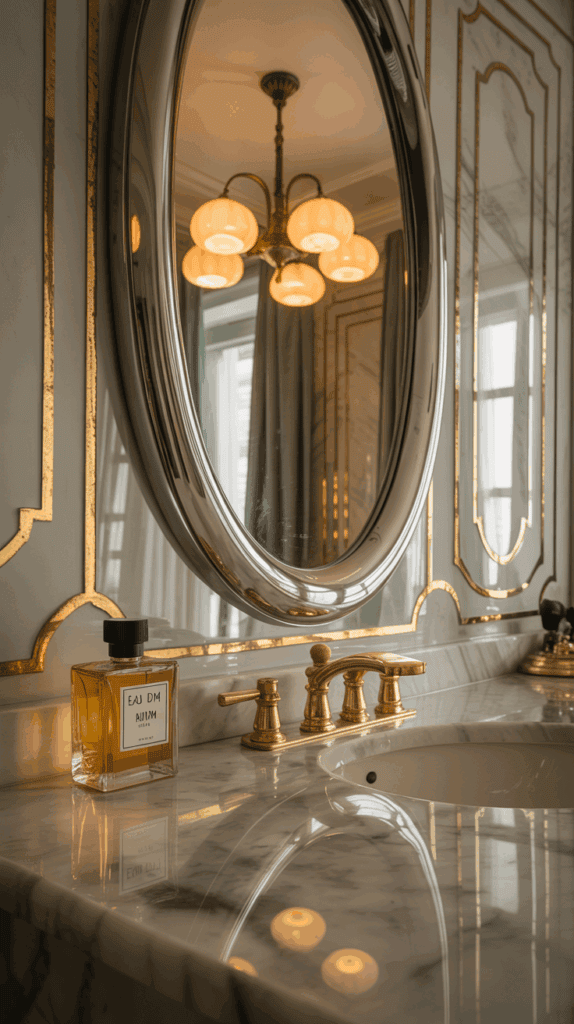
Metallic elements were essential to the Art Deco aesthetic, reflecting the industrial age’s celebration of new materials and manufacturing techniques. Chrome, brass, and gold accents added glamour and caught the light, creating dynamic visual interest.
Incorporate metallic finishes through light fixtures, mirror frames, or furniture hardware. Mix metals for a contemporary twist – pair brass table lamps with chrome picture frames, or add gold-leafed accessories to a room with silver accents. Even small touches like metallic trim on cushions can evoke this luxurious 1920s style.
4. Sunburst Motifs: Radiating Energy

The sunburst or starburst pattern symbolized optimism and the dawn of a new era in 1920s design. This iconic Art Deco motif appeared on everything from building facades to furniture details, radiating energy and light.
A sunburst mirror makes a dramatic statement in any room. For a more subtle approach, look for sunburst patterns on cushions, rugs, or wall art. This versatile motif works particularly well above fireplaces, in entryways, or as a focal point in dining rooms, instantly adding Art Deco glamour to contemporary spaces.
5. Jewel Tones: Rich and Vibrant Colors

The Art Deco color palette featured rich jewel tones that exuded luxury and drama. Emerald greens, sapphire blues, ruby reds, and amethyst purples were often contrasted with metallics and neutrals for maximum impact in 1920s interiors.
Introduce these bold colors through velvet upholstery, decorative pillows, or statement walls. For a modern approach, choose one dominant jewel tone and use it as an accent against neutral backgrounds. Emerald green velvet chairs or a sapphire blue sofa can become the centerpiece of a contemporary Art Deco-inspired room.
6. Mirrored Surfaces: Reflecting Light and Space

Mirrored furniture and decorative elements were quintessential features of Art Deco interior design in the 1920s. These reflective surfaces amplified light and created a sense of expanded space while adding glamour and sophistication.
Incorporate mirrored elements through furniture pieces like side tables or console tables with mirrored panels. Wall treatments with inset mirrors or mirrored decorative screens can define spaces while maintaining an open feel. For a subtle touch, try mirrored trays or picture frames that catch and reflect light around the room.
7. Stepped Forms: Architectural Influence

Stepped or ziggurat forms were inspired by ancient Mesopotamian architecture and became a defining characteristic of Art Deco design. These graduated, receding layers appeared in building facades, furniture, and decorative objects throughout the 1920s.
Look for furniture with stepped silhouettes, particularly in cabinets, bookcases, or headboards. Lighting fixtures with tiered shades create dramatic shadows while embodying this distinctive Art Deco element. Even simple decorative items like vases or bookends with stepped profiles can introduce this architectural influence into modern interiors.
8. Lacquered Furniture: High-Gloss Sophistication

High-gloss lacquered furniture in bold colors or deep black was a luxury statement in 1920s Art Deco interiors. This labor-intensive finish created smooth, reflective surfaces that epitomized the era’s emphasis on craftsmanship and modern materials.
Incorporate lacquered pieces as statement furniture – a glossy black dining table or a bold red lacquered cabinet creates instant drama. For a contemporary approach, combine lacquered furniture with matte finishes for textural contrast. Even small lacquered boxes or trays can add this distinctive Art Deco touch to modern rooms.
9. Symmetrical Design: Balance and Harmony

Symmetry was a fundamental principle in Art Deco interior design, creating a sense of order and formality. In the 1920s, rooms were often arranged with perfect balance – matching furniture pieces, identical lamps, and centered focal points.
Create symmetrical arrangements with matching side tables flanking a sofa or identical table lamps on a console. For a modern interpretation, maintain symmetry in the overall layout while introducing subtle variations in accessories. This approach honors the Art Deco principle while avoiding an overly rigid feel.
10. Streamlined Furniture: Sleek and Modern

Art Deco furniture of the 1920s featured streamlined forms influenced by the era’s fascination with speed, machines, and efficiency. Pieces typically had smooth, curved edges and simplified silhouettes that conveyed modernity and forward-thinking design.
Choose furniture with clean lines and gentle curves rather than ornate details. Look for rounded corners, tubular metal frames, and smooth surfaces. A curved sofa or rounded armchairs paired with sleek side tables capture this streamlined aesthetic while remaining thoroughly contemporary.
11. Contrasting Materials: Textural Juxtaposition

The juxtaposition of different materials was a hallmark of 1920s Art Deco interiors. Designers boldly combined smooth with rough, shiny with matte, and hard with soft to create visual interest and tactile richness.
Mix materials like velvet upholstery with glass tabletops, or pair polished wood with textured fabrics. Contrast metal accents against soft textiles or place glossy ceramics on rough stone surfaces. These thoughtful combinations add depth and sophistication to contemporary spaces while honoring the Art Deco tradition of material exploration.
12. Dramatic Lighting: Sculptural Fixtures

Lighting in Art Deco interiors was never merely functional – it was sculptural and dramatic. The 1920s saw the rise of statement lighting fixtures in materials like frosted glass, chrome, and alabaster, often with geometric or stepped designs.
Install a showstopping chandelier with layered glass panels or a floor lamp with a stepped base and geometric shade. Wall sconces with upward-facing frosted glass create the characteristic ambient glow of Art Deco spaces. Even table lamps with geometric bases and simple shades can capture this dramatic lighting aesthetic.
13. Animal Prints: Exotic Inspiration

Animal prints reflected the 1920s fascination with exotic travel and African safaris. Zebra, leopard, and tiger patterns added a sense of adventure and worldliness to Art Deco interiors, often used as luxurious accents.
Incorporate animal prints through accent pillows, area rugs, or upholstered ottomans. For a modern approach, limit these bold patterns to one or two statement pieces rather than overwhelming the space. A zebra-print bench at the foot of a bed or leopard-patterned cushions on a neutral sofa add just the right touch of exotic Art Deco flair.
14. Fan Motifs: Elegant Curves

The fan or peacock feather motif was a popular decorative element in 1920s Art Deco design, representing elegance and the exotic. This curved, radiating pattern appeared on furniture, textiles, and architectural details throughout the era.
Look for fan-patterned textiles for cushions or upholstery, or choose wallpaper with this distinctive motif for a feature wall. Decorative screens with fan designs make dramatic room dividers, while smaller accessories like fan-shaped wall sconces or decorative objects add subtle Art Deco character to contemporary spaces.
15. Velvet Upholstery: Tactile Luxury

Velvet was the fabric of choice for Art Deco interiors, adding tactile luxury and rich color to 1920s spaces. This sumptuous material captured and reflected light differently as one moved through a room, creating visual dynamism.
Choose velvet upholstery for sofas or armchairs in jewel tones like emerald green, sapphire blue, or ruby red. For a lighter touch, incorporate velvet through accent pillows, ottomans, or bench seating. Modern performance velvets offer the luxury look with improved durability, making this Art Deco element practical for contemporary living.
16. Glass Elements: Transparency and Light

Glass was celebrated in Art Deco design for its modern qualities and ability to manipulate light. Frosted, etched, and colored glass appeared in furniture, lighting, and decorative objects throughout the 1920s, often featuring geometric patterns.
Incorporate glass elements through lighting fixtures with frosted or colored glass shades. Glass-topped tables with geometric metal bases capture the Art Deco aesthetic perfectly. For decorative accents, look for etched glass vases, colored glass sculptures, or mirrors with sandblasted geometric details.
17. Bold Artwork: Cubist and Futurist Influence

Art Deco interiors featured bold, modern artwork influenced by Cubism, Futurism, and other avant-garde movements of the early 20th century. These pieces often depicted stylized figures, industrial scenes, or abstract compositions with strong geometric elements.
Select artwork with bold colors, strong lines, and geometric compositions. Look for prints of iconic Art Deco posters or contemporary pieces inspired by the movement. Large-scale art creates dramatic focal points, while smaller pieces can be grouped for impact. Frame artwork in simple black or metallic frames to enhance their bold character.
18. Black and White Contrast: Dramatic Foundations

The stark contrast between black and white created dramatic foundations in many Art Deco interiors of the 1920s. This bold pairing appeared in flooring, wall treatments, and furniture, providing a sophisticated backdrop for colorful accents.
Create this high-contrast look with black and white checkerboard flooring in entryways or bathrooms. For a more subtle approach, pair white walls with black door frames and window trim, or choose furniture with strong black and white elements. This timeless combination provides a perfect foundation for introducing other Art Deco elements.
19. Sculptural Elements: Three-Dimensional Art

Sculptural elements were essential to Art Deco interiors, adding three-dimensional interest and artistic sophistication. The 1920s saw a proliferation of figurative sculptures, often depicting stylized human forms, animals, or abstract shapes in materials like bronze, marble, and ceramic.
Incorporate sculptural elements through table-top figurines, bookends, or larger floor sculptures. Look for pieces with the characteristic stylized forms and simplified details of the Art Deco period. Even functional items like clocks or lamps can feature sculptural bases or decorative elements that add artistic dimension to contemporary spaces.
20. Layered Lighting: Creating Atmosphere

Art Deco interiors of the 1920s pioneered the concept of layered lighting, using a combination of ceiling fixtures, wall sconces, floor lamps, and table lamps to create atmosphere and highlight architectural features and decorative elements.
Create a layered lighting scheme with a statement ceiling fixture for general illumination, wall sconces for ambient light, and decorative table lamps for task lighting. Use uplighting to highlight architectural details or sculptures. Frosted glass shades and dimmer switches help achieve the soft, flattering glow characteristic of authentic Art Deco interiors.
Bringing Art Deco Glamour Into Your Modern Home
The enduring appeal of Art Deco interior 1920s design ideas lies in their perfect balance of boldness and sophistication. These iconic elements can be incorporated individually or combined for maximum impact, allowing you to create spaces that honor this glamorous era while remaining thoroughly contemporary.
The key to successful modern Art Deco styling is selectivity – choose the elements that resonate most with your personal aesthetic and integrate them thoughtfully into your existing décor. Whether you embrace the bold geometric patterns, luxurious materials, or dramatic contrasts, these timeless design ideas will continue to shine in homes for generations to come.
Love These Art Deco Design Ideas?
Pin this article to your Interior Design inspiration board for your next home makeover project! Create a dedicated Art Deco board to collect all your favorite 1920s-inspired ideas.
