

Urban Gardening 101: How to Grow a Lush Balcony or Patio Garden
A balcony or patio does not need much space to feel green. It just needs the right mix of plants, containers, and layout.
The best urban gardens are not packed to the edges. They feel layered, useful, and easy to enjoy. A few herbs, some climbing greenery, a compact fruit tree, or a row of flowers can completely change how the space feels.
If you want your outdoor space to feel fuller, fresher, and more like a little retreat, these ideas will help you build it in a way that actually works.
1. Start by Reading the Space Properly
Before buying plants, spend a few days noticing how your balcony or patio behaves. The amount of sun, wind, and shelter matters more than people think.
A sunny space can handle herbs, tomatoes, and lavender. A shadier one needs ferns, leafy greens, or shade-loving flowers. A windy balcony will dry out quickly and needs heavier pots plus sturdier plants.
- What to check: Sunlight hours, strong wind, heat from walls, drainage
- Why it matters: The right plants will thrive instead of constantly struggling
- Small-space win: You waste less money when you match plants to the spot first
2. Use Containers That Actually Support Growth
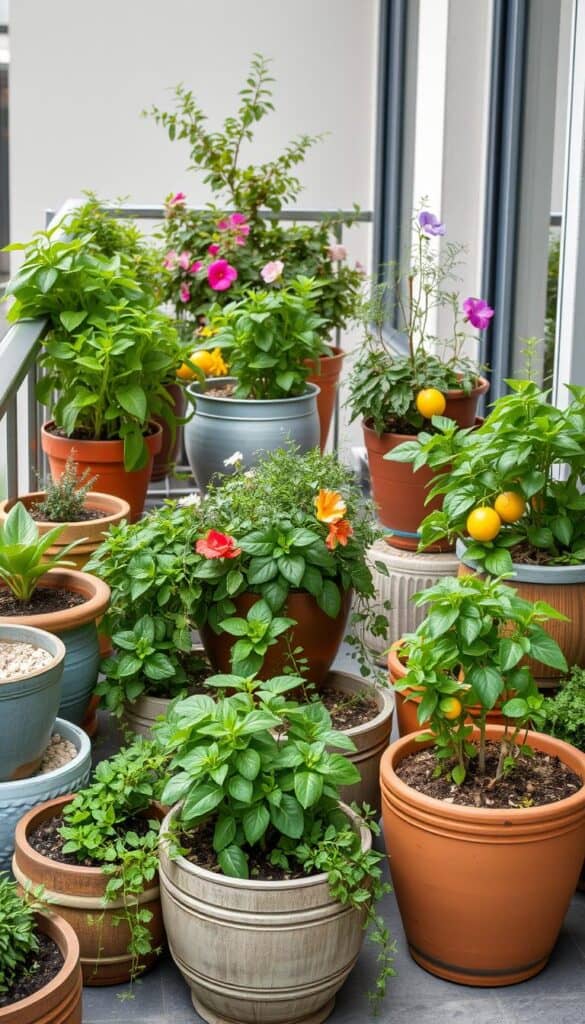
The quickest way to make an urban garden harder than it needs to be is choosing pots that are too small. Plants dry out faster, roots get cramped, and everything becomes more high-maintenance.
Larger containers hold moisture better, feel more stable in windy weather, and make the whole setup look more intentional.
- Best choices: Large pots, trough planters, window boxes, grow bags
- Look for: Drainage holes and sturdy materials
- Style tip: Repeat the same pot colour or texture for a cleaner look
3. Build the Garden in Layers
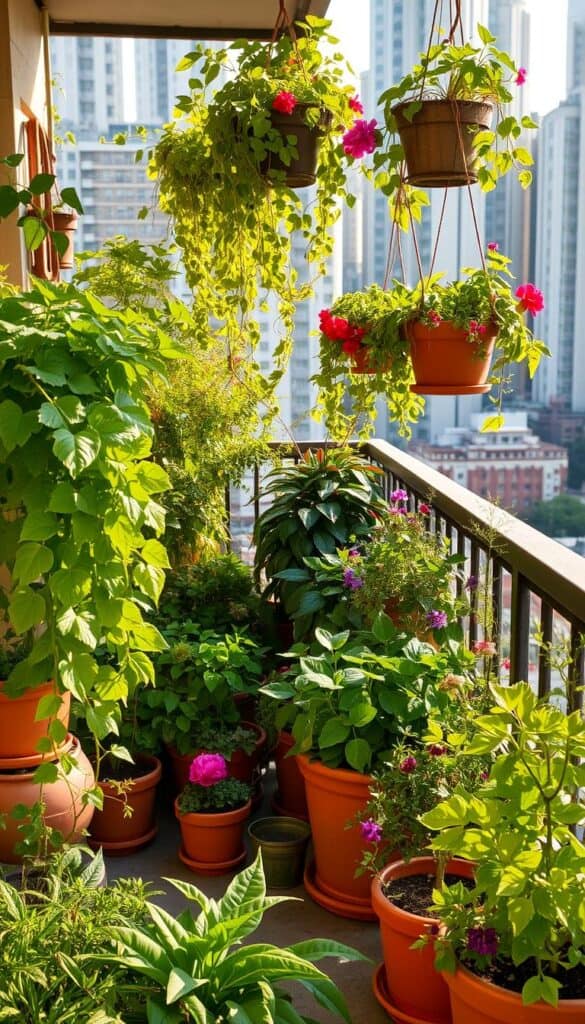
A lush balcony never comes from lining up pots in one flat row. It comes from layering heights so the space feels fuller and more garden-like.
Think of it the same way you would style a shelf. You need something taller, something medium, and something that softens the edges.
- Back layer: Dwarf trees, trellised climbers, tall grasses
- Middle layer: Herbs, compact flowering plants, leafy greens
- Front layer: Trailing plants, low flowers, soft spillers
This one shift makes even a tiny patio feel much more complete.
4. Grow Vertically to Save Floor Space
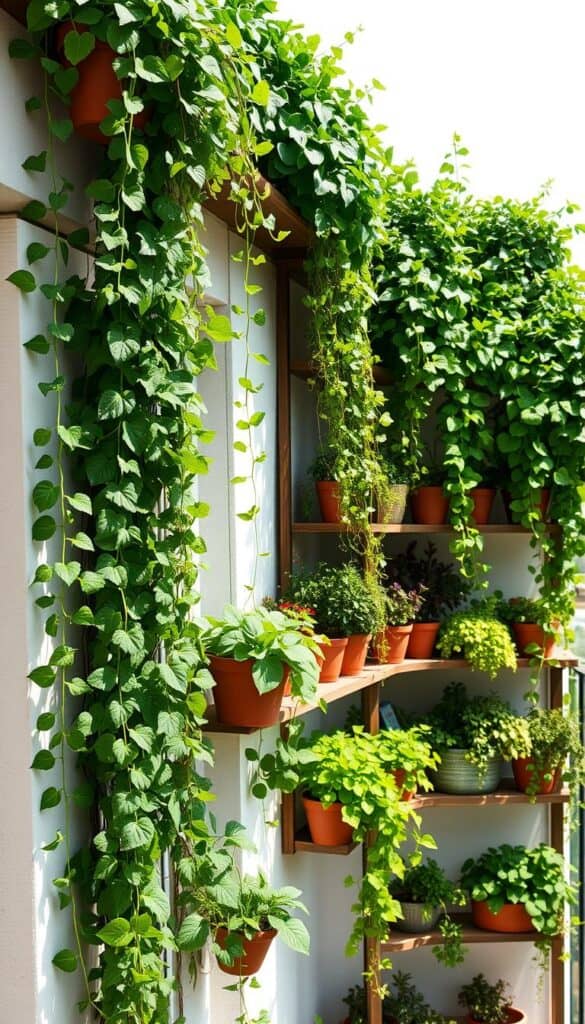
If the floor area is limited, the easiest fix is to move upward. Wall planters, hanging baskets, and trellises make the whole space feel more generous without taking over the balcony.
Vertical gardening also helps the space feel styled instead of cluttered, because plants are spread through the area rather than crowded at foot level.
- Try: Wall-mounted herb planters, hanging baskets, slim trellises
- Best for: Herbs, trailing flowers, peas, beans, climbing vines
- Style tip: Keep supports simple so the greenery stays the focus
5. Mix Pretty Plants With Useful Ones
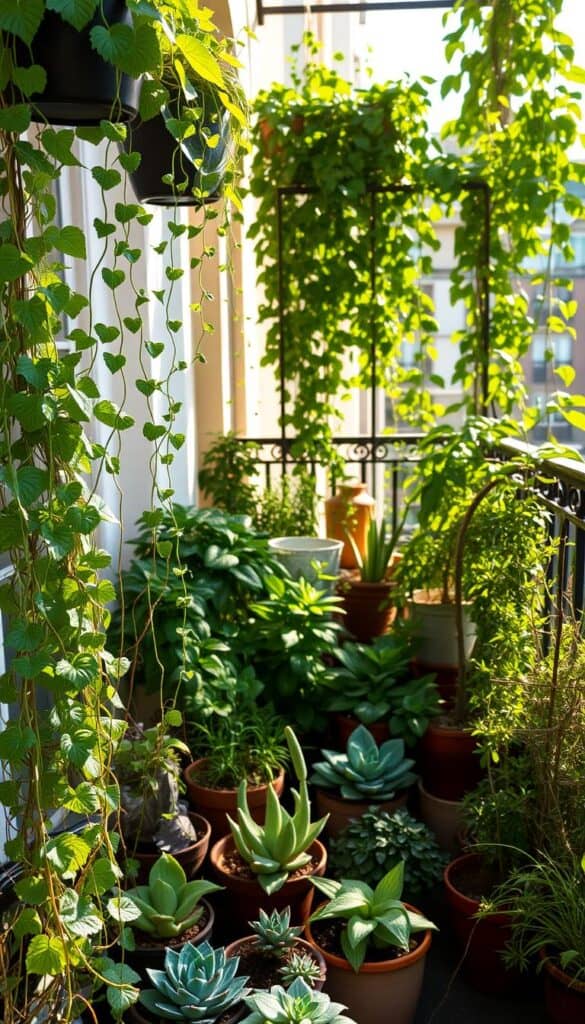
The most satisfying urban gardens usually do both. They look good and give you something back.
Mixing flowers with herbs or compact vegetables makes the space feel more relaxed and lived-in. It also stops the garden from looking too ornamental or too practical.
- Easy herbs: Basil, thyme, rosemary, parsley, chives
- Compact edibles: Cherry tomatoes, salad leaves, strawberries
- Soft fillers: Geraniums, lavender, petunias, trailing lobelia
That mix of useful and beautiful is what makes a balcony garden feel personal.
6. Choose Plants That Match the Light
Not every balcony gets all-day sun, and honestly, that is fine. You just need to plant for the conditions you actually have.
Trying to grow sun-loving plants in a gloomy corner usually ends in disappointment and a slightly offended looking rosemary plant.
- Sunny balconies: Lavender, rosemary, thyme, tomatoes, geraniums
- Part shade: Mint, parsley, lettuce, begonias, coral bells
- Mostly shade: Ferns, hostas, ivy, leafy greens
7. Make Watering Easier From the Start
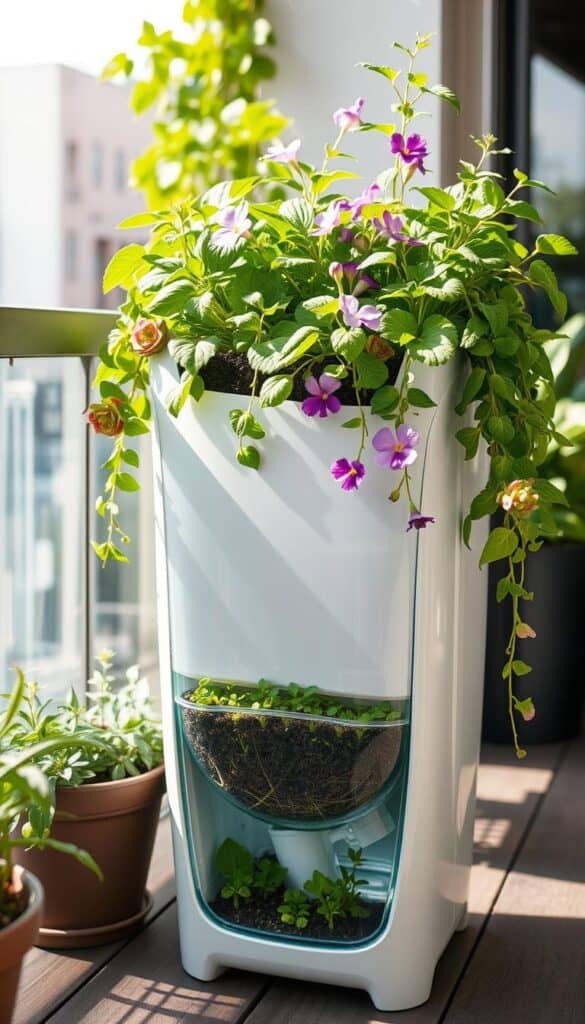
Container gardens dry out faster than regular beds, especially in summer. If you make watering awkward, the garden becomes a chore very quickly.
That is why self-watering containers, mulch, and grouped pots make such a difference. They keep moisture levels steadier and make the whole garden more forgiving.
- Helpful upgrades: Self-watering pots, trays, mulch, watering wand
- Best habit: Check soil regularly instead of watering on autopilot
- Easy win: Group thirstier plants together so care is simpler
8. Use a Cohesive Pot Palette
A balcony can have beautiful plants and still look messy if every pot is shouting for attention. One of the easiest ways to make a small garden look more designer is to keep the containers visually connected.
You do not need every pot to match exactly. Just keep them in the same family, maybe all terracotta, all black, all pale stone, or a simple mix of two finishes.
- Good options: Terracotta, matte black, warm stone, soft grey
- Why it works: The eye reads the whole setup as one garden, not separate bits
- Extra polish: Repeat planter shapes as well as colours
9. Add One Bigger Anchor Plant
Small gardens look stronger when they have one plant with presence. Without that anchor, everything can start to feel a bit scattered.
A dwarf olive tree, a compact citrus, a tall grass, or a statement shrub gives the balcony structure and helps the rest of the planting feel grounded.
- Best anchors: Dwarf lemon, olive tree, bay tree, tall grass
- Placement: Back corner or where it frames the view
- Effect: Makes the whole garden feel more established
10. Do Not Forget Seating or Breathing Room
A balcony garden should still feel usable. If every inch is covered in pots, it stops feeling like a retreat and starts feeling like a very polite plant shop.
Even a tiny stool, folding chair, or slim bench changes how the space feels. It tells you this is somewhere to pause, not just somewhere to water things.
- Best small-space choices: Folding chairs, slim benches, stackable stools
- Layout tip: Leave a clear path so the space feels open
- Designer trick: Fewer better pieces always look calmer
11. Let Texture Do Some of the Work
A lush garden is not only about colour. Texture matters just as much. Mixing soft leaves, trailing stems, upright grasses, rough pots, and woven details makes the whole space feel richer.
This is often what separates a balcony that looks nice from one that feels genuinely layered and inviting.
- Mix: Soft herbs, glossy leaves, fine grasses, trailing plants
- Add: Woven baskets, wooden stools, textured planters
- Result: More depth without needing more colour
12. Keep It Easy Enough to Maintain

The best balcony garden is the one you can actually keep up with. If you choose plants that need constant fussing, complicated feeding schedules, and daily reshuffling, the charm wears off quickly.
Start with a manageable mix. Add more only when the setup already feels easy enough to care for.
- Low-effort favourites: Rosemary, thyme, geraniums, ivy, lettuce, ferns
- Seasonal refresh: Swap in a few new flowers rather than redoing everything
- Long-term tip: Prune lightly, feed regularly, and do not overcrowd containers
A Small Garden Can Still Feel Lush
A balcony or patio garden does not need a huge footprint to feel beautiful. It just needs a little structure, the right plant choices, and a layout that feels calm rather than cramped.
Start with good containers. Read the light properly. Add one anchor plant, build around it in layers, and make space for something useful as well as something soft and pretty.
That is usually all it takes for the whole space to shift. Suddenly it feels greener, more lived in, and much more like somewhere you want to spend time.
Small-space gardening is not about squeezing in more. It is about choosing better. And once you get that part right, even the tiniest balcony can feel full of life.