
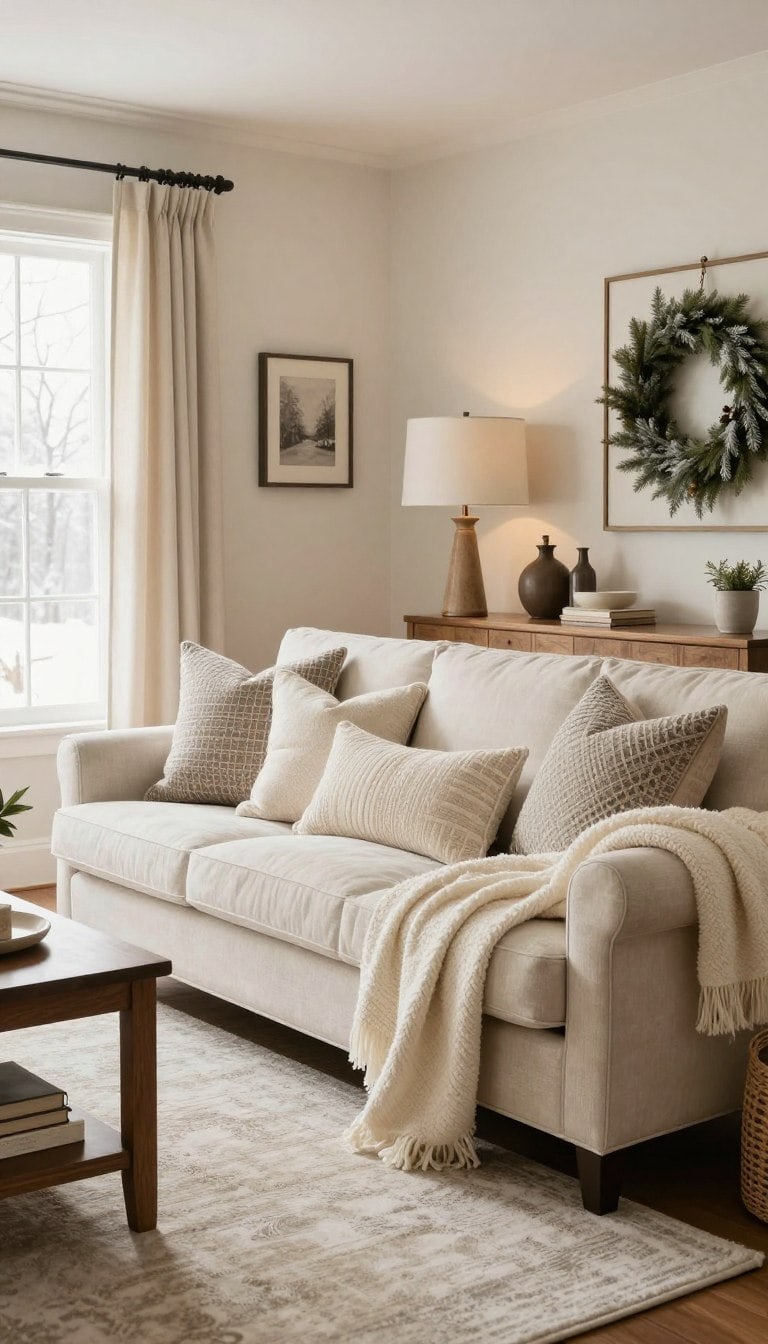
15 Cozy Winter Home Ideas for Warm and Inviting Rooms
When the days get shorter and the temperature drops, home naturally becomes the place where you want to feel warm, comfortable, and tucked away from the weather. The good news is that creating that cozy winter feeling does not require completely redecorating every room or filling the house with seasonal decorations.
A few thoughtful changes can make a room feel noticeably softer. Warm lighting, layered textiles, natural materials, and deeper colors all help create that comfortable winter atmosphere without making your home feel cluttered.
The goal is less “winter wonderland” and more “I may never leave this sofa.” These cozy winter home ideas focus on simple changes that make everyday rooms warmer, more inviting, and easier to enjoy throughout the colder months.
Quick Guide: Make Your Home Feel Cozy for Winter
Living Room
Start with the room you use most in the evening. Layer a few soft textiles around the main seating area and replace harsh lighting with smaller, warmer sources of light.
- Layer throws, cushions, and a substantial rug.
- Add table and floor lamps at different heights.
- Bring in warm wood and natural materials.
- Repeat two or three deeper winter colors.
Bedroom
Concentrate on comfort rather than decoration. A quilt, soft throw, tactile bedding, and warm bedside lighting can make the bedroom feel considerably more inviting.
- Layer a quilt or coverlet over your usual bedding.
- Fold a warm throw across the foot of the bed.
- Use soft bedside lamps instead of relying only on the ceiling light.
- Choose bedding for genuine comfort rather than piling on unnecessary layers.
Small Home
In a small home, you need even less. Concentrate on texture, color, and lighting rather than adding lots of seasonal objects that need somewhere to live.
- Keep pathways and floor space clear.
- Choose fewer but more substantial accents.
- Use walls and vertical space where practical.
- Restyle pieces you already own before buying more.
Best place to start: Change the lighting and add one or two tactile textiles before buying winter decor. These simple changes usually have a much bigger effect on how cozy a room actually feels.
1. Layer the Sofa With Winter Textures
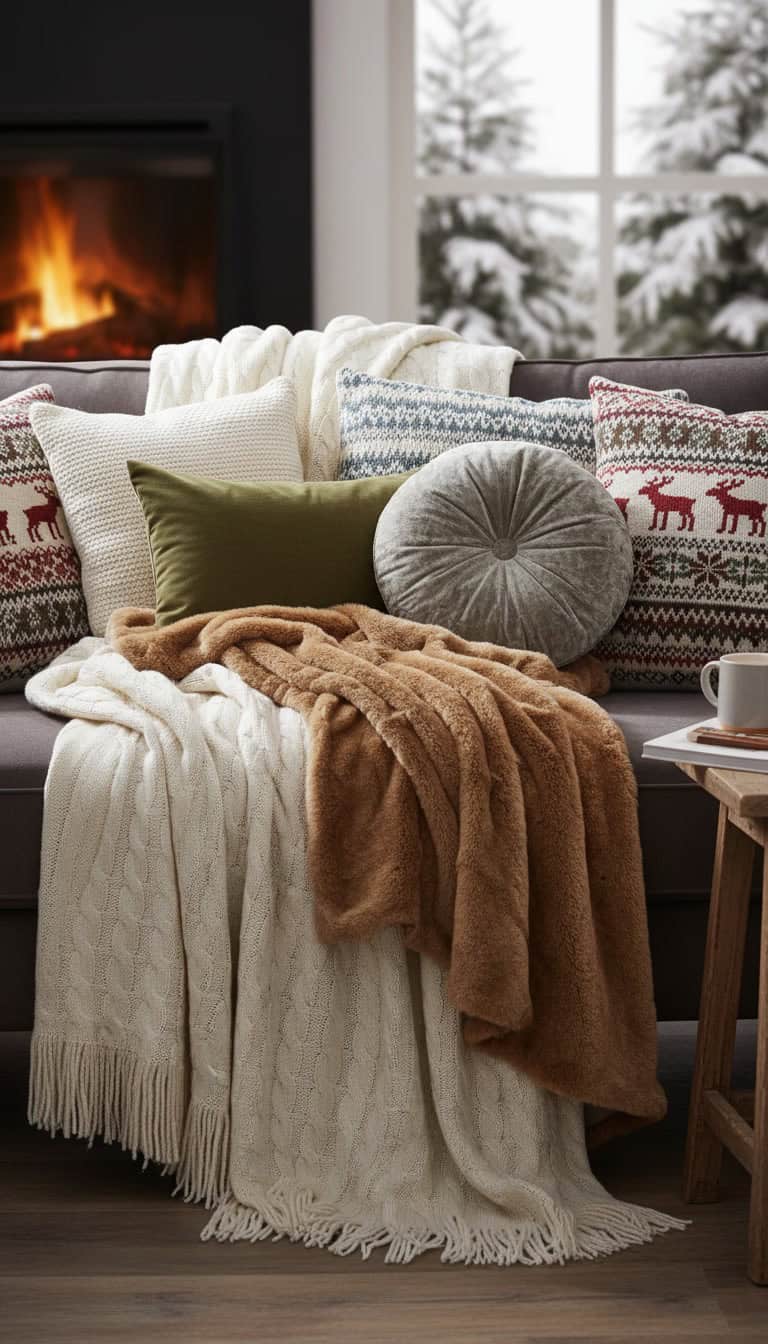
The sofa is one of the easiest places to begin because a few textile changes can make the whole living room feel ready for winter. Instead of covering everything in one matching fabric, layer materials that look and feel slightly different.
Try a chunky knitted throw alongside wool, velvet, brushed cotton, boucle, or faux fur cushions. You do not need a small mountain of pillows. Two or three substantial cushions and one generously sized blanket can look much more relaxed.
If your sofa is cream, beige, or gray, bring in warmer tones through smaller pieces. Chocolate brown, camel, burgundy, forest green, and muted rust can add richness without committing you to a permanent color change.
Easy Textures to Layer
- Chunky knit.
- Wool or wool-look fabric.
- Velvet.
- Boucle or faux fur.
- Brushed cotton or linen blends.
Easiest upgrade: Fold a thick throw casually over one arm of the sofa. It adds softness and texture without making the room look overdecorated.
2. Replace Harsh Overhead Lighting With Warm Lamps
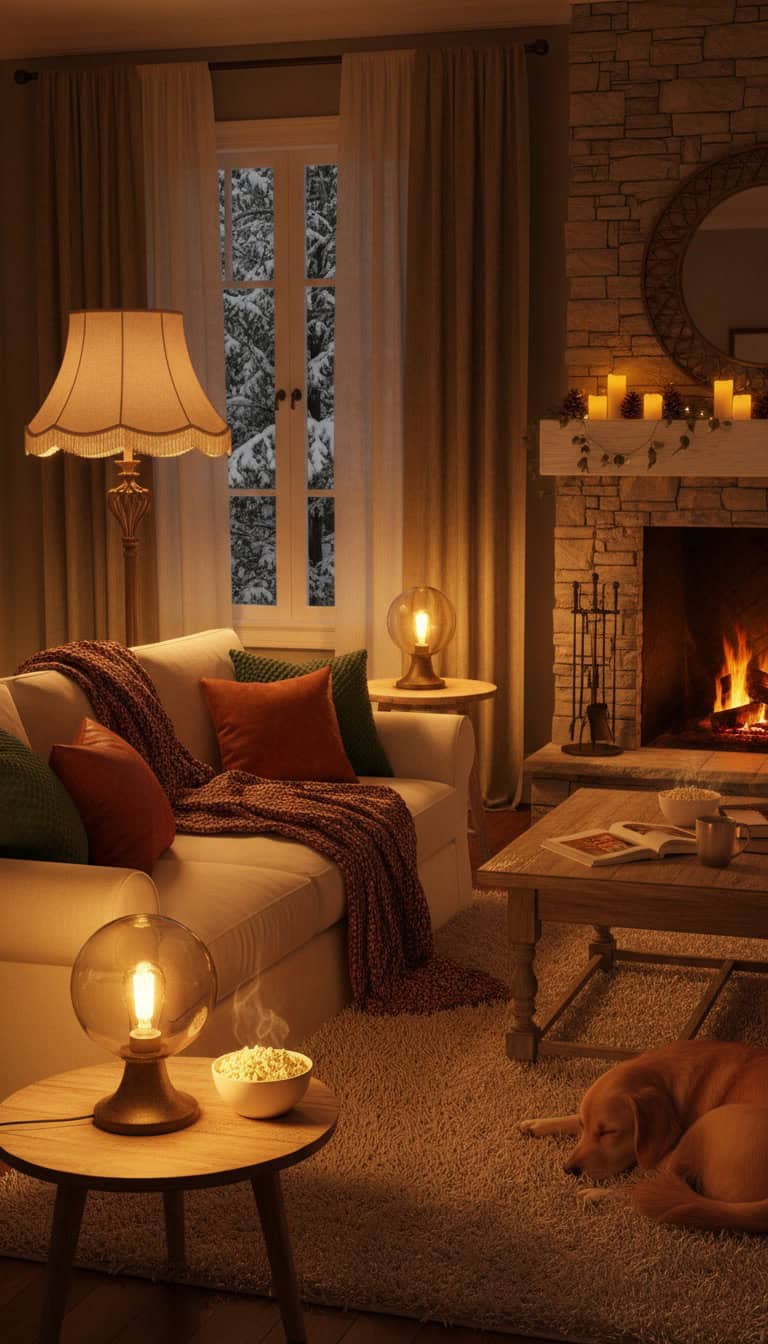
Lighting can make more difference to a winter room than almost any decorative accessory. One bright ceiling light tends to flatten everything, while several smaller sources create warm pools of light around the room.
Use table lamps, floor lamps, and suitable wall lights at different heights. Position them around the places you actually use in the evening, such as beside the sofa, reading chair, console, or favorite corner.
You do not necessarily need more light—you often just need it in better places. Switching off the main ceiling light and turning on two or three smaller lamps can completely change the atmosphere.
Create Layers of Light With
- A floor lamp beside the sofa.
- A small table lamp on a console.
- A reading light beside an armchair.
- Suitable decorative accent lighting.
Why it works: Several smaller light sources create softer shadows and make a room feel more intimate during long winter evenings.
3. Add a Thick Rug to Warm Up the Living Room
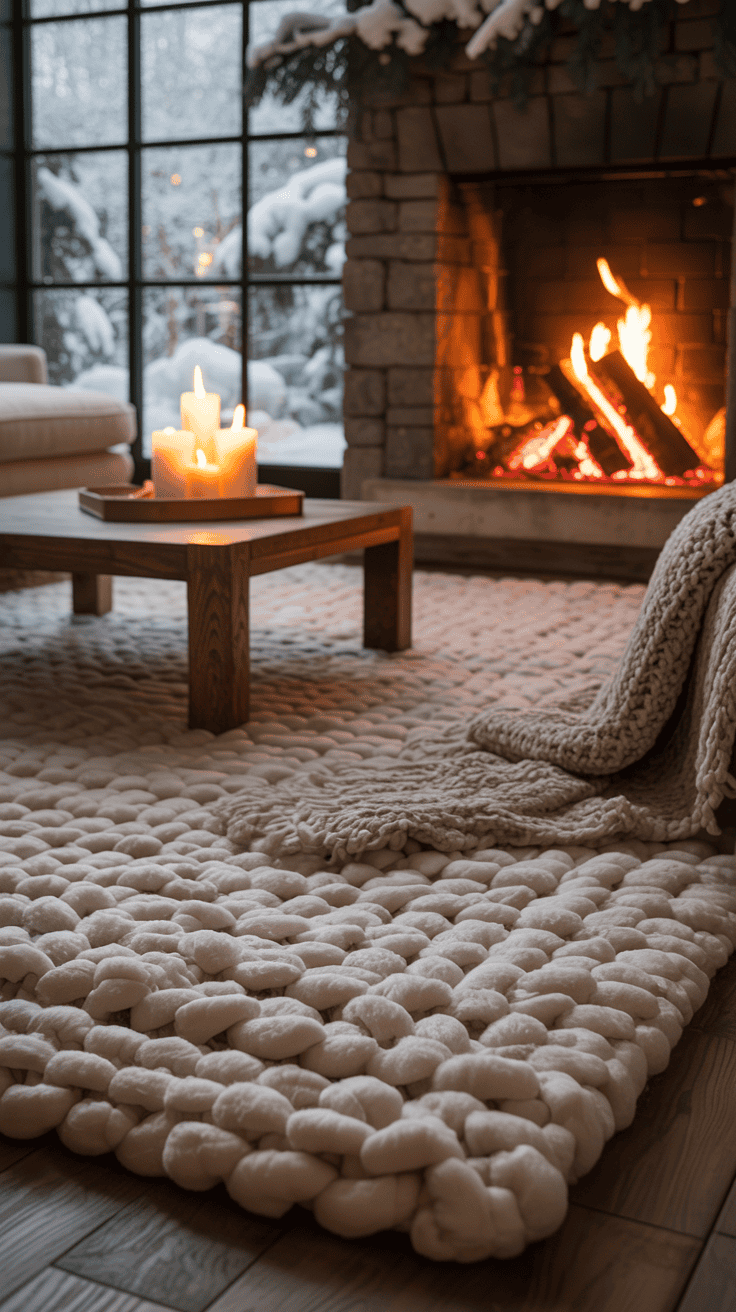
A large rug can instantly make a living room feel warmer, particularly when the floor is wood, tile, or laminate. It gathers the seating area together while adding softness underfoot.
Look for wool, wool-look, textured flatweave, or a soft low-to-medium pile. Cream and oatmeal keep the room light, while taupe, brown, rust, or a faded traditional pattern can add more depth.
Scale matters here. A tiny rug floating beneath the coffee table can make the furniture feel disconnected. Where possible, choose a size that relates properly to the main seating arrangement.
Winter Rug Ideas to Try
- Soft oatmeal wool.
- Warm taupe or brown.
- A faded traditional pattern.
- A textured neutral flatweave.
Designer detail: Let at least part of the main furniture visually connect with the rug so it feels like the foundation of the seating area rather than a decorative island in the middle of the floor.
4. Create a Cozy Winter Reading Corner
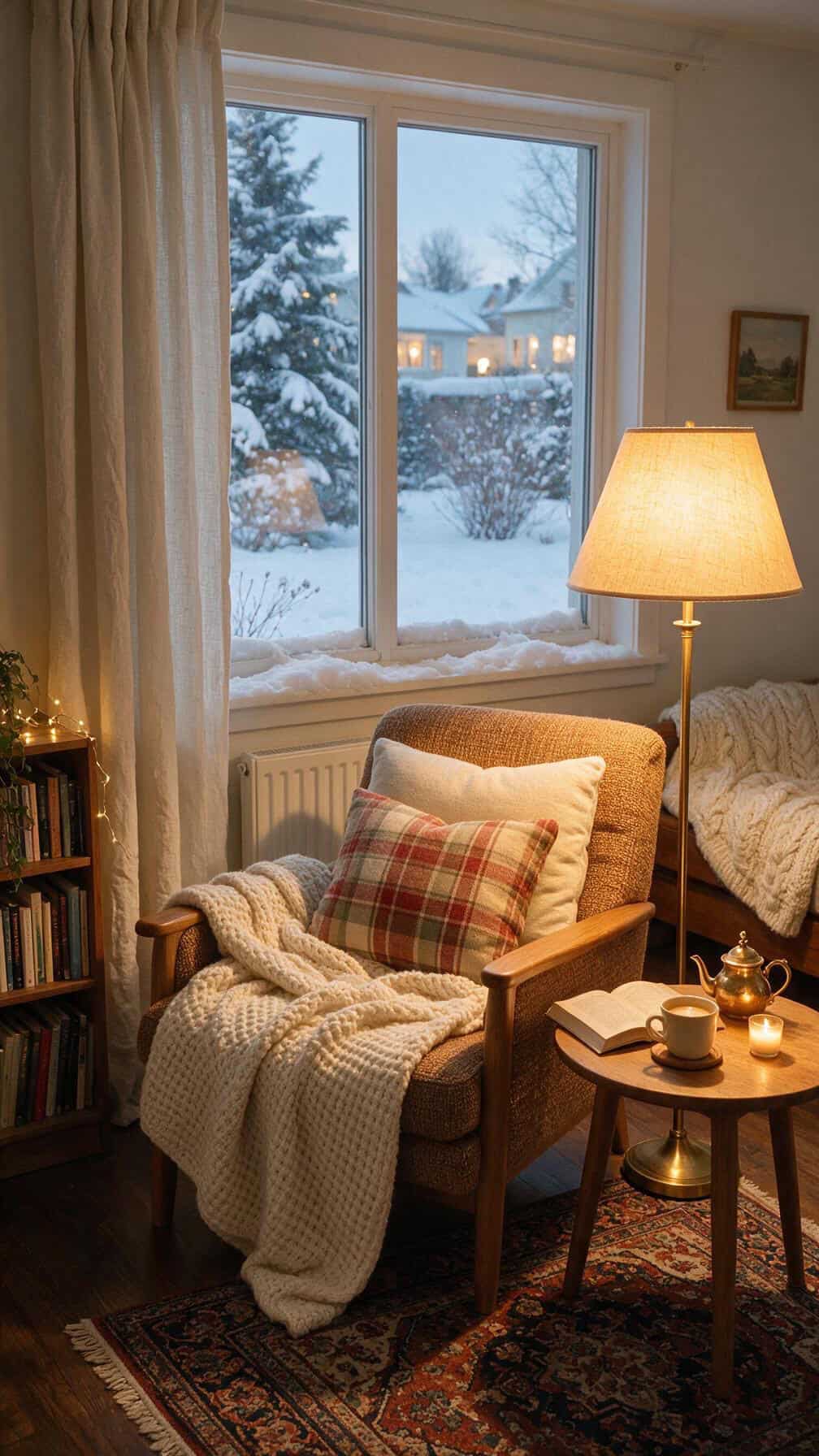
An unused corner can become one of the coziest places in the house without requiring much furniture. Start with a comfortable chair, then add a small table, reading light, and blanket.
Keep practical things within reach: somewhere for a drink, enough light to read comfortably, and a place to put your book when you inevitably fall asleep halfway through a chapter.
Try positioning the chair near a window if you enjoy reading during the day, then add a floor or wall-mounted light so the corner remains useful after dark.
A Simple Reading Nook Needs
- One comfortable chair.
- A reading lamp.
- A small side table.
- A warm throw.
- A few favorite books.
Small-space tip: A reading nook does not need its own room. A chair tucked into an underused corner can create the feeling of a separate retreat without taking over the space.
5. Bring Warm Wood Tones Into the Room
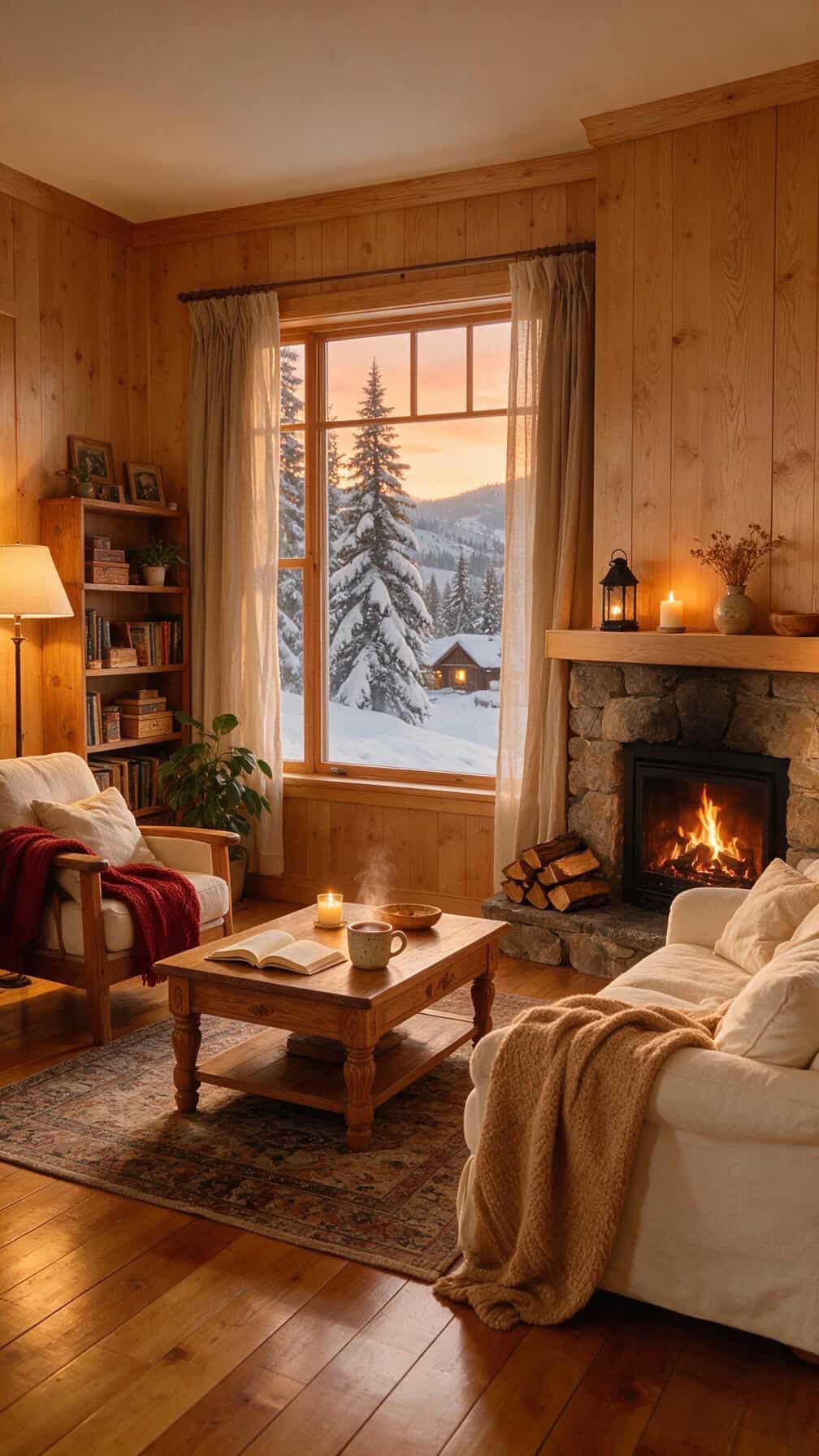
Wood is an easy way to warm up a winter room that feels cold or overly polished. Oak, walnut, antique pine, and other warm tones introduce natural variation that works particularly well beside soft fabrics.
You do not need to replace all your furniture. A wooden side table, picture frame, tray, lamp base, stool, or decorative bowl may be enough to break up a room dominated by painted or upholstered surfaces.
Secondhand wooden pieces are worth considering too. A slightly worn stool or vintage side table can add more warmth and character than an entire matching furniture collection.
Easy Ways to Add Wood
- A small side table.
- Wooden picture frames.
- A decorative tray or bowl.
- A vintage stool or bench.
- A wood or wood-look lamp base.
Budget-friendly idea: Look at the small wooden pieces you already own before buying new furniture. Even moving a warm wood stool or side table into a pale room can noticeably soften it.
6. Style the Coffee Table for Winter
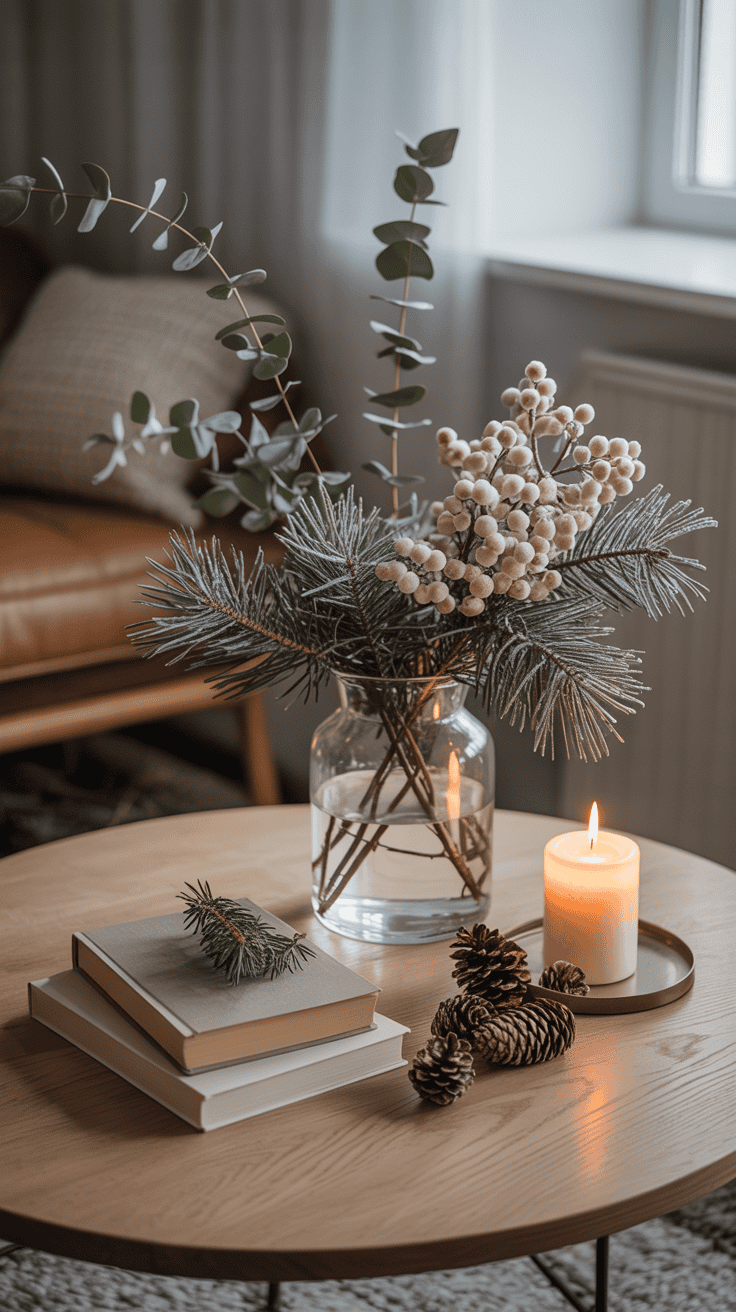
Winter coffee table styling does not need to mean covering the surface in seasonal ornaments. Start with a tray or a small stack of books, then add a ceramic vase with bare branches or simple winter greenery.
Keep enough of the table clear for everyday life. A coffee table that looks beautiful but has nowhere to put an actual cup of coffee has perhaps misunderstood the assignment.
If you use candles, place them on stable, heat-resistant surfaces away from curtains, greenery, books, children, pets, and anything else that could catch fire. Never leave a burning candle unattended. Flameless candles can provide a similar glow without an open flame.
Keep the Styling Simple With
- A wooden or stone tray.
- Two or three books.
- A ceramic vase.
- Winter branches or greenery.
- One decorative accent.
Most timeless option: Use natural materials and a restrained arrangement rather than highly themed winter decorations. You can leave most of it in place long after the holidays are over.
7. Use Deep Green for a Sophisticated Winter Palette
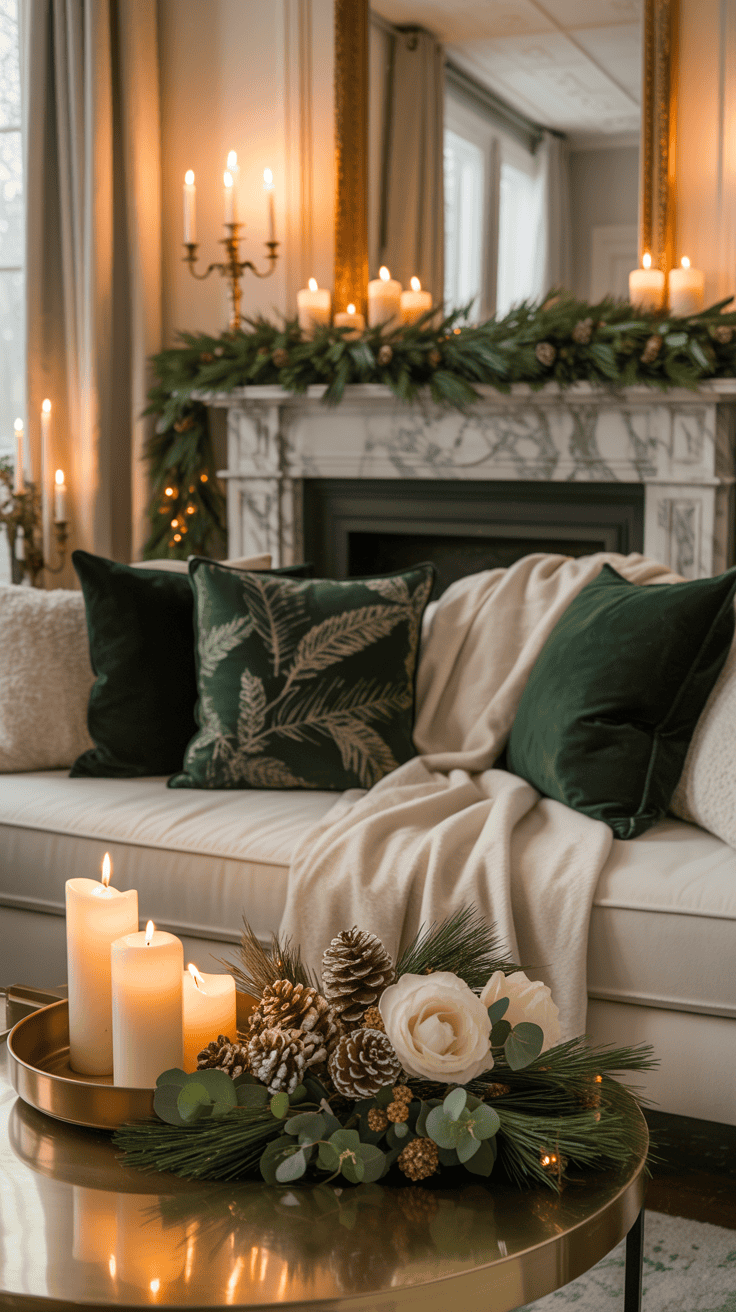
Forest and olive greens work beautifully in winter because they reference evergreen foliage without looking specifically festive. They pair naturally with cream, brown, brass, black, and warm wood.
For a softer look, choose earthy olive. If you want something more dramatic, deep forest green or an almost-black green can create a cocooning effect, particularly when balanced with lighter upholstery and warm lighting.
You also do not need to paint the room. Introduce green through cushions, a throw, artwork, ceramics, or one upholstered chair if you want a winter palette that is easy to change later.
Pair Deep Green With
- Cream and oatmeal.
- Chocolate brown.
- Walnut or warm oak.
- Brass or aged metal details.
- Natural woven textures.
Why it works: Deep green adds richness during winter but still feels like a genuine decorating color rather than something that needs to disappear as soon as the season changes.
8. Layer the Bed for a Cozy Winter Bedroom
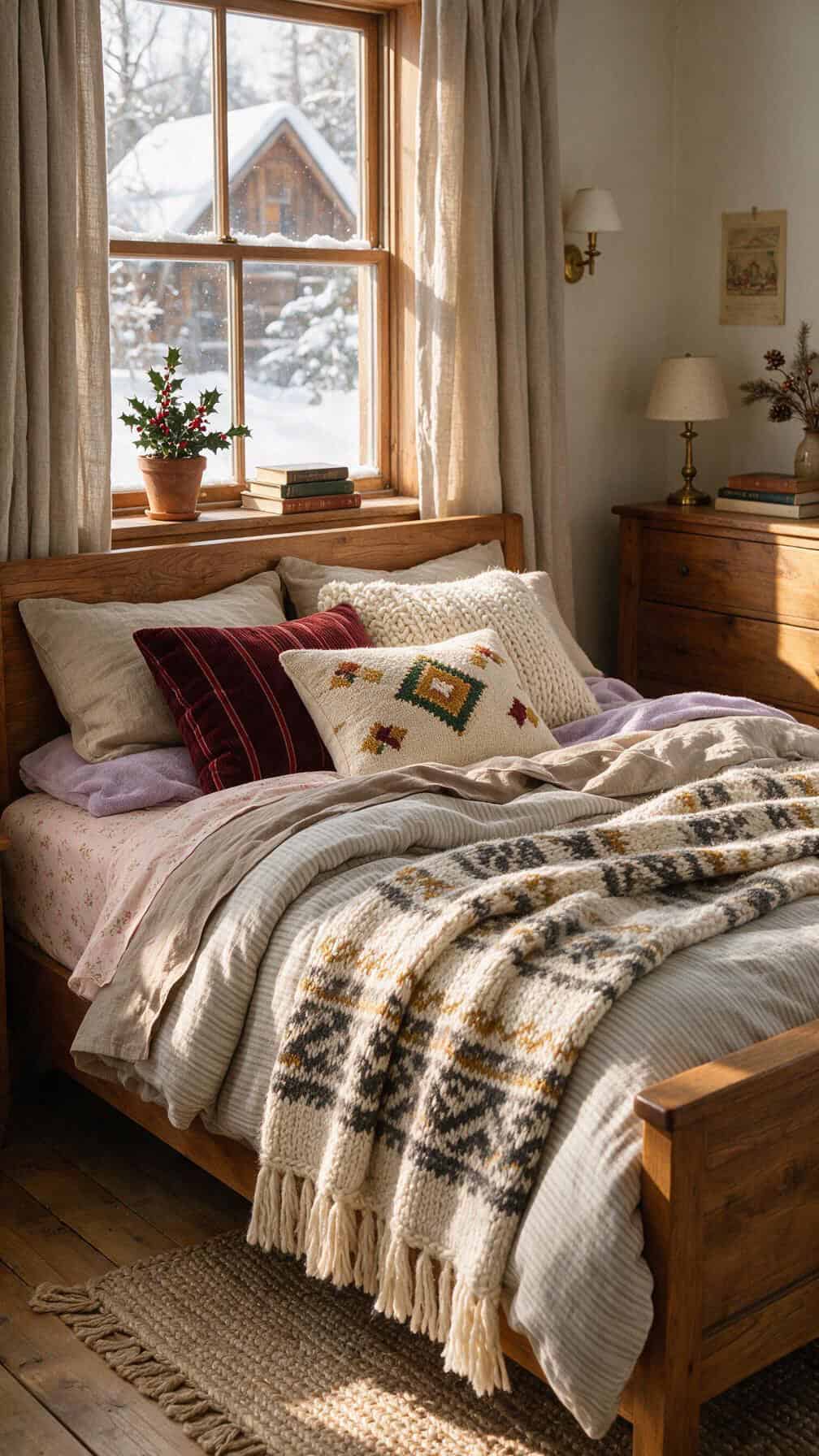
The bedroom is another place where texture can completely change the atmosphere. Start with your usual bedding, add a quilt or coverlet, and finish with a folded throw at the foot of the bed.
Mix slightly different shades of cream, beige, taupe, or brown rather than trying to match every layer perfectly. The subtle variation makes the bed feel softer and more relaxed.
Choose bedding according to your comfort and room temperature rather than piling on layers purely for appearance. Cozy is considerably less convincing when you have to remove six decorative blankets before you can actually go to sleep.
Create a Layered Bed With
- Your usual sheets and bedding.
- A quilt or coverlet.
- A folded throw.
- Two or three decorative cushions.
- Warm bedside lighting.
Creates this effect: A few substantial layers give the bed that soft, inviting winter look while keeping it practical enough to use every night.
9. Add Heavier Curtains for a Softer Winter Look
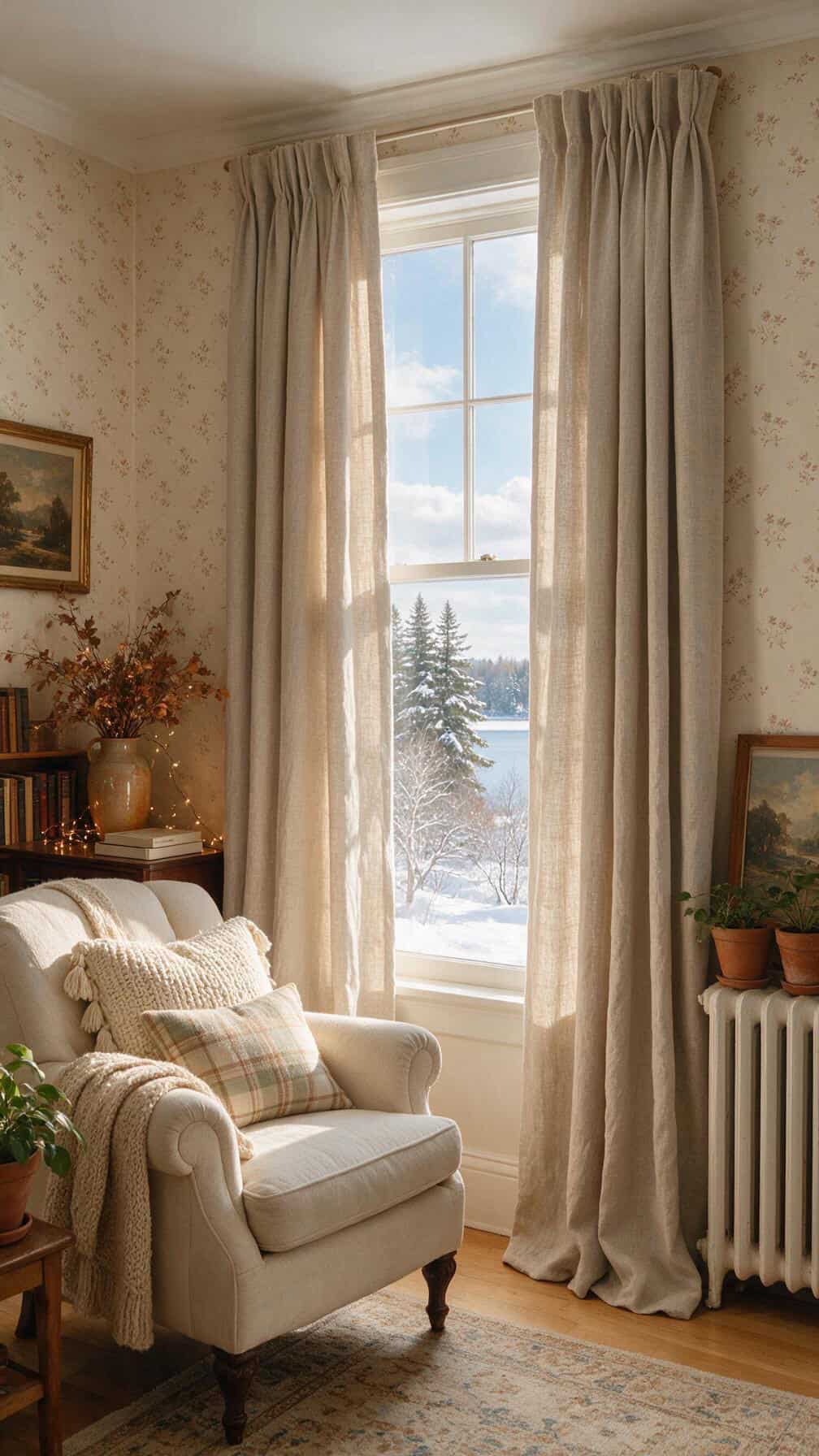
Windows can make a room feel colder during winter, particularly once it gets dark outside. Fuller curtains soften the edges of the room and create a more enclosed, comfortable feeling.
Velvet gives you a richer look, while lined cotton, textured weaves, and heavier linen-look fabrics offer a more relaxed alternative. Warm oatmeal, taupe, soft brown, olive, and muted rust can all add depth without feeling overly seasonal.
If insulation is important, check the actual construction and thermal properties of the curtains rather than assuming a heavy-looking fabric will automatically provide better insulation.
Winter Curtain Fabrics to Try
- Velvet.
- Lined cotton.
- Heavy textured weaves.
- Linen-look fabrics with a substantial drape.
Designer detail: Let the curtains fall generously rather than looking skimpy around the window. The extra fabric makes the whole room feel softer and more finished.
10. Create a Warm Winter Entryway
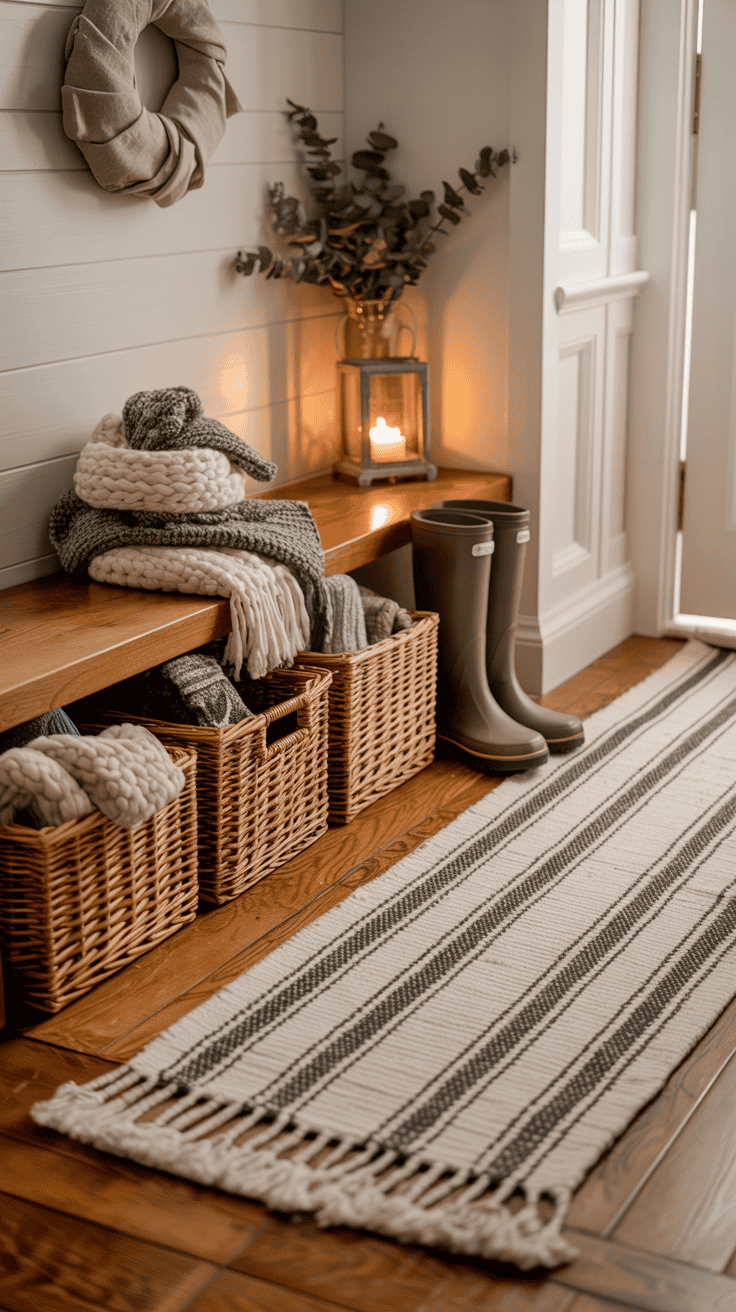
The entrance sets the mood before you even reach the living room. A runner, warm lamp, natural wood, and a little restrained greenery can make coming home on a dark winter evening feel immediately more welcoming.
Winter also brings coats, shoes, scarves, gloves, and umbrellas, so practical storage matters just as much as decoration. Hooks, a small bench, baskets, or a narrow storage piece can stop the entrance becoming the place where everything gets dropped.
Keep the arrangement simple enough that you can still move through the space comfortably. Cozy should never mean negotiating an obstacle course every time you come through the front door.
Make the Entrance Welcoming With
- A washable or practical runner.
- A warm table lamp where suitable.
- Hooks or organized coat storage.
- A basket for winter accessories.
- Simple seasonal greenery or branches.
Small-space tip: Use the walls for hooks and slim storage so coats and winter accessories do not consume valuable floor space.
11. Decorate With Bare Branches and Winter Greenery
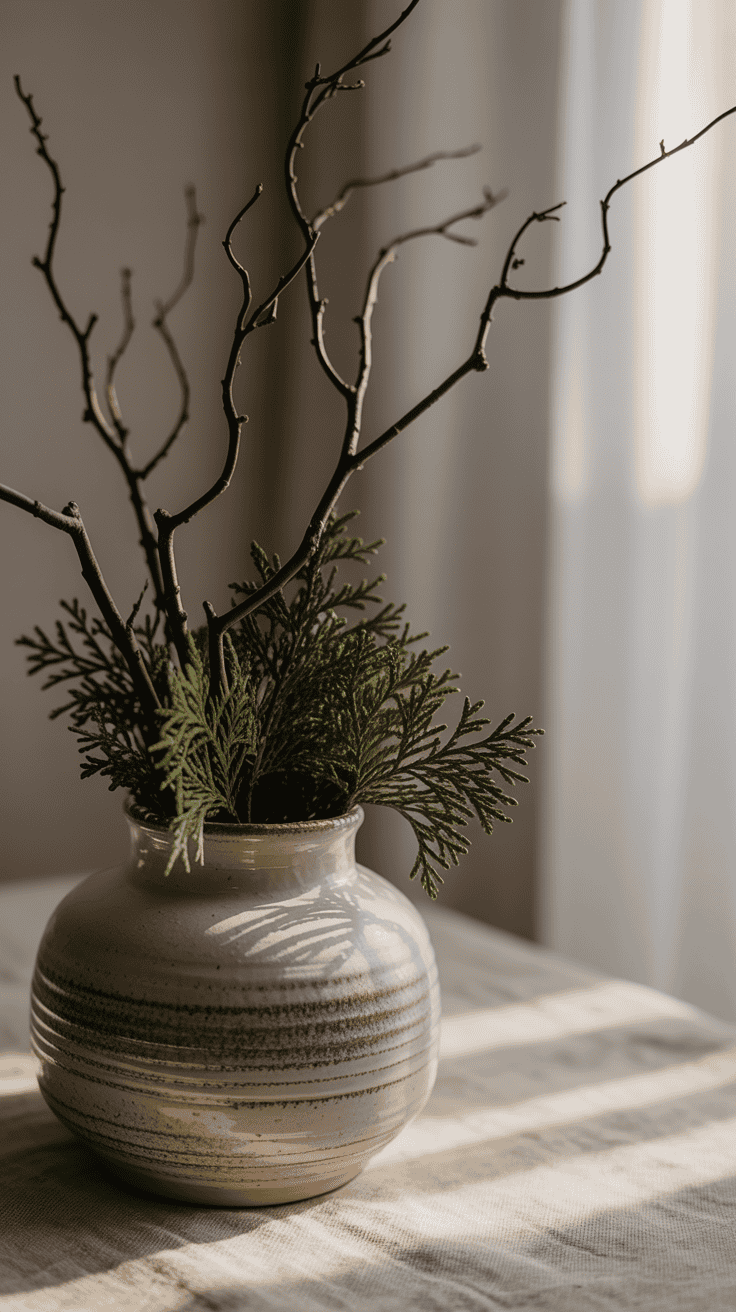
Natural winter elements can make a room feel seasonal without filling it with decorations. Bare branches look sculptural, while evergreen-style foliage brings welcome color to a neutral room.
One generous arrangement is usually enough. Try it on a dining table, console, mantel, or sideboard rather than scattering small pieces of greenery across every available surface.
If you bring real plant material indoors, make sure it is suitable for your household, particularly around children and pets. Artificial foliage is a practical reusable alternative and has the added advantage of not dropping needles all over the floor.
Natural Winter Details to Try
- Bare sculptural branches.
- Suitable evergreen foliage.
- Pinecones.
- Dried seed heads.
- Natural or artificial greenery.
Budget-friendly idea: A large vase filled with simple branches can create more impact than buying several smaller seasonal decorations.
12. Bring Chocolate Brown Into Your Winter Decor
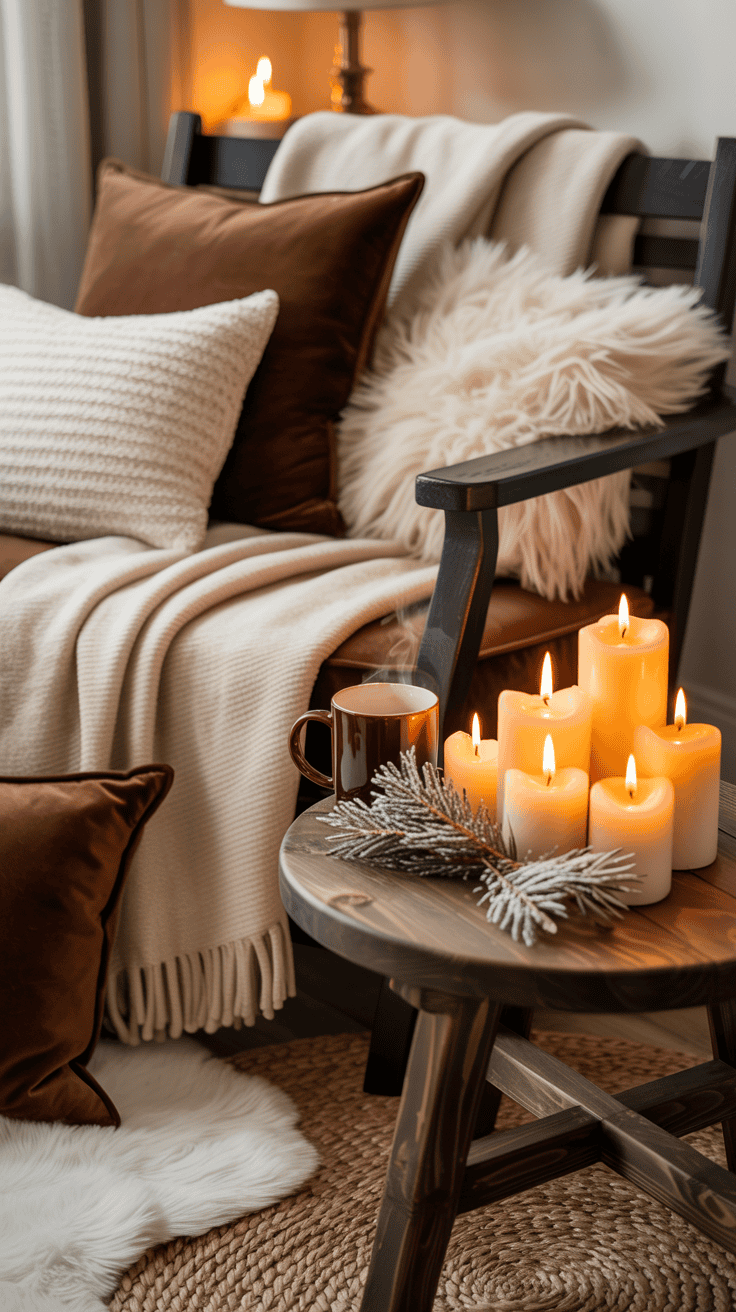
Chocolate brown is an easy way to warm up a pale interior for winter. It creates more contrast than beige but remains neutral enough to combine with furniture and accessories you already own.
Introduce it through velvet cushions, a throw, wooden furniture, pottery, or a patterned rug rather than changing the entire room. Against cream and oatmeal, even a small amount of dark brown can make the palette feel richer.
Brown also works beautifully with forest green, olive, burgundy, muted rust, camel, and warm metallic details, giving you plenty of ways to build a winter palette without relying on traditional festive colors.
Pair Chocolate Brown With
- Cream and oatmeal.
- Forest or olive green.
- Burgundy or muted rust.
- Camel and warm beige.
- Brass or aged metal accents.
Why it works: Chocolate brown adds depth to a neutral room while remaining timeless enough to stay long after winter has finished.
13. Turn the Fireplace Into a Cozy Winter Focal Point
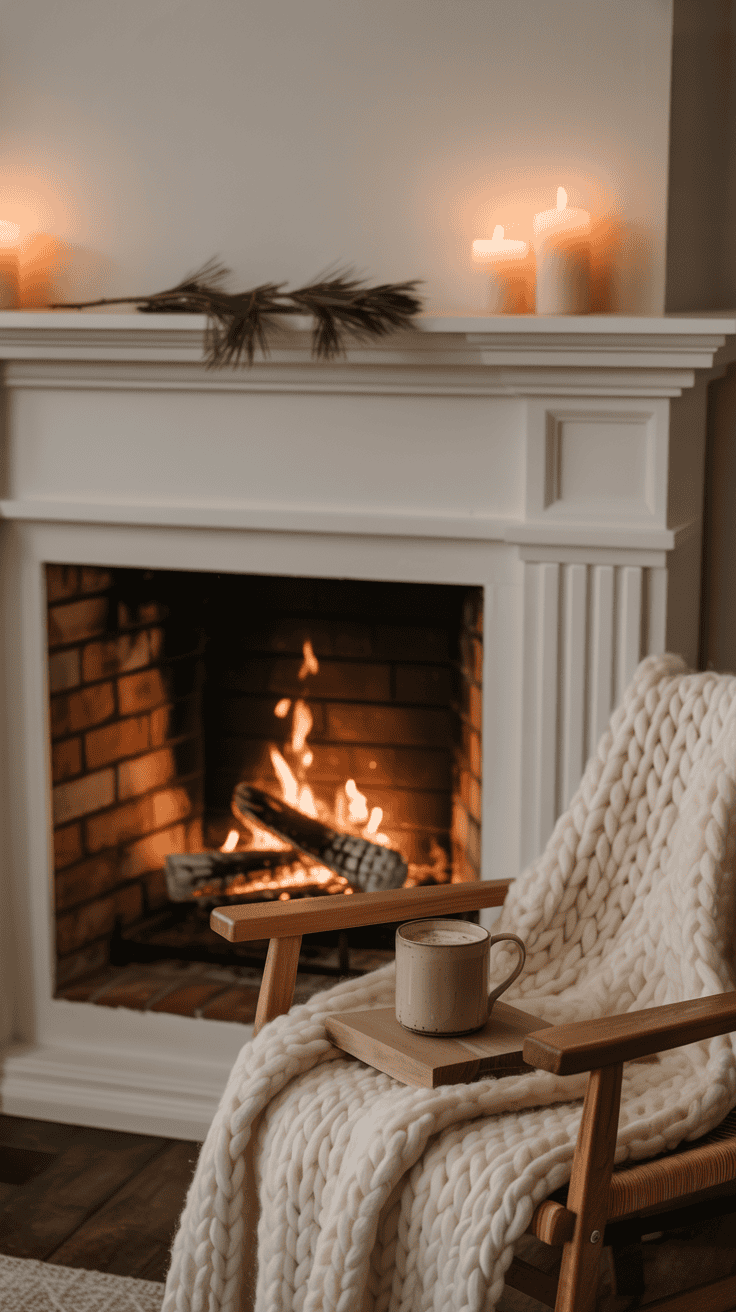
If your home has a fireplace, winter is the perfect time to let it become the visual center of the living room. Arrange the seating so the fireplace feels connected to the conversation area rather than sitting alone on one wall.
Keep the mantel relatively simple with one large piece of artwork, a mirror, a few ceramics, or a restrained natural arrangement. Leaving some empty space usually looks more elegant than filling the entire mantel with small decorative pieces.
For a working fireplace or stove, follow the manufacturer’s instructions and relevant fire-safety requirements. Keep combustible decorations, textiles, furniture, and other materials safely away from heat and flames.
Create a Simple Fireplace Look With
- One large mirror or artwork.
- A few ceramic pieces.
- Natural materials where safely appropriate.
- A comfortable seating arrangement nearby.
Most timeless option: Treat the fireplace as an architectural feature first and a decorating surface second. It usually needs far less styling than you think.
14. Create a Cozy Winter Dining Area
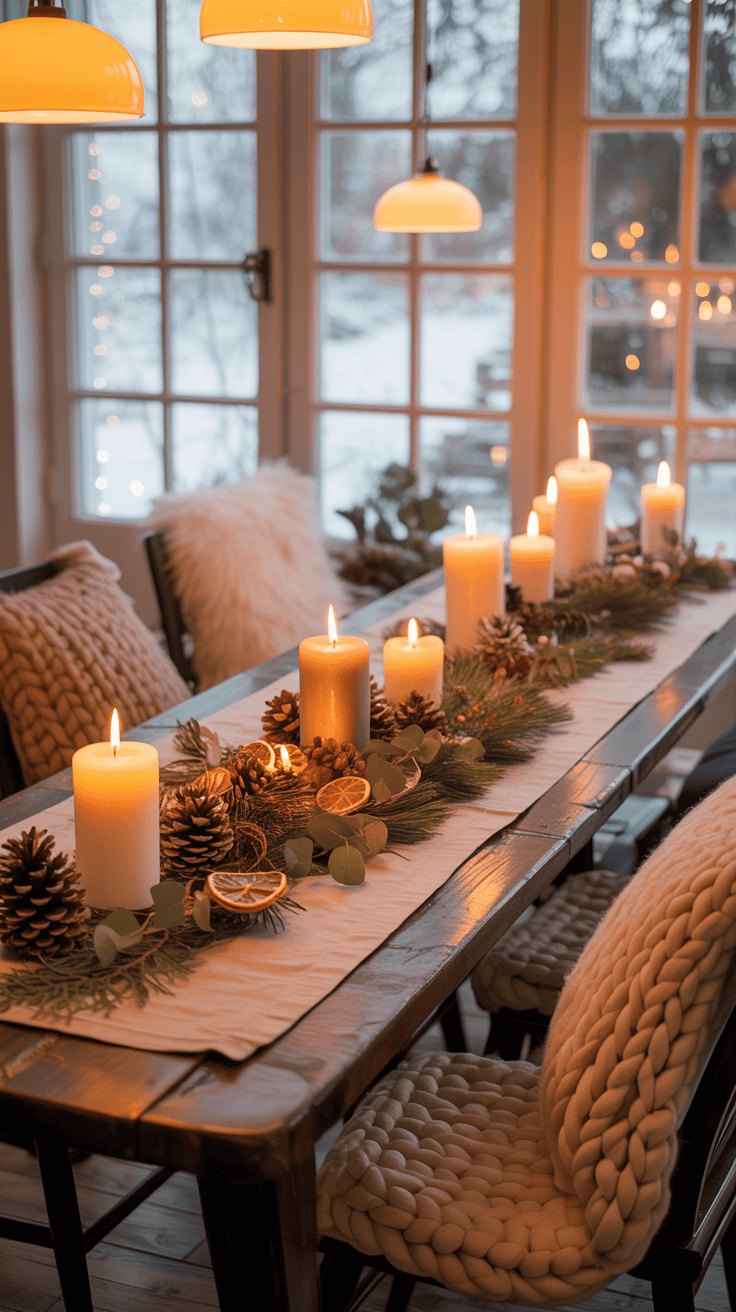
A dining area can feel much warmer with a few layers of texture and softer lighting. A linen tablecloth or runner, handmade-look ceramics, and a simple natural centerpiece are enough to change the atmosphere without creating a formal tablescape every day.
Wooden serving pieces and warm neutral textiles work particularly well in winter because they add warmth without making the table look specifically festive.
Keep the everyday arrangement uncomplicated. Winter coziness should make daily life easier, not create another household chore every time somebody wants to eat dinner.
Add Warmth to the Dining Area With
- A linen runner or tablecloth.
- Handmade-look ceramics.
- Wooden serving pieces.
- A simple seasonal centerpiece.
- Warm layered lighting.
Easiest upgrade: Replace a complicated centerpiece with one substantial vase or bowl and let the texture of the table linens provide the rest of the interest.
15. Create a Warm Evening Ritual With a Cozy Corner
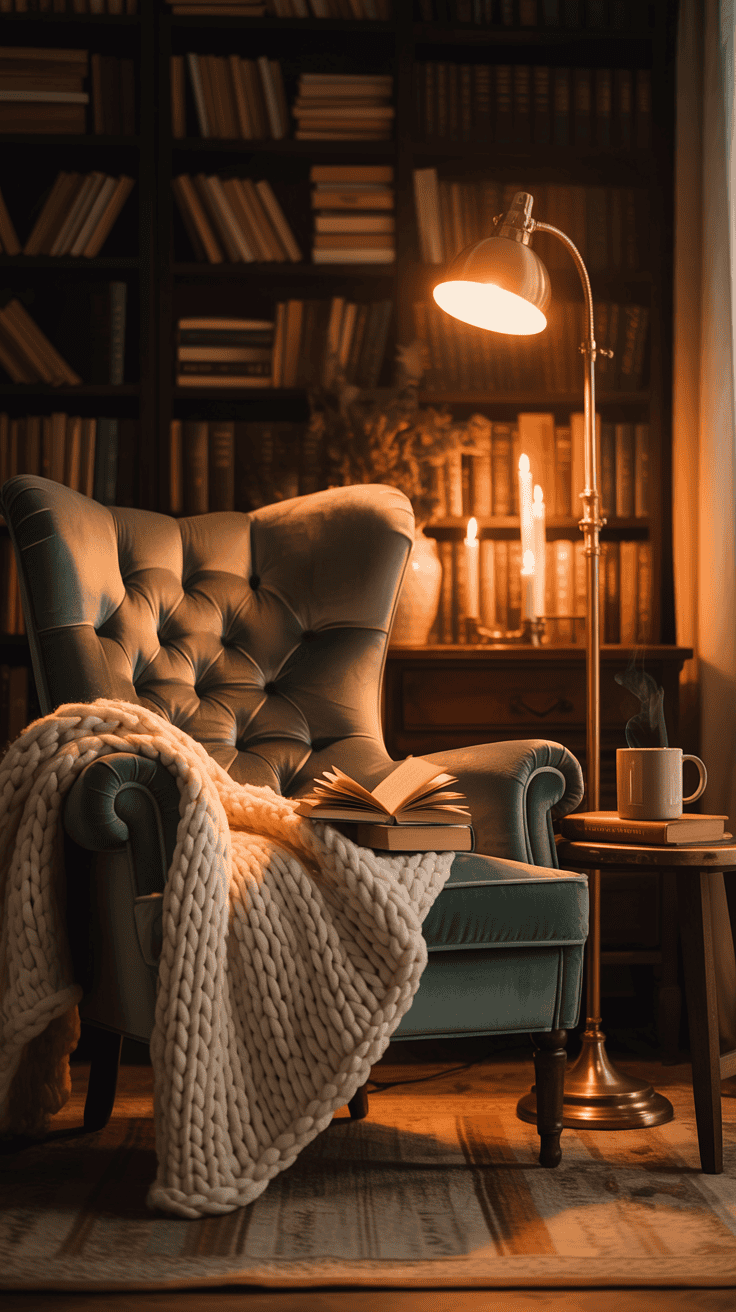
Sometimes the coziest part of a home is simply having somewhere to slow down at the end of the day. Create a small corner for reading, music, a warm drink, or quiet time away from your desk and television.
You only need a comfortable seat, good lighting, a small surface, and perhaps a blanket. You may not need to buy anything at all; rearranging what you already own can be enough to make an overlooked corner feel deliberate.
The important part is making the space genuinely comfortable enough to use. A beautiful chair nobody wants to sit in is really just a very large ornament.
Keep Your Cozy Corner Simple With
- A comfortable chair or end of the sofa.
- A warm reading lamp.
- A small table.
- A soft blanket.
- Books, magazines, or another quiet activity.
Creates this effect: Giving one small area a clear purpose can make the whole room feel calmer and more inviting during winter evenings.
You Might Also Like
How to Make Your Home Feel Cozy After Christmas
That slightly empty feeling after the holiday decorations come down often happens because texture, greenery, color, and warm lighting all disappear at once. Instead of stripping the room completely bare, keep some of those cozy layers in a simpler winter form.
- Keep the greenery: Use simple foliage or branches without festive ornaments.
- Leave out warm textiles: Throws, cushions, rugs, and faux fur can stay throughout the colder months.
- Keep layered lighting: Table and floor lamps are just as useful in January and February.
- Replace festive red with earthy colors: Try brown, olive, burgundy, camel, and muted rust.
- Use natural details: Bare branches, wood, ceramics, and pinecones feel wintry without looking holiday-specific.
Easy transition: Remove the obviously festive pieces first and leave the neutral textiles, warm lighting, natural wood, and simple greenery in place. The room will feel calmer rather than suddenly empty.
How to Make a Small Home Feel Cozy Without Clutter
Small rooms already have a natural sense of enclosure, so you do not need large quantities of winter decor to make them feel cozy. Concentrate on the surfaces, textiles, and lighting you already have rather than adding more furniture and accessories.
- Use one substantial throw: One beautiful blanket can provide enough texture without several competing layers.
- Choose fewer cushions: Mix two or three textures rather than filling the sofa.
- Decorate vertically: Use wall lighting, shelves, or a tall vase instead of occupying more floor space.
- Keep pathways clear: Avoid adding stools, baskets, and decorative objects where they interfere with movement.
- Use one seasonal arrangement: A single vase of branches can be enough.
- Prioritize lighting: A well-positioned lamp creates atmosphere without adding much visual clutter.
Small-space tip: Texture has very little physical footprint compared with extra furniture. A cushion cover, rug, curtain, or throw can create warmth without making the room feel fuller.
Best Colors for a Cozy Winter Home
You do not need a completely different color scheme for winter. Start with the colors already in your home and introduce one or two warmer or deeper shades through textiles and accessories.
Light and Cozy
Cream, oatmeal, camel, warm beige, and soft brown create a bright, calm winter room. Layer several related neutrals so the scheme has depth rather than relying on strong contrast.
Earthy Winter
Olive, forest green, rust, brown, and natural wood add warmth while still feeling relaxed. These colors work particularly well with cream and warm white.
Rich and Elegant
Burgundy, chocolate brown, deep green, walnut, and brass create a more dramatic winter mood. Use the deepest shades in smaller amounts if you want to keep the room feeling light.
Most flexible approach: Keep expensive or permanent pieces fairly neutral and bring deeper winter colors in through cushion covers, throws, ceramics, and other items that are easy to change.
Common Winter Decorating Mistakes to Avoid
Cozy rooms feel layered and comfortable, but there is a surprisingly short distance between “warm and inviting” and “where did the furniture go?” A little restraint keeps the room practical.
- Adding too many cushions: Leave enough room for people to actually sit on the sofa.
- Relying only on overhead lighting: Add smaller light sources around the areas you use most.
- Making every surface dark: Balance deeper winter colors with cream, warm white, or lighter natural materials.
- Buying too much seasonal decor: Choose pieces that can remain useful beyond a few weeks of the year.
- Ignoring practical circulation: Keep doorways, pathways, and frequently used areas clear.
- Mixing every cozy texture at once: Two or three complementary textures are usually enough.
- Forgetting everyday life and storage: A room should still be easy to tidy, clean, and use once all the winter layers are added.
An Easy Cozy Winter Home Formula
If you are not sure where to start, focus on atmosphere before decoration. A handful of simple changes can make a room feel noticeably warmer without requiring a full seasonal makeover.
- Choose one warm neutral as your base.
- Add one deeper color such as brown, olive, burgundy, or rust.
- Layer two or three tactile fabrics.
- Introduce natural wood or another warm material.
- Add useful light sources at different heights.
- Bring in one simple natural winter arrangement.
- Leave enough empty space for the room to remain calm.
Why this formula works: It creates warmth through color, texture, natural materials, and lighting rather than relying on large quantities of seasonal decoration.
Final Thoughts
Creating a cozy winter home is not about filling every room with seasonal decorations. It is about making the spaces you already use feel warmer, softer, and more inviting during the coldest months of the year.
Start with lighting and textiles, then bring in warm wood, deeper colors, natural details, and comfortable places to settle in. Even small changes—a thicker throw on the sofa, a lamp beside your favorite chair, or a warmer rug underfoot—can completely change the atmosphere.
Most importantly, choose pieces you genuinely enjoy living with. The best winter rooms feel cozy because they are comfortable and useful, not because every surface has been decorated for the season.