
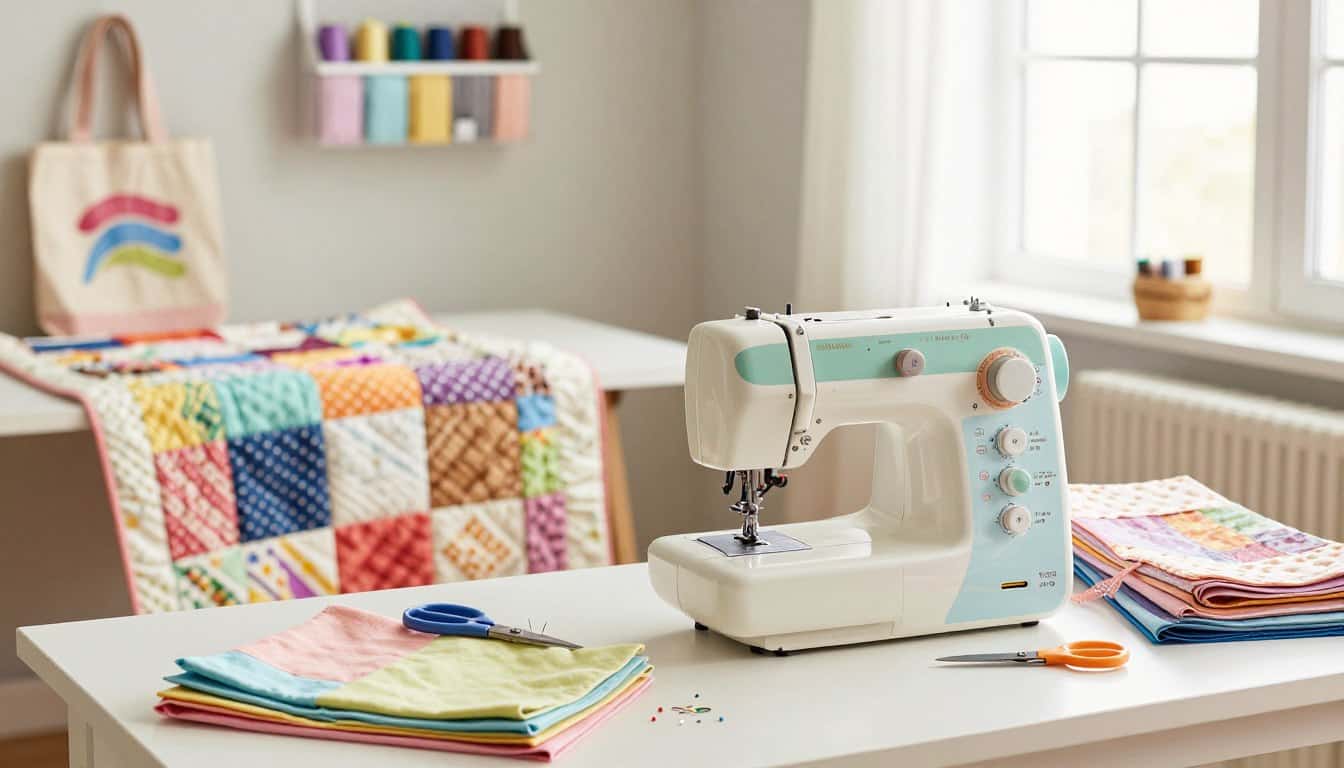
Fun sewing machine projects for beginners to start now
Learning to sew can feel intimidating when you are surrounded by patterns, unfamiliar tools, and endless fabric choices. The easiest way to begin is with a small project that teaches one or two useful skills at a time.
These beginner sewing projects include home accessories, organizers, gifts, and simple wearables. Most require only basic straight stitching and can be completed in an afternoon or over a relaxed weekend.
Start with stable woven cotton, practise on leftover fabric, and remember that imperfect stitches are part of learning. Every finished project will make your next one feel easier.
Quick Guide to Choosing Your First Sewing Project
- Under one hour: Fabric coaster, sleep mask, or reusable produce bag.
- One afternoon: Pillow cover, placemat, tote bag, apron, or zip pouch.
- Weekend project: Fabric basket or elastic waist skirt.
- Best fabric for beginners: Quilting cotton, medium weight cotton, canvas, or a stable linen blend.
- Best first skill: Learn to sew a straight seam before moving on to zippers, elastic, and curved edges.
What You Need to Start Sewing
You do not need a large collection of specialist equipment. A basic sewing machine with straight and zigzag stitches is enough for most beginner projects.
- Sharp fabric scissors or a rotary cutter and cutting mat.
- Universal sewing machine needles.
- Good quality all purpose thread.
- Pins or sewing clips.
- A measuring tape and clear ruler.
- Fabric chalk or a washable marker.
- A seam ripper for correcting mistakes.
- An iron and ironing board.
Before you begin: Read the sewing machine manual, practise threading the machine, and test your stitches on a folded piece of scrap fabric.
Easy Home Sewing Projects

Home accessories are ideal first projects because they normally use straight seams and simple shapes. They also give you something useful to enjoy as soon as you finish sewing.
1. Fabric Coasters or Mug Rugs
Fabric coasters are among the easiest projects to sew. Cut two matching squares of cotton and add a layer of cotton batting between them. Sew around the outside, leave a small opening, and turn the coaster right side out.
Press the edges before closing the opening with topstitching. You can also add straight or diagonal quilting lines through the centre.
Skills learned: Accurate cutting, straight stitching, turning corners, pressing, and topstitching.
2. Envelope Pillow Cover
An envelope pillow cover gives you a polished result without needing to install a zipper. Cut one front panel and two overlapping back panels, then hem the exposed edges before joining the pieces.
Home decor cotton, linen blends, and medium weight woven fabrics work well. Measure the cushion insert carefully and press each seam as you sew.
Easiest upgrade: Add a line of topstitching around the outside edge to create a simple tailored finish.
3. Placemats or a Table Runner
Placemats and table runners provide useful practice with measuring, layering, quilting, and finishing edges. Use coordinating cotton prints, a plain backing fabric, and a thin layer of batting.
You can turn the project through a small opening or finish the outside with bias binding. Make a matching set for your own table or give it as a handmade gift.
Design tip: Combine one patterned fabric with one or two solid colors to keep the set coordinated.
4. Simple Tote Bag
A basic tote bag teaches you how to sew strong seams and attach handles. Begin with two rectangular fabric panels, sew around three sides, and finish the top edge before adding cotton webbing or fabric straps.
Canvas, denim, cotton duck, and interfaced quilting cotton are sturdy beginner friendly choices. Reinforce the handles with square or crossed stitching where they join the bag.
Next step: Once you have made a flat tote, try adding boxed corners and a simple lining.
5. Easy Half Apron
A half apron can be made from a large rectangle with a waistband and long fabric ties. Hem the sides and lower edge, gather or pleat the top, and attach the waistband.
Cotton and lightweight denim are durable and easy to wash. Add a large front pocket for utensils, sewing tools, or gardening supplies.
Skills learned: Hemming, gathering, attaching ties, and positioning pockets.
Useful Organizers, Gifts, and Wearables

Once you can sew straight seams confidently, projects involving zippers, interfacing, elastic, and boxed corners will help you expand your skills.
6. Small Zip Pouch
A zip pouch is useful for cosmetics, sewing notions, pencils, cables, or travel essentials. Cut two outer pieces and two lining pieces, then sew them to either side of a nylon coil zipper.
Lightweight fusible interfacing will give quilting cotton more structure. Use a zipper foot and test that the zipper opens smoothly before sewing the pouch sides.
Beginner tip: Start with a medium sized rectangular pouch because the zipper and corners will be easier to handle.
7. Fabric Storage Basket
Fabric baskets can organize craft supplies, toiletries, toys, accessories, or household clutter. Sew outer and lining panels into two simple boxes, then place them together and finish the top edge.
Use fusible fleece or firm interfacing to help the basket stand upright. Canvas and medium weight cotton are easier to control than thin or stretchy fabric.
Practical detail: Add small fabric handles before joining the lining and outer basket.
8. Reusable Produce Bag
A reusable produce bag is a quick project that uses lightweight cotton, muslin, or washable mesh. Sew the sides and lower edge, then create a casing at the top for a drawstring.
Finish the internal seams with a zigzag stitch or French seam to prevent fraying. Make several sizes for fruit, vegetables, snacks, or household storage.
Budget friendly idea: Use clean cotton from an old sheet to practise before cutting into new fabric.
9. Soft Sleep Mask
A sleep mask is small enough to finish quickly but introduces curved seams and elastic. Cut matching outer and lining pieces, add a thin layer of batting, and insert covered elastic between the layers.
Use soft cotton, satin, or another smooth washable fabric against the skin. Clip the curved seam allowance before turning the mask right side out.
Gift idea: Pair a handmade sleep mask with a matching drawstring pouch.
10. Elastic Waist Skirt
An elastic waist skirt is a manageable first garment because it does not require buttons, zippers, or complicated fitting. Choose a simple rectangular or gently shaped pattern with one waistband casing.
Lightweight cotton, chambray, and stable linen blends are easier for beginners than slippery or stretchy fabrics. Measure your waist and hips, allow enough room for movement, and test the elastic before closing the casing.
Before cutting: Check the finished garment measurements rather than relying only on the pattern size printed on the envelope.
Basic Sewing Skills Every Beginner Should Practise
Test Your Stitch Settings
A straight stitch of approximately 2.5 mm works for many general seams. Use a slightly longer stitch for visible topstitching and a zigzag stitch to help control fraying along raw edges.
Always test the stitch length and tension on a scrap of the project fabric before sewing the final pieces.
Understand Seam Allowances
The seam allowance is the space between the stitching line and the raw fabric edge. Check the pattern instructions before sewing because different projects may use different measurements.
Use the markings on your machine plate or place removable tape beside the presser foot to help guide the fabric evenly.
Press as You Sew
Press each seam before joining the next section. This improves accuracy, reduces bulk, and makes even a simple beginner project look more polished.
Finish the Raw Edges
A zigzag stitch is an easy way to reduce fraying when you do not have an overlocker. Pinking shears, French seams, bias binding, and enclosed linings are other useful finishing methods.
Troubleshoot Simple Machine Problems
When stitches skip or thread gathers underneath the fabric, rethread the upper thread and bobbin first. Check that the needle is inserted correctly and replace it when it becomes bent, blunt, or damaged.
Most beginner problems can be solved by rethreading the machine, changing the needle, checking the bobbin, and testing the settings on scrap fabric.
Choosing Beginner Friendly Fabric
Stable woven fabrics are easier to cut and sew because they do not stretch, curl, or slide excessively.
- Quilting cotton: Ideal for coasters, pouches, produce bags, and small accessories.
- Canvas or cotton duck: Suitable for sturdy tote bags and storage baskets.
- Chambray: A comfortable choice for simple skirts and lightweight aprons.
- Linen blends: Useful for pillow covers, napkins, and relaxed home accessories.
- Medium weight denim: Good for durable bags and aprons once you feel more confident.
Save silk, slippery satin, fine chiffon, and very stretchy knit fabric until you are comfortable controlling fabric beneath the presser foot.
How to Keep Improving
Choose projects that introduce one new technique at a time. Begin with a coaster, move on to a pillow cover, make a tote bag, and then try a zipper or elastic casing.
Keep small fabric samples showing stitches, seam finishes, and machine settings that worked well. This creates a useful reference for future projects.
Most important: Do not wait until your sewing feels perfect. Completing small projects will teach you more than repeatedly practising without making anything.
Frequently Asked Questions
What is the easiest sewing project for a complete beginner?
A fabric coaster or envelope pillow cover is a good first project. Both use basic shapes, straight seams, and stable woven fabric.
What sewing machine features does a beginner need?
A beginner mainly needs reliable straight and zigzag stitches, reverse stitching, adjustable stitch length, and a clear instruction manual. Decorative stitches are optional rather than essential.
Which sewing machine needle should I use?
A universal needle works for many woven cotton projects. Use a ballpoint or stretch needle for knit fabric and a denim needle for heavier material. Replace the needle when stitches begin skipping or the needle appears damaged.
Should fabric be washed before sewing?
Wash and dry fabric in the same way you intend to care for the finished item. This reduces the risk of unexpected shrinking or color transfer later.
How can I make beginner sewing look more professional?
Cut accurately, use a consistent seam allowance, press every seam, trim loose threads, and add neat topstitching where appropriate.
Can beginners sell simple sewing projects?
Simple items such as coasters, produce bags, pouches, sleep masks, and tote bags can be suitable for selling once the construction is neat and secure. Calculate the cost of fabric, supplies, packaging, fees, and sewing time before setting a price.
Final Thoughts
Beginner sewing projects do not need to be complicated to feel rewarding. A coaster, pillow cover, tote bag, organizer, or simple skirt can teach skills that you will use for years.
Choose one project that fits the time and fabric you have available. Practise each new technique on a scrap first, press as you sew, and allow yourself to make mistakes.
Every seam you finish will make the next project easier.