
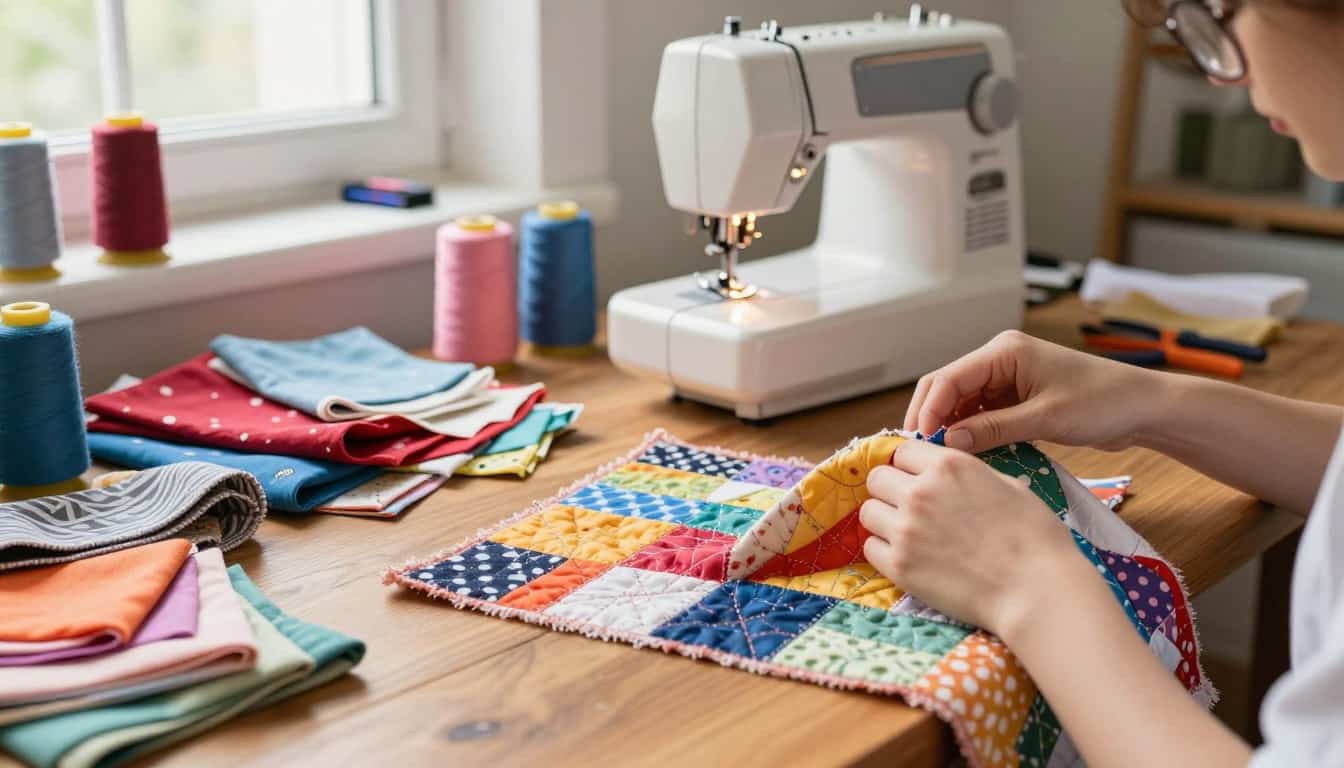
Sewing with scraps: creative ways to reuse fabric
That basket of leftover fabric under your sewing table is full of possibilities. Even small pieces can become scrunchies, coasters, pouches, pot holders, bookmarks, decorations, and useful gifts.
Sewing with scraps is an affordable way to practise new techniques, reduce fabric waste, and create something useful without buying more material. Whether you are a beginner or an experienced sewist, these ideas will help you make the most of the fabric you already have.
Quick Guide: Choosing the Right Scrap Fabric Project
- Very small scraps: Fabric flowers, appliqué, ornaments, toys, and decorative patches.
- Long narrow strips: Scrunchies, bracelets, bindings, and fabric garlands.
- Medium pieces: Coasters, pot holders, bookmarks, and small pouches.
- Larger remnants: Napkins, tote bags, cushions, and clothing panels.
- Best beginner fabric: Woven cotton is easy to cut, press, and sew.
Before you begin: Group scraps with a similar weight and stretch. Fabrics that behave in the same way are easier to sew together and are less likely to shrink unevenly.
Why Sewing With Scraps Is Worthwhile
Scrap sewing keeps useful material out of the bin and reduces the need to buy something new for every project. It is also a low-pressure way to practise cutting, topstitching, quilting, appliqué, seam finishes, and colour combinations.
Before starting, separate woven cotton, linen, knits, denim, felt, and heavier fabrics. Store tiny pieces, strips, squares, and larger remnants separately so you can quickly find something suitable for your next project.
Easiest storage idea: Keep one small basket beside your sewing machine for scraps you would like to use first.
Easy Scrap Fabric Projects

Small projects are ideal when you are learning to sew because they require very little fabric and can often be completed in an afternoon. Choose one idea that suits the scraps you already have rather than trying to use your entire collection at once.
1. Sew a Simple Fabric Scrunchie
A scrunchie is one of the quickest ways to use a long strip of cotton, satin, linen, or soft jersey. Fold the strip lengthwise, sew along the long edge, turn it right side out, and thread elastic through the centre before joining the ends.
Beginner tip: Woven cotton is easier to control than slippery satin, while a longer strip will create a fuller scrunchie.
2. Make a Reversible Fabric Headband
Combine two coordinating scraps to create a reversible headband. Cut matching pieces, sew them with the right sides together, turn, press, and topstitch before adding elastic or fabric ties at the back.
Try this with: Pair floral cotton with plain linen, two small prints, or fabric cut from an old shirt.
3. Create Fabric Bracelets
Narrow offcuts can become colourful fabric bracelets. Add lightweight interfacing when the material needs more structure, then finish the bracelet with a button, snap, or fabric tie.
Decorative stitching, embroidery, lace, and vintage buttons can make even a plain scrap feel special.
Scrap-saving idea: Join several tiny pieces before cutting out the final bracelet shape.
4. Sew a Small Zip Pouch
A zip pouch can hold sewing notions, cosmetics, cables, coins, or stationery. Use one medium-sized scrap or join smaller pieces into a patchwork panel, then add interfacing and a simple cotton lining.
Easiest option: Start with a slightly larger pouch because the zip and corners will be easier to handle.
5. Make a Patchwork Pot Holder
Join small cotton scraps into a square, then layer the patchwork with cotton batting and insulation designed for kitchen projects. Quilt through the layers and finish the outside with binding.
Important: Decorative fabric alone does not provide enough heat protection. Use tightly woven cotton and suitable heat-resistant insulation, and avoid polyester where it could be exposed to high temperatures.
6. Turn Larger Scraps Into Cloth Napkins
Cotton and linen remnants can be turned into practical cloth napkins. Finish the edges with a narrow double-fold hem or mitred corners, and choose washable fabric that can withstand regular use.
Most timeless option: Combine soft neutral colours or coordinating floral prints for a relaxed handmade table setting.
7. Sew a No-Pattern Patchwork Coaster
Patchwork coasters are excellent for using short cotton strips. Sew the strips together, press the seams, and trim the panel into a square. Layer it with cotton batting and backing fabric before quilting and finishing the edges.
Colour tip: Arrange scraps from light to dark or repeat one colour throughout the design to make mismatched prints feel coordinated.
Larger Scrap Fabric Projects
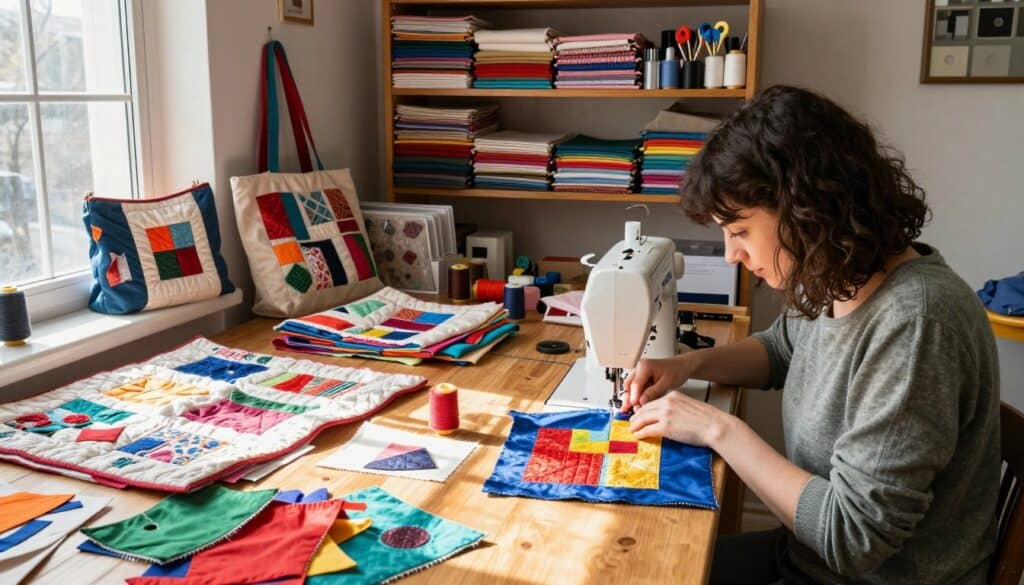
Once you feel comfortable with smaller projects, use medium and large remnants for bags, quilts, clothing repairs, cushions, and decorative pieces.
8. Create a Patchwork Tote Bag
Combine medium-sized cotton, denim, canvas, or linen scraps into two rectangular panels. Add interfacing for strength, line the bag, and attach reinforced handles. A boxed base will create extra storage space.
Useful detail: Add an interior pocket for keys or a phone before attaching the lining.
9. Make a Memory Quilt
Old shirts, baby clothes, dresses, and household textiles can be transformed into a meaningful memory quilt. Wash and press the fabric first, then stabilise delicate or stretchy pieces with lightweight interfacing.
Most timeless layout: Cut equal-sized squares and separate them with plain fabric sashing for a calm, balanced design.
10. Repair Clothes With Visible Mending
Visible mending turns worn fabric into a decorative feature. Use scraps to reinforce knees, elbows, pockets, and thinning areas, securing the patches with running stitches, appliqué, or embroidery.
Practical tip: Round the corners of each patch to reduce the chance of them lifting after repeated washing.
11. Add Scrap Panels to Clothing
Larger remnants can refresh plain garments as contrasting pockets, cuffs, collars, or side panels. Match the weight and stretch of the scrap to the original garment and pin everything in place before sewing.
Designer detail: Repeat the same fabric in two or three places so the finished garment looks intentional.
12. Sew Patchwork Cushions
Join cotton, linen, velvet, denim, or upholstery remnants into a decorative cushion front, then use a plain fabric for the back. Add interfacing behind delicate materials and quilt the panel when more structure is needed.
Beginner option: An envelope-style cushion cover is easier to sew than a zip closure.
Small-space idea: Scrap cushions can introduce new colour and pattern without replacing furniture or adding permanent decor.
13. Make a Table Runner or Placemat Set
Join long strips and medium-sized pieces to create table runners or placemats. Add a thin layer of batting, quilt the surface, and finish the edges with binding made from leftover strips.
Gift idea: A pair of placemats with coordinating cloth napkins makes a useful handmade present.
14. Create Fabric Wall Art
Arrange tiny scraps on a plain backing fabric to create flowers, landscapes, abstract shapes, or simple initials. Secure the pieces with fusible web before adding hand or machine stitching.
Display the finished design in an embroidery hoop, wooden frame, or hanging rail.
Why it works: Fabric art gives sentimental or unusually patterned scraps somewhere they can be enjoyed every day.
15. Sew Miniature Toys and Fabric Flowers
Very small scraps can become stuffed hearts, stars, fabric flowers, doll blankets, ornaments, or miniature soft animals. Felt is particularly beginner-friendly because the cut edges do not fray.
Festive scraps can also be saved for bunting, reusable gift bags, Christmas decorations, and Advent calendar pockets.
Safety note: Items made for babies or young children should have secure embroidered features rather than buttons, beads, or other detachable decorations.
How to Make Scrap Projects Look More Polished
- Press before cutting: Flat fabric is easier to measure and join accurately.
- Use a consistent seam allowance: This keeps patchwork panels straight and balanced.
- Match similar fabric weights: Pair cotton with linen, denim with canvas, and sturdy upholstery scraps together.
- Add interfacing when needed: It can strengthen old, thin, or stretchy material.
- Finish raw edges: Use binding, zigzag stitching, overlocking, French seams, or a lining.
- Add one special detail: Neat topstitching, embroidery, a handmade label, or a coordinating lining can elevate a simple project.
Easiest fabric combination: Quilting cotton, cotton shirting, and lightweight linen will usually sew together successfully.
Ideas for Sharing or Selling Scrap Projects
Pouches, tote bags, quilts, napkins, toys, and cushions can make thoughtful gifts or useful donations. Check the current requirements of charities and community organisations before making items specifically for them.
When selling handmade patchwork, include clear photographs, measurements, care instructions, and an accurate description of the materials. Fabric swaps and local sewing groups are also helpful for exchanging scraps that do not suit your own projects.
Frequently Asked Questions
What scraps are worth keeping?
Keep fabric that is large enough for patchwork, appliqué, binding, stuffing, or decorative details. Remove pieces that are badly stained, damaged, or too frayed to sew securely.
What is the easiest project for a beginner?
A scrunchie, coaster, cloth napkin, or simple fabric bookmark is a good starting point because these projects mainly require accurate cutting and straight stitching.
Can I mix different fabric types?
Yes, but fabrics with a similar weight, stretch, and care requirement are easier to combine. Stabilise lightweight or stretchy pieces with interfacing when necessary.
How small is too small to keep?
Tiny pieces can still be used for stuffing, appliqué, collage, or decorative stitching. However, scraps you know you will never use should be recycled or discarded rather than allowed to overwhelm your sewing space.
How should patchwork projects be washed?
Follow the care instructions for the most delicate fabric in the project. Prewashing scraps before sewing will reduce the risk of uneven shrinkage and colour transfer.
Final Thoughts
Sewing with scraps turns leftover material into useful accessories, household essentials, gifts, repairs, and decorations. Small pieces can become scrunchies and coasters, while larger remnants can be transformed into bags, cushions, quilts, and clothing updates.
Begin by sorting your scraps and choosing one project that matches the fabric you already have. Your next favourite sewing project may already be waiting in your scrap basket.