
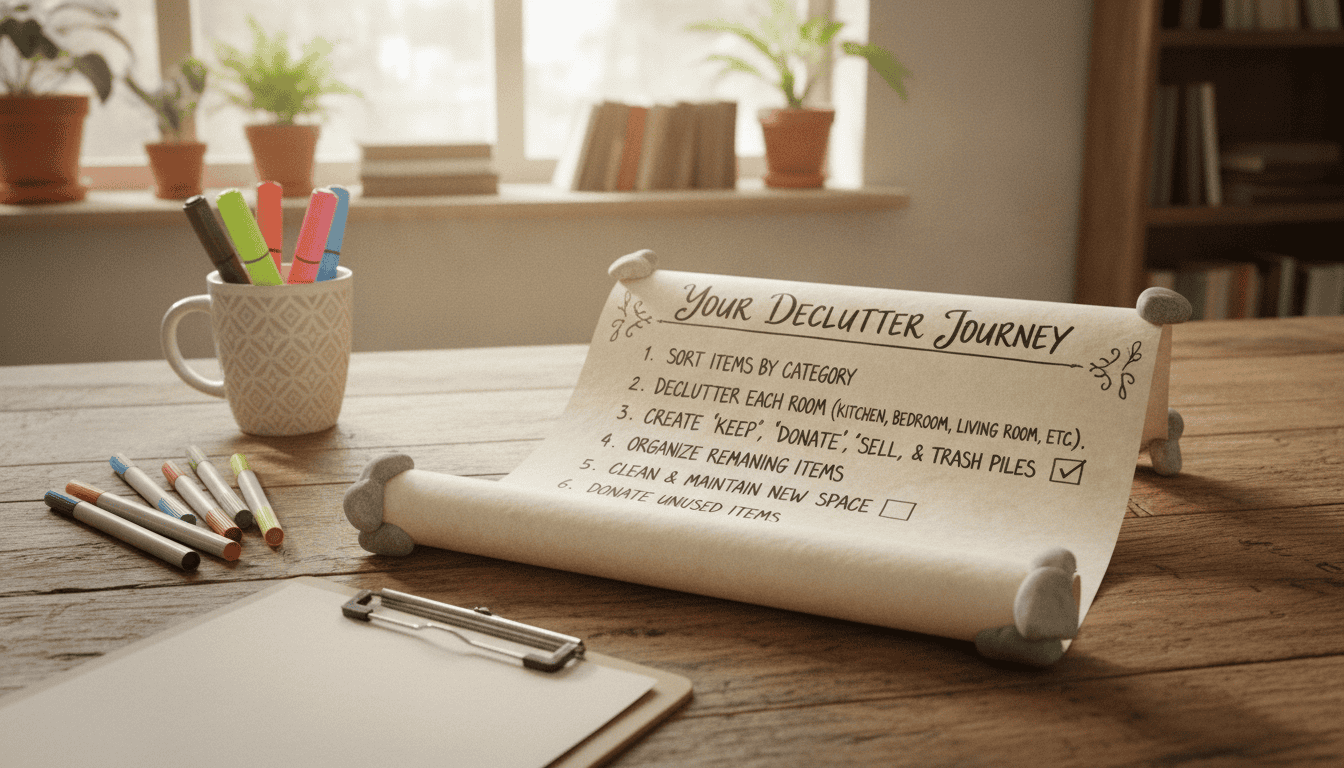
Home Declutter Checklist Easy Steps to Organize Your Home
Do you ever feel overwhelmed by stuff in your home? It’s like your chest gets tight and your head gets foggy. You promise to clean up this weekend. But weekends pass, and the mess grows.
Clutter does more than just take up space. It takes your peace and energy. You know you need to make a change.
You don’t have to change everything at once. Just start with small steps. You don’t need to be perfect, just make progress.
This guide is for real people with real messes. It helps you declutter room by room. So, you won’t feel lost staring at a big mess.
Are you tripping over boxes or losing your keys? This is where you start. Let’s make your home a place you love to be.
Key Takeaways
- A home declutter checklist makes a big task smaller and easier.
- Decluttering step by step saves time and keeps you focused.
- Clutter messes with your mood, focus, and energy.
- Don’t try to clean everything in one weekend. Small steps are better.
- Every room needs its own cleaning plan. One plan doesn’t fit all.
- Creating daily habits helps keep your home tidy over time.
Understanding the Importance of a Systematic Home Decluttering Approach
Let’s get real for a second. Just tossing things into a trash bag isn’t a plan. It’s more like a panic attack with a garbage bag. A good home organization checklist gives you a clear path, not just a quick burst of energy.
Studies show that clutter can really mess with your brain. Princeton University neuroscientists found that clutter makes your brain work harder to focus. It’s not just a Pinterest issue — it’s a brain issue.
Benefits of Living in a Clutter-Free Environment
A clutter-free home does more than look nice. It saves you time. The National Association of Professional Organizers says we spend about one full year looking for lost things. That’s twelve months of “Where are my keys?”
- Less visual chaos means faster daily routines
- Cleaner spaces reduce dust and allergens
- Organized rooms make hosting stress-free
How Decluttering Impacts Mental Health and Productivity
UCLA’s Center on Everyday Lives and Families found that cluttered homes stress women out more. They had higher cortisol levels all day. It’s not about deadlines or traffic — it’s about all the stuff on your counter.
“Clutter is nothing more than postponed decisions.” — Barbara Hemphill, productivity expert
Your brain likes order. A good home organization checklist helps you make decisions faster. It frees up your mind for what really matters.
Setting Realistic Goals for Your Home Organization Journey
Rome wasn’t built in a day, and your junk drawer won’t organize itself in an hour. A good plan starts with small, achievable goals.
| Goal Type | Example | Timeframe |
|---|---|---|
| Quick Win | Clear one kitchen drawer | 15 minutes |
| Weekend Project | Organize an entire closet | 2–3 hours |
| Long-Term Shift | Declutter every room in the house | 4–6 weeks |
Start small. Build momentum. That’s how you make lasting changes — one drawer at a time.
Essential Supplies and Tools for Effective Household Clutter Elimination
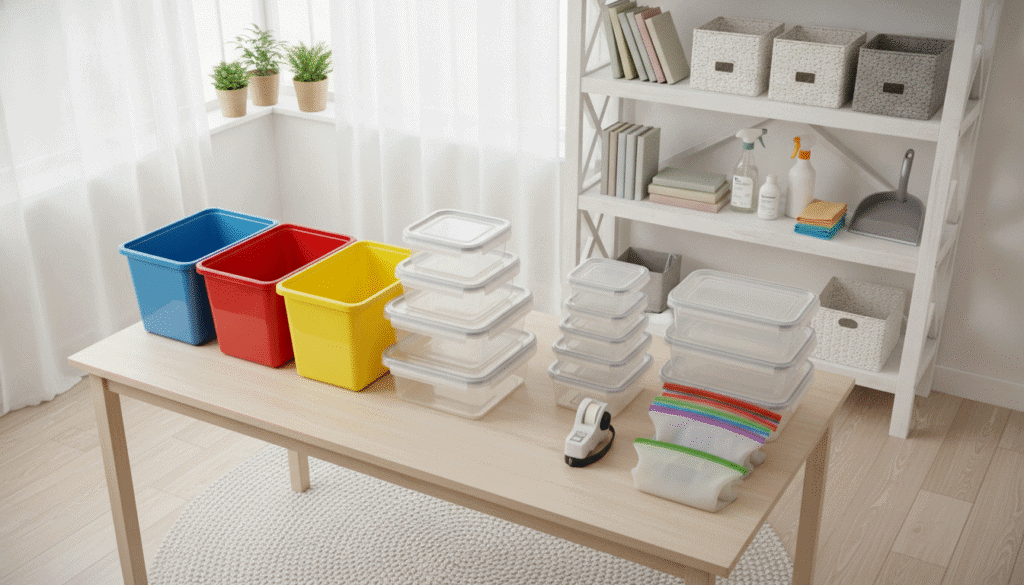
Before you start organizing your home, you need the right tools. It’s like cooking without a pan. You need the right stuff to get rid of clutter.
- Clear storage bins from The Container Store — seeing what’s inside means no more guessing games
- Heavy-duty trash bags from Hefty for items that need to go
- Cardboard boxes labeled “Donate,” “Sell,” and “Relocate”
- A label maker from Brother or DYMO — your new best friend
- A timer for the Pomodoro Technique (25-minute bursts keep burnout away)
- Cleaning supplies from Method or Mrs. Meyer’s to freshen up as you go
One secret weapon? A “maybe” box. Some items make you freeze with indecision. Put them in the maybe box and check them in 30 days. If you didn’t miss them, it’s okay to let them go.
Getting organized isn’t about perfection. It’s about making your space work for your actual life.
Set aside $50–$100 for supplies. Here’s how you can spend it:
| Supply | Recommended Brand | Estimated Cost | Purpose |
|---|---|---|---|
| Clear Storage Bins (set of 4) | The Container Store | $25–$40 | Visible, stackable storage |
| Heavy-Duty Trash Bags | Hefty Ultra Strong | $8–$12 | Discarding unwanted items |
| Label Maker | DYMO LetraTag | $15–$25 | Labeling bins and shelves |
| Cleaning Spray (multi-surface) | Mrs. Meyer’s Clean Day | $4–$6 | Wiping down cleared spaces |
With these tools, you’re ready to tackle your home room by room.
Home Declutter Checklist
A home declutter checklist is your secret weapon. It’s a roadmap that keeps you focused when chaos tries to win. Without a clear plan, most people get tired before they even start. Let’s make a plan that fits your life, not someone else’s dream.
Creating Your Personalized Decluttering Schedule
Forget those long weekend purges. They make you tired and upset. Instead, try 15-minute daily sessions. That’s all you need.
Use a tool like Todoist or a simple bullet journal to plan your week. Set small goals like “clear one drawer” or “sort junk mail.” These small wins help a lot.
Prioritizing Rooms Based on Daily Usage
Start with rooms you use a lot. Peter Walsh says to tackle these first for the best results:
- Entryway — it sets the tone every time you walk in
- Kitchen — you use it many times a day
- Bedroom — a calm sleep space changes everything
- Bathroom — quick wins live here
- Living areas — where guests see your progress
- Storage spaces — the grand finale
This order gives you early wins that keep you going.
Tracking Progress and Maintaining Momentum
Take before-and-after photos of every space you tackle. They’re very motivating when you feel stuck. Track your progress with a simple chart:
| Room | Start Date | Micro-Goal | Status |
|---|---|---|---|
| Entryway | Week 1 | Clear shoe pile, organize hooks | Complete |
| Kitchen | Week 2 | Sort one cabinet per day | In Progress |
| Bedroom | Week 3 | Declutter nightstand and closet shelf | Not Started |
| Bathroom | Week 4 | Toss expired products | Not Started |
| Living Room | Week 5 | Organize entertainment center | Not Started |
| Garage/Storage | Week 6 | Sort and donate unused items | Not Started |
With your checklist, you’re ready to make each space shine.
Room by Room Decluttering Guide for Maximum Efficiency
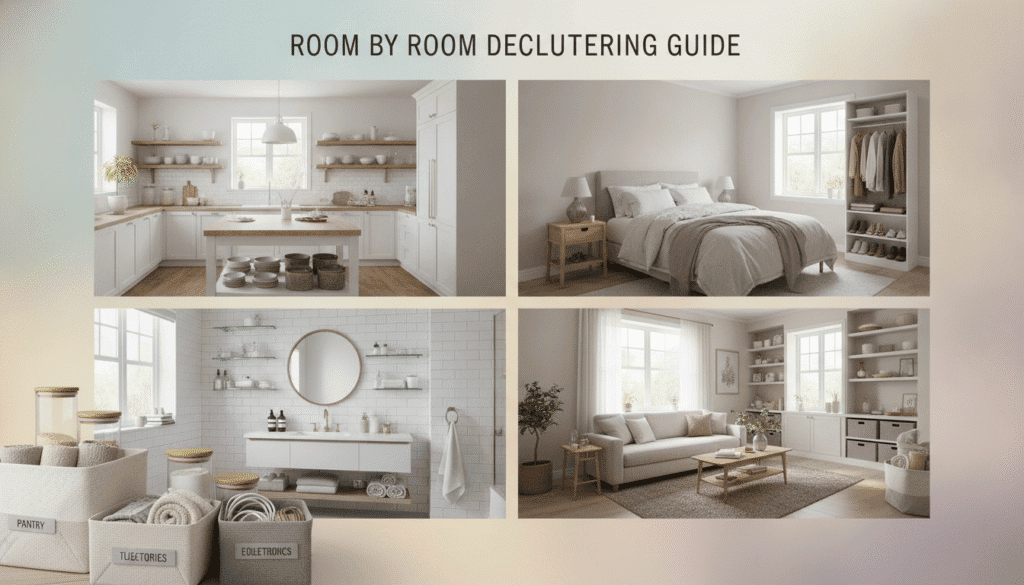
Trying to declutter your whole home at once can be too much. A room by room guide makes it easier. You’ll focus on one space at a time, making progress.
Kitchen Organization Strategies
Begin with your spice cabinet. Spices lose flavor after two to three years. Get rid of old spices.
Don’t keep gadgets you never use. If an appliance hasn’t been used in a year, it’s time to go. Use OXO drawer dividers to keep utensils organized.
Bedroom Decluttering Essentials
Try the reverse hanger trick. Hang all clothes backward today. When you wear something, flip it forward. After six months, donate what’s backward.
Use IKEA under-bed storage bins for seasonal items. This keeps your space tidy without clutter.
Bathroom Space Optimization
Your bathroom has expired products you might not know about. Mascara should be replaced every three months. Old medicines should go to a pharmacy, not your cabinet.
Use iDesign acrylic organizers to make messy drawers tidy. This turns your drawers into a spa.
Living Room and Entertainment Areas
Use Vudu to digitize your DVDs. This frees up shelf space. Keep remotes in one place.
Set up a “command center” with wall-mounted organizers. This keeps mail and papers in order.
“Clutter is nothing more than postponed decisions.” — Barbara Hemphill
| Room | Top Priority Item to Declutter | Recommended Organizer | Time Estimate |
|---|---|---|---|
| Kitchen | Expired spices and duplicate gadgets | OXO Drawer Dividers | 1–2 hours |
| Bedroom | Unworn clothing | IKEA Under-Bed Storage | 2–3 hours |
| Bathroom | Expired makeup and medications | iDesign Acrylic Organizers | 30–60 minutes |
| Living Room | Physical media and loose papers | Command Wall-Mounted Organizers | 1–2 hours |
This guide helps you declutter room by room. Use it with your checklist to build lasting habits.
Mastering the Art of Organizing Your Home Step by Step

Here’s a truth bomb most organizing blogs won’t tell you — organizing before decluttering is like alphabetizing your garbage. You need to get rid of what you don’t need first. Only then does organizing make sense.
Professional organizer Julie Morgenstern created the SPACE method. It’s a guide for clearing your home in five steps:
- Sort — Group like items together. All batteries in one spot. All pens in another. No exceptions.
- Purge — Let go of duplicates, broken items, and things you haven’t touched in a year.
- Assign a home — Every single item gets a designated spot. No more “junk drawers.”
- Containerize — Use bins, baskets, and dividers to keep things neat and visible.
- Equalize — Maintain the system daily so chaos doesn’t creep back in.
Start with visible surfaces — countertops, tables, and floors. These give you that instant hit of satisfaction that keeps you going. Think of it as a quick win for your brain.
Next, create activity-based zones. Build a coffee station with your mugs, filters, and supplies grouped in one place. Set up a mail station near the front door. Organizing your home step by step means designing spaces around how you actually live — not how a magazine says you should.
Adopt the “one in, one out” rule. Every new item that enters your home means one old item leaves. This principle alone can prevent 90% of future clutter buildup.
With your rooms already decluttered from the previous steps, you’re now ready to build systems that stick — and that’s where a minimalist approach comes in.
Implementing a Minimalist Home Checklist for Long-Term Success
Minimalism isn’t about living in an empty white box. It’s about keeping what matters and letting go of the rest. A minimalist home checklist helps you move from “decluttered” to intentionally curated. It’s like the next step in organizing your home.
Defining Your Minimalist Goals
First, decide what “enough” means to you. Courtney Carver’s Project 333 asks you to wear just 33 items for 3 months. It might seem extreme, but it brings real freedom. Write down what “enough” is for each room. Your checklist should match your life, not someone else’s.
“Have nothing in your houses that you do not know to be useful or believe to be beautiful.” — William Morris
Categories to Evaluate and Reduce
Start by going category by category, not room by room. Here’s a quick guide:
| Category | Keep | Let Go |
|---|---|---|
| Books | Ones you’ll re-read or reference | Read-once novels collecting dust |
| Kitchen tools | Multi-use items and that garlic press you love | Single-use gadgets you forgot you owned |
| Décor | Pieces on display that bring joy | Stored decorations “just in case” |
| Digital clutter | Active subscriptions you read | Unused email lists (try Unroll.me) |
Maintaining Minimalist Principles After Decluttering
The Swedish concept of döstädning — or death cleaning — asks a tough question. Would you want a loved one to deal with this item? It’s blunt, but it works.
To keep your home organized, build two habits into your daily life:
- Ask “where will this live?” before buying anything new
- Use a 30-day wish list for non-essential purchases — if you want it after a month, go for it
A minimalist home checklist isn’t just a one-time task. It’s a mindset shift. It makes every space in your home work for you, not against you.
Residential Space Clearing Guide for Different Home Sizes

Every home is different. So, why declutter them the same way? A good guide considers the size of your home. What works in a small place won’t fit in a big one. We’ll show you how to declutter based on your home’s size.
Small Apartment Decluttering Solutions
In small apartments, items must do double duty. Use wall-mounted shelves for extra storage. Choose an ottoman with hidden storage for more room.
A Murphy desk folds up when not in use. Remember, if it doesn’t serve two purposes, it might not belong.
Single-Family Home Organization Strategies
Bigger homes mean more clutter. Create a donation station in your mudroom. This makes it easy to give away things you no longer need.
Use attic space for seasonal items. Make areas for homework, crafts, and mail. This keeps your kitchen counter clear.
Storage Unit and Garage Clearing Techniques
Storage units cost about $1,200 a year, on average. If you haven’t checked your unit in six months, it’s probably time to clear it out.
For garage clutter, try this:
- Install overhead storage racks for seasonal bins
- Mount pegboards for tools and gardening supplies
- Park your cars first — revolutionary, right?
- Donate sports equipment your kids outgrew three years ago
A clutter-free space isn’t about having less — it’s about making room for what matters most.
With this guide, you’re set to declutter your home. Next, we’ll share tips for specific rooms that really work.
Decluttering Tips for Every Room That Actually Work

You’ve got a plan for each room. You know what to tackle. Now, let’s make decluttering fun, like a game you can win.
Start with the four-box method. Get four boxes or bags and label them: Keep, Donate, Trash, Relocate. Put every item in one box. No “maybe” pile allowed. Touch each item only once.
Set a timer for 10 minutes and race yourself. This makes tasks fun. Listen to music at 120–140 BPM. Upbeat songs help you work better, like Beyoncé.
Try the “20/20 rule” from The Minimalists. If you can buy something new for under $20 in 20 minutes, let go of the old one. This rule helps you decide fast and feel good about it.
One more trick: schedule a donation pickup before you start. This adds pressure and helps you stay focused.
| Trick | Why It Works | Best For |
|---|---|---|
| Four-Box Method | Eliminates decision fatigue | Closets, garages, storage areas |
| 10-Minute Timer | Creates urgency and focus | Bathrooms, small spaces |
| 20/20 Rule | Reduces attachment to replaceable items | Kitchens, junk drawers |
| Pre-Scheduled Pickup | Adds a real deadline | Whole-home declutters |
| Upbeat Music (120-140 BPM) | Boosts energy and speed | Every room |
Get a friend to help you. Someone who will tell you the truth about your stuff. These tips really work. They’ve helped many people keep their homes tidy.
Creating Your Sustainable Clutter-Free Living Plan

Decluttering your home once feels amazing. But keeping it that way is the real challenge. A clutter-free living plan makes it last. It’s like building a system, not just cleaning up.
Daily Habits to Prevent Clutter Accumulation
Make your bed every morning. Admiral McRaven said it sets the tone for your day. Before bed, do a 10-minute nightly reset. Put things back in their place.
Deal with mail right away. Use a compact shredder from Fellowes to get rid of junk mail fast.
Monthly Maintenance Routines
Choose one area each month to declutter. It could be books, clothes, or paperwork. Check expiration dates on food and medicine.
Also, clean out digital files on your phone and laptop. Decluttering is not just about physical stuff.
Seasonal Deep Cleaning Schedules
Deep-clean one room each season. Use vacuum storage bags from SpaceSaver for your clothes. Don’t keep too many holiday decorations.
| Frequency | Task | Time Needed |
|---|---|---|
| Daily | Nightly 10-minute reset | 10 minutes |
| Monthly | Evaluate one category | 30–60 minutes |
| Seasonal | Deep-clean one full room | 2–4 hours |
Teaching Family Members to Maintain Organization
Your plan works only if everyone helps. Give kids their own zones. Use Canva to make guides for them.
Have a donation box for everyone to contribute to. Reward them for being consistent, not perfect. When everyone helps, keeping organized becomes easy.
Conclusion
You now have a complete home declutter checklist. It’s like a roadmap for you. Start with one drawer, one shelf, or one corner.
Small wins help build momentum. This momentum leads to lasting change. It’s a journey, not a quick fix.
Decluttering isn’t a weekend project. It’s a habit you build over time. Think of it like brushing your teeth for your home.
Some weeks will be better than others. Counters might get messy again. That’s okay. It’s just life.
Give yourself grace and try again when you can. Whether you want a minimalist home or just a tidy closet, these tips work. The best system is one you’ll use.
Perfection is not the goal. But knowing where your favorite sweater is? That’s worth the effort.