
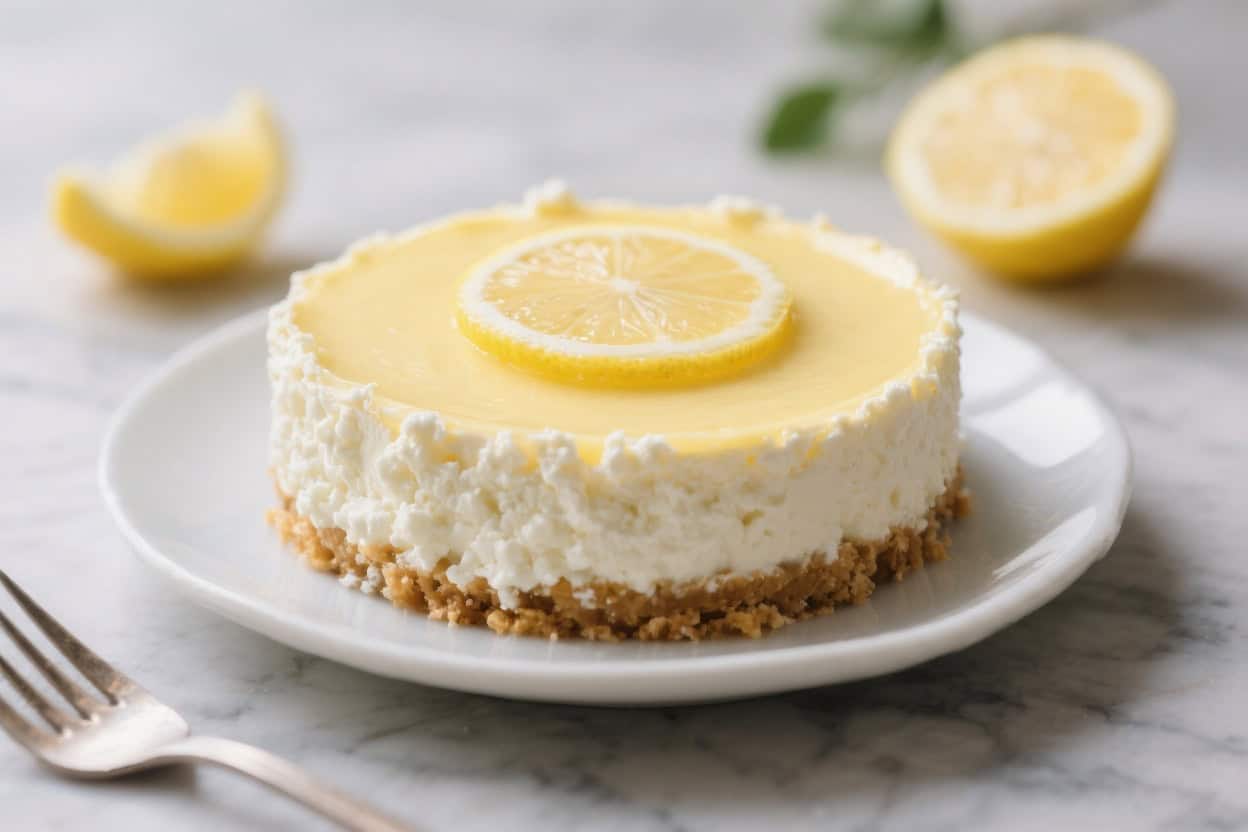
Cottage Cheese Lemon Cheesecake (Low Carb & Fresh) – Bright, Creamy, and Easy
This cheesecake brings bright lemon flavor, a creamy texture, and a surprisingly light feel—all with low carbs and no complicated steps. It leans on cottage cheese and Greek yogurt for a silky filling without loads of sugar. The crust is almond flour–based and bakes up tender with a gentle crunch.
If you love a classic cheesecake but want something fresher and lighter, this is it. It’s great for a weekend bake, a spring dessert, or anytime you want something sweet that doesn’t weigh you down.
Cottage Cheese Lemon Cheesecake (Low Carb & Fresh) – Bright, Creamy, and Easy
Ingredients
- For the crust: 1 1/2 cups almond flour
- 3 tablespoons granulated sweetener (erythritol, allulose, or a blend)
- 1/4 teaspoon fine sea salt
- 1/4 cup unsalted butter, melted
- 1 teaspoon vanilla extract
- For the filling: 2 cups full-fat cottage cheese
- 1 cup plain Greek yogurt (full-fat or 2%)
- 3 large eggs, at room temperature
- 2/3 to 3/4 cup granulated sweetener (adjust to taste)
- 2 tablespoons lemon zest (from about 2 large lemons)
- 1/3 cup fresh lemon juice
- 1 teaspoon vanilla extract
- 1/4 teaspoon fine sea salt
- 1 tablespoon cornstarch or 2 teaspoons arrowroot (optional, for extra stability; adds minimal carbs)
- Equipment: 9-inch springform pan
- Food processor or high-speed blender
- Mixing bowls, spatula, and whisk
- Oven and cooling rack
Instructions
- Prep the pan and oven. Heat the oven to 325°F (165°C). Grease a 9-inch springform pan and line the bottom with parchment for easy release.
- Make the crust. In a bowl, stir almond flour, sweetener, and salt. Add melted butter and vanilla. Mix until the texture resembles damp sand and holds together when pressed.
- Press and pre-bake. Press the crust evenly into the bottom of the pan, compacting it slightly up the edges if you like. Bake for 10 minutes until just set and lightly golden at the edges. Cool for 5 minutes.
- Blend the cottage cheese. In a blender or food processor, blend cottage cheese until completely smooth, 30–60 seconds. Scrape the sides to catch any curds. This step is key for a silky filling.
- Whisk the filling. In a large bowl, whisk the blended cottage cheese, Greek yogurt, sweetener, lemon zest, lemon juice, vanilla, and salt. If using cornstarch or arrowroot, whisk it in well to avoid lumps.
- Add the eggs. Crack in the eggs and whisk gently just until incorporated. Avoid overmixing to reduce air bubbles, which can cause cracks.
- Fill the pan. Pour the batter over the slightly cooled crust. Tap the pan on the counter 3–4 times to pop surface bubbles.
- Bake low and slow. Bake at 325°F for 40–50 minutes. The edges should be set, and the center should jiggle like soft gelatin when nudged.
- Cool gradually. Turn off the oven, crack the door, and let the cheesecake sit inside for 30 minutes. Move to a cooling rack and cool to room temperature.
- Chill for best texture. Cover and refrigerate for at least 4 hours, ideally overnight. The flavor deepens and the texture firms up.
- Serve. Run a thin knife around the edge before releasing the springform. Slice with a warm, clean knife for neat wedges. Garnish with lemon zest curls or a few fresh berries if you like.
Why This Recipe Works
- Cottage cheese for creaminess: Blended cottage cheese turns smooth and rich, offering the classic cheesecake vibe with fewer carbs and more protein.
- Lemon keeps it bright: Fresh lemon juice and zest cut through the richness, so each bite tastes clean, not heavy.
- Almond flour crust: It delivers a toasty, cookie-like base without grains. It’s quick to mix and bakes in minutes.
- Balanced sweetness: A zero- or low-calorie sweetener keeps it low carb but still dessert-worthy.
- No water bath needed: This recipe bakes low and slow to prevent cracks without fussing with boiling water.
What You’ll Need
- For the crust:
- 1 1/2 cups almond flour
- 3 tablespoons granulated sweetener (erythritol, allulose, or a blend)
- 1/4 teaspoon fine sea salt
- 1/4 cup unsalted butter, melted
- 1 teaspoon vanilla extract
- For the filling:
- 2 cups full-fat cottage cheese
- 1 cup plain Greek yogurt (full-fat or 2%)
- 3 large eggs, at room temperature
- 2/3 to 3/4 cup granulated sweetener (adjust to taste)
- 2 tablespoons lemon zest (from about 2 large lemons)
- 1/3 cup fresh lemon juice
- 1 teaspoon vanilla extract
- 1/4 teaspoon fine sea salt
- 1 tablespoon cornstarch or 2 teaspoons arrowroot (optional, for extra stability; adds minimal carbs)
- Equipment:
- 9-inch springform pan
- Food processor or high-speed blender
- Mixing bowls, spatula, and whisk
- Oven and cooling rack
Step-by-Step Instructions
- Prep the pan and oven. Heat the oven to 325°F (165°C).
Grease a 9-inch springform pan and line the bottom with parchment for easy release.
- Make the crust. In a bowl, stir almond flour, sweetener, and salt. Add melted butter and vanilla. Mix until the texture resembles damp sand and holds together when pressed.
- Press and pre-bake. Press the crust evenly into the bottom of the pan, compacting it slightly up the edges if you like.
Bake for 10 minutes until just set and lightly golden at the edges. Cool for 5 minutes.
- Blend the cottage cheese. In a blender or food processor, blend cottage cheese until completely smooth, 30–60 seconds. Scrape the sides to catch any curds.
This step is key for a silky filling.
- Whisk the filling. In a large bowl, whisk the blended cottage cheese, Greek yogurt, sweetener, lemon zest, lemon juice, vanilla, and salt. If using cornstarch or arrowroot, whisk it in well to avoid lumps.
- Add the eggs. Crack in the eggs and whisk gently just until incorporated. Avoid overmixing to reduce air bubbles, which can cause cracks.
- Fill the pan. Pour the batter over the slightly cooled crust.
Tap the pan on the counter 3–4 times to pop surface bubbles.
- Bake low and slow. Bake at 325°F for 40–50 minutes. The edges should be set, and the center should jiggle like soft gelatin when nudged.
- Cool gradually. Turn off the oven, crack the door, and let the cheesecake sit inside for 30 minutes. Move to a cooling rack and cool to room temperature.
- Chill for best texture. Cover and refrigerate for at least 4 hours, ideally overnight.
The flavor deepens and the texture firms up.
- Serve. Run a thin knife around the edge before releasing the springform. Slice with a warm, clean knife for neat wedges. Garnish with lemon zest curls or a few fresh berries if you like.
Storage Instructions
- Refrigerator: Store covered for 4–5 days.
Keep it in the springform base or a flat, sealed container to prevent drying out.
- Freezer: Freeze individual slices on a sheet pan until firm, then wrap and store in an airtight bag for up to 2 months. Thaw overnight in the fridge.
- Make-ahead tip: Bake a day ahead for the best texture. The lemon flavor settles and becomes more balanced after chilling.
Benefits of This Recipe
- Low carb without compromise: Almond flour crust and a zero- or low-calorie sweetener keep carbs down while still tasting like real cheesecake.
- Higher protein: Cottage cheese and Greek yogurt add protein for a more satisfying dessert.
- Lighter feel: The lemony profile and yogurt make it taste fresh, not heavy.
- Budget-friendly: Cottage cheese is often cheaper than bricks of cream cheese.
- No special technique needed: No water bath or fancy steps—just blend, whisk, and bake.
Pitfalls to Watch Out For
- Skipping the blend: If you don’t blend the cottage cheese thoroughly, the texture may be grainy.
Blend until completely smooth.
- Overbaking: A firm center in the oven means it’s overdone. Pull it when the middle still jiggles slightly.
- Mixing too aggressively: Whipping in too much air can cause cracks. Stir gently once the eggs go in.
- Warm release: Don’t unclasp the springform while warm.
Chill first to avoid tearing the edges.
- Sour sweetener swap: Some sweeteners taste sharper with lemon. Taste the batter and adjust; allulose is smooth, erythritol can be cooling.
Recipe Variations
- Lemon-blueberry swirl: Drop 1/2 cup mashed fresh blueberries (sweetened lightly) over the filling and swirl with a knife before baking.
- Meyer lemon twist: Use Meyer lemons for a softer, floral citrus note. Reduce sweetener slightly since Meyer lemons are sweeter.
- Nut-free crust: Use a sunflower seed flour crust or a coconut flour crust (add an extra tablespoon of butter; coconut flour is more absorbent).
- Crustless: Skip the crust and bake directly in a greased pan.
Reduce bake time by 5–8 minutes.
- Mini cheesecakes: Divide into a lined muffin tin. Bake 16–20 minutes. Great for portion control and freezing.
- Lemon-vanilla bean: Add scraped seeds from 1/2 vanilla bean to the filling for a bakery-style finish.
FAQ
Can I use cream cheese instead of cottage cheese?
Yes.
Replace the cottage cheese and Greek yogurt with 24 ounces of softened cream cheese and 1/3 cup sour cream. Keep the rest of the ingredients the same. The texture will be richer and slightly denser.
Which sweetener works best?
Allulose gives the smoothest taste and least crystallization.
Erythritol blends can work but may have a slight cooling effect. If using monk fruit, choose a blend with erythritol or allulose for proper sweetness by volume.
Do I need the cornstarch or arrowroot?
No, but a small amount helps prevent cracking and makes cleaner slices. It adds minimal carbs to the whole cheesecake.
If you skip it, bake gently and chill fully for neat cuts.
Why did my cheesecake crack?
Common causes are overbaking, lots of air in the batter, or quick temperature changes. Bake just until jiggly, mix eggs gently, and cool gradually with the oven door cracked before moving to the rack.
How do I know it’s done?
The edges should be set and the center should wobble slightly when you nudge the pan. If the top looks glossy and barely golden, you’re on track.
It will firm up as it cools and chills.
Can I make it dairy-free?
You can try dairy-free yogurt and a dairy-free cream cheese alternative, but cottage cheese has no true dairy-free twin. If going dairy-free, use a tested vegan cheesecake method and keep the lemon-zest profile.
What’s the best way to slice cleanly?
Use a thin, sharp knife dipped in hot water and wiped dry between cuts. This melts through the filling and prevents crumbs from dragging.
In Conclusion
This Cottage Cheese Lemon Cheesecake balances bright citrus, creamy texture, and a low-carb profile without fussy steps.
It’s simple enough for a weeknight project and special enough for guests. Blend the cottage cheese well, bake gently, and chill overnight for the dreamiest slices. Keep it classic, or try a swirl or mini version—you’ll get a fresh, satisfying dessert either way.