
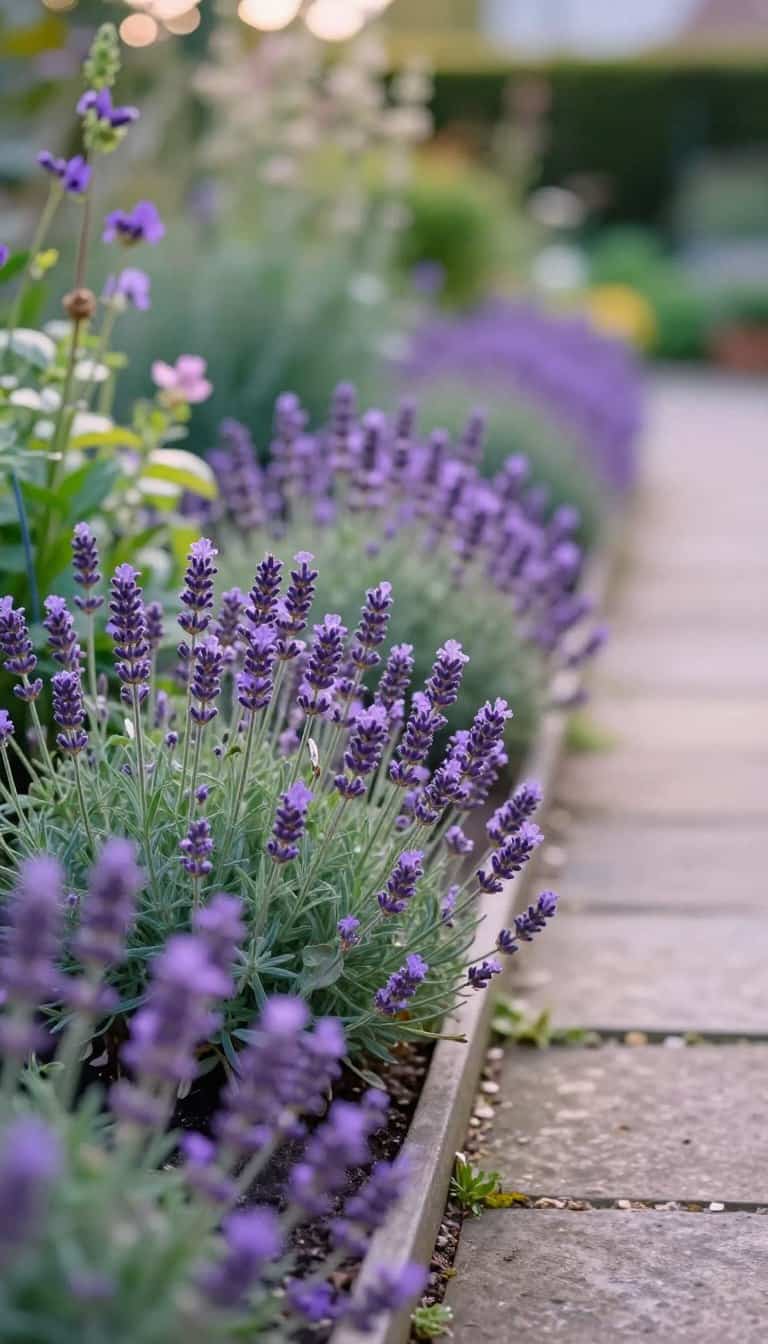
20 Cottage Garden Ideas for Narrow Garden Beds
Ready to turn your narrow garden bed into a dreamy cottage border? Let’s explore twenty charming garden ideas that squeeze every drop of beauty out of slim planting spaces.
This post includes affiliate links. If you make a purchase through them, I may earn a small commission at no extra cost to you. More details here.
Each one focuses on a full look. From plant combinations to small decorative touches. So you can choose a style and recreate it easily.
Think layered flowers, soft spill-over plants, and romantic details that make a garden feel welcoming. Whether your bed sits beside a path, along a fence, or tucked against a wall, these ideas prove that even the narrowest borders can look lush and magical.
1. Lavender and Catmint Ribbon Border
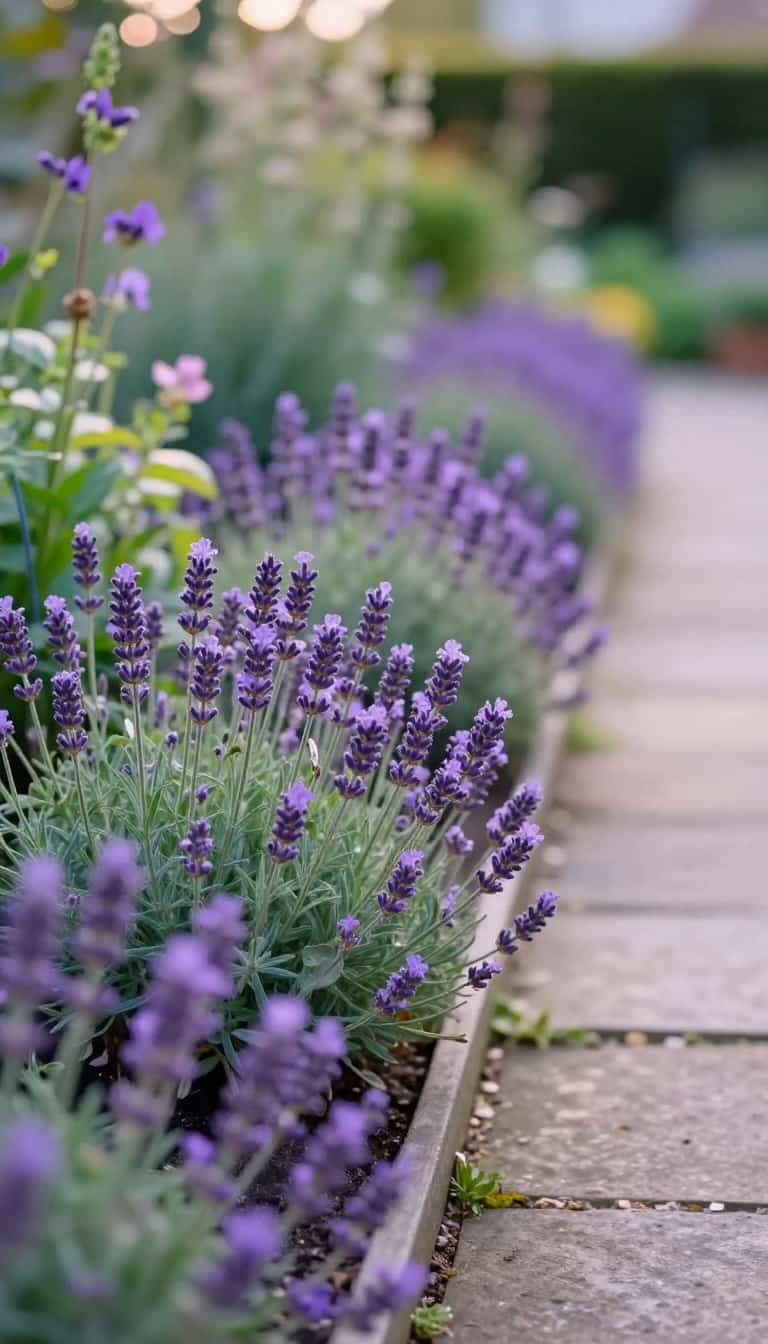
Picture a narrow strip of garden filled with waves of soft purple. Lavender brings structure while catmint creates a hazy, flowing texture that makes the space feel fuller than it really is.
Together they form a relaxed cottage border. It looks beautiful beside a walkway or driveway.
Key plants: Lavender, catmint (nepeta)
Best for: Sunny pathways and front garden borders
Accent idea: Gravel or stone edging to highlight the plants
2. Climbing Roses with Cottage Underplanting
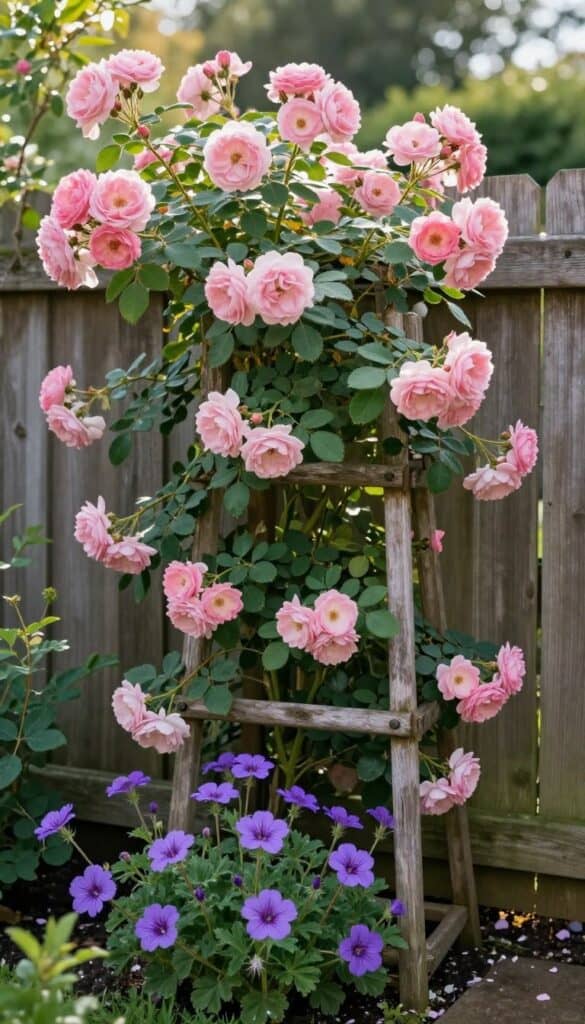
When a bed is narrow, height becomes your best design trick. A climbing rose trained on a trellis or fence instantly adds romance and vertical interest.
Below the roses, plant soft fillers like hardy geranium or lady’s mantle. This gives the border that layered cottage look.
Key plants: Climbing roses, hardy geranium, lady’s mantle
Best for: Fence lines or walls
Accent idea: Wooden trellis or painted metal arch
3. Foxglove Spires for Instant Height
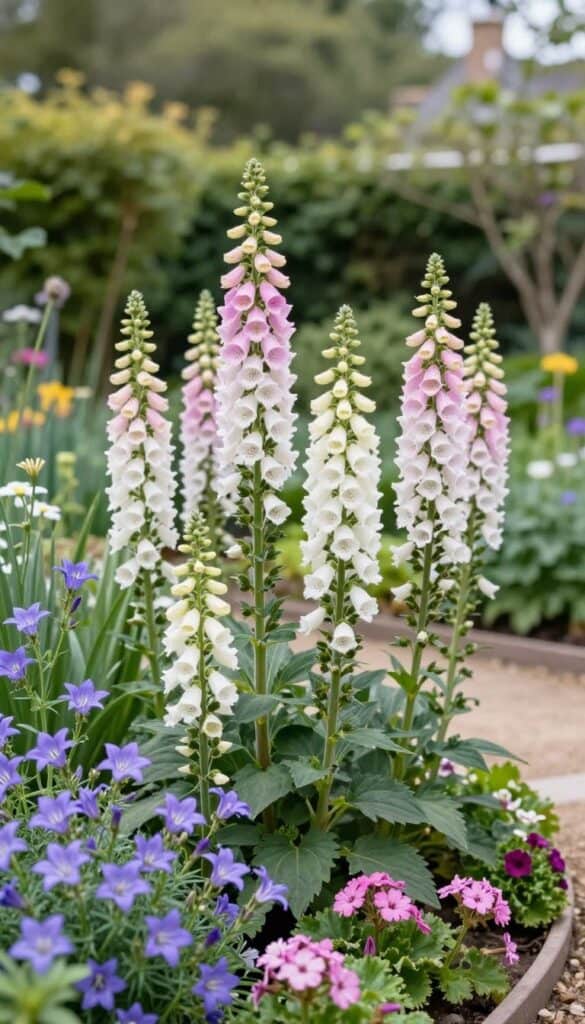
Foxgloves grow tall rather than wide. This makes them perfect for skinny beds. Their elegant flower spikes add structure without crowding the space.
Let them pop up naturally among smaller perennials. This creates that relaxed cottage garden feel.
Key plants: Foxglove, campanula, hardy geranium
Best for: Sun to part shade
Accent idea: Allow a few foxgloves to self-seed for a natural look
4. Soft Pastel Cottage Flower Mix
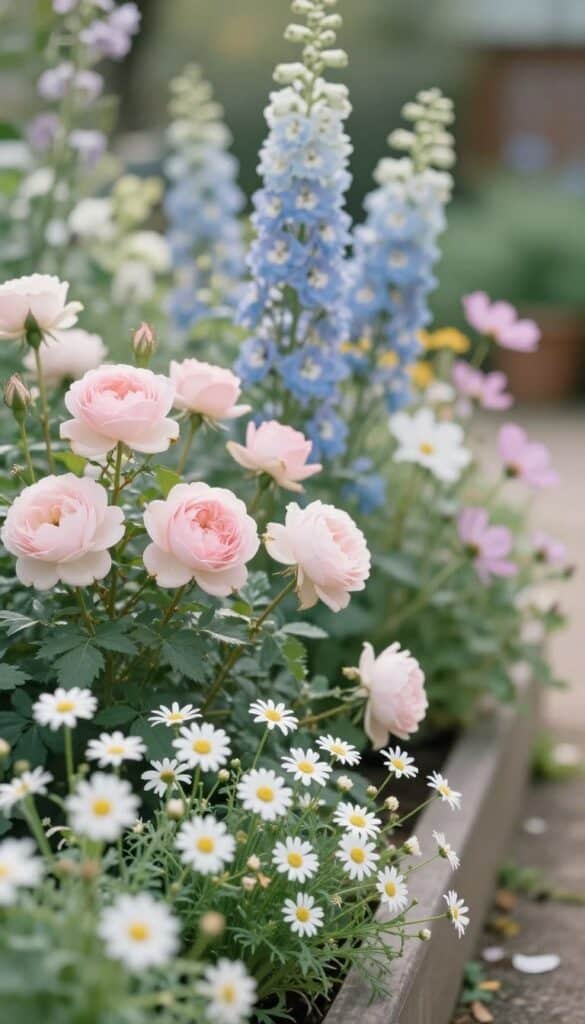
A narrow bed can look airy and romantic when planted in soft pastel tones. Think pale pink roses, creamy white daisies, and soft blue delphiniums.
Keeping the colors gentle prevents the border from feeling visually busy.
Key plants: Cosmos, daisies, pale roses, delphiniums
Best for: Sunny borders
Accent idea: Light stone or pale gravel to brighten the space
5. Cottage Herb Border
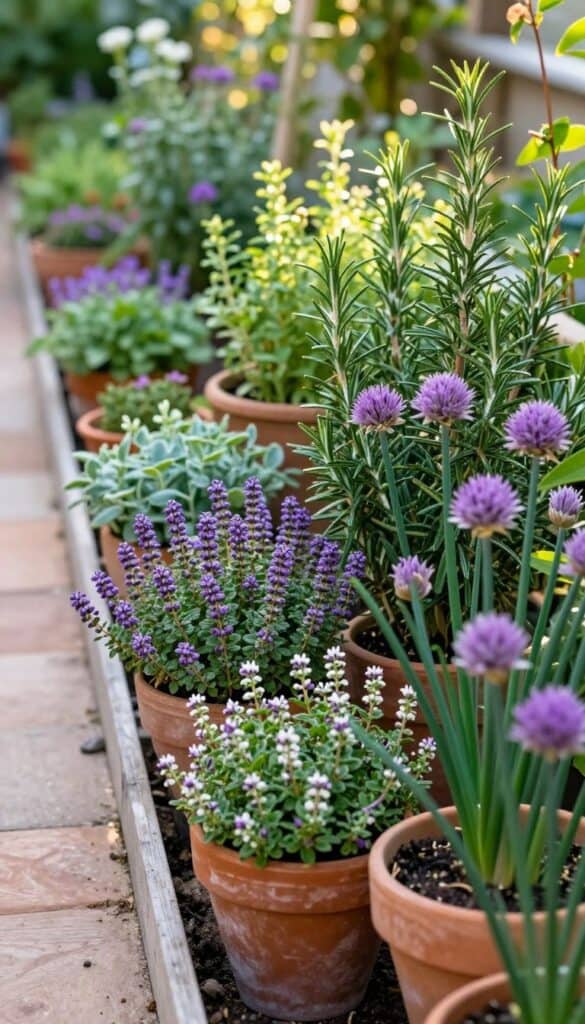
A herb border is both practical and beautiful. Herbs stay compact but provide texture, scent, and delicate flowers that suit cottage gardens perfectly.
Place them along a path. Brushing past releases their fragrance.
Key plants: Thyme, sage, rosemary, chives
Best for: Sunny beds near patios or kitchen doors
Accent idea: Terracotta pots tucked between plants
6. Hollyhocks Along a Wall
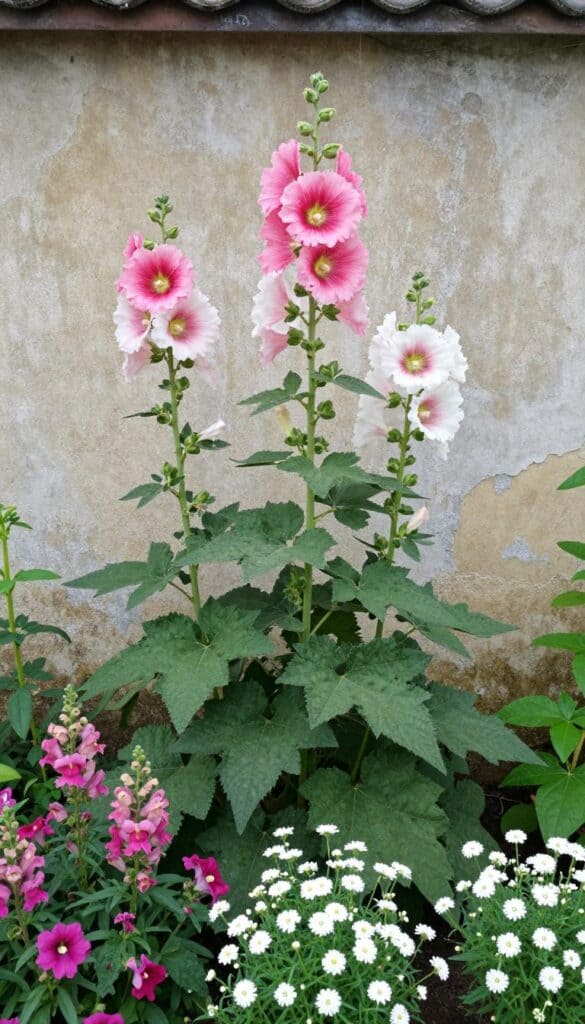
Hollyhocks bring instant cottage charm with their tall stems and old-fashioned blooms. Planted against a fence or wall, they create a dramatic vertical display.
Smaller flowers below keep the border soft and full.
Key plants: Hollyhocks, snapdragons, alyssum
Best for: Sunny walls or fences
Accent idea: Rustic wooden trellis or cottage-style gate
7. Spill-Over Cottage Path Edge

When a narrow bed runs beside a walkway, let plants spill gently over the edge. This softens the border and makes the space feel more relaxed.
Low-growing plants are perfect for this look.
Key plants: Creeping thyme, sweet alyssum, dwarf campanula
Best for: Garden paths and stepping stones
Accent idea: Slightly uneven brick edging for a natural look
8. Roses and Lavender Classic Pairing
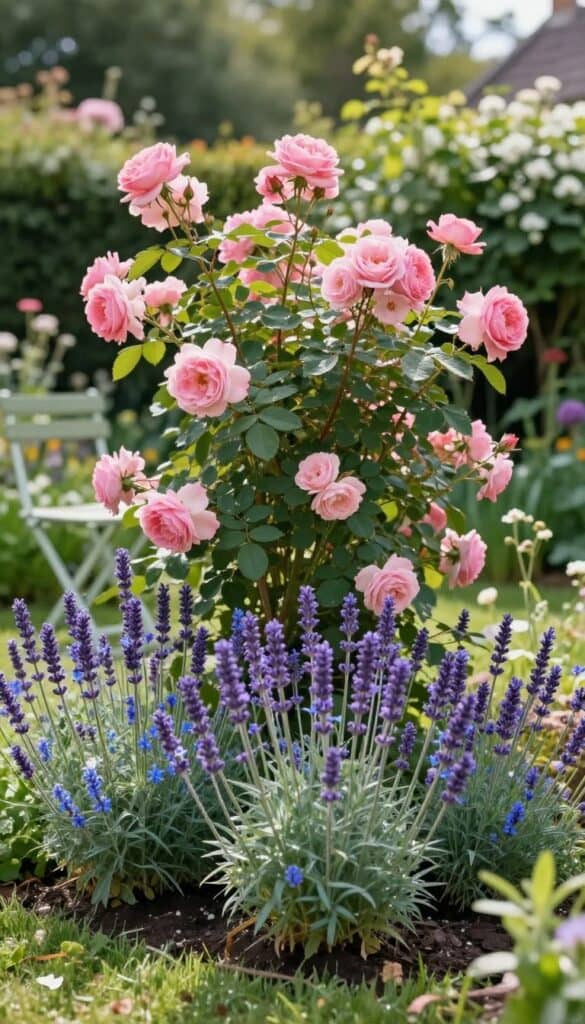
Few combinations feel more timeless than roses and lavender. Compact shrub roses add shape while lavender softens the base with silvery foliage.
The pairing creates a balanced border. It looks both romantic and structured.
Key plants: Shrub roses, lavender, nepeta
Best for: Sunny cottage borders
Accent idea: A small bistro chair or bench nearby
9. Wildflower-Inspired Cottage Strip
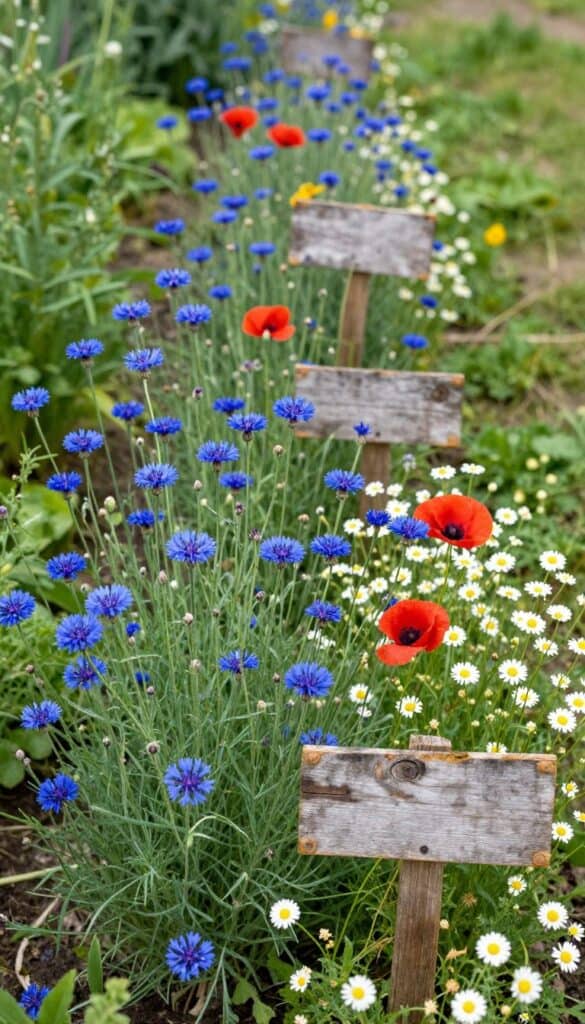
A narrow border planted with meadow-style flowers can look surprisingly abundant. Mixing wildflowers creates a loose, relaxed planting style.
The overlapping stems give the border depth. You don’t need width for this effect.
Key plants: Cornflowers, poppies, nigella, chamomile
Best for: Sunny informal gardens
Accent idea: Wooden plant labels or rustic markers
10. Silver and Blue Cottage Palette
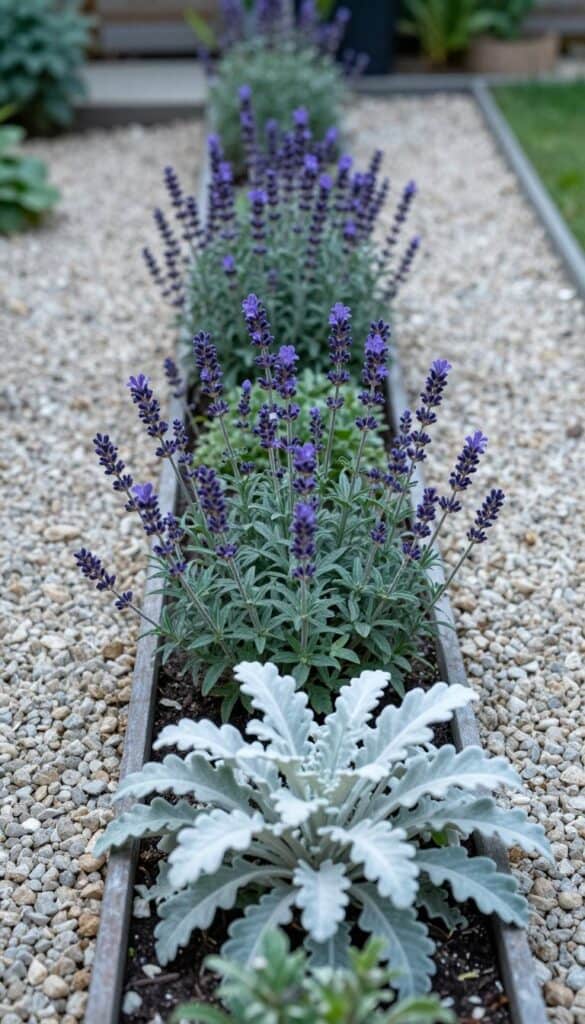
Cool tones like blue, lavender, and silver foliage create a calm, elegant border. Plants with soft grey leaves also add texture without making the space look crowded.
This palette feels serene and cohesive.
Key plants: Russian sage, lavender, lamb’s ear
Best for: Sunny, dry borders
Accent idea: Pale gravel mulch
11. Layered Spring Bulb Display

Spring bulbs bring early color to narrow beds before perennials take over. Plant tulips, daffodils, and muscari in small clusters for a natural effect.
This creates a seasonal wave of color each year.
Key plants: Tulips, daffodils, muscari, alliums
Best for: Borders with good drainage
Accent idea: Add forget-me-nots between bulbs
12. Tiered Cottage Fence Border
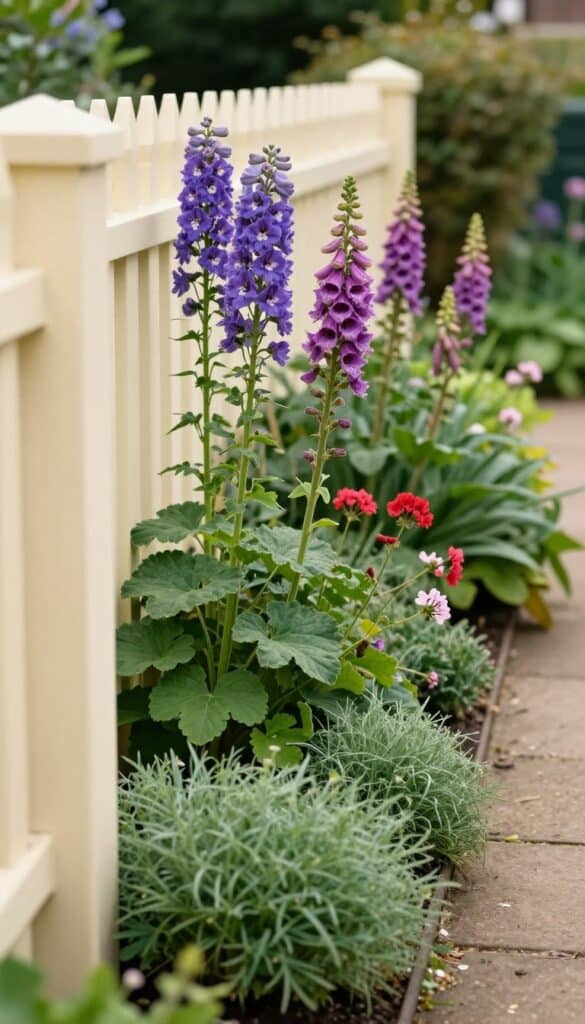
A tiered planting layout works beautifully in narrow spaces. Tall plants grow at the back, medium plants in the middle, and low flowers soften the edge.
This layering technique gives depth to the border.
Key plants: Delphinium, foxglove, hardy geranium
Best for: Beds along fences
Accent idea: Soft sage or cream-painted fence
13. Pollinator-Friendly Cottage Border
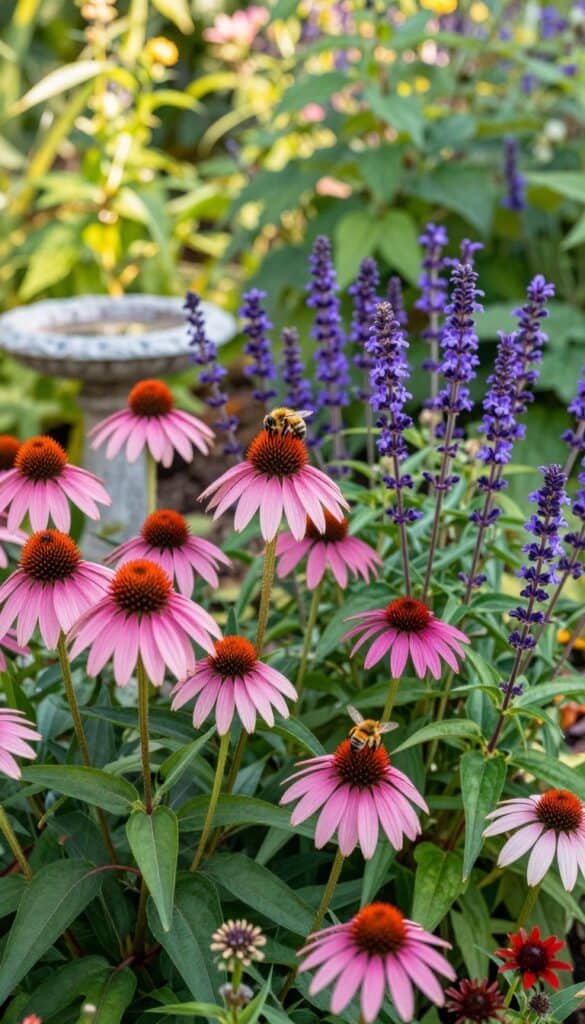
Planting pollinator-friendly flowers brings life and movement into the garden. Bees and butterflies make the border feel vibrant and full.
Repeating plants along the bed creates visual rhythm.
Key plants: Echinacea, salvia, bee balm
Best for: Sunny borders
Accent idea: Small birdbath nearby
14. Soft Cottage Ornamental Grasses
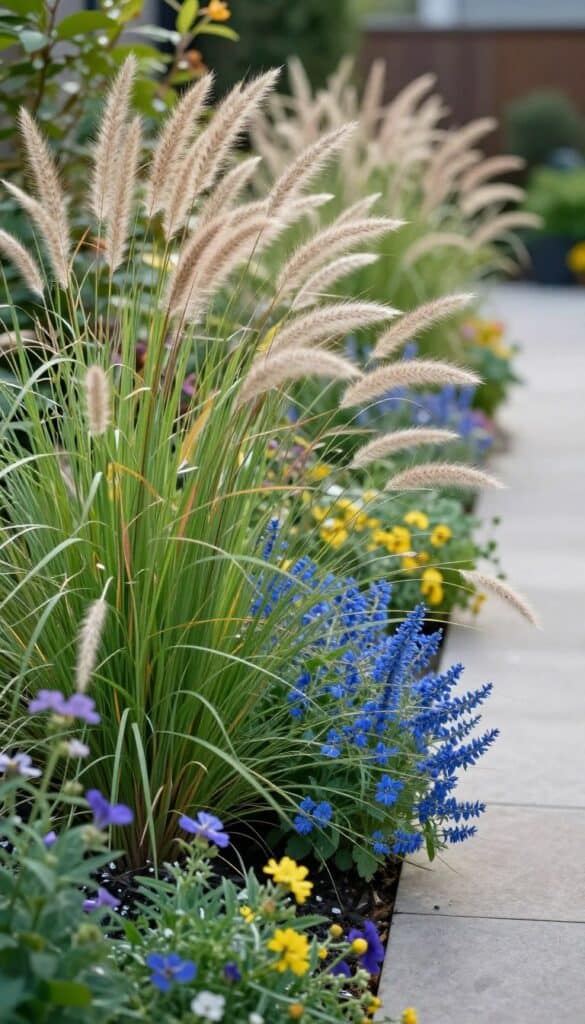
Ornamental grasses add movement and lightness to narrow beds. Their delicate texture complements cottage flowers without overcrowding the space.
They also sway beautifully in the wind.
Key plants: Feather grass, blue fescue
Best for: Sunny mixed borders
Accent idea: Repeat grasses every few plants
15. Vintage Rose Border
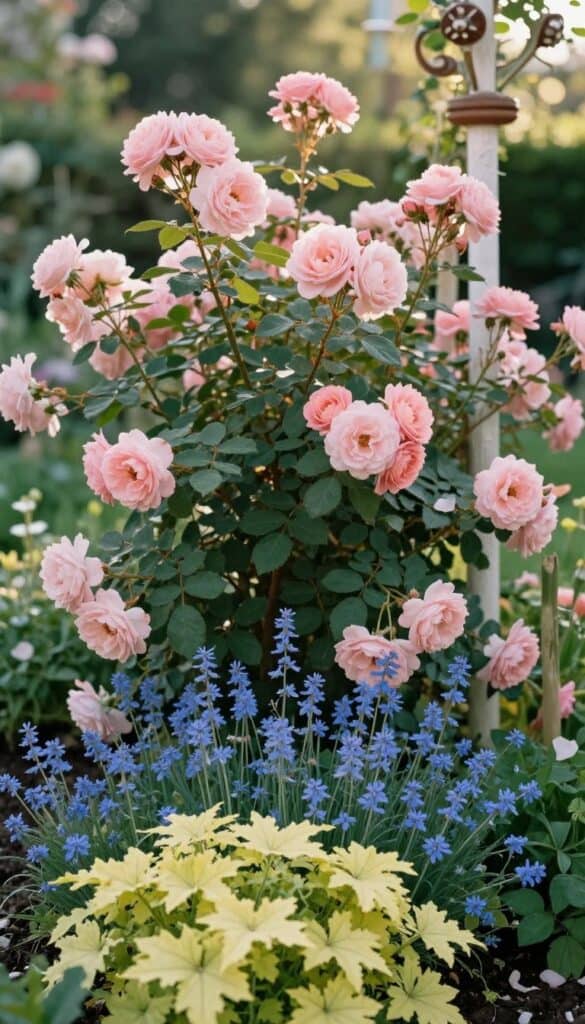
A row of old-fashioned roses can turn a narrow bed into a romantic focal point. Underplanting keeps the base lush and prevents the roses from looking too formal.
The result feels classic and elegant.
Key plants: English shrub roses, nepeta, lady’s mantle
Best for: Sunny garden borders
Accent idea: Decorative rose supports
16. Cottage Shade Garden Border
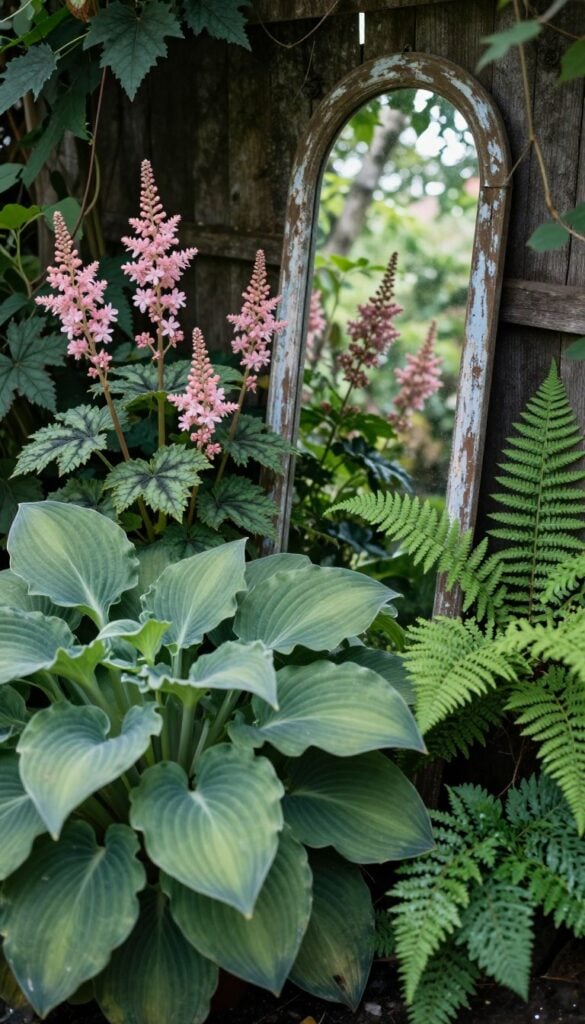
Shady narrow beds can still feel lush with foliage plants. Large leaves and layered textures create a woodland cottage atmosphere.
Add a few delicate flowers for color.
Key plants: Hostas, ferns, astilbe, heuchera
Best for: Shaded borders
Accent idea: Weathered garden mirror
17. Dianthus Cottage Pink Edge

Dianthus (also known as cottage pinks) are compact plants with fragrant blooms. They work beautifully at the front of narrow beds.
They provide color without spreading too wide.
Key plants: Dianthus, thyme, lamb’s ear
Best for: Sunny edges
Accent idea: Brick path edging
18. Seasonal Flower Rotation

Changing plants with the seasons keeps a narrow bed interesting year-round. Spring bulbs, summer perennials, and autumn flowers create a rotating display.
This approach works well when space is limited.
Key plants: Tulips, salvia, asters
Best for: Small dynamic borders
Accent idea: Keep spare pots ready to swap in
19. Color Drift Cottage Planting

Repeating a single color family across a narrow bed creates flow and visual harmony. Soft pink or lavender tones work especially well in cottage gardens.
The border feels calm and cohesive.
Key plants: Geraniums, roses, salvias
Best for: Long narrow borders
Accent idea: Repeat the same plants every few feet
20. Relaxed Mixed Cottage Border

The classic cottage garden look comes from mixing flowers that overlap naturally. Combining tall flowers, airy fillers, and low edging plants creates a layered effect.
The result feels abundant and charming.
Key plants: Foxgloves, daisies, lavender, geranium
Best for: Traditional cottage gardens
Accent idea: Add a small bench or garden stool
Transform Your Narrow Space into a Cottage Paradise
Even the narrowest garden bed can become a lush cottage border. The right combination of plants and structure makes all the difference.
Focus on vertical flowers, soft spill-over edges, and repeating color palettes. Small spaces quickly start to feel abundant with these techniques.
Start with one idea that suits your garden. Build from there. Over time, the plants will fill in and soften the space.
That creates the timeless, slightly wild charm that makes cottage gardens so loved. Your narrow border holds more potential than you might think.

Common Questions About Narrow Cottage Garden Beds
How wide does a cottage garden border need to be?
A cottage garden border can thrive in spaces as narrow as 18 inches. The key is choosing plants that grow vertically rather than spreading wide. Foxgloves, delphiniums, and climbing roses work perfectly in slim beds. Layer tall plants at the back with shorter ones at the front to maximize visual impact.
What cottage garden plants work best in narrow beds?
The best cottage garden plants for narrow beds include lavender, catmint, foxgloves, dianthus, and hardy geraniums. These stay relatively compact while providing abundant blooms. Climbing roses trained vertically also work beautifully. Avoid spreading perennials like phlox that need more horizontal space.
How do I make a narrow garden bed look fuller?
Make narrow beds look fuller by using spill-over plants at the edges. Creeping thyme, alyssum, and nepeta soften hard lines. Plant in layers with tall flowers at the back, medium height in the middle, and low growers at the front. Repeating the same plants every few feet creates rhythm and makes the border feel more abundant.
Can I grow roses in a narrow cottage garden bed?
Yes, roses grow beautifully in narrow beds. Choose compact shrub roses or train climbing roses vertically on trellises. English roses like ‘The Pilgrim’ and ‘Gertrude Jekyll’ stay relatively contained. Plant them 18 to 24 inches apart. Underplant with lavender or lady’s mantle to fill the space below.
What color scheme works best for small cottage borders?
Soft pastel color schemes work wonderfully in narrow cottage borders. Stick to two or three main colors to avoid visual clutter. Pink, white, and purple create a romantic feel. Silver foliage and blue flowers produce a calm, elegant look. Repeating your chosen colors along the border creates harmony and makes the space feel larger.
Essential Design Elements for Small Cottage Borders
Vertical Structure
Height becomes crucial in narrow spaces. Use tall plants and climbing flowers to draw the eye upward.
- Train climbing roses on trellises or fences
- Plant foxgloves and delphiniums for natural height
- Add garden obelisks for vertical interest
- Use hollyhocks against walls or boundaries
Layered Planting
Create depth by planting in layers from tall to short. This technique maximizes visual impact in slim borders.
- Position tallest plants at the back or center
- Fill middle layer with medium-height perennials
- Edge with low-growing cottage flowers
- Let plants overlap slightly for fullness
Soft Edges
Soften hard lines with plants that spill gently over borders. This creates the relaxed cottage garden feel.
- Use creeping thyme along path edges
- Plant catmint to flow over boundaries
- Add trailing alyssum for gentle spillover
- Allow lady’s mantle to soften corners
Color Repetition
Repeat plants and colors every few feet. This creates rhythm and makes narrow borders feel cohesive.
- Choose a main color palette and stick to it
- Repeat the same plants at regular intervals
- Use silvery foliage to tie colors together
- Keep the palette simple in small spaces
Creating Year-Round Interest in Narrow Cottage Borders
The most successful cottage garden borders offer beauty throughout the growing season. Planning for continuous bloom keeps your narrow bed interesting from spring through late fall.

Spring in Narrow Borders
Start the growing season with early bulbs tucked between perennials. Tulips, daffodils, and muscari bring the first wave of color. Plant them in clusters rather than rows for a natural cottage garden look.
Early-flowering perennials like primrose and forget-me-nots fill gaps while later bloomers emerge. These compact spring flowers work perfectly in slim spaces.

Summer Abundance
Summer brings peak bloom time for classic cottage garden plants. Roses, lavender, delphiniums, and hardy geraniums create the quintessential cottage look. These perennials provide months of continuous color with minimal care.
Deadhead spent blooms regularly. This encourages more flowers and keeps the border looking fresh. Many cottage garden plants bloom repeatedly through summer if maintained properly.

Autumn Color
Extend the season with late-blooming perennials. Asters, sedums, and Japanese anemones keep narrow borders colorful into fall. Their flowers complement autumn foliage beautifully.
Ornamental grasses also shine in fall. Their seed heads catch low autumn light and provide movement. They fill space without overwhelming narrow beds.

Winter Structure
Leave some perennials standing through winter. Seed heads and dried flower stems create interest when everything else has died back. This also provides food and shelter for wildlife.
Evergreen shrubs like lavender maintain structure year-round. Their silvery foliage looks beautiful even in winter. Plan for at least one evergreen element in narrow borders.
Maintaining Your Narrow Cottage Border
Cottage gardens are meant to look slightly wild, but they still need regular maintenance to stay healthy and beautiful. The good news is that narrow borders require less work than large beds.
Essential Maintenance Tasks
Keep your cottage garden thriving with these simple maintenance routines. Most tasks take just minutes in narrow borders.
- Deadhead spent flowers weekly during the growing season to encourage repeat blooms
- Water deeply once or twice weekly rather than shallow daily watering
- Mulch around plants in spring to retain moisture and suppress weeds
- Cut back perennials in late fall or early spring before new growth emerges
- Divide overcrowded perennials every three to four years to maintain vigor
- Feed plants with organic compost in spring and midsummer for best blooms

Weed Control in Narrow Beds
Dense planting naturally suppresses weeds. Once your cottage garden fills in, weeding becomes minimal. Until then, mulch bare soil to prevent weed seeds from germinating.
Hand-pull weeds when soil is moist. This removes the entire root system. Regular quick weeding sessions prevent problems from developing.
Supporting Tall Plants
Tall cottage garden plants sometimes need support. Insert stakes or plant supports early in the growing season. Plants grow around them naturally, hiding the supports.
Pea sticks (twiggy branches) work beautifully in cottage gardens. They provide natural-looking support and disappear as plants mature. This maintains the informal cottage garden style.
Selecting Cottage Garden Plants for Your Climate
The most beautiful cottage garden ideas work best when you choose plants suited to your local conditions. Understanding your climate helps ensure success.
Know Your Hardiness Zone
Check your USDA hardiness zone before purchasing cottage garden plants. Most traditional cottage perennials thrive in zones 5 through 9. Some tolerate colder or warmer conditions.
Classic cottage plants like lavender prefer zones 5-9. Foxgloves grow well in zones 4-8. Roses vary widely by variety. Always verify zone compatibility before planting.

Adapting Cottage Garden Ideas for Hot Climates
Hot climate gardeners can still create beautiful cottage borders. Choose heat-tolerant plants that maintain the cottage garden aesthetic. Many traditional cottage flowers struggle in intense heat and humidity.
Heat-Tolerant Cottage Plants
- Salvia (multiple varieties for hot climates)
- Lantana (colorful and drought-tolerant)
- Russian sage (thrives in heat and dry conditions)
- Coneflower (echinacea) for hot sunny borders
- Knockout roses (bloom continuously in heat)
- Mexican bush sage (late season color)
Avoid in Hot Climates
- Delphiniums (prefer cool summers)
- Traditional lavender varieties
- Foxgloves (struggle with heat)
- English roses (many dislike humidity)
- Lupines (require cool conditions)
- Sweet peas (prefer mild temperatures)
Cold Climate Cottage Gardens
Cold climate cottage gardens focus on extremely hardy perennials. Many traditional cottage plants tolerate freezing winters beautifully. The key is choosing varieties proven in your zone.
Hardy shrub roses withstand severe cold. Daylilies, hardy geraniums, and Siberian iris thrive in cold zones. These reliable perennials return year after year in challenging climates.

Perfect Plant Pairings for Narrow Cottage Borders
Successful cottage garden design relies on thoughtful plant combinations. These pairings work beautifully in narrow spaces and complement each other throughout the growing season.

Classic Rose and Lavender
This timeless combination never fails. Pink or white roses pair beautifully with lavender’s purple spikes. The color contrast is striking while both plants share similar sun requirements.
Lavender’s silvery foliage complements rose blooms perfectly. Both plants prefer well-drained soil and full sun. This pairing works in zones 5-9.

Foxglove with Hardy Geranium
Tall foxglove spires rise dramatically above low-growing hardy geraniums. This creates perfect vertical and horizontal balance in narrow beds. The height difference maximizes visual impact.
Hardy geraniums fill space while foxgloves provide structure. Both tolerate partial shade. This combination works well in zones 4-8.

Catmint and Allium
Purple catmint creates a flowing base for spherical allium flowers. The contrasting flower shapes add visual interest. Both bloom in late spring to early summer.
Catmint continues blooming after alliums fade. This extends the color display. Both plants thrive in full sun and well-drained soil in zones 4-9.
Companion Planting Tips for Cottage Gardens
Choose plants with similar water and sun requirements. Mix flower shapes and sizes for visual interest. Include plants that bloom at different times for continuous color. Repeat successful combinations along the border for cohesion.
Common Mistakes to Avoid in Narrow Cottage Borders
Even experienced gardeners make mistakes when designing narrow cottage borders. Learning from these common errors saves time and creates better results.
What Works Well
- Choosing compact plant varieties specifically bred for small spaces
- Planting in odd-numbered groups for natural appearance
- Using vertical space with climbing plants and trellises
- Repeating plants every few feet for visual rhythm
- Mixing textures (spiky, round, flowing) for interest
- Allowing plants to overlap slightly at maturity
- Focusing on two or three main colors for cohesion
What to Avoid
- Planting too densely initially (plants need room to grow)
- Choosing spreading perennials that overtake narrow beds
- Using too many different plant varieties (creates chaos)
- Neglecting to check mature plant sizes before purchasing
- Planting shade lovers in full sun or sun lovers in shade
- Forgetting about bloom times (resulting in gaps of no color)
- Ignoring soil conditions and drainage requirements

The Spacing Dilemma
New cottage gardens always look sparse initially. Resist the urge to overplant. Follow spacing recommendations on plant tags. Plants will fill in within two growing seasons.
Use annuals to fill gaps while perennials establish. This provides immediate color without permanent overcrowding. Remove annuals once perennials mature.
Choosing the Wrong Plants
Not all cottage garden plants suit narrow borders. Some traditional favorites like phlox spread aggressively. Others like delphiniums need staking and significant space.
Research each plant’s mature size and growth habit. Compact varieties of traditional cottage plants often work better in narrow beds than full-size versions.
Preparing Soil for Thriving Cottage Garden Plants
Great cottage gardens start with healthy soil. Most cottage garden plants prefer rich, well-draining soil. Proper preparation before planting ensures long-term success.
Testing and Amending Your Soil
Test soil pH before planting. Most cottage garden plants thrive in slightly acidic to neutral soil (pH 6.0-7.0). Lavender and dianthus prefer slightly alkaline conditions.
Amend heavy clay soil with compost and coarse sand to improve drainage. Add organic matter to sandy soil to increase water retention. Work amendments into the top 12 inches before planting.

Improving Drainage in Narrow Beds
Narrow beds against walls or fences often have poor drainage. Water collects in these areas, damaging plant roots. Improve drainage by raising the bed slightly or installing a gravel layer beneath the soil.
Many cottage garden plants tolerate dry conditions better than wet feet. Roses, lavender, and salvias all prefer excellent drainage. Address drainage issues before planting.
Ongoing Soil Care
Add a two-inch layer of compost around plants each spring. This feeds soil organisms and provides slow-release nutrients. Avoid placing compost directly against plant stems.
Mulch with organic materials like shredded bark or leaf mold. Mulch retains moisture, suppresses weeds, and gradually improves soil as it breaks down. Maintain a two to three-inch mulch layer.
Creating a Cottage Garden on a Budget
Beautiful cottage gardens don’t require massive budgets. Smart shopping and propagation techniques help create stunning borders without overspending.
Money-Saving Strategies
- Buy small plants and let them grow (patience saves money)
- Divide existing perennials rather than buying new plants
- Start plants from seed for pennies per plant
- Join local garden clubs for plant swaps and free divisions
- Shop end-of-season sales for discounted perennials
- Propagate cuttings from friends’ gardens (with permission)
- Choose self-seeding plants that spread naturally

Plants That Give the Most Value
Some cottage garden plants provide exceptional value. Hardy geraniums spread steadily and bloom for months. Catmint can be divided every few years. One lavender plant becomes three or four within a few seasons.
Self-seeding annuals like forget-me-nots, nigella, and poppies return year after year without replanting. Let some flowers go to seed. They’ll naturalize throughout your border.

Finding Inspiration for Your Cottage Garden Design
Great cottage garden design comes from observing successful borders and adapting ideas to your space. Multiple sources provide endless inspiration for narrow cottage gardens.
Visit Established Cottage Gardens
Nothing beats seeing mature cottage gardens in person. Visit public gardens, historic estates, and garden tours in your area. Take photos and notes about plant combinations that appeal to you.
Pay attention to how established gardens handle narrow spaces. Notice plant spacing, color combinations, and structural elements. Adapt successful ideas to your own border.

Learn from Online Communities
Join online gardening forums and social media groups focused on cottage gardens. Members share photos, advice, and plant recommendations. These communities offer valuable support, especially for beginners.
Regional gardening groups provide climate-specific advice. Learn which cottage garden plants thrive in your area from experienced local gardeners.
Document Your Own Garden Journey
Take photos of your cottage garden throughout the growing season. Document what works and what doesn’t. This personal record becomes invaluable for future planning.
Note bloom times, growth rates, and color combinations. Review these records each winter when planning improvements. Your own garden provides the best lessons over time.