

Journaling for Beginners: A Gentle, No-Pressure Guide to Getting Started
Starting a journal can feel oddly intimidating. Blank pages. Big expectations. The quiet pressure to be profound.
This post includes affiliate links. If you make a purchase through them, I may earn a small commission at no extra cost to you. More details here.
Let’s remove all of that.
Journaling isn’t about being poetic or perfectly consistent. It’s about giving your thoughts somewhere safe to land. Think of it as a soft place to untangle your mind.
Here’s how to begin—simply, gently, and without overthinking it.
1. Choose a Journal You Actually Like

Your journal should feel inviting, not clinical.
Maybe it’s:
- A soft linen cover
- A smooth leather-bound notebook
- A simple spiral pad from the stationery aisle
Why It Works
- Tactile connection makes you want to open it
- Aesthetic appeal lowers resistance
- It feels personal
Try This
Run your hand over the cover before writing. Make it feel like a small ritual.
The physical sensation of holding something you chose matters. When your notebook feels good in your hands, you reach for it more often.
Don’t overthink this choice. Walk into a stationery store and touch every notebook. The one that makes you smile is the right one.
2. Start With “Today I Feel…”

You don’t need a deep prompt. Just begin with one sentence.
Why It Works
- It lowers the pressure to be insightful
- It creates immediate clarity
- It anchors you in the present
Try This
Write “Today I feel…” and don’t stop for five minutes. No editing. No judging.
This simple prompt removes the blank page paralysis that stops most people. You don’t need wisdom or insight right now.
Just describe your current emotional state. Let the pen move across the paper without thinking too hard about what comes next.
Some days you’ll write “tired” and discover you’re actually worried about something specific. Other days you’ll start with “content” and realize small moments brought unexpected joy.
The magic happens when you keep writing past the obvious answer. The first thing you write isn’t always the whole truth.
3. Keep It Short (Seriously)
You do not need to fill pages.
Why It Works
- Short entries are sustainable
- Consistency matters more than length
- It prevents burnout
Try This
Aim for 5–10 lines. Stop when it feels natural.
This might be the most liberating permission you receive today. Brief snapshots often reveal more than lengthy rambling.
When you commit to short entries, you actually show up more often. Three sentences every single day beats three pages once a month.
Your future self will appreciate these concise records. Six months from now, you can scan through months of entries in one sitting.
Patterns emerge more clearly when each day gets its own snapshot rather than drowning in endless paragraphs.
4. Don’t Worry About Handwriting

Messy writing is real writing.
Why It Works
- Perfectionism blocks expression
- Fast writing captures real thoughts
- Journals are private
Try This
Write quickly on purpose. Let the letters lean and loop.
Nobody will ever read this except you. Your handwriting can be as wild as your thoughts.
Some of your most honest entries will look like you wrote them during turbulence. That’s perfectly fine.
Speed matters more than neatness when you’re trying to capture something true before self-censorship kicks in.
5. Create a Tiny Ritual Around It

A small sensory cue helps your brain settle.
Why It Works
- Repetition builds habit
- Ritual creates safety
- It signals “quiet time”
Try This
Light a candle. Make tea. Sit in the same chair. Even two minutes helps.
Your brain responds to consistent cues. When you repeat the same small action before journaling, your mind learns to shift into reflection mode.
This doesn’t need to be elaborate. One simple sensory signal works better than five complicated steps.
Maybe you always journal with your morning coffee. Perhaps you light the same candle every evening before opening your notebook.
The ritual bookends your writing time. It creates a container that makes the practice feel special without requiring extra time or energy.
Over weeks, that candle scent or that specific chair becomes associated with the mental health benefits of journaling.
6. Use Prompts When You Feel Stuck
If your mind goes blank, prompts are your friend.
Why It Works
- They give direction
- They reduce overthinking
- They spark insight
Try These Beginner Prompts
- What’s been on my mind lately?
- What do I need more of right now?
- What felt good today?
- What am I avoiding?
Journal prompts act like conversation starters with yourself. They open doors to thoughts waiting just beneath the surface.
Keep your favorite prompts on a bookmark tucked inside your journal. On difficult days when your mind feels empty, you won’t waste time searching for questions.
Different prompts serve different needs. Reflective questions work well for processing emotions. Practical questions help when you need clarity about your life direction.
Even people who have been journaling for years use prompts regularly. There’s no shame in needing a starting point.
The prompt is just a doorway. Once you start writing, you often discover the real thing you needed to explore.
7. Try Gratitude Journaling (But Keep It Real)
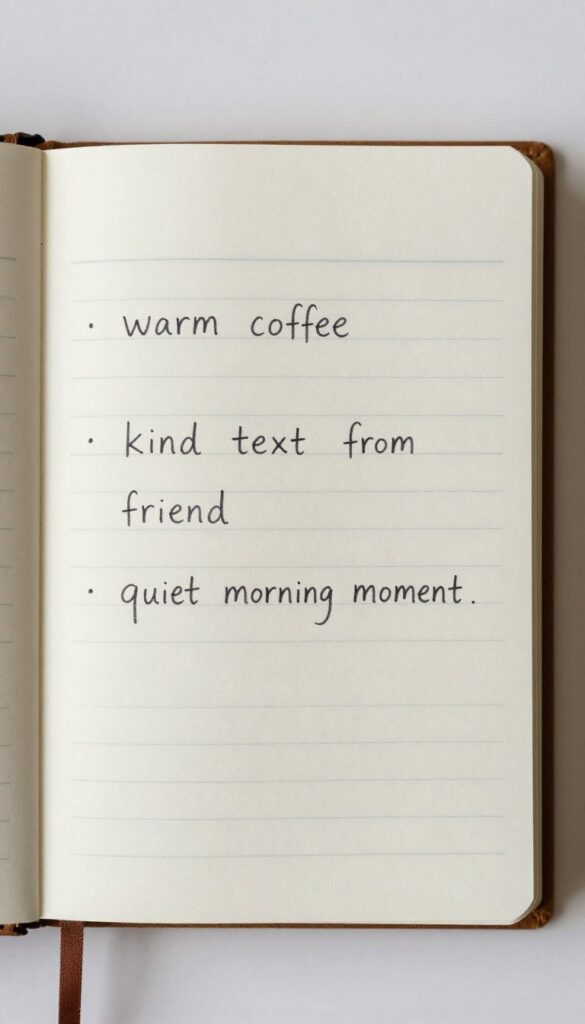
Gratitude doesn’t have to be dramatic.
Why It Works
- It shifts attention gently
- It balances difficult days
- It builds emotional awareness
Try This
Write three small things:
- A warm drink
- A kind message
- A quiet moment
Small counts.
This isn’t about forcing positivity when life feels hard. A mental health journal holds both struggle and appreciation in the same space.
On truly difficult days, your gratitude list might look like: “I got out of bed. I drank water. I’m still here.”
That’s enough. That’s real gratitude for real life, not some idealized version nobody actually lives.
The practice trains your brain to notice good things without dismissing hard things. Both exist simultaneously in your day.
You don’t need grand statements. Noticing your cat’s warmth or the way afternoon light hits your wall counts completely.
8. Let It Be Imperfect
Some days you’ll skip it. Some entries will feel shallow. Some will surprise you.
That’s normal.
Why It Works
- Removes guilt
- Makes it sustainable
- Keeps it human
Journaling is not a performance.
This practice doesn’t require perfection or consistency to be valuable. You might miss three days, then write for seven straight.
All of that is valid. The notebook doesn’t judge the way you show up or don’t show up.
Perfectionism kills more journaling habits than anything else. The moment you decide it needs to be done “right,” you add pressure that defeats the purpose.
Your journal can hold contradictions. You can write “I’m grateful” one day and “I hate everything” the next.
You can be profound or petty, insightful or confused. The pages accept every version of you.
Some entries will feel pointless when you write them, then reveal unexpected meaning months later.
9. Experiment With Styles

You don’t have to stick to one format.
You can:
- Brain dump
- Bullet point
- Write letters to yourself
- Sketch
- Make lists
Try This
Dedicate one page to “Messy Thoughts” with zero structure.
Different days call for different approaches. Your journal is a space for exploration, not rigid rules.
Full paragraphs work when thoughts need space to develop. Quick bullet points serve you better when time is short.
Sometimes words feel inadequate and you need to sketch instead. Other days your brain craves the structure of lists.
You might discover natural patterns. Morning pages could be stream of consciousness. Evening reflection might be structured lists.
Honor what serves you in each moment rather than forcing consistency across every entry.
Your practice can shift based on what you need right now, not what worked last week or what someone else recommends.
This flexibility keeps journaling fresh rather than letting it become another rigid obligation in your life.
10. End With One Grounding Sentence
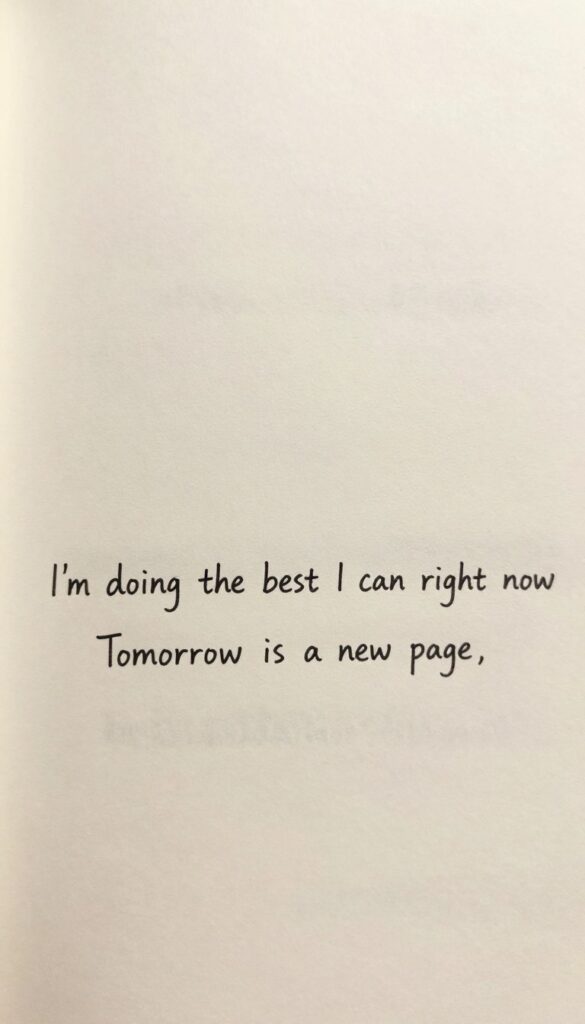
Before closing your journal, write something steady.
Why It Works
- Creates emotional closure
- Leaves you feeling contained
- Ends on intention
Try This
“I’m doing the best I can.”
or
“Tomorrow is a new page.”
This creates clear emotional closure for your writing session. It signals to your brain that reflection time is complete.
You’re transitioning back to the rest of your day or evening now. The thoughts stay in the journal.
Need Extra Guidance for Your Journaling Journey?
Start your practice with our free collection of 50 thoughtful journal prompts created for beginners. Gentle guidance, no pressure—just helpful questions to support your writing.
Get Your Free PromptsThe closing sentence doesn’t need to solve anything or fix your problems. It just needs to feel like a gentle hand on your shoulder.
You took time to process your thoughts and feelings. That matters. You showed up for yourself today.
Over time, this ritual trains your brain to compartmentalize reflection time from the rest of your day.
You close the cover and move forward with a bit more clarity than you had before opening those pages.
A Gentle Reminder

There is no right way to journal.
You don’t need perfect grammar. You don’t need insight. You don’t need a reason beyond wanting to feel a little clearer.
Start small. Stay curious. Let the pages hold what you don’t need to carry alone.
And remember—the first page doesn’t have to be perfect. It just has to be written.
Your journal is a conversation with yourself that never needs to end. Some days you’ll have a lot to say.
Some days just a few words. Both ways of showing up count equally.
Give yourself permission to begin imperfectly. The practice will find its own rhythm once you stop trying to force it into someone else’s shape.
Your journaling habit will look different from everyone else’s. That’s exactly how it should be.
So open that notebook. Pick up that pen. Write today’s date at the top of the page.
Then write one true sentence about this moment. That’s how every journaling practice begins—with one honest word followed by another.
The blank pages that seemed intimidating at first become a record of your life over time. Your worries. Your dreams. Your mundane observations.
Your hopes. Your fears. Your random thoughts that don’t fit anywhere else but here on these pages.
This space belongs to you. It holds your thoughts without judgment. It offers clarity when your head feels jam-packed with mental noise.
It becomes one thing in your life that can be as messy as you need it to be right now.
You Might Also Like
Shop the Look: Gentle Journaling Starter Essentials
Want journaling to feel easier (and actually inviting)? These simple picks help you start softly—no pressure, no perfection.
Tip: Keep it simple—aim for 5–10 lines, then finish with one grounding sentence like: “I’m doing the best I can.”