
The 15-Minute Declutter Method That Actually Works
Let’s be honest—decluttering doesn’t fail because you’re lazy. It fails because most methods expect you to have endless time, boundless energy, and some weird love affair with organizing sock drawers.
What if I told you that just 15 minutes could transform your space? Not someday. Not after a weekend-long cleaning marathon. Right now.
This post includes affiliate links. If you make a purchase through them, I may earn a small commission at no extra cost to you. More details here.
This 15-minute declutter method has changed how I approach organization, and it works because it respects reality: your limited time, your actual energy levels, and your very human tendency to get overwhelmed.
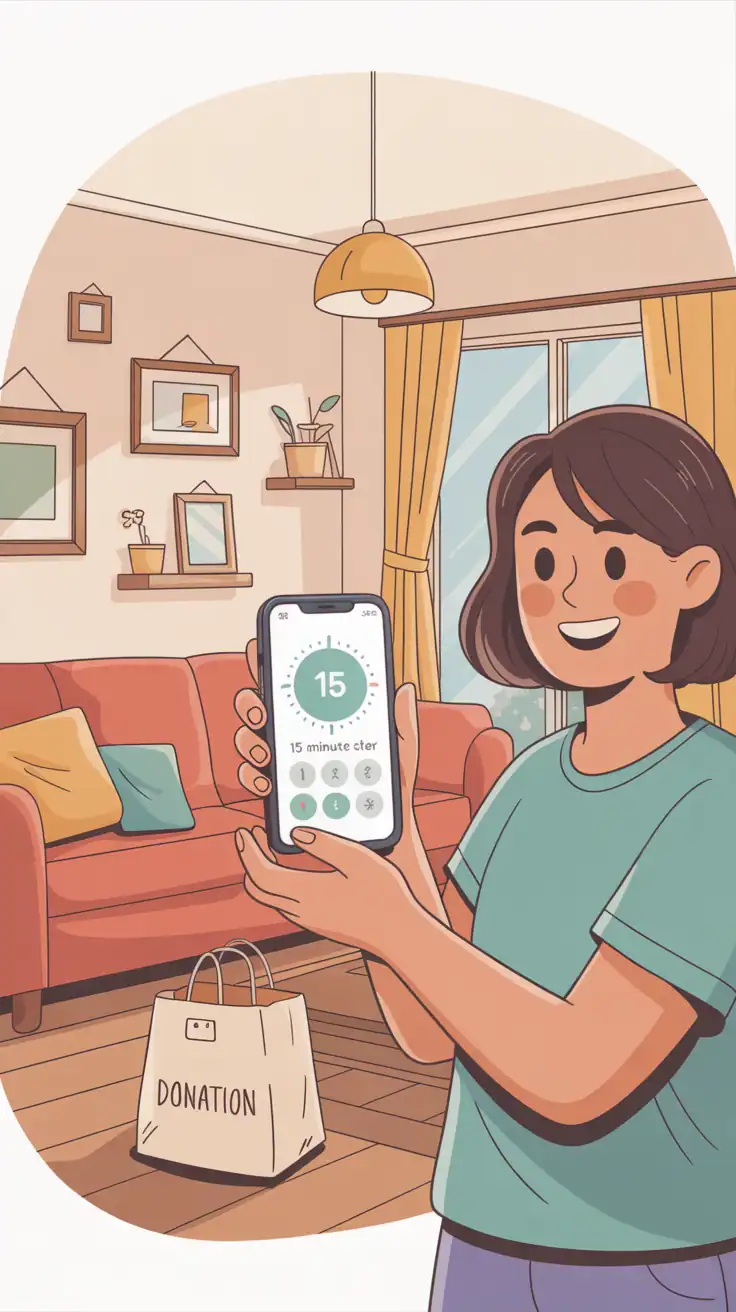
Why the 15-Minute Method Works When Others Fail
Most decluttering advice sets you up for failure with unrealistic expectations. This method flips the script completely.
Here’s the psychology behind why it sticks:
The Science of Small Wins
Research shows our brains are wired to respond positively to quick victories. Each 15-minute session gives you a complete win rather than leaving you with half-finished projects that drain your motivation.
When I worked with clients, I noticed something fascinating: almost everyone started losing focus right around the 15-minute mark. Decision fatigue would kick in, and progress would slow dramatically.

Beating Decision Fatigue
Your brain can only make so many decisions before it gets tired. Traditional decluttering methods exhaust your decision-making capacity, leading to poor choices or complete abandonment.
The 15-minute method works within your brain’s natural limits, keeping you sharp and focused throughout the entire session.
- Your brain doesn’t resist short, defined tasks
- You stop before burnout kicks in
- Progress feels achievable, not punishing
- You can repeat it daily without dread
Think of it as decluttering in snack-sized portions instead of forcing yourself to eat the whole meal at once. Your brain—and your home—will thank you.
The Non-Negotiable Rules (There Are Only Four)
Before you dive in, commit to these four simple rules. They’re the difference between another failed attempt and actual, sustainable progress.
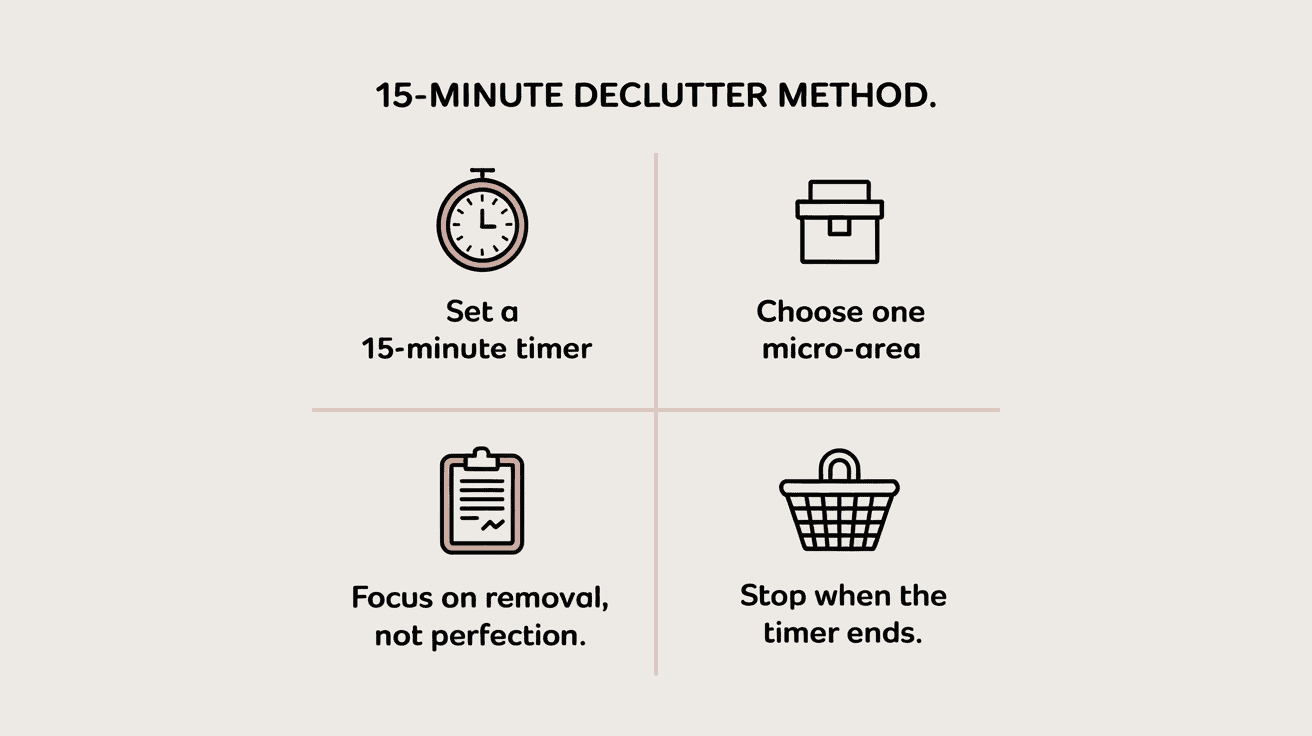
Set a 15-Minute Timer
This isn’t a suggestion—it’s the foundation of the method. The timer creates urgency and a clear endpoint. No “just five more minutes” allowed.
Choose One Micro-Area Only
Be specific and small. Not “the kitchen”—think “the utensil drawer” or “the spice shelf.” Small zones create fast wins.
Stop When the Timer Ends
Even if you’re “on a roll,” stop. This builds the habit and prevents burnout. Tomorrow is another day with another 15 minutes.
Remember: This is about removal, not perfection. You’re not organizing systems or creating Instagram-worthy spaces. You’re simply removing what doesn’t belong or serve you.
Step 1: Choose a Micro-Zone (Smaller Than You Think)
The biggest mistake people make is going too big. If your brain says “the bedroom,” you’ve already failed. Think smaller—much smaller.

Perfect Micro-Zones for 15-Minute Wins:
- One junk drawer (you know the one)
- A single bathroom cabinet
- The spice shelf
- Your nightstand surface
- The glove compartment in your car
- One shelf in your refrigerator
- Your makeup bag or toiletry kit
- The entryway shoe area
- One section of your closet (just shirts, for example)
- A single kitchen counter corner
Small areas = quick wins. Quick wins = momentum. Momentum = lasting change.
“The secret to getting ahead is getting started. The secret to getting started is breaking your complex, overwhelming tasks into small, manageable tasks, and then starting on the first one.”
— Mark Twain
Step 2: Grab Just One Declutter Tool
Simplicity is key. You only need one container for this method to work effectively.
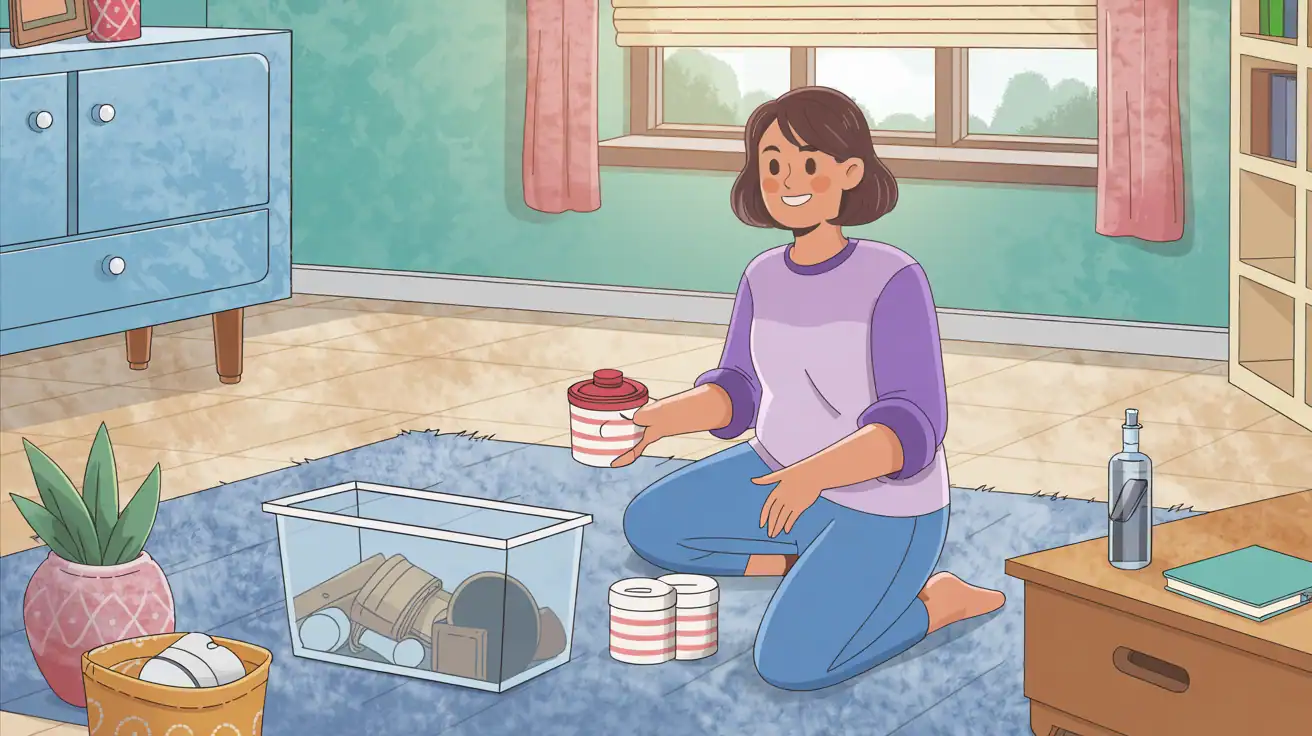
Choose One of These:
- A trash bag for obvious garbage
- A donation bag for items in good condition
- A “doesn’t belong here” box for misplaced items
No complicated sorting systems. No piles all over the floor. Just one container to collect what doesn’t belong in your chosen micro-zone.
Pro Tip: If you’re new to decluttering, start with obvious trash. It requires zero emotional decisions and gives you an immediate sense of progress.
Step 3: Use the “Would I Keep This Today?” Test
Forget complicated decision trees. Ignore sunk costs. Set aside the guilt about gifts you never used.
Ask yourself one simple question for each item:
“If I didn’t already own this, would I buy it again today?”
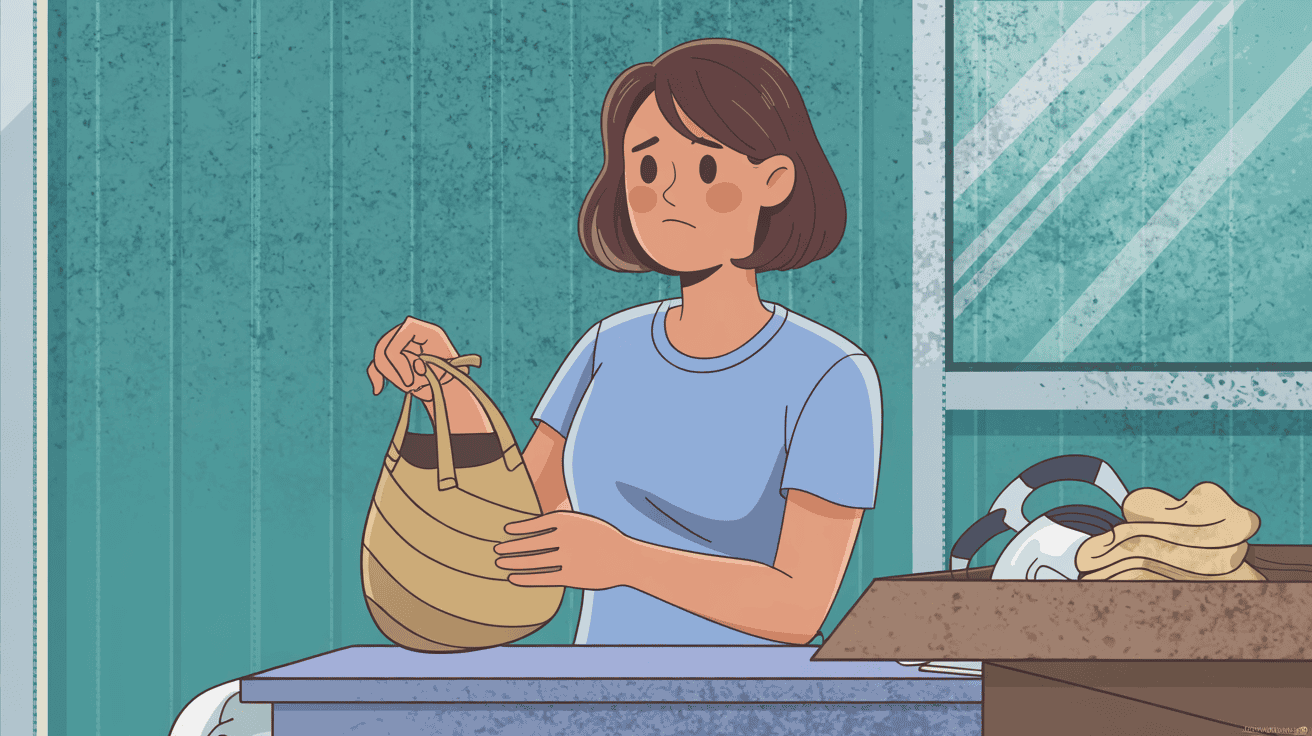
If your answer is anything other than an enthusiastic “yes,” it goes in your container.
It Goes If:
- You forgot you even had it
- It’s broken or incomplete
- You “might use it someday”
- You feel obligated to keep it
- It doesn’t make you feel good
It Stays If:
- You use it regularly
- It works properly and completely
- You’ve used it in the last 6-12 months
- It genuinely brings you joy
- It serves a specific, current purpose
Clarity beats overthinking every time. Trust your gut and move quickly.
-
Home Organization Hacks
Clever tips to keep every room tidy, functional, and stress-free.
-
The Weekend Declutter: How to Transform Your Space in Just 48 Hours
Step-by-step weekend plan to refresh and reset your home.
Step 4: Stop When the Timer Ends (This Is the Magic Part)
When your timer beeps, you stop. Period. This isn’t about willpower—it’s about sustainability.
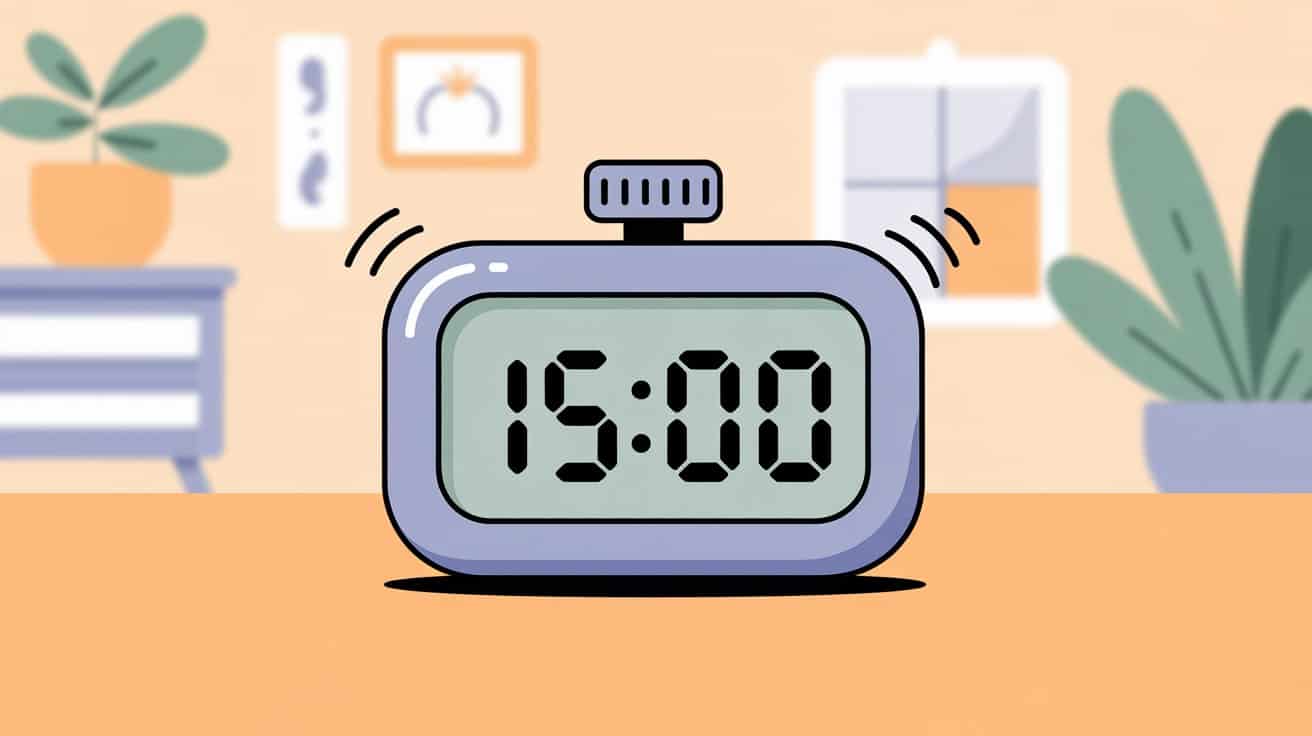
Why Stopping On Time Works:
- You don’t associate decluttering with exhaustion
- You leave the space better than you found it
- You build trust with yourself about time commitments
- You actually want to do it again tomorrow
Consistency beats intensity. Every single time.
“We are what we repeatedly do. Excellence, then, is not an act, but a habit.” — Aristotle
What to Do With the Stuff (Without Letting It Linger)
The final crucial step: immediately dealing with what you’ve removed. Don’t let your “doesn’t belong here” container become a new clutter zone.
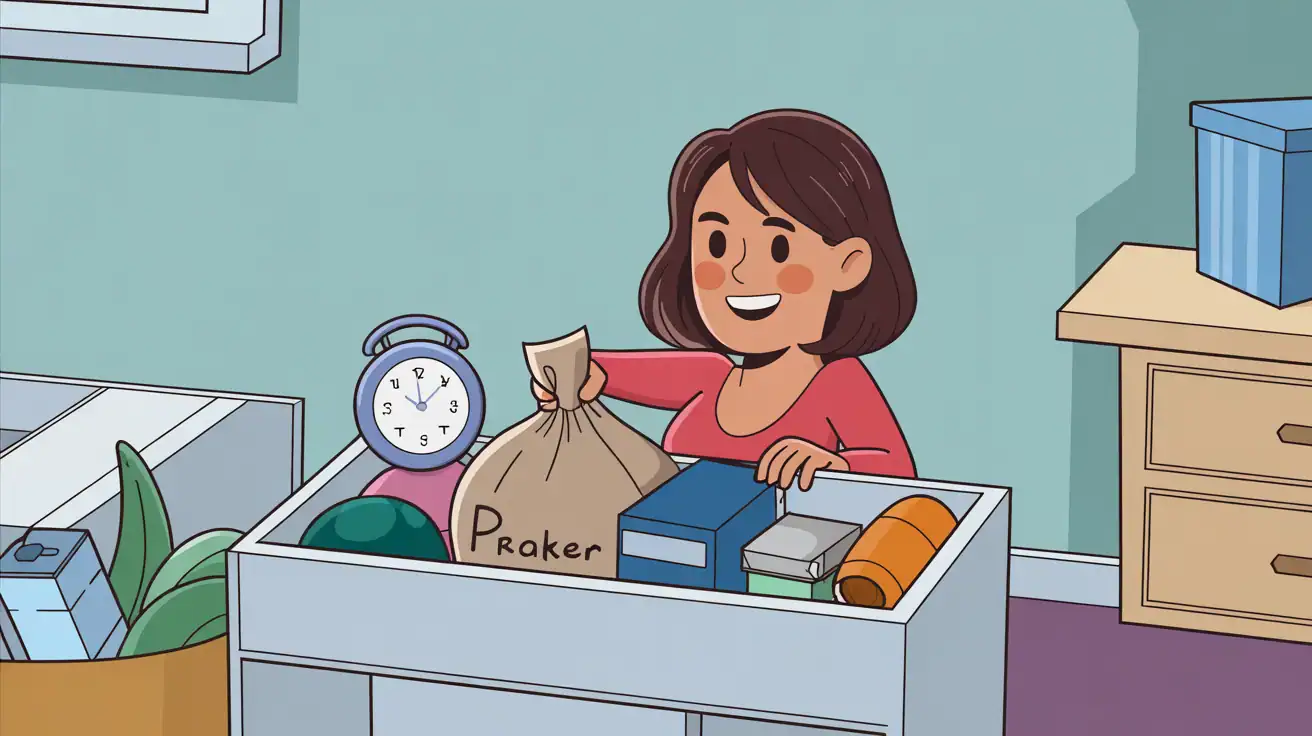
End Your 15 Minutes With One Quick Action:
- Put the donation bag directly in your car
- Take the trash straight to the outdoor bin
- Return misplaced items to their proper homes
No “I’ll deal with this later” pile. That’s how clutter respawns and multiplies.
Remember: The goal isn’t to create a perfect home overnight. The goal is to build a sustainable habit that gradually transforms your space—and your relationship with your possessions.
How Often Should You Do This?
The beauty of this method is its flexibility. You can adapt it to your real life—not some idealized version where you have endless free time.
Ideal Frequency:
Once a day for 7-14 days to build momentum and see significant changes in your home.

Realistic Frequency:
3-4 times a week still creates remarkable progress over a month.
- Monday: Kitchen micro-zone
- Wednesday: Bathroom micro-zone
- Friday: Bedroom micro-zone
- Weekend: Flexible bonus session
Even 15 minutes, three times a week = 3 hours of focused decluttering per month. That’s enough to transform your entire home over time.
Common Mistakes That Make People Quit
Avoid these pitfalls and you’ll maintain momentum when others give up.

Starting With Sentimental Items
Begin with easy, emotionally neutral areas. Save photos, memorabilia, and gifts for when you’ve built your decluttering muscles.
Organizing Before Decluttering
Don’t buy storage solutions until after you’ve decluttered. Otherwise, you’re just organizing stuff you don’t need.
Expanding the Zone Mid-Session
Stick to your chosen micro-zone. Don’t let yourself wander to other areas, no matter how tempting.
The Biggest Mistake: Ignoring the timer because “just five more minutes” will quickly turn into an hour, leading to burnout and resistance to future sessions.
Discipline with these simple rules is what makes this method feel easy and sustainable long-term.
Picture This: The Cumulative Power of 15 Minutes
Imagine what your home could feel like after just a few weeks of consistent 15-minute sessions:
Physical Changes
- Drawers that open smoothly
- Counters you don’t have to clear before using
- Closets with breathing room
- Surfaces that stay cleaner longer
Mental Benefits
- Reduced visual stress
- Less time spent searching for things
- Easier daily cleaning
- More mental bandwidth
Emotional Rewards
- Pride in your space
- Confidence in your abilities
- Relief from the weight of excess
- Joy in what you choose to keep
That’s how clutter actually stays gone—not through marathon sessions, but through consistent, manageable actions that build on each other day after day.
Ready to Transform Your Space 15 Minutes at a Time?
The 15-minute declutter method isn’t about perfection. It’s about progress. It’s about working with your brain instead of against it. And most importantly, it’s about creating a home that supports your life instead of draining it.
Start today with just one 15-minute session. Choose your micro-zone, set your timer, and discover how much lighter you feel when you’re done.
Remember: You don’t need more storage solutions. You don’t need more complicated systems. You just need 15 minutes and the willingness to let go of what no longer serves you.
Keep the Momentum Going
What micro-zone will you tackle first? The freedom of a decluttered home is just 15 minutes away.