
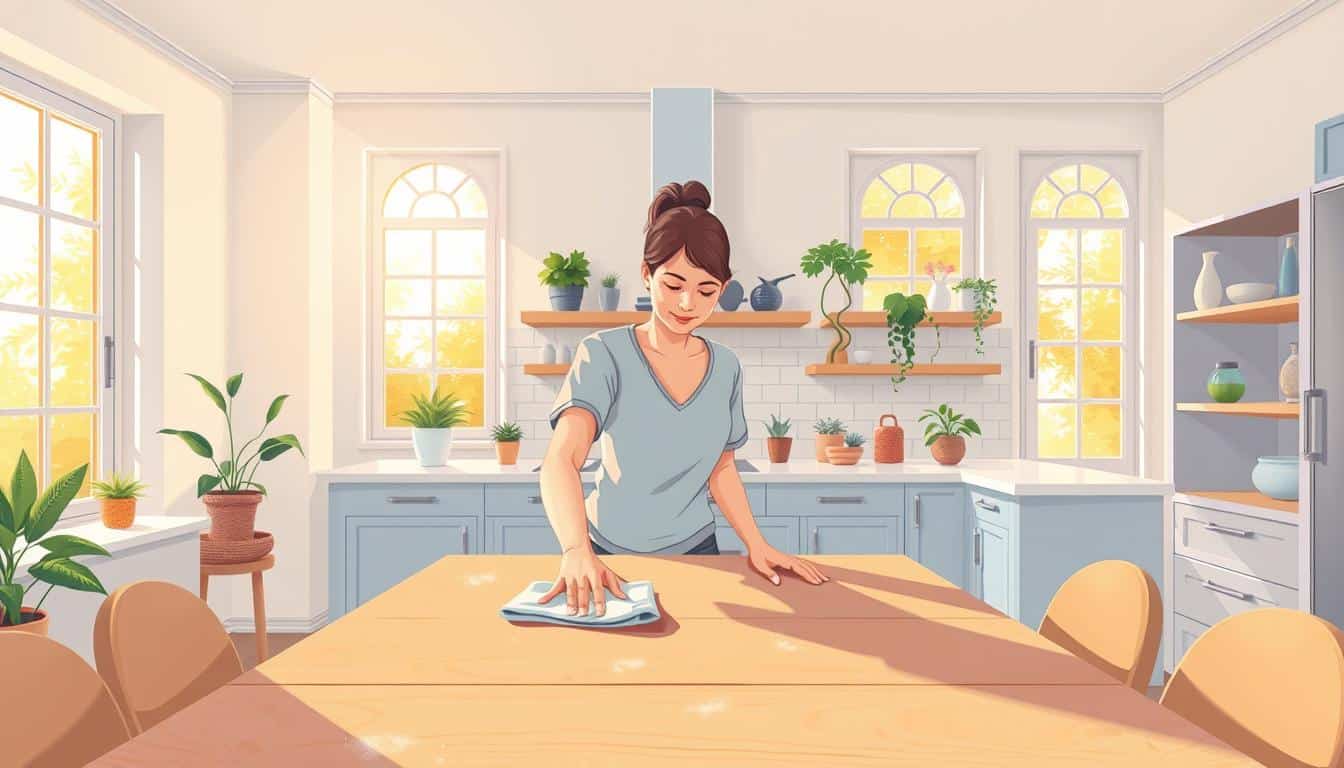
The Therapeutic Power of Cleaning: Mental Benefits
Cleaning isn’t glamorous, but it works. This piece explores the therapeutic power of cleaning. It shows how it can lift mood, cut stress, and sharpen thinking. We’ll look at why cleaning can feel mentally restorative and how simple actions at home can lead to real mental health benefits.
This post includes affiliate links. If you make a purchase through them, I may earn a small commission at no extra cost to you. More details here.
Research shows messy, cluttered environments lead to higher stress and worse concentration. Studies from Indiana University, led by NiCole Keith, PhD, find that clean homes predict better physical health. They even say clean homes matter more than walking in your neighborhood. These findings show the link between cleanliness and mental health. They explain why a clear surface often clears the mind.
Cleaning creates small wins. These wins trigger dopamine and a lift in motivation. This is why cleaning and mental clarity feel connected. The act reduces noise and gives you a sense of control and mastery.
What follows will dig into the science behind why cleaning feels restorative. We’ll explore the mental health benefits like better sleep and focus. We’ll also look at the behavioral mechanisms that make it work. And we’ll talk about when cleaning helps and when it can become harmful. We’ll end with simple, realistic strategies to start and keep a routine you can actually enjoy.
Key Takeaways
- Cleaning offers practical, evidence-backed mental health benefits.
- Clutter links to stress and poorer concentration in several studies.
- Small cleaning tasks create wins that boost dopamine and motivation.
- Cleaning can improve sleep, mood, focus, and overall mental clarity.
- Later sections cover when cleaning helps, when it hurts, and how to build a lasting habit.
Why Cleaning Can Feel Mentally Restorative
Cleaning is more than just making things tidy. Small tasks like making your bed or cleaning a counter can make you feel good. These small victories can help your brain handle stress better.
Scientific links between clutter and stress
Studies show clutter can harm your body. One study found young women in messy homes had more stress, even if they felt okay. Clutter makes it hard to focus and do well on tasks.
Dirty homes can also hurt your mental health. Messy places can slowly drain your happiness. This shows how important clean spaces are for our minds.
Psychological mechanisms: control, mastery, and dopamine
When life gets tough, people often clean. A study found cleaning is a way to feel in control. It lets us shape our surroundings.
Clutter makes our brains feel like there’s unfinished work. Doing small tasks can make that feeling go away. It also makes us feel good by releasing dopamine.
Cleaning as mindfulness and active meditation
Certain cleaning tasks can be like meditation. A study showed that washing dishes mindfully can calm nerves and boost creativity. Tasks like folding or vacuuming help you focus on the moment.
Adding nice smells or music makes cleaning even better. It turns cleaning into a calming ritual. This is why cleaning can help people with anxiety feel better.
Practical Mental Health Benefits of Cleaning and Decluttering
Cleaning is like a small therapy. Simple actions change your space and mood. These changes explain why cleaning helps our mental health.

Reduced anxiety, improved mood, and better sleep
Clearing surfaces and making the bed reduces stress. The Anxiety and Depression Association of America says cleaning lowers stress and anxiety. It also helps with depression and fatigue.
Clean sheets and a tidy bedroom help you sleep better. Doing chores makes you feel good. This feeling adds up over time.
Enhanced focus, productivity, and mental clarity
Too much clutter distracts us. Cleaning helps our brains focus better. Start with your desk to get more done.
Organizing reduces stress. A tidy workspace helps you concentrate and be more productive.
Routines, resilience, and emotional regulation
Cleaning routines are like anchors in a busy day. They make you feel safe and competent. Mindful cleaning for 10-20 minutes is good for your brain.
Decluttering helps older adults feel in control. Small daily routines build resilience and help with emotions.
-
The Weekend Declutter: How to Transform Your Space in Just 48 Hours
Step-by-step weekend plan to refresh and reset your home.
-
Home Organization Hacks
Clever tips to keep every room tidy, functional, and stress-free.
-
Smart Living: Home Organization & Decluttering Guide
A friendly guide to decluttering and simplifying your space and routines.
When cleaning helps and when it can be problematic
Cleaning is good if it reduces stress and improves life. But, beware if it replaces social life or causes missed obligations. This might be a sign of obsessive-compulsive tendencies.
On the other hand, not cleaning at all can be a sign of depression. If cleaning interferes with work or relationships, seek help.
Practical strategies to get started and stay motivated
Start with small tasks. One envelope of mail or one cleared counter is a good start. Use 15–30 minute blocks with a timer.
- Try 10-minute tidy sessions to collect steady wins.
- Enlist help from family, friends, or a hired cleaner for big jobs.
- Use tools like robot vacuums to keep maintenance simple.
Make cleaning fun. Listen to music, use nice-smelling cleaners, or reward yourself. For depression, break tasks into small steps and celebrate small wins.
These tips turn cleaning into emotional benefits. Organizing and decluttering keep these benefits coming. They make a big difference in our mental health.
Conclusion
Cleaning is more than just tidying up. It helps our minds feel better too. When our space is clean, we feel less stressed and think clearer.
Even small tasks like wiping a counter can make us feel good. This is why cleaning can be so uplifting. It gives us quick wins and a sense of control.
See cleaning as a gentle habit, not a chore. It’s good for our mental health when we do it regularly and with care. Start with small goals and keep cleaning sessions short.
If cleaning feels too hard because of anxiety or depression, get help. Talk to a mental health professional.
Try a 10–20 minute cleaning session today. Pick one surface and set a timer. See how it changes your mood.
Small, regular cleaning is better than big, rare deep cleans. Make cleaning a part of your daily routine. Enjoy the calm and clear thinking that comes with it.
FAQ
How does cleaning actually improve my mood?
Cleaning gives you small wins that make your brain feel complete. These small victories make you feel good and motivated. A clean space also makes you less stressed and helps you think clearer.
Is there scientific evidence linking clutter to stress?
Yes, studies show clutter makes you stressed. One study found young mothers in cluttered homes were more stressed, even if they didn’t feel it. Other research shows dirty homes can hurt your mental health.
Why does visual clutter make it hard to concentrate?
Visual clutter takes up your attention and makes your brain tired. This makes it hard to focus on tasks. Cleaning your space helps you focus better and makes decisions easier.
How does cleaning give a sense of control or mastery?
Cleaning helps you feel in control when life is chaotic. A University of Connecticut study found cleaning helps people feel more in charge. It makes them feel more predictable and competent.
Can cleaning actually act like a form of mindfulness?
Yes, cleaning can be like meditation. Tasks like washing dishes or vacuuming keep your mind focused. A study found that cleaning dishes made people feel less nervous and more inspired.
Will cleaning help me sleep better?
Cleaner spaces help you sleep better. A tidy bedroom with fresh sheets and less clutter reduces stress. The Anxiety and Depression Association of America says cleaning can also reduce anxiety and help you sleep.
How long should a cleaning session be to get mental-health benefits?
Short, regular cleaning sessions are best. Research suggests 10–20 minutes of mindful cleaning is therapeutic. Try cleaning for 15–30 minutes or do a quick tidy to start a routine.
What if I have depression and can’t bring myself to clean?
Start with tiny steps, like cleaning one dish or drawer for five minutes. Celebrate your small wins and reward yourself. If you really can’t clean, talk to a doctor or mental health expert. It could be a sign of depression.
When does cleaning become a problem instead of a help?
Cleaning becomes a problem if it controls your life. If it stops you from seeing friends or doing work, it’s a sign of a bigger issue. Seek help if cleaning is causing you more stress than calm.
What practical tips help start and maintain a cleaning habit?
Start with one small task a day. Use timers and do tiny tasks. Get help for big jobs or hire cleaners if needed. Make cleaning fun by listening to music or using nice-smelling cleaners. Reward yourself after cleaning to keep the habit.
Can decluttering improve productivity at work?
Yes, decluttering your workspace helps you focus. It reduces distractions and makes you more efficient. Even a few minutes of tidying can improve your concentration.
Are there special benefits for older adults from decluttering?
Decluttering helps older adults feel in control. It supports their emotional well-being and resilience. Cleaning routines provide structure and make them feel competent.
How can I make cleaning more enjoyable so I’ll stick with it?
Make cleaning fun by listening to music or using nice cleaners. Reward yourself after cleaning with something you enjoy. Turning cleaning into a ritual makes it more enjoyable and helps you stick with it.
What’s the core takeaway about cleaning and mental health?
Cleaning is a simple way to reduce stress and improve your mood. It helps you focus, sleep better, and feel more relaxed. Clean for 10–20 minutes regularly to feel the benefits. But be careful not to overdo it and seek help if needed.