
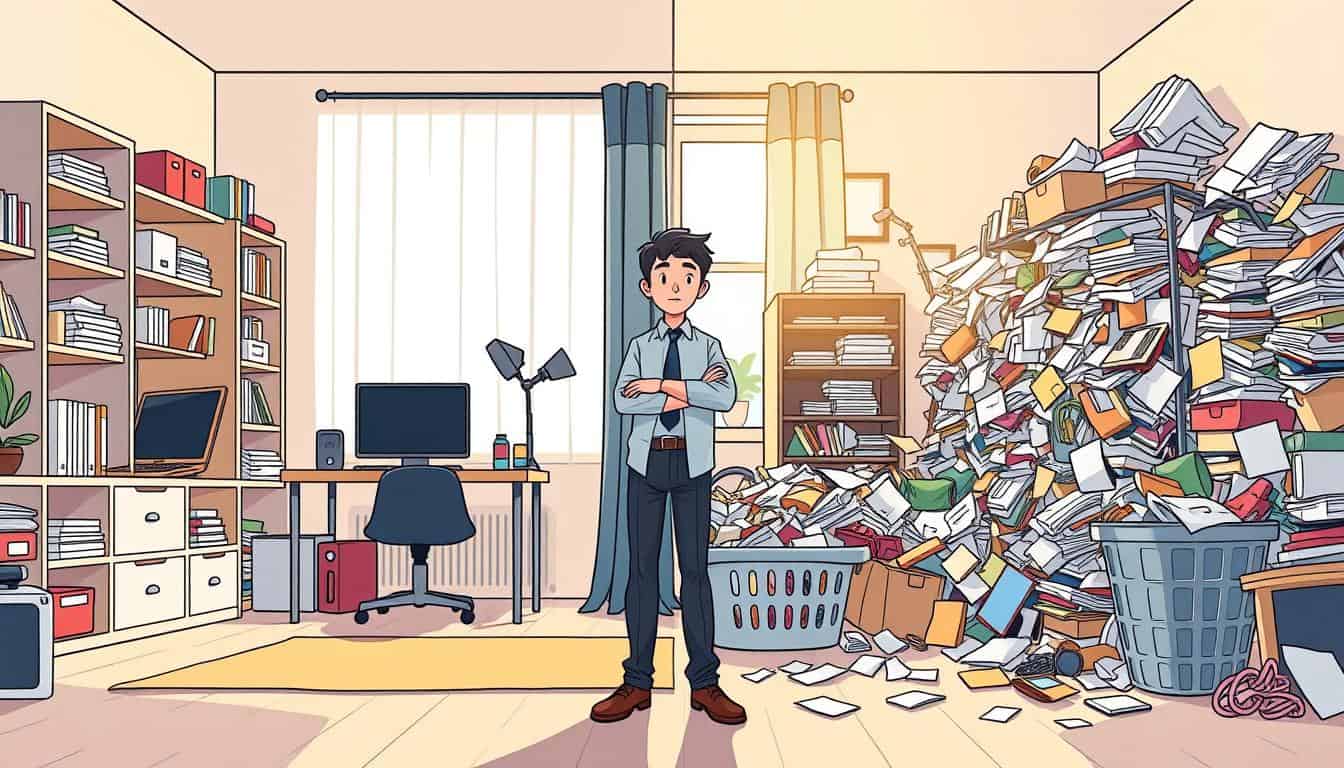
The Challenge of Decluttering vs. Mess Making
You clean the pantry. It looks amazing.
A week later? Chaos again.
That doesn’t mean you failed. It means you’re human.
This post includes affiliate links. If you make a purchase through them, I may earn a small commission at no extra cost to you. More details here.
Making a mess is easy. Letting go of things is hard — emotionally, mentally, and practically.
Here’s the truth most decluttering advice skips:
Clutter isn’t a storage problem. It’s a mindset problem.

Decluttering and tidying are not the same thing:
- Decluttering removes what no longer belongs in your life
- Tidying organises what you decide to keep
Both matter — but without the right mindset, nothing stays organised for long.
I’ve folded clothes for hours and felt zero relief. I’ve organised cupboards that didn’t stay organised. Decluttering isn’t about perfection or aesthetics. It’s about how you relate to your stuff.
This article explains why letting go feels so difficult — and how to make decluttering emotionally easier and more sustainable.
Key Takeaways
- Decluttering removes excess; tidying organises what remains
- Emotional attachment makes letting go difficult
- Organising without decluttering creates tidy clutter
- Mindset matters more than storage solutions
- Small, realistic habits prevent mess from returning
The Emotional Side of Clutter (What No One Talks About)

Clutter isn’t just stuff sitting around your home. It’s:
- Memories
- Guilt
- Habits
- Identity
Before you can clear physical space, you need to understand why holding on often feels safer than letting go.
Emotional Attachments and Sentimental Items
Some items feel impossible to release, including:
- Wedding dresses tied to family memories
- Maternity clothes that represent survival or loss
- Gifts that feel emotionally linked to the giver
- Old clothes connected to past versions of yourself
The popular “spark joy” rule doesn’t work for everyone. A gentler, more practical question is:
Does this serve my life right now?
You don’t have to erase memories to move forward. Taking photos of sentimental items allows you to keep the story without keeping the clutter.
Why Letting Go Feels So Mentally Hard

Letting go is often blocked by common psychological patterns, such as:
- Scarcity mindset: keeping things “just in case”
- Shopping as coping: buying for comfort, not need
- Decision paralysis: too many choices lead to inaction
- Perfectionism: waiting to start until it feels “right”
Add guilt over money spent and fear of regret, and clutter quickly becomes emotionally sticky.
How Clutter Affects Your Daily Life
Clutter quietly drains your energy and attention. It often leads to:
- Slower, more stressful mornings
- Frustration during simple daily tasks
- Overfilled wardrobes that block access
- Crowded surfaces that feel visually noisy
When people began spending more time at home, many realised how deeply clutter affected their mood. Clearing space often leads to better sleep, calmer routines, and a greater sense of control.
Why Making a Mess Feels Easier Than Decluttering
Making a mess requires no decisions. Decluttering does.
Letting go asks you to confront emotions, habits, and identity — which is why it feels heavier than simply putting things down wherever they land.
-
Home Organization Hacks
Clever tips to keep every room tidy, functional, and stress-free.
-
Smart Living: Home Organization & Decluttering Guide
A friendly guide to decluttering and simplifying your space and routines.
-
The Therapeutic Power of Cleaning
How cleaning can calm the mind and uplift your lifestyle.
Identity, Shopping, and “Just Bought” Items
What we own often reflects who we think we are. For example:
- Clothes can signal careers, hobbies, or aspirations
- Supplies or stock may feel like proof of success
- New purchases feel wasteful to let go of
Shopping can bring short-term comfort, but unused items quickly turn into guilt-filled clutter. Letting go can feel like admitting a mistake, even when releasing the item is the healthiest choice.
Decision Fatigue and Perfectionism
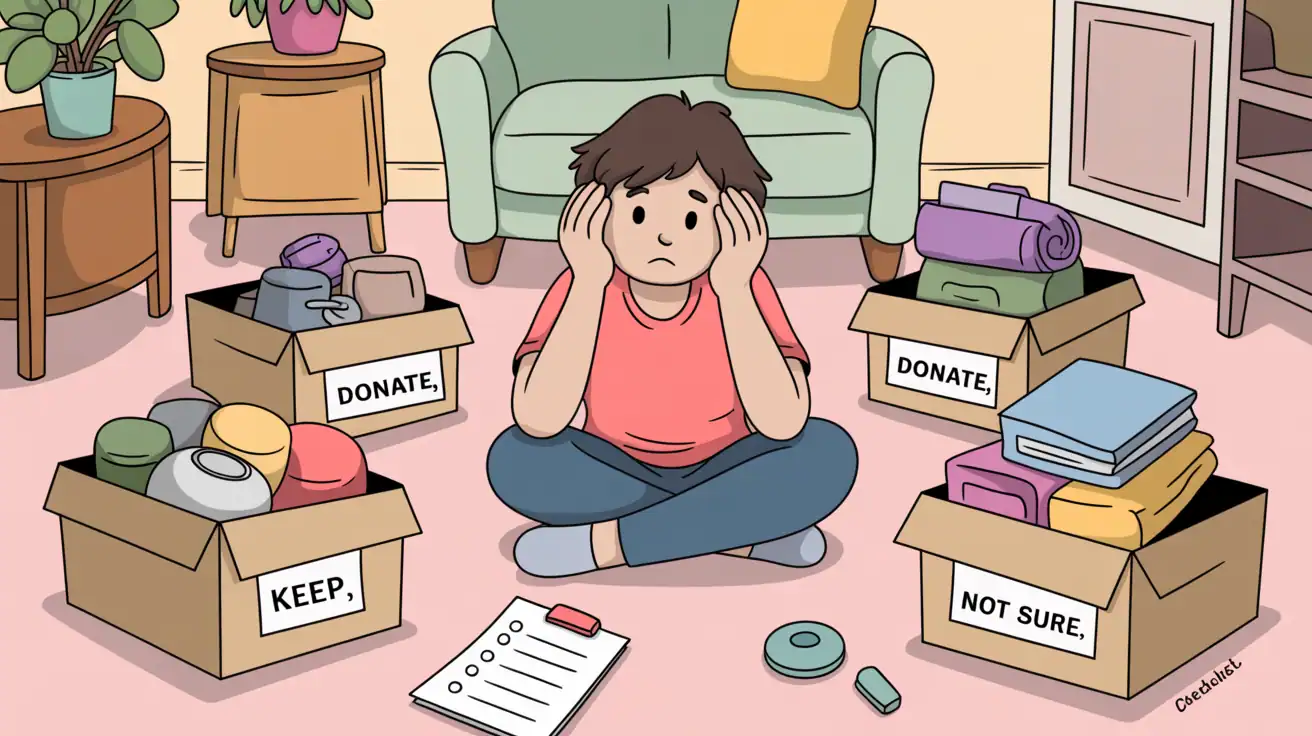
Your brain can only make so many decisions before it shuts down.
When every item requires a keep-or-toss choice, progress stalls. Perfectionism makes it worse by convincing you not to start unless you can do it perfectly.
Progress matters more than perfection.
Blame, Storage, and Systems That Don’t Work
Blame often hides the real problem.
When items don’t have clear homes, mess returns. Organising without decluttering creates fragile systems that collapse when life gets busy.
Simple storage and fewer belongings almost always work better than complicated setups.
Practical Decluttering Strategies That Actually Stick

Start by decluttering before organising. Removing excess first makes everything else easier.
Use simple decision rules, such as:
- One-year rule: not used in the past year? Let it go
- Fit or function rule: doesn’t fit or work? Release it
- Two-second rule: hesitation usually means it’s non-essential
Work in short sessions to avoid burnout:
- Aim for 30–60 minutes at a time
- Stop while you still have energy
- Count one drawer or shelf as real progress
Give every item a clear home. Items without designated places wander and create clutter. Visible, simple storage makes maintenance easier for everyone in the household.
Match maintenance to how often a space is used:
- Hall closets: yearly check-ins
- Fridges: monthly resets
- Daily-use areas: quick weekly tidy
Avoid buying organisers until decluttering is finished and measurements are taken.
If shopping or hoarding tendencies are present, extra support can help. Therapy and support groups are tools, not failures. Focus on progress, not perfection. Trial boxes and donation deadlines reduce hesitation and overthinking.
Final Thoughts

Letting go is hard because objects carry emotion.
Making a mess is easy because it avoids decisions.
To make decluttering stick:
- Start small
- Declutter before organising
- Use simple rules
- Work in short sessions
- Give items clear homes
Small actions, repeated consistently, lead to a calmer home — and a clearer mind.