

HIIT vs. Yoga: Which Is Better for Stress Relief and Fitness?
Ever wonder if your workout is actually making your stress worse instead of better? You’re not alone. Millions of Americans face this exact dilemma when choosing between HIIT and yoga for their mental health fitness comparison.
The fitness world loves to pit these two powerhouses against each other. On one side, you’ve got HIIT – those heart-pounding, sweat-dripping sessions that promise to torch calories in just 20 minutes. On the other, there’s yoga – the ancient practice that whispers promises of inner peace while you hold Warrior Two.

But here’s what nobody tells you: picking the best exercise for anxiety isn’t about choosing sides. It’s about understanding what your body and mind actually need. Some folks thrive on the adrenaline rush of burpees and mountain climbers. Others find their zen in downward dog and deep breathing.
Recent research on young women with binge eating patterns revealed something fascinating. The yoga group saw a 20% improvement in their eating behaviors, while the HIIT group built impressive physical fitness but showed no change in their emotional eating patterns. Makes you think, right?
Both workouts bring unique gifts to the table. HIIT builds cardiovascular strength and melts fat faster than ice cream on hot pavement. Yoga stretches your muscles and your patience, teaching you to breathe through discomfort – a skill that comes in handy during your next traffic jam.
Key Takeaways
- HIIT delivers quick 20-30 minute workouts that boost cardiovascular fitness and burn calories rapidly
- Yoga sessions run 30-90 minutes, focusing on flexibility, balance, and mental clarity through mindful movement
- Your personality type plays a huge role in which workout style reduces your stress levels
- Research shows yoga may be more effective for emotional and behavioral health improvements
- Both practices offer distinct physical benefits – HIIT for strength and endurance, yoga for flexibility and balance
- The best approach might not be either-or but finding ways to incorporate both into your routine
Understanding the Fundamentals of HIIT and Yoga
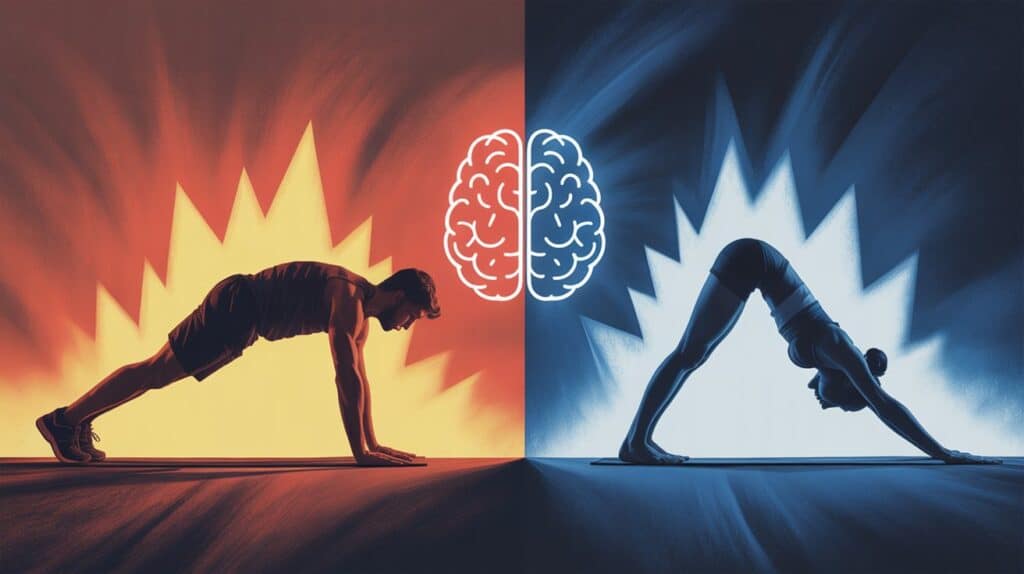
Choosing between HIIT and yoga means knowing what each offers. Both help you get healthier, but in different ways. Let’s see what makes them unique.
What Is High-Intensity Interval Training?
HIIT mixes short, hard exercises with rest. Imagine doing 30 seconds of burpees, then resting for 15 seconds. This cycle is repeated many times.
During these hard parts, you should try your best. The hiit workout benefits include burning lots of calories and improving your heart health. Plus, your metabolism stays high for hours after.
A typical HIIT session might include:
- Jump squats for explosive leg power
- Mountain climbers for core strength
- Push-up variations for upper body conditioning
- Sprint intervals for cardiovascular endurance
The Core Principles of Yoga Practice
Yoga is softer, mixing poses, breathing, and meditation. A session starts with meditation, then moves to poses, and ends with relaxation.
The yoga for stress reduction works by calming your body. Each pose links breath to movement, making a calm meditation.
Key Differences in Exercise Approach and Philosophy
HIIT and yoga are very different. HIIT is all about pushing hard and fast. Yoga focuses on calm and balance.
HIIT is about beating your own record. Yoga is about listening to your body. Both can change your fitness in their own ways.
“The body benefits from movement, and the mind benefits from being calm.” – Sakyong Mipham
HIIT needs your full effort and is competitive. Yoga is about listening to your body and working at your own pace. Both can help you get fit, but in different ways. For those with busy lives, effective home workouts like these can be quick and effective.
Physical Fitness Benefits: Comparing HIIT and Yoga Results
Choosing between HIIT and yoga depends on what your body needs. Both offer great benefits, but in different ways. Some people choose to combine hiit and yoga for even better results.
Cardiovascular Health and Endurance Improvements
HIIT is great for your heart. Studies show it can increase your VO2max by almost 13%. This means your body burns calories long after you stop exercising.
Yoga also boosts your heart health. It can improve VO2max by 11.5% through flowing movements and deep breathing. These cortisol reduction exercises help your heart and calm your mind.

Muscle Strength and Body Composition Changes
HIIT users often see:
- 1.78% reduction in body weight
- 3.94% decrease in fat mass
- 1.80% drop in BMI
Yoga strengthens your body in a different way. It uses balance poses to build core strength. This approach helps you build lean muscle without getting too bulky.
Flexibility and Mobility Gains
Yoga is best for improving flexibility and mobility. It stretches your muscles and makes your joints more mobile. This reduces the risk of injury and helps you recover faster.
HIIT vs. Yoga: Which Is Better for Stress Relief and Fitness?
HIIT and yoga are great for stress and fitness. They help your mind and body in different ways. It’s not just about getting sweaty.
Scientific Evidence on Stress Reduction
A study on 47 young inactive females found interesting results. Yoga helped them reduce binge eating by 20.25% HIIT didn’t change their stress eating much. Yoga’s calm focus helps your emotions.

Impact on Cortisol Levels and Anxiety
HIIT makes you feel good with intense activity. It’s like a big rush. Yoga is calm, with gentle moves and deep breathing. HIIT is loud, yoga is quiet.
Long-term Mental Health Benefits
Both HIIT and yoga make you stronger, but in different ways. HIIT boosts your confidence with each workout. Yoga teaches you to love yourself and listen to your body.
The Science Behind Stress Relief in Different Exercise Modalities
Exercise helps manage stress in different ways. Knowing how helps you choose the best cortisol reduction exercises for you.
Yoga lowers stress by using your body’s calm system. It does this through breathing and meditation. Studies show yoga lowers stress by almost 12 percent.

High-intensity training (HIIT) works differently. It makes you feel good with endorphins. Then, rest helps you feel even better.
But, getting fitter doesn’t always mean less stress. Some people who got better at HIIT didn’t feel less stressed. They might even eat more, which can add stress.
Mindfulness in fitness is key for stress relief. Yoga works on both mind and body. It’s great for managing stress. HIIT gives quick happiness, but yoga builds lasting calm.
Choosing the Right Practice Based on Your Personality Type
Your personality affects many things, like food and vacations. It also picks the workout you’ll stick with. A study from University College London found that matching exercise to personality traits makes it more fun and keeps you going longer. Let’s see how different personalities do best with certain holistic wellness approaches.
Exercise Preferences for Introverts and Extroverts
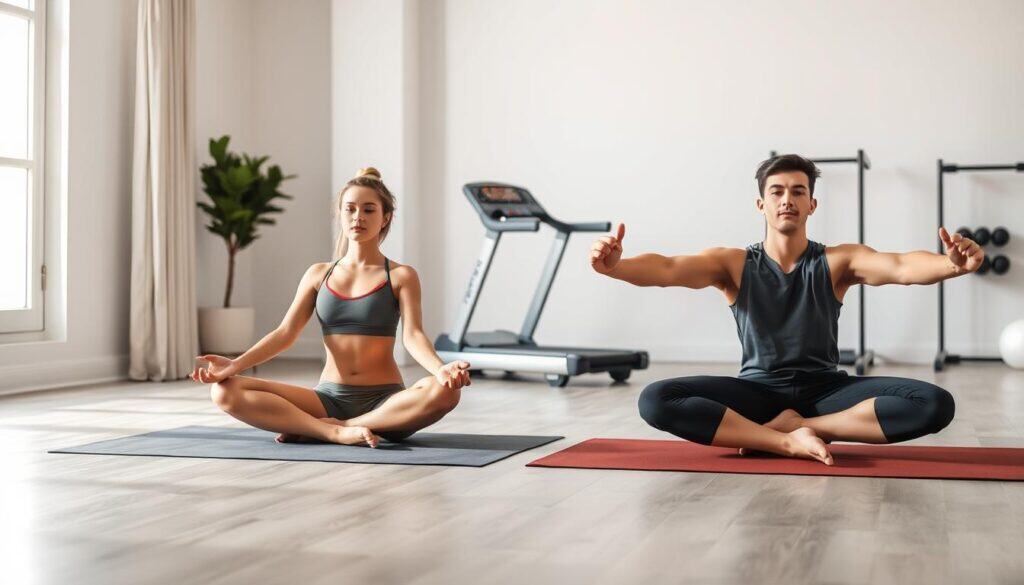
Extroverts love being around people. They enjoy HIIT classes, spin sessions, or team sports. The energy of the group makes them excited to work out.
Introverts prefer quieter activities. Running alone or doing yoga at home is perfect for them. It lets them focus without distractions.
Matching Workout Styles to Individual Temperaments
Other traits also play a role in what exercise works best:
- Conscientious types like to see progress – think marathon training or weight lifting
- Neurotic personalities do well with gentle activities like Pilates or personal training
- Open personalities enjoy trying new things like rock climbing or dance classes
Goal-Oriented vs. Mindfulness-Focused Approaches
Some people aim for specific goals, like lifting more or running faster. Others focus on being present and mindful during their workouts. Both ways are good for wellness. Knowing what you naturally prefer helps you choose the right path.
Combining HIIT and Yoga for Optimal Wellness
Why pick just one when you can have both? HIIT and yoga together are like your favorite songs. They give you energy and calmness.
When you mix holistic wellness approaches, you get the best of both worlds. HIIT helps with stress and yoga relaxes you. It’s like having a personal trainer and a meditation coach together.
- Monday, Wednesday, Friday: HIIT sessions for fat burning and metabolic boost
- Tuesday, Thursday: Yoga practice for flexibility and stress management
- Weekend: Mix it up based on how you feel
Don’t worry if you can’t stick to a plan. The key is to be flexible. Even 11 minutes of exercise a day can help a lot.
HIIT days make you strong and burn calories. Yoga days stretch you and calm your nerves. It’s all about finding a balance that works for you.
Practical Considerations for Your Fitness Journey
Before we start, let’s talk about what you’ll need. Both HIIT and yoga have their benefits. But, they also have different needs that can help or hurt your journey.
Time Commitment and Schedule Flexibility
HIIT is great for busy people. You only need 20-30 minutes, three times a week. That’s less time than your average Netflix episode.
Yoga takes more time. You’ll need 30-90 minutes, three to five times a week. Many find this time a great escape from daily stress.

Equipment and Space Requirements
Your wallet will be happy. HIIT needs very little:
- A pair of dumbbells or kettlebells
- Resistance bands
- Your own body weight
Yoga is even simpler. Just grab a mat and wear comfy clothes. You can do it in your living room, backyard, or park.
Accessibility for Different Fitness Levels
HIIT needs some fitness to start. It can be tough for beginners. Yoga is for everyone, no matter your fitness level.
Both can be adjusted to fit your level. But yoga is softer for beginners. Think about your fitness level and comfort when choosing.
Conclusion
Choosing between HIIT and yoga depends on what you need. Yoga is great for stress relief and treating binge eating disorder. HIIT is better for quick fitness gains and heart health.
What you like also matters. If you love intensity, HIIT is for you. Yoga is best for those who enjoy calm and focus. Mixing both can give you the best of both worlds.
Think about your goals and how you feel. Want to lose fat and get strong? Try HIIT three times a week. Feeling stressed? Yoga can help you relax.
Remember, your fitness path is yours alone. It’s not about being perfect. Start with what feels right, listen to your body, and change as needed. The most important thing is to keep going.