
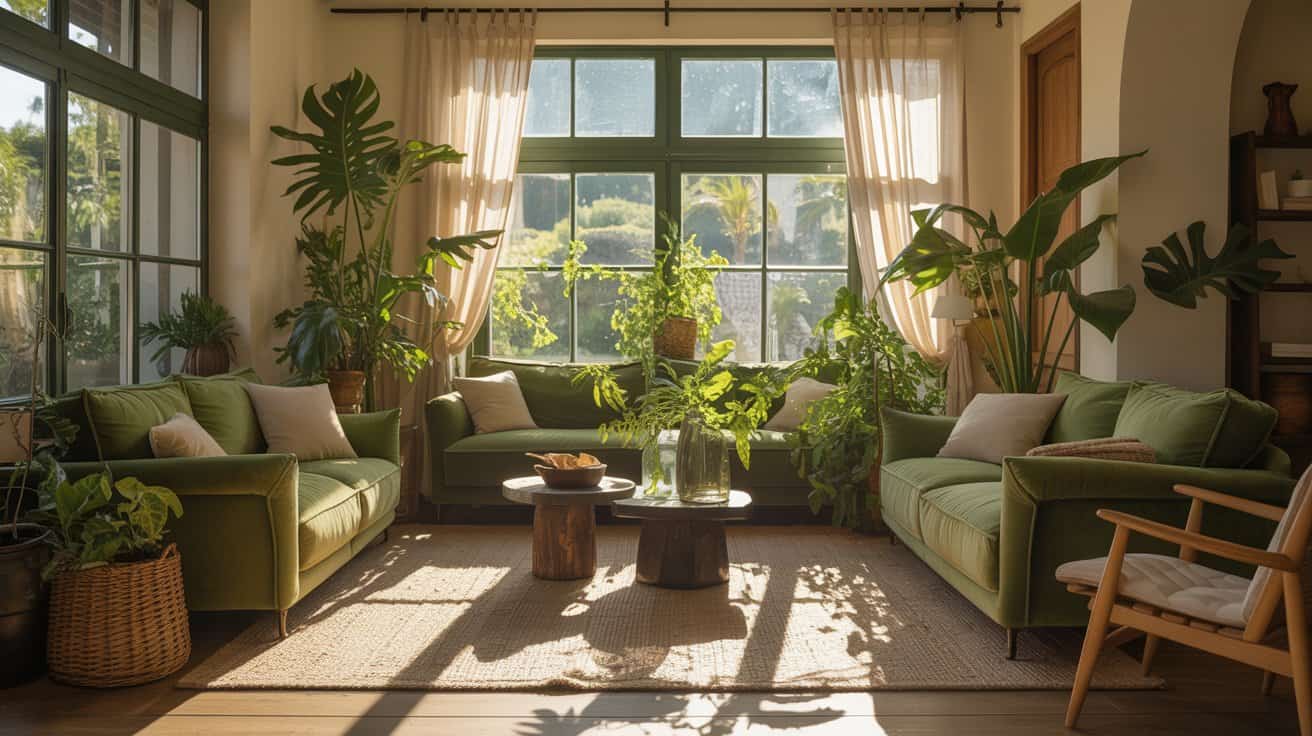
How to Style a Green Living Room Without Making It Too Dark
Ever walked into a green living room that felt like a cave? You’re not alone in wondering if green walls make it dark.
The truth is, green living room decor can be bright and full of energy. Green is like nature’s best actor. It can be soft or bright, making your room feel light and airy.
Designers like Les Ensembliers use light green ceilings to make rooms feel taller. Tamsin Johnson uses mirrors to make emerald walls shine. The key is to pair green with the right colors from stunning color combinations that make your room feel bright.
Ready to make your green dreams bright and real? Let’s explore designer secrets to make your space green and bright.
Key Takeaways
- Choose lighter green shades like sage or mint to maintain brightness while adding color depth
- Use strategic mirror placement to reflect natural light and amplify room brightness
- Pair green walls with cream, yellow, or neutral accents to prevent overwhelming darkness
- Incorporate multiple light sources including table lamps and overhead fixtures for balanced illumination
- Select furniture in lighter tones to contrast beautifully with green walls
- Add metallic accents like brass or gold to create warm light reflection throughout the space
Choosing the Right Shade of Green for Your Space
Finding the perfect green for your living room is like finding a date. You need a color that matches your room’s vibe, light, and size. The wrong green can make your room feel dark and small.
The color you choose sets the mood of your room. Light greens make rooms feel airy, while dark greens need good lighting. It’s important to know how different greens work with your room’s elements.
Light vs. Dark Greens
Light greens are safe choices for a bright room. Sage, mint, and eucalyptus look great with natural light. They make small rooms feel bigger and cozy.
These colors change with the day. Mint greens look sharp in the morning and soft at night. This keeps your room interesting without being too much.
Dark greens, like Benjamin Moore’s Caribbean Teal, need careful planning. They add drama but need lots of light and the right colors to avoid feeling dark. These greens work best in big rooms with lots of light.
Understanding Color Psychology
Green calms you down. It’s the color your eyes like the most. That’s why it’s great for relaxing rooms.
Different greens do different things. Cool greens like mint help you focus. Warmer greens make you feel welcome. Knowing this helps you choose the right green for your space.
When picking a green, think about how you use your space. A home office might need mint, while a relaxing area needs sage.
For more tips, check out this guide on choosing the right.
Combining Greens with Other Colors
Good green decor involves mixing colors like nature. Pair greens with colors found in nature:
- Creamy whites — like morning mist filtering through trees
- Warm yellows — mimicking sunshine through leaves
- Soft pinks — echoing spring blossoms
- Rich browns — grounding like tree bark and soil
Designers often mix different greens. Farrow & Ball’s Calke Green works well in schemes with lighter and darker greens. This adds depth without making the room dark.
The trick is balancing warm and cool colors. If your green is cool, add warm colors. If it’s warm, add cool colors to keep the space open.
Incorporating Natural Light
Your green living room’s secret weapon isn’t paint or furniture. It’s natural light in living rooms. This free resource makes any space bright and inviting. Treat every ray of sunshine like gold.
Smart designers know light is key. Without enough, even the most beautiful walls can feel dark. But with natural light, your green becomes alive.
Work with your space’s natural lighting. Make smart choices about window treatments and furniture. Each choice lets in or blocks light.
Maximizing Windows and Open Spaces
Your windows are light portals. Treat them well. Move furniture away from windows to let light in.
Floor-to-ceiling windows need attention. Keep them clear to let sunlight reach deep into your room.

Remove heavy elements that cast shadows. A simple furniture move can double your light. Aim for flow for people and sunshine.
Using Mirrors for Reflection
Mirrors aren’t just useful. They’re light multipliers. Designer Tamsin Johnson uses large mirrors to bounce light around.
Place mirrors near windows for best effect. This makes your green walls glow instead of absorb.
High-gloss green walls and mirrors create stunning light reflection. This turns dark colors into something bright and fresh. Light needs somewhere to bounce.
Choosing Sheer Window Treatments
Heavy curtains steal light in green rooms. Use sheer panels that filter sunlight. They offer privacy and keep the room bright.
Sheer fabrics in white or cream are great with green walls. They soften sunlight without blocking it. This creates a soft, diffused glow.
For easy biophilic design tips, mix natural light with green elements. Use different textures of sheer treatments for interest while keeping light in.
Remember, light colors for living room decor need actual light to shine. Choose window treatments that enhance natural light. Your green living room will feel bright and welcoming all day.
Selecting the Right Furniture
Choosing the right furniture is key to avoiding dark colors in interior design and creating a bright green living room decor. Your sofa, chairs, and tables can make your room brighter or darker. Knowing the basics helps you pick furniture that keeps your room light and airy.
Your furniture should support your green living room’s look. They should help make your room look great, not take over.

Light-Colored or Neutral Upholstery
Light-colored upholstery is great for avoiding dark colors in interior design. Cream sectionals, white slipcovered seating, and soft gray sofas make your room feel open. This prevents your space from feeling too green.
Warm beige is also good. It adds coziness without making your room feel heavy. Choose colors that reflect light, not absorb it.
Here’s a tip: if your walls are green, choose lighter furniture. If your walls are neutral, you can use bolder green furniture pieces as accents.
Mixing Textures for Balance
Mixing textures adds interest without weight. A linen sofa and a velvet throw pillow create depth and keep your eye moving. This makes your room feel lively.
Try combining smooth and textured surfaces. A sleek leather ottoman with a chunky knit throw works well. A jute rug with silk curtains also looks great.
Each texture reflects and absorbs light differently. This creates natural variation that keeps your room interesting, even with a limited color palette.
Incorporating Vintage or Reclaimed Pieces
Vintage or reclaimed pieces are a great choice. A weathered wood coffee table adds character without making your room feel heavy. Vintage chairs reupholstered in bold green fabrics create contrast without overwhelming your space.
Reclaimed wood adds warmth and texture. It makes your room feel instantly cozy. These pieces already have a lived-in quality.
Vintage pieces add personality while keeping your room light and bright. A pale mint vintage dresser or a cream-painted antique side table brings charm to your green living room decor without losing your design vision.
Adding Accents with Accessories
Accessories make your green living room pop. They add a special touch without big changes. Think of them as your room’s jewelry, adding sparkle and personality.
Accessories are super flexible. You can change them with the seasons or mix colors. This makes your room feel bigger and brighter, perfect for green.
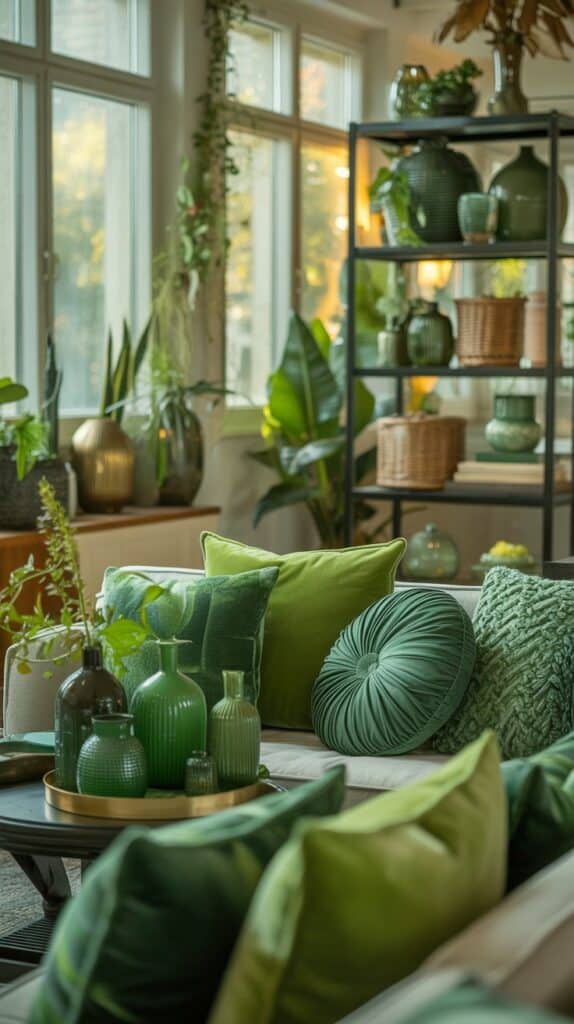
Choosing Bright Decorative Pillows
Decorative pillows add layers of green easily. Mix textures and patterns for depth and interest.
Here’s how to pick the right pillows:
- Vary the textures: Pair a velvet emerald pillow with a linen sage one
- Play with patterns: Geometric designs work beautifully with botanical prints
- Size matters: Use different pillow sizes to create a collected, not matched look
- Add neutrals: Cream or white pillows help break up the green and add brightness
It’s all about mixing with care. You want it to look like you picked each pillow with thought.
Utilizing Artwork to Enhance Lightness
Your walls need artwork that makes your room feel light. The right pieces can make your room feel bigger and airier.
Good artwork choices include:
- Botanical prints: Nature-inspired art that complements your green theme
- Abstract pieces with white space: These create breathing room for your eyes
- Gallery walls: Mix plant photography with light, airy landscapes
- Mirrors as art: Reflective surfaces that bounce light around the room
Choose frames in light woods or white. Avoid dark frames that can make green feel heavy.
Selecting Area Rugs with Light Patterns
Area rugs can totally change your green living room. The right rug can tie everything together and add lightness.
Look for rugs with light backgrounds and green accents. Cream rugs with green patterns or white rugs with botanical motifs are great. They ground your space without making it dark.
Pro tip: If you’re nervous about pattern, start with a solid light-colored rug. Add green through other accessories. You can always add a smaller patterned rug on top later.
Remember, accessories should feel intentional and cohesive. Each piece should add to the room’s brightness and flow. This makes your green living room vibrant and welcoming.
The Role of Lighting in Your Living Room
Lighting is key to making your green living room bright. It turns a dark space into a bright, beautiful area. Your green walls will look different at different times of day.
Lighting makes your room feel more alive. It adds depth and makes shadows disappear. This stops green spaces from looking muddy.

Layering Different Lighting Sources
Layering lights is important for green room lighting. You need different kinds of light to make your room warm and inviting. Start with lights in the ceiling or a big chandelier.
Then, add table and floor lamps for focused light. These are great for reading or talking. Accent lights behind plants or art add interest.
Use amber glass sconces on your green walls. They give off a warm glow that makes green look rich. Brass and glass tables with lights add style and function.
Choosing Warm Light Bulbs
Warm light bulbs are a must for green spaces. Cool white bulbs make green look sickly. Choose bulbs in the 2700K to 3000K range for a cozy glow.
These bulbs make green paint look alive and welcoming. They bring out the yellow and blue in green. LED bulbs in this range are good for energy and last long.
Dimmer switches are great. They let you change the light’s intensity to match the day. This keeps the warm color all day.
Statement Light Fixtures as Art Pieces
Why not use lights as art? Brass chandeliers are dramatic and warm. Sculptural lamps add personality to tables and consoles.
String lights add magic to green spaces. Hang them behind curtains or through bookshelves for sparkle.
Choose fixtures that match your room’s style. Mid-century modern brass pendants look great with sage green. Rustic wood and metal work well with forest greens.
Integrating Plants for Freshness
Adding the right plants can make your living room feel fresh and bright. Living plants add texture and movement. They help avoid dark colors in your design.
Plants act like lighting assistants in your room. They reflect and filter light better than walls. They make your space feel alive and welcoming.
Types of Plants That Brighten the Room
Not all plants are good for brightening your room. You need ones that lift the look, not weigh it down. Here are some great choices:
- Trailing pothos — Their heart-shaped leaves cascade beautifully and catch light
- Snake plants — Tall and architectural, they draw eyes upward
- Fiddle leaf figs — Large, glossy leaves that become living sculptures
- Peace lilies — White blooms add bright contrast to green walls
- Rubber trees — Shiny leaves that reflect light around the room
Choose plants with glossy or variegated leaves that bounce light. Avoid dark, dense foliage that makes your space feel heavy.
Using Plant Stands to Elevate Greens
Plant stands are great for adding visual layers without clutter. They lift your plants to eye level for maximum impact. Light-colored stands work best — think natural wood, white metal, or woven materials.
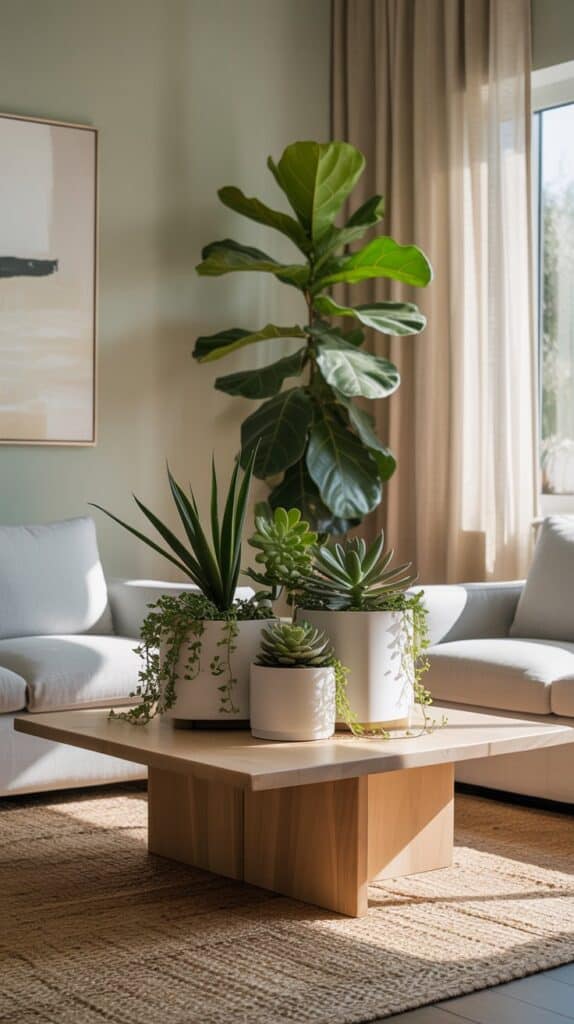
Mix different heights for a dynamic display. A tall fiddle leaf fig on the floor, medium plants on stands, and small ones on shelves. This keeps your room feeling open and airy.
Check out these stunning living room ideas for inspiration on using elevated plants.
Creating a Vertical Garden Wall
A vertical garden wall can be stunning. Choose one accent wall for a focal point. Mix trailing plants like pothos with upright ones for interest.
Use light-colored wall-mounted planters to highlight the plants. White ceramic or natural wood planters look great against green walls. Aim for a living art piece that adds freshness without darkness.
Keep your vertical garden sparse. Negative space is your friend — it prevents the wall from feeling too busy. Think of it as curated greenery, not a jungle.
Balancing the Green with Other Colors
Your green living room is a masterpiece with the right colors. Think of color coordination like a beautiful conversation. Each color should complement the others without being too loud.
Color placement is key. You want your green to be intentional, not too much. Designers use the 60-30-10 rule: 60% neutral colors, 30% green, and 10% accent colors.
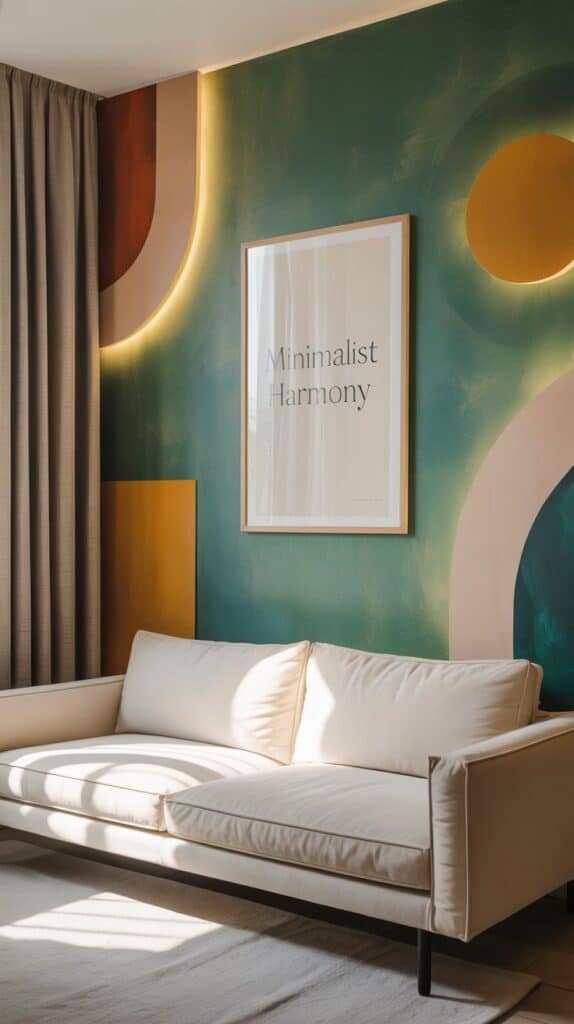
Complementary Color Schemes
Complementary colors are great for your green room. Dusty rose and sage green make a sophisticated pair. Pink softens green’s intensity and adds warmth.
Yellow brings energy to green spaces. Soft butter yellow curtains with a green wall are fresh and cheerful. Coral accents with olive green grasscloth wallpaper add a tropical vibe.
Pink and lime green together is striking. It might seem risky, but it looks sophisticated and unique.
Adding Neutrals to Break Up Green
Neutrals give your eyes a break. Cream, soft white, and warm beige are essential. They prevent your space from feeling too intense.
Soft gray complements green well. It has cool undertones that work together. Neutrals are like pauses in music, making it more beautiful.
Warm beige and mushroom tones add coziness. They ground your green without making the room heavy.
Using Bold Colors as Accents
Don’t be afraid of bold accent colors. They can make your green room stunning. Navy blue adds sophistication and prevents green from feeling too sweet.
Brass and gold accents add warmth and luxury. They catch light beautifully and add glamour. Black accents create dramatic contrast that makes both colors stand out.
Use bold colors sparingly. Think throw pillows, artwork, or a statement piece. This creates interest while keeping the look balanced.
Creative Wall Treatments
Smart wall choices help you avoid dark colors in design. They make your space feel bright and welcoming. Your walls can either let in light or take it away.
Think of your walls as a canvas for your green room. The right treatment adds depth and brightness. Choose paint, wallpaper, or wood that makes your room feel light.

Light Paint Finishes and Techniques
Paint finish is key for light interaction. Satin and semi-gloss finishes reflect more light than flat paint. High-gloss is bold and bounces light around.
For decorating with green, try eggshell finish. It’s durable and reflects light well. Glossier finishes on accent walls add interest.
Color-washing adds texture without darkness. Apply a lighter green glaze over your base color. This creates depth and catches light.
Wallpaper with Green Patterns
Wallpaper offers endless green options. Botanical prints on cream or white backgrounds bring nature indoors. Geometric patterns blend green with light colors for interest.
Grasscloth wallpaper in soft olive tones adds warmth and texture. It catches light beautifully. Butterfly or bird prints with green accents are playful yet sophisticated.
Remember, pattern size matters. Large patterns make rooms feel bigger. Tiny patterns might feel busy. Choose patterns that fit your furniture and room size.
Using Wood Paneling for Contrast
Wood paneling is modern and trendy. Board and batten treatments in soft sage or mint add interest. They make ceilings appear higher.
Use natural wood tones against painted green walls. Light oak or pine wainscoting with pale green upper walls feel fresh. This works well in dramatic dark green bedrooms for balance.
Shiplap painted in white or cream is perfect for green furniture. It adds texture and keeps walls light.
Tips on Decor Placement
Smart furniture arrangement is key for bright green decor ideas that work. Think of your living room as a stage. Every piece should play its part without blocking natural light.
Your green elements should work with your space, not against it. Think about how light moves through your room. Position furniture to support that natural rhythm.
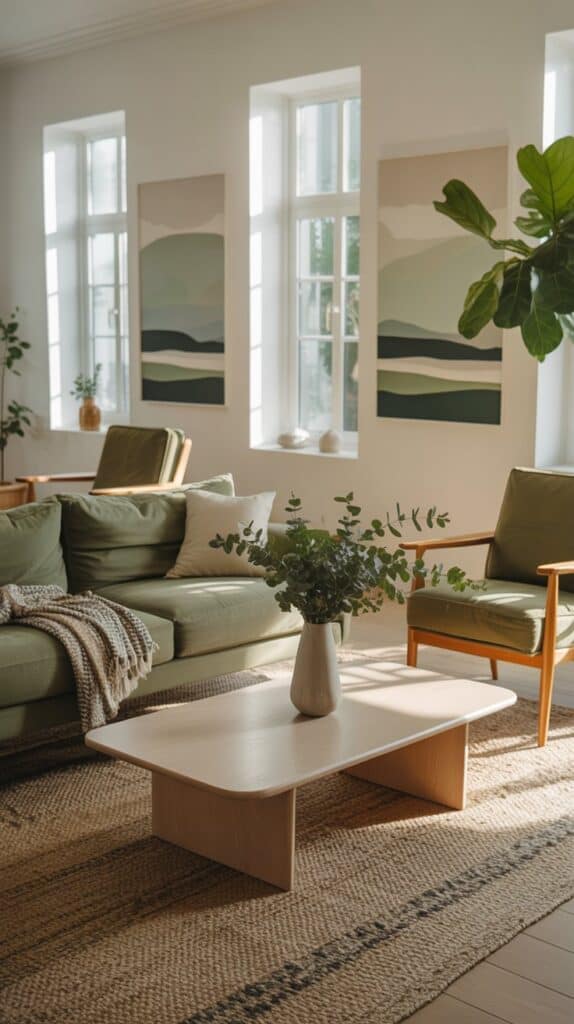
Arranging Furniture to Facilitate Flow
Start with your largest pieces and think like a traffic director. Your sofa shouldn’t block windows or create awkward pathways. Position seating to encourage conversation and keep clear routes.
Create a furniture layout that lets light bounce freely. Pull furniture away from walls by at least 12 inches when possible. This makes rooms feel larger and prevents a heavy look.
Consider the conversation zone principle. Arrange seating so people can talk comfortably without shouting. This creates intimacy while keeping the room open.
Focal Points that Capture Natural Light
Every room needs a star, and in a green living room, that star should work with natural light. Position your main focal point where morning or afternoon light can make it shine.
Built-in bookshelves painted in soft green tones become stunning when positioned to catch natural light. A statement green chair placed in a sunny corner transforms into art. The key is using light as your design partner.
Avoid placing dark green elements in shadowy corners where they’ll disappear. Instead, use these spots for lighter accessories that can brighten those areas.
Creating Vignettes that Feel Open
Vignettes are your secret weapon for adding personality without creating clutter. Follow the rule of three when grouping objects, mixing different heights and textures for visual interest.
Leave breathing room around your vignettes. A crowded side table or mantel can make the entire room feel cramped. Choose three meaningful objects instead of seven mediocre ones.
Layer textures and colors thoughtfully within each vignette. A smooth ceramic vase, a textured throw pillow, and a glossy picture frame create depth without overwhelming the eye. Remember, less is often more when creating spaces that feel open and inviting.
Choosing Functional and Stylish Storage Solutions
Good storage does two things in green living rooms. It keeps things tidy and makes the room feel light. It’s not just about hiding stuff. It’s about making your green living room decor look good too.
Storage can stop your room from feeling dark. Pick pieces that look good and serve a purpose. This way, storage becomes a part of your room’s design.

Open Shelving for Display
Open shelving lets your room breathe while showing off your favorites. Shelves in soft colors reflect light well. This makes your room feel open, not cramped.
Put books, plants, and decorations on your shelves. Balance them well. Empty space is important. Choose light colors for living room decor to keep things light.
Here are some tips for your shelves:
- Group items in odd numbers for a nice look
- Mix heights and textures for interest
- Leave some shelves empty
- Use white or light storage boxes for hidden items
Multi-Functional Furniture Choices
Multi-functional furniture saves space. Ottomans with storage cubes offer seating and hide blankets. Coffee tables with drawers keep things tidy. Console tables hide clutter behind closed doors.
Choose furniture in light colors that match your green living room decor. Avoid dark pieces that make your room feel small. Look for furniture with simple designs and light colors for living room decor to keep your room feeling open.
Good multi-functional furniture includes:
- Storage ottomans in cream or beige
- Nesting tables that fold away
- Bench seating with lift-up tops
- Console tables with both open and closed storage
Decorative Baskets and Boxes
Natural materials like wicker and light wood add texture and hide clutter. They warm up your room without making it feel heavy. They’re great for storing pillows and toys.
Go for baskets in natural tones or soft whites. Avoid dark colors that make your room feel empty. Size is important — big baskets for floor, small ones for shelves.
The best storage is both beautiful and useful. When everything has a place, your green living room feels calm and spacious. Your guests will be amazed at how organized it is. You’ll have the perfect storage solutions to thank.
Personalizing Your Green Living Room
Your green living room becomes special when it shows who you are. Decorating with green is fun, but it’s even better when it feels like home. Adding personal touches makes a room truly yours.
Infusing Personal Memories and Travel Finds
That vase from Morocco or your grandma’s prints add heart to your room. They start conversations and mix with green nicely. Show off your travels or favorite things in frames or displays.
Customizing with DIY Projects
DIY projects let you make your green space just right. Paint frames, make flower art, or reupholster a chair. These projects are cheap but add a lot of character.
Highlighting Your Unique Style and Taste
Let your style, whether simple or bold, show in every part of your room. Mix textures, show off your favorite books, and arrange furniture how you like. The best rooms reflect the people who live there.
Learning to make a green room bright and personal is all about balance and light. Your green sanctuary is ready to shine.