

The 10 Most Charming Cotswolds Towns to Explore
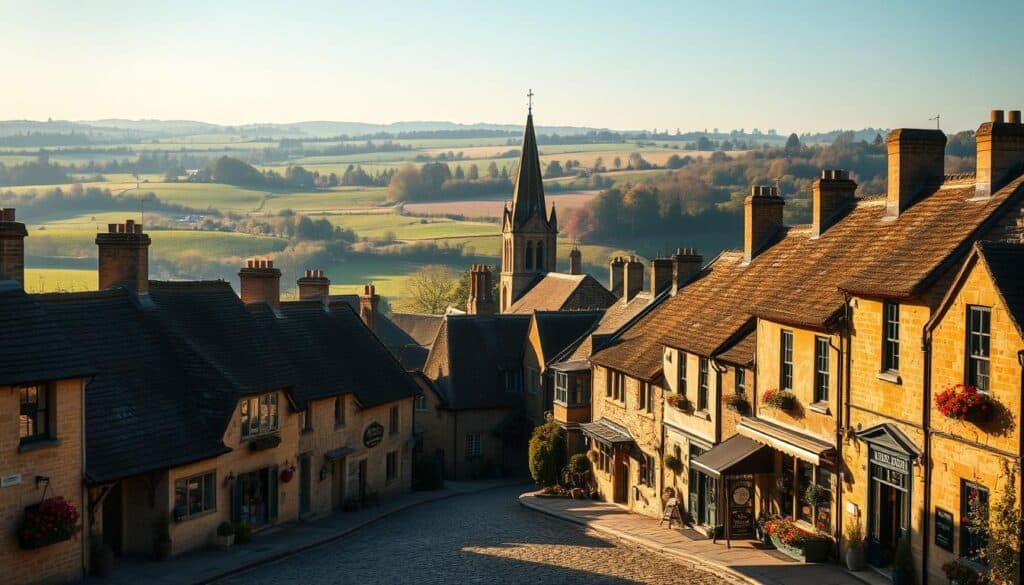
Imagine stepping into a postcard where golden cottages line streets. Time seems to stop for afternoon tea. The Cotswolds is like that, a perfect English countryside.
Imagine 800 square miles of hills with honey-colored villages. This is England’s largest Area of Outstanding Natural Beauty. Medieval wool merchants built fortunes here, leaving behind beautiful buildings.
“Cot” means sheep enclosure. “Wold” means hill. Together, they form the Cotswolds. Hills full of sheep made this area rich long ago. The yellow limestone buildings make every photo special.
This guide shows you the 10 must-see towns in the Cotswolds. Each town has its own charm. From busy squares to quiet paths, they all share the Cotswolds magic.
Key Takeaways
- The Cotswolds spans 800 square miles of protected countryside in England
- Yellow Oolithic Limestone creates the signature honey-colored buildings throughout the region
- You can explore 15+ charming towns and villages in just 4 days
- The area’s name comes from medieval sheep farming that brought prosperity
- Each town offers unique attractions while maintaining classic Cotswolds character
- The region ranks as England’s third largest protected landscape after the Lake District and Yorkshire Dales
Overview of the Cotswolds
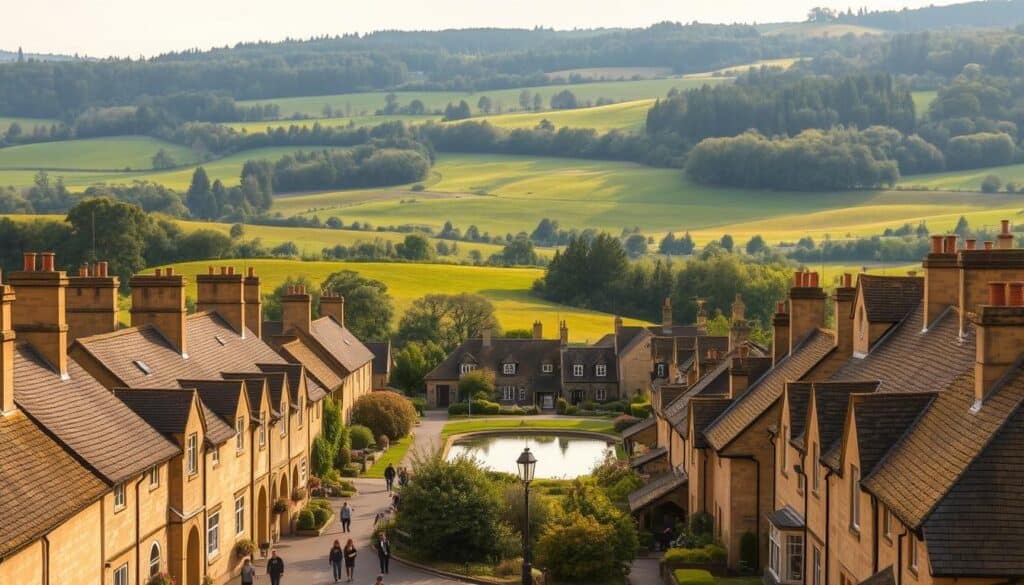
Imagine rolling hills with villages that look like they’re from a fairy tale. The Cotswolds covers six counties in south-central England. It’s a place where time moves slowly.
Millions visit each year to see its beauty. They want to explore the Cotswolds and its lovely views.
What Makes the Cotswolds Unique?
The Cotswolds are known for their golden limestone. This stone makes every building look warm and the same. You’ll see it on big houses and small walls.
The towns here have buildings that look like they’re from another time. They create a beautiful sight.
Key features that define the area include:
- Thatched cottages with blooming gardens
- Narrow cobblestone streets perfect for wandering
- Ancient market squares bustling with local life
- Half-timbered buildings dating back centuries
History and Culture of the Region
In the Middle Ages, the Cotswolds were famous for wool. Rich merchants built big churches and houses. These buildings are now part of Cotswolds tourism.
Key Features to Look For
Look for cottages with steep roofs and special windows. Old inns are great places to rest. Efforts to save these places mean future visitors can enjoy them too.
1. Bourton-on-the-Water
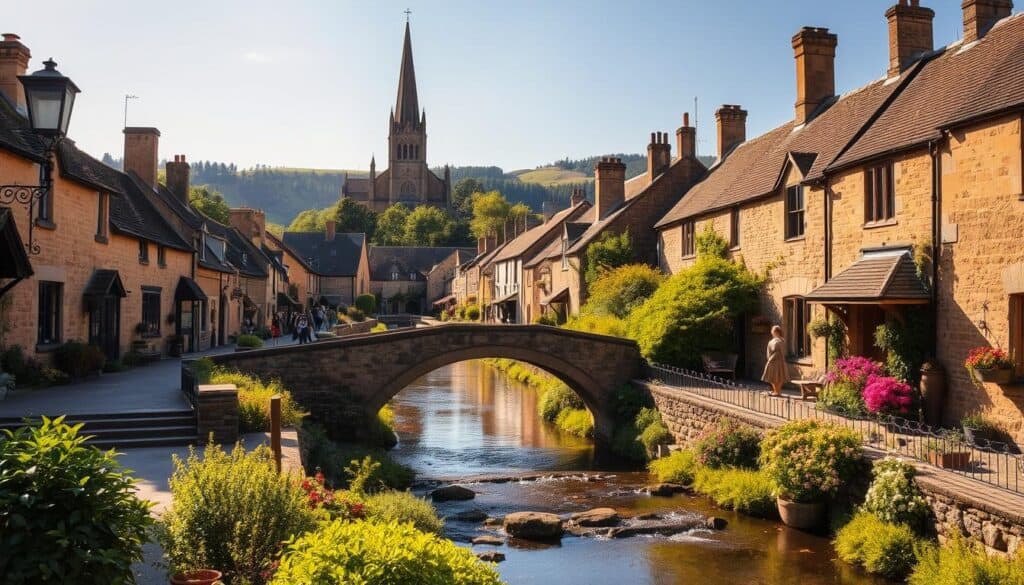
Welcome to the Venice of the Cotswolds. It’s a village with stone bridges over a clear River Windrush. It’s perfect for families and solo travelers.
Low bridges make the river look like a postcard. You’ll see beautiful views everywhere.
Discover the Village’s Attractions
The famous Model Village is a must-see. It’s a 1:9 scale model of the town. You’ll see tiny shops and trees.
There’s even a mini Model Village inside the big one. It’s really cool.
The Dragonfly Maze is great for puzzle fans. It’s a maze with scavenger hunts and riddles. Both kids and adults enjoy it.
Birdland Park has over 130 bird species. The Motor Museum has rare cars that car lovers love.
Explore the Beautiful River Windrush
The river is shallow, perfect for wading on warm days. Every August Bank Holiday Monday, there’s a fun football game in the river.
Pro tip: Go early in the week. Weekends get crowded. The river is peaceful before 10 AM.
2. Stow-on-the-Wold
Stow-on-the-Wold is at 800 feet high. It’s at the crossroads of old Roman roads. This makes it a great spot for planning your Cotswolds trip.
The town has beautiful views of the hills. It’s a perfect place to stay while exploring the UK countryside. It was once a key spot for trading wool.
Historic Market Square
The Market Square has a rich history. Stone buildings surround it, where wool fairs were held. St Edward’s Church is there, with its medieval tower and famous north door.
Those ancient yew trees by the entrance are loved by many photographers and artists. The church was even used as a prison during the English Civil War.
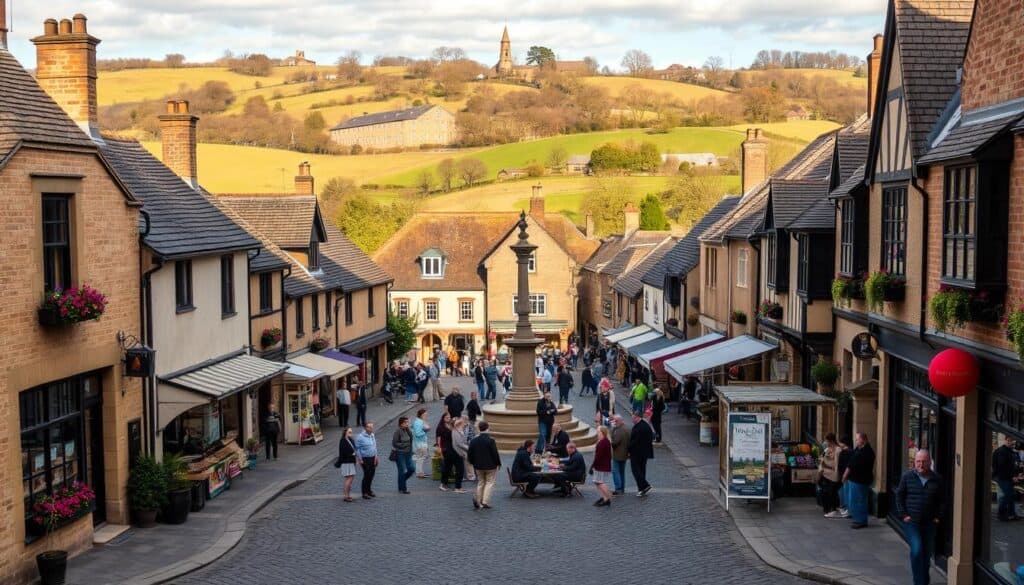
Visiting early in the morning is special. The light is golden, and the streets are quiet. It’s perfect for taking photos.
As the day goes on, the square comes alive. Locals and visitors fill the space.
Local Shops and Cafés
Antique lovers will find treasures in the town’s shops. Art galleries display local art. Gift shops have handmade items for souvenirs.
Tea rooms serve cream teas on old china. Cozy pubs offer local ales by the fire.
Make sure to visit Digbeth Street and Sheep Street. They have lots of independent shops. It’s worth it for your Cotswolds trip planning.
3. Bibury
Welcome to what William Morris once called “the most beautiful village in England.” Bibury is a top Cotswolds town. It feels like a fairy tale, with each cottage having its own story. This small village is full of charm by the river, making it a must-see in any Cotswolds travel guide.
Iconic Arlington Row
You might have seen Arlington Row before, even if you didn’t know its name. These honey-colored stone cottages from the 1600s are on many postcards and Instagram. They were once a wool store and later homes for weavers.
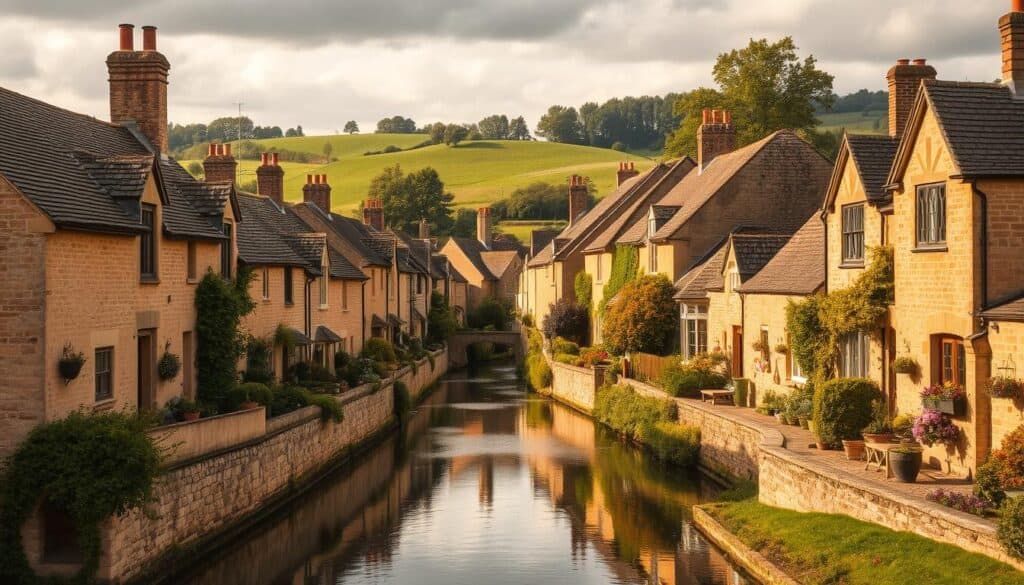
The cottages look over a calm water meadow where the River Coln flows. Henry Ford loved these houses so much, he wanted to move them to Michigan! Even Emperor Hirohito stayed here during his European tour, showing its fame worldwide.
Natural Beauty and Walking Trails
Beyond the famous cottages, Bibury has beautiful riverside walks. These are great for walking off lunch from The Swan Hotel. St. Mary’s Saxon church is in the village square, with replicas of ancient artifacts (the originals are in the British Museum).
Visit early morning or on a drizzly day to avoid the crowds. Arlington Row at sunrise is magical. Wear comfy shoes to explore all the scenic paths in this beautiful town.
4. Chipping Campden
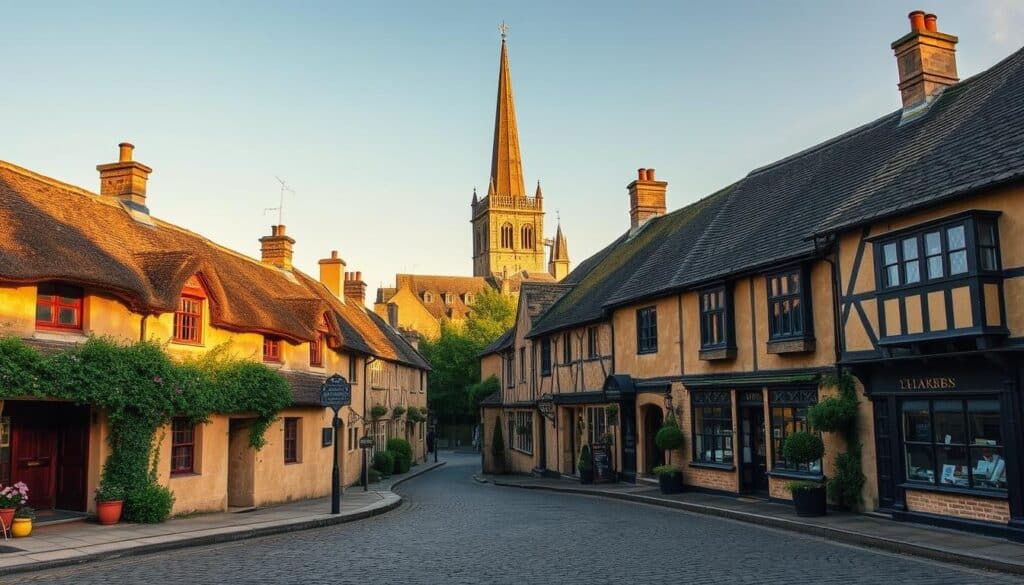
Explore one of the best-preserved medieval towns in the Cotswolds. Chipping Campden got its name from “chipping,” meaning market. It was a historic wool trading center with honey-colored limestone buildings.
The High Street and Its Architecture
The town’s High Street is a hidden gem in the Cotswolds. It has buildings from the 14th century, like Grevel House from the late 1300s. The 17th-century Market Hall is protected by the National Trust.
St James’ Church is 36 meters high. It has ancient tapestries and brasses.
You’ll see the Almshouses from 1612. They are Renaissance-influenced and provide community housing. These homes show the town’s dedication to keeping its history alive.
Arts and Crafts Movement Influence
Chipping Campden became a creative center for the Arts and Crafts Movement in the early 1900s. You can see this influence in:
- Handcrafted stonework details on shop fronts
- Traditional craft workshops that are open today
- Restored guild buildings with period design
- Annual exhibitions for local artisans
The town is the start of the 100-mile Cotswold Way to Bath. It’s great for walkers exploring the Cotswolds.
5. Moreton-in-Marsh
When you step into Moreton-in-Marsh, you’re right in the heart of Cotswolds tourism. This lively market town is on the old Roman Fosse Way. It’s a great place to start your journey through the 10 Must-See Towns in the Cotswolds.
It’s easy to get to by train from London and Oxford. Many people start their Cotswold trips here.
Route to the Cotswolds
Moreton-in-Marsh is like a compass for exploring the Cotswolds. It’s close to:
- Chipping Campden – just 8 miles north
- Stow-on-the-Wold – 4 miles west
- Bourton-on-the-Water – 9 miles south
The A429 road follows the Roman route. It connects you to beautiful villages. Buses also make it easy to explore without a car.
Vibrant Local Markets
Every Tuesday, the High Street turns into a traditional market. It’s been around for over 800 years. You can find fresh lamb, handmade soaps, local honey, and veggies.
The market shows the true spirit of the 10 Must-See Towns in the Cotswolds. It’s where locals and visitors shop together. It’s like a real-life Pinterest moment.
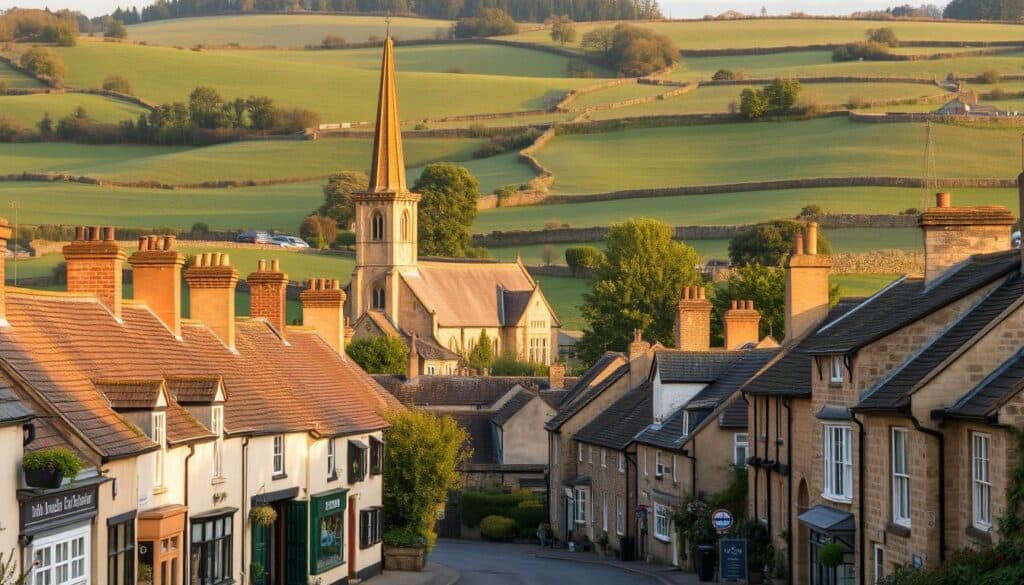
The buildings are made of honey-colored limestone. They show off classic Cotswold architecture. There are also independent shops, cozy pubs, and cafés. They make you want to stay longer before moving on.
6. Burford
When you visit Burford, you’ll see why it’s called the “Gateway to the Cotswolds.” It’s a medieval town by the River Windrush. The High Street goes down to the river, with golden limestone buildings.
These buildings have tea rooms and cozy restaurants. It’s a beautiful place in the UK countryside.
Visit the Historic Burford Priory
The Burford Priory is a piece of English history. It was built in the 13th century. You can see what life was like back then.
The priory is not open to everyone. But the grounds are great for photos. Nearby, Reavley Chemist is England’s oldest pharmacy, open for over 300 years.

Riverside Walks and Scenic Views
The River Windrush is perfect for walks. The path by the river is beautiful. It’s why people love visiting the Cotswolds.
Burford Hill is famous for its photos. The street has honey-colored cottages. They make great pictures.
In late April to May, the wisteria blooms are amazing. They cover the cottages in purple and white. Don’t miss the Madhatter Bookshop for unique books and hats.
The medieval bridge has great views of the river. It’s even more beautiful during golden hour when the buildings glow.
7. Northleach
Northleach is in the heart of the Cotswolds. It’s a quiet town that shows medieval wealth. It’s not always on tourist lists, but it’s a must-see for real experiences.
If you love beautiful buildings without crowds, add Northleach to your trip plan.
Remarkable Wool Church
The Church of St. Peter and St. Paul is a big deal in Northleach. Its tower goes up high, built in the 15th century. It was made from money made from wool.
The south porch is amazing. It has detailed stone carvings of families who helped build it.

Inside, you’ll see brass memorials of wool merchants. They show their wealth with woolsacks or sheep. It’s like a medieval LinkedIn.
The church’s style is top-notch Cotswold craftsmanship.
Exploring the Town’s History
The old market square is just like it was in medieval times. It’s surrounded by buildings that look like they’re made of honey. The Mechanical Music Museum is in a 17th-century house.
It has music boxes and pianos that play by themselves. It’s a fun piece of history.
There are walking paths from town to other villages. They go through fields with sheep. It’s ironic because these fields used to grow the wool that built the town.
8. Winchcombe
This Anglo-Saxon town is between Broadway and Cheltenham. It has historic buildings and natural beauty. Winchcombe is a hidden gem in the Cotswolds that feels untouched by time.
Key Attractions in the Town
Start at St Peter’s Church. It has medieval grotesques on its walls. The church is from the 15th century and has amazing stonework.
Next, visit the Winchcombe Museum. It has local history exhibits. They make the town’s past come alive.
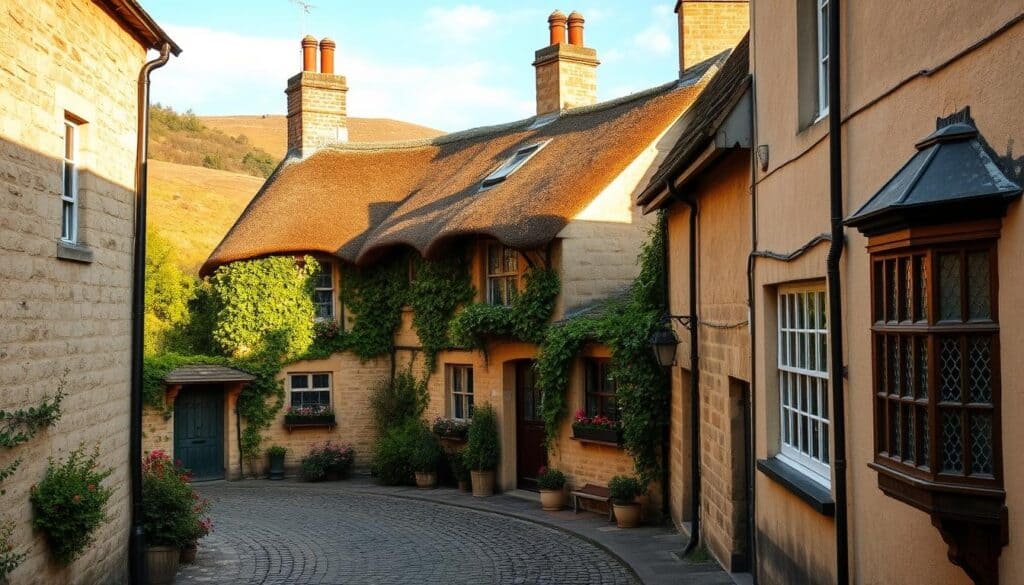
Don’t miss Sudeley Castle. It’s from the 15th century and has award-winning gardens. It’s also where Katherine Parr, Henry VIII’s last wife, is buried.
The castle grounds have:
- Ten magnificent gardens
- Tudor ruins to explore
- Fascinating exhibitions
- Peaceful walking paths
Nearby Walks and Attractions
Winchcombe is great for walking in the Cotswolds. Footpaths lead to Roman villa ruins and Belas Knap Long Barrow. This ancient burial site is 5,000 years old.
These walks show the area’s history. They also offer beautiful views of the countryside.
9. Painswick
Welcome to the “Queen of the Cotswolds” – a title this elegant town wears like a perfectly fitted crown. Painswick stands out among UK countryside destinations. It has pale grey limestone cottages and grand townhouses that whisper stories of 300 years in the wool trade. Every corner reveals why this gem deserves a prime spot in your Cotswolds travel guide.
The Painswick Rococo Garden
Just outside town, the Painswick Rococo Garden offers a delightful escape into 18th-century landscaping. Visit between April and October when the gardens burst with color. The ornamental vegetable garden shows off its geometric perfection. The whimsical follies and woodland walks create picture-perfect moments around every bend.

Charming Streets and Architecture
St. Mary’s Church takes center stage with its famous churchyard containing exactly 99 yew trees – legend says the 100th never survives. The wool merchants’ houses lining the streets showcase the town’s prosperous past. Their honey-colored facades and mullioned windows are stunning.
Key architectural highlights include:
- The Beacon – offers panoramic views across five counties
- Court House with its distinctive gables
- Friday Street’s row of weavers’ cottages
Painswick proves that the best UK countryside destinations combine natural beauty with preserved history. This architectural time capsule makes every stroll feel like stepping through centuries.
10. Tetbury
Tetbury is the last stop on our tour of the 10 Must-See Towns in the Cotswolds. It’s known for its royal history and antique shops. The town’s golden limestone buildings shine brightly, making it a unique place to shop.
Antique Shops and Historic Heritage
When you visit Tetbury, you’ll see why it’s a favorite for antique lovers. The town has 25 antique shops along its historic streets. You can find everything from old furniture to vintage jewelry.
The Market House is the town’s heart. It’s a bright yellow building with yellow pillars. Every Wednesday and Saturday, it hosts lively markets.
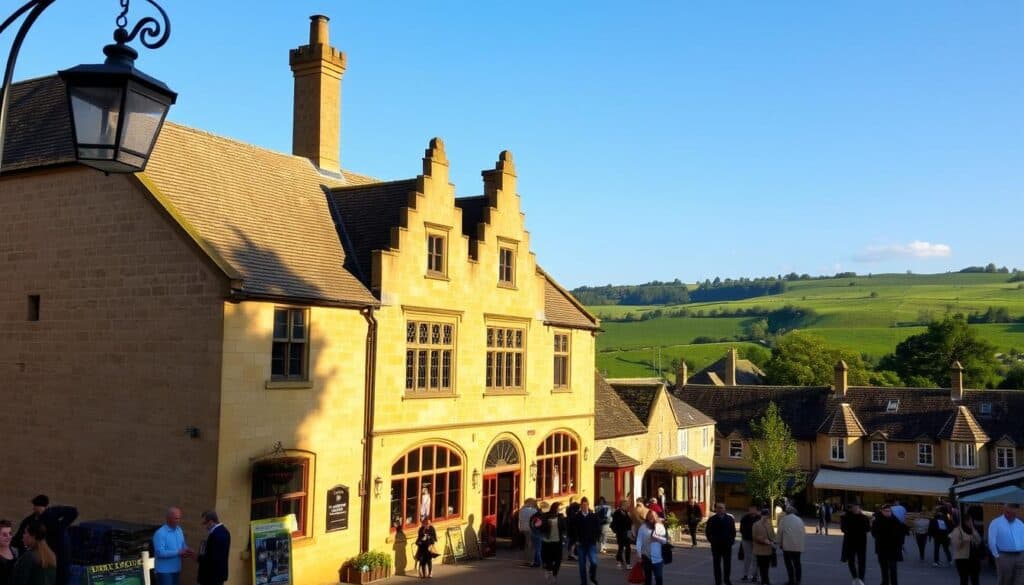
Take a walk down the Chipping Steps to see the town’s history. These steps are between old cottages that look like they’re from another time. Sometimes, these cottages are for sale, drawing people who love Cotswolds tourism history.
Notable Landmarks to Visit
Here are the top places to see in Tetbury:
- St Mary the Virgin Church — with one of Britain’s tallest spires
- The Highgrove Shop — selling items from Prince Charles’ estate
- The Police Museum — with fun exhibits like snoring figures (free entry!)
- Wool merchants’ houses — unchanged for 300 years
Tetbury is a perfect example of what makes Cotswolds tourism great. It combines royal history with everyday beauty in a charming market town.
Tips for Exploring the Cotswolds
Ready to make your Cotswolds vacation dreams come true? Planning well is key. It helps you avoid crowds and find quiet spots. Here are some tips to make your trip smooth.
Best Time to Visit
Spring is amazing in the Cotswolds. Imagine wisteria covering cottages and trees blooming. Visit in April or May for beauty without the crowds.
Summer is warm for walks between villages. But, it gets busy. Get to famous spots like Arlington Row early to avoid the chaos.
Transportation Options
Having a car lets you explore at your own speed. Park once and walk to nearby villages. The path from Upper to Lower Slaughter is breathtaking.
Coach tours are good if you don’t want to drive. But, they can fill small villages. Trains reach big towns like Moreton-in-Marsh, great for planning your trip.
Pro tip: Buy museum tickets online. Seeing “Sold Out” signs can ruin your trip.
Conclusion
The Cotswolds has something for everyone. You can find bustling markets in Stow-on-the-Wold or peaceful spots in Bibury. Each town has its own story, from old buildings to local traditions.
Your Cotswolds Adventure Awaits
Planning a trip to the Cotswolds is easy. You can visit 15 villages in four days. Don’t miss Chipping Campden and Bibury, but also explore hidden spots like Adlestrop and Wotton-under-Edge.
Additional Resources and Travel Tips
Want to learn more about Cotswolds history? Berkeley Castle has been home to the same family for nine centuries. The Chedworth Roman Villa has amazing 2nd-century mosaics. Highgrove Gardens offers tours of King Charles III’s gardens.
The Cotswolds suits every traveler. You can shop, enjoy pub lunches, or go on walks. The region’s beauty unfolds slowly, from morning mist to golden sunsets. Your Cotswolds story is waiting.