

10 Japandi Living Room Accessories to Complete the Look
You’ve probably walked into a space that instantly made you exhale, where everything just clicked. That’s the magic of Japandi decor, a gorgeous blend of Japanese zen and Scandinavian coziness.
This post contains affiliate links. If you purchase through these links, I may earn a small commission at no extra cost to you. Learn more here.
This design philosophy isn’t about stark minimalism or overwhelming hygge. It’s about finding that sweet spot where less truly becomes more.
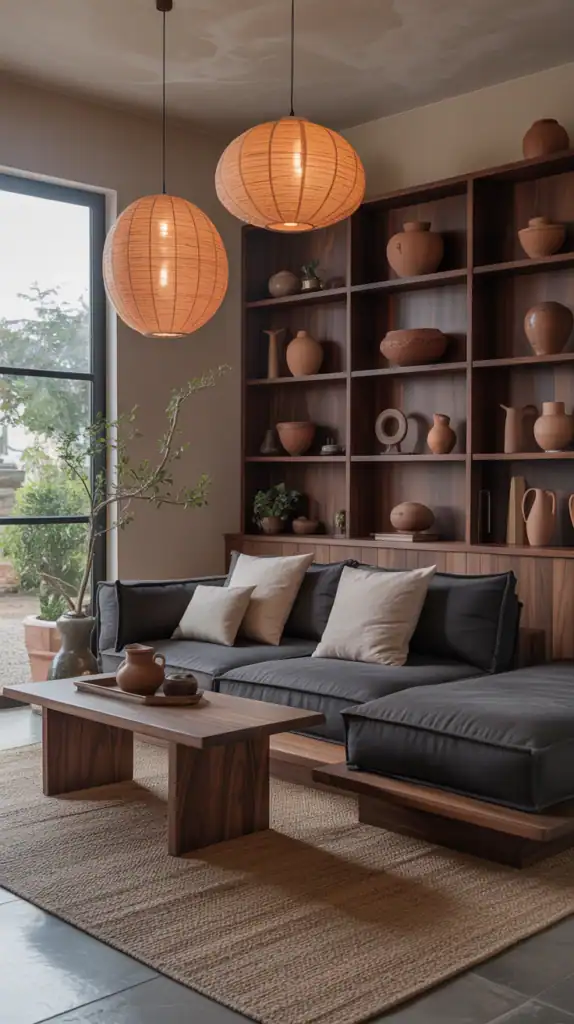
But here’s what most people miss: the accessories make or break this look. You can’t just throw a beige sofa in a room and call it done.
The right pieces from natural materials like wood and stone to carefully chosen ceramics, transform empty spaces into serene sanctuaries. These aren’t just pretty objects sitting around.
They’re the bridge between function and beauty, creating that perfect balance where every piece earns its place.
Key Takeaways
- Japandi style combines Japanese minimalism with Scandinavian warmth for balanced living spaces
- Accessories are essential for completing the Japandi aesthetic, not just furniture alone
- Natural materials like wood, stone, and ceramics create authentic Japandi appeal
- Every decorative piece should serve both functional and aesthetic purposes
- Neutral color palettes and clean lines define successful Japandi room design
- The right accessories bridge the gap between stark minimalism and cozy comfort
1. Understanding Japonism in Interior Design

Before you start shopping for Japandi living room accessories, you need to understand what it’s all about. It’s not just a fleeting trend. Japandi interior design is a way of life that changes how you see your space.
It combines Japanese minimalism with Scandinavian hygge. This creates spaces that feel full yet calm. It’s about making a home that fits your life, not just your social media.

What is Japandi Style?
Japandi style mixes Japanese simplicity with Scandinavian coziness. It’s about finding beauty in the simple and imperfect. And it’s about making your space warm and welcoming.
This mix makes your space feel calm yet inviting. It’s like minimalism with a heart. Your home won’t be empty or cluttered. Every item has a special role.
This style is about living on purpose. You pick items that add to your daily life. That ceramic bowl holds your keys, and that linen throw is perfect for movie nights.
Key Elements of Japandi Design
The heart of Japandi interior design is color. You’ll use a soft, neutral palette. This makes your space look great on Instagram.
Natural materials are key. Wood and stone add stories and authenticity. Textiles, like linen and wool, invite you to touch them.
Function is important. Form follows function, but they work well together. Your coffee table is more than a surface. It’s storage and a place to gather.
Balance is everything. You want interest, but not too much. Each item should be beautiful and useful.
2. Importance of Accessories in Japandi Living Rooms
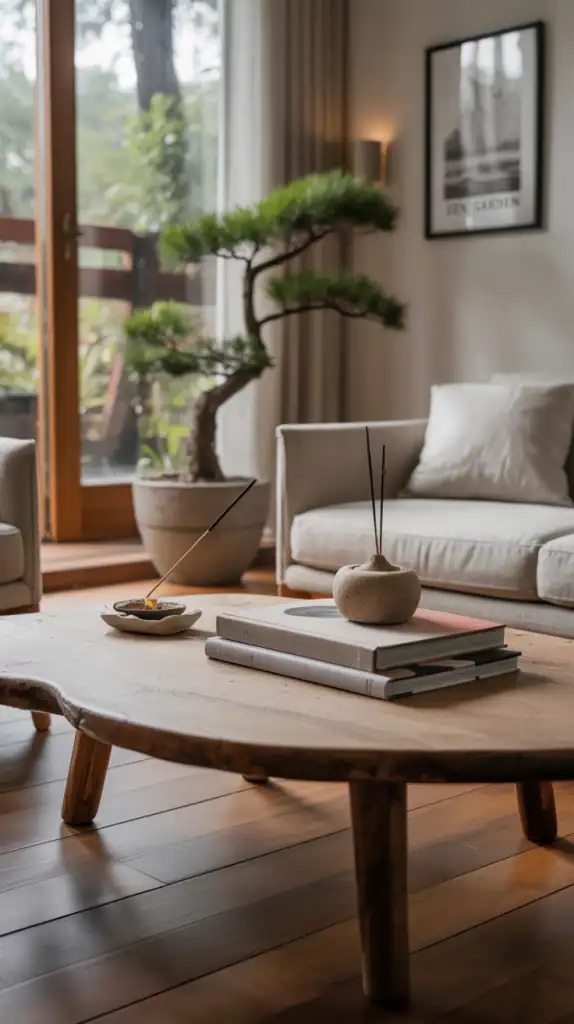
Many think minimalist design means empty spaces. But Japandi accessories show a different truth. These pieces turn simple rooms into cozy homes. They mix Japanese simplicity with Scandinavian warmth.
Accessories in minimalist Japandi design do more than look good. They serve many uses while keeping things tidy. This is what you want.s
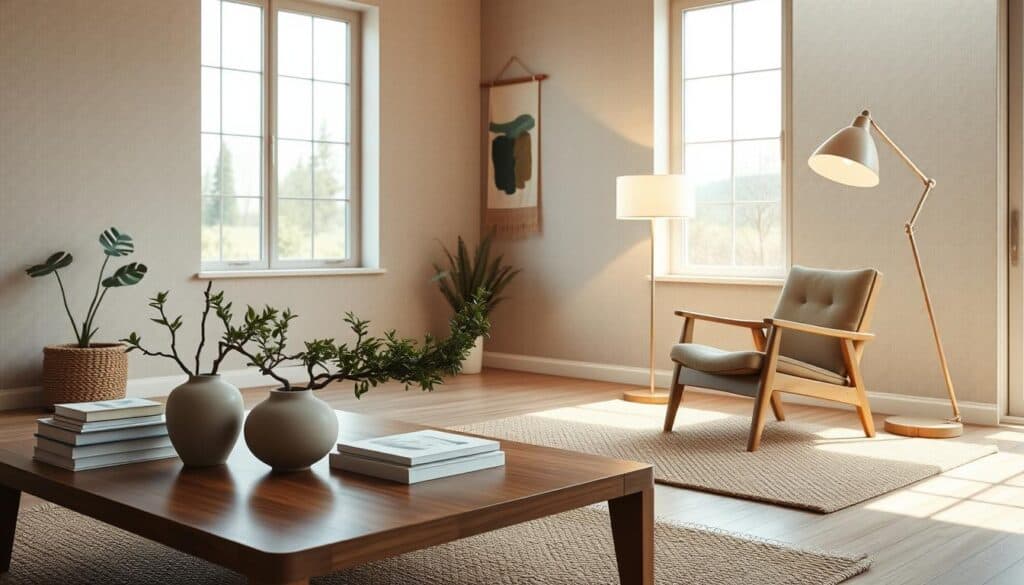
How Accessories Enhance the Aesthetic
Accessories give your Japandi furniture a soul. Without them, even the most beautiful pieces feel cold. Accessories make your furniture stand out.
Here’s how the right accessories change your space:
- Texture layering — Woven baskets and ceramic vases add interest without being too much
- Warmth injection — Natural materials like wood and stone make hard edges feel softer
- Color balance — Neutral-toned accessories keep things harmonious and interesting
- Scale variation — Different sizes create a nice rhythm in the room
Choose accessories that feel like they were meant to be there. Each piece should look like it fits perfectly. This creates a look that’s both effortless and stylish.
Balancing Functionality with Style
Good Japandi furniture choices mean picking accessories that do more. A handwoven basket keeps your remotes tidy. A ceramic planter adds organic shapes to your space.
It’s better to have a few amazing pieces than many okay ones. This follows the minimalist Japandi idea of less but better.
The aim is to add layers of interest with careful choices. Each accessory should help with both function and looks. When you get this right, your living room is both beautiful and cozy.
3. Natural Fiber Rugs for Comfort and Warmth
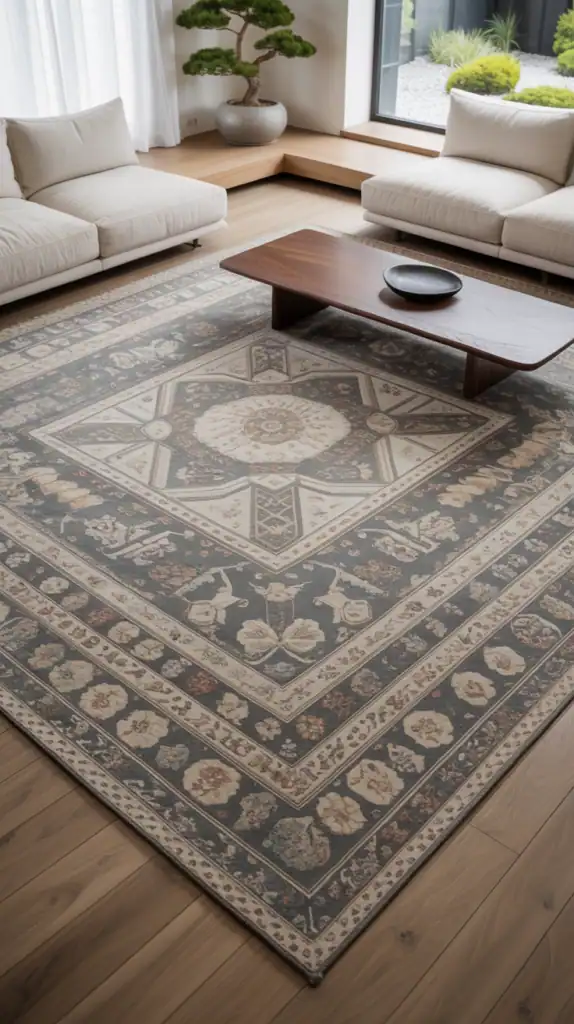
Natural fiber rugs add comfort and style to Japandi design. They are not loud statement pieces. Instead, they make cold floors warm and inviting.
Think of natural fiber rugs as the heart of your Scandinavian Japandi living room. They define your space without harsh lines. They add warmth to cold floors.

Benefits of Natural Fiber Rugs
Natural fiber rugs are great for your Japandi home decor. They make your space feel cozy and real. They add texture to keep your room from feeling cold.
These rugs are also practical. They make your floor softer, quieter, and warmer. Most importantly, they make your home feel cozy and welcoming.
They are also good for the planet. Natural fibers are sustainable and can be recycled. This fits well with Japandi’s values of living mindfully.
Popular Types for Japandi Style
Jute rugs are great for adding texture. Their natural look is perfect for Japandi. They add interest without being too much.
Wool rugs are super comfy and last a long time. They keep your space looking clean and simple. Wool is also good at hiding stains.
Cotton rugs are easy to clean and affordable. They are perfect for busy homes. Cotton works well in places with lots of people or pets.
Choose rugs in neutral colors to match your room. Warm grays, soft beiges, or off-white are good choices. Remember, aim for harmony, not contrast.
4. Minimalist Coffee Tables: The Centerpiece

Your coffee table is like the quiet leader in your living room. It keeps things in order without shouting. It’s all about balance and beauty, making Japandi inspired accessories so loved.
Choose a coffee table that feels like it’s always been there. Go for timeless over trendy. Pick pieces with simple designs and natural materials that get better with age.

Materials that Complement Japandi Design
Wood is key for your coffee table in Japandi style. Walnut adds warmth with its beautiful grain. Oak brings a Scandinavian feel. Reclaimed wood tells a story with its unique marks.
These marks are not mistakes but special features. They make each piece special.
But wood isn’t the only choice. Stone coffee tables bring a natural elegance. Concrete, when done right, feels organic and cozy. The goal is to pick materials that feel unprocessed and natural.
Designing Your Space Around the Coffee Table
The look of your coffee table is important. Keep it low for a clean look. But it should also be big enough to hold your space together.
Round tables make your sofa look softer. They help conversations flow. Rectangular tables fit Japandi’s love for clean lines and offer more space.
Think about size carefully. Your table should match your seating but not take over. Make sure there’s room to move around it.
This table is for the long haul. Pick something made to last. Your future self will appreciate Japandi inspired accessories that last.
5. Statement Lighting Fixtures to Set the Mood
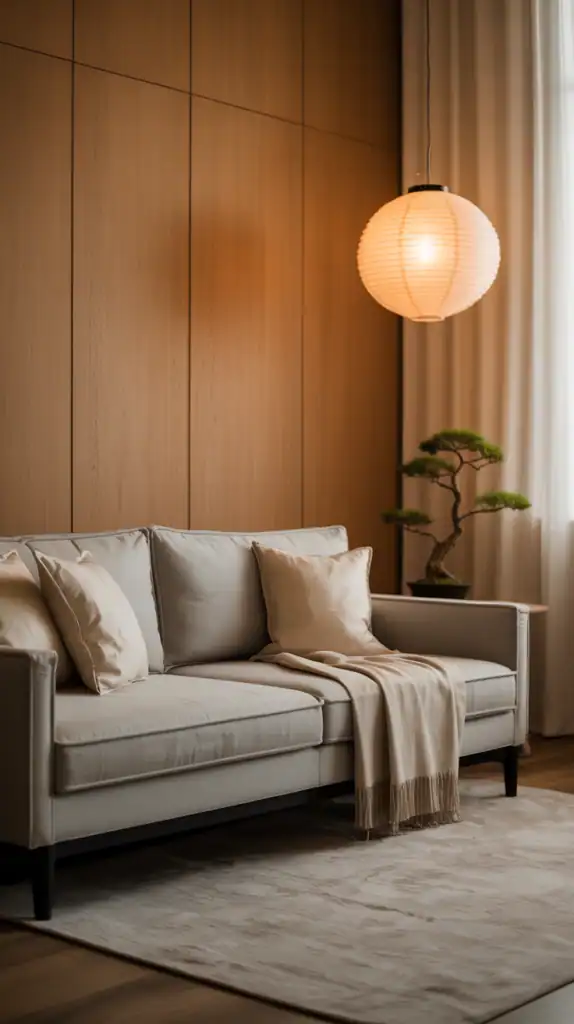
Lighting is like a conductor in your Japandi living room. It doesn’t just light up the space. It also makes everything feel warm and cozy, like a sunset kiss.
Soft lighting is important in both Japanese and Scandinavian designs. It helps make your room calm and peaceful. The trick is to use different light sources all over your room.

Types of Lighting That Work Well
Paper lanterns are very popular, and for a good reason. They’re not the cheap kind. They’re made with care and cast soft, beautiful light. They add a touch of Japan while keeping things simple like Scandinavian design.
Pendant lights are great over seating areas. Pick ones with bamboo or linen shades. They add beauty without taking over your space.
Floor lamps make cozy spots in corners. Look for ones with simple designs and warm bulbs. They create a warm, inviting light.
Table lamps are perfect for finishing touches. Put them on side tables or consoles. They add soft light and make your room feel cozy in the evenings.
Tips for Choosing the Right Fixture
Your lighting should match your Japandi color palette. Warm brass and matte black are good choices. Natural wood fits well with your organic decor.
Stay away from too much decoration. You want lighting that makes your room calm, not loud. Simplicity is key in Japandi design.
Think about your room’s size when picking lights. Big pendant lights are good for big rooms. Small table lamps are better for small spots. Mix heights for depth.
Use bulbs with warm colors, between 2700K and 3000K. These bulbs make your room feel cozy and inviting. Cool white bulbs can make your colors look dull.
Remember, layered lighting is important. Use ambient, task, and accent lights for a balanced room. This makes your room both useful and peaceful.
6. Decorative Pillows and Throws for Texture

Your Japandi living room needs the right mix of sleek and soft. Decorative pillows and throws add that touch. They make your space feel cozy and inviting.
Think of these items as your texture toolkit. They make your space feel like home. The goal is to pick a few pieces that work well together.
Incorporating Different Textures
Mixing textures makes your space special. Linen is a top choice for its soft, natural feel. Pick linen pillows in colors like gray, beige, or off-white.
Wool throws add warmth to your sofa. Choose chunky knits for cozy nights. Smooth wool blankets keep things clean and simple.

The Japandi secret is about quality, not quantity. Mix smooth and textured fabrics. Try a linen pillow with a wool throw or different weaves of the same material.
Here are some great texture combos:
- Smooth linen cushions with chunky knit throws
- Woven cotton pillows paired with soft wool blankets
- Textured hemp fabric mixed with silky bamboo throws
- Bouclé accent pillows balanced with smooth linen covers
Color Palettes that Suit Japandi
Your colors should be soft and subtle. Stick to neutrals but play with different shades. A charcoal throw with cream pillows is a great combo.
Good Japandi colors include:
- Warm beige cushions with soft gray blankets
- Off-white throws paired with mushroom-colored pillows
- Sage green accents mixed with natural linen tones
- Charcoal gray throws against cream or ivory pillows
Remember, you’re adding layers that feel good to touch. Each piece should be chosen carefully. Japandi is all about simplicity and purpose.
Your throws and pillows should feel like part of your space. When someone sits on your sofa, they’ll notice the difference.
7. Houseplants for a Touch of Nature

Plants are more than just decorations in Japandi design. They connect your indoor space to nature. This is true for both Scandinavian and Japanese cultures. Houseplants are key in authentic Japandi living rooms.
Think of plants as friends for your room. They add warmth and subtle color to simple spaces. The right plants keep your room calm and follow Japandi’s simple style.

Recommended Plants for Indoors
Snake plants are perfect for Japandi rooms. They have clean lines and need little care. They look great and are easy to keep alive.
Fiddle leaf figs add height without taking over. Their big leaves make great focal points. Peace lilies have soft leaves and white flowers that add elegance.
Small spaces look great with hanging plants or monstera plants. Use simple pots in neutral colors. Stay away from pots that are too fancy or bright.
Benefits of Adding Greenery
Indoor plants do more than look good. They clean the air and add natural color. This makes your room feel alive and not empty.
Caring for plants is rewarding. It adds mindfulness to your day. It connects you to nature, even in the city.
Plants also add texture to your room. They make your space feel richer. Your plants grow and change with your home.
8. Wall Art: Creating a Focal Point

Wall art is like your room’s quiet confidence. It speaks volumes without being loud. In Japandi design, art is a gentle anchor that draws your eye.
You’re not looking for art that shouts. Instead, you want art that whispers elegance. Abstract pieces work beautifully here, with subtle textures and muted colors.

Photography is stunning too. Black and white landscapes and close-ups of natural textures are perfect. They complement your focal point for Japandi livingroom design.
Types of Art That Fit the Style
Minimalist art thrives in Japandi spaces. Abstract paintings with earthy tones create interest without overwhelming. Botanical prints, like fern silhouettes, are also great.
Calligraphy pieces add cultural depth. Textured art pieces, like woven wall hangings, bring a tactile element Japandi loves.
Photography should focus on nature. Mountain landscapes, ocean scenes, or close-up shots of stones and wood grain are perfect.
How to Hang Art for Maximum Effect
The “less is more” philosophy shines with wall art placement. One large piece above your sofa creates more impact than many small ones. If you choose multiple pieces, keep them cohesive.
Placement is key. Hang art at eye level when seated, not standing. This creates a more intimate connection.
Frame choices should complement your aesthetic. Natural wood for warmth, sleek black for contrast, or no frame at all for a modern look. The frame becomes part of the art, so choose wisely.
9. Stylish Storage Solutions for Clutter-Free Spaces

Most people don’t know the secret of Japandi spaces. It’s not about having fewer things. It’s about choosing storage that’s beautiful and fits with your decor.
Smart storage makes your living room calm and organized. Every item has its spot, but it doesn’t feel too neat. This balance is what makes Japandi design so peaceful.

Types of Storage That Align with Japandi
Storage ottomans are multitasking heroes in Japandi living rooms. They offer seating, a footrest, and hidden storage. Pick ones in natural materials like linen or leather.
Floating shelves keep things simple while showing off your accessories. Remember, less is more in Japandi design. Leave space between items for a calm look.
Woven baskets add warmth and hide things like magazines. Choose ones in natural materials like rattan or seagrass. They fit well with Japandi colors and add texture.
Built-in storage is a Japandi luxury. It blends with your walls for clean storage. Even wooden boxes on your coffee table can keep things tidy while looking stylish.
Creative Ways to Organize
Think outside the box for storage. A wooden tray can hold remotes and coasters and look good doing it. Dual-purpose pieces are key for a clutter-free look.
Make zones for different activities. Use baskets for reading materials and another for electronics. This keeps things organized without losing the room’s calm.
Use vertical space with tall, narrow storage. It makes rooms look bigger and offers lots of storage. Pick pieces that match your furniture.
Remember, visible storage can be decorative. Show off books, ceramics, or plants on open shelves. This adds interest while keeping clutter hidden.
10. Bookshelves to Showcase Your Personality

Your bookshelf is more than storage. It shows who you are. In Japandi design, bookshelves mix functional organization with personal stories. They show your interests in a clean way.
Make your bookshelf like a gallery, not a storage place. Quality over quantity is key. You want just enough to be interesting, not too much.

Designing a Functional Bookshelf
Begin with your books as the base. Arrange them in a way that looks good. You can group them by color or size for a clean look.
Choose shelves made from natural materials. Light wood adds warmth, while dark woods bring Japanese style. The material sets the mood for your display.
Don’t fill every shelf. Leave some space for a clean look. This keeps your bookshelf from feeling too busy.
Styling Tips for a Cohesive Look
Japandi design is more than books. Add a few special items like a vase or candle. The rule of three helps arrange these items nicely.
Use handmade items that show off craftsmanship. A small bowl or wooden sculpture adds character without disrupting the calm.
Your bookshelf should tell your story in a calm way. It should support the peaceful feel of your space.
11. Showcasing Handmade Crafts and Ceramics
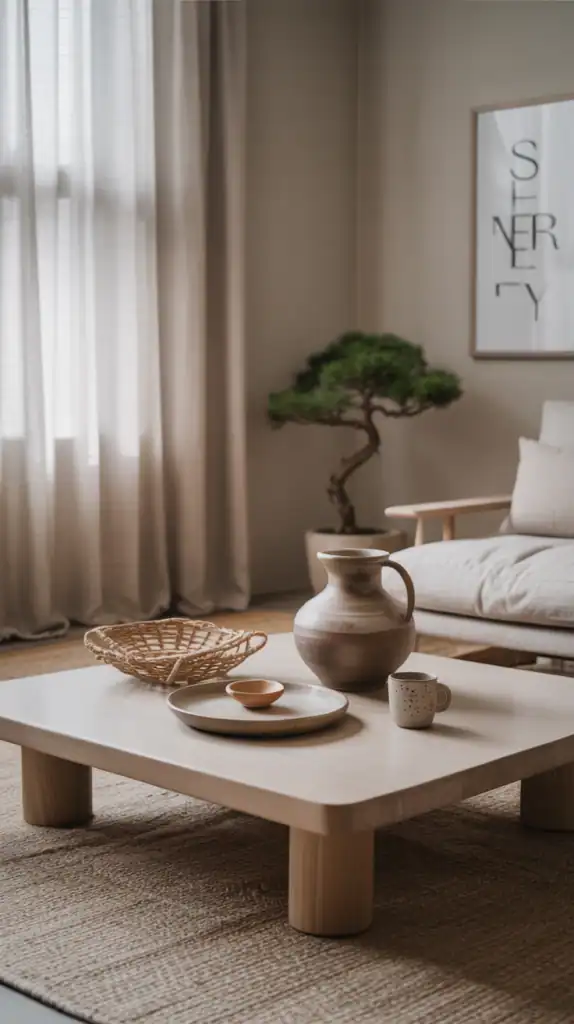
Handcrafted ceramics and woven treasures can change a minimalist space. They add warmth and humanity. This makes your Japandi living room special.
Choosing handmade crafts shows you value the Japanese idea of wabi-sabi. It’s about finding beauty in imperfections and the human touch.

The Role of Artisanal Pieces in Japandi
Artisanal pieces are the heart of Japandi design. They make clean lines feel cozy and add personality. Each piece tells a story through its unique imperfections.
Handcrafted ceramics are magical in Japandi. Think of simple vases and bowls with special glazes. The beauty is in their small, human-made flaws.
Woven materials add texture and warmth. Consider these:
- Rattan baskets for stylish storage
- Seagrass placemats for organic texture
- Jute rugs to ground your space
- Bamboo serving trays for beauty and function
Wooden accessories are also special. Carved bowls and vases add natural beauty. They make your space feel cozy.
Suggestions for Unique Finds
Finding artisanal pieces is fun. Start at local markets to meet makers and hear their stories. This makes your finds even more special.
Look for pieces that show the maker’s touch. A wobbly pot or fingerprints in clay are signs of real craftsmanship.
Here are places to find unique items:
- Local pottery studios and ceramic artists
- Craft fairs and artisan markets
- Small online makers who share their process
- Vintage shops for unique finds
- Your own hands — try pottery!
Choose pieces that feel authentic and meaningful to you. They’re more than decorations. They’re expressions of human creativity that make your space personal.
Ceramics and handmade crafts are best when they’re simple. Let their beauty shine through thoughtful styling.
12. Conclusion: Bringing It All Together

You’ve looked at key accessories that make any space calm and Japandi. This design is special because it’s simple. Each item has a role and adds to the peace.
Essential Elements That Make the Difference
Natural fiber rugs warm your space. Minimalist coffee tables help the room flow. Statement lighting sets the mood.
Textural pillows and throws make it cozy. Plants bring life to every spot.
Wall art is your main focus. Smart storage keeps things tidy. Bookshelves show your style. Handmade ceramics add real charm to your Japandi living room.
Your Path Forward
Begin with accessories that really speak to you. Live with them for a while. See how they change your space.
Choosing wisely means picking items that are both beautiful and useful. Simple design doesn’t mean it’s dull. Each piece should be chosen carefully.
Your living room tells your story in a calm way. It’s a place of peace and beauty. Trust your gut and go for natural materials. Make your space feel real, not just set up.